Author Archives: Logan Dalton

Mini Reviews: Godzilla: Monsterpiece Theatre #2, Paranoid Gardens #6, The Question: All Along the Watchtower #2, Absolute Batman #3, Ultimate Spider-Man #12
Absolute Batman #3

Sometimes, the staff at Graphic Policy read more comics than we’re able to get reviewed. When that happens you’ll see a weekly feature compiling reviews of the comics, or graphic novels, we just didn’t get a chance to write a full one for.

These are Graphic Policy’s Mini Reviews and Recommendations.

Logan

Godzilla’s Monsterpiece Theatre #2 (IDW) – Jules Verne, Sherlock Holmes, a mysterious time traveller, Jay Gatsby, Daisy Buchanan, and a jealous Tom Buchanan assemble to fight Godzilla in a submarine in Godzilla’s Monsterpiece Theatre #2. Cartoonist Tom Scioli revels in showing Godzilla foil Gatsby and Verne’s tech and the resources of American capitalism and destroy various monuments in big splash pages with crayon colors. Something that would potentially be a story-ender in a lesser book ends up just prolonging the characters’ agony. And speaking of agony, between the monsters and missiles and Transylvanian vampires, Gatsby just wants to be with Daisy, who won’t even give him the time of day. Scioli breaks out the florid prose for their interactions while the rest of book is just literature syllabus action figures going to war. The appearance of red-tinged Dracula does put a wrench in things as it looks like the book will go from sci-fi to horror in 2025. Overall: 7.9 Verdict: Buy

Paranoid Gardens #6 (Dark Horse)Gerard Way, Shaun Simon, Chris Weston, and Dave Stewart‘s weird extraterrestrial retirement home ends on a suitably hopeful and anti-corporate note. This issue reveals the origins of the Gardens and connects it to their current crisis as well as Loo’s personal struggles. There’s a lot of commentary about how art has become flattened and turned into product, including some spot-on jabs at Disney so it’s fitting that this book was published by one of the longest lasting independent comics publishers. Also, Stewart goes full psychedelia with his colors to match the unsettling realism of Weston’s art. Overall: 8.7 Verdict: Buy

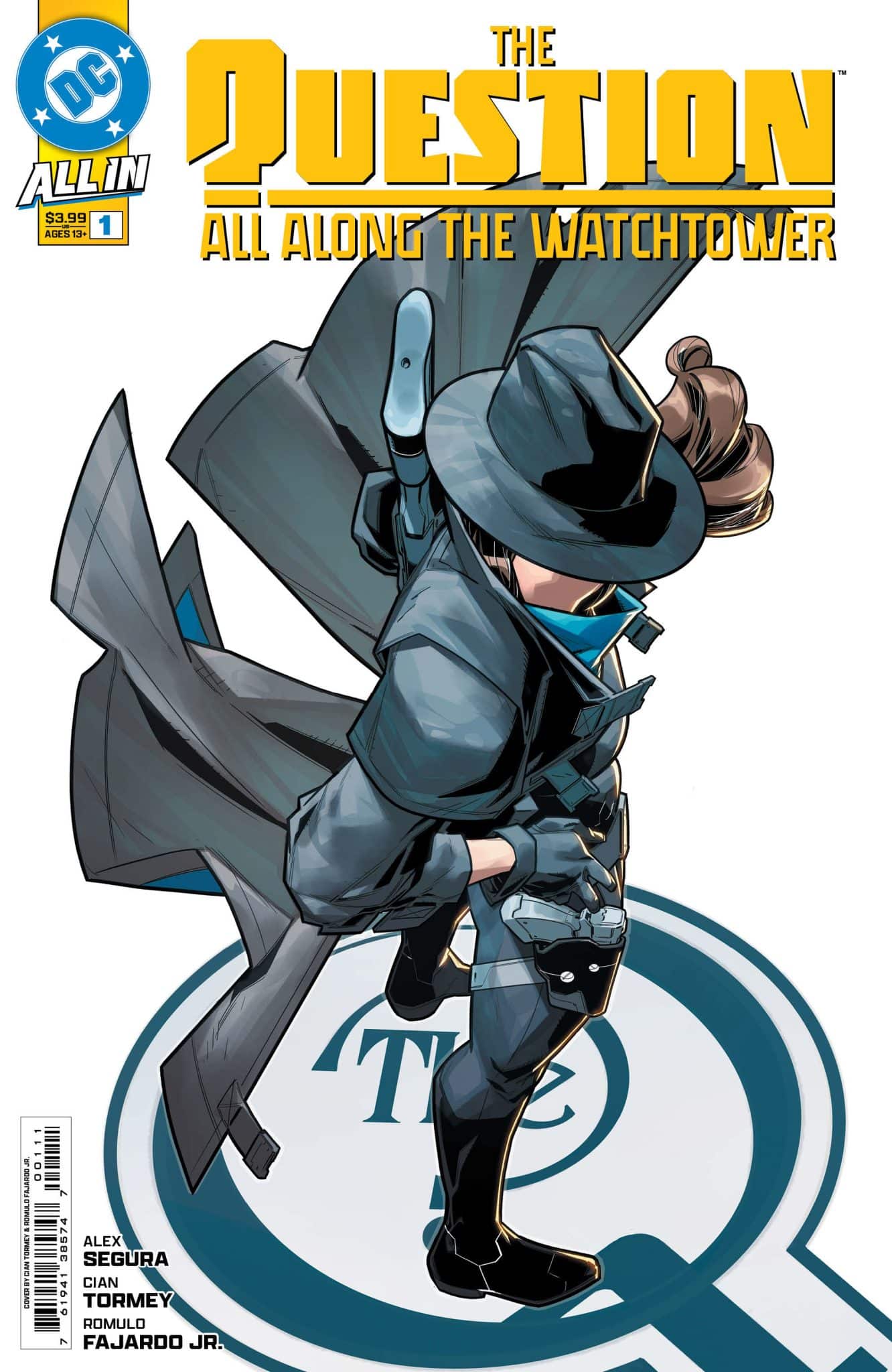
The Question: All Along the Watchtower #2 (DC) – The second issue of Alex Segura and Cian Tormey‘s The Question: All Along the Watchtower is a little less mystery and more action with the Eradicator wreaking havoc in the JL’s new headquarters. The series has a real knack for making C or D-list characters with Nightshade and the Bulleteer handling themselves well in the chaos. However, the Renee Montoya/Kate Kane relationship is the emotional core of the series, and Segura connects it to the main mystery making it even more compelling. Overall, The Question: All Along the Watchtower continues to show the richness of the DC Universe. Overall: 8.0 Verdict: Buy

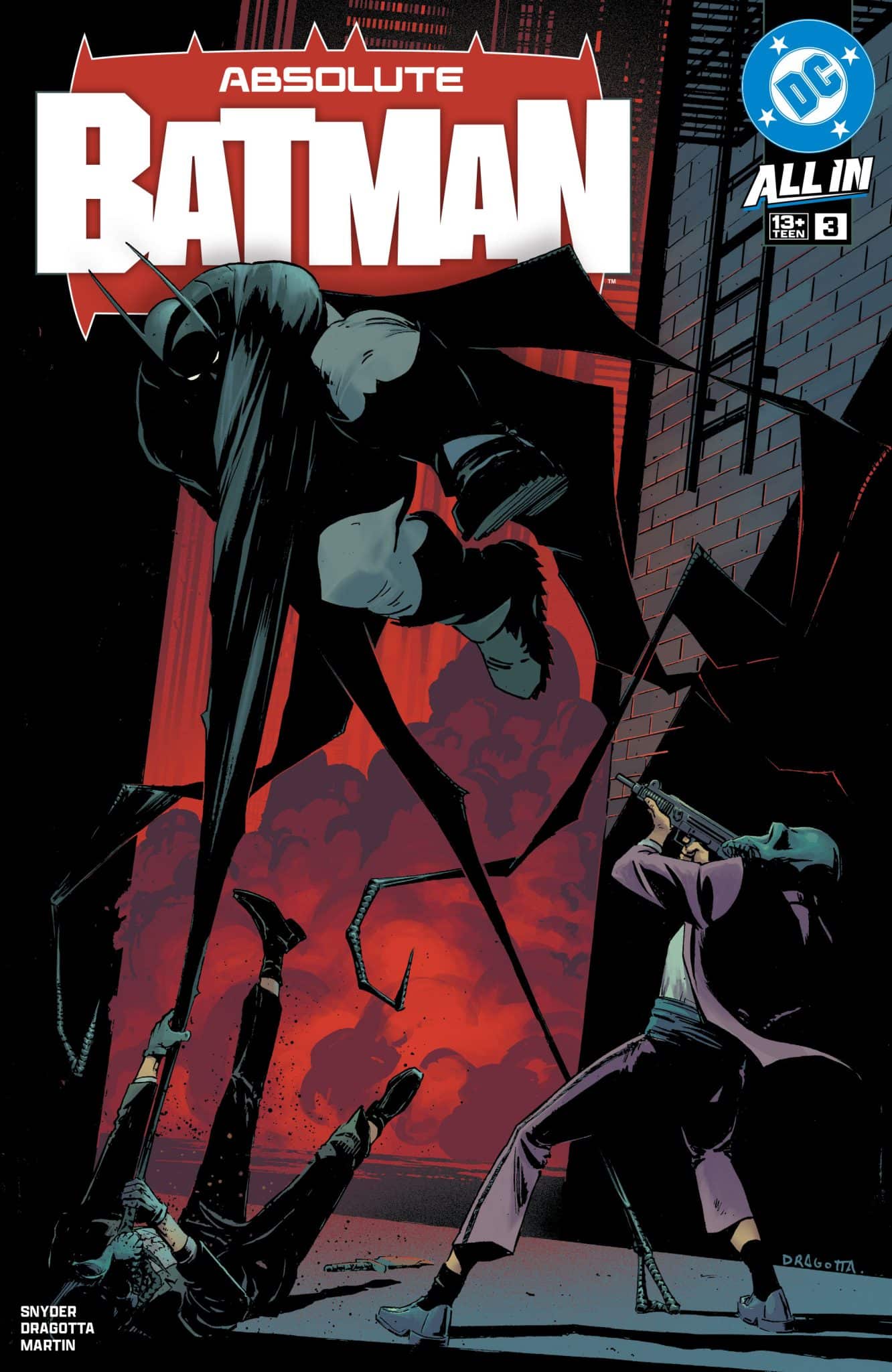
Absolute Batman #3 (DC)Absolute Batman #3 has more chase scenes, epic moments, heartbreaking flashbacks, and just a smidge of moral compromise courtesy of Scott Snyder, Nick Dragotta, and Frank Martin. There’s a pun that doesn’t quite land, but Black Mask starts to get fleshed out more in this issue with a heightened take on cryptocurrency and private prisons. But he’s also just a physically imposing baddie with Dragotta channeling David Mazzucchelli’s Kingpin as he puts a professional boxer in a chokehold while doing the same to the city. Absolute Batman #3 makes the odds against Batman saving his tumultuous city a little higher while continuing to build up his supporting cast and backstory. Overall: 8.4 Verdict: Buy

Ultimate Spider-Man #12 (Marvel)Ultimate Spider-Man wraps up an incredible first year with a family holiday soiree. Before a delivering a jaw dropper of a cliffhanger, Jonathan Hickman and Marco Checchetto explore the dynamic between Mary Jane and the Watson family. There are all kinds of little conflicts like between Mary Jane and her sister Gayle, who bristles at her because she chose a “normal life” with Peter and her kids as well as her mother Madeline, who keeps hitting on Uncle Ben. I’m glad Checchetto was the artist on this issue because he’s great at drawing body language and reaction shots, which is a super helpful for a dialogue-driven comic. Ultimate Spider-Man #12 has heartwarming, holiday film energy and lets this book’s supporting civilian cast shine while also having dark undertones around the edges leading into year two. Overall: 9.0 Verdict: Buy
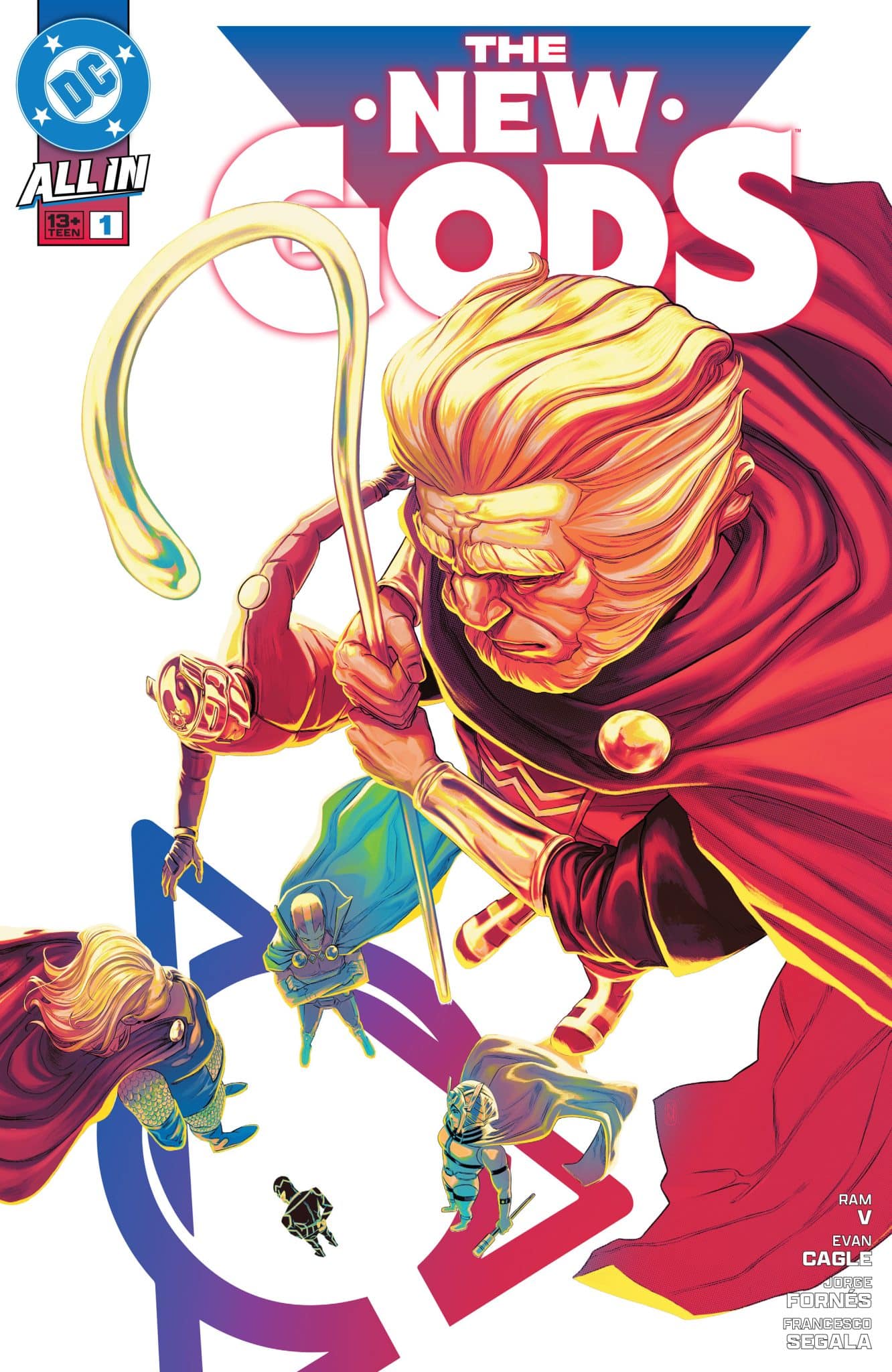
The New Gods #1 is an epic first chapter in the ongoing saga of some of the DC Universe’s most powerful beings

The New Gods #1

The New Gods #1 is an epic first chapter in the ongoing saga of some of the DC Universe’s most powerful beings from Ram V, Evan Cagle, and Francesco Segala. The Jorge Fornes-drawn opening is pure Jack Kirby: florid prose, krackling stars, and of course, “The Old Gods died”. However, this comic isn’t a nostalgia trip, but creates a new conflict for the residents of the New Genesis in light of Darkseid’s passing in the DC All In Special. (You don’t need to read that comic to understand what’s going on here though.) There’s a new New God on the horizon to balance the scales between dark and light, but this also threatens Highfather’s domain so its coming isn’t necessarily seen as a positive. Caught in between are key players like Orion, Mister Miracle, Metron, and a napping Big Barda. (Being a mom and a Bird of Prey is hard work.) V and Cagle give these powerful beings humanistic traits in both their dialogue and mannerisms while not shying away from the universe-spanning scope of the book.

Seriously, if you’re a fan of anything cosmic, then New Gods #1 is the book for you. Fornes plays the previously mentioned overture, then Evan Cagle leads off his portion of the interior art with a Jonathan Hickman-meets-Leonardo Da Vinci’s journals data page, and it’s off to races. Cagle and Segala never lose sight of storytelling fundamentals like character acting and panel transitions while depicting the glittering spires of New Genesis, the corridors of a Parademon-controlled corporate mining planet warehouse, or the puke-stained couch at the Free residence. Tom Napolitano’s lettering also accentuates key moments in the comic like a static-ringed bubble when Highfather interrupts Orion’s ass kicking with a dark message. Evan Cagle’s visuals match the flow of Ram V’s dialogue. His linework is more fluid when Scott Free and Orion are shooting the breeze and more rigid when Metron is warning Highfather of an upcoming prophecy. Also, Doom-Crow being Highfather’s name for Metron is like something straight out of Tolkien, but V writes sassier dialogue than the Oxford don.

Hear me out, but at times, New Gods #1 feels like a modernization of a long lost Stan Lee and Jack Kirby collaboration. The Kirby side is Cagle’s cool sci-fi visuals mixed with craggy faces for characters like Highfather and Orion (In one panel.) plus any time V’s writing feels like cracking open the Hebrew Bible. The Lee side is Free’s insecurity about being a father, Orion debating between duty and morality, or even Lightray and Fastbak flying through New Genesis and vying for Allfather’s favor like a B-list hero trying to make the Avengers or a young Spider-Man trying to join the Fantastic Four. New Gods #1 combines timeless archetypes and relatable neuroses to make an enjoyable not unlike those classic Silver Age Marvel Comics. Thankfully, Ram V uses a lot less narrative captions than Stan Lee and lets Evan Cagle’s layouts sing.

New Gods #1 checks all the boxes for a great first issue. It has an aesthetically memorable opening scene, a cast of characters that are easy to latch onto and introduced in a way that flows with the plot, and moral dilemma that also acts as a series hook. Plus it ends on a splash page that is Kirby-meets-Akira Toriyama. Even if the last time you cared about the New Gods was their appearances in Grant Morrison’s JLA or in the DC Animated Universe, this is still worth picking up and immersing yourself in this messy, mythic world.

Story: Ram V Art: Jorge Fornes, Evan Cagle
Colors: Francesco Segala Letters: Tom Napolitano
Story: 9.0 Art: 9.2 Overall: 9.1 Recommendation: Buy

DC Comics provided Graphic Policy with a FREE copy for review


Purchase: Zeus ComicsKindle

Mini Reviews: Ultimate Universe: One Year In, Toxic Avenger #3, Batman: Dark Patterns #1, Dazzler #4

Batman: Dark Patterns #1

Sometimes, the staff at Graphic Policy read more comics than we’re able to get reviewed. When that happens you’ll see a weekly feature compiling reviews of the comics, or graphic novels, we just didn’t get a chance to write a full one for.

These are Graphic Policy’s Mini Reviews and Recommendations.

Logan

Ultimate Universe: One Year In (Marvel) – The Ultimate Universe One Year In comic from Deniz Camp, Jonas Scharf, and Mattia Iacono shows just how messed up Earth-6160 is. Since Ultimate Invasion, we’ve seen this universe from a heroic perspective, but One Year In focuses on the baddies and fleshes them out in various and sundry ways. Nick Fury is the narrator, and there’s a little Steranko, a pinch of Garth Ennis, and a mega dose of the United States military industrial complex. Basically, whatever he does, he’ll lose and never find redemption. Iacono uses a nostalgic color palette for flashbacks and a dark, faded out one for the present day until the big reveal. Finally, as a cherry on top, there’s a short Ultimate Wolverine story from Chris Condon and Alessandro Capucchio building on the main story that establishes the Rasputins as true players in Earth-6160. The bit of story reminded of those early Ed Brubaker/Steve Epting Captain America issues, but with more of a visceral, destructive flair. Overall: 8.8 Verdict: Buy

Toxic Avenger #3 (Ahoy)Toxic Avenger #3 is my least favorite issue of the series so far, but Matt Bors and Fred Harper still bring the irradiated, insectoid action and sharp political satire. This issue digs into Toxie’s pre-radioactive waste backstory revealing he was the victim of a cruel Internet prank, but he ends up owning that humiliation and attempting to rally Tromaville against their alien invaders. (Emphasis on attempt.) I see a lot of parallels between the cover-up attempts in Tromaville and real life things like the ban of TikTok as the free flow of information isn’t something the powers that be like. However, there’s more gross-out humor and less dancing in Toxic Avenger. Overall: 7.5 Verdict: Read

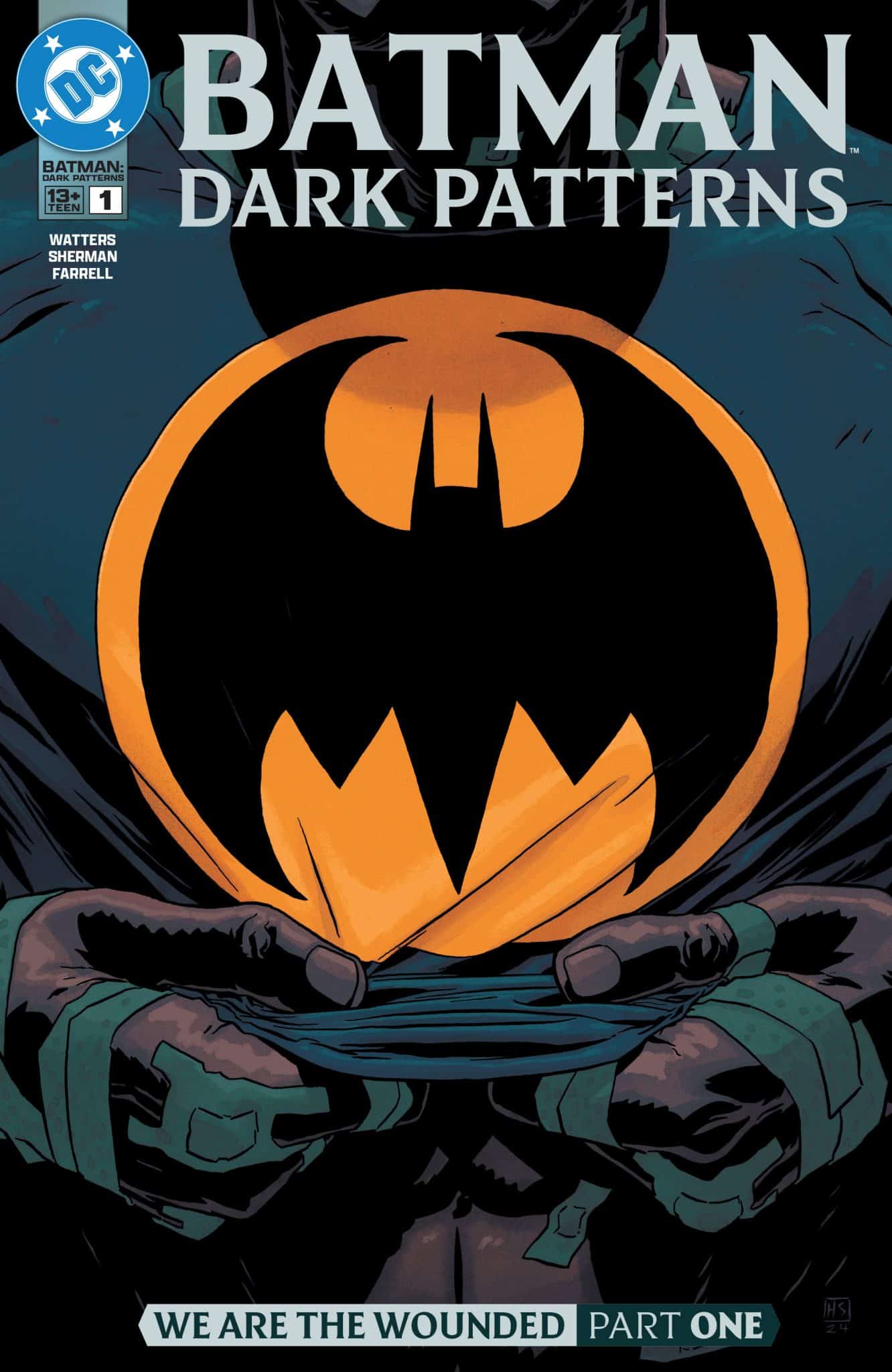
Batman: Dark Patterns #1 (DC) – A young Batman going after a serial killer: it doesn’t get more primal than that in the fittingly named Batman: Dark Patterns #1 from Dan Watters, Hayden Sherman, and Triona Farrell. With a Se7en-meets-Impressionism aesthetic, this first issue sets the trail that Batman must follow as he discovers a corpse with needles jutting out of major arteries and vitals. Watters’ plot is engaging, but he sprinkles in character moments highlighting Batman’s inexperience and more outlaw character like ignoring the Bat-signal and trying to tend to his own wounds. Also, Sherman’s approach to layout mirrors the way Batman works through his case, and I love their and Farrell’s take on the Batmobile. Batman: Dark Patterns is the Bat-title for true crime junkies who may have had a Goth phase or really liked Robert Pattinson’s portrayal of the Caped Crusader. Overall: 8.9 Verdict: Buy

Dazzler #4 (Marvel) – For better or worse, the Dazzler miniseries regressed to a modern version of the 80s Jem and the Holograms cartoon, and Dazzler #4 is an all-action/not great plot twist finale from Jason Loo, Rafael Loureiro, and Alan Robinson. As seen in NYX #6, Dazzler is playing her final show at the copyright friendly version of Madison Square Garden and deals with the guy who’s been sabotaging her tour all along. Relationships that maybe should have been seeded earlier in the series are dropped in this final issue, and what follows is a rocky read that’s the polar opposite of the glowing pop potential of Dazzler #1. It’s just another mutant fight comic, but with musical accompaniment. Overall: 5.8 Verdict: Pass

Midnight Radio gets a new edition and it shouldn’t be missed

Midnight Radio

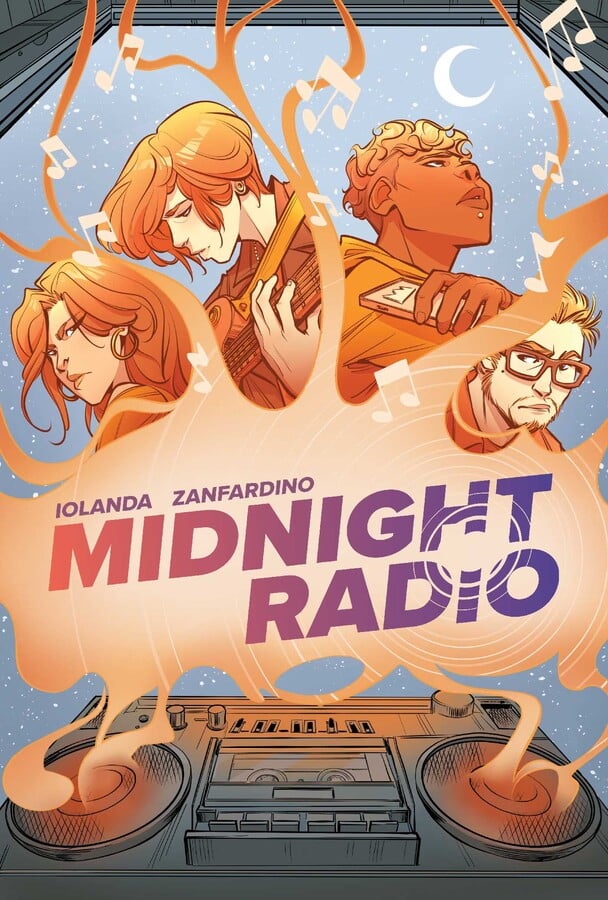
Originally published in 2019, Midnight Radio was Italian cartoonist Iolanda Zanfardino’s debut solo graphic novel, and it’s getting a nice re-release from Oni Press just in time for the holiday season. The comic follows four characters (Mike, Jo, Seika, Steph) of different ages, races, gender identities, and sexual orientation who are brought together by a mysterious radio broadcast telling them to basically live life to the fullest. The defining characteristic of Midnight Radio is that each character gets a different color palette that connects to their arc and personality in a gorgeous marriage of form and content. Zanfardino also interweaves commentary on racism, homophobia, social media addiction, and the exploitative nature of corporations into each character’s deeply personal journey.

The first character that we bump into in Midnight Radio is Mike, who gets a green palette not unlike the glow illuminating the scenes in The Matrix in The Matrix film series. This is fitting because Mike is a punk/indie game developer turned IT worker for an evil healthcare company, who wrestles with his conscience. Zanfardino shows his frustration through acts of violence as he wrecks the trappings of his old life (Battle vest, computer, demo of the game he and his friends worked on.), and as he succumbs to workaholism while dealing with a pesky hacker called Woodpecker throughout the story. Mike’s arc is a modern update of the concept of “selling out” because he wants to be creative and anti-authoritarian with his friends, but wants to pay the bills and get the respect of his parents. As someone who has worked both corporate and more creative, life affirming jobs, his storyline was highly relatable to him.

Bursting forth with a shock of red, Iolanda Zanfardino mines the queer experience and spaces, grief, and depression in Joanne’s story arc. Fitting for the color palette, there’s lots of rage in this portion of Midnight Radio as she deals with the aftermath of a shooting at a queer bar in San Francisco (One of the most haunting panels of the book features the bullet holes from it.) as well as romantic relationships, the drive to be creative, and conservative family members. There’s a viscerality to the way Zanfardino writes Joanne’s dialogue and captions only mellowing out when she vibes out and plays a long with some Guns ‘N’ Roses songs. Just like Mike’s story, Jo feels like her authentic self when she’s playing music and working at the queer bar. There’s powerful energy and even a bit of sensuality in her story arc.

The most, let’s say, melodramatic story arc of Midnight Radio features Seika, a Japanese-American woman, who gets in trouble and is forced by some corrupt cops (Of course, the color palette for this plotline is blue.) to become an informer on a Mexican-American forgery ring. It’s a crime/romance sandwiched between the more slice of life stylings of the other plotlines. (Bits of Mike’s arc have a techno-thriller influence though.) However, between the getaways, the wire wearing, and gunplay, Iolanda Zanfardino tells a story about racism, imperialism, and the immigrant experience as Seika falls for the the leader of the forgery ring, Francisco. However, she also continues the through-line of finding an authentic existence through creating art as Francisco and his friends playfully splash paint in the back of their van.

The final plotline is the yellow-tinged saga of Steph, a non-verbal social media influencer. Zanfardino uses captions and detailed facial expressions and gestures to tell probably the most emotionally resonant bit of Midnight Radio and play with the reader’s perception. Initially, Steph comes off as arrogant and above-it-all: a Baby Boomer’s conception of what Gen Z folks are like. However, as you learn more about his relationship with his parents, sister Pearl, and best friend Ruth, he becomes a more sympathetic figure and the beating heart and literal voice of Midnight Radio. As someone who has used social media as a stim and/or security blanket, I personally connected to this story, and Iolanda Zanfardino handles Steph’s non-verbality in a sensitive way without holding him up as some kind of saint.

Through its distinct, yet interconnected narrative, Midnight Radio is a comic that capture both the uniqueness and universality of the human experience. Zanfardino uses color innovatively to establish each character’s arc while connecting them through little chance meetings and the shared theme of finding their own authentic selves through relationships and creativity. Midnight Radio is a life-affirming comic full of feeling and worth a read during the dark days of winter.

Story/Art/Letters: Iolanda Zanfardino 
Story: 8.8 Art: 9.2 Overall: 9.0 Recommendation: Buy

Oni Press provided Graphic Policy with a FREE copy for review


Purchase: AmazonBookshop

Mini Reviews: Absolute Superman #2, Christmas 365 #1, and NYX #6

Absolute Superman #2

Sometimes, the staff at Graphic Policy read more comics than we’re able to get reviewed. When that happens you’ll see a weekly feature compiling reviews of the comics, or graphic novels, we just didn’t get a chance to write a full one for.

These are Graphic Policy’s Mini Reviews and Recommendations.

Logan

Christmas 365 #1 (Dark Horse) – In the vein of Christmas Vacation (Plus supernatural elements), Mikey Way, Jon Rivera, and Piotr Kowalski‘s is all about a dad who takes celebrating Christmas way overboard. But beneath the dream sequences, combusting Christmas trees, and possessed Nutcrackers, it’s a tale about a dad who can’t be there for his family because his job has taken such a toll on him aka it’s super relatable for many readers. There are few little storytelling hiccups in Christmas 365 #1 like similar hairstyles and misplaced word balloons making it hard to keep up with the flow of dialogue and speakers, but for the most part, Christmas 365 is a mischievous, over-the-top holiday comedy that’s going to last for 364 days after Christmas. Overall: 7.5 Verdict: Read

NYX #6 (Marvel) – The main cast of NYX go to a Dazzler show, and of course, it turns out terribly. Jackson Lanzing and Collin Kelly throw out so many dashed out subplots, returns of characters from NYX Volume 1, and a kind of, sort of mind control plotline and make the whole issue feel very fragmented. However, Michael Shelfer and Elisabetta D’Amico‘s art is gorgeous ; kind of like a mix of Grand Theft Auto loading screens and manga with a dash of the usual Marvel house style. Raul Angulo’s colors also do a great job of showcasing both Kiden Nixon and Local’s powers plus the small slice of Dazzler show we get. NYX #6 isn’t the best issue of the series, but not giving up on one of the better X-titles just yet. Overall: 6.7 Verdict: Pass

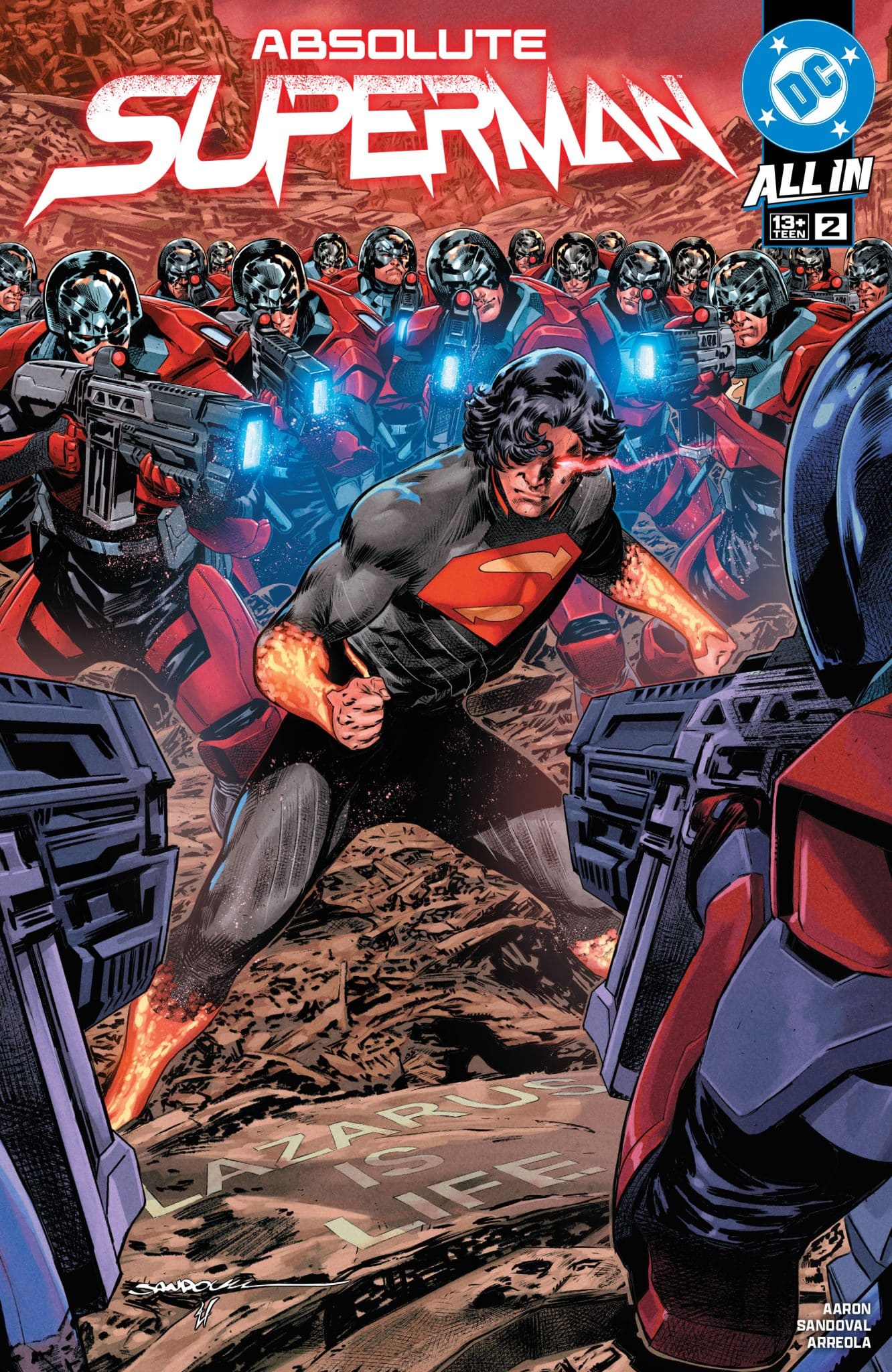
Absolute Superman #2 (DC)Absolute Superman #2 has a refreshing anti-AI/pro-humanity bent from his opening scene where young Kal-El gets called out for not using the Kryptonian equivalent of Open AI on his paper for his Zoom class, but make it sci-fi. Jason Aaron and Rafa Sandoval extend this to present day by making Lois Lane the POV character as she relates her dealings with Superman using her own handwriting and not Brainiac. It’s a new take on Superman and Lois’ first meeting grounded in the military-industrial complex and with splashy action and high energy colors from Sandoval and Ulisses Arreola. This second issue continues to establish Superman as the champion of the downtrodden and colonized while also adding depth to Lane and building up the evil Lazarus Corporation. There are fewer flashbacks, but they add important context to Superman’s personality like Lara and Jor-El working together to build the ship and making it an ark and not just a single baby carrier. Overall: 8.5 Verdict: Buy

Mini Reviews: Absolute Wonder Woman #2, Justice League Unlimited #1, Black Canary: Best of the Best #1

Absolute Wonder Woman #2

Sometimes, the staff at Graphic Policy read more comics than we’re able to get reviewed. When that happens you’ll see a weekly feature compiling reviews of the comics, or graphic novels, we just didn’t get a chance to write a full one for.

These are Graphic Policy’s Mini Reviews and Recommendations.

Logan

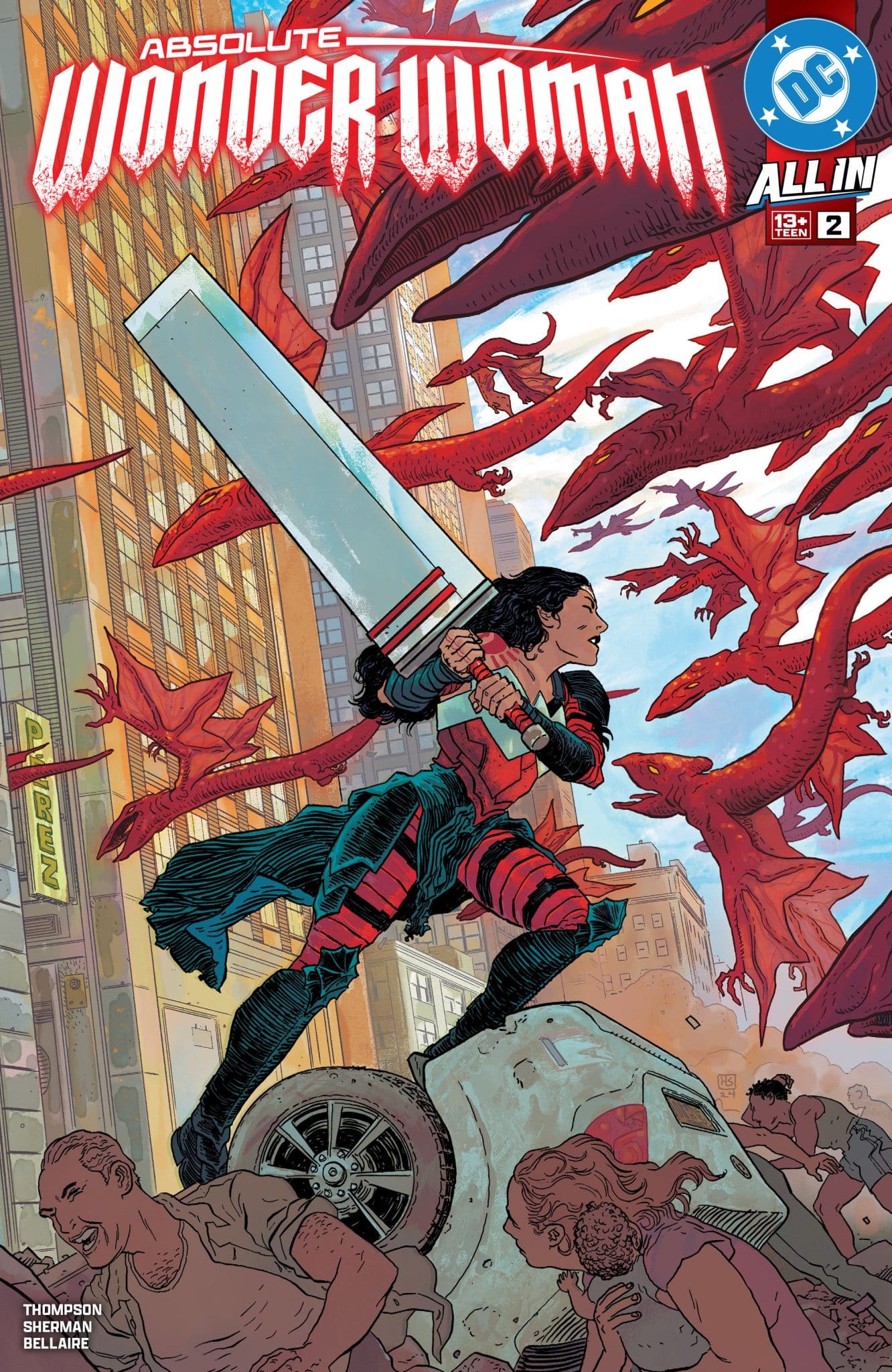
Absolute Wonder Woman #2 (DC) – After the conclusion of the opening battle that began in a previous issue, Absolute Wonder Woman #2 feels more like a traditional comic, especially since Steve Trevor is a key figure in the story. Kelly Thompson, Hayden Sherman, and Jordie Bellaire still deal in hellish imagery, but there’s a gentle humor to Thompson’s script especially when Diana and Steve interact. His reaction to Pegasus being *that* Pegasus is priceless. Sherman’s layouts continue to be exquisite, and I love how they draw Diana’s interactions with American military members as she expressly refuses to be a part of the war machine. Bellaire’s flat reds and blacks tie everything together as Wonder Woman is a damn good hero, but one born from hellfire. Overall: 8.5 Verdict: Buy

Justice League Unlimited #1 (DC) – With Dan Mora drawing big crowd shots and action sequences, Mark Waid getting to the emotional heart of heroes you already love or maybe haven’t met yet, and Tamra Bonvillain giving each hero or ambiguous bad guy their own hue and palette, Justice League Unlimited #1 lives up to its name. In the plotting department, Waid is definitely a traditionalist, but I love how he gets creative with certain characters’ abilities like Star Sapphire. Plus the split a mega team into small groups to solve problems approach to superhero storytelling always works for me. This felt like a Saturday morning cartoon in the best way and even managed to slide in a little social commentary between the fisticuffs. Overall: 8.0 Verdict: Buy

Black Canary: Best of the Best #1 (DC) – America loves an underdog, and Black Canary is a big one in the new series Black Canary: Best of the Best from Tom King, Ryan Sook, and Dave Stewart. For some reason, Black Canary and Lady Shiva are in a one-on-one, no superpowers, no holds barred PPV brawl to crown the best fighter in the DC Universe. Best of the Best #1 feels like a good sports/combat film with its balance between gloriously choreographed fisticuffs and a look into Dinah Lance’s reason for taking the fight. The emotional center is the relationship between Black Canary and her mother, the original Black Canary, and the scenes with them in small-town Washington State are touching and bittersweet. There’s also a running, verbose commentary on the upcoming boxing match that satirizes 24/7, gambling-centric sports coverage, and I love the contrast between King’s intentionally overblown narration with the tender visuals of Sook and Stewart. Black Canary: Best of the Best is sneaky good launch to a series I’ll definitely be glued to in 2025. Overall: 8.7 Verdict: Buy

Mini Reviews: Gladiator II

Gladiator II

Sometimes, the staff at Graphic Policy see more movies than we’re able to get reviewed. When that happens you’ll see a weekly feature compiling reviews of the movies, we just didn’t get a chance to write a full one for.

These are Graphic Policy’s Mini Reviews and Recommendations.

Logan

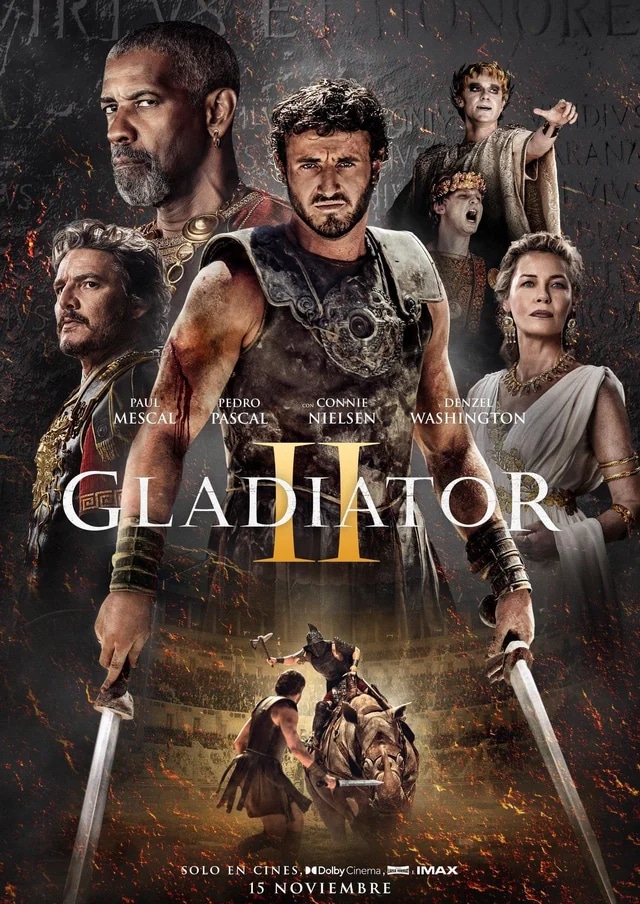
Gladiator II – Although obviously not an instant classic like its predecessor, Gladiator II is a solid piece of spectacle that remixes elements of the original while adding fantasy/escapism elements. It’s like restarting a video game after loosing to the final boss and winning in the end.

Playing the arms dealer/gladiator owner Macrinus, Denzel Washington steals every scene he’s in as a man of opportunity in a decadent time. (The sequence where he plays peek a boo with a monkey/consul is priceless.) Gladiator II doesn’t have has a tight narrative arc as its predecessor, and its fight scenes don’t build Hanno’s arc like it does with Maximus.

At times, it just feels like Ridley Scott is crossing items off his action sequence bucket list, but he and Paul Mescal’s weary facial expressions capture the vibe of a world that has been exploited by wealthy, powerful warmongers far too long.

Overall Verdict 7.1

Mini Reviews: Exceptional X-Men, The Power Fantasy, Godzilla Rivals: SpaceGodzilla vs. King Ghidorah, The Question: All Along the Watchtower

The Question: All Along the Watchtower #1

Sometimes, the staff at Graphic Policy read more comics than we’re able to get reviewed. When that happens you’ll see a weekly feature compiling reviews of the comics, or graphic novels, we just didn’t get a chance to write a full one for.

These are Graphic Policy’s Mini Reviews and Recommendations.

Logan

Exceptional X-Men #3 (Marvel) Exceptional X-Men‘s lineup and focus start to snap together in its third issue. A physical/ideological fight between Emma Frost and Kitty Pryde might be the headliner, but Eve Ewing and Carmen Carnero also continue to flesh out Thao, Alex, and Trista’s characters and start to build their team dynamic even extending into costumes and codenames. (Axo, which is short for Axolotl, is my favorite.) Alex was 100% right when he asked why Emma and Kitty had tea after phasing/diamond-forming at each other, and Ewing and Carnero grasp the tension and respect between them. Emma is a more traditional, tough love educator while Kitty wants to get away from the X-Men and show a different way for young mutants live. But what really ends up being most important is what Axo, Melee, and Bronze want for themselves. With its small, tightknit cast and lack of missions/fight for the sake of fights, Exceptional X-Men is a breath of fresh air in the mutant/superhero space. Overall: 8.5 Verdict: Buy

The Power Fantasy #4 (Image) -The cast of The Power Fantasy comes together at Masumi’s art show where Kieron Gillen and Caspar Wijingaard explore what would happen if an all-powerful person gets a bad review. And that’s basically create a devouring monster: Godzilla but scarier. I love how Wijingaard integrates Masumi’s actual art with the style of the comic with the abstract paintings overwhelming the frame when she almost melts down before mellowing into the usual flow and palette of The Power Fantasy. The Power Fantasy #4 provides more insight into Masumi’s personality and insights, but Etienne Lux continues to be the prime mover and gets the series’ equivalent of an action scene. The Power Fantasy #4 uses art and its critical reception to just show how fragile and tense its world is. Overall: 7.9 Verdict: Buy

Godzilla Rivals: SpaceGodzilla vs King Ghidorah (IDW)Godzilla Rivals: SpaceGodzilla vs King Ghidorah (GR: SvK from here on out) is both an epic kaiju battle royale and emotional family drama from creators Dave Baker, Kevin Catalan, and Heather Breckel. GR: SvK is filled with poster-worthy pages of colorful battles between the titular characters plus everyone’s favorite radioactive lizard, and Baker and Catalan do a solid job blocking out the fights between these three behemoths. Along with the fights, they build an arc between a son who wants his father to meet his grandson and a father who just wants to use SpaceGodzilla’s crystals for renewable energy. It’s really exceeded my expectations for this kind of comic. Overall: 8.8 Verdict: Buy

The Question: All Along the Watchtower #1 (DC) – I feel like this DC comic was tailor made for me because it’s Renee Montoya in a cowboy hat toting a giant shotgun and solving mysteries with her ex-fiancee Batwoman, Jaime Reyes, and Ted Kord. Alex Segura and Cian Tormey use the new Justice League Unlimited/Watchtower/All-In era of the DC Universe as a backdrop for fun action/detective stories featuring various B, C, and Z-listers while keeping Montoya’s arc front and center. I love how they set up the stakes of the series by having the Trinity handpick Montoya, and the reveal of Batwoman as the field agent touches a real emotional chord. All Along the Watchtower #1 has an epic scope while staying grounded like your favorite street-level title. Overall: 9.0 Verdict: Buy
The 5 Best Comics Set in Ancient Rome

With the long-awaited release of Gladiator II this week coupled with the continued decline of a current empire, ancient Rome is back in the cultural conversation. (Plus there was the whole “your Roman empire” TikTok phenomenon in 2023.) There have been many successful films, TV shows (Spartacus is my personal fave.), and video games about an empire that had such an impact on human civilization that I was studying their “dead” language for college credit in the mid-2010s. In addition to this, there are many wonderful comics where the Roman Empire is the main setting, including one of the most popular comics ever. In my research for this article, I discovered that there was a whole manga series called Plinivus about the life of Roman polymath and victim of the Mt. Vesuvius volcanic eruption, Pliny the Elder, but unfortunately, there’s no English translation so it just missed the cut.

However, here are five comic books set in ancient Rome for you to check out while you wait between Gladiator sequels.

5. SPQR Blues (Webcomic, 2005-present)

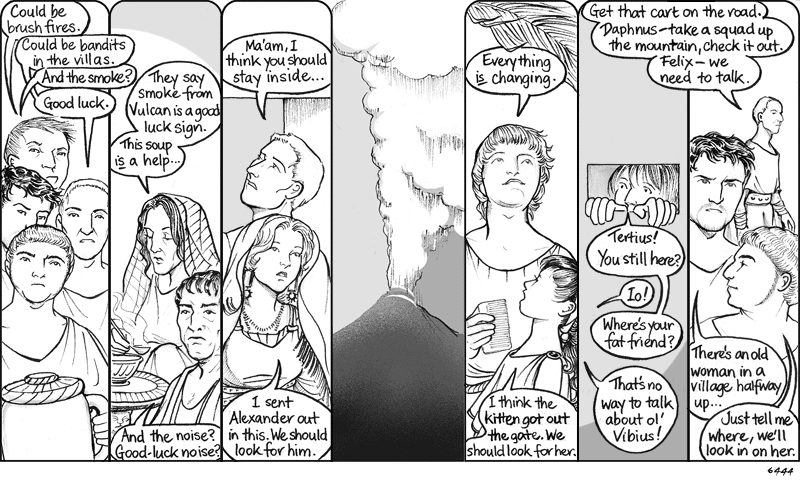
Lots of fiction and book about ancient Rome focuses on men with the honorific “Caesar”, the wars and battles of legions, or the political intrigue of a city that makes Washington, DC look like Mayberry. However, Carol Burrell’s SPQR Blues webcomic takes an opposite tack focusing on daily life in Herculaneum before the eruption of Vesuvius during the reign of Emperor Titus. The series follows the ups and downs of the life of former Roman soldier Marcus Felix as he settles down in Herculaneum and runs into his old friend Mus. As the series progresses, there is more intrigue (and murder), and figures from Roman history like future emperor Domitian make appearances. Also, it’s rewarding to see how Burrell’s art style shifts throughout the series going from looser to tighter pencils and more complex backgrounds. Her hand-lettered dialogue is also a continual treat. SPQR Blues is an ancient Roman soap opera with a sprawling cast that really picks up in its second chapter when Carol Burrell elucidates Felix’s backstory.

4. Britannia (Valiant, 2016-2018, 2024)

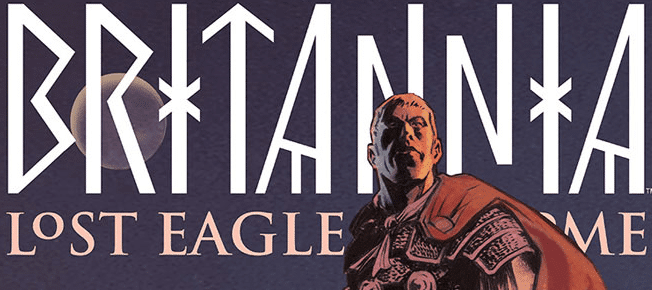
Written by Peter Milligan with art by Jose Juan Ryp, Robert Gill, and Alvaro Papagiani, Britannia is a supernaturally-tinged detective series set during the reign of Emperor Nero in the first century CE. Its protagonist is Antonius Axia aka the Detectioner, who faced down the monster Orkus in southern Italy and was revived by the Vestal Virgins with special abilities, including the powers of deductive reasoning. Axia’s missions send him all across the Roman Empire beginning in the titular frontier of Britannia to the wilds of Germania and, of course, to Rome itself in a gladiator-centric story called Britannia: We Who Are About To Die. A common thread in the story is the conflict between reason and superstition with Axia representing logic, and his British slave Bran (He’s refused freedom for tax purposes.) representing a belief in the supernatural. Each story has dynamic visuals from artists like Ryp and Gill who have gone on to draw X-Books for Marvel capturing the sex, blood, and rock’n’roll of this period in Roman history. As an added bonus, Britannia came back after a six year hiatus in the one-shot The Great Fire of Rome where Axia must find out the cause of the Great Fire of Rome while, for better or worse, the series becomes part of the greater tapestry of the Valiant Universe.

3. The Wicked + the Divine 455 AD (Image, 2017)

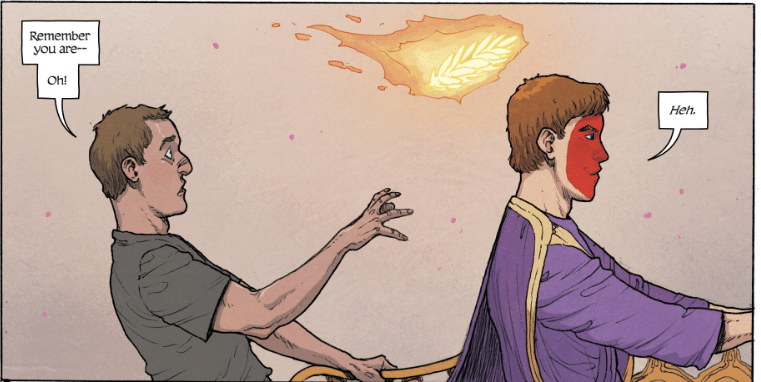
In popular culture, the main eras of Roman history that appear are usually the 1st century BCE, the 1st century CE, and the 2nd century CE because it features such heavy hitters as Julius Caesar, Augustus Caesar, and Marcus Aurelius as well as infamous figures like Nero, Caligula, and Commodus. The latter years, or the “decline and fall” of the Roman Empire, don’t get as much love unless figures like Attila the Hun, or by skin of their teeth, King Arthur. However, in this flashback one-shot as part of the modern classic The Wicked + the Divine series, Kieron Gillen, Andre Lima Araujo, and Matthew Wilson nail the decadence and depravity of the final days of Rome as an ancient Roman incarnation of Lucifer takes on the mantle of Julius Caesar, routs the invading Vandals, and refuses to accept his fate as a member of the Pantheon. This comic features one of the most intense and literal portrayals of burnout ever as Lucifer simply can’t accept a world where Rome doesn’t rule the world, but he also wants to be an actor and musician. As the only living member of the Pantheon, he gets to play off Ananke a lot, who wants to keep history traditional, Christian, masculine, and heterosexual instead of queer and rebellious. WicDiv 455 AD is a fun bit of hyperviolent melodrama, especially through the lavish visuals of Araujo Wilson. (Seriously, Lucifer playing one of his senator’s rib cage like a harp has stuck with me for the past seven years.)

2. Asterix (Various, 1959-present)

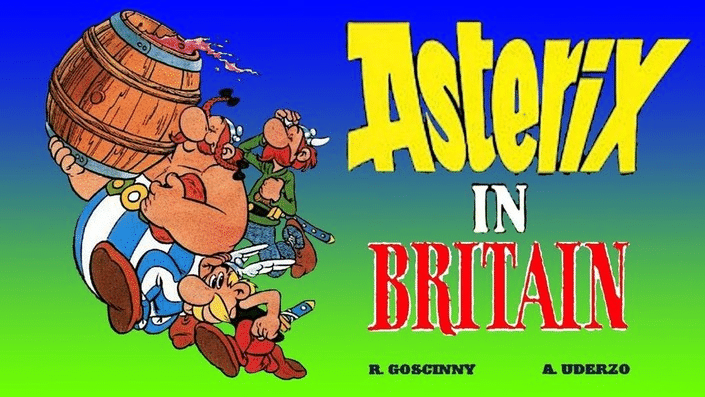
Of course, Asterix is on this list and not just to throw a bone to our site’s Francophone readers. Set in and around 50 BCE or thereabouts, Asterix follows the adventures of its titular character, who is a wise warrior and a member of the last Gallic village to resist Julius Caesar’s invasion. He and his not-as-bright, bigger giant monument-carrying friend Obelix defend their village from the Romans while also traveling to a variety of places like Germany, Egypt, Belgium, and even North America on various quests, involving puns, fisticuffs, food, drink, and of course, French stereotypes for other countries during the publication of the book. Although, some of the earlier books are dated at best and racist at worst, creators Rene Goscinny and Albert Uderzo bring a manic, mischievous sense of humor and an anarchic energy to both visuals and wordplay that makes these books highly entertaining reads even in 2024. (My personal favorite volume is Asterix in Britain) Asterix comics could definitely be considered one of France’s finest cultural imports (A close third to Daft Punk and Victor Wembanyama.), and there’s even an Asterix themed amusement park in Picardy with some seriously gnarly coasters. However, the books themselves still hold up (and are still being published) and are definitely worth checking out in 2024 with the caveat that they reflect traditional French stereotypes about the world around them through the lens of ancient Rome.

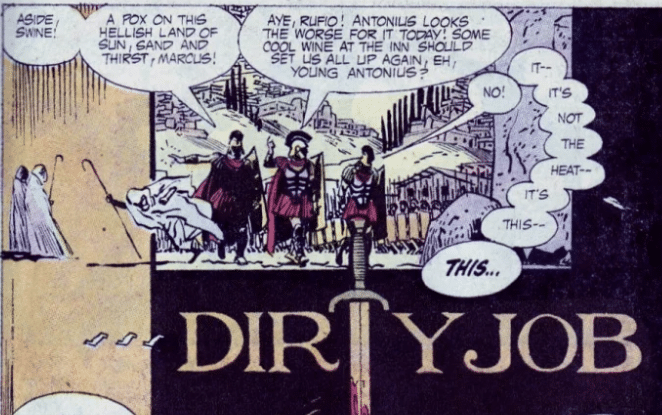
1. “Dirty Job” from Our Army at War #241 (DC Comics, 1972)

My favorite comic story set in ancient Rome is a four page backup story from a long-running DC war comic written by Teen Titans co-creator Bob Haney and drawn by the legendary Alex Toth. It’s about three Roman centurions drinking in a bar after a crucifixion and is one of the most touching anti-war, anti-imperialism, and yes, pro-Christian comic books of all time with Toth’s final page being a silhouette of the crosses on which Jesus of Nazareth and the two thieves hung from the New Testament story. I love the furrows that Toth draws in the face of the conscience-stricken young soldier Antonius, and the way he draws the careless movements of his compatriot, who paws and gropes at the serving women and other workers at the tavern. His layouts also show convey the oppression of the Romans towards the areas that they’ve conquered, and how trapped the centurions feel in following orders and having to do the “dirty work” of executions while their leaders recline in luxury. “Dirty Job” is a masterpiece of the comic book short story form, and its message resonates while empires continue to mistreat innocent people in Palestine on a daily basis.

You Never Heard of Me #1 kicks off a high concept, yet easy to connect with comic

You Never Heard of Me #1

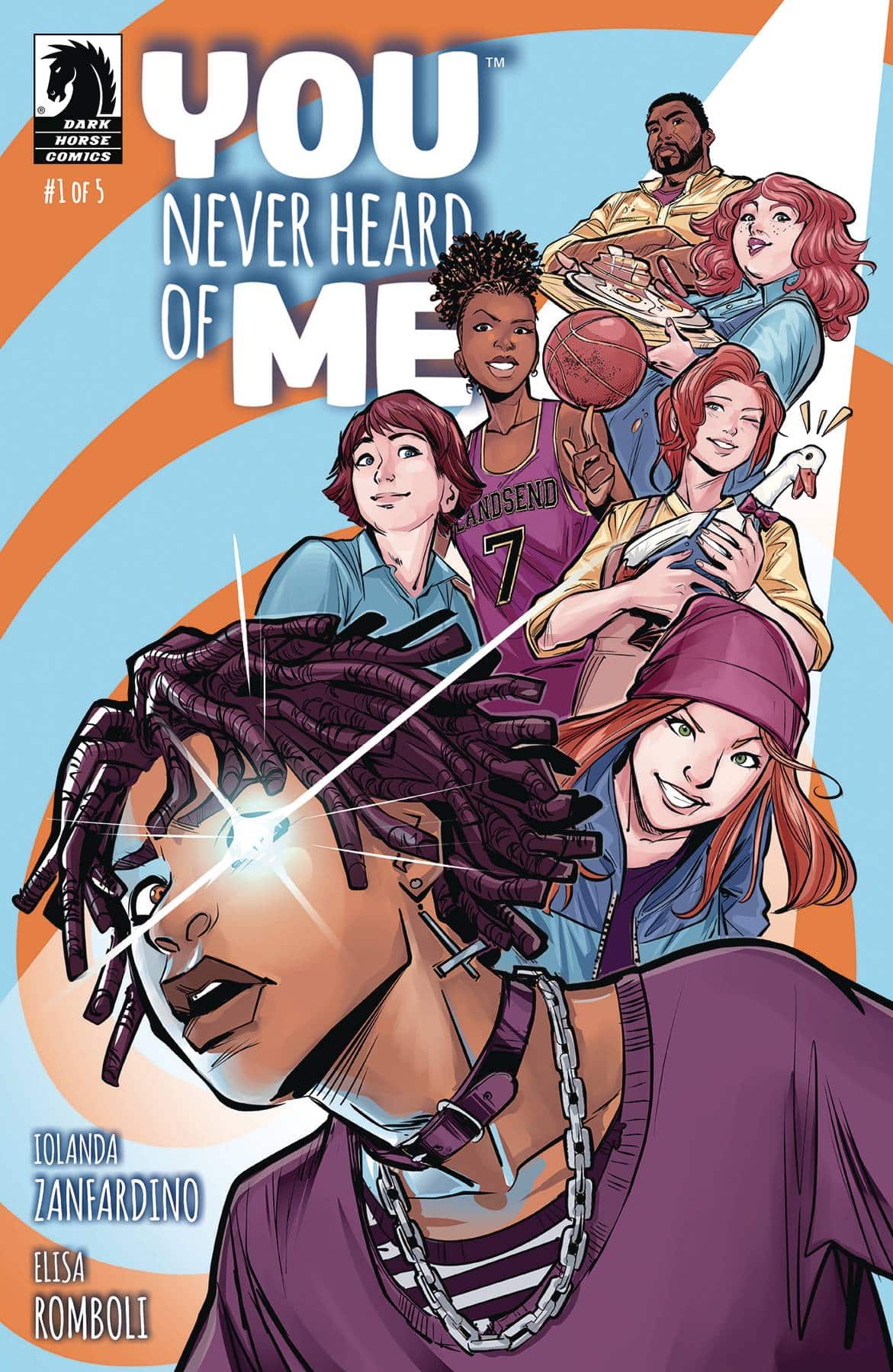
You Never Heard of Me is a high concept, yet easy to connect to comic from Iolanda Zanfardino and Elisa Romboli. In the book, a teenager named William inherits the ability to see both the best and worst moments of someone’s life from his grandmother. This might seem like a powerful gift, but was also a curse leading to William’s family moving around from place to place to avoid people who wished to exploit his grandmother or do her harm. You Never Heard of Me #1 establishes the premises series as well as the dynamic between William, his family, his (non-existent) friends, and spends quite a lot of time showing the effects of this ability on both William and his grandmother to create an emotional bond between reader and characters.

Even before he gets his abilities, William is an easy character to relate to with his opposite of “main character energy”. He’s thoughtful and empathetic, if a little lazy as he doesn’t takes his studies or extracurriculars seriously like his older sister and instead spends his time vibing at the beach, listening to music, and trying to cope with how chaotic his life is. Having to go to a new school every year (Or even less time than that.) has taken a toll on William so, of course, he just wants to soak up the sun at the beach or escape behind his headphones while bullying and drama happens at his high school.

Iolanda Zanfardino and Elisa Romboli don’t make his character a slacker per se with dialogue about him passing tests and showing interest in psychology as well as showing support for his father who think he’s a failure at life because he has spent his entire life as a a car mechanic. In his words, William just wants to “go with the flow”, which is why getting foresight abilities is so jarring and changes his pretty chill life in an instant. He’s not the nerd who gets great powers or the theater kid in a melodrama, but just a nice, quiet kid with good fashion sense and taste in music that happens to know the happiest and saddest moments of everyone he comes into contact with.

One element of You Never Heard of Me that I love is that Zanfardino and Romboli show the foresight powers visually instead of verbally beginning with a double page spread showing William’s grandmother’s relationship with her abilities. Romboli and Zanfardino uses pinks, red, oranges, and yellows to reveal the instability of her family’s life, and they also use visual shorthand like Game of Life car pieces to show how William’s mother chose to leave the family. This storytelling choice establishes important information about the main cast of characters and the comic’s themes without being bogged down in text. In fact, the blasts of color from the book’s creators create an initial emotional response that is broken down or intensified by Romboli’s line art, especially in the scene where William first discovers his abilities. There’s a real intimacy to experience someone’s best and worst actual or potential moments, and it’s a real burden to be bombarded with your peers’ psyches stripped bare while you’re still trying to grow up and find yourself like William.

You Never Heard of Me is for all the sensitive, quiet kids who had more active roles in life, their family, or workplace thrust upon them by a society that treasures being outgoing and charismatic above all. Iolanda Zanfardino and Elisa Romboli craft a story of teenage kid dealing with a loss in his family and trying to keep his head above water while also getting extranormal abilities bestowed upon him. But this isn’t a gift he can punch, fly, or optic beam his way out of, and William’s psyche and capacity for empathy and connection are on trial and the driving force of this comic as he must choose whether to use his powers actively, passively, or somewhere in between.

Story/Colors/Letters: Iolanda Zanfardino Art/Colors: Elisa Romboli
Story: 8.2 Art: 8.6 Overall: 8.4 Recommendation: Buy

Dark Horse Comics provided Graphic Policy with a FREE copy for review


Purchase: TFAWZeus ComicsKindle

« Older Entries Recent Entries »