
Movie Review: Pearl is a masterfully crafted origin for a new female slasher

The decision to reveal the origins of a new killer within the slasher genre incurs a lot of risk. A botched attempt can result in a slasher with diminished presence and mystique. Rob Zombie’s 2007 Halloween remake comes to mind. The movie has its high points, especially in terms of how it adds another layer of violence and cruelty to the myth of Michael Myers, but to explain the source of his evil and the reasons why he kills robbed him of the mystery that made his very existence so unsettling in the John Carpenter original.
Ti West’s Pearl manages to avoid all this by making sure the story behind the titular slasher is strong enough to warrant exploration. The bad things that turn Pearl into a killer make for a fascinating watch as they’re put on a more intimate and emotional path that mixes violence and tragedy in the service of sculpting a new horror icon with an identity all her own. Its success is owed to a stellar performance from Mia Goth, who takes the character into places largely reserved for established movie monsters and murderers. It’s impressive enough to flirt with the idea of several nominations for the actress in the upcoming awards season.
Pearl is the second part in West’s “X” trilogy, which began with 2021’s X, a movie about a small group of porn actors and filmmakers that rent out a small cabin in a remote farm deep in Texas only to find the old couple they rented it from are vicious killers. Pearl, played by Goth in heavy prosthetics that make her look very old (and who also plays the younger character of Maxine in the movie), is one of the two aging killers. Pearl is a prequel, set in 1918 with the intention of looking at the killer’s younger days, when she was but a mere farmer’s daughter with a secret love for musicals (and an even more secret urge to kill and feed her victims to an alligator in a pond near her house).
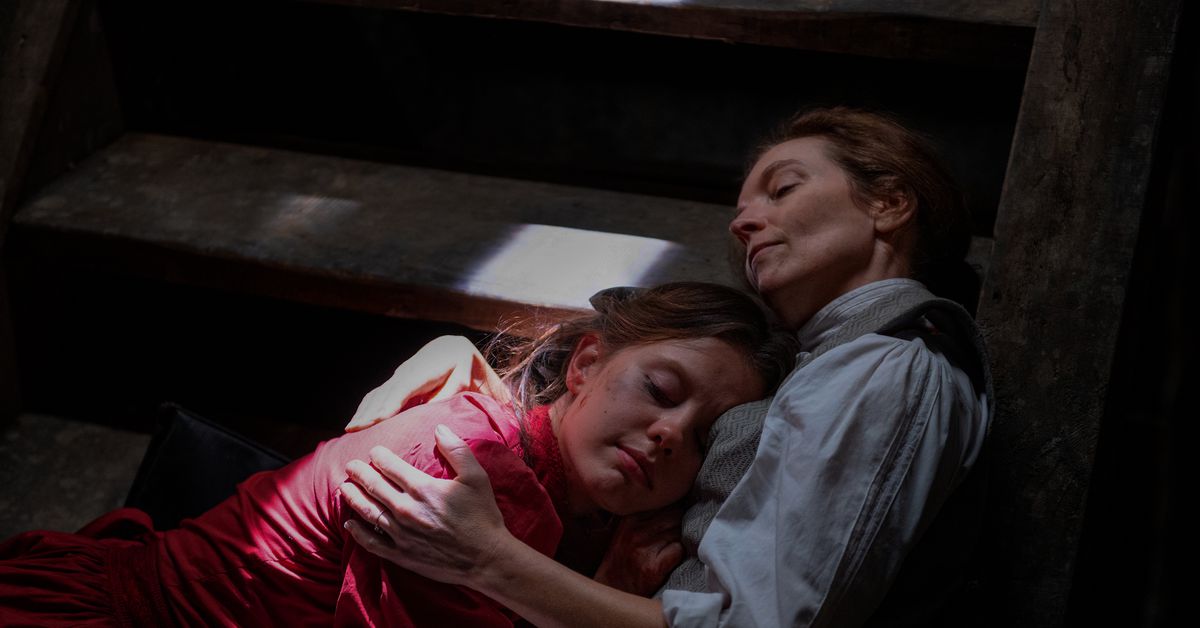
Pearl’s mother and wheelchair-stricken father (played by Tandi Wright and Matthew Sunderland respectively) stand in her way, a tragic pair whose circumstances interfere with the development of their daughter’s true potential (at least in Pearl’s mind, that is). It’s a theme that runs throughout the entire movie. Pearl desperately wants to avoid the fate her parents embody the entire time they’re onscreen, which points to a lifetime of regrets and dullness in relative isolation.
It doesn’t help matters that it’s revealed quite early that Pearl is married to a man who is currently overseas, dug in the trenches of World War I. Every aspect of her life, every decision she’s made or has been made for her, further pushes her into the future she dreads. Her killer side takes form within the confines of that.
It’s easy to see how much tragedy envelops Pearl at a mere glance. Goth and West don’t set out to turn her into evil incarnate. On the contrary, she’s portrayed as an ambitious young woman that’s constantly reminded of all the things she’ll never manage to achieve. The movie takes to a slower pace because of this, letting the world around Pearl breath organically to better allow audiences to step into the character’s shoes.
Goth takes all this and channels it into a performance that is wholly committed only to then take it a step further. She doesn’t just deliver every single line with conviction and belief, she also brings every possible facial expression into it to fully become and define the character. Goth’s face twists, turns, contorts, and flexes in ways that give the character a sense of physicality that makes her presence intensely magnetic and endlessly watchable.

Much of Pearl’s story revolves around the slow psychological breakdown of the character, her descent into a life of murder. Goth compartmentalizes her expressions, saves some of them for the character’s later stages, when her world is teetering on the edge of existential collapse. She can go from sweet and naïve to angry and murderous at a moment’s notice, making her face a powerful source of horror. It’s quite simply spectacular, a treat to witness as it evolves throughout the movie. Goth gives audiences one of the best performances in horror movie history.
Then come the movie’s influences and how they contrast with the first entry of the “X” trilogy. Where X drew comparisons to The Texas Chainsaw Massacre (1974) for its approach to setting and violence, Pearl finds its look in the Hollywood classics of the 1920’s and 1930’s, in the age of Technicolor. Movies like The Wizard of Oz (1939) take the lead here, but with a generous coat of blood and body parts added to the mix. This is where West’s directing skills come in to elevate the story and give Goth the best chance possible to shine.
Classic movies tend to have a kind of shiny and well-defined visual style that was lighted in a way that accentuated the actors’ features and draped shots with carefully constructed shadows that made each scene pop. West achieves the same with Pearl. Each scene vibrates with life, sound, and color, all of which combine for a very different type of slasher horror styling that no other recent movie in the genre can lay claim to. It’s not played for laughs or even irony. Pearl is a serious story and it is treated as such every step of the way.
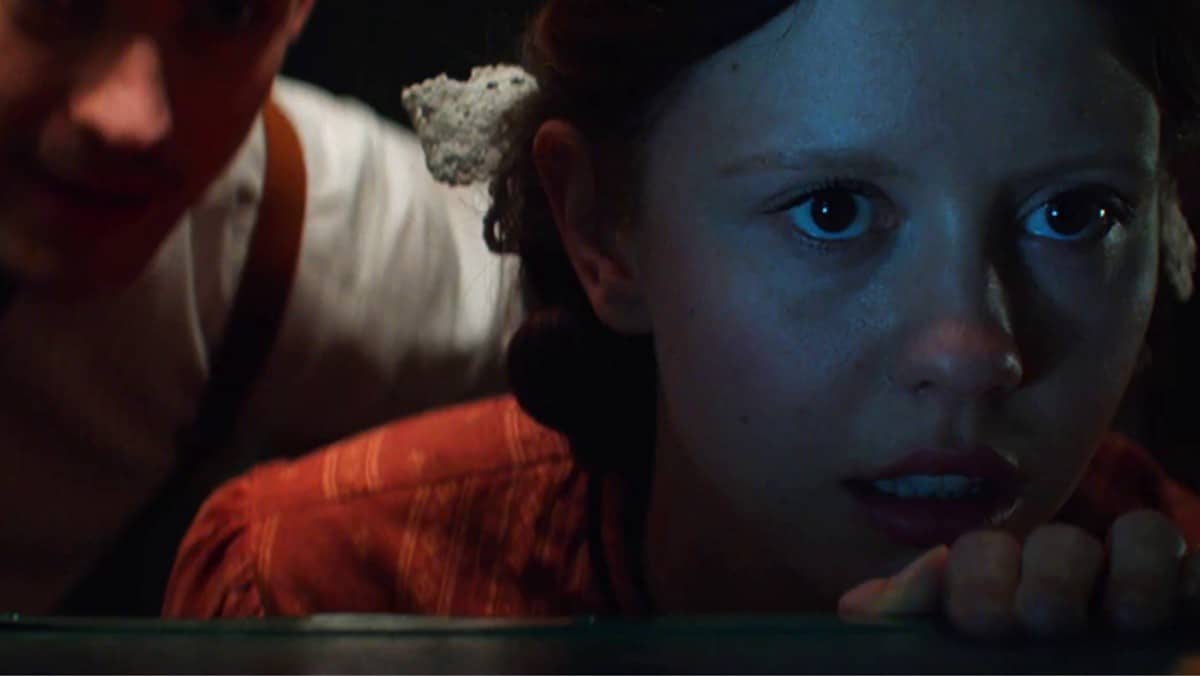
The same applies with Tyler Bates and Timothy Williams’ score. It captures the sounds of early 20th century classics with a measured treatment of strings that can get quite sinister when Pearl is at her scariest. The first trailers might’ve suggested a musical take that would homage the movie’s influences while also poking some fun at it, but the end result is way more thoughtful and meaningful. It’s perfectly captures the hopes and dreams Pearl holds dear right down to the disappointment and rage that take over as the story plays out. It’s another well-oiled component in a movie that’s very cleverly constructed.
Pearl is a new horror classic. It’s propelled by a masterful performance from Mia Goth that creates a new titan in the field of the horror slasher and an equally masterful directorial showing by Ti West. It’s the kind of movie that sets new standards, that creates new possibilities and dares future filmmakers to push themselves creatively. Succeeding in this can bring about the creation of new horror icons and classics. Pearl has already achieved this, in both regards.
Discover more from Graphic Policy
Subscribe to get the latest posts sent to your email.
