Tag Archives: Shudder

The Creepshow Animated Special is a fun Halloween watch covered in gore

Outside of manga, animated horror films or specials are few and far in between, which is why Shudder’s announcement that Creepshow series was going to give animation a shot for Halloween was so surprising. And yet, perhaps this shouldn’t have surprised us that much. The Stephen King, George Romero, and Bernie Wrightson creation did come into being as an homage to the EC horror comics that inspired them in the first place. Given the overlap between comics and animation, the visual language they share, it was quite simply the next logical step.

Thankfully, the Creepshow Animated Special delivers in this form, presenting a pair of violent and clever stories that adapt stories written by Stephen King and Joe Hill. Each story runs for about 20 minutes and wastes no time getting to the bloody bits, taking care of not leaving the plot and character development out to dry. They transition well into the show’s pastiche-driven interests.
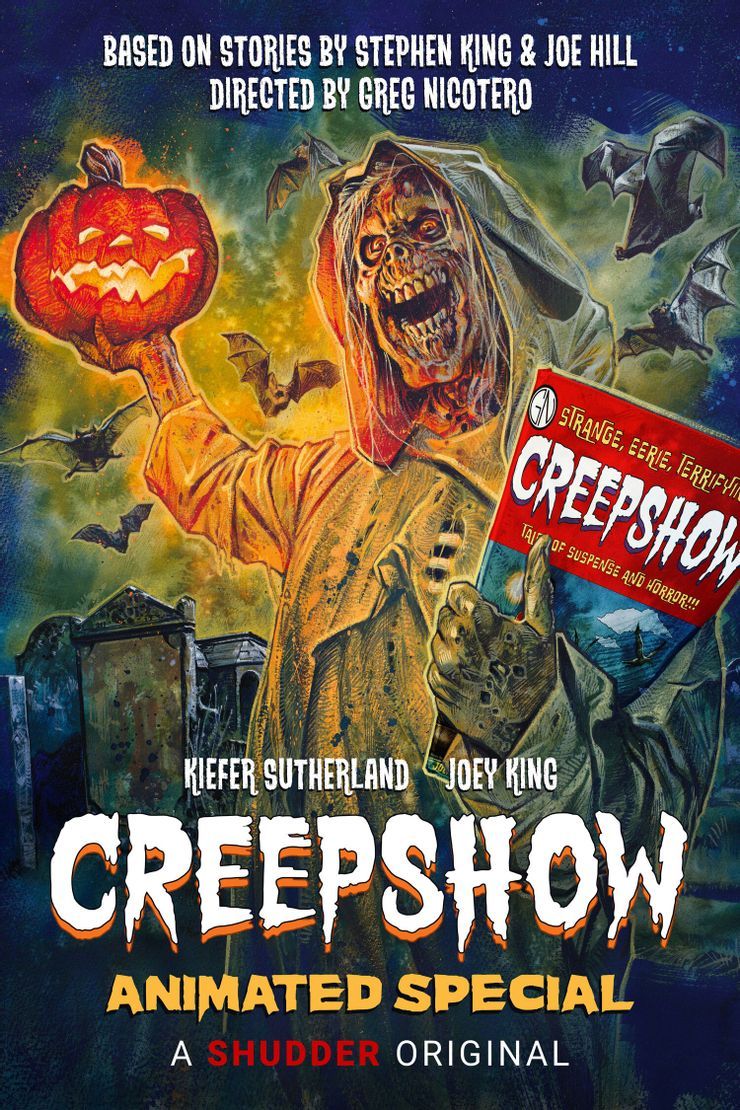
Creepshow Animated Special
Shudder

A word on the animation, though. The special is presented in a motion comic style of animation (as previously seen in the Watchmen motion comics that came out almost in conjunction with Zack Snyder’s adaptation of the classic comic). There’s motion on-screen but not to the extent one might be expecting. It’s not the most sophisticated or intricate of styles out there, but director Greg Nicotero squeezes as much as he can out of it to great effect.

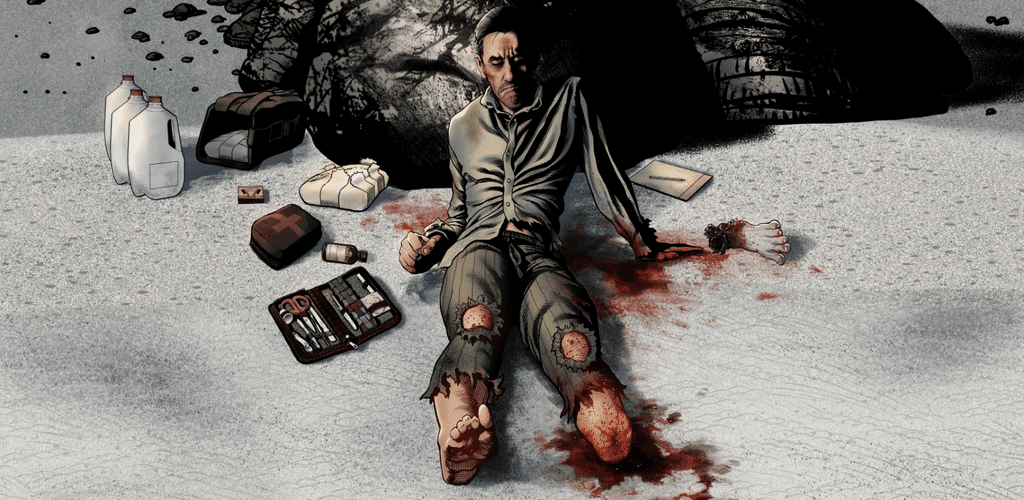
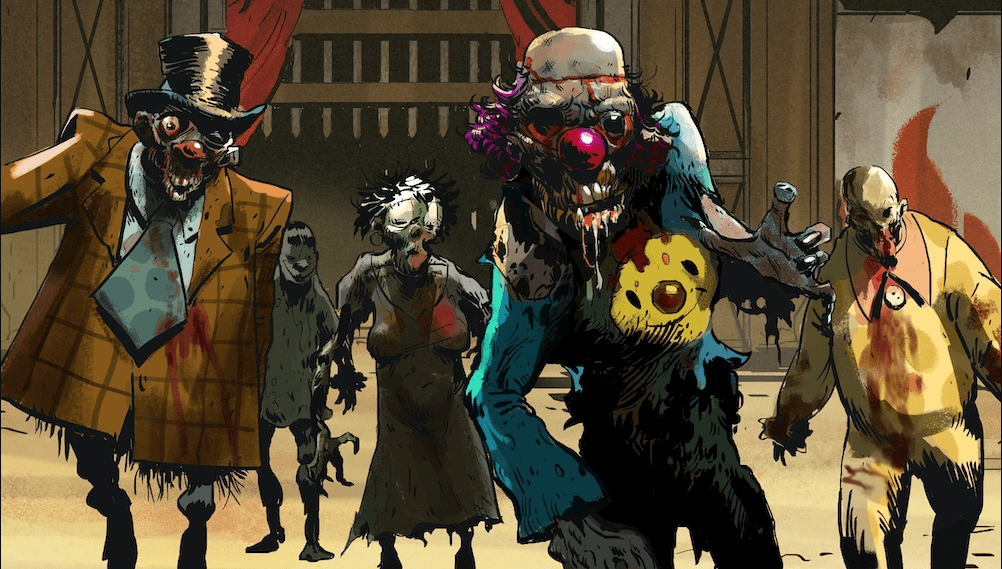
The first story comes from the mind of Stephen King and it’s called “Survivor Type,” about a man stranded on an island with the body of a dead woman after their ship sinks. The second one is called “Tweetering from the Circus of the Dead” and is adapted from a Joe Hill story. This one focuses on a teenager that gives a play-by-play Twitter account of the terrifying happenings that take place inside a sadistic circus.

Both stories are twisted enough to make for great visual adaptations. “Survivor Type” is a very bright story where every instance of terror is highly visible and in full color. It feels like an EC tale in that it’s gauche and grisly sense of violence dials up the blood and gore to its highest setting. “Tweetering from the Circus of the Dead” follows along the same lines but plays around with a darker color palette. Still, the carnage is allowed to display the full gamut of colors that comes with dismemberments and bloodletting fans of the exploitation will certainly appreciate.
Creepshow Animated Special
Shudder

All of this would’ve been in vain had the voice actors for each story failed to rise to the occasion. Fortunately, they do. The main character of “Survivor Type” is played by Keifer Sutherland and his performance perfectly captures the man’s egotistical and immoral spirit, imbuing his backstory with the necessary roughness required to make the landing.

Hill’s story is performed by Joey King (The Kissing Booth, Slenderman) and while her part isn’t as fine-tuned as Sutherland’s, she still manages to capture the sounds of a social media obsessed teen. What stands out in King’s segment is how her character’s sarcasm shifts into outright horror and shock as the story progresses. King gets to explore different aspect of her voiceover skills and it helps maintain a good sense of urgency as the character tweets about gory acts and dead things.

The animated approach for this special does achieve another thing that is worthy of note. It more closely resembles the comic book look both the original movie and series managed to capture on-screen. It fits well with the spirit of Creepshow and it is nice to see that connection make it through.
Creepshow Animated Special
Shudder

Speaking comics, Eric Powell (creator of The Goon) designed the creatures that feature in Joe Hill’s segment. This gives the story and even more present comic book feel and further cements the relationship between both mediums. Each creature is a treat to see shamble on-screen and they deserve to be explored closer to appreciate all the details Powell managed to squeeze into them.

The Creepshow Animated Special was a pleasant surprise that made me want to see more of these horror motion comic animations in the future. That might already be in the works as the final images of the special seem to hint at a Christmas offering. Consult with whatever dark forces are available to you to make sure we get more of these stories in the very, very near future.
Shudder’s CURSED FILMS is a surprisingly noble look at notorious horror cinema

Cursed Films
Shudder

The idea of a cursed film evokes images of satanic creatures standing behind the camera, corrupting what’s captured on celluloid. It’s a kind of subgenre in its own right, a kind of supernatural conspiracy theory hub for fans that do not believe in coincidence when it comes to set fires, mysterious crew deaths, and filming disasters. Shudder’s new Cursed Films docuseries traverses this particular horror terrain, and it does it well, but thankfully not in ways I was expecting.

Cursed Films is a five-part documentary series focusing on five films widely considered to be cursed by horror fans, collectors, and even casual moviegoers, especially those that love to dig into the mythos behind productions marked by tragedy and controversy.

The cursed movies explored in the docuseries are The Exorcist, Poltergeist, The Omen, Twilight Zone: The Movie, and The Crow. As of the time of this writing, only the first three films have been explored in the series.

Those expecting a gratuitous indulgence in the dark stories surrounding these films, and validation of popular beliefs, will not leave entirely satisfied. I say this as a good thing. Cursed Films is, surprisingly (to me, at least), a very serious deconstruction of horror myths, where fact and fiction are separated and then dissected to get at the root of why people like to think cursed movies exist.

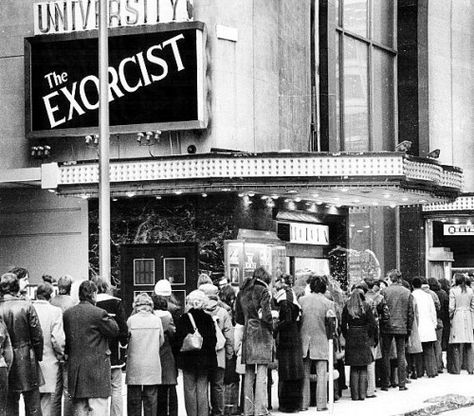
The first episode dives straight into perhaps the most controversial movie of the bunch, The Exorcist. My personal favorite horror movie (traditionalist that I am, I guess), William Friedkin’s movie about a girl possessed by a demon has been mired in darkness since day one. People worried that the actual making of the film resulted in the legitimate summoning of Lucifer and his army of possession-hungry demons. Injuries sustained by actors during production and even unexplained set burnings seems to confirm all of this to eager followers of the happenings of The Exorcist’s initial release.

People lined up in droves to see The Exorcist.

To tell you the truth, just writing the name of this movie down gives me chills, irrational though that may be. It’s the only movie that gets scarier with each viewing for me, and yet Cursed Films took me down a different path with it. It dedicated most of its runtime to explaining why people so aggressively associate the devil with the movie and why horror inspires audiences to pursue such dark trains of thought.

The show features psychologists, religious scholars, key production and cast members, and writers all mostly aligned within the idea that the only thing that can curse a movie is its audience. Psychological terms are conjured up to explain why fans gravitate towards curses to explain the mysteries of their favorite movies, all of which have perfectly plausible explanations (for the most part).

The Exorcist episode, for instance, debunks a lot of its myths by looking at the PR campaigns of a desperate movie studio hellbent on turning a profit while also looking at how some of the accidents in the workspace actually happened. It even includes talks on the impact of the work culture the movie’s director created during filming, which is well documented.

Perhaps the most potent and surgically precise look at a cursed film can be seen in the Poltergeist episode. Two deaths and rumors about the macabre nature of certain props have been circulated enough for some people to confirm the tragedies that accompany the franchise are the results of a curse, possibly originating from beyond the grave.

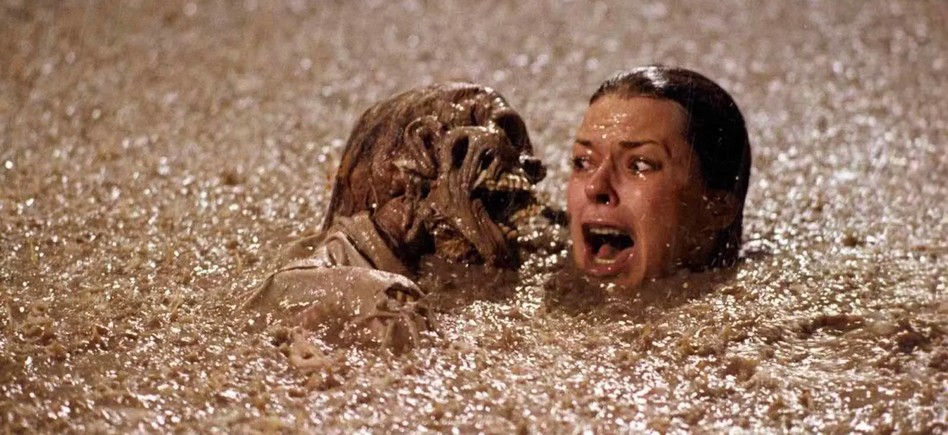
Scene from the movie Poltergeist.

What Cursed Films does with this movie is nothing short of masterful, going from legend to legend in an attempt to dispel the “curse,” which for the series means proving no such thing exists. It looks at the psychological and supernatural value people put into objects and locations seen in popular films and how it translates into a whole tradition of people visiting fictional haunted places as if they’re actually haunted.

I’ve participated in this, although not under the impression the place I visited was really haunted. I once had the chance to drive close to where the Amityville house from the infamous 1979 Amityville Horror movie was located. The fact the movie was loosely based on “true events”—that have since then been disproved—made the opportunity all the more enticing, so I took it. I saw the house. People live there. I saw no ghosts walking around, not a single swarm of flies hovering over its windows, and no blood dripping from its walls. In fact, I saw other houses that looked almost the same neighboring it. So much for a place housing one of the gates of Hell.

I thought about this short trip to Amityville a lot while watching Cursed Films. The show’s deconstruction of what could be termed as magical-horror thinking made me rethink the entire experience. It’s interesting because even though I knew the house wasn’t haunted, I did feel unsettled. The power of the movie, and the story it’s based on, had definitely charged the place with a supernatural sensation that was hard to shake off. In the end though, it was just a house. For the few minutes I was there, the only thing haunting it was a curious horror fan holding up traffic to take in one of horror cinema’s most iconic locations. Watching Cursed Films, one can feel a lot like this, especially if you’re prone to give into urban legends.

Cursed Films aims at reminding people horror fiction is just that, fiction. And it needs that emphasis on fiction. In fact, the docuseries suggests these myths and legends do a disservice to the people behind the scares, the ones who work for a living to get a scream out of people in the movie theaters. It’s a meditation on the power of belief when it comes to the representation of evil in film. It wants us to consider that movies themselves don’t have to be haunted to become superior works of horror fiction. They can achieve that pretty well on their own, without the necessity of being cursed.

Recent Entries »