Category Archives: Underrated

Underrated: Animosity Volume One: The Wake

This is a column that focuses on something or some things from the comic book sphere of influence that may not get the credit and recognition it deserves. Whether that’s a list of comic book movies, ongoing comics, or a set of stories featuring a certain character. The columns may take the form of a bullet pointed list, or a slightly longer thinkpiece – there’s really no formula for this other than whether the things being covered are Underrated in some way. This week: Animosity Volume One: The Wake.
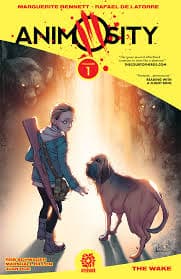


animosity.jpgI’ve had this trade sat in my digital to-read pile for quite some time, and this week I finally got around to reading it. I could give you my take on the central premise, but it sounds so much better straight from the horses mouth (because I basically reworded this the first time I wrote the opening):

“One day, for no reason, the Animals woke up. They started thinking. They started talking. They started taking REVENGE. Collecting the first four issues of the best-selling series, plus the special one-shot issue ANIMOSITY: THE RISE. 

The world is plunged into chaos as the newly-intelligent Animals fight humanity, and simply fight each other, for their own life, liberty, and pursuit of happiness. In the midst of the turmoil is Jesse, an 11-year-old girl, and her dog, Sandor, who is devoted to her and her protection. One year after the incident, Jesse and Sandor begin a cross-country journey to find Jesse’s half-brother, Adam, who is living in San Francisco.”

To be honest I actually went into this series knowing only the bare minimum about it, so when the animals woke up I was actually taken aback by the entire thing. I know. The entire premise of the comic caught me off guard when it happened on the opening few pages of the story. It makes me laugh a little, too.

Centering around Jesse and her beloved dog Sandor’s relationship, and his overwhelming desire to protect her because she loves him. He’s one of the few animals not to hate humanity, and others who are still somewhat fond of humans are typically those who weren’t abused or mistreated in any way – and sadly, humans have done far too much of that in our time on this planet. Marguerrite Bennett‘s script is remarkable; she touches on the bigger impact of animals gaining sentience and the political and economical ramifications of this often in passing but with enough detail to answer some of the questions you’ll be having regarding food sources, population control… there’s a lot to set up in this trade, and for the most part the four issues of the main series collected here succeed in doing that.

There is a time jump that some may find jarring, but as with  any time jumps it will give us something to flash back to in subsequent trades and issues.

Artistically, Rafael De La Torre and Rob Schwager deliver. Their animals are able to convey the requisite emotions and atmospheric design needed to pull you from page to gorgeous page. Animosity‘s first volume is remarkably solid and enjoyable – and well worth checking out.


Join us next week where there will doubtless be another movie, series, comic or comic related thing discussed that is, for whatever reason, Underrated.

Underrated: Graphic Novel Biographies

This is a column that focuses on something or some things from the comic book sphere of influence that may not get the credit and recognition it deserves. Whether that’s a list of comic book movies, ongoing comics, or a set of stories featuring a certain character. The columns may take the form of a bullet pointed list, or a slightly longer thinkpiece – there’s really no formula for this other than whether the things being covered are Underrated in some way. This week: Graphic Novel Biographies.


Biographies aren’t always the first thing you think  of when you think of graphic novels, and vice versa. But the thing is a graphic novel is a fantastic way to tell a person’s life story, or a portion there of, that isn’t often used as much as it could be. Graphic novel biographies are a wonderfully unique way of telling a story that you really can’t capture the same way with a prose book. By utilizing the graphic novel format, the creative team have the opportunity to bring the story to life with picture, or temper  the harshness of what the biography’s subject went through so that the reader can take more of the story in (seriously, imagine the first entry with realistic artwork). Or the artwork can tell give you a subtlety that’s missing in other mediums as you’re more readily able to spend time pouring over the images in front of you. Yeah, I think it’s safe to say that I think graphic novels are an underrated method of telling a biographical story.

So I present to you here a short list of graphic novel biographies. 

A few things before we start; firstly, these biographies are all told primarily in the graphic novel format, but they my not encapsulate  the entirety of the subjects life. Secondly, because I’ve got eclectic taste these selections may not be for everybody so be prepared for some potentially foolish claims. Lastly, this isn’t a complete, or inclusive, list and it is completely subjective.

Maus (Pengiun)
Lets’s be honest here, Maus is far from underrated as a comic book. It’s one of the prime examples of excellence in the medium, and for good reason; this is a book that tackles the harsh realities of life in a concentration camp, and is still every bit as relevant now as it it ever was. So its far from underrated as a comic, but as a biography? It’s not often thought of in that way, especially by non comics fans.  Granted, this book takes a spot in this weeks Underrated simply because it’s a graphic novel that really exemplifies the mediums power, but also because when those outside of comics think of a biographical tale seldom does a graphic novel crop up. It’s for this reason that Maus is on the list.

Andre The Giant: Closer To Heaven (IDW)
You don’t need to be a wrestling fan to appreciate this story, but I won’t deny that it helps. I am not a wrestling fan any more (though I still appreciate the talent these men and women have to do what they do), but I found Closer To Heaven is an incredibly touching tribute to a great man. A giant who entertained millions of people around the world, while suffering an incredible amount of pain because of his gigantism. Andre is a truly inspiring figure, and this is a fantastic way to honour his story. It’s not the only biography of Andre released in graphic novel form, but it is the only one that I have read.

Bill The Boy Wonder: The Secret Co-Creator Of Batman (Charlesbridge)
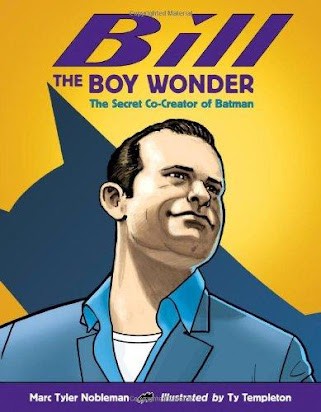
Perhaps the most powerful book on this list that isn’t Maus, Bill The Boy Wonder tells the story of Bill Finger, and his integral role in creating Batman that went largely known know, and entirely uncredited, until last year. This is a must read for any fans of Batman who want to know the true origin story of the caped crusader, and for those who want to read the book that helped Bill Finger get the recognition he deserves.

Dark Night:  A True Batman Story (Vertigo)
Telling the story of the night that legendary Batman writer Paul Dini was mugged, this book is honestly hard to read at times thanks to it’s frank and honest depiction of one man’s struggle to overcome one of the mot traumatic nights of his life, and how Batman inspired him to get back up.

March (Top Shelf Productions)
This is a bit of a cheat because March is actually a three volume graphic  novel that tells the story of congressman John Lewis, a congressman in the state of Georgia. Each volume in this series is amazing, and delivers to an incredible reading experience about an American icon. Brett has an incredible series of reviews on this modern classic that can all be found within the first paragraph here, so if you want to know why you should read these books then read those.


There we have it – some of the best of the graphic novel biographies. Not all are underrated in the typical sense as relates to this column, (Mausfor example is one of the most respected graphic novels around), but all are worth reading. There are without a doubt other graphic novel biographies that I missed, so there’s a good chance there will be a second (or third) part to this list eventually.

In the meantime, Underrated will return to highlight more comic book related stuff  that either gets ignored despite it’s high quality, or maybe isn’t quite as bad as we tend to think it is.

Underrated: The Phantom

This is a column that focuses on something or some things from the comic book sphere of influence that may not get the credit and recognition it deserves. Whether that’s a list of comic book movies, ongoing comics, or a set of stories featuring a certain character. The columns may take the form of a bullet pointed list, or a slightly longer thinkpiece – there’s really no formula for this other than whether the things being covered are Underrated in some way. This week: The Phantom.


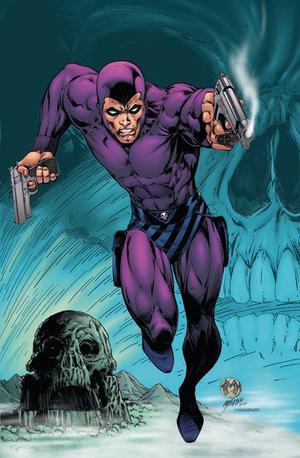
First appearing in newspapers on February 17, 1936, the Phantom was the first character to wear the skintight costume that has become emblematic of the superhero (inspired, it turns out, by stage productions of Robin Hood). He was also the first character to wear a mask with no visible pupils; the Phantom’s creator, Lee Falk, explained  that Ancient Greek busts inspired the idea of the not showing the Phantom’s pupils when he was wearing his mask, incorrectly believing that the statues had no pupils, when instead it was just that the paint had faded over the centuries. But Falk felt the pupil-less eyes gave the statues an inhuman, awe-inspiring appearance – ideal for the Ghost That Walks.

The Phantom has been in continuous publication since he debuted as a newspaper strip in 1936, with Lee Falk continuing to write the character until his death in 1999 (let that sink in for a moment. That’s sixty three years on the same character), although before he died, Falk dictated his final Phantom story to his wife from his death bed.

The essence of the Phantom is that he is an undying ghost destined to protect the fictional country of Bengala, located in Africa, from the evil Singh Brotherhood – originally a gang of pirates, though they manage to evolve with the times. The Phantom’s reputation as The Ghost That Walks comes from his longevity – Bengala has been protected by the Phantom since the early 1500’s, but it hasn’t always been the same man. Son takes over the mantle from father, over and over, giving the impression of immortality to his enemies (establishing the character as the first true legacy hero in comics).

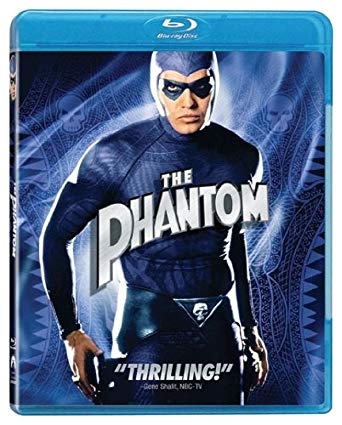
The reason I’ve gone in to such detail about the character is because I have finally found the 1996 movie on DVD from Amazon. I say finally because I’ve been looking on and off for this movie for quite some time. It hasn’t been on any streaming service that I subscribe to, and it comes and goes from online stores – usually for more than I want to pay for a Blu-ray. In the end, I needed to bulk up an Amazon order for free shipping, and the DVD was $7* or so – well worth the price for the movie.

*(Before you ask, my wife has Amazon Prime, so I could have gotten free shipping, but for some reason the item I wanted, a low end drawing tablet, gave me a coupon and not her so in the end the DVD was closer to $2 – which is an absolute bargain).

It had been nearly twenty years since I had seen this movie, and after the glut of big budget super hero films, and so I was curious as to whether it would hold up as more than a nostalgic diversion or whether it would still be a good film in its own right. Billy Zane’s performance is solid enough, though the script doesn’t give him much to do; Treat Williams commands the screen as a wonderfully camp comic book villain with just enough of a sinister bent to make you nervous; Kirsty Swanson and Catherine Zeta Jones are both able to play strong, if fairly one dimensional characters; and James Remar is James Remar – an actor who will never give a bad performance (you may see a bad movie with him in it, but it wasn’t bad because of him).

You might think that I’m going to start ragging on the movie, but I genuinely enjoyed it. It was exactly what I hoped it would be, and indeed remembered it as; a good movie that stuck to the core concepts of the Phantom (as I remembered them); the Phantom doesn’t shoot to kill, his horse and wolf are in the movie, the stunts and effects haven’t aged brilliantly, but they’re still not terrible (the only time that you really notice anything is anytime a vehicle crashes into a ball of flames; everything else is forgivable or still holds up).

Yes, it’s a kitschy movie, and the Phantom isn’t the one man wrecking machine that super heroes have become in movies today – which oddly keeps the flick pretty grounded – but it is a really fun film.

I am absolutely going to watch the movie again. And again.

If you’re curious about the Phantom in the comics, well although the character has been in continuous publication in newspaper strips from the 30’s, The Ghost Who Walks has also appeared in several comic books throughout the last few decades – the most recent of which was Dynamite Entertainment’s The Last Phantom, a fantastic 12 issue modern take on this legendary character that I highly recommend. You can find the issues collected under The Last Phantom: Ghost Walk and Jungle Rules


Join us next week when we look at something else that is, for whatever reason, Underrated.
Underrated: Undone By Blood: The shadow Of A Wanted Man

This is a column that focuses on something or some things from the comic book sphere of influence that may not get the credit and recognition it deserves. Whether that’s a list of comic book movies, ongoing comics, or a set of stories featuring a certain character. The columns may take the form of a bullet pointed list, or a slightly longer thinkpiece – there’s really no formula for this other than whether the things being covered are Underrated in some way. This week:  Undone By Blood: Shadow Of A Wanted Man.


I actually passed on this when the first issue came out because I was running out of capacity to buy and read comics at the time, and I ended up getting something else instead (the truth is I probably have a short box of new comics yet to read, and close to the same in trades as well). I don’t remember what book I picked up instead of this one so I can’t honestly say whether I should have picked up the first issue of Undone By Blood: The Shadow of a Wanted Man or the other comic, but I am glad I was able to grab the trade from my comic shop ($17 USD well spent).

So what is the book about? Well, to borrow from the back of the book…

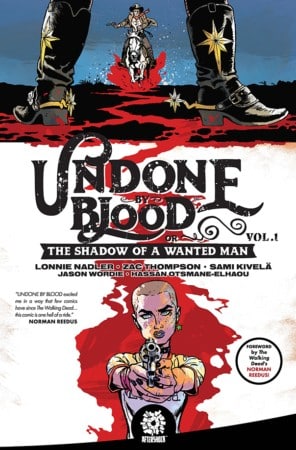
In the early 1970s, Ethel Grady Lane returns to her hometown of Sweetheart, Arizona with one thing on her mind: killing the man who murdered her family. But first, she’ll have to find him. As Ethel navigates the eccentric town and its inhabitants, she learns that the quaint veneer hides a brewing darkness. She has no choice but to descend into a ring of depravity and violence, with her only ally an Old West novel that follows famed gunslinger Solomon Eaton. As both stories unfold simultaneously, a love of fiction informs choices in reality, for better or worse.

It’s strange to say that I only picked this trade paperback up because I had a chance to talk to one of the writers, Zac Thompson about part of the inspiration behind it, Red Dead Redemption 2, which reminded me that this was a series I’d been interested in when it first came out but had fallen off my radar. I’m glad I had the chance to talk to Zac, because without that chat I’d likely have left it on the shelf awhile longer until something reminded me to check it out.

I’m a big fan of the dual narratives between Ethel and Solomon, even more so how how Lonnie Nadler and Zac Thompson alternate between prose pages and comic pages. The entire presentation of the trade paperback is brilliant; there’s a weathered aging effect applied to some of the interior pages (most obviously on the prose pages) that immerses you into the two time periods in subtle ways. As a western story, this is one of the best that I’ve read in any form, whether comic or book.

Undone By Blood: The Shadow Of A Wanted Man features some killer artwork by Sami Kivela, Jason Wordie and lettering by Hassan Otsmane-Elhaou – the entire creative team are utterly brilliant. Now is an ideal time to pick this book up as the second volume is due to hit later this year.


Join us next week when we look at something else that is, for whatever reason, Underrated.
Underrated: The Witcher Omnibus

This is a column that focuses on something or some things from the comic book sphere of influence that may not get the credit and recognition it deserves. Whether that’s a list of comic book movies, ongoing comics, or a set of stories featuring a certain character. The columns may take the form of a bullet pointed list, or a slightly longer thinkpiece – there’s really no formula for this other than whether the things being covered are Underrated in some way. This week:  The Witcher Omnibus.


I often wonder how to start a column when the focus is an adaptation of other media – especially when the other media is an adaptation of something else. Such as it is with Dark Horse’s The Witcher Omnibus. The book collects four five issue miniseries mostly written by Paul Tobin, with two being based on the books and two seemingly based on the video games that were also based on the books judging by Geralt’s armour and the appearance of certain characters in the final story.

As someone who has grown to love the The Witcher over the last 18 months, getting a chance to experience the stories in a different format was an exciting opportunity. I loved the books, and thoroughly enjoyed The Witcher III: Wild Hunt on PlayStation 4. The eight episodes of the Netflix adaptation wasn’t even close to being enough for me, and I can’t wait to experience more when the second season hits. For some reason, despite being a comic guy, I had never actually read the comics until my parents sent me the omnibus for my birthday (it hasn’t happened yet – I just have no patience when it comes to opening gifts for my birthday), and I read the 200 odd pages in two sittings interrupted only by an exhausted sleep.

The book was a fantastic read, and I really enjoyed seeing how the a short story from one of the first two books translated to comic book form (I’d be more specific which book it was from, but I read them back to back and often get which short stories are in which book mixed up), just as it was fun to see a story set after the events of one of the game’s endings. Thankfully, it was the ending I had gotten when playing through, so it could be confusing if you only went through the game once and got a different outcome.

That’s honestly the only downside I can think of to the omnibus. That you may need to know pieces from the other adaptations to enjoy one of the stories within (even though the game isn’t specifically referenced so the story won’t spoil your enjoyment of Wild Hunt), but if you’re somebody like me who has gone all in of Andrej Sapkowski’s creation then you’ll not notice it. Or if you’re willing to accept that certain things have happened that don’t impact the story then you’ll still be able to enjoy the final story.

All in all, it’s a minor complaint.

The art is varied within the omnibus, with the first two tales taking on a more Hellboy-esque look and feel which suits the world of Geralt just fine, and the latter two taking inspiration from the imagery gamers are more familiar with. Either way, I had absolutely no complaints with how the book looked, how it read nor how Tobin and the rest of the creative team handled Geralt of Rivia.

The book will set you back between roughly $25-30 depending which side of the Canadian border you’re on, and it was worth each and every penny for me. If you’re curious about who Geralt is beyond the events in the Netflix show and you haven’t read the books yet, then this is a great introduction. The nature of his long life and many adventures lend themselves well to short pointed stories within a five issue miniseries, which is what makes this book stand out so well; there isn’t an epic story told over hundred of pages, but rather a selection of Geralt’s contracts, his adventures and his stories. So toss a coin to you witcher comic shop and grab this book. You won’t be disappointed


Join us next week when we look at something else that is, for whatever reason, Underrated.
Underrated: Comic Book Video Games

This is a column that focuses on something or some things from the comic book sphere of influence that may not get the credit and recognition it deserves. Whether that’s a list of comic book movies, ongoing comics, or a set of stories featuring a certain character. The columns may take the form of a bullet pointed list, or a slightly longer thinkpiece – there’s really no formula for this other than whether the things being covered are Underrated in some way. This week: Comic book videogames.


It’s been a long time since I wrote any kind of list for this column, and after finishing up my first playthrough of Spider-Man: Miles Morales yesterday (and my subsequent return to the original PS4 Spider-Man‘s DLC), I wanted to take a trip down memory lane with some games that aren’t as fondly remembered as perhaps they should be amongst the greats like the aforementioned Spider-Man games and Batman: Arkham Asylum/City/Knight. Games that were fun, but may not have been as critically acclaimed or rated as high as others released around the same time; often, super hero games are either overlooked as cheap movie cash-ins (for good reason, honestly), or they’re overlooked in favour of games that have generated more of a buzz. It wasn’t really until the Arkham games cam about that superhero based videogames really gathered any traction; the combat system from that game has inspired countless others over the years – and for good reason.

So, here’s a few gems from yesteryear that are worth circling back to if you’re looking for a bout of nostalgia fueled superhero action.

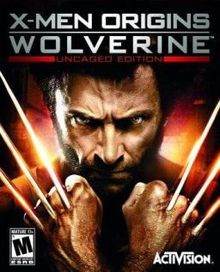
X-Men Origins: Wolverine (PS3/Xbox 360)
A videogame adaptation that was far better than the movie, this game was a blast to play from start to finish. It’s certainly not the best action game around, but it is one of the best superhero movie tie-in games around, and it’s a hell of a lot of fun watching Wolverine getting sliced to pieces and then watching as his healing factor starts to kick back in and rebuild his flesh over his skeleton. Despite it being a very linear game, there’s a hell of a lot to enjoy even today (I’m not holding out hope for a sequel or remake any time soon, but I am very fond of the game even now).

X2: Wolverines Revenge (PS2/Xbox/Gamecube)
If you’re sensing a theme here, it’s probably not accidental. This game was, technically, a tie in to the second X-Men film, but it was also a compelling stealth adventure where the use of Wolverine’s powers were implemented in cel-shaded awesomeness. Fun, though maybe not the greatest game, it’s one that still holds fond memories for me.

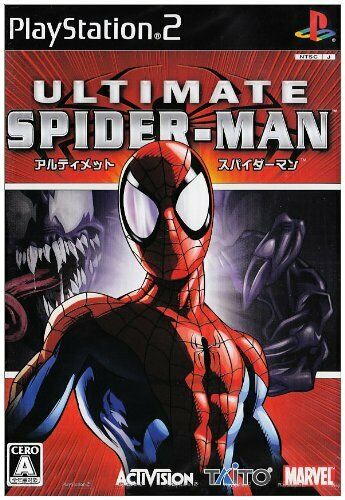
Ultimate Spider-Man (PS2/Xbox/Gamecube)
The second time we got to play as Spider-Man in an open world. Visually, the game holds up fairly well because of the cel-shaded comic style art, though the gameplay may feel a touch dated to those who have become accustomed to the PS4 offerings. The story picks up after the Venom arc from the Ultimate universe’s version of the comics, and so we get to play as both Spider-Man and Venom across Manhattan and Queens (which may have been the last time we saw Queens in the games).

Spawn: In The Demon’s Hand (Dreamcast)
Think Dynasty Warriors meets Spawn. It’s fun, especially with friends, but don’t expect a super deep experience.

Batman Begins (PS2/Xbox/Gamecube)
Look, being completely honest, this isn’t as good as the Arkham games; not even close. But that’s not to say this is a terrible game – it’s just not the best, either. I enjoyed the game, enjoyed the terror mechanics where you’d have to hide from enemies and gradually terrify them into submission (you’ll see this in the Arkham games, but with a much more subtle excitation). Worth a play if you’re curious, but I wouldn’t rush for it.

There’s a lot of 2D games that I didn’t include on the list – games from the Sega Genesis era that were mainly action beat ’em ups – that are all fantastic (though admittedly harder than expected), but what I’d have to say would fall around the same thing: “a solid game that has a lot of vintage nostalgia value, but doesn’t hold up as well as you’d expect – which is the case for a lot of vintage games in many ways. The mechanics of yesteryear take some getting used to, but once you do there’s a lot to love.”


Unless the comics industry ceases to exist this week, Underrated will return next week.

Underrated: Havok and Wolverine: Meltdown

This is a column that focuses on something or some things from the comic book sphere of influence that may not get the credit and recognition it deserves. Whether that’s a list of comic book movies, ongoing comics, or a set of stories featuring a certain character. The columns may take the form of a bullet pointed list, or a slightly longer thinkpiece – there’s really no formula for this other than whether the things being covered are Underrated in some way. This week: Havok & Wolverine: Meltdown.


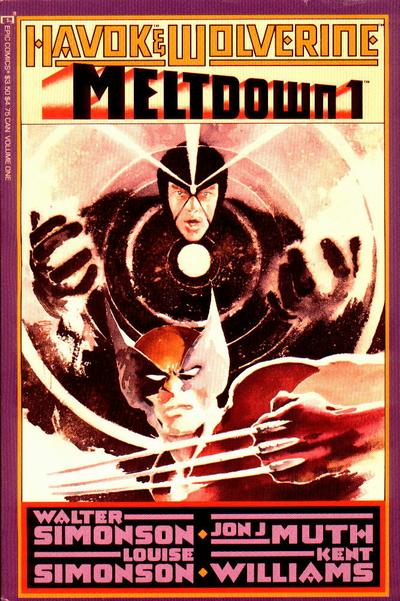
I don’t remember the first time I read this story, but it was likely in the UK reprint magazine Wolverine Unleashed in the mid to late 90’s. That was also the last time I read it, so when I saw the collected edition at my LCS for $15 I couldn’t pass it up – now because Wolverine is a little bit more marketable than Havok, the trade was just called Wolverine: Meltdown.

Originally published in the late 80’s, Meltdown was written by Walter and Louise Simonson, with illustrations by John J. Muth and Kent Williams. The story is set around the Chernobyl nuclear disaster of the mid 80’s, and finds Havok and Wolverine caught up in the midst of a plot to end the world in nuclear war from the shadows. The art has a wonderful painted look to it at times, but the artists aren’t afraid to experiment with multiple forms of media throughout the book. It’s a choice that is divisive to some – I’ll freely admit when I was younger the art did nothing for me, but I enjoyed the story a fair bit, whereas now I find myself absorbed in the art more than the writing which is a strange twist on how I usually find myself feeling when coming back to stories I haven’t read in 20 some years.

It’s easy to imagine the way this story would have felt when initially released as it presents another possibility behind the Chernobyl disaster as an intentional act to snare the X-Men. Looking back now, it’s a great premise to a story, and one that still holds up despite the very specific time setting. Admittedly, I’ve no idea or memory as to how in continuity/canon this story is within the X-Universe but the story is entertaining enough to allow you to just enjoy it as is, and seeing Wolverine and Havok team up together is still a relatively rare event even today – and while I’m probably in the minority here, I’d love to see more chances for these two mutants to come together on the page.

The main reason I wanted to talk about this book today is solely because it’s a story that I’d completely forgotten about. This isn’t one of the classic Wolverine or X-Men stories that people will talk about, and honestly nor should it be, but it’s still an enjoyable tale that still stands the test of time; admittedly it’s the artwork that will pull you in more than the story, because this is a book that just looks utterly fantastic. The art is at times risky and pushes the envelope of what comics would typically feature 30 years ago (and yet is far more common today). Do yourself a favour and check this story out if you can – it’s a four issue mini series that shouldn’t break the bank if you hunt the individual issues.


Unless the comics industry ceases any and all publication look for a future installment of Underrated to cover more comics that aren’t cracking the top 100.

Underrated: Five 90’s Comic Book Movies

This is a column that focuses on something or some things from the comic book sphere of influence that may not get the credit and recognition it deserves. Whether that’s a list of comic book movies, ongoing comics, or a set of stories featuring a certain character. The columns may take the form of a bullet pointed list, or a slightly longer thinkpiece – there’s really no formula for this other than whether the things being covered are Underrated in some way. This week:  Comic Book Movies From The 90’s


With the cinematic landscape jam packed with comic book inspired movies these days, I had to wonder what the 90’s looked like, and whether any of those movies held up today. So I asked myself, I said “self, are there any movies that you feel are, for whatever reason, somewhat underrated?”

Turns out, there is.

A few things before we start; firstly, these comic book movies may have been well received when released, but may never have garnered as much attention as they deserved. Secondly, some of these movies I’m probably viewing with the rose tinted glasses of nostalgia so be prepared for some potentially foolish claims. Thirdly, this isn’t a complete, or inclusive, list and it is completely subjective.

phantom.jpg

The Phantom (1996)
This is probably one of the only comic book movie on this list with an actual spandex bodysuit in it, and Billy Zane does admirably well in the roll. I haven’t seen this movie since the 90’s, but not for lack of trying – it is very tough to track down for a reasonable price. The Phantom is a hugely enjoyable movie, so long as you take it for what it is (Guardians of the Galaxy, it is not), you can’t fail to not enjoy it. But do yourself a favour and skip the two part mini series released in 2010.

Batman Forever (1995)
Joel Shumacker ruined the Batman movie franchise with Batman and Robin, that’s no lie, but before he did that he made Batman Forever. I still enjoy this flick to this day. It echoes the Adam West TV show of the 1960’s, updating the camp foolishness of that time into a slightly more modern and darker time, bridging the gap expertly between Tim Burton’s films and the TV show. The movie stars because of its villains; Tommy Lee Jones’ Two Face and Jim Carry’s excellent portrayal of the Riddler.  No, the film isn’t the best batman movie out there, but it isn’t as bad as Shumacker’s other offering.

crow.jpg

The Crow (1994)
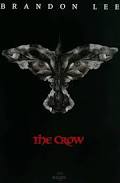
The Crow is a certified cult classic at this point, and with a new adaptation of the source material coming in the near future, I thought it would be worth familiarizing myself with one of my favourite movies (and was the genesis of this column). Brandon Lee is a revelation in this film, and the tragedy of his untimely death during filming only adds to the overwhelming sense of sadness and the themes of love that are woven through the movie. The film is a love story at heart, with just shy of half a dozen characters’ fates being intertwined through their actions; you’ll also notice some of the cinematography and visuals having an influence on some of the darker comic book movies that would follow.

rocketeer.jpg

The Rocketeer (1991)
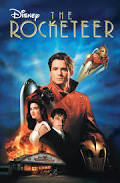
A film in the vein of Indiana Jones and the adventure films of the 80’s, The Rocketeer is an entertaining romp set during the late 30’s as war brews in Europe. A stunt pilot finds a secret weapon, the jetpack, and struggles to win back his girl and stop the weapon from falling into the wrong hands. A genuinely entertaining film that you can watch with your kids (assuming you watch the adventures of Dr. Jones with them), The Rocketeer has long held a special place in my heart.

The Mask (1994)
Jim Carry’s rubber face is on full display in this outrageously fun and completely stupid offering. You can’t watch this without either laughing or rolling your eyes because The Mask is a movie that doesn’t take itself seriously at all, and nor should you take it seriously. Just watch it and enjoy the fun.


That’s all we have for this week, folks. Come back next time  when there’s something else Underrated to talk about.

Underrated: Black Hammer: Secret Origins

This is a column that focuses on something or some things from the comic book sphere of influence that may not get the credit and recognition it deserves. Whether that’s a list of comic book movies, ongoing comics, or a set of stories featuring a certain character. The columns may take the form of a bullet pointed list, or a slightly longer thinkpiece – there’s really no formula for this other than whether the things being covered are Underrated in some way. This week: Black Hammer: Secret Origins


A lot has been said about Black Hammer, Jeff Lemire’s homage to the classic hero comics of yesteryear, and much of that praise can be found on the back of this very collection. Scott Snyder, Charles Soule, Cullen Bunn, Dan Jurgens and more are all effusive in their praise for a comic that Mark Millar called “the most brilliant comic I’ve read in years.”

I would agree with everything said on the back of the book, honestly. Jeff Lemire is one of the dozen or so writers whose work I will read without caring what it is because I know the quality of writing will always be very high (of course there are some things that just don’t do it for me, but not because they’re bad – but because it’s not entirely my cup of tea). Black Hammer is one of those things that is both really good (better, honestly, than I expected), and entirely my thing.

In short, it’s one of the best things that I have ever read from Jeff Lemire.

So what exactly is the book about? I’ll use the blurb from the back of the book to explain:

Wiped out of their superhero universe by a multiversal crisis, the forgotten heroes of Spiral City now live as a dysfunctional family on a mysterious farm in a small town from which they have no escape.

If it sounds intriguing, well you’ll be happy to know that’s only the very tip of the iceberg. The premise is good, and promises an interesting look at what life looks like after (forced) retirement, but it’s the way that the characters come to life on the page that’s truly gripping. Some have accepted their new lot in life, and are even making the best of what cards they’ve been dealt as they adjust to life after superheroics.

And some, well, some have never given up trying to get home.

The way that Lemire frames the opening parts of Black Hammer (as I write this I have the following three volumes on my read pile, but I’m just looking at volume one today) is that escape is hopeless, and anything other than acceptance is foolishness. But if that were you, would you accept what you’ve been given or do your damnedest to get back to the home you knew, even if it may not be as peaceful as where you are?

The answer, ultimately, would depend on a couple key differences; whether you were at least content with the new life you had or if it was driving you to insanity. Within the pages of Black Hammer, there are characters nearing their breaking point (or in some cases may have already gone beyond the breaking point), and it’s fascinating watching them all struggle to navigate the normal that they now find themselves in.

Black Hammer has spoken to my love of modern takes on distinctly Golden Age heroes. With a Justice League like group of characters locked in mysterious pocket dimension where they’re forced to live normal lives on a farm, we get to explore what happens to a hero on a forced retirement. Not everybody I know is a fan of where this comic is going, and how it’s been getting there, but every issue has been a win for me – which is another reason this appears in this issue of Underrated. But the tinges of something lingering just beneath the surface give a genuine sense of unease to the comic. Black Hammer is very much a slow burn, but it’s going to be incandescent when we get the pay off at the end…


Unless the comics industry ceases any and all publication look for a future installment of Underrated to cover more comics that aren’t cracking the top 100.

Underrated: X-O Manowar: Birth

This is a column that focuses on something or some things from the comic book sphere of influence that may not get the credit and recognition it deserves. Whether that’s a list of comic book movies, ongoing comics, or a set of stories featuring a certain character. The columns may take the form of a bullet pointed list, or a slightly longer thinkpiece – there’s really no formula for this other than whether the things being covered are Underrated in some way. This week: X-O Manowar: Birth


The Vine are replaced with the Spider-Aliens, although aside from the name there is little that distinguishes them from the first few comics in the 2012 run. Where as the Vine become one of the more interesting and complex plot points in the VEI stories, the Spider-Aliens show little of the same qualities at this point (yes, there are signs that there is more to the Vine within the first three issues of the VEI run), but then that really just makes it easier to enjoy the battle carnage as Aric tears his way through the soldiers and corporate representatives of the Spider-Aliens.

Although you can enjoy the book without any prior knowledge, for a Valiant fan of the old or new school (or both) this beautifully presented book is a must read. And most of us will seek the story out if we can, but for those not entrenched in Valiant lore, this standalone story here represents an Underrated gem from comics history.


Join us next week when we look at something else that is, for whatever reason, Underrated.

« Older Entries Recent Entries »