This is a column that focuses on something or some things from the comic book sphere of influence that may not get the credit and recognition it deserves. Whether that’s a list of comic book movies, ongoing comics, or a set of stories featuring a certain character. The columns may take the form of a bullet pointed list, or a slightly longer thinkpiece – there’s really no formula for this other than whether the things being covered are Underrated in some way. This week: X-Men Origins: Wolverine.
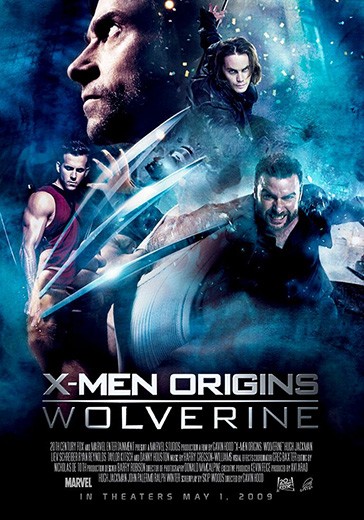
This week on Underrated, I wanted to take a look at one of the most reviled movies in the X-Men Franchise, not because I’m going to convince you it’s secretly a great movie that has been unfairly shat on for nearly ten years, but because I want to highlight some of the things that it actually did right. Do they out weight the bad to redeem the movie? Personally, I think so. Although X-Men Origins: Wolverine will never be thought of as a shining example of the character in cinema, and nor should it be, it isn’t the catastrophic mess that we remember it being.
Before you start raging at me (and you’re more than welcome to do so on twitter @karcossa) ask yourself when was the last time you saw this movie? I watched it on the 21st of March this year with the intention of tearing it to pieces in an article, but I actually kind of enjoyed it, so I wrote this instead [note, this article was written on March 23rd, so the movie was quite fresh in my mind]. So before you fire up those angry fingers, give the movie a quick watch and remember I’m not claiming it’s great, just that it isn’t bad.
The Opening Sequence Honestly, you give me a movie with Wolverine and Sabretooth fighting their way through history based on this opening credit montage and I will throw my money at you. This is a prime example of a movie blowing it’s load too early, if you’ll pardon the expression. We get one of the best opening sequences in the franchise before one of the worst movies. No wonder it got flattened by fans.
Liev Schreiber And Hugh Jackman Say what you want about the script, plot choices, and pointless cameos, but I will not hear a bad word said about either Schreiber or Jackman’s performances in this movie. It remains a great tragedy that we only got one movie with Liev Schreiber playing Sabretooth opposite Hugh Jackman, and that it was this one. Having watched the movie recently, the two men are almost able to save the movie with their acting chops alone – without them it wouldn’t be worth watching past the title sequence.
Most Action Sequences Strangely enough, the action sequences in the movie are actually pretty good; Logan and Creed fighting in the bar is awesome, and even the final battle is pretty entertaining (despite the character mutilation of Deadpool). The only downside to the sequence where Team X attacks a compound is that the individual use of the soldier’s abilities makes little sense as a tactical strike, but as a showcase of the individual powers at play it’s pretty good. As is the helicopter fight – right up until the cliched walking away from the explosion end point.
The One Liners X-Men Origins: Wolverine isn’t a comedy, but there’s quite a few one liners that will at the very least elicit a chuckle from you. Plus, you can also laugh at the so-bad-it’s-good moments.
Wolverine Uses All His Powers Funnily enough, one of the things this movie gets right is how many other abilities Logan has. At different points in the movie you see him use his enhanced senses of smell, vision and hearing to locate Creed, Zero and Kayla. You don’t see him using his other powers as often as you do his healing and claws (for obvious reasons, I’m sure).
Yes, the movie has its problems, especially with how it fits (or used to fit depending on who you’re talking to) into the X-Men movie franchise, or how it treats certain characters, but if you look at it as a standalone movie that just happens to feature Wolverine… it’s actually not that bad; truth be told, I enjoyed it more than I thought I would, and that’s why it’s the subject of this week’s Underrated.
This is a column that focuses on something or some things from the comic book sphere of influence that may not get the credit and recognition it deserves. Whether that’s a list of comic book movies, ongoing comics, or a set of stories featuring a certain character. The columns may take the form of a bullet-pointed list, or a slightly longer thinkpiece – there’s really no formula for this other than whether the things being covered are Underrated in some way. This week: Wolverine: Save The Tiger.
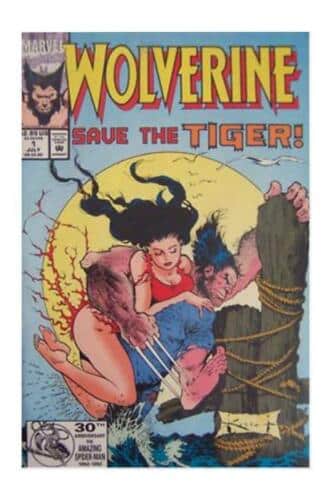
Originally printed in the first ten issues of Marvel Comics Presents from late September ’88 to early January ’99 (MCP started out as a bi-weekly anthology series), Save The Tiger tells the story of Tyger Tiger’s origin in Madripoor.
The story was written by Chris Claremont with art by John Buscema (though the image featured today is of a comic collecting just the ten parts of Save The Tiger with Sam Keith’s artwork on the cover), and leads into Wolverine’s first ongoing solo series (also by Claremont and Buscema initially). Depending on how you read it, whether it’s in the comic pictured to the right or Wolverine Epic Collection: Madripoor Nights or through Marvel Unlimited, you’re going to find a story that still holds up more than thirty years later.
Save The Tiger introduces a lot of what we now associate as standard parts of Wolverine’s life; the Princess Bar, Madripoor, and the characters who make the island a living breathing place. It’s set during the time that the X-Men are thought dead, and so you don’t see Wolverine popping his claws as often as you’d expect when engaging in brawls. It’s an added layer to the story where Claremont is writing the X-Man as avoiding using his claws in order to maintain his cover of being dead. That makes this one of the few stories I’ve read recently where events in another book actually play a larger role behind the scenes than they would otherwise. Given that this is a 30 year old story written by the same person who was also writing the main X-book at the time, it’s not surprising to me that the two books influence each other.
I’ve said it before, and I’ll happily say it again, but I’ve noticed that the older the comic the more story you get in it. That Save The Tiger is told over the course of about 80 pages (the asterisk here is that’s what the floppy book clocks in at, and I’m not sure if there’s ads in there because I read it via the Epic Collection method), but it feels so much longer than that (in a good way) because of the amount of story that Claremont packs into each issue.
Because Claremont also wrote the main X-book for a long time, you’ll find some consequences to the X-Men’s actions here that still isn’t that common today – that it’s tied to Uncanny X-Men wasn’t an issue for me, because even though I’ve long forgotten those events, Claremont still adds enough context within the comic for the reader to understand the poignancy of the moment.
I’m always a sucker for older comics from the 80’s and 90’s, so obviously I’ll be a little more biased toward this one, but Save The Tiger surprised me in how much I actually enjoyed it. It’s not a defining Wolverine story, and consequently won’t be high on the Must Read Wolverine list, but it’s one that’s well worth checking out.
Join us next week when we look at something else that is, for whatever reason, Underrated.
This is a column that focuses on something or some things from the comic book sphere of influence that may not get the credit and recognition it deserves. Whether that’s a list of comic book movies, ongoing comics, or a set of stories featuring a certain character. The columns may take the form of a bullet-pointed list, or a slightly longer thinkpiece – there’s really no formula for this other than whether the things being covered are Underrated in some way. This week: A system to organize your comics.
Okay, bear with me. A lot of the comic readers I chat with at my LCS fall into one of three categories; those using an app to track their comics, those with an eidetic memory or those who just do the best to remember what they have generally but buy based on a specific want list. I tend to fall into the latter category; I’ve a list of the books I’m hunting on my phone, but when it comes to the books I already have, I’m less prepared. I tend to rely on what isn’t on my list and memory… which is fine when I’m looking at comic runs that I know I’ve finished, but less ideal when I come across a book I’m not sure if I have and am not actively collecting.
So what are my options to help me file and organize my books?
An excel or google doc spreadsheet is one of the simpler and less flashy methods, but also one of the most effective if you’re just listing which issues you do and don’t have. The more comfortable with spreadsheets then the more you’ll be able to customize how much information about each comic you want to put in, but at the end of the day it’s all reliant on what you put in.
Of course there’s comic book collecting apps designed to help you organize your books such as CLZ that for $14.99 a year allows you to track your books with a barcode scanner or the Comic Book Collector’s Database. I can’t honestly give you much information about the apps because I don’t use them (and never have), but they’re an excellent option for those who want a little more of a user experience than a basic list or spreadsheet.
You could also probably pay someone to catalogue your books but why waste the money on that when you can buy more comics?
Ultimately how you track your books is entirely up to you; but if you’re new to the comic collecting and reading community then eventually you’re going to want to track your collection somehow because unless you’re really good at remembering what you have (I’m not) then you’ll probably end up with a couple doubles of books you probably don’t need doubles of (I’m looking at you Wolverine #36).
Join us next week when we look at something else that is, for whatever reason, Underrated.
This is a column that focuses on something or some things from the comic book sphere of influence that may not get the credit and recognition it deserves. Whether that’s a list of comic book movies, ongoing comics, or a set of stories featuring a certain character. The columns may take the form of a bullet pointed list, or a slightly longer thinkpiece – there’s really no formula for this other than whether the things being covered are Underrated in some way.
This week: the multi-part crossover event X-Cutioner’s Song.
The first chapter of X-Cutioner’s Song was published in November 1992 in Uncanny X-Men #294, with subsequent eleven parts coming in issues of X-Factor, X-Men, X-Force and Uncanny X-Men. With the series being billed as revealing the origin of Cable (it didn’t – that came in 1994), there was significant hype and buzz around the comics when they were hitting the shelves nearly thirty years ago, but because I wasn’t into comics at the time, I never heard any of it.
Instead, I noticed a cover when restocking the boxes at my LCS and decided to pick up the arc after the shop owner gave it a quick recommendation. Fortunately, we had a full set (or seven) in stock, so I grabbed the individual issues rather than hunting down a collected edition (partly because I am also building an X-Men and Uncanny X-Men collection, but also because I wanted to read it as it was originally presented in comic form. Complete with the polybags still sealed for some off the comics (I won’t lie, I was tempted to leave them sealed, but at only a couple bucks a comic it didn’t seem worth it.
Plus, I wanted the feeling of cracking those bags and getting to be the first person reading these comics.
I forget sometimes how much dialogue and text there used to be on pages in comics.
Without question, comics from this era were technically published before I started buying single issues, but that doesn’t mean that these issues didn’t kickstart a sense of nostalgia for the old UK reprint magazines that I first came across this arc in. The first issue felt oddly familiar, but beyond that…? It was pure 90’s joy.
After all, 90’s comics aren’t bad. There’s just a huge number of them in longboxes across the country because so many were printed. That just makes them worth less than the comics from the 70’s and 80’s, but it doesn’t mean they’re not worth reading.
“If mankind waited for the ‘right time’ to address the winds of change it’s unlikely we’d ever have crawled from the primordial ooze.”
Scott Lobdell, Uncanny X-Men #294
I don’t know if I had forgotten about the amount of times characters within X-Men comics in the 90’s spouted pearls of wisdom, but I was less than halfway through this first part of X-Cutioners Song and I already had enough one liners to make me sound like I a semi professional couch philosopher thanks entirely to the less than subtle messaging. Messaging that seems just as relevant today as it ever did (and I’m sure we’d all hoped that would be different).
The main plot of X-Cutioner’s Song isn’t fully revealed in the first issue, but there is more than enough information here to reel you in hook line and sinker. The crossover cost me less than $20 to put together, and it was worth every penny to do so – not only because of the nostalgia factor, but primarily because this is a damn good story that holds up today (even the funky fashion choices for the street clothes the X-Men wear don’t detract too much).
With any story crossing over four series, the creative team is, as expected, pretty hefty. There are names that at the time were relatively new faces to the X-Men, but now… well now we consider them as creators who have made significant contributions to the comicsphere, frequently drawing large crowds at conventions;
Writers: Scott Lobdell, Fabian Nicieza and Peter David.
Pencillers: Brandon Peterson, Andy Kubert, Jae Lee and Greg Capullo
Inkers: Terry Austin, Mark Pennington, Al Milgrom and Harry Candelario
Colorists: Mike Thomas, Marie Javins, Glynis Oliver, Joe Rosas and Steve Buccellato.
But despite the big names, the characters and import associated with the story, it’s an arc that can easily get overlooked when when you’re looking in the longboxes because the story came in the early 90’s, before the big bust in the comics market. Despite having heard a little about it over the years, largely through comments in UK reprints, I had never actually read the book before. Something I was more than happy to do with a story that is far more Underrated than I ever expected.
Join us next week when we look at something else that is, for whatever reason, Underrated.
This is a column that focuses on something or some things from the comic book sphere of influence that may not get the credit and recognition it deserves. Whether that’s a list of comic book movies, ongoing comics, or a set of stories featuring a certain character. The columns may take the form of a bullet-pointed list, or a slightly longer thinkpiece – there’s really no formula for this other than whether the things being covered are Underrated in some way. This week: Black Beetle: No Way Out
Another week, and yet another case of “Alex bought something for Underrated without knowing anything about it beforehand.” This week we’re looking at the first volume of Francisco Francavilla‘s Black Beetle: No Way Out, another book that I found at a thrift store for an absolute bargain price. Actually, bargain is understating things. I paid $1 for this book (technically $1.25, but at but 4 get 1 free it works out to a dollar). Which is an absolute steal of a deal for a hardcover trade.
Black Beetle: No Way Outis published by Dark Horse, written and drawn by Francavilla, and takes the form of a modern reinterpretation of the old pulp novels of the 30’s and 40’s, with all the semi futuristic-steampunk technology and sleek lines that includes.
This throwback feeling permeates the entire graphic novel, genuinely allowing it to read as a pulp novel from a bygone era – but one with the tonal sensitivities of today. It’s within this area that Francavilla tells the story of a vigilante who is equal parts the Shadow, the Spider and the Black Bat – and though comparisons to Batman will be made, the only similarity there is that Batman is more prevalent in the cultural awareness of our medium than the other three characters previously mentioned. I’m not saying the comparisons are unfair, but that the similarities are more in line with the characters Batman took inspiration from rather than Bruce Wayne himself.
The story, then, that is told within No Way Out is very reflective of those pulp novels, especially the original covers that are used as story breaks between the individual issues. Francavilla’s artistic approach is very evocative of the art styles of the time – simple colours, thick lines and a sense of foreboding. With Francavilla handling both the writing and the art duties in the book, we’re given a tour-de-force of a creative offering as he delivers an incredible experience.
And that, ultimately, is why I loved this book so much. It’s an incredibly fun pulp story, a classic hero romp with a hero who in’t shy about using his guns. Of course that does leave a little room for folks to be concerned about a lack of substance in the plot, but I think for the most part that is a concern that can be put aside by the artistic offering.
This is a book that’s absolutely worth a read.
Yes, I only paid $1 for it, and yes, I only bought it because it was in a thrit store, but I am so glad that I did. Black Beetle: No Way Out is easily the best thing I have read all week – including the four other books I picked up – and I am frankly astounded that I had never read this before. I’m equally as astounded that I’d never even heard of the book before. Consequently, this is a book I don’t see getting the love it deserves – that’s why the book is Underrated.
Join us next week when we look at something else that is, for whatever reason, Underrated.
This is a column that focuses on something or some things from the comic book sphere of influence that may not get the credit and recognition it deserves. Whether that’s a list of comic book movies, ongoing comics, or a set of stories featuring a certain character. The columns may take the form of a bullet pointed list, or a slightly longer thinkpiece – there’s really no formula for this other than whether the things being covered are Underrated in some way. This week: The Man Who F#&%ed Up Time.
Time travel comics are always interesting. How the writer plays with chronology in the story can make an otherwise A to B story take on an entirely new journey when you start to realize just how much small things can impact each other.
One of my favourite time travel stories is the twelve issue series from Valiant Ivar, Timewalker, released a half decade or so ago. One of the strengths of that story is how time travel is played relatively straight – Ivar’s journey is linear even if it doesn’t happen in linear time.
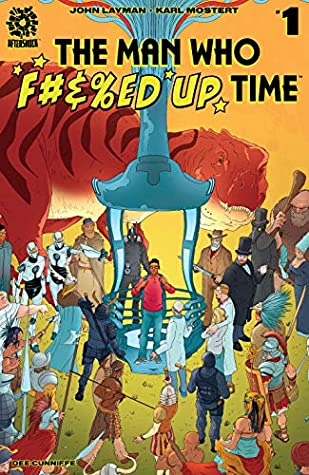
Similar things can also be said about The Man Who F#&%ed Up Time, only as you’ve probably guessed from the title there’s a lot more humour in this book, and as such a lot of what happens is genuinely funny as the proverbial shit starts really hitting the fan. The book, written by John Layman with art by Karl Mostert and colours by Dee Cunniffe, was published by Aftershock in 2020. I picked up the collected edition second hand from my comic shop this week solely to read for this column and then intended to trade it back, though after finishing the book I’ve shelved it away because it’s the kind of story I know I’ll want to read again.
I’m not going to tell you too much about the plot beyond what is on the blurb on the back:
Sean Bennett is just your everyday, ordinary lab worker in a high-tech lab with a prototype time machine. And, yeah, he’s got the same temptations any of us would have about going back in time, just a bit, to correct mistakes of the past and right old wrongs. So, when he meets a version of himself from the future who encourages him to do just that, Sean takes the temporal plunge. Only…can you guess what happens next? Did you read the book title? Yup. All of TIME is f#%&ed up now, and it’s up to Sean to correct it – or else!
The writing in the book is top notch, but it’s the vibrant and enthusiastic art that really sells the story; Mostert and Cunniffe bring their A game with The Man Who F#&%ed Up Time.
This book is a lot of fun, and will make an excellent diversion on a lazy day sat with your feet up. Plus, who doesn’t like a bit of time travelling goodness?
Join us next week when we look at something else that is, for whatever reason, Underrated.
This is a column that focuses on something or some things from the comic book sphere of influence that may not get the credit and recognition it deserves. Whether that’s a list of comic book movies, ongoing comics, or a set of stories featuring a certain character. The columns may take the form of a bullet pointed list, or a slightly longer thinkpiece – there’s really no formula for this other than whether the things being covered are Underrated in some way. This week: A Spotlight on Indigenous Creations.
This week I’m doing something that I have never done; spotlighting books I haven’t read. You see this week 751 unmarked graves were discovered on the grounds of an Indian Residential School in Saskatchewan, Canada. This is on top of the 215 bodies found in Kamloops, British Columbia, Canada. These children were taken from their homes, horrifically abused, and far too many were murdered and forgotten. The Indian Residential Schools, the first opened around 1830, were a concerted effort at cultural genocide by the Canadian government (and later the Catholic Church) upon its involvement and escalation of the residential schools in the 1870’s. I’m not going to tell you what I know about the system because frankly I don’t know enough, but I do want to make you aware of them. I also want you to know that the last school closed in 1996. That is recently enough that a lot of us remember that year – and the Canadian Government and Catholic Church were still operating residential schools. This isn’t something from the distant past, and the impact of the residential schools have been generational and culturally devastating.
For more on the residential schools, read The Residential School System By Erin Hanson (2009), with updates and revisions by Daniel P. Gamez & Alexa Manuel (September 2020). Wikipedia is a good place to start to learn more, though not as detailed as the former article.
The mortality rate for Indigenous Peoples in the residential schools was greater than those of Canadian soldiers in World War One. Many families who lost children never found out what happened to them. It is a heartbreaking truth to learn, and non Indigenous Canadians have a lot of learning and listening to do.
The publishers and comics.
I hope if you’re reading this then you at least read the Wikipedia page above, and maybe you’ll check out some of the links below; all will take you to art, graphic novels, comics and novels created by Indigenous writers and artists. This column isn’t going to come anywhere close to reconciliation, but as a white man I feel it’s my responsibility to encourage others to listen to and read the stories of Indigenous People. I’m going to link you to publishers and some sample stories; please note that none of the below are affiliate links for Graphic Policy, nor are these the only books located at each publisher – these are just a selection.
Eaglespeaker Publishing Based in Halifax, Nova Scotia, Eaglespeaker write, illustrate, publish and distribute bestselling paperbacks and eBooks worldwide. With titles that feature over 250 First Nations throughout North America. I’ve included a small number below with the link to the book on the publisher’s site, but there’s a lot more on the website.
The Secret of the Stars A young man’s journey to find four fallen stars.After watching the stars falling to earth, he is whisked into the land of dreams where he is told that the discovery of each star will also reveal one of life’s many secrets. A voyage that takes him across distant lands, into the realm of dreams, and back again. Ultimately the young man begins to understand the deeper purpose of why he was put on this path and what finding all the stars truly means. A story about the wondrous places your dreams can take you.
The Did Not Quit The story of the first all-female team to finish the 3200km Cain’s Quest Snowmobile Endurance Race. Their dedication and strength helped them overcome the challenges that racers experience during cross country snowmobile races. Their goal was to inspire more females to join the male dominated sport, and that they did.
Mukwa And The SuitcaseBoozhoo (Greetings) – storytelling has been an ancient tradition of North America’s original people since time immemorial. The truth of the Indigenous experience, and the impacts of colonization, is a story that has been silenced for far too long. Mukwa and The Suitcase takes you on a storytelling journey, through the eyes of an Indigenous child facing the impacts of disconnection from his identity and culture. When hope is at its lowest, Mukwa finds the beginning of a new journey … a journey of re-connection to his identity and his community.
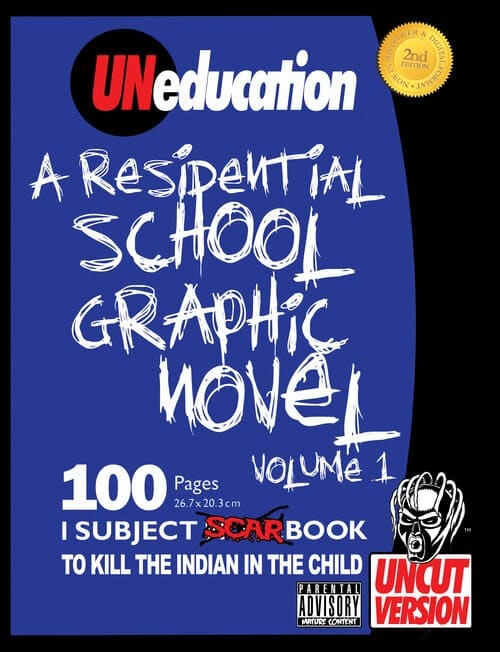
UNeducation Vol 1: A Residental School Graphic Novel This quote from the author, Jason Eaglespeaker, says it all: “I am often asked about the backstory of UNeducation. The original version was a scrapbook, one single copy that I put together when my local school district asked me about residential school resources. At the time there were very few that were instantly engaging. My mom and all of her 8 siblings attended the notorious St Paul’s Residential school in Southern Alberta, so I decided to just make a resource. I set up a little area in my basement, gathered everything I had, and jam-packed a coil bound Hilroy Notebook with articles, interviews, photos, quotes, first hand accounts, and graphic novel illustrations of my family’s experience (completely uncensored). I brought it to the school. By noon, they asked for 10 more copies. So, I hand crafted and coil bound 10 more in my basement (took me a week). I brought them to the school. By the next day, the district wanted 100 more copies. So, I hand crafted and coil bound 100 more in my basement (took me a month). I brought them to the school. By the next week, Alberta Health said they wanted 1000 copies! So, I hand crafted and coil bound 1000 more copies in my basement (took me 3 months!). Since then, UNeducation has gone on to sell well over 220,000 copies, but, I no longer hand make them (lol). It’s now in schools, universities, libraries, addictions programs, and healing initiatives throughout North America and beyond.”
Strong Nations is an online retailer and a publishing house located in Nanaimo, BC, specializing in Indigenous literature and art.
7 Generations: A Plains Cree Saga Edwin is facing an uncertain future. Only by learning about his family’s past—as warriors, survivors of a smallpox epidemic, casualties of a residential school—will he be able to face the present and embrace the future.
Indigenous Story Studio formerly known as the Healthy Aboriginal Network, has been a registered non-profit Society in the province of British Columbia since 2005. There is a wealth of stories on this site, that I haven’t had a chance to full investigate, let alone read.
Strength Of The Sash Our Métis story is about a struggling young man finding refuge and a sense of self-worth in his rich heritage. It’s an 18 page story and you can preview 4 pages of the education content [at the link in the title]. The content in these stories may stir up unpleasant feelings or thoughts. Please consider reading them with a family member or friend. This is a two-sided book; the other half being the First Nations story.
Inhabit Education Booksis a Nunavut-based educational publishing company with a mandate to provide educators and parents with educational resources that are infused with authentic Northern perspectives, ways of life, and imagery. Their publishing initiative always considers stories and information in an educational context. All of their publications are developed by a team of Northern educators and language experts. These titles incorporate concepts that students are familiar with—counting, animals, family, traditional stories, and so on—within a Northern context.
Moonshot: The Indigenous Comics Collection Inhabit Education Books is proud to distribute this important collection of Indigenous comic stories, originally published by Alternate History Comics. This collection features stories by Indigenous authors and artists from across North America and showcases the rich heritage and identity of Indigenous storytelling. From traditional stories to exciting new visions of the future, this collection presents some of the finest comic book and graphic novel work on the continent.
Portage and Main Press publishes a wide range of innovative and practical K–12 educational materials, including two new graphic novels. They build dynamic learning communities by bringing together authors, educators, and students. Founded in 1967 as Peguis Publishers, the company quickly established a reputation for publishing quality educational resources in addition to Indigenous literature and regional history. Portage & Main Press remains an independently owned Canadian company.
This is a column that focuses on something or some things from the comic book sphere of influence that may not get the credit and recognition it deserves. Whether that’s a list of comic book movies, ongoing comics, or a set of stories featuring a certain character. The columns may take the form of a bullet pointed list, or a slightly longer thinkpiece – there’s really no formula for this other than whether the things being covered are Underrated in some way. This week: Valiant Masters: Ninjak: Black Water.
Ever since I’ve started to collect Valiant comics, I’ve been picking up the hardcover deluxe editions here and there as a way to catch up in bulk on some of the series I’ve missed, and also because I just like the look of them. A while back I did a cost analysis as to whether it was worth buying the deluxe editions verses the softcover trades or single issue floppies at cover price; generally the savings were negligible depending on the size of the book (less than $5, I think) between the hardcovers and soft covers, but the difference between the hard covers and cover price floppies varied greatly depending on how many books were collected (and it didn’t factor in the cost of the floppies after they’ve been on the market for a while, as they can fluctuate higher or lower depending on different trends).
This is relevant only because the Valiant Masters hardcovers generally contain the first eight issues of the original Valiant series (either 1-8 or 0-7 depending on the stories within), which means that for $25 you end up paying about $3.25 a comic. Whether that’s a good price for the early Valiant books depends on which book you’re looking at; I’ve paid $20 for the first appearance of Rai, $6 for the first appearance of Ninjak and around $1 for others, so it’s largely a crap shoot, but for the most part the individual issues collected in the Valiant Masters are going to be cheaper than the hardcover itself depending on which one you’re looking at.
The point I’m making here is that while I’m talking about the hardcover today, in reality I’m really looking at the eight issues within the book (Ninjak #1-6, before giving us his origin with issues #0 and #00), and those you can probably find easier than the hardcover which may be out of print now. The floppies will likely be cheaper given how out of print Valiant hardcovers tend to sell for higher than cover price.
Perhaps my favourite aspect of these Masters editions is in comparing what I know about the characters from their 2012 relaunch and the versions that appeared in the 90’s. The Ninjak of the 90’s had his differences from the modern version; born to English parents as part of an experiment to grow enhanced humans, he grew up in Japan and learned the ways of the ninja from a temple he sought refuge in after his father was murdered. The rest, his technology and such, differ only in what was conceivable to the writers of the time.
Black Water has the titular ninja taking down an international conglomerate. It sounds fairly cliche now, but the story’s echoes of Batman and James Bond set it apart from the general run of the mill hero vs corporation stories. The story is only the first two issues of the series and , but by the time that story had wrapped I felt like I’d read a full trade – one of my favourite things about comics from the 90’s and before has always been the amount of content packed into each issue. The first six issues we get are wonderful. Reading these, and the other early Valiant, I can understand why the publisher gained such a strong following over the years. Compact, exciting, and with some truly exciting art (I acknowledge that comic art has come a long way since the 90’s, but these issues of Ninjak hold up very well even today).
There may only be a limited number of folks left who, like me, want to explore the original Valiant comics of the 90’s that haven’t already done so, but these hardcover editions are a brilliant gateway to the past, and great encouragement to go hunting for the comics that haven’t been collected – and may never be at this point. That’s why I think these books are underrated; because so few of you will be looking for them. Which is a shame because those early Valiant stories are fantastic.
Join us next week when we look at something else that is, for whatever reason, Underrated.
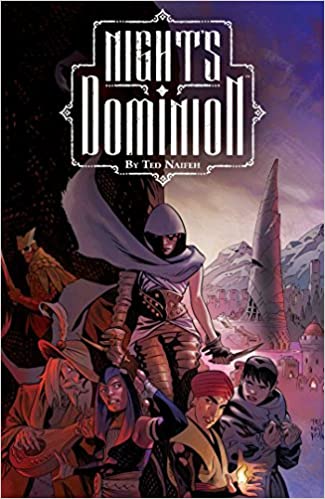
This is a column that focuses on something or some things from the comic book sphere of influence that may not get the credit and recognition it deserves. Whether that’s a list of comic book movies, ongoing comics, or a set of stories featuring a certain character. The columns may take the form of a bullet pointed list, or a slightly longer thinkpiece – there’s really no formula for this other than whether the things being covered are Underrated in some way. This week: Night’s Dominion.
The first volume of Night’s Dominion was published by Oni Press late 2016/early 2017 as the first six issues of, funnily enough, Night’s Dominion. The volume was written and drawn by Ted Naifeh, and presents itself as a prototypical fantasy story with the added flavour of modern superheroes (though not literal modern superheroes). So what’s the story about?
Taken from the blurb:
A thief, an assassin, a mage and a cleric walk into a tavern in the ancient city of Umber. Awaiting them is a mysterious bard with a dangerous scheme: to break into the dungeon of a powerful death cult in search of treasure. For these five desperate criminals, it’s the last chance for hope in a city of corruption and despair. But what they find instead is an undead army preparing to conquer the world. Now, they must fight to protect the city that pushed their backs to the wall, or watch it burn.
Night’s Dominion is a fun distraction, though the plot is fairly by the numbers in terms of fantasy stories, it’s still engaging and entertaining enough to keep you moving the pages.
I was able to pick up the first six issues for about $12, and it was absolutely worth the price of admission (if I’m honest, I had it sat in my To Read pile for almost a year before I finally picked it up last night). I don’t know if I’d pay more for it than that, but I’m happy with the price I paid. Naifeh’s art is atmospheric and moody, although a couple of his characters look similar enough that it can be hard to tell them apart at some points, I’ve really no major nitpicks with the art style or the writing – the story is good, if not groundbreaking, and it was exactly what I wanted to read (and just about what I expected when I first saw the series solicited half a decade or so ago).
Unfortunately you don’t hear a lot of people talking about the series, which comprises of two volumes as of this writing, and so for that reason I wanted to focus on it for today’s column. It’s a fun book, and it gives you a break from the traditional superhero comics without fully ignoring the genre (if that sounds strange, it’ll make sense when you read it), and until I was googling the cover I had no idea that it wasn’t a self contained story, so the lack of a pesky cliffhanger is always a bonus.
Unless the comics industry ceases any and all publication look for a future installment of Underrated to cover something else next week.
This is a column that focuses on something or some things from the comic book sphere of influence that may not get the credit and recognition it deserves. Whether that’s a list of comic book movies, ongoing comics, or a set of stories featuring a certain character. The columns may take the form of a bullet pointed list, or a slightly longer thinkpiece – there’s really no formula for this other than whether the things being covered are Underrated in some way. This week: Marvel’s Facsimile Comics.
Recently Marvel Comics have been releasing what they call Facsimile Editions of some of their key issues, which essentially just reprints those issues for (modern) cover price. The cynical person would say that this is just a cash grab from a publisher looking to take advantage of people who want to own a copy of those stories in print, whereas I’m looking at it as a great opportunity to own an exact copy of Giant Size X-Men for less than a fraction of the actual cost.
Before you say that it’s available on Marvel Unlimited, I don’t care. Mainly because I don’t have Marvel Unlimited, but mostly because it allows me to read a print version of the story – something I haven’t yet been able to do.
Yes, I understand that some of us may have a copy of two of the original story already, but are those copies exact to the original printing?
Probably not.
(It should be said at this time that I have never been able to touch an original of any of the comics that the Facsimile Editions reprint, much less actually read one, so I have no way of actually verifying this myself but at least that’s the idea).
Because most of us will never get a chance to view an original copy of many of the original comics, these Facsimile Editions are a great alternative to seeing the original comic (not the stories, because you can find those in a multitude of other place – I own several versions of Incredible Hulk #181, just not an original), including the ads. It’s a recreation of a piece of history in much the same way a reproduction Velociraptor claw is. Which exactly how I’m looking at it; there’s no way I would ever read an original copy of Giant Size X-Men #1 or Incredible Hulk #181 if I was ever lucky enough to find one for a non-exorbitant price, but I sure as hell will read these Facsimile Editions.
Because I’m the kind of nerd who loves looking at old comics; the ads, the commentary… it’s a snapshot of where the industry was at the time, and in many ways the older comics mean more for that than the story inside (because those I can read elsewhere).
That’s why these books are underrated.
Unless the comics industry ceases any and all publication look for a future installment of Underrated to cover something else next week.