Category Archives: Underrated

Underrated: Vengeance Of The Moon Knight: Shock And Awe

This is a column that focuses on something or some things from the comic book sphere of influence that may not get the credit and recognition it deserves. Whether that’s a list of comic book movies, ongoing comics, or a set of stories featuring a certain character. The columns may take the form of a bullet pointed list, or a slightly longer thinkpiece – there’s really no formula for this other than whether the things being covered are Underrated in some way.

This week: the multi-part crossover event Vengeance Of The Moon Knight: Shock And Awe.


I was actually going to write about a totally different book for today’s column, but when I was recording a podcast yesterday, I spend the best part of an hour and a half playing with a Moon Knight figure from Marvel Legends, which then led me to checking what Moon Knight books I owned. Not many, if I’m honest. My options were either this, the sequel or Midnight Son because I don’t have the Warren Ellis run in trade and I was too lazy to dig through my comic boxes to find it (even if I know exactly where it is).

This is the same image on the trade’s cover, and
I didn’t realize it wasn’t until it was already uploaded…

So, Vengeance Of The Moon Knight: Shock And Awe was the book that I ended up grabbing.

I remember really enjoying it the first time I read the series, ten or eleven issues set right at the end of the Dark Reign era of Marvel Comics which found Norman Osborn as the head of S.H.I.E.L.D. and the “official” Avengers being made up of a group of villains in disguise (Bullseye as Hawkeye, Mac Gargan’s Venom as Spider-Man, Daken as Wolverine and a few others I can’t remember off the top of my head). This sits in the background of this story, with Moon Knight’s antics being set to a backdrop of billboards and advertisements for the villains heroes. The real conflict in the book comes, as with so many great stories featuring Moon Knight, from whether he can control his dissociative identity disorder or if his bloodlust will rear it’s ugly head once again.

The book opens with Jake Lockley in control as Moon Knight, gently letting his comrades and friends know that Marc Spector is gone. Moon Knight’s reputation for excessive violence in his vigilante activities is played to great effect in this book – both by the supporting characters being surprised that there’s no blood on his white costume, and be his constant refusal to maim and kill, which adds to his internal struggle as the primary antagonist shows up in the book.

You don’t need to have read a lot of Moon Knight comics in the past to enjoy this book, nor its subtle dig at Batman’s willingness to use excessive force when facing off against multiple criminals, because this is a self contained story about a man looking for redemption on the biggest stage possible for his previous actions.

This isn’t one of the defining runs in Moon Knight’s history, but it is a lot of fun – and that’s why it’s a great candidate for today’s Underrated column. Check it out if you ever get a chance.


Join us next week when we look at something else that is, for whatever reason, Underrated.

Underrated: The Amazing Spider-Man

I drastically overslept today, so rather than the planned column, we’re revisitng one from 2017 when I went to bat for one of the more maligned Spider-Man movies.


This is a column that focuses on something or some things from the comic book sphere of influence that may not get the credit and recognition it deserves. Whether that’s a list of comic book movies, ongoing comics, or a set of stories featuring a certain character. The columns may take the form of a bullet pointed list, or a slightly longer thinkpiece – there’s really no formula for this other than whether the things being covered are Underrated in some way. This week: The Amazing Spiderman


Today I wanted to talk about the first reboot of the Spider-Man movie franchise from waaaaaaaay back in 2012. After the Sam Raimi trilogy which, lets be honest, didn’t exactly end on a high note, Sony would eventually decide to relaunch the Spider-Man movie franchise, and it’s the result of that reboot that I wanted to talk about today.

If you’re surprised that this is the movie we’re focusing on today, then you may have missed that the Marvel Studios/Sony collaboration Spider-Man Homecoming is in theaters  (and the MCU!) now; and you may also have been unaware of the amount of people who are now complaining about this movie (or maybe that’s just the people I hang out with?) – or you may have never really enjoyed this movie. But regardless of where you sit, I’ve always really enjoyed this movie, and feel that it’s stronger than a lot of people give it credit.

Why? To the bullet points!

• The chemistry between the leads
One of the strongest aspects of the Amazing franchise is the relationship between Andrew Garfield’s Peter Parker and Emma Stone’s Gwen Stacy. Their interactions on screen approach poetry in some scenes, and without a doubt these two actors elevate the film beyond what a typical pair of romantic leads can do.

•  Andrew Garfield’s Spider-Man
Garfield may have been to cool to genuinely pull off a nerdy Peter Parker, but his Spider-Man was top notch; his boundless energy and fast mouth was unlike anything we had seen before in live action, and Garfield pulled it off spectacularly. This was a Spider-Man whose failures were a palpable weight on his spandex clad shoulders, and in the quiet moments throughout the movie you can genuinely sense that through Garfield’s body language.

•  The webswinging
The effects team did a wonderful job guiding Spider-Man’s journey through the skies in what is, for my money, the most realistic depiction of a man flying through the air on super strong glue to date.

•  The costume
I’m kidding. I wasn’t exactly fond of this movie’s Spider-Man look. The orange lenses weren’t my thing, and the way the red came down the legs weren’t my favourite.

•  The lack of the actual words “With great power there must also come great responsibility”
I know this is probably a contentious point to make, but loved that Peter learned this lesson throughout the film without having the quote used just for the audience who feel they must hear those words in the movie. It was far more powerful for Peter to learn it through his actions and reactions than have the lesson spelled out in what could have been an awkward and stilted scene. Plus, it lent a much heavier weight to Uncle Ben’s voice message at the end.

There are quite a few aspects of The Amazing Spider-Man that I thoroughly enjoyed, more than I should probably talk about in this article, but I’m aware that this isn’t a flawless movie – it’s not even the best Spider-Man movie- that honour is reserved for Sam Raimi’s Spider-Man 2. Yes, The Amazing Spider-Man  did have its issues; the Lizard wasn’t the most compelling villain, and his design was somewhat weak, but he isn’t the weakest in any of the Spider-Man movies (Topher Grace a Venom will hold that title for quite some time). His rationale is still just understandable enough when you break it down for yourself, but you do need to be aware of his misguided, yet deeply hidden altruistic thought process. And only a few years removed from Spider-Man 3, did we really need to see Uncle Ben die again? Not really.

I’m aware that it had it’s problems, but I don’t care; I love it anyway. For years, this was one of my favourite Spider-Man films, until we got the two Tom Holland flicks. I’ll always enjoy this movie, but it won’t be the first Spider-Man movie I reach for.


There we have it. Are there other comic book related stuff out there that is, for whatever reason, underrated and under-appreciated?

Absolutely.

Because of that, Underrated will return to highlight more comic book related stuff  that either gets ignored despite it’s high quality, or maybe isn’t quite as bad as we tend to think it is. In the meantime, though, if you do get a chance check out the characters in thisUnderrated, then you may need to hunt through the back issue bins for some, but others do have some stories collected in trades.

Until next time!

Underrated: Crecy

This is a column that focuses on something or some things from the comic book sphere of influence that may not get the credit and recognition it deserves. Whether that’s a list of comic book movies, ongoing comics, or a set of stories featuring a certain character. The columns may take the form of a bullet pointed list, or a slightly longer thinkpiece – there’s really no formula for this other than whether the things being covered are Underrated in some way. This week: Crecy.


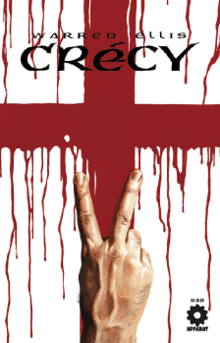
I’ve always been interested by the middle ages, and the English use of the longbow. In part because it’s the origin of one of my favourite hand gestures to use (especially in North America when so few actually know what I’m doing in pictures). Needless to say, when I saw that gesture over a bloody St. George’s cross, I grabbed the book off the shelf. And then noticed that it was a Warren Ellis book.

I am by no means an authority on the Battle of Crecy. I only really know of a few accounts through Wikipedia articles and their sources and the Bernard Cornwall novels surrounding an English Archer named Thomas of Hookton, with the book Harlequin telling the tale of the battle from his perspective. So I won’t claim to know that this book is 100% historically accurate, but it is as faithful a telling as you’re likely to find from the eyes of an archer – whether in a textbook or not.

Ellis utilizes a lead character who frequently addresses the audience when telling the battle’s story and events, showing knowledge of modern times without ever indicating that he knows he’s in a fictional story. It’s an effective story device, and one that I really enjoy for this type of story (but I hope we don’t see it over used, either). The black and white are hides some of the violence, but serves to highlight the mayhem and carnage of the day.

Crecy is a great book – worth every penny of the cover price, and far more Underrated than it should be.


Join us next week when we look at something else that is, for whatever reason, Underrated.
Underrated: Time Before Time Volume One

Time got away from me this week, so we’re rerunning an older column from yesteryear.

This is a column that focuses on something or some things from the comic book sphere of influence that may not get the credit and recognition it deserves. Whether that’s a list of comic book movies, ongoing comics, or a set of stories featuring a certain character. The columns may take the form of a bullet pointed list, or a slightly longer thinkpiece – there’s really no formula for this other than whether the things being covered are Underrated in some way. This week: Time Before Time vol. 1.


Time Before TIme

Ever since I first watched Marty McFly try and find his way through the 50’s in Back To The Future, I’ve always enjoyed a good time travel story. There’s something about being able to witness history first hand that has always intrigued me, and I get oddly excited when thinking about the details and implications of how the time travelling actually works in different stories. For example can you change the past, or have your actions already happened eve though you haven’t done anything yet?

Is time a river where you can hop out and in at different points but you are still in the same river and it’s course doesn’t divert regardless of what you do, or does each action that you take that differs from what should have happened create something new?

Time Before Time aligns closer to the former example in the above paragraph. In the year 2140, the criminal gang the Syndicate will smuggle you back in time from a world with very little prospects or future to a time with a better tomorrow (albeit with no Wi-Fi). Tatsuo, one of the Syndicate’s time smugglers has had enough of the grind (and radiation exposure) of constant time jumps.

It’s about this moment when he’s caught up with an FBI agent who throws a bit of a wrench into his escape plan, which obviously works out well for the reader.

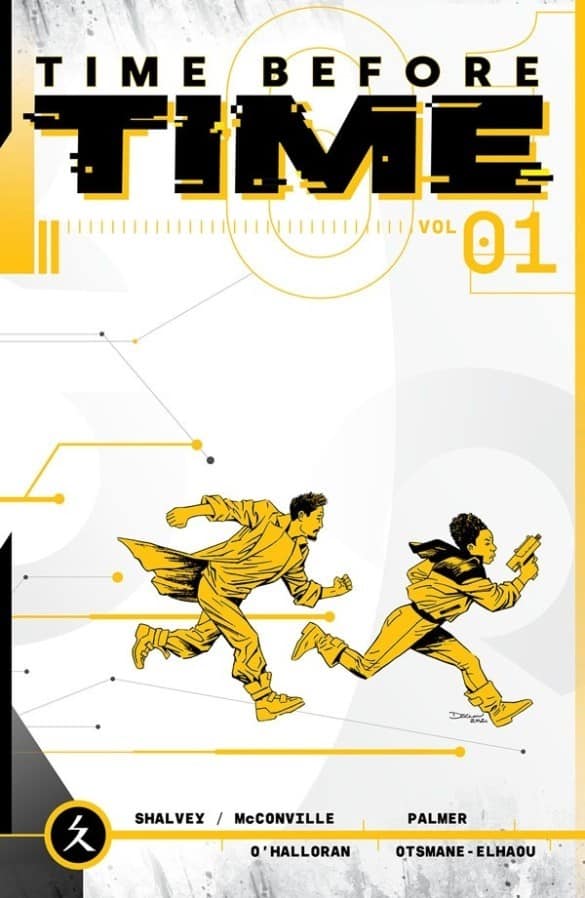
The comic wasn’t on my radar at all until I was filing back issues away at my LCS and something about the cover caught my eye. I’d love to say I picked it up and read it at home, but instead I stopped what I was doing and read it there and then, and upon finishing picked up the remaining five issues for cover price. There is a trade also available for those same issues, and while the story doesn’t end with the first volume, I’m writing about it today because it was really enjoyable. Time Before Time is one of those stories that I didn’t expect to find – I’m not going to say I didn’t expect to enjoy it, because I’d heard nothing about the book until I actually read the comic. Maybe my head was in the clouds with this one, but I don’t remember putting it in many pull boxes during the initial run of the individual comics earlier in the year, either. So assuming my shop is typical (which it very well may not be), I figured there’s a chance that the book has been slept on by a fair few people.

Do yourselves a favour, and check it out.


Join us next week where there will doubtless be another movie, series, comic or comic related thing discussed that is, for whatever reason, Underrated.
Underrated: Star Wars: Episode I – The Phantom Menace

I may have spent far too much time over the last week watching Disney+. Because of that, I wanted to rerun an older column, and what better column than one focusing on the first chronological Star Wars movie? For no other reason than I’ve been watching a lot of Mandalorian.


This is a column that focuses on something or some things from the comic book sphere of influence that may not get the credit and recognition it deserves. Whether that’s a list of comic book movies, ongoing comics, or a set of stories featuring a certain character. The columns may take the form of a bullet pointed list, or a slightly longer thinkpiece – there’s really no formula for this other than whether the things being covered are Underrated in some way. This week: Star Wars: Episode I – The Phantom Menace


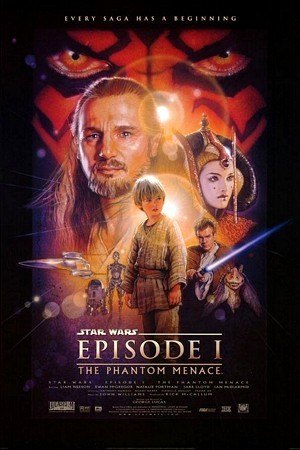
Star_Wars_Phantom_Menace_poster.jpg

Released in 1999, Star Wars: Episode I – The Phantom Menace was written and directed by George Lucas, produced by Lucasfilm and distributed by 20th Century Fox. It is the first installment in the Star Wars prequel trilogy and stars Liam Neeson, Ewan McGregor, Natalie Portman, Jake Lloyd, Ian McDiarmid, Anthony Daniels, Kenny Baker, Ahmed Best, Pernilla August, Brian Blessed, Ray Park, and Frank Oz. It  is also widely known for being a stonking pile of manure.

Released sixteen years after Return Of The Jedi, The Phantom Menace was set 32 years before Star Wars, and follows Jedi Knight Qui-Gon Jinn and his apprentice Obi-Wan Kenobi as they protect Queen Amidala, in hopes of securing a peaceful end to a large-scale interplanetary trade dispute. Joined by Anakin Skywalker—a young slave with unusually strong natural powers of the Force—they simultaneously contend with the mysterious return of the Sith.

Now that you’ve read (basically) the first two paragraphs of the Wikipedia entry, allow me to tell you why this movie is underrated.

Look, I’m not claiming it’s good, just that it isn’t (quite) as bad as you think it is. And it does have good moments. If I can’t convince you, maybe I’ll make you laugh…?

Anyway.

If you’re of a certain age, or your parents are, then you would have been beyond excited to see this movie when it hit the theaters in 1999. I remember watching the lines on the local news back in England being in awe that anybody would care about a movie that much, but nearly twenty years later I can begin understand the level of excitement people would feel surrounding the return of such a beloved franchise – indeed, as I type this I am already planning to line up for the latest Star Wars flick, The Last Jedi, two hours before the screen doors open. But that’s after having two good movies released in the last two years, so can you imagine the excite fans of the franchise would have had in the weeks and months (hell, years) leading up to May 19th, 1999 when the movie finally opened for the masses. It would have been incredible! In the years before the widespread usage of the Internet (in comparison to what we see now), there were conversations in schools, at the water cooler and frankly anywhere fans would gather. The excitement was palpable wherever nerds and fans gathered. It’s hard to overstate how much hype was in the air surrounding the first Star Wars movie in sixteen years.

And then the movie was released.

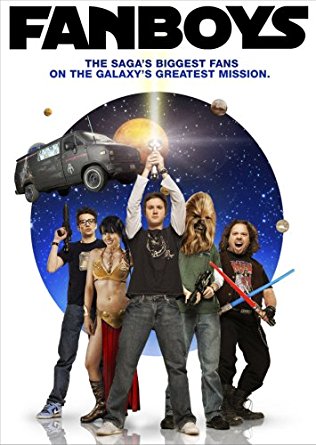
fanboys.jpg
If you’ve never seen this movie, then you should check it out. It’s a great send up of nerd culture circa 1998 with a touching heart. Rumour has it the movie is based on real events – whether that’s true or not I’m unsure.

Look, without beating around the bush, it’s safe to say that it didn’t live up to expectations. At all. The movie is widely regarded as the worst live action entry into the saga, and rightly so, and fans have often said that the movie is best left forgotten in the deep recesses of history. Which is a touch harsh, but I understand where they’re coming from. But here’s the thing; despite the movie’s obvious flaws, I still feel like it gets the short end of the stick quite a bit.

Why? Well let me break out the bullet points…

  • Firstly, it was the first Star Wars movie in a generation, and as such it was the first time that many of us were able to sit in a chair and experience that title sequence – next time you see a Star Wars movie in the theatre and those titles start to roll with that music… you tell me that isn’t an incredible moment. Almost makes what came after those titles worth watching.
  •  Secondly, you can’t tell me you weren’t grinning from ear to ear with the extensive lightsaber duels. Everything is better with lightsabers.
  •  Thirdly, and perhaps most importantly, there were people for whom this was the first Star Wars movie they’d experienced and as such it served, for those folks at least, as a gateway into the franchise.
  •  How many of you who did see, and loath, this movie in the cinema rushed out to see Episode II – Attack Of The Clones opening night because it couldn’t have been as band as this one, right? It wasn’t, was it? If nothing else, that the first movie was the worst in the new trilogy should be seen as a bright spot.
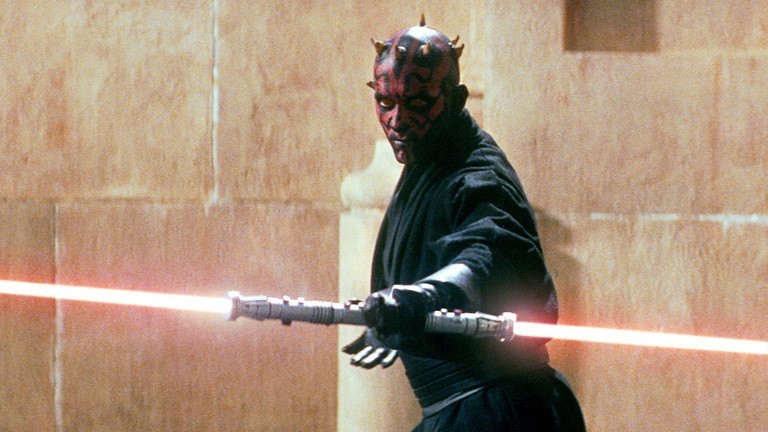
  • Dual lightsaber! Darth Maul’s dual blades were the first time we had seen a break from the standard style lightsaber from the original trilogy, which opened up a breadth of on-screen options for the iconic weapon going forward.
    darth maul.jpeg

Star Wars: Episode I – The Phantom Menace was always doomed to fail. No movie with as much hype as this one will ever meet expectations. But eighteen years on, while the movie may not hold up visually any more with the advances in digital technology, and Jar Jar Binks is still an annoying fuckwit, I came to realize that the movie isn’t as bad as you would think. Aside from Jar Jar, and a little too much time spent on the pod racing subplot, the movie isn’t bad. Could it have been better? Absolutely – I won’t argue that. But it wasn’t as  bad as you’ve heard, certainly not as bad as its reputation would have you believe.


Next week we’ll return to a more comic themed Underrated. Until next time!

Underrated: Starlight

This is a column that focuses on something or some things from the comic book sphere of influence that may not get the credit and recognition it deserves. Whether that’s a list of comic book movies, ongoing comics, or a set of stories featuring a certain character. The columns may take the form of a bullet pointed list, or a slightly longer thinkpiece – there’s really no formula for this other than whether the things being covered are Underrated in some way. This week: Starlight.


Conceived by Hollywood darling Mark Millar (with art by Goran Parlov), Starlight was a six issue miniseries that was released beginning in March of 2014 and ending in October 2014. Telling the story of the superbly named Duke McQueen, an Air Force pilot who went to space and saved the alien planet of Tantalus from tyranny forty years ago, before returning home and raising a family instead of staying to rule the planet. His exploits, sadly, were written off as the ravings of a attention seeker, and Duke became a joke to all but his sweetheart.

Now, with his wife dead, his family not giving him the time of day, and people still treating him as a joke, a spaceship arrives to take the old man on one last grand adventure to save the planet Tantalus once again.

One of the less Mark Millar-y comics that have come from his keyboard in the last half decade, this mini series had none of the hyper violence seen in things such as Kick-Ass, Wanted and Kingsman. Surprisingly Starlight is a sentimental yarn about a former hero redeeming himself in his own eyes and saving the planet from a tyrannical despot once again.

Starlight is a pleasure to read. Although criticism can be levelled at the sudden change as Duke McQueen goes from couch-bound crank to crack aimed space hero over the course of only a couple of issues, for me that misses the spirit of the book. Think not of Starlight in terms of the modern, more realism based stories we’ve become accustomed to, and instead fall back into the nostalgia of the classic stories of yesteryear as Millar embraces the straight forward nature of the story – almost against type, as McQueen battles against an antagonist who doesn’t measure up to the rich and deep characterization of the hero; Kingfisher is a perfectly adequate villain, but make no mistake, Starlight is a redemptive story for Duke McQueen.

Perhaps in seeing McQueen struggle against overwhelming odds, himself, and the reputation he had been given, we can find hope and inspiration in our own lives. Not quite the lesson I expected to take from a Mark Millar book.

I had forgotten how much I loved Starlight until I saw a tweet mentioning the series a few days ago that inspired me to dig the comics out and reread them.  It’s a love that I genuinely believe you’ll share when you give the series a chance – it’s an underrated gem that you wouldn’t typically expect to come from Mark Millar.


Join us next week when we look at something else that is, for whatever reason, Underrated.
Underrated: Incognito

Time got away from me this week, so we’re rerunning an older column from yesteryear.

This is a column that focuses on something or some things from the comic book sphere of influence that may not get the credit and recognition it deserves. Whether that’s a list of comic book movies, ongoing comics, or a set of stories featuring a certain character. The columns may take the form of a bullet pointed list, or a slightly longer thinkpiece – there’s really no formula for this other than whether the things being covered are Underrated in some way. This week: Incognito


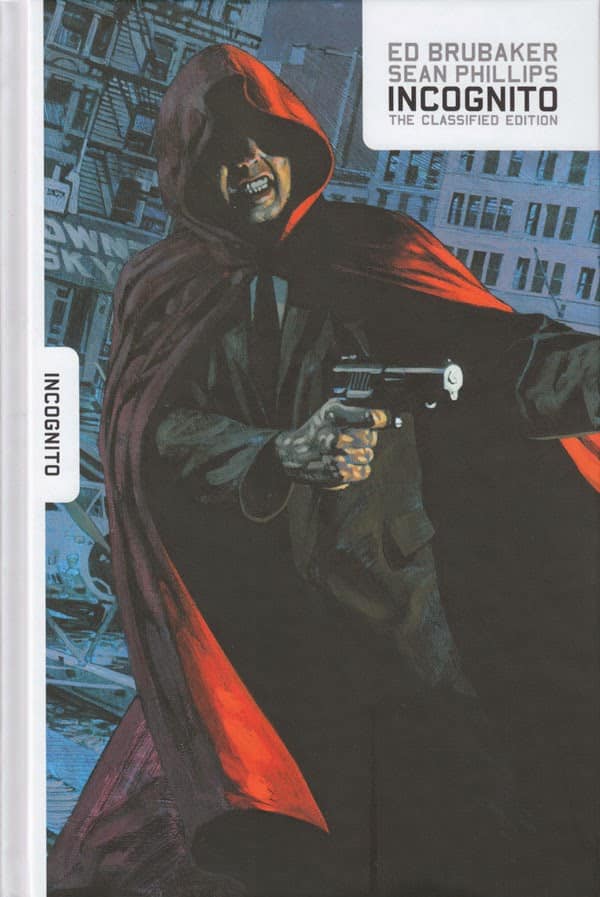
My local comic shop recently got the hardcover edition of Incognito in, and it last all of ten minutes on the table where it was in line for pricing as I picked it up and read what amounted to half the first issue before scooping it up before it ever actually made it to the shelf.

Written by Ed Brubaker, with art by Sean Phillips and colours by Val Staples, the hardcover collects both Incognito and the sequel Incognito: Bad Influences within its 360-odd pages as well an essay, a series cover gallery and some interesting process pieces. If you’ve read any of Brubaker and Phillips other work together, such as Criminal, Fatale or Kill Or Be Killed, then you probably have an idea what you’re in for. If you don’t… well, let’s just say you’re in for a very compelling story that you’ll probably want to read multiple times.

If you want to read the series’ synopsis, it’s below. If you don’t… well, skip the next paragraph, I guess. Either way, you’ll find the core premise of the comic below.

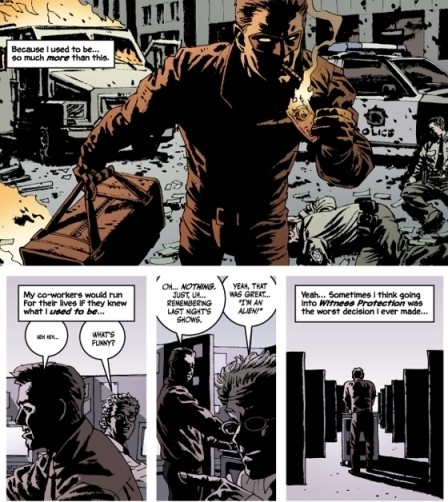
What if you were an ex-super villain hiding out in Witness Protection… but all you could think about were the days when the rules didn’t apply to you? Could you be a humdrum office clerk after being the best at years of leaving destruction in your wake? And what if you couldn’t stand it? What would you do then? 

This story is steeped in the pulp fiction of the 30’s and 40’s, stories that undeniably inspired the superhero fiction of today. Brubaker takes those early influences and fills out a world that has descended from them; there’s a very clear path in Incognito back to characters like the Shadow and the Spider (or rather Brubaker’s version thereof), and it gives the reader the sense that we’re barely scratching the surface with the characters and history revealed through the course of the hardcover’s 360-odd pages.

I was immediately taken in by the story as we learned more about Zack Overkill and how he went from a heavy hitting super villain to a lowly file clerk barely noticed by his coworkers. We see flashes of his mandated psychiatric appointments, the oh-so-real struggles he’s facing in a life that he’s not accustomed too. If you remove the super powered aspect from the opening part of the story, you can see a man struggling with his mental health amidst an unfulfilling life of boredom and depression. Is it any wonder that he eventually turns to drugs in order to find an escape?

Zach Overkill is an oddly likable guy despite never hiding (at least from us) what kind of man he used to be; whether this story is about his trying to find redemption, or a larger tale about whether a leopard can truly change its spots is one of the best parts about this book. Brubaker asks you not whether you can change for the better after making a horrible series of life choices, but whether others can accept your change. Whether they truly believe it, or if once they’ve labelled you a villain then that’s how they will always see you.

I should have expected good stuff from this book, but I wasn’t quite prepared with just how good it would be.

In a story that can be so much to so many, we’re left asking ourselves who we really are; are you really the person you think you are, or are you just a product of what this world has made you?


Join us next week where there will doubtless be another movie, series, comic or comic related thing discussed that is, for whatever reason, Underrated.
Underrated: Marvel Epic Collections

This is a column that focuses on something or some things from the comic book sphere of influence that may not get the credit and recognition it deserves. Whether that’s a list of comic book movies, ongoing comics, or a set of stories featuring a certain character. The columns may take the form of a bullet pointed list, or a slightly longer thinkpiece – there’s really no formula for this other than whether the things being covered are Underrated in some way. This week: Marvel Epic Collections.


I noticed that my reading habits changed a little during the pandemic; rather than individual issues, I was drawn toward complete stories that were typically collected in some form of trade paperback or graphic novel. I say typically because my comic shop began selling sets of various kinds (full runs, miniseries, etc.) and I have picked up a few of those over the last year or two. But more often than not I’ve been reading tpbs. Over the past couple of months I’ve been reading Marvel’s Epic Collections – a series of books with between 3-500 pages that will focus on a particular series told in chronological order. There’s a chance that you may get more than the main series included if there’s a crossover story, but never more than the issues that pertain to the story.

My interest in these was piqued because I found the first volume of Wolverine’s Epic Collection that contained the early issues of Wolverine and around ten parts of a story from Marvel Comics Presents featuring the clawed mutant as the story led directly into the solo series. I didn’t have those issues of MCP, and reading the single issues of the main series in trade was far more convenient than digging out the individual issues. Yes, I paid for convenience, no I am not ashamed. But it did get me looking at other characters, teams and series that were featured in the Epic Collections. Spider-Man, Moonknight and Daredevil all now sit on my shelf (some in the “to read” category), and while they’re solid books, the opportunity they afford a person to be able to read comics from fifty, sixty years ago is fantastic.

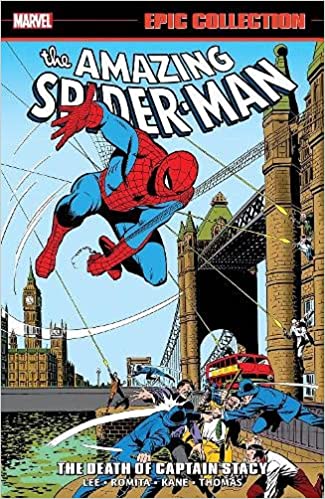
I’d never be able to read a bulk amount of early Amazing Spider-Man comics in full colour, in print, unless I had a ton of disposable income or was lucky in finding a great deal, or had picked up an omnibus or two. Yes, there are doubtless trades featuring the odd collected story, Marvel Masterworks, for example, and there have been reprint mags in the UK (but those issues are long out of print), but the volume of the comics in the Epic Collection combined with the retail price makes them the best value for money out there.

Interestingly, because the Epic Collections focus more on collecting stories that either haven’t been published in trade form before they’re not published sequentially. So while the first eight volumes of The Amazing Spider-Man have been released, volumes nine through 14 have yet to have even been given a release date. While this can prove irritating for those looking to read a series in full from start to finish, for me it’s a relief because I’m able to get a complete story with each Epic Collection (minus the odd loose end because the books are collecting full runs for the most part).

There are Epic volumes with more than just the named series, though; Wolverine Volume 13 has nine issues plus an annual of Wolverine, but also the six issue Origin miniseries. I’m sure that this isn’t unique, and that other volumes will feature odds and ends apart from the main series, but for the most part in my (limited) experience the volumes focus on the named series plus crossovers more often than not.

I had thought of buying a Marvel Unlimited subscription to read these early Spider-Man comics, and while that would likely have been cheaper initially, eventually I’d have cancelled it and been unable to read the comics. Plus I tend to prefer print over digital for reading comics, books and graphic novels. Now, excuse me while I crack open the next volume in my pile.


In the meantime, Underrated will return to highlight more comic book related stuff  that either gets ignored despite it’s high quality, or maybe isn’t quite as bad as we tend to think it is.

Underrated: Autumnlands: Woodland Creatures

This is a column that focuses on something or some things from the comic book sphere of influence that may not get the credit and recognition it deserves. Whether that’s a list of comic book movies, ongoing comics, or a set of stories featuring a certain character. The columns may take the form of a bullet pointed list, or a slightly longer thinkpiece – there’s really no formula for this other than whether the things being covered are Underrated in some way. This week:  Autumnlands: Woodland Creatures


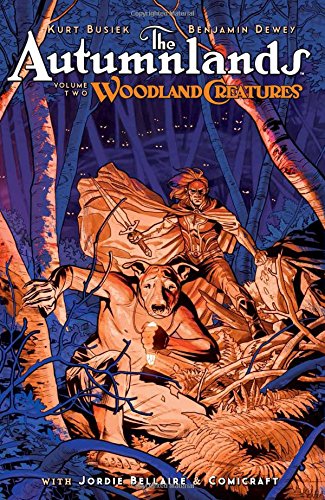
A few weeks ago I wrote about the first volume of The Autumnlands  in this column (which you can find in a horribly typo filled post here because apparently I forgot to spell check). I was quite taken with the book, and remarkably surprised that I’d never come across the story before, and as I’m sure you’ve figured out, I picked up the second trade. This time for full price.

The second trade, Woodland Creatures picks up, with the aftermath of the bridge battle sending Dusty and Learoyd left abandoned on the ground as the rest of the citizens are rehomed.

Whereas the first volume touched on the divide of rich and poor in a class-based society, the second really drives home the differences between the magic users and the rest of the woodland creatures, culminating in a shocking and remarkably relevant commentary on the imposition of one’s will over another.

Slavery, class divide, religion, environmental damage and technological abuses are all touched upon here in a way that doesn’t come off as Kurt Busiek standing on a soapbox, but rather encouraging us to think about the world around us. Maybe something that seems impossible has a rather obvious solution when approached from a different angle.

If you’re looking for a fun fantasy story, then you will find what you’re looking for with the second volume in the Autumnlands saga. Without question, this is a top notch comic book. But like any great science fiction or fantasy series, the messages barely beneath the surface are more powerful and relevant for their seemingly innocuous delivery and framing within the confines of the story.

As with all great works of fiction, Woodland Creatures asks exactly as much of the reader as it needs to in order to encourage you become a better person. Yup. But as deeply as I have read into this book, and possibly far deeper than I should have, you don’t need to do that. This is a book that can be enjoyed solely as a great story.

Image has a vast library of great books, and while we’re still waiting on the third volume of the series, this book is worth reading now. Yes, there’s a set up for the following issue, and yes there are unanswered questions, but nothing that will haunt you long into the night (though the wait for the next chapter  will suck).

As with most books covered in this column, it’s a book I don’t see getting the love it deserves – that’s why the book is Underrated. Go read it now. You won’t regret it.


Join us next week when we look at something else that is, for whatever reason, Underrated.
Underrated: Autumn Lands: Tooth And Claw

This is a column that focuses on something or some things from the comic book sphere of influence that may not get the credit and recognition it deserves. Whether that’s a list of comic book movies, ongoing comics, or a set of stories featuring a certain character. The columns may take the form of a bullet pointed list, or a slightly longer thinkpiece – there’s really no formula for this other than whether the things being covered are Underrated in some way. This week:  Autumn Lands: Tooth And Claw


In another case of “Alex bought something for Underrated without knowing anything about it beforehand,” we have The Autumn Lands: Tooth And Claw by Kurt Busiek, Benjamin Dewey, Jordie Bellaire and John Roshell of Comicraft. I had never heard of this series before spotting it at my LCS last week as I restocked the trade shelves (I’m not a nice person, they pay me to do it). Then this week a used copy came in, and I couldn’t turn down a half priced trade.

It didn’t take long for me to realize that $5 was an utter steal for this book. Within four pages I had become absorbed into this wonderfull world of anthromorphic animals, magic and class based society.

Autumnlands is published by Image, with the first volume being released in 2015 that collects the six issues released from November 2014 to June 2015. There was a second volume released in 2017 that collects the eight issues released from November 2015 to January 2017. As a person who only recently discovered the series, I can imagine that the less than frequent release date didn’t help garner Autumnlands much buzz – but I could easily be wrong here as it is entirely possible I just missed it. Like I missed the comics.

Magic is failing in the world, and a group of sky-city dwelling wizards want to bring back the Great Champion so that he can show them how to return the world’s magic. Only… the wizards didn’t bring back a savior, they snagged themselves a soldier. An effective soldier, but a soldier nonetheless. From anther world, or time, or dimension. Into this new world, then, the soldier finds himself embroiled in the politics of a city (or he would if he seemed to care about such things), and it’s through the uses of the types of animals that we can see a class-based commentary begin to form.

Although this is more a rule of thumb than specifically stated, meat eaters, generally, seem to be at the top of the hierarchy, while herbivors are (quite literally) at the ground level. There are exceptions to this, including a wizarding giraffe, however. But put the politics and commentary aside, and you still have a solid fantasy story about a hero who finds himself alone in a strange world who must somehow protect and save those who need him. Busiek delivers on multiple levels with this book, and it’s easy to see why there’s a cover quote telling us it’s his best work in some time.

Likewise, there’s also a cver quote extolling Benjamin Dewey’s art work, and rightly so, as he and colourist Jordie Bellaire deliver the second punch with their all out visual assualt. Rarely have I been so surprised by a book’s visual impact as I was when reading this.

Autumnlands: Tooth and Claw is fatastic, and I’d have been supremely happy with this at twice the price – I’m pretty sure my LCS has volume two (or they did when I put it on the shelf), so I’ll be picking that up this weekend, too. Volume one is going to set you backaroud $10 new, which is an astounding deal for six issues, let alone six issues of this quality. Autumnlands: Tooth and Claw is a really good read, phenomenl, even.

But as with most books covered in this column, it’s a book I don’t see getting the love it deserves – that’s why the book is Underrated. Go read it now. You won’t regret it.


Join us next week when we look at something else that is, for whatever reason, Underrated.

« Older Entries Recent Entries »