Category Archives: Features

Underrated: X-Cutioner’s Song

The cover of the trade I don’t own.

This is a column that focuses on something or some things from the comic book sphere of influence that may not get the credit and recognition it deserves. Whether that’s a list of comic book movies, ongoing comics, or a set of stories featuring a certain character. The columns may take the form of a bullet pointed list, or a slightly longer thinkpiece – there’s really no formula for this other than whether the things being covered are Underrated in some way.

This week: the multi-part crossover event X-Cutioner’s Song.


The first chapter of X-Cutioner’s Song was published in November 1992 in Uncanny X-Men #294, with subsequent eleven parts coming in issues of X-Factor, X-Men, X-Force and Uncanny X-Men. With the series being billed as revealing the origin of Cable (it didn’t – that came in 1994), there was significant hype and buzz around the comics when they were hitting the shelves nearly thirty years ago, but because I wasn’t into comics at the time, I never heard any of it.

Instead, I noticed a cover when restocking the boxes at my LCS and decided to pick up the arc after the shop owner gave it a quick recommendation. Fortunately, we had a full set (or seven) in stock, so I grabbed the individual issues rather than hunting down a collected edition (partly because I am also building an X-Men and Uncanny X-Men collection, but also because I wanted to read it as it was originally presented in comic form. Complete with the polybags still sealed for some off the comics (I won’t lie, I was tempted to leave them sealed, but at only a couple bucks a comic it didn’t seem worth it.

Plus, I wanted the feeling of cracking those bags and getting to be the first person reading these comics.

I forget sometimes how much dialogue and text there used to be on pages in comics.

Without question, comics from this era were technically published before I started buying single issues, but that doesn’t mean that these issues didn’t kickstart a sense of nostalgia for the old UK reprint magazines that I first came across this arc in. The first issue felt oddly familiar, but beyond that…? It was pure 90’s joy.

After all, 90’s comics aren’t bad. There’s just a huge number of them in longboxes across the country because so many were printed. That just makes them worth less than the comics from the 70’s and 80’s, but it doesn’t mean they’re not worth reading.

“If mankind waited for the ‘right time’ to address the winds of change it’s unlikely we’d ever have crawled from the primordial ooze.”

Scott Lobdell, Uncanny X-Men #294

I don’t know if I had forgotten about the amount of times characters within X-Men comics in the 90’s spouted pearls of wisdom, but I was less than halfway through this first part of X-Cutioners Song and I already had enough one liners to make me sound like I a semi professional couch philosopher thanks entirely to the less than subtle messaging. Messaging that seems just as relevant today as it ever did (and I’m sure we’d all hoped that would be different).

The main plot of X-Cutioner’s Song isn’t fully revealed in the first issue, but there is more than enough information here to reel you in hook line and sinker. The crossover cost me less than $20 to put together, and it was worth every penny to do so – not only because of the nostalgia factor, but primarily because this is a damn good story that holds up today (even the funky fashion choices for the street clothes the X-Men wear don’t detract too much).

With any story crossing over four series, the creative team is, as expected, pretty hefty. There are names that at the time were relatively new faces to the X-Men, but now… well now we consider them as creators who have made significant contributions to the comicsphere, frequently drawing large crowds at conventions;

  • Writers: Scott Lobdell, Fabian Nicieza and Peter David.
  • Pencillers: Brandon Peterson, Andy Kubert, Jae Lee and Greg Capullo
  • Inkers: Terry Austin, Mark Pennington, Al Milgrom and Harry Candelario
  • Colorists: Mike Thomas, Marie Javins, Glynis Oliver, Joe Rosas and Steve Buccellato.

But despite the big names, the characters and import associated with the story, it’s an arc that can easily get overlooked when when you’re looking in the longboxes because the story came in the early 90’s, before the big bust in the comics market. Despite having heard a little about it over the years, largely through comments in UK reprints, I had never actually read the book before. Something I was more than happy to do with a story that is far more Underrated than I ever expected.


Join us next week when we look at something else that is, for whatever reason, Underrated.
Underrated: Alphabetizing Comics

This is a column that focuses on something or some things from the comic book sphere of influence that may not get the credit and recognition it deserves. Whether that’s a list of comic book movies, ongoing comics, or a set of stories featuring a certain character. The columns may take the form of a bullet pointed list, or a slightly longer thinkpiece – there’s really no formula for this other than whether the things being covered are Underrated in some way. This week: Alphabetizing comics


As I was sat down trying to think of something to cover for this week’s column, I realized I hadn’t really read much this week other than the comics I’ve already reviewed or written a column about. Maybe you’ve seen the and, maybe you haven’t, but I didn’t want to retread the same comics here, regardless of whether they fit the theme or not. Which left me in a bit of a pickle as I really didn’t have any thing up my sleeve and I wasn’t particularly keen on rerunning a column from yesteryear.

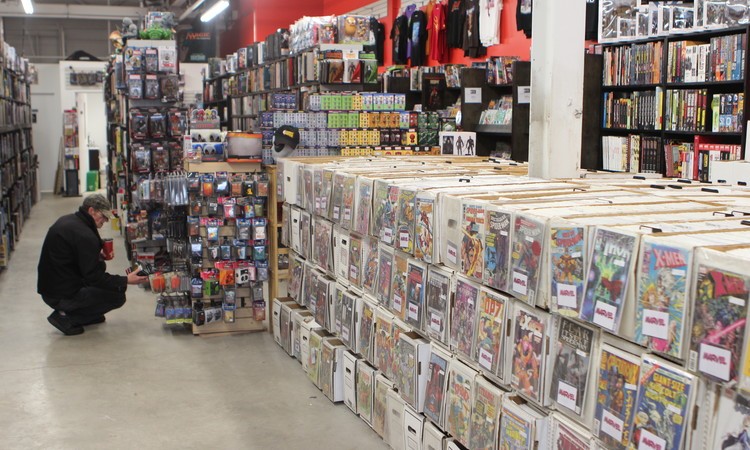
It was then I realized that one of the biggest frustrations I have when looking at dollar bins in comic shops is the lack of alphabetization of the comics. I don’t expect much; my LCS has the dollar boxes separated out by letter, but doesn’t bother to make sure it’s 100% perfectly sorted because that’d be a loosing battle. But there’s at least some semblance of order there that enables customers to find the letter they’re looking for and then flick through looking for a good deal on X-Men or Batman comics. But when they’re thrown in the boxes willy nilly? Yeah, that sucks.

Not my photo. Sourced from the Telegraph Journal (the link seems to be broken).

I get it, though. As a person who has to restock dollar boxes, I can tell you it is far easier to just dump them in and let the customers hunt. But what’s easier for me does not make for a good business practice in the long run.

For example, my wife and I stopped in at a shop a few months ago in a city we don’t visit all that often. In fact it was only the second or third time I’ve been to that specific shop in that city because the opening hours aren’t always compatible with the time and day we’re in said city. I digress. We stopped in the shop, and she was expecting me to go digging, which I did, and I knew she’d look for a bit before she eventually lost interest in the hunt (indeed, she actually found me a couple of absolute gems in their Free For The Taking box). She’s not a huge comic fan, and is certainly not fond of rooting through dollar boxes. Which allows me to circle back to my point; because the ten long boxes weren’t alphabetized, I had to look through each and everyone to find the hole-filling books for the series I was looking for.

And I did.

While I did find quite a lot of comics to plug the holes I was looking to fill, it irked me a little that I found an issue of X-O Manowar next to Moon Knight and Detective Comics. Rifling through those boxes left me less time to go through the other boxes, shelves and what have you that inevitably had a higher price tag (I always start in a dollar bin when hunting in a shop because you never know if the owner is using those to clear overstock of a book he’s got for $5 in marginally better condition). In this specific case the lack of alphabetization potentially cost the store further sales of more expensive product. I say potentially, because I don’t know if I’d have actually found anything else to pick up.

Alphabetizing, especially for stores, is a cheap and easy way to potentially increase sales. If nothing else, it also makes you look organized. Hence why it’s an appropriate subject for today’s column.


Unless the comics industry ceases any and all publication look for a future installment of Underrated to cover more comics that aren’t cracking the top 100.

Underrated: Ivar, Timewalker

We’re going back to early 2018 to revisit an old column this week, because if you listen to Those Two Geeks, then you’ll understand why this comic was so loved.


This is a column that focuses on something or some things from the comic book sphere of influence that may not get the credit and recognition it deserves. Whether that’s a list of comic book movies, ongoing comics, or a set of stories featuring a certain character. The columns may take the form of a bullet pointed list, or a slightly longer thinkpiece – there’s really no formula for this other than whether the things being covered are Underrated in some way. This week: Ivar, Timewalker


IVAR_HC_001_ALLEN-281x414.jpg

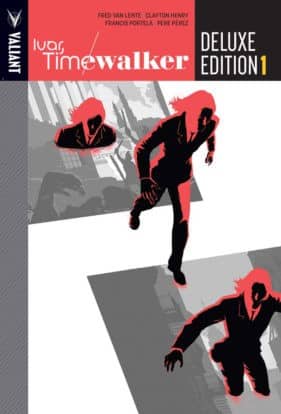
My comic shop recently got the deluxe hardcover edition of Valiant’s Ivar, Timewalker in on a special order for yours truly, which collects the entire twelve issue run in one place for $40. You can also pick up the series in three softcover trade paperbacks, if you’re so inclined, but I’ve become partial to the oversized hardcovers (especially because of the bonus material in the back, but then I love that stuff). I had already read the final four issues of the series long before I started reading the hardcover, which some would think would be foolish, but when you’re reading a book about time travel then it suddenly becomes less foolish.

In order to give you a bit of context, you’ll find the preview text for the series below.

“At this very moment in Geneva, Switzerland, history is being made. A thousand meters underground inside the Large Hadron Collider, researcher Neela Sethi is about to discover time travel – and jeopardize her life in the process. But she doesn’t know that yet. Ten minutes from now, every deadbeat chrononaut, wannabe conqueror, and misguided protector of the timestream will be banging down her door. Good thing that the legendary Ivar, Timewalker, got there first…right? Now it’s down to history’s most jaded, most tempestuous time traveler to stop the worst of everything that is, was, and will be…before time runs out!“

The series was written by Fred Van Lente, who was joined by Pere Perez, Francis Portella and Clayton Henry with Robert Gill, the first issue being released in January 2015, with the final issue coming in December of that year. The twelve issue series is one of the more underrated offerings from Valiant Entertainment, as many people don’t tend to think about Ivar, Timewalker when talking about the great comics to have come from this publisher – myself included.

As a story about time travel, Ivar, Timewalker is a series that rewards multiple readings – indeed, you could reasonably start at the beginning of any of the three arcs within the series, though this is admittedly more difficult to do with the deluxe edition than the single issues or the trades. Van Lente put together a story that will leave you with as many questions as it will provide answers with an intelligent script that effortlessly blends a heartbreaking story of loss, hope and determination with a sly wit that will have you laughing out loud more often than you would expect in a series that, technically, isn’t a comedy.

Time travel, and effects travelers can have on history are touched on, and often provide some interesting flashes to a story that at its heart is a tale of two incredibly different people; Ivar himself, and Neela Sethi – the scientist who will invent time travel. For as fantastical as the scenery is in this series (and thanks to the artists, it truly is phenomenal), the true draw is the relationship between the two leads.

And that relationship is why you need to read this wonderful story at least twice. I didn’t realize how good this book was when I first read it, and I dare say it’ll only get better with time. Pardon the pun.

Time travel has never been so wonderful.


Join us next week where there will doubtless be another movie, series, comic or comic related thing discussed that is, for whatever reason, Underrated.
The 5 Best Comics Set in Ancient Rome

With the long-awaited release of Gladiator II this week coupled with the continued decline of a current empire, ancient Rome is back in the cultural conversation. (Plus there was the whole “your Roman empire” TikTok phenomenon in 2023.) There have been many successful films, TV shows (Spartacus is my personal fave.), and video games about an empire that had such an impact on human civilization that I was studying their “dead” language for college credit in the mid-2010s. In addition to this, there are many wonderful comics where the Roman Empire is the main setting, including one of the most popular comics ever. In my research for this article, I discovered that there was a whole manga series called Plinivus about the life of Roman polymath and victim of the Mt. Vesuvius volcanic eruption, Pliny the Elder, but unfortunately, there’s no English translation so it just missed the cut.

However, here are five comic books set in ancient Rome for you to check out while you wait between Gladiator sequels.

5. SPQR Blues (Webcomic, 2005-present)

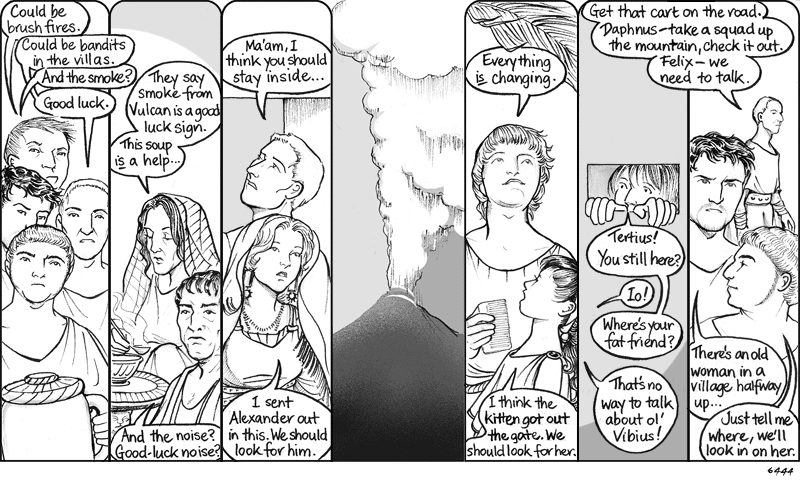
Lots of fiction and book about ancient Rome focuses on men with the honorific “Caesar”, the wars and battles of legions, or the political intrigue of a city that makes Washington, DC look like Mayberry. However, Carol Burrell’s SPQR Blues webcomic takes an opposite tack focusing on daily life in Herculaneum before the eruption of Vesuvius during the reign of Emperor Titus. The series follows the ups and downs of the life of former Roman soldier Marcus Felix as he settles down in Herculaneum and runs into his old friend Mus. As the series progresses, there is more intrigue (and murder), and figures from Roman history like future emperor Domitian make appearances. Also, it’s rewarding to see how Burrell’s art style shifts throughout the series going from looser to tighter pencils and more complex backgrounds. Her hand-lettered dialogue is also a continual treat. SPQR Blues is an ancient Roman soap opera with a sprawling cast that really picks up in its second chapter when Carol Burrell elucidates Felix’s backstory.

4. Britannia (Valiant, 2016-2018, 2024)

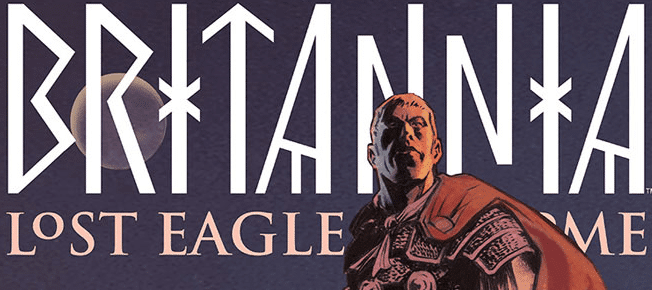
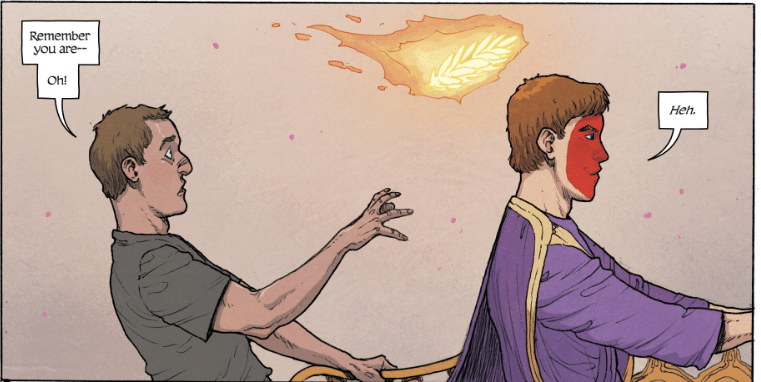
Written by Peter Milligan with art by Jose Juan Ryp, Robert Gill, and Alvaro Papagiani, Britannia is a supernaturally-tinged detective series set during the reign of Emperor Nero in the first century CE. Its protagonist is Antonius Axia aka the Detectioner, who faced down the monster Orkus in southern Italy and was revived by the Vestal Virgins with special abilities, including the powers of deductive reasoning. Axia’s missions send him all across the Roman Empire beginning in the titular frontier of Britannia to the wilds of Germania and, of course, to Rome itself in a gladiator-centric story called Britannia: We Who Are About To Die. A common thread in the story is the conflict between reason and superstition with Axia representing logic, and his British slave Bran (He’s refused freedom for tax purposes.) representing a belief in the supernatural. Each story has dynamic visuals from artists like Ryp and Gill who have gone on to draw X-Books for Marvel capturing the sex, blood, and rock’n’roll of this period in Roman history. As an added bonus, Britannia came back after a six year hiatus in the one-shot The Great Fire of Rome where Axia must find out the cause of the Great Fire of Rome while, for better or worse, the series becomes part of the greater tapestry of the Valiant Universe.

3. The Wicked + the Divine 455 AD (Image, 2017)

In popular culture, the main eras of Roman history that appear are usually the 1st century BCE, the 1st century CE, and the 2nd century CE because it features such heavy hitters as Julius Caesar, Augustus Caesar, and Marcus Aurelius as well as infamous figures like Nero, Caligula, and Commodus. The latter years, or the “decline and fall” of the Roman Empire, don’t get as much love unless figures like Attila the Hun, or by skin of their teeth, King Arthur. However, in this flashback one-shot as part of the modern classic The Wicked + the Divine series, Kieron Gillen, Andre Lima Araujo, and Matthew Wilson nail the decadence and depravity of the final days of Rome as an ancient Roman incarnation of Lucifer takes on the mantle of Julius Caesar, routs the invading Vandals, and refuses to accept his fate as a member of the Pantheon. This comic features one of the most intense and literal portrayals of burnout ever as Lucifer simply can’t accept a world where Rome doesn’t rule the world, but he also wants to be an actor and musician. As the only living member of the Pantheon, he gets to play off Ananke a lot, who wants to keep history traditional, Christian, masculine, and heterosexual instead of queer and rebellious. WicDiv 455 AD is a fun bit of hyperviolent melodrama, especially through the lavish visuals of Araujo Wilson. (Seriously, Lucifer playing one of his senator’s rib cage like a harp has stuck with me for the past seven years.)

2. Asterix (Various, 1959-present)

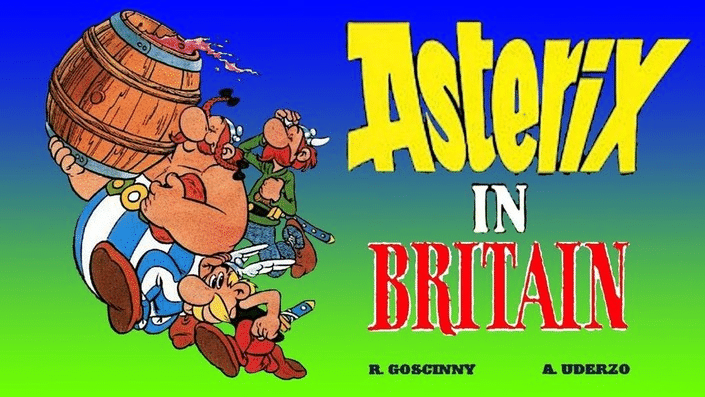
Of course, Asterix is on this list and not just to throw a bone to our site’s Francophone readers. Set in and around 50 BCE or thereabouts, Asterix follows the adventures of its titular character, who is a wise warrior and a member of the last Gallic village to resist Julius Caesar’s invasion. He and his not-as-bright, bigger giant monument-carrying friend Obelix defend their village from the Romans while also traveling to a variety of places like Germany, Egypt, Belgium, and even North America on various quests, involving puns, fisticuffs, food, drink, and of course, French stereotypes for other countries during the publication of the book. Although, some of the earlier books are dated at best and racist at worst, creators Rene Goscinny and Albert Uderzo bring a manic, mischievous sense of humor and an anarchic energy to both visuals and wordplay that makes these books highly entertaining reads even in 2024. (My personal favorite volume is Asterix in Britain) Asterix comics could definitely be considered one of France’s finest cultural imports (A close third to Daft Punk and Victor Wembanyama.), and there’s even an Asterix themed amusement park in Picardy with some seriously gnarly coasters. However, the books themselves still hold up (and are still being published) and are definitely worth checking out in 2024 with the caveat that they reflect traditional French stereotypes about the world around them through the lens of ancient Rome.

1. “Dirty Job” from Our Army at War #241 (DC Comics, 1972)

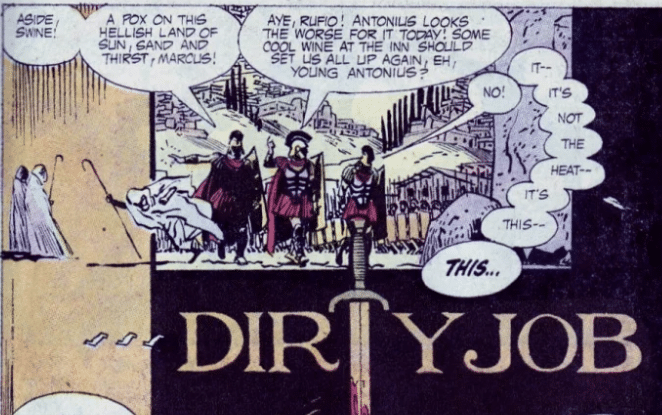
My favorite comic story set in ancient Rome is a four page backup story from a long-running DC war comic written by Teen Titans co-creator Bob Haney and drawn by the legendary Alex Toth. It’s about three Roman centurions drinking in a bar after a crucifixion and is one of the most touching anti-war, anti-imperialism, and yes, pro-Christian comic books of all time with Toth’s final page being a silhouette of the crosses on which Jesus of Nazareth and the two thieves hung from the New Testament story. I love the furrows that Toth draws in the face of the conscience-stricken young soldier Antonius, and the way he draws the careless movements of his compatriot, who paws and gropes at the serving women and other workers at the tavern. His layouts also show convey the oppression of the Romans towards the areas that they’ve conquered, and how trapped the centurions feel in following orders and having to do the “dirty work” of executions while their leaders recline in luxury. “Dirty Job” is a masterpiece of the comic book short story form, and its message resonates while empires continue to mistreat innocent people in Palestine on a daily basis.

Underrated: Snow, Glass, Apples

This is a column that focuses on something or some things from the comic book sphere of influence that may not get the credit and recognition it deserves. Whether that’s a list of comic book movies, ongoing comics, or a set of stories featuring a certain character. The columns may take the form of a bullet pointed list, or a slightly longer thinkpiece – there’s really no formula for this other than whether the things being covered are Underrated in some way.

This week: Snow, Glass Apples.


Snow Glass Apples

We all know the story of Snow White at this point. Whether that’s from the Disney version, the original Grimm Brothers story, or one of the other iterations released over the years, I would be surprised if you didn’t have some level of familiarity with the story, so I won’t bother to recap or copy and paste a synopsis here because it’s ultimately a moot point.

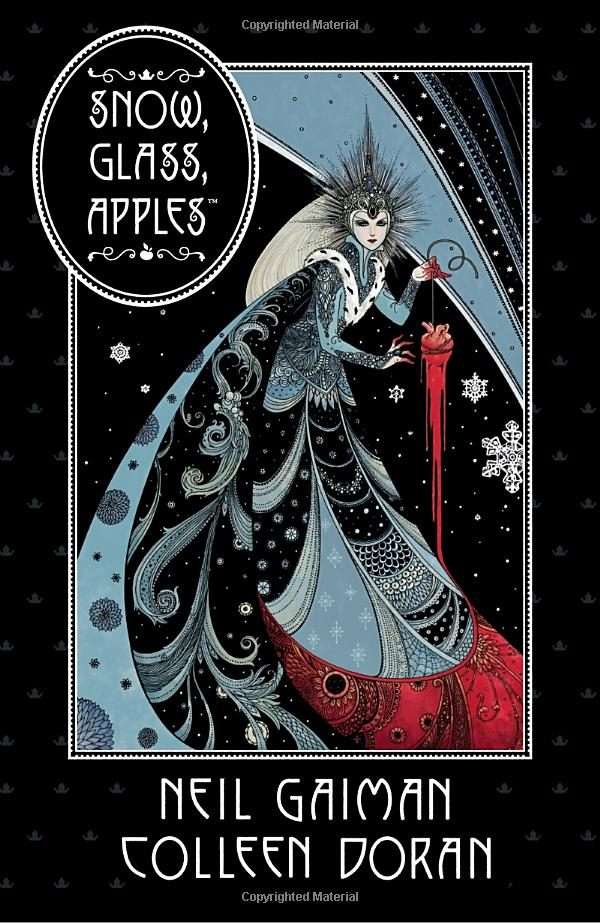
Neil Gaiman clearly assumes the same, as Snow, Glass, Apples builds upon that innate knowledge of the fairytale by telling the story from the perspective of the Evil Queen. Originally conceived as a short story in 1994, the book I read this morning was adapted from that story, and fleshed out with illustrations by the fantastically talented Colleen Doran.

I’m not entirely sure if I’d classify this as a graphic novel or an illustrated novel, and ultimately it’s a moot point because I enjoyed the shit out of how the words and art interplay across the page.

There’s more of a classic art style to the book, and while it wouldn’t be my cup of tea in, say, a Wolverine story, it’s perfectly suited to the reinterpretation of a classic fairytale.

I featured Snow, Glass, Apple this week not because I think Neil Gaiman or Colleen Doran are an underrated pair of creators, but because this is the kind of book that can easily be missed or skipped over by those who don’t feel the strike of curiosity as they see the cover, and that’s a shame. This is a solid book, and I’m glad my LCS added it to the list of things that they recommended to me.


Join us next week when we look at something else that is, for whatever reason, Underrated.
Underrated: Beasts Of Burden: Animal Rites

This is a column that focuses on something or some things from the comic book sphere of influence that may not get the credit and recognition it deserves. Whether that’s a list of comic book movies, ongoing comics, or a set of stories featuring a certain character. The columns may take the form of a bullet pointed list, or a slightly longer thinkpiece – there’s really no formula for this other than whether the things being covered are Underrated in some way. This week: the Dark Horse Comics’ hardcover collection Beasts Of Burden: Animal Rites.


Beasts Of Burden: Animal Rites

I’m willing to bet that a lot of you have never heard of this set of stories. Until recently, I hadn’t either.

A few months ago, the proprietor of my Local Comic Shop told me that I should read a hardcover graphic novel called Beasts Of Burden. It was still shrink wrapped, so I had no idea what is was about other than it featured talking cats and dogs, and that it was apparently right up my alley.  It took me almost two weeks before I finally caved and plonked down the $25 for the comic, an another week before I removed the shrink wrapped outer cover.

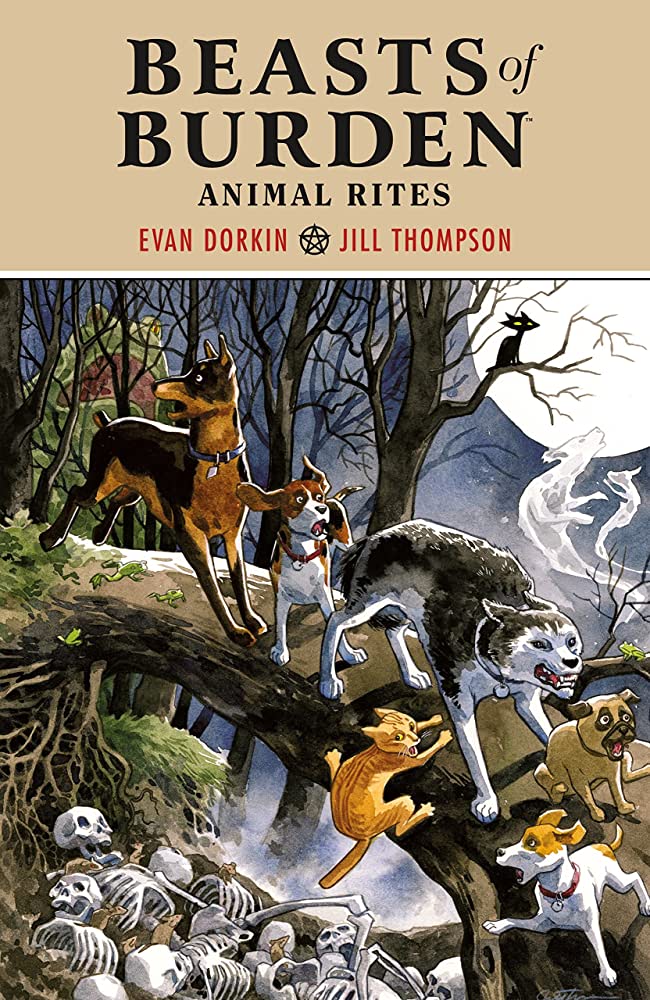
Upon cracking the cover and reading the small print (I like knowing what issues have been collected…) I found out that Beasts Of Burden Animal Rites collects eight stories from the series first appearance in the Dark Horse Book Of Hauntings released in 2003 to the first four issue miniseries from 2009, and tells the story of the pets of a sleepy neighbourhood called Burden Hill, and the adventures they get up to while their owners are asleep or at work. Beasts Of Burden: Animal Rites may look like it’s geared toward a younger audience based on the colourful artwork adorning the pages of the trade, but there’s a distinctly mature feel underpinning the comic as the characters deal with subjects that may surprise you.

There’s more than 150 pages of story in the graphic novel (there may be upwards on 170, but the trade is upstairs and I’m not so I can’t verify the story to bonus materials ratio so I guessed conservatively), and I read them all in a single sitting.

Up until the owner of my LCS recommended the collected edition to me, I had never seen any talk about the series anywhere before, which is a genuine shame because Beasts Of Burden: Animal Rites is a fantastic experience. Jill Thompson’s art won three Eisner awards, and it’s easy to see why she received the wins (the collected edition was also nominated for Best Anthology in 2007). Below is a sample from one of the early pages in the collected edition that will give you a feel of how good the artwork is.

bobar.jpg

You may notice the Orphan casually licking himself in the bottom left panel; it’s one of the numerous examples of the audience being reminded that these characters may be talking animals, but that they’re not just humans in animal form. Evan Dorkin infuses such personality into these domesticated little fluff bags with his writing, that by the time we get to experience the comic the resultant final product is frankly just phenomenal.

This collection is about as far from my typical comic book reading as you can get – the majority of my weekly reading is made up of spandex and capes – but there’s something refreshing about reading a collection of almost completely standalone stories featuring the same characters. There is some bleed over, and previous events do impact subsequent issues, but for the most part you could have happily read any issue of the series when initially released without reading the previous. This style gives the collection a really rewarding feeling as you go through it; you’ll notice subtleties to the art and writing that may not impact the stories hugely, but certainly add to the enjoyment of those who pick up on them.

Thematically, the stories touch on some very relatable topics, from acceptance, companionship and the need to help others, to the more supernatural side of things. Following the journey of these characters is incredibly rewarding, and at times touching, especially for those of us who have a pet at home (ironically enough my cat is sleeping on my lap as I write this). If you prefer a more typical-to-comics superhero style story, there is still something here for you; the Burden Hill gang feel very much like a classic super team where almost everyone gets along.

There’s genuinely something here for all walks of comic fandom to enjoy.

Beasts Of Burden: Animal Rites can be found for between $20-25 at your local comic store, depending on where you are (I’m in Canada and the hardcover cost me $25ish – your LCS may have discounted graphic novels).

So why did I want to spend an entire Underrated talking about Beasts Of Burden: Animal Rites? Because it’s one of the best collected editions that you’ve probably never heard of.  I do not exaggerate when I say this was one of the best hardcover collections I’ve read, and held, in my hands in a long time – both because of the content and the presentation.

And that, my friends, makes it criminally Underrated.

Underrated: God Country

This is a column that focuses on something or some things from the comic book sphere of influence that may not get the credit and recognition it deserves. Whether that’s a list of comic book movies, ongoing comics, or a set of stories featuring a certain character. The columns may take the form of a bullet-pointed list, or a slightly longer thinkpiece – there’s really no formula for this other than whether the things being covered are Underrated in some way. This week: God Country


God Country has one of the more interestingly unique concepts in comics; that of an Alzheimer’s patient who is cured when his hand touches a twelve foot sword, only to be drawn into the soap  opera like world of space gods that have more than a passing resemblance to the Greco-Roman pantheons. Written by Donny Cates, who also co-wrote The Paybacks with Eliot Rahal; that series looked at the other side of superheroing with a starkly funny focus on a group of knock off characters serving as superpowered repomen (and women) struggling to emerge from the crippling debt their equipment put them in. On the surface, God Country may have little in common with The Paybacks other than half of the writing team (and Geoff Shaw‘s art), that’s certainly true on a superficial thematic level, but at their core both series focus on something quite relatable: people and their struggles against every day adversity.

There is every chance that you probably recognize Cates’ name from his work on Venom, Thor and King In Black, and I’ll admit that it feels strange to write about something Donny Cates has written as being underrated, but this is a book that I don’t see people talk about as much as they should.

Emmet Quinlan’s family have been struggling with the horror of watching a loved one slip away whilst suffering from Alzheimer’s, and their struggles are haunting – if you’ve ever had to watch a loved one slip away while suffering this horrible disease as I have, then you’ll understand immediately how hard it can be. Donny Cates treats the subject with the respect it deserves without sugar coating the emotions that Emmet’s family face.

Of course, with this being a comic book called God Country, that’s not what the comic is about.

At least not in it’s entirety. You see Emmet finds a giant sentient sword that restores his mind in its entirety. While Emmet’s disease does form the backbone of his desire to keep his hand on the sword that returned his mind, it’s the conflict with the space gods who want the sword back that provides the more immediate physical threat.

If you enjoyed Jason Aaron’s run on Thor: God Of Thunder  then you’re going to find a lot to love here, from the heavily emotional sequences in the first issue to the more operatic space god scenes in subsequent comics, this is a powerful series – indeed, without Cates wry humour that appears every so often throughout the series, then this could easily become an almost too heavy story.

Ultimately though, this story is so much more than it seems on the surface.

God Country is that rare beast that uses a well thought out high concept science fiction or fantasy premise to tell the most human of stories. It is truly a work of art that had my eyes sweaty with respect – and that doesn’t happen very often when I read comics.


Join us next week when we look at something else that is, for whatever reason, Underrated.
Underrated: The Wrong Earth

This is a column that focuses on something or some things from the comic book sphere of influence that may not get the credit and recognition it deserves. Whether that’s a list of comic book movies, ongoing comics, or a set of stories featuring a certain character. The columns may take the form of a bullet pointed list, or a slightly longer thinkpiece – there’s really no formula for this other than whether the things being covered are Underrated in some way. This week: The Wrong Earth


The Wrong Earth

I initially stumbled over The Wrong Earth because the first issue of the second volume caught my eye. I enjoyed it, a lot, and decided to circle back and order the trade of the first volume.

What’s the book about? Well because I don’t see the need to rewrite the publisher’s blurb for the trade, I’ll paste it below.

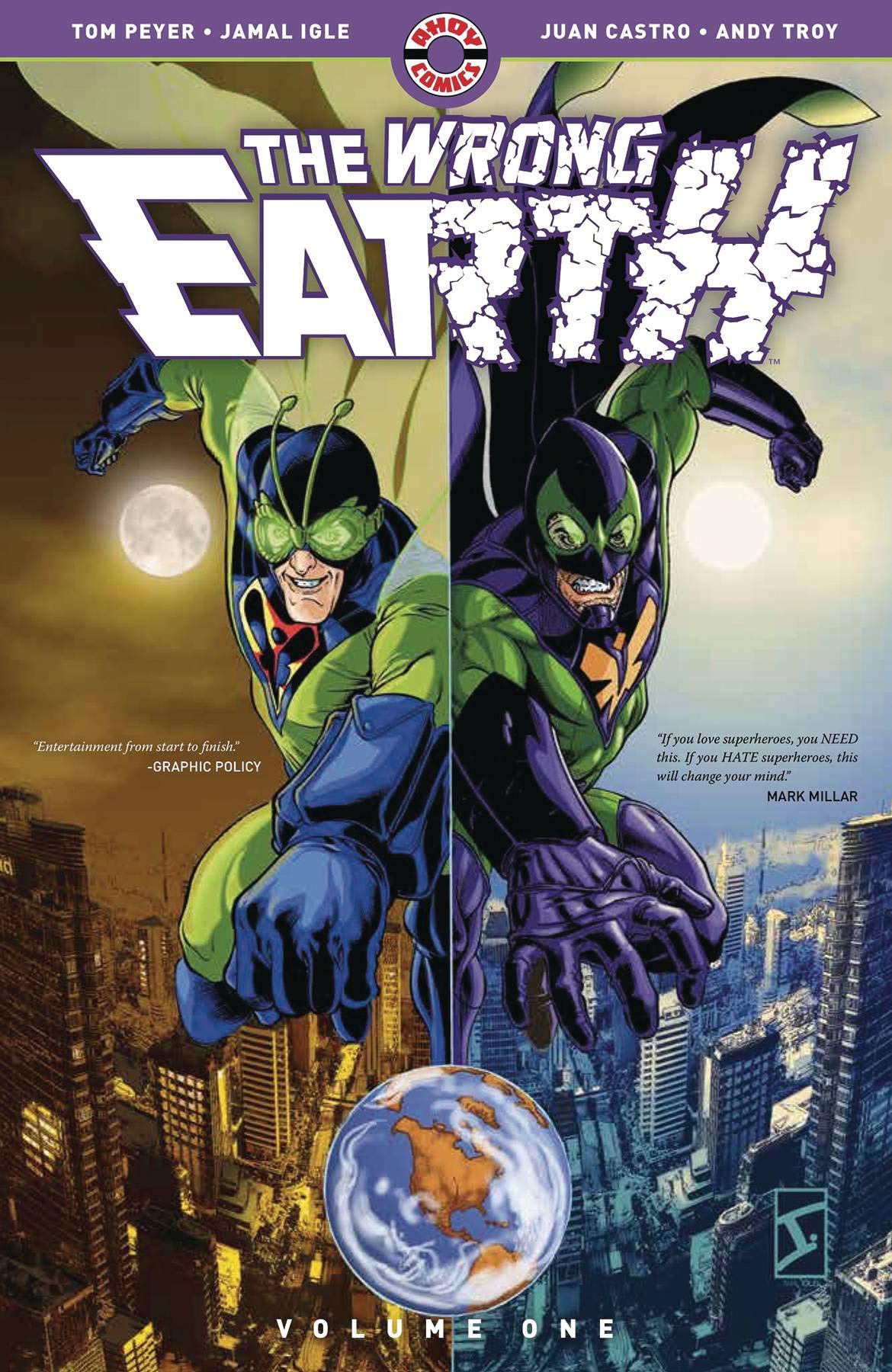
“On dark, gritty Earth-Omega, masked vigilante Dragonfly punishes evil maniacs and evades corrupt authorities. On sun-splashed Earth-Alpha, costumed crook-catcher Dragonflyman upholds the letter of the law. Now they’re trapped on each other’s worlds, where even the good guys don’t share their values!”

If the idea of the Silver Age Batman or the Adam West Batman and Frank Miller’s Dark Knight switching places sounds awesome, to you, well, that’s because it is. But it’s also so much more than just that elevator pitch.

Written by Tom Peyer, featuring art by Jamal Igle, with inks and colours provided by Juan Castro and Andy Troy respectively. Rounding out the creative team is letterer Rob Steen, who’s contributions to the comic are often subtle until you catch the sound effects giving you a nostalgic smile. Wrong Earth is the six issue miniseries that launched publisher Ahoy Comics, who some of you may recognise from comics such as Captain Ginger, Second Coming and Penultiman – but we’re not looking at those today. No, this column is about a book that hooked me from the premise, and then surprised me with just how well executed everything was.

A lot of superhero stories that can be seen to take inspiration from others (in the case, Batman), often struggle to tell a compelling story and also stand apart as anything other than a lesser imitation when all is said and done. Wrong Earth leans into the familiarity of the Silver Age with gleeful abandon; Peyer adds a little more realism to the era without sacrificing any of its fun – but he certainly calls out the foolishness of it all as you see the gritty Dragonfly loses his mind at how innocent the world of Earth: Alpha. Conversely, the reader is commiserating with Dragonfly Man as he realizes that Earth: Omega’s world is a living nightmare – and yet you can’t help but laugh as his Silver Age tricks inexplicably work in the modern era. There’s nothing quite like the sense of familiarity as he explains how he escaped a death trap with his cunning, logic, and a little bit of comics magic.

It shouldn’t work, but it does. It REALLY does.

When it comes to The Wrong Earth, I think I’ve found one of my favourite new stories. It is equal parts the charm of the Silver Age and the gritty sensibilities of modern comics, and yet it works in delivering one of the most entertaining stories from start to finish in this volume. In addition, there’s also five back up stories within the trade that enhance and build out the mythology of (the) Dragonfly/man’s world, which are all utterly fantastic.

I’ve only really scratched the surface with this book, because a lot of it you’ll benefit from going in as blind as you can – it’s fun, really fun, and an engrossing read that swooped below far too many radars. Go find this underrated gem at your favourite retailer now.


Unless the comics industry ceases to exist this week, Underrated will return next week.

Underrated: The Bill Schelly Reader

This is a column that focuses on something or some things from the comic book sphere of influence that may not get the credit and recognition it deserves. Whether that’s a list of comic book movies, ongoing comics, or a set of stories featuring a certain character. The columns may take the form of a bullet-pointed list, or a slightly longer thinkpiece – there’s really no formula for this other than whether the things being covered are Underrated in some way. This week: The Bill Schelly Reader.


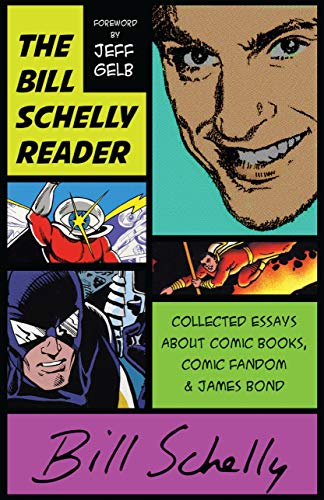
I’ve never been shy about my interest in comic book history, and it was when I was searching for some new books to scratch the itch, I came across The Bill Schelly Reader, a book by Bill Schelly that collects some of his finest prose work on the early history of comics and fandom.

Borrowing the text from the back of the book, because that’ll give you a better synopsis than anything I’ll write:

Bill Schelly has been writing about comics and fandom since 1965. In over 50 years one can do a lot of writing, and The Bill Schelly Reader includes some of the author’s best work on subjects ranging from the golden age of comic fandom to James Bond.

Schelly takes us back to the very beginnings of comic fandom with such articles as:

  • “Batmania”: a short history of the early 1960s fanzine (the first fanzine Bill Schelly ever read) credited for a resurgence of interest in Batman comics during a time of dwindling sales
  • “The First Comicons”: a retrospective on the first conventions organized by comics fans, from the Alley Tally Party to larger events in major cities like New York and Chicago
  • “It Started on Yancy Street”: an issue-by-issue look at the first fanzine devoted entirely to Marvel Comics, and why an unwelcome decision by Marvel led to its demise

In addition, book includes articles about the Silver Age Batman, Hawkman by Joe Kubert, the James Bond books by Ian Fleming, and an interview with the author. With dozens of vintage photos and images!

I’d never knowingly read one of Schelly’s essays before, though that’s mostly because I never got much of an opportunity to read Alter Ego where a lot of his essays were published. Over the course of The Bill Schelly Reader, Schelly dives into the early stages of comic fandom in the 1960’s, exploring the emergence of fanzines and the very first conventions. His essays are deep and incredibly interesting for those of us who want to learn more. A lot of the information that Schelly presents, while by no means the definitive history, paints enough of a picture so that you grasp what those days were like for fans. Remember this was long before any websites or even widely published magazine like Wizard, and so fanzines often had circulation numbers running at less than a thousand issues – and were put together by folks who also had other jobs (not unlike a lot of comics websites, but we don’t need to worry about publishing, printing and distribution of our content).

The essays run an average of ten pages or so each with a lot of additional images that add flavour to the text, and it’s amazing how much info Schelly crams into each one. There’s the odd moment where I found my interest waning, but for the most part the book held my attention from cover to cover (though I’d only read an essay or two a night).

If you’re at all curious about the early days of comic fandom, then I’d highly suggest you take a look at this book. Schelly’s literary work often goes out of print (well, as far as I know from my fifteen minutes of research, anyway), and then inevitably the prices spike. Grab this one if you’re at all interested.


Join us next week when we look at something else that is, for whatever reason, Underrated.
Underrated: MY CAPTAIN AMERICA: A GRANDDAUGHTER’S MEMOIR OF A LEGENDARY COMIC BOOK ARTIST EXPLORES THE WORLD OF JOE SIMON

This is a column that focuses on something or some things from the comic book sphere of influence that may not get the credit and recognition it deserves. Whether that’s a list of comic book movies, ongoing comics, or a set of stories featuring a certain character. The columns may take the form of a bullet pointed list, or a slightly longer thinkpiece – there’s really no formula for this other than whether the things being covered are Underrated in some way. This week: Captain America: A Granddaughter’s Memoir of a Legendary Comic Artist .


MY CAPTAIN AMERICA: A GRANDDAUGHTER'S MEMOIR OF A LEGENDARY COMIC BOOK ARTIST

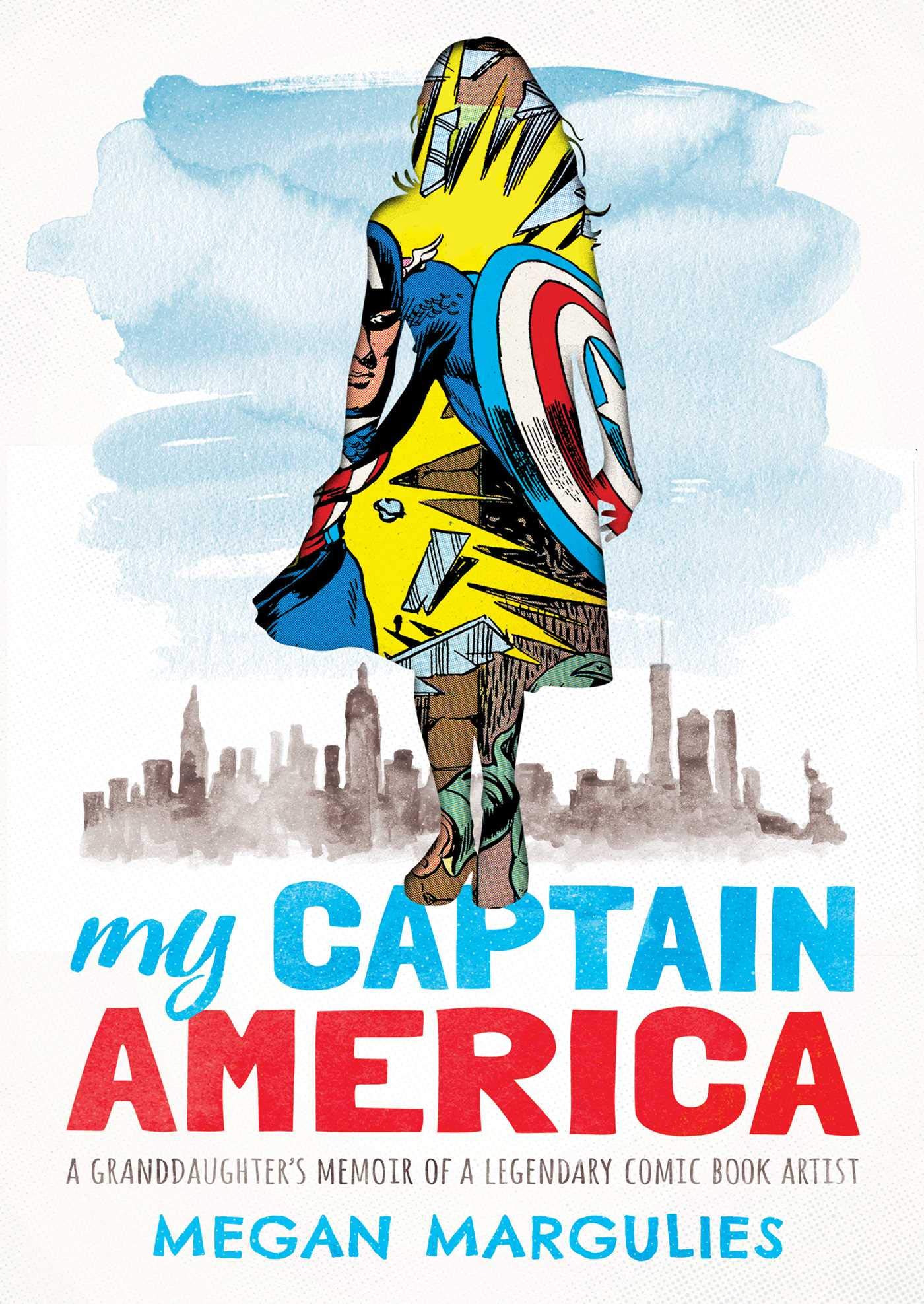
In the 1990s, Megan Margulies’s Upper West Side neighborhood was filled with strife, and the small one-bedroom apartment she shared with her parents and two younger siblings was hardly a respite. Salvation arrived in the form of Megan’s spirited grandfather, whose midtown studio became a second home. His living room was dominated by the drawing table, notes, and doodles that marked him as Joe Simon the cartoonist. But for Megan, he was always Daddy Joe.

That was all it took for me to want to read My Captain America: A Granddaughter’s Memoir of a Legendary Comic Artist; it checked all the boxes of my interest – comic book history and the chance to learn more about a legend, Joe Simon. I’ll be honest in saying I can count on one hand the number of memoirs I’ve read (aside from graphic novel memoirs, I could probably use two fingers to count), because ultimately memoirs aren’t typically my thing. Megan Margulies book recounting her relationship with her grandfather, however, was a book that I thoroughly enjoyed.

Although Joe Simon, or Daddy Joe, features prominently in the book, My Captain America… is as much Margulies’ story as it is about Joe Simon.

We follow Marqulies story growing up in the upper west side of New York City in a one bedroom apartment, through the expansion of her family and her rebellious teenage years. Through it all, there’s Joe Simon He is the refuge in a tumultuous young life, the island of calm as the author’s life spirals through familial squabbles and the New York of the late 90’s.

This isn’t a historical record of everything Joe Simon did in his storied comic book career and Marqulies never presents it as such, only bringing up moments that are relevant to the events unfolding on the page. By doing this, she is able to give you an insight into who Joe Simon was, and the impact he had one those around him. Her tidbits also have the effect of being told from a very unique perspective; – and yes, there are certainly aspects of the comic legend that many will be learning about for the first time from this memoir.

You will read about the behind the scenes of Simon’s interviews, snippets of his reactions to events within comics, and even hear about his experience watching Captain America: The First Avenger.

For any fan of Captain America, this book is a must read.

Joe Simon passed away at 98 years old in December 2011. Even knowing that date is coming when reading this book, you can’t help but feel heartbroken when Marqulies peels back the layers of time. The grief we feel as readers is only a fraction of what his family felt, and I’m not ashamed to say that my eyes were more than misty reading those pages. Marqulies pulls on every heart string you have, and some you didn’t know about.

What I was expecting to be an exploration of a comic book legend from a perspective that we’ve never seen before quickly became an intimate look at the relationship between a grandfather and his granddaughter that it was an honor to share.


Purchase: Bookshop – Amazon (Hardcover) – Kindle – Audiobook – Audio CD


Join us next week where there will doubtless be another movie, series, comic or comic related thing discussed that is, for whatever reason, Underrated.
« Older Entries Recent Entries »