Tag Archives: violence

Virus: 32 looks at an outbreak of violence from the the perspective of parenthood
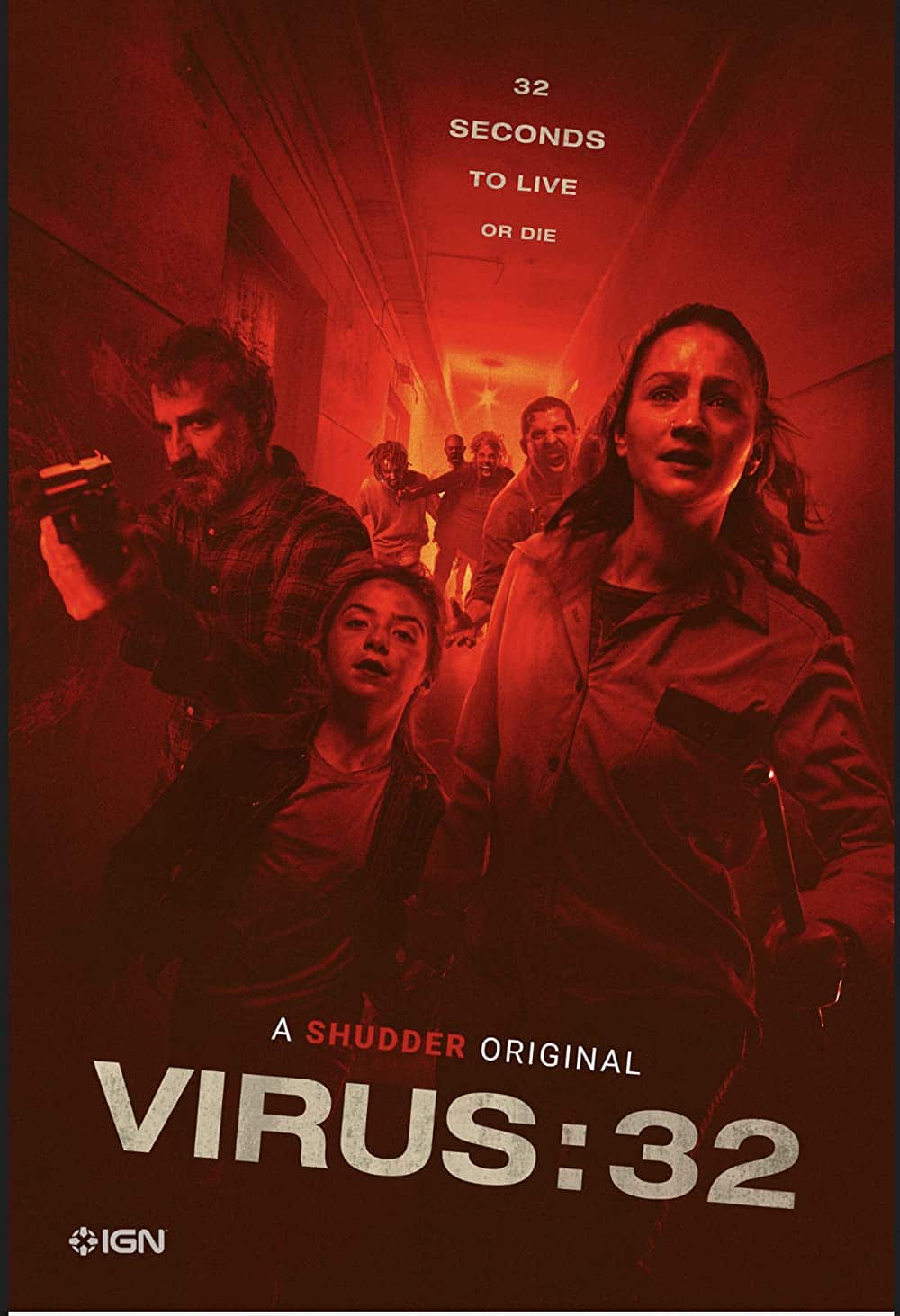
Virus:32

The zombie/infected horror subgenre is at a point where innovation and conceptual remixes are almost a necessity for any of its movies to succeed. The Walking Dead looked at survival from a multitude of forms and perspectives, the George Romero Dead movies took on the zombie as a metaphor for social collapse, and 28 Days Later framed the figure of the zombie-like infected human as a stand-in for society’s capacity for violence in times of crisis. Uruguayan infected/zombie movie Virus: 32 throws its hat in the ring with a story that looks inward rather than outward. Not at society as a whole but on the failings of the individual. It does so quite successfully.

Directed by Gustavo Hernández, Virus: 32 centers on Iris (played by Paula Silva) and her young daughter Tata (played by Pilar García Ayala) as a virus takes over the city of Montevideo, Uruguay. Iris is a security guard in a worryingly unkempt sports club, a place that looks more like a death trap than a place where people go to play anything. Iris is presented as a free spirit that resists meeting the traditional expectations of motherhood and responsible parenting.

Iris drinks before work, carries herself as if her life is simple and responsibility-free, and sees the idea of arriving to work on time more as a suggestion than a rule. Her attitude pushes her daughter away from her. Tata doesn’t like spending time with her forgetful mom, especially as she’s treated more like a friend than a daughter.

All of this is communicated to the audience in the first ten minutes of the film, signaling the filmmaker’s intention to make that relationship power the story at a personal level. It’s effective in that once the virus breaks out and starts becoming an immediate danger for Iris and Tata, the expectations surrounding the mother/daughter relationship come to the fore with a force, paving the way for an intimate look at these characters rather than on the total breakdown of society via infection. Iris’ parenting decisions catch up to her and they become a potent source of horror as they point to Tata’s safety not being in the most capable of hands.
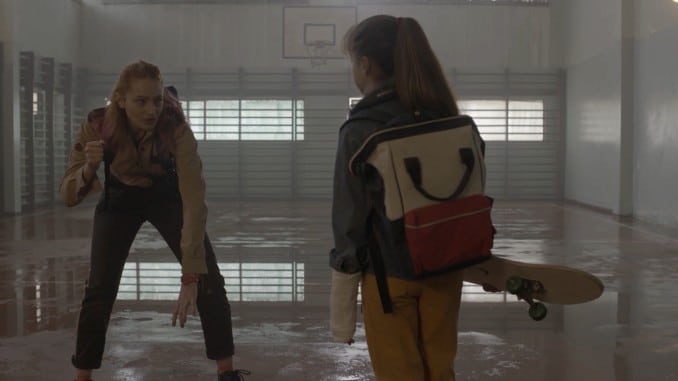
Virus: 32

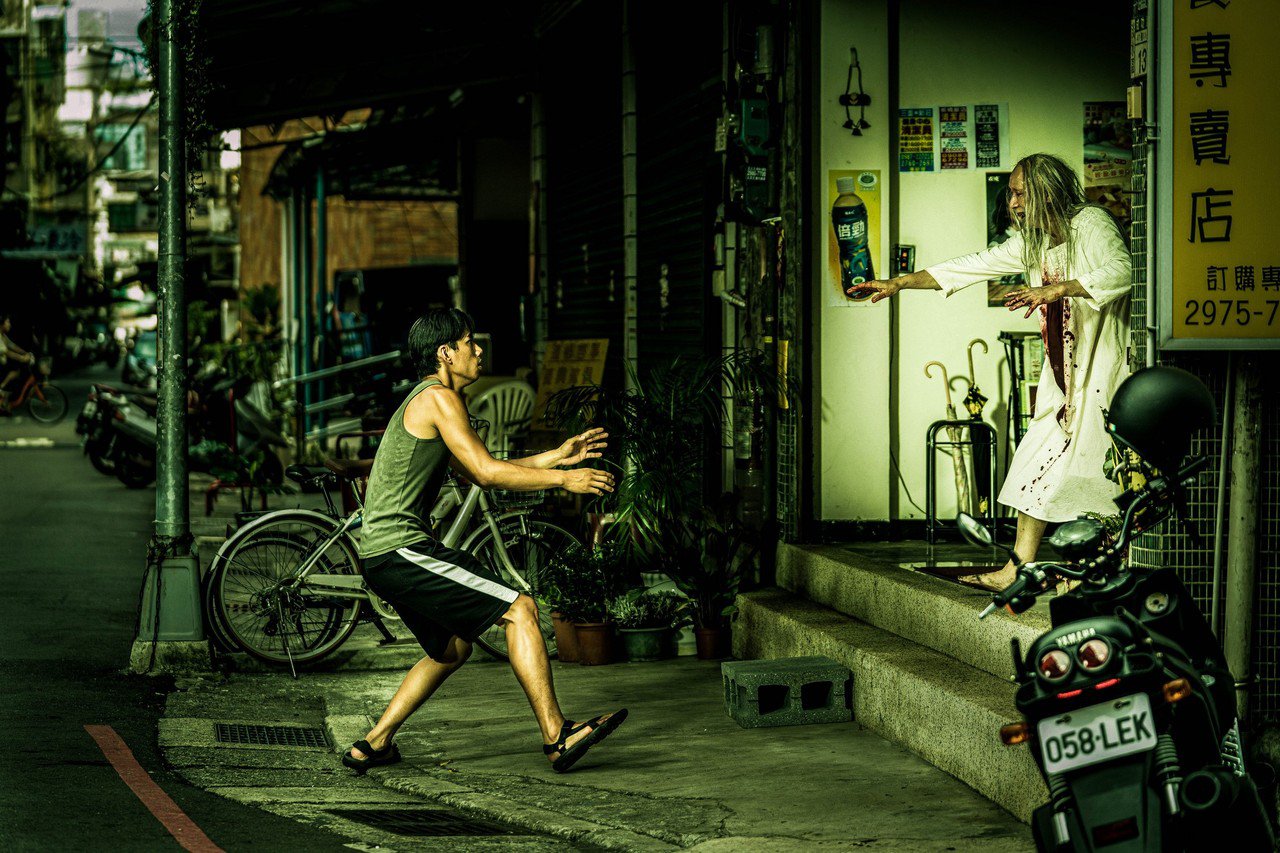
The main threat of the story, the thing that will metaphorically test Iris’s ability to be a good parent or not, is a virus that creates vicious killers that go berserk whenever a potential victim enters their field of view. The infected here remind of those in Garth Ennis and Jacen BurrowsCrossed, or with those in the ultraviolent 2022 virus movie The Sadness (which also borrows heavily from Crossed and 28 Days Later). They don’t eat flesh. They hunger for violence instead. In Virus: 32, the infected are incapacitated for 32 seconds after killing someone or hitting someone enough to leave them on the verge of death.

Director Hernández proves to be adept in creating a sense of horror over his characters that hinges on their fears of what they stand to lose as the pandemic breaks. For starters, Tata and Iris are split up for most of the film. Iris leaves Tata alone playing with her skateboard and kicking around basketballs as she goes to make her rounds in the sports club. Moments later, the first sign of things going completely wrong start making their way inside the club, immediately putting Iris’ decision to leave her daughter all by herself into harsh perspective.

Each terrifying development after that hits different thanks to Paula Silva’s performance as Iris. Her expressive, full-bodied performance packs an emotional punch that makes every situation feel oppressively intense, especially after another character with a unique but somewhat shared problem merges into her path (bringing another yet very different type of worry about parenthood into the story). Silva wears her character’s fears and regrets on her face and it helps the movie capture the metaphors at play more clearly.

For all of Virus: 32’s accomplishments with its personal take on the formula, there are moments, particularly in the last leg of the movie, that borrow too freely from its influences, most notably 28 Days Later. The infected behave much like those in Danny Boyle’s flick and some of the chase sequence seems ripped straight from it. The ending, too, has echoes of 28 Days, but what stuck with me was its refusal to commit to a particularly traumatic character development that happens late in the story and see it all the way through. It might’ve made for a bleaker experience, but it could’ve taken the movie’s metaphors in a different direction.

Virus: 32

Virus: 32’s decision to keep things personal helps elevate its infected/zombie story above standard fare. The movie sticks to a single location for the most part, introduces new problems with a very different and compellingly written character about halfway through, and it doesn’t settle on the grand but overused metaphor of humanity being the real monster in a zombie movie that so many others default to. It looks towards parenthood, considers how much damage it can do, and then puts it in a world devolving into senseless violence. It’s safe to say the latest wave of zombie movies has a good advocate for innovation in Virus: 32.

Virus: 32 is currently streaming on Shudder.
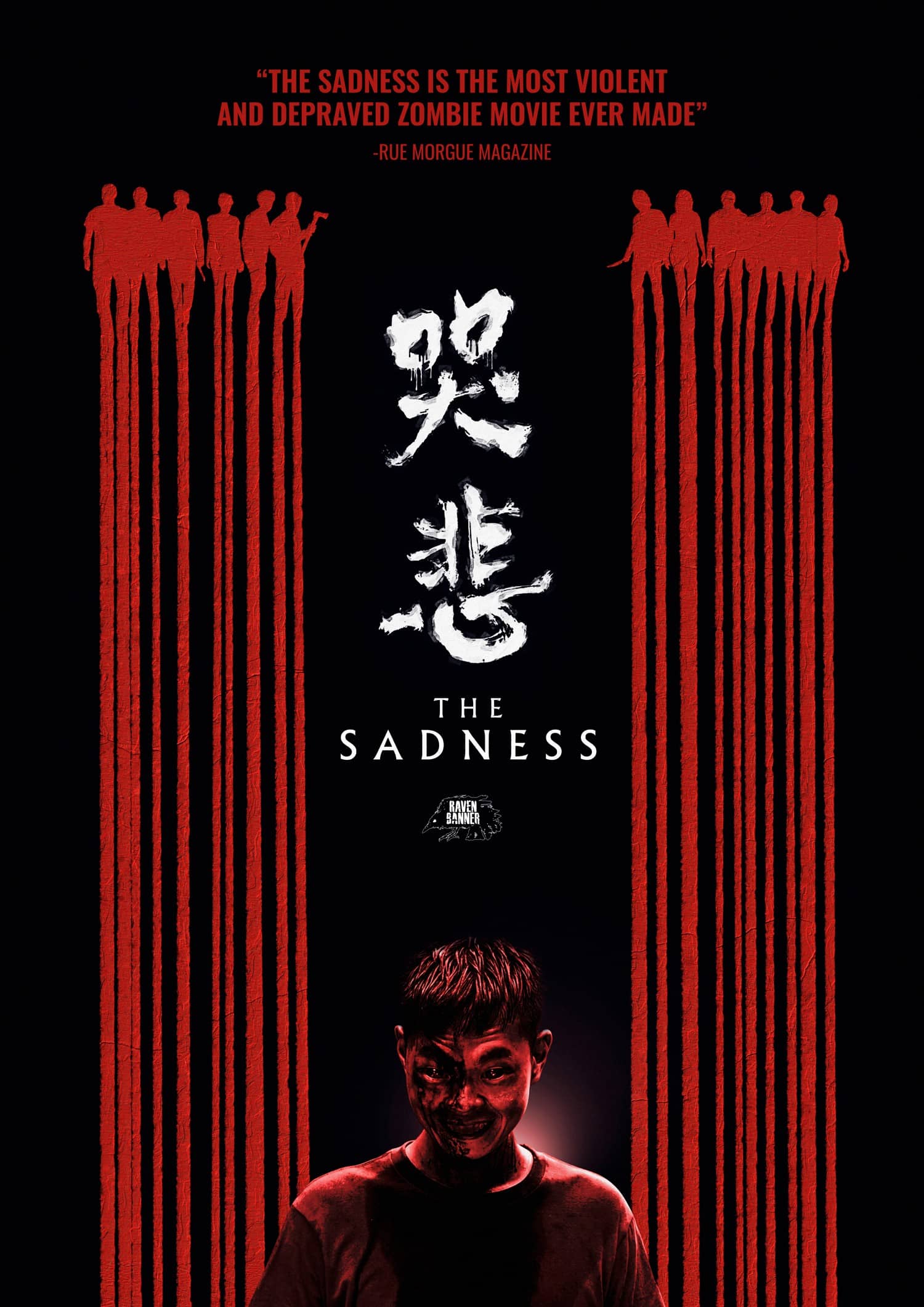
Movie Review: The Sadness holds up a mirror to show how ugly humanity can be

The Sadness

Horror produces some of the strongest, most visceral metaphors for humanity’s self-destructive bent across genres. Be it to comment on our near-cannibalistic drive towards consumerism in a capitalistic society (George Romero’s Dawn of the Dead) or to address harmful misconceptions about aggressive diseases that deteriorate our very bodies (David Cronenberg’s The Fly). There’s little to no contest. Horror does it better.

And yet, there are times when human behavior can be so ugly, so brutal, that metaphors might not be the adequate vehicle for getting a message across. Sometimes you need to hold a mirror up and just show the ugliness, blood and guts intact. Taiwanese horror movie The Sadness, directed by Rob Jabbaz, does exactly that to produce one of the most gut-wrenching horror experiences to date on our reactionary and selfish behavior during a pandemic. Brutal doesn’t even begin to cover the type of violence this movie manages to put on screen.

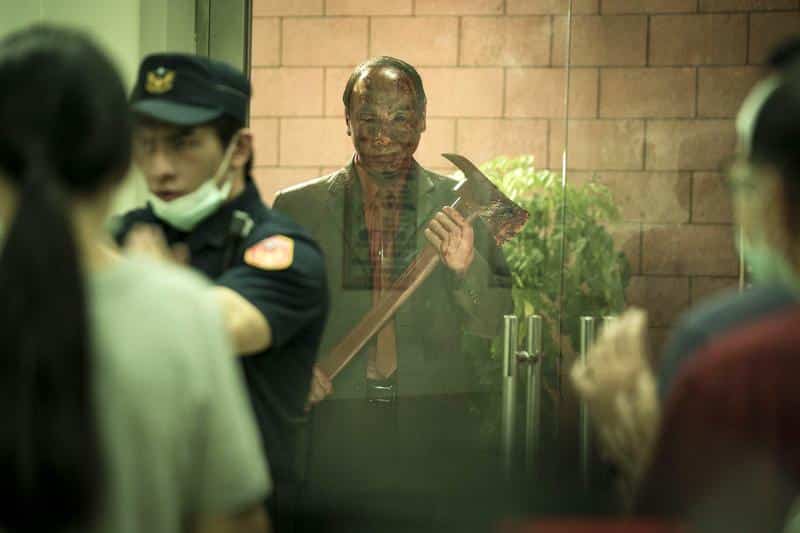
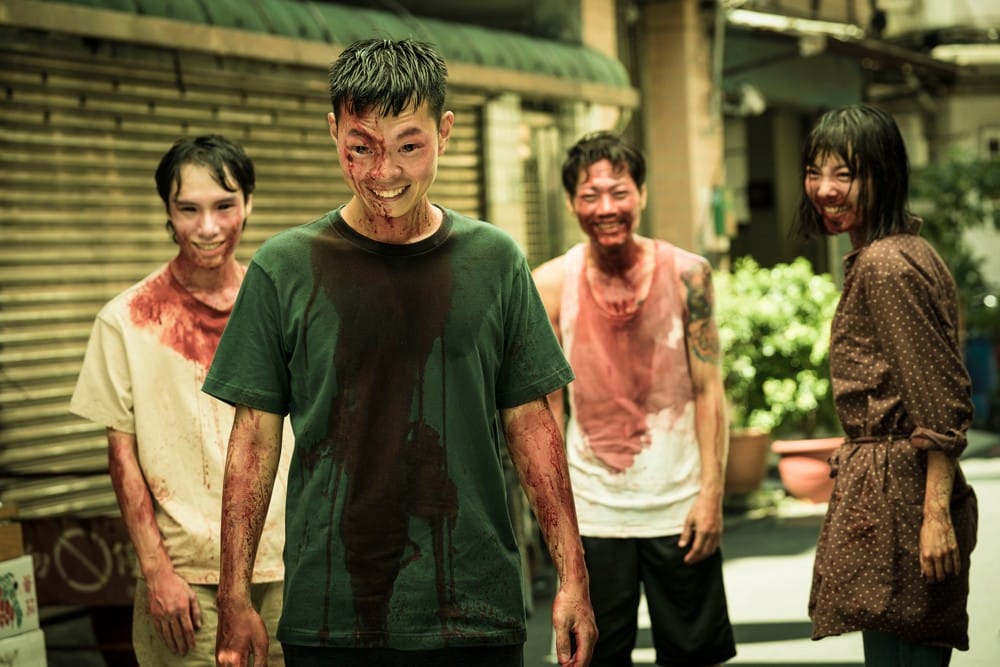
The Sadness (currently streaming on Shudder) sees Taiwan very quickly collapse under the strains of a highly contagious virus that turns the infected into ultraviolent killers unburdened by morality and possessed by a sexual rage that makes them even more repulsively dangerous. They represent an irreparable tear in the social fabric and they get plenty of opportunities to enact their darkest urges to show what total societal collapse can look like.

The story is driven by a couple living in the city as the pandemic breaks out. One of them is at home, Jim (played by Berant Zhu) and the other is at work, Kat (played by Regina Lei), just as things take a turn for the worse. Each one witnesses the different forms of violence the infected are capable of, guiding the viewer from shock to shock to build tension while also obliterating any sense of safety the characters can have as it progresses.

The Sadness

Fans of Avatar PressCrossed series (co-created by Garth Ennis and Jacen Burrows) will find themselves in familiar territory with The Sadness as the basic premise is pretty much the same as the comic’s. In Crossed, a pandemic breaks out that causes the infected to shed their morals and go on mass killing sprees interspersed with sexual violence. The exchange of bodily fluids created more crossed, named as such because of the red cross-shaped rash that appears on their faces. A similar thing happens in The Sadness. A change in eye color (from the original to a sickly dark red) that covers the entire eyeball separates the infected from the not infected.

Upon reading Crossed for the first time, I remember thinking that there was no way in Hell an American or even a British movie studio would ever dare adapt the comic into film. Until I’m proven wrong, The Sadness is as close as we’re getting to a Crossed movie.

Director Jabbaz’s decision to make the violence say its piece so close up to the camera, in many of the movie’s death sequences specifically, ends up playing to the story’s strengths, namely its intention to lay bare the levels of depravity people will willingly descend to if allowed. The movie is a gorehound’s dream, but it’s not exploitative or celebratory of gore for the sake of it. It’s meant to unsettle, to become a mirror of us at our worst.

The camerawork on display during the more violent sequences accentuates this. It’s structured in the service of making the audience feel repulsed by it. It differs from the Crossed comic in this regard, if only a bit. Ennis and Burrows tend to go over the top in their story for a very dark comedic effect that puts shock first and commentary second. This isn’t a knock on the comic, it’s just a difference worth pointing out.

The Sadness

It was also surprising to see a fair amount of restraint in the instances of sexual violence. What’s put on the screen regarding it is meant to further complicate the reflection the infected cast upon us, but it never outstays its welcome and what we get of it is focused and purposeful. Crossed is on the opposite side of the spectrum. It prefers to attack the senses by digging into all that’s horrible about the infected.

One standout performance comes from one of the infected, a business man who’s trying to flirt (very awkwardly) with the Kat character and gets infected during an intense train scene in which the infection starts spreading from passenger to passenger. The business man is played by Tzu-Chiang Wang and he represents the current strain of sexist male behavior that argues men are justified in expressing their desires towards women without fear of rejection or consequence. Men who act in accordance with this mindset view themselves as the victims of “female arrogance” and “female oppression” and thus argue that they’re being shunned or unjustly made out to be the villains.

This character ends up being one of the most malignant expressions of the virus, a stand-in for gender violence. The movie doesn’t hit viewers on the head with the message so much as it puts it front and center as a warning of how bad things can get in this particular subject if left unchecked. Other infected act accordingly, representing a behavioral fear that’s just unpleasant to think about, much less to look at.

The Sadness

Human cruelty and sadism have consistently proven to be some of fiction’s most powerful forms of terror. The Sadness operates like the unplugged version of these human traits. It’s a hard watch that confronts viewers with their potential to do serious social damage should certain conditions allow for it. Pair it with a reading of Crossed and you’ll find yourself having a tough time mustering even an ounce of hope for humanity.

Kentaro Miura’s BERSERK carries a legacy of blood, Guts, and great manga

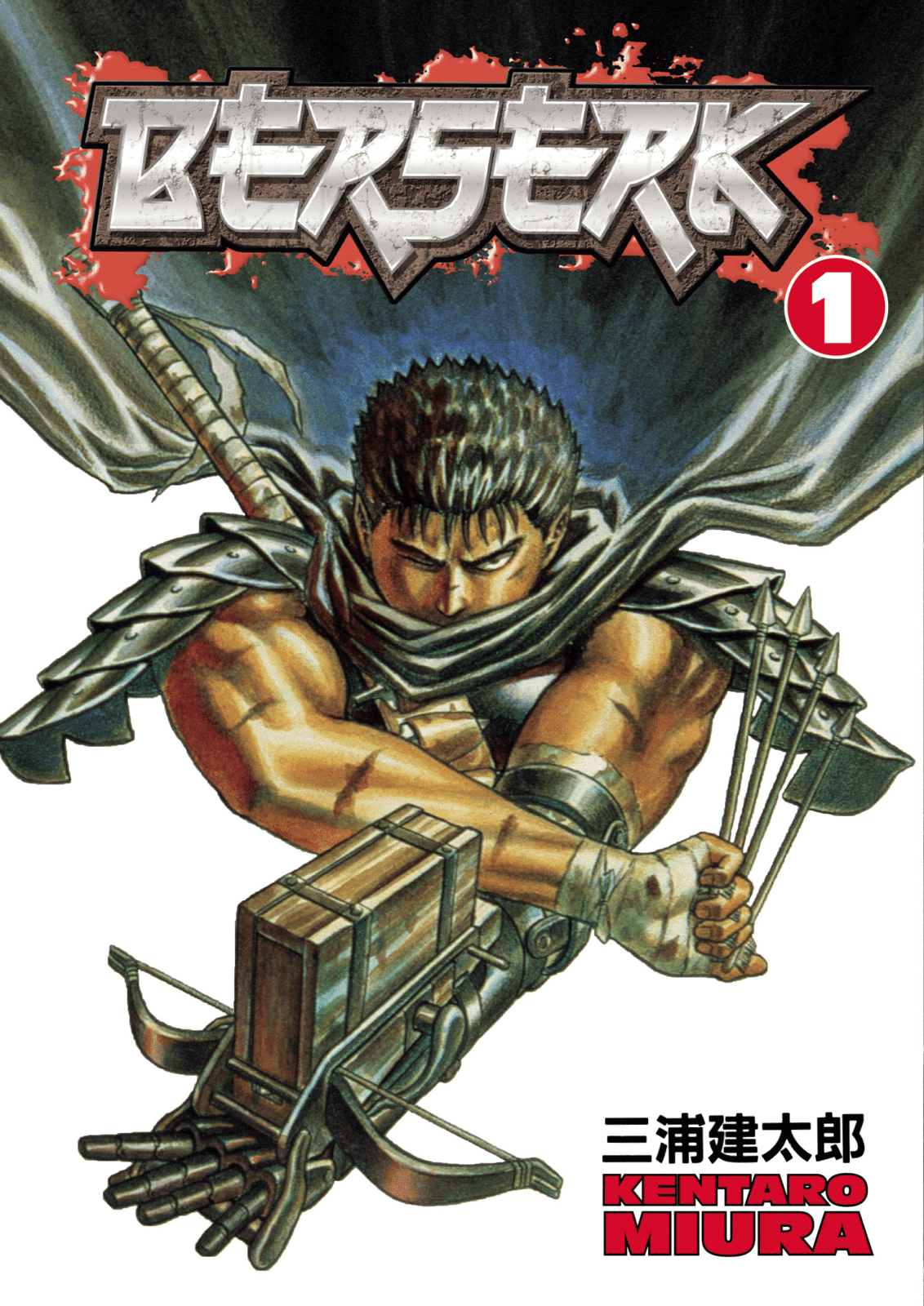
Berserk Vol. 1
Berserk, book 1

The passing of legendary manga writer/artist Kentaro Miura will either get veteran fans of his Berserk series revisiting the dark fantasy world he created for his giant sword-wielding warrior, Guts, or new fans looking to finally take the plunge into the sprawling epic.

Whichever the case, engaging with the first book of the series means experiencing a brutal read with monsters and other creatures that’ll make you readjust your fingers at the edges of the page so as not to touch the horrors Miura committed to it. This is certainly the case with the first pages of Berserk book 1, in which Guts is having sex with a woman that quickly turns into a monstrosity that looks like something straight out of an H.R. Giger nightmare and tries to kill him. It sets the tone for the type of story Berserk while tell.

Berserk follows the now iconic Guts, also known as the Black Swordsman, as he embarks on a journey fueled by revenge. Guts is branded with a symbol that attracts murderous demons towards him, forcing him into a life of isolation. The revenge aspect of the story centers on a character named Griffith that might or might not be responsible for Guts’ supernatural affliction.

Miura presents Guts to readers, in the first book, as the perfect man to deal with the violence and chaos that governs his medieval Europe setting. It’s a dark state of affairs that is overwhelmingly ugly and ever present. Death and gore is the status quo, which explains why Guts carries a giant broadsword that cuts people into pieces after a single swipe. The weapon is a reflection of how bad things are, and in Berserk’s case, things are quite bad.

Berserk
Berserk

We get a taste of this in the events that follow the aforementioned sex scene that opens the story. Almost immediately after the incident, Guts is faced with a group of bandits and soldiers that are throwing knives at a Pisky elf called Puck for their own deranged amusement.

Guts makes a bloody mess of the corrupt men for what seems to be a righteous motive, but it ends up being about sending a message to their leader, a humanoid snake demon that ends up giving Guts a particularly gruesome fight as he reveals his true form.

This is all meant to establish Guts as a kind of antihero character. His mission is purely personal and his commitment to the innocent people he meets along the way initially hinges on personal gain. Guts isn’t a hero here. He’s a hardened, near maniacal force of visceral violence that responds to his cursed reality in kind.

I characterize Guts as maniacal for the bleak outlook he has towards life, its worth, and how individuals who die on his watch are more a reflection of their own flaws rather than his. The Black Swordsman has little tolerance for weakness and takes no responsibility for the deaths of those who fall in combat around him. In some instances, he even laughs while explaining this, showing little regard for the misguided moral expectations others decide to put on him.

What’s impressive about how Miura introduces Guts to readers is that a considerable portion of his character development comes through violence rather than expository text. We get to know this man through the carnage he rains down on his enemies, and it’s not all done for the sake of bloodletting.

Berserk

There’s a kind of sadness to his existence knowing he doesn’t fight for glory or for the safety of others. By fighting for revenge, Guts is put on a road of no return, and he seems to be aware of it. Ruin is sure to follow and we as readers are given the necessary story elements to be able to foresee this and think on the cruelties of fate. It’s just awe-inspiring how Miura manages to achieve this level of storytelling through action rather than dialogue or narration.

Kentaro Miura’s Berserk has one of the best first books of a series in the history of manga and it does an admirable job of setting up a world and a main character that have no choice other than being iconic. Forget about the reasons you need to experience this book, just make sure you do and know that there’s a lot more waiting for those brave enough to stay the path.

Diversity in Comics? Rethinking Green Lantern #0

This is an adapted version of an article published on Reading with Pictures.

GL_Cv0_dsIn September 2011 DC Comics attempted to create their first major Arab Muslim American superhero, a new rendition of the Green Lantern, a staple character in the DC lineup dating to 1940. This new superhero, Simon Baz, made his appearance in Green Lantern #0, written by Geoff Johns with art by Doug Mahnke and Christian Alamy, and added a spark of diversity to the publisher’s largely white cast.

Unfortunately, they did so with a deeply troubling origin story in which Simon Baz stole a van that, unbeknownst to him, had a bomb in it. He was quickly arrested, taken to Guantanamo Bay and tortured. He was saved by the Green Lantern ring, which chose him as the world’s next protector. The ring allowed him to escape, whereafter he was pursued as a dangerous terrorist by the Justice League. All of this was published under the guise of authentically narrating the experiences of Arab and Muslim Americans.

Newspapers as respected as The New York Times reported on the Arab Muslim addition to the DC comic book universe, and interviews with writer Geoff Johns revealed his Lebanese ancestry — this, it was made to seem, gave him the credibility to write about Arab and Muslim American experiences.

Indeed, while it is critical that the experiences of racial prejudice, harassment, suspicion, and violence perpetrated almost daily against Arab and Muslim Americans be represented, there remains the damming potential for such representations to be the only way in which media consumers come to know Arab and Muslim characters. By default, these representations become the lens through which they come to view not only fictional people, but real lives.

The problem is one of character design: how the characters are created to be. This is a problem for all media, though it is particularly crucial for comics, since the industry is currently undergoing a push from fans and new creators to be more representative.

What this often means, as Green Lantern #0 shows, is checking off identities on a list of non-white/non-male categories, with the aim to please by name and number. Companies like Marvel Comics can now say, “Yep, we’ve got an Afro-Puerto Rican Spider-Man” and DC can say, “Yep, we’ve got an Arab Muslim.” But DC’s 2011 attempt at diversification also shows that diversity is limited, often to aggrandized stereotypical stories that, say, frame Arabs and Muslims as terrorists (even if by accident). So how about a little background on this issue.

To say that life has not been easy for Arab and Muslim Americans after the attacks on the World Trade Center and Pentagon in September 2001 would be farce. As literary critic and self-identified Arab American Stephen Salaita pointed out in his fantastic study of Arab American literature, Arab American Literary Fictions, the concept of Arab or Muslim Americans as a unified, racially distinct segment of the population emerged in response to fears of foreign Islamic fundamentalist terrorism, and the need to control potential threats at home.

Even before 9/11, Edward Said’s concept of Orientalism — that brand of racial ideology that fetishizes the Arab world, the East as a whole, and its cultural products as an exotic, mysterious, and must-have Other (i.e. “not us”) — had long structured America’s view of Arab and Muslim immigrants to the U.S. In the 1950s-1970s they were regarded as a model minority alongside Indians and Eastern Asians. Regardless, they were not considered a distinct group with identifiable and discernible characteristics.

In other words, unlike Blacks and Latina/os, Arabs and Muslims didn’t bother white middle-class suburbia. You know, those gl0so-called “average Americans.” Arab and Muslim Americans were not disruptive enough to white society to need designating as a specific racial group.  This is in part because before 9/11 “The Arab” and “The Muslim” were doofy Ottoman costumery, children’s parodies (Aladdin), and occasional bad guys (Indiana Jones).

In the wake of 9/11, violence against Arabs and Muslims, whether American or not, increased exponentially and was governmentally sanctioned via the stripping of Constitutional rights for the purpose of national security. Arabs and Muslims were widely depicted in film and on television as the enemy. Scholarship on the issue of Arab and Muslim representation has finally reached a headway, a result of the growth of Arab American Studies as a discipline emerging out of the long-established field of American Studies, and is best exemplified in Evelyn Alsultany’s Arabs and Muslims in the Media (NYU, 2012).

The violence, in many cases, is often spurred by the inability to read beyond media representations and to think critically about the plurality of Arab and Muslim lived experiences. Sikhs, non-Muslim Arabs, non-Arab Muslims, Muslim Arabs, and sometimes Jews are conflated with the identity of the singular, Otherized muslimarab-arabmuslim, a seemingly insoluble identity that is, according to government policy and popular belief, potentially engaged in fundamentalist Islamic activity or at least aware of such activity.

Not all Arabs are Muslim, not all Muslims are Arab. The United States hosts some 3.5 million Arab Americans, whose group identity is based largely in shared cultural and linguistic traditions which hail largely from the twenty-two members states of the Arab League.

Some are Christian, Jewish, atheist, Baha’i, etc. Muslims, on the other hand, number roughly 2.6 million, only 26% of which are of Arab descent. Many are from South(east) Asia, are black Muslims, white, or Hispanic, according to the 2006 American Community Survey, and in 2009 and 2011 they made up the largest percentage of immigrants to the U.S.

So where does this information, a context which we can use to critically read Green Lantern #0, leave us? Ultimately, it reminds us as readers who have market influence in comics more so than in almost any other format of Nerd media, that we need to demand more than stereotypes. I have not read Ultimate Spider-Man, but I have heard many fans attest to the sincerity with which Bendis writes Miles Morales. Gail Simone, likewise, writes female characters with an eye to their long history of being sexualized, fetishized, and abused by creators and fans.

We have to demand more than a story that, by all means, breaks boundaries but which simultaneously places other barriers to diversification. When “terrorist” and “Arab” or “hijab” and “Muslim (woman)” are binaries used to define an entire population of radically diverse lived experiences, we have to be willing to call bullshit. We have to be willing to exert the same kind of buying and petitioning power as when we got Orson Scott Card kicked off Adventures of Superman.

If anything good came out of Green Lantern #0, it’s the possibility to learn from a company’s mistakes and do “diversity” better. We’ll see how Marvel does with Ms. Marvel, and hope a lesson was learned.