Antony Johnston and Sam Hart Talk Atomic Blonde and The Coldest City
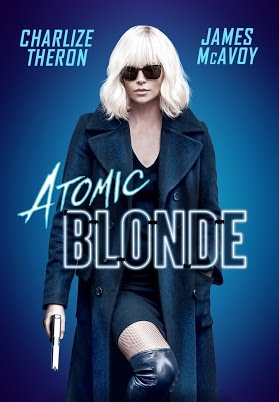 Out this week on blu-ray is Atomic Blonde, the big screen adaptation of the graphic novel by writer Antony Johnston and artist Sam Hart. The graphic novel was originally published by Oni Press under the title of The Coldest City.
We got a chance to talk to Antony and Sam about the movie, comic series, what it’s like to see your creation on the big screen, and if we’ll see a sequel.
Graphic Policy: How does it feel to see a comic you created on the big screen?
Antony Johnston: It feels amazing. It’s very exciting and surreal at the same time. Mainly exciting to see something I came up with at my desk 10 years ago out of my head and Sam brought to life at his drawing table, is up on the silver screen and millions of people have watched it. It’s extraordinary.
Sam Hart: Yup, same here.
GP: What were your involvement with the creation of the actual film? Were you hands on at all?
AJ: I was a Co-Producer of the movie so I had a little involvement. Most of the actual business of selling the rights was handled by Oni Press who shopped it around. Charlize’s (Theron) production company was interested. The production company was looking for something like this book at the time for herself to star in. Talks began. When things actually got moving, and it was apparent the movie was really going to happen, then I was sent the screenplay and then I was consulted on casting and when we were shooting I visited the set. I gave my notes on the screenplay and saw a rough cut of the movie.
I wasn’t there day to day but I gave notes and my thoughts and feedback on the movie as it was going. That was gracious of them because they didn’t have to have me involved in that way but they wanted me involved. I was grateful to be involved.
It was a great experience to see if all from the inside and the care of putting the movie together.
GP: Sam were you involved at all? The visuals of the film are amazing.
SH: They’re amazing. I wasn’t involved at all. But I was very happy with what they did.
GP: The soundtrack of the film really stands out. A lot of creators have said they listen to music when creating comics. When you were originally making it, were you listening to music at the time?
AJ: Amazingly no. I listen to music all the time when I’m working. I’m usually working to classical or ambient. I’m not one of those people who make playlists for a book. I never have though I know some do. The soundtrack was as much a surprise and delight to me as everyone else. It’s a fantastic soundtrack. I loved it.
SH: Same here. It didn’t occur to me to create a playlist at the time I was working on the artwork. It was a brilliant idea for the film people.
GP: Though the comic came out 10 years ago it feels like we’re back in a Cold War sensibility. You told a story about the Cold War and 30 years later and the story is still relevant.
AJ: That just goes to show you things move in cycles doesn’t it? You’re right, when I was writing the story the Cold War was seen as retro and quite unfashionable and the question was whether anyone would be interested in this story of Cold War spies? The answer is yes, nine years later it’s on everyone’s lips. History itself moves in cycles and creators should make in something they’re pasionate about because trying to predict what’s going to be in fashion is a fool’s game.
SH: Yeah, a bit on life going in cycles. When I was drawing the book, my first daughter had just been born and my second daughter is to be born in a week or two. It’s a different cycle but similar feeling for my life.
GP: Congrats!
AJ: One comic child and one movie child.
GP: That’s actually an interesting thing. Atomic Blonde is part of that beginning of seeing multiple kick-ass women on the big screen, Wonder Woman being another example this year. As a father of two daughters, how do you reflect on that?
SH: It feels amazing and two really good examples to show my daughters in what they can do with their lives. It’s an amazing feeling and two good examples.
AJ: I think it’s always interesting where one of the things where it’d be nice to reach as a society is where not every female character on the screen has to be a role model. So we can have enough of them where it’s ok for them to be a bit broken and not very nice. Unfortunately, we’re not quite there, but wouldn’t it be nice?
GP: It’d be nice if I didn’t have to ask that question at all and it was an afterthought.
With the film, the ending is differnet than the graphic novel. What are your general thoughts?
AJ: It wasn’t run by me. I did read the screenplay and I gave feedback. I didn’t want to have people feeling like I was standing over the shoulder because that’s no way to make an adaptation. I make adaptations myself for YA books and other short stories so I’ve seen the process from the other side of the fence. It’s no fun if you feel that the original creator is watching over your shoulder. So I was deliberately hands off. I said to the film makers that we made the best graphic novel we can and now it’s your job to make the best movie you can.
The ending was part of that and you can see why they did it. They’re hoping to make this a franchise and without spoiling the original for anyone that hasn’t read it, the original doesn’t leave a lot of room for sequels and a franchise. It’s totally understandable. The way they handled it was really well fashioned.
SH: The way they did it, I thought it was really well made and it plays with people’s expectations with people who have read the graphic novel.
GP: Sam, how does it feel as an artist to see real live people as your creations?
SH: It’s pretty amazing. It’s also amazing to see what changes they did for example with Percival. They kept the character personality but visually very different. Totally respectful of the character. Both versions make sense. For Lorraine it was interesting to me because I based the visual on my grandmother so watching the movie I’m imagining it’s my grandmother on screen.
GP: With the film out, is it possible we’ll get a sequel since there’s a second book? And how about a third book in the series?
AJ: There is a second book, I have nothing to announce at the time as to whether that’ll be adapted. I am working on a third book and the third book will focus once again on Lorraine. But that’s all I can say at the moment. There will be a third book at some point. Who knows, but keep an eye out.
GP: Is there a moment for each of you that really stands out from the film?
AJ: Apart from when our names are on screen?
GP: That could be the answer.
AJ: It’s hard to pick out a moment because the whole thing, because it’s the first work of mine that made it through the process. The whole thing blows me away. I do have favorite moments but they’re little touches of acting. There’s a look Møller gives Lorraine at one point a raised eyebrow without a word expresses so much. Little touches like that for me make the movie. I’m so familiar the big stuff is spectacular but the little moments of acting craft that you only spot after watching three or four times are what makes it for me.
SH:The same. At the end when you see “The Coldest City” on the credits was nice. The last time I saw the movie I noticed at Percival’s death scene they let the cigarette fall to the floor which is a call back to the beginning.
GP: Thanks so much for chatting and your time!

