
Review: Iceman #11
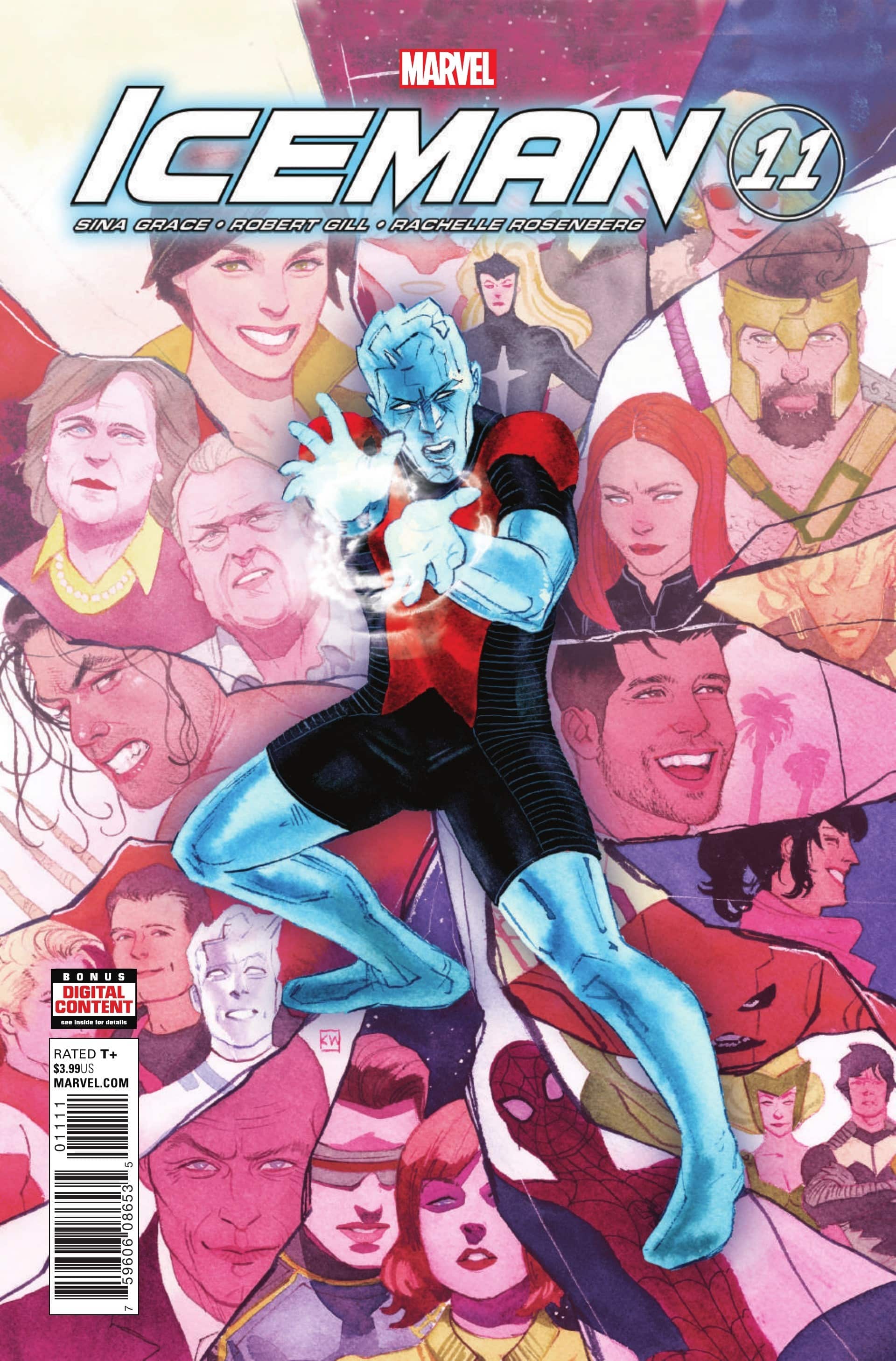 Sina Grace ends his run on Iceman with a strong standalone story where Bobby overcomes his neuroses, freakouts about his past and possibly leading his own X-Men team, and a trigger happy team-up buddy in Rictor to help his parents’ neighbor, Mr. Poklemba, come to terms with being a mutant. Robert Gill and Rachelle Rosenberg handle the art duties for the main story while Grace does his first Marvel interiors with flashbacks of Bobby’s life as a young boy and X-Man as he comes to terms with being both a mutant and gay. Grace looks at how religion can (Catholicism in Bobby’s case.) influence one’s coming out as queer in a negative way and provides a fuller look at
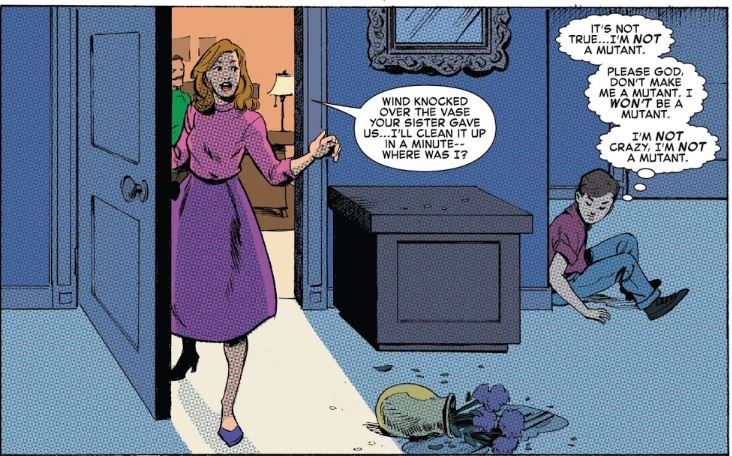
Even if Iceman #11 deals with some heavy subject matter, like a priest repudiating young Bobby Drake’s status as a mutant and his parents discussing if they did something wrong with him to be one, Grace and Gill don’t abandon the comedy and dad jokes. After a one page cold open of Bobby’s ideal life, they cut to an extremely awkward pho “date” featuring him and Rictor where they talk about their exes way too much Also, lunch dates are the unsexiest of all dates.
One of my qualms with Iceman as a series has been Bobby’s lack of interactions with other queer superhero in a non-hostile way (*cough* Daken), and Grace and Gill remedy this in Iceman #11. Bobby and Rictor banter about how Iceman’s neurotic jokes might be a little bit of a turn-off and then they get to go on a mission together and talk the mutantphobic, telekinetic mutant Mr. Poklemba off the ledge. Rictor sees this team-up as a straight-up neutralizing a violent mutant adventure of the week while it’s more personal for Bobby. Either way, Rosenberg’s scarlet palette coming from a house is never a good sign.
Sina Grace, Robert Gill, and Rachelle Rosenberg hit the right sweet spot between action spectacle and character introspection in Iceman #11. There’s a sort of silly scene where Rictor is getting tired of Bobby musing over how to reach out to Mr. Poklemba and is about to just knock the new mutant out, and Gill draws a montage of Bobby offering him an ice flower and wearing an ice helmet and wielding an ice sword until he finally ices down, introduces himself as Bobby and Madeline’s kid, and generally interacts with Poklemba on a human level.
Mr. Poklemba is pretty terrible with a house that is the opposite of clean, press clippings about all the bad things the X-Men have done, and has a religious hatred towards mutants, but Bobby doesn’t attack him and tries to help him through a heart to heart conversation. These scenes exhibit his growth as a character, and why he would make a great X-Men team leader because he chooses empathy over brute force and uses his abilities to defuse situations and not ramp them up. For example, because he has the ability to manipulate the temperature of water molecules, he tells Mr. Poklemba to lower his body temperature so that the rage fueling his ability subsides. He is calm and a helping hand (And has a great ass, I had to.) in the middle of a storm and helps Poklemba realize that maybe being a mutant isn’t as bad as he thought. Just because you have powers doesn’t mean you have to be a superhero or terrorist.
Iceman #11 has insightful flashbacks where Sina Grace shows his skill as an artist and riffs off the style of Jack Kirby, (possibly) Steve Ditko for the sad young Bobby at home scenes, Jim Lee, and even Stuart Immonen plus a plot featuring a one two-punch of cool ice/earthquake powers and human empathy. The series as a whole has been up and down, but Grace, Robert Gill, and Rachelle Rosenberg end it on a positive note with Bobby starting to realize his potential as both an X-Man and a single, gay man.
Story: Sina Grace Art: Robert Gill, Sina Grace Cover: Kevin Wada
Color: Rachelle Rosenberg Letterer: VC’s Joe Sabino
Graphic Designers: Jay Bowen, Anthony Gambino
Group Editor: Mark Paniccia Editor: Chris Robinson Consulting Editor: Darren Shan
Story: 8.2 Art: 8.6 Overall: 8.4 Recommendation: Buy
Marvel Comics provided Graphic Policy with a FREE copy for review
