
Tag Archives: prejudice

People’s History of the Marvel Universe, Summer Special: Anti-Mutant Prejudice in the Superhero Community

Anonymous asked:

Are there any notable examples of anti-mutant prejudice towards the X-Men coming from within the superhero community?

This is a great question!

This gets to the complicated nature of how mutants fit into the Marvel Universe. I’ve always been a vocal proponent of the idea that, far from the mutant metaphor only making sense if it’s in its own little bubble where mutants are the only people with superpowers, the mutant metaphor actually functions better in the context of the Marvel Universe, because it allows you to explore more complicated and more subtle ways that prejudice functions.
Image

While there are plenty of super-villains who have quite blatant anti-mutant prejudice, you don’t tend to get that same kind of overt bigotry towards mutants among super-heroes. Partly, this is because bigotry is a very unheroic character trait, but it also has to do with the way that the way that Marvel historically portrayed the spillover effects of anti-mutant prejudice.

Following in a kind of Niemöllerian logic, it’s almost always the case that groups that hate and fear mutants also end up hating and fearing non-mutant superheroes. Thus, Days of Future Past starts with the Sentinels being turned on mutants, but it ends with the Sentinels wiping out the Avengers and the Fantastic Four too – because the same atavistic fear of “the great replacement” applies to both mutants and mutates. Likewise, the same forces that line up to push through the Mutant Registration Act inevitably end up proposing a Superhuman Registration Act, because once you’ve violated the precepts of equality under the law for one minority group, you establish a precedent to do it to another.
Image

Instead, I would argue what you see in the case of anti-mutant prejudice among superheroes is explorations of liberal prejudice. This takes many different forms: in Civil War, you see Tony Stark insensitively try to wave the bloody shirt of Stamford in the face of a survivor of the Genoshan genocide or Carol playing the good liberal ally but ultimately trying to get mutants to set aside their own struggle in favor of her own political project. (For someone who’s spent a good deal of time working, and living with, the X-Men, occasionally against the interests of the state, Carol does have a tendency to stick her foot in her mouth. Hence in Civil War II, you see Carol essentially goysplaining the dangers of creeping authoritarianism to Magneto.)

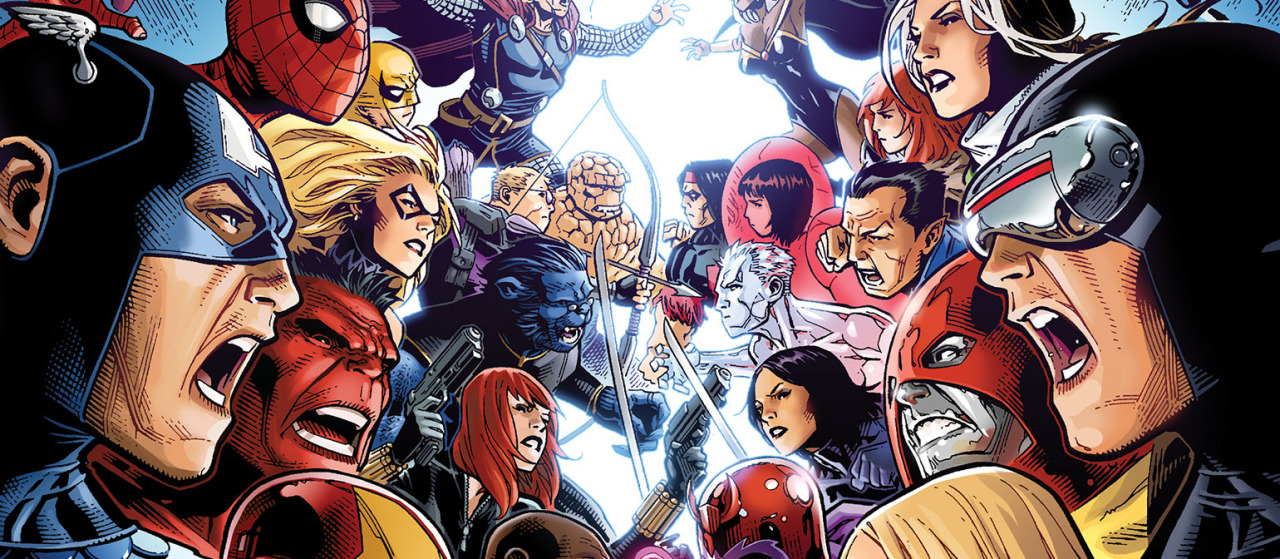
In Avengers vs X-Men, you see the Avengers acting like they know the Phoenix Force better than mutants and ultimately prioritizing the safety of mankind over the efforts of mutantkind to reverse their own extinction. This is where the “Avengers are cops” meme in the fandom comes from. (I would argue that Captain America is badly mischaracterized in the latter event – we know which side he’s on when the interests of mutants and the interests of the state come into conflict.)

The common thread here is that anti-mutant prejudice among superheroes emerges as a kind of unthinking, unreflective callousness brought on by a worldview that thinks of humans as the universal default of lived experience – while thinking of mutants as a somewhat annoying special interest group that fixates on their particularist grievances rather than working for what the heroes consider to be the common good.
Image

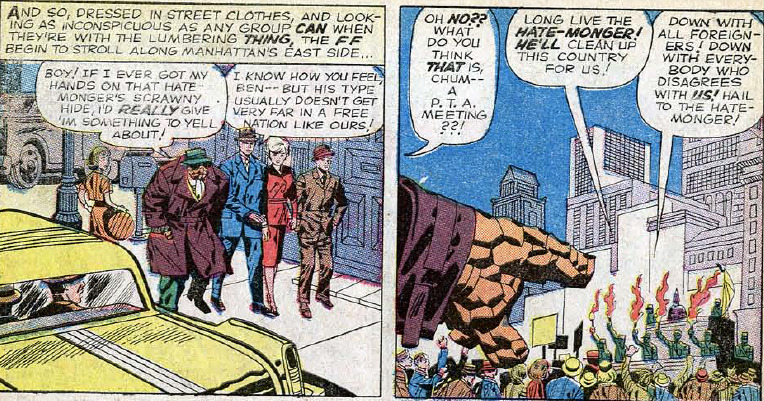
For a more intimate version of how this plays out, I think the Fantastic Four are a great exploration of how “well-meaning” liberals can massively fuck up when they don’t do the work of examining their own biases. We’ve seen this since the very beginning: in Fantastic Four #21, Kirby goes out of his way to depict uber-WASP Reed Richards blithely assuming that the “free market of ideas” will take care of the Hatemonger, while the subtextually Jewish Ben Grimm knows that the way to deal with a mind-controlling Hitler clone wearing purple Klan robes is deplatforming-by-way-of-clobberin’.

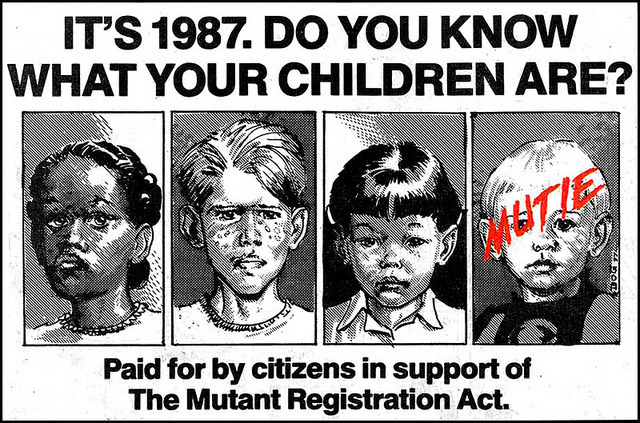
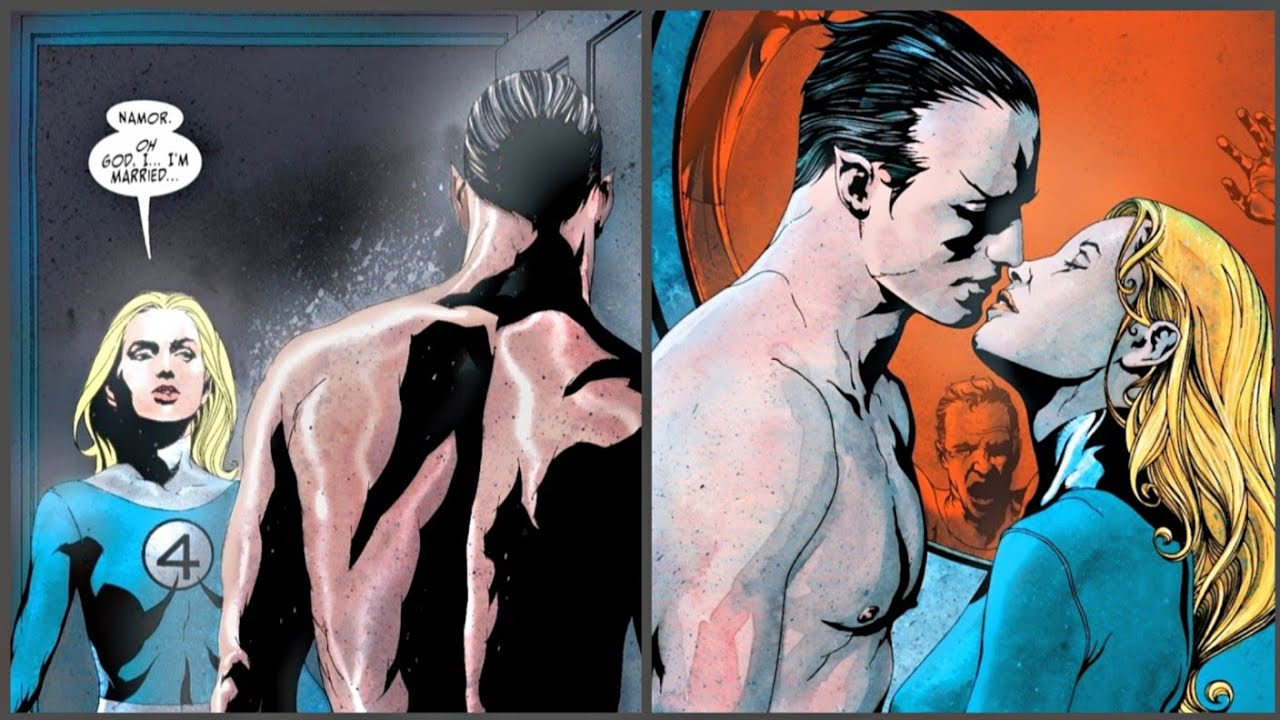
Then later on, we see Reed Richards debate Congress out of passing a Superhuman Registration Act, while saying nothing about the Mutant Registration Act – even though he has a mutant son who is directly threatened by it. (See that adorable blond moppet with the slur scrawled across his face in the fictional advertisement above? That’s Franklin Richards.) This is why I have a crack theory that Franklin’s biological father is actually Namor rather than Reed, which is why Reed so consistently shows a passive-aggressive hostility to his son’s mutancy.
Image

At the same time, Sue also has her blindspots when it comes to mutant rights. In the underrated FF/X miniseries, Susan Storm acts like an understanding and supportive parent to Franklin – right up until someone suggests that Franklin might want to come to Krakoa and explore his mutant identity, at which point she goes full Karen and starts lashing out with her powers. Chip Zdarsky, the writer, explicitly compared Reed and Sue to liberal parents who support gay rights in the abstract until their kid comes out as trans and wants to spend time in LGBT+ spaces.

Diversity in Comics? Rethinking Green Lantern #0

This is an adapted version of an article published on Reading with Pictures.

GL_Cv0_dsIn September 2011 DC Comics attempted to create their first major Arab Muslim American superhero, a new rendition of the Green Lantern, a staple character in the DC lineup dating to 1940. This new superhero, Simon Baz, made his appearance in Green Lantern #0, written by Geoff Johns with art by Doug Mahnke and Christian Alamy, and added a spark of diversity to the publisher’s largely white cast.

Unfortunately, they did so with a deeply troubling origin story in which Simon Baz stole a van that, unbeknownst to him, had a bomb in it. He was quickly arrested, taken to Guantanamo Bay and tortured. He was saved by the Green Lantern ring, which chose him as the world’s next protector. The ring allowed him to escape, whereafter he was pursued as a dangerous terrorist by the Justice League. All of this was published under the guise of authentically narrating the experiences of Arab and Muslim Americans.

Newspapers as respected as The New York Times reported on the Arab Muslim addition to the DC comic book universe, and interviews with writer Geoff Johns revealed his Lebanese ancestry — this, it was made to seem, gave him the credibility to write about Arab and Muslim American experiences.

Indeed, while it is critical that the experiences of racial prejudice, harassment, suspicion, and violence perpetrated almost daily against Arab and Muslim Americans be represented, there remains the damming potential for such representations to be the only way in which media consumers come to know Arab and Muslim characters. By default, these representations become the lens through which they come to view not only fictional people, but real lives.

The problem is one of character design: how the characters are created to be. This is a problem for all media, though it is particularly crucial for comics, since the industry is currently undergoing a push from fans and new creators to be more representative.

What this often means, as Green Lantern #0 shows, is checking off identities on a list of non-white/non-male categories, with the aim to please by name and number. Companies like Marvel Comics can now say, “Yep, we’ve got an Afro-Puerto Rican Spider-Man” and DC can say, “Yep, we’ve got an Arab Muslim.” But DC’s 2011 attempt at diversification also shows that diversity is limited, often to aggrandized stereotypical stories that, say, frame Arabs and Muslims as terrorists (even if by accident). So how about a little background on this issue.

To say that life has not been easy for Arab and Muslim Americans after the attacks on the World Trade Center and Pentagon in September 2001 would be farce. As literary critic and self-identified Arab American Stephen Salaita pointed out in his fantastic study of Arab American literature, Arab American Literary Fictions, the concept of Arab or Muslim Americans as a unified, racially distinct segment of the population emerged in response to fears of foreign Islamic fundamentalist terrorism, and the need to control potential threats at home.

Even before 9/11, Edward Said’s concept of Orientalism — that brand of racial ideology that fetishizes the Arab world, the East as a whole, and its cultural products as an exotic, mysterious, and must-have Other (i.e. “not us”) — had long structured America’s view of Arab and Muslim immigrants to the U.S. In the 1950s-1970s they were regarded as a model minority alongside Indians and Eastern Asians. Regardless, they were not considered a distinct group with identifiable and discernible characteristics.

In other words, unlike Blacks and Latina/os, Arabs and Muslims didn’t bother white middle-class suburbia. You know, those gl0so-called “average Americans.” Arab and Muslim Americans were not disruptive enough to white society to need designating as a specific racial group.  This is in part because before 9/11 “The Arab” and “The Muslim” were doofy Ottoman costumery, children’s parodies (Aladdin), and occasional bad guys (Indiana Jones).

In the wake of 9/11, violence against Arabs and Muslims, whether American or not, increased exponentially and was governmentally sanctioned via the stripping of Constitutional rights for the purpose of national security. Arabs and Muslims were widely depicted in film and on television as the enemy. Scholarship on the issue of Arab and Muslim representation has finally reached a headway, a result of the growth of Arab American Studies as a discipline emerging out of the long-established field of American Studies, and is best exemplified in Evelyn Alsultany’s Arabs and Muslims in the Media (NYU, 2012).

The violence, in many cases, is often spurred by the inability to read beyond media representations and to think critically about the plurality of Arab and Muslim lived experiences. Sikhs, non-Muslim Arabs, non-Arab Muslims, Muslim Arabs, and sometimes Jews are conflated with the identity of the singular, Otherized muslimarab-arabmuslim, a seemingly insoluble identity that is, according to government policy and popular belief, potentially engaged in fundamentalist Islamic activity or at least aware of such activity.

Not all Arabs are Muslim, not all Muslims are Arab. The United States hosts some 3.5 million Arab Americans, whose group identity is based largely in shared cultural and linguistic traditions which hail largely from the twenty-two members states of the Arab League.

Some are Christian, Jewish, atheist, Baha’i, etc. Muslims, on the other hand, number roughly 2.6 million, only 26% of which are of Arab descent. Many are from South(east) Asia, are black Muslims, white, or Hispanic, according to the 2006 American Community Survey, and in 2009 and 2011 they made up the largest percentage of immigrants to the U.S.

So where does this information, a context which we can use to critically read Green Lantern #0, leave us? Ultimately, it reminds us as readers who have market influence in comics more so than in almost any other format of Nerd media, that we need to demand more than stereotypes. I have not read Ultimate Spider-Man, but I have heard many fans attest to the sincerity with which Bendis writes Miles Morales. Gail Simone, likewise, writes female characters with an eye to their long history of being sexualized, fetishized, and abused by creators and fans.

We have to demand more than a story that, by all means, breaks boundaries but which simultaneously places other barriers to diversification. When “terrorist” and “Arab” or “hijab” and “Muslim (woman)” are binaries used to define an entire population of radically diverse lived experiences, we have to be willing to call bullshit. We have to be willing to exert the same kind of buying and petitioning power as when we got Orson Scott Card kicked off Adventures of Superman.

If anything good came out of Green Lantern #0, it’s the possibility to learn from a company’s mistakes and do “diversity” better. We’ll see how Marvel does with Ms. Marvel, and hope a lesson was learned.