It’s safe to assume a lot of us grew up watching a tv show that not only helped inform our identities but also our fears. For me it was Nickelodeon’s Are You Afraid of the Dark, a show that made me appreciate horror storytelling and how scary monsters could be when they had great backstories pushing them forward. For others it was Goosebumps or Eerie, Indiana or Buffy the Vampire Slayer. Older generations had their own shows, The Twilight Zone and The Outer Limits among them. Regardless, these shows possessed the power to confront viewers with metaphors and creepy situations that could force them to reckon with their own sense of self at a young age. In the process, it was hard not to put ourselves in the shoes of the kids that faced the supernatural. We wanted to be as brave as they were.
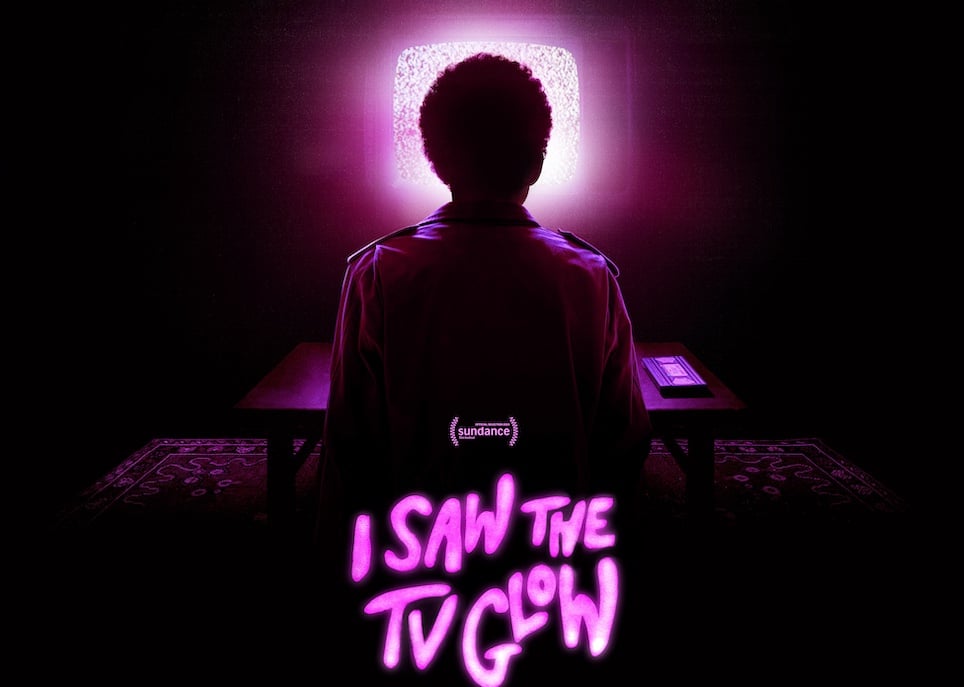
Jane Schoenbrun’s I Saw the TV Glow taps into this world of identities and the tv shows that would shape them for a story that looks at adolescence as if it were a tv show of its own, one that could get rewritten for the worse at any moment.
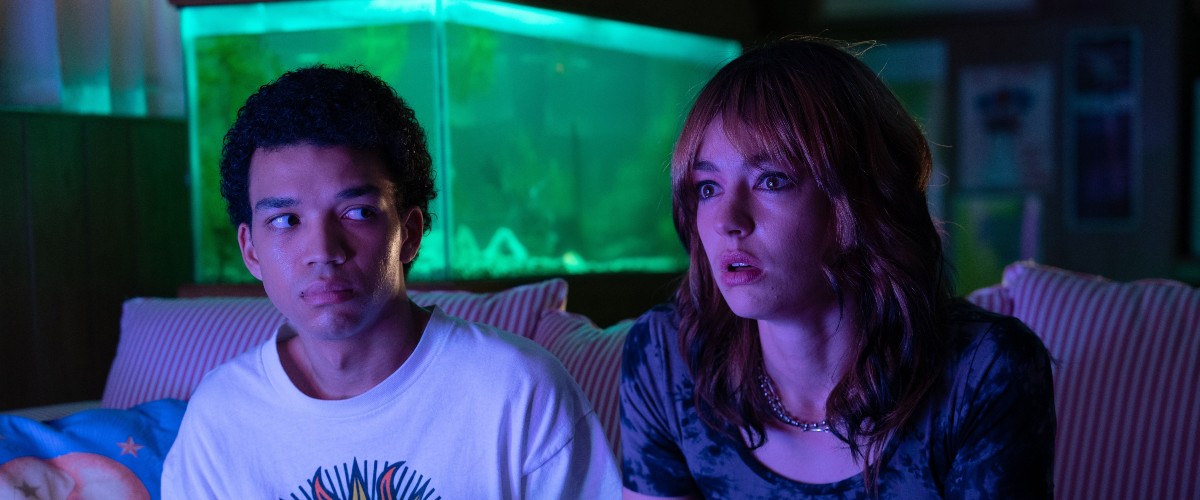
I Saw The TV Glow follows Owen (played by Justice Smith when the character’s older and by Ian Foreman when he’s younger) and Maddy (played by Brigette Lundy-Paine both as the young and older version of the character), two friends who bond over a show called The Pink Opaque, a mix of Goosebumps and Charmed (with some Supernatural) that also follows two friends who face off against the demonic forces of main villain Mr. Melancholy.
As Maddy and Owen’s friendship grows, finding itself reflected somewhat by that of the kids in The Pink Opaque, their personal development turns episodic. Its progression isn’t all encompassing, though. It’s more akin to how we remember our younger years in terms of special or traumatic moments that mark us. It’s a path paved with its fair share of tragedies.
This idea is furthered by Schoenbrun’s decision to have Owen break the fourth wall for quick bits of narration to offer insight into both his feelings and the things that happen to Maddy. They act as points of no return, of memories that will haunt the character. In fact, the screen glows with neon-infused words marking the beginning of new chapters in the story, further cementing that sense of life masquerading as a tv show.
You’d think this focus on tv and how influential it is as a source of identity would keep I Saw the TV Glow in nostalgia territory to the point of it being only decipherable to Nineties kids, but it’s actually the opposite. Schoenbrun’s neon-tinged visuals (beautifully composed by cinematographer Eric Yue) allude to the ephemeral quality of memories, to how we construct and unconsciously manipulate them down to the way they’re lighted. It opens up the movie to anyone who’s ever obsessed over a tv show and survived middle school and high school in large part because of it.
That’s not to say there aren’t any references and influences strewn throughout. There’s a scene in a dark bar with a whole musical number that echoes a similar scene found in the original Twin Peaks series, and there’s flashes of Tobe Hooper’s Poltergeist and David Cronenberg’s Videodrome that are potent enough to come across as intentional winks to them.
That Schoenbrun also shot the scenes from The Pink Opaque in the fuzzy analogue style that characterized Nineties TV strengthens the idea that nostalgia is how we reconnect with the bits and pieces we used to put our identities together.
And then comes the gut punch. I Saw the TV Glow slowly pulls back the veil on nostalgia to reveal its most frightening realization: growing up means deciding what things will and will not accompany you into adulthood, knowing the choice can backfire. It’s a tough consideration as Schoenbrun essentially argues that building one’s identity is as much about breathing life into the self as it is about the willful death of certain parts of the self. What you kill to become your true self is crucial and it determines a lot, but not letting certain things die can prevent the full blossoming of identity. Nostalgia can either be a reminder of what we became or a reminder of what we didn’t become, and that’s hard to come to terms with.
I Saw the TV Glow takes nostalgia and turns it into a source of terror that finds scary things in the memories of our youth. Like a tv show, there’s certain episodes that we love to watch and rewatch. But then there are also episodes we dread catching up to, that we wish weren’t a part of the whole. We can skip them, but they don’t stop belonging to the story. And they’ll haunt the characters involved in one way or another.
As popular as paranormal shows and documentaries are, there’s really only a handful of them that mystify people enough to consider the possibility that ghosts are real. The United States, for instance, will forever have The Amityville Haunting, which produced an entire franchise of movies and books given how aggressively it took over the American psyche when it reached the zeitgeist. England has The Enfield Haunting. Or The Conjuring 2 haunting, as many might know it as.
Apple + dropped a trailer for their new docuseries focusing on the British haunting, titled The Enfield Poltergeist, a project that might garner a lot of attention for its connection with The Conjuring universe. It took place in 1977, when a working-class family in Enfield, London claimed their house was visited upon by angry ghosts that caused kids to levitate and be thrown around by unseen forces. All four episodes drop on Friday, October 17, 2023.
The case is not without its controversy. Much like Amityville, accusations of the haunting being staged for publicity, fame, or financial gain were quick to make the rounds. Skeptics point to the picture “evidence” of the poltergeist as being fabricated, and that it was quite obvious at that. Pictures of family members levitating, for instance, have been subjected to considerable scrutiny as they seem to show girls just launching themselves up into the air or jumping to give off the impression they were being thrown around by ghosts.
This isn’t the only documentary dropping this year tied to the James Wan-developed horror franchise. Netflix is releasing its own, titled The Devil on Trial, the first case in the US to attempt a “demonic possession” defense at a murder trial. It was the basis for the third Conjuringmovie, what many consider to be the weakest entry of the three films. The Devil on Trial will also drop on October 17.
These two docs lay bare the fictionalized aspects behind the films, especially in the case of the Enfield haunting. The Conjuring 2 made it look like The Warrens, the paranormal investigators and exorcists driving the films, were mostly responsible for riding the house of its demonic afflictions despite investigator Maurice Grosse alleging they were only there briefly. Grosse was the original investigator behind the Enfield Haunting, staying on the case for the duration of it while also acting as witness to some of the more extreme phenomena (levitation, changes in voice).
In fact, Apple also revealed the series will draw heavily from Grosse’s research, especially from the recordings he made and the reports he wrote up. Events will be recreated and will aim for fidelity to the sources. All of this to say, this won’t be The Conjuring 2.
The Enfield Haunting does have an interesting cultural record, having been used as the basis and inspiration for other movies and TV series. One notable project that used it as its foundation was the 1992 BBC television movie Ghostwatch, a pseudo-reality horror documentary that aired on Halloween of the same year. It took the form of a live special report on a haunting at a house on the fictional Foxhill Drive area in Northolt, Greater London. The found footage genre owes it a lot, preceding The Blair Witch Project by seven years.
The Enfield Poltergeist is a fascinating case that should yield a compelling watch once it premieres. Myths can certainly be shattered here, especially if the hoax allegations are treated seriously enough (some of which are referenced in both The Conjuring 2 and Ghostwatch). Real or not, there’s potential for deep fear to set in the series. Ultimately, audiences will have enough to be afraid of. Even if the haunting is entirely human.
I may have spent far too much time over the last week watching Disney+. Because of that, I wanted to rerun an older column, and what better column than one focusing on the first chronological Star Wars movie? For no other reason than I’ve been watching a lot of Mandalorian.
This is a column that focuses on something or some things from the comic book sphere of influence that may not get the credit and recognition it deserves. Whether that’s a list of comic book movies, ongoing comics, or a set of stories featuring a certain character. The columns may take the form of a bullet pointed list, or a slightly longer thinkpiece – there’s really no formula for this other than whether the things being covered are Underrated in some way. This week: Star Wars: Episode I – The Phantom Menace
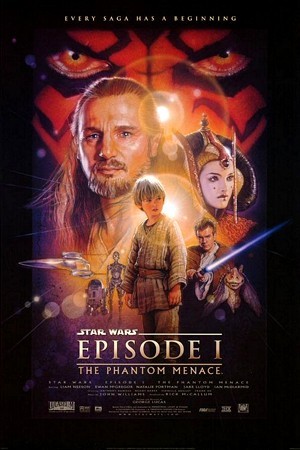
Released in 1999,Star Wars: Episode I – The Phantom Menace was written and directed by George Lucas, produced by Lucasfilm and distributed by 20th Century Fox. It is the first installment in the Star Wars prequel trilogy and stars Liam Neeson, Ewan McGregor, Natalie Portman, Jake Lloyd, Ian McDiarmid, Anthony Daniels, Kenny Baker, Ahmed Best, Pernilla August, Brian Blessed, Ray Park, and Frank Oz. It is also widely known for being a stonking pile of manure.
Released sixteen years after Return Of The Jedi, The Phantom Menace was set 32 years before Star Wars, and follows Jedi Knight Qui-Gon Jinn and his apprentice Obi-Wan Kenobi as they protect Queen Amidala, in hopes of securing a peaceful end to a large-scale interplanetary trade dispute. Joined by Anakin Skywalker—a young slave with unusually strong natural powers of the Force—they simultaneously contend with the mysterious return of the Sith.
Now that you’ve read (basically) the first two paragraphs of the Wikipedia entry, allow me to tell you why this movie is underrated.
Look, I’m not claiming it’s good, just that it isn’t (quite) as bad as you think it is. And it does have good moments. If I can’t convince you, maybe I’ll make you laugh…?
Anyway.
If you’re of a certain age, or your parents are, then you would have been beyond excited to see this movie when it hit the theaters in 1999. I remember watching the lines on the local news back in England being in awe that anybody would care about a movie that much, but nearly twenty years later I can begin understand the level of excitement people would feel surrounding the return of such a beloved franchise – indeed, as I type this I am already planning to line up for the latest Star Wars flick, The Last Jedi, two hours before the screen doors open. But that’s after having two good movies released in the last two years, so can you imagine the excite fans of the franchise would have had in the weeks and months (hell, years) leading up to May 19th, 1999 when the movie finally opened for the masses. It would have been incredible! In the years before the widespread usage of the Internet (in comparison to what we see now), there were conversations in schools, at the water cooler and frankly anywhere fans would gather. The excitement was palpable wherever nerds and fans gathered. It’s hard to overstate how much hype was in the air surrounding the first Star Wars movie in sixteen years.
And then the movie was released.
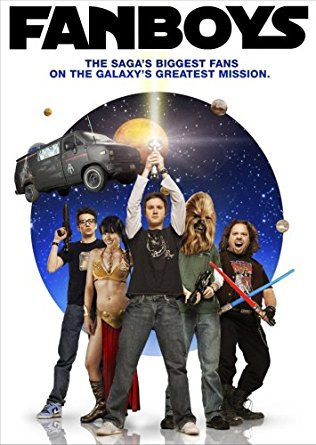
If you’ve never seen this movie, then you should check it out. It’s a great send up of nerd culture circa 1998 with a touching heart. Rumour has it the movie is based on real events – whether that’s true or not I’m unsure.
Look, without beating around the bush, it’s safe to say that it didn’t live up to expectations. At all. The movie is widely regarded as the worst live action entry into the saga, and rightly so, and fans have often said that the movie is best left forgotten in the deep recesses of history. Which is a touch harsh, but I understand where they’re coming from. But here’s the thing; despite the movie’s obvious flaws, I still feel like it gets the short end of the stick quite a bit.
Why? Well let me break out the bullet points…
Firstly, it was the first Star Wars movie in a generation, and as such it was the first time that many of us were able to sit in a chair and experience that title sequence – next time you see a Star Wars movie in the theatre and those titles start to roll with that music… you tell me that isn’t an incredible moment. Almost makes what came after those titles worth watching.
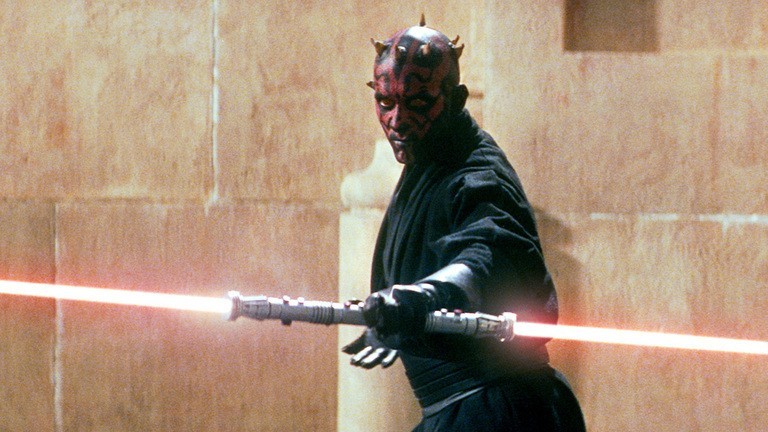
Secondly, you can’t tell me you weren’t grinning from ear to ear with the extensive lightsaber duels. Everything is better with lightsabers.
Thirdly, and perhaps most importantly, there were people for whom this was the first Star Wars movie they’d experienced and as such it served, for those folks at least, as a gateway into the franchise.
How many of you who did see, and loath, this movie in the cinema rushed out to see Episode II – Attack Of The Clones opening night because it couldn’t have been as band as this one, right? It wasn’t, was it? If nothing else, that the first movie was the worst in the new trilogy should be seen as a bright spot.
Dual lightsaber! Darth Maul’s dual blades were the first time we had seen a break from the standard style lightsaber from the original trilogy, which opened up a breadth of on-screen options for the iconic weapon going forward.
Star Wars: Episode I – The Phantom Menace was always doomed to fail. No movie with as much hype as this one will ever meet expectations. But eighteen years on, while the movie may not hold up visually any more with the advances in digital technology, and Jar Jar Binks is still an annoying fuckwit, I came to realize that the movie isn’t as bad as you would think. Aside from Jar Jar, and a little too much time spent on the pod racing subplot, the movie isn’t bad. Could it have been better? Absolutely – I won’t argue that. But it wasn’t as bad as you’ve heard, certainly not as bad as its reputation would have you believe.
Next week we’ll return to a more comic themed Underrated. Until next time!
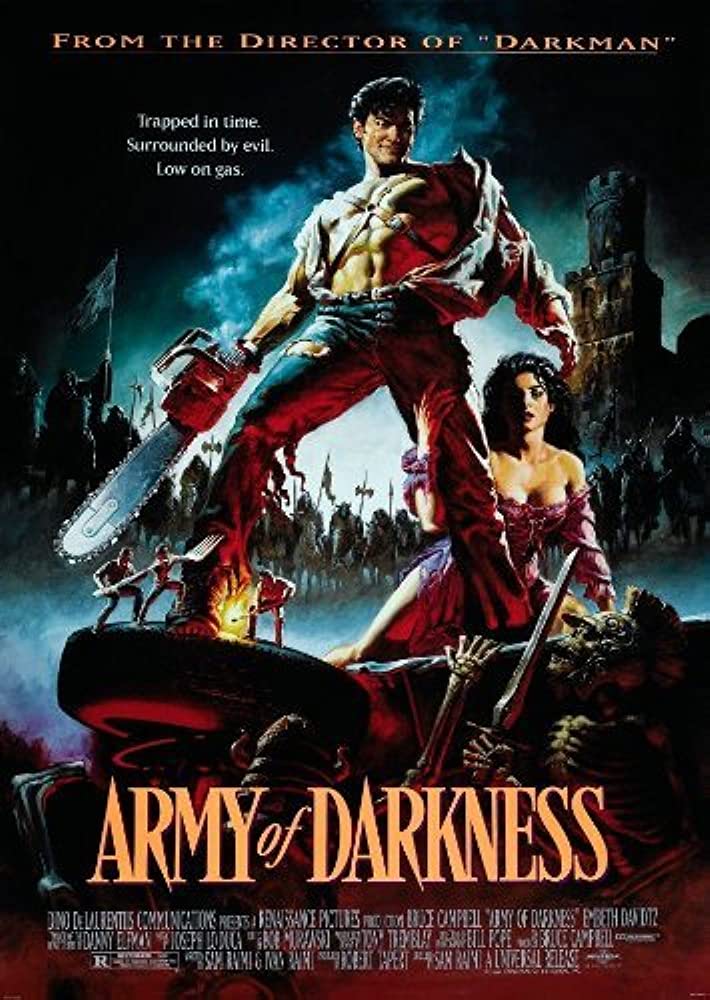
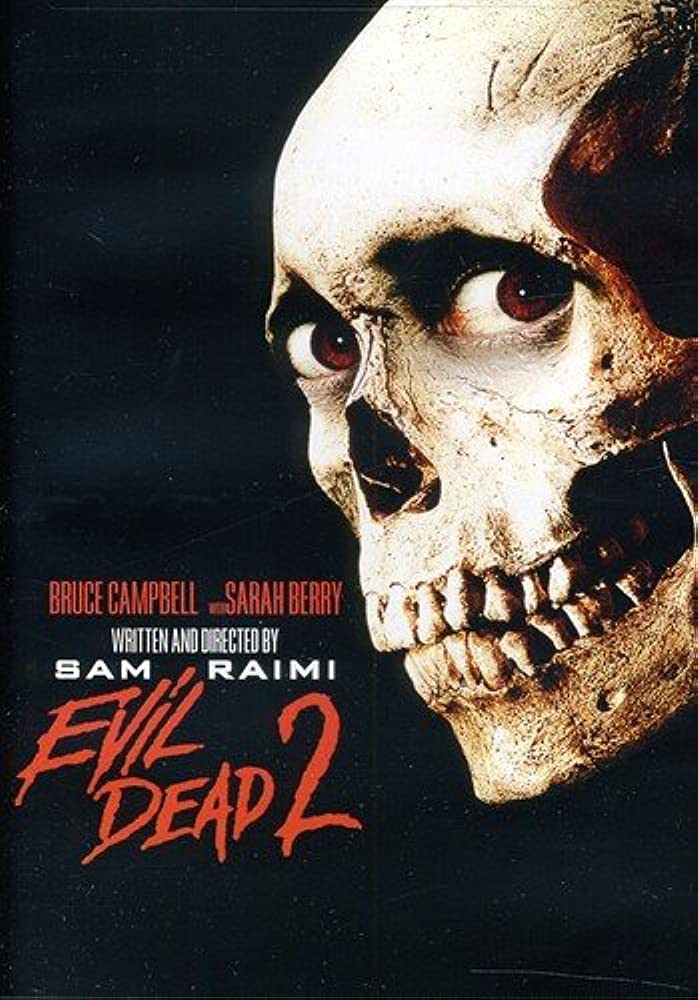
Evil Dead is perhaps the most wildly chimeric franchise in horror cinema. Not a single one of the five movies in its catalogue conforms to a singular identity, or even feels the same. The first movie (released in 1981), for instance, is a low budget horror movie that was intense, scary, and experimental (especially in its approach to camera work). Sure, it had its comedic moments, but it didn’t lean into it all the way. The horror-comedy identity it carries later on really starts being fleshed out in Evil Dead 2 (1987), only to fully embrace the mix in the third movie, Army of Darkness (1992), a direct sequel to part 2’s reimagining of the first film.
This is perhaps best reflected in how its signature character, Bruce Campbell’s Ash, behaves in each one of the movies he’s in (specifically the first three, then followed by the Starz TV series Ash and the Evil Dead, and the various video games based on the universe). He goes from typical college student in the first Evil Dead (1981) to punchline-spewing/chainsaw-wielding hero in Army of Darkness. We can’t speak of one Ash, but of several Ashes. The version people know and love today is mostly the one from Army of Darkness, the one where he’s at his most quotable.
Perhaps the only constant throughout the movies is the source of the demonic threat: the Book of the Dead. This is where the universe’s signature demons, the Deadites, come in. They are a nasty bunch and they might just be the most sadistic, brutal, and evil entities in horror cinema, easily living up to the Evil Dead name. They are cruel and gleeful in their violence, and they settle for nothing less than swallowing souls. And yet, they also change and evolve as the license grows.
All of this to say, the franchise’s DNA can be quite tough to untangle in any traditional way. It’s a Frankenstein’s Monster of a movie universe that built its identity as it went along, to the whims of its creator Sam Raimi.
In the best possible way, Evil Dead is a franchise that relishes in the possibilities of creative freedom when it is allowed to be as chaotic as it wants. It’s one of the most fascinating pieces of cinema because of it, mostly because it hasn’t been torn to pieces to later be rebuilt by higher-ups and corporate interests to the extent other licenses have been (look at Star Wars, the MCU). Not that it hasn’t been meddled with entirely, but Raimi and company have managed to keep most of their vision for it under their control.
So, where does the latest movie in the Evil Dead-verse, the Lee Cronin-directed Evil Dead Rise, rank in it? Can it be fairly ranked even? Is it enough of an Evil Dead movie or is it something else? Things get complicated and messy here, so let’s see if we can find where it fits.
For the purposes of this ranking, I’m sticking with the movies. It makes for a more manageable sample size and it doesn’t short-change the many other mediums the franchise has expanded into (with comics being among its most important story-wise). Also, I don’t believe it’s possible to be a purist with such a mercurial bunch of films, so I’ll be basing my ranking on how well they got the story across and how memorable they end up being because of it.
Let’s start.
5. The Evil Dead remake (dir. Fede Álvarez, 2013)
This movie came as a surprise for reasons that hit at the core of the franchise. It was a remake of the very first movie, but it wasn’t entirely clear who it was for. If it was a way to reintroduce the audience to the story, then the absence of Campbell’s Ash or a character that could inherit the role made it a somewhat strange and disjointed experience.
The movie itself boasts some great Deadite sequences and the makeup effects (by a team of artists that included Vinnie Ashton, CJ Goldman, Suzy Lee, and Jane O’Kane) elevated them by keeping things grounded and practical. The story is partly driven by an addiction metaphor that carries through well, but it ultimately felt a bit generic (a few years too late after the torture porn craze of the early aughts, which ramped up the gore considerably). It’s not as playful with the camera as Raimi’s original and the signature malice of the evil afflicting the cast isn’t as imaginative as what came before.
Not a bad movie, ultimately, but one that didn’t really push the Evil Dead brand in any meaningful way.
4. Evil Dead Rise (dir. Lee Cronin, 2023)
Lee Cronin’s stab at the Evil Dead franchise stands at the crossroads between the 2013 remake and the original trilogy. Its story, which follows a single-parent family in a rundown apartment building that’s about to get the Deadite treatment, certainly attempts at establishing a kind of balance between the new and the old, but it doesn’t quite result in an interesting or new way forward for the universe.
Rise gets one thing undeniably right: the Deadites. Alyssa Sutherland’s possessed mother character, Ellie, stands as one of the most terrifying performances both in the series and in recent horror outings overall. Taking a cue from the original films, the demonic presence here is oppressively evil and it echoes that sinister enthusiasm found in the Deadites from the 1981 film. The generous amounts of blood and gore on display assures viewers Cronin has his eyes on the ball, and it works for the most part.
Where it doesn’t really do much is with its characters. Rise borrows more from the remake than anything else in this department, opting for characters that aren’t entirely memorable (other than Ellie). Establishing a new Ash-type character or anchor character could’ve pushed it all further. In fact, this was a great opportunity to give audiences a female Ash, a new face that could steer Evil Dead into uncharted territory (an idea that has already been explored in the Army of Darkness comics). Unfortunately, it doesn’t.
Rise feels like an Evil Dead movie. In fact, it captures the tone of the very first movie and its remake very well, more so than that of Evil Dead 2 and Army of Darkness. It’s just missing good characters. It seems to be betting on different Books of the Dead to tie in new movies together, but it really needs a compelling character or characters to make this new phase stand out.
3. Army of Darkness (dir. Sam Raimi, 1992)
The Ash we know today, the horror icon, got forged in Army of Darkness. Bruce Campbell dialed up the comedy for part three, going for slapstick and physical comedy in the tradition of the Three Stooges, and it worked well enough to cement Ash as a staple of the horror genre, a legend.
Raimi went from horror/comedy in Evil Dead 2 to dark fantasy/comedy in Army, emphasis on comedy. The shift can be jarring, though. Ash only has one or two quips in part 2 (most notably when he says ‘groovy’ after he attaches a chainsaw to his bloody stump and fashions himself a boomstick), whereas he’s a walking quote factory in part 3. Lines like “Hail to the king, baby” and “come get some” became synonymous with the franchise, becoming Easter eggs themselves when said by some characters in Rise and in the remakeas a tribute to the originals.
The movie does sacrifice a lot of its horror in the name of fun. The good thing is, it turns Army into the funniestmovie in the series in a way that’s unique to it, a distinction it carries to this day. There’s funny, and then there’s Evil Dead funny. Ash becomes the voice of its universe and creates a kind of expectation with his presence in that, physical or not, he should be present or alluded to in everything Evil Dead (hence the callbacks in Rise and the remake).
2. The Evil Dead (dir. Sam Raimi, 1981)
When it comes to pure horror, there’s no beating the original. The Deadites in this one are loyal servants of sadism. Despite the budget constraints, Raimi managed to put on a display of evil the series has yet to match (though Rise comes very close with Deadtite Ellie).
The movie establishes the lore and mythical foundations future outings will adhere to. It places the story in a lone and isolated cabin in the woods (setting up a style that favors small living spaces as a kind of signature of the series, which Rise sticks to but Army of Darkness doesn’t), it features a book bound in human skin that can awaken sleeping demons, it has the reciting of ancient words by accident to bring forth the monsters, and it boasts excessive amounts of blood and gore.
While this movie’s Ash isn’t as quotable as the other ones, Campbell still stands out as the strongest character of the bunch and a worthy protagonist we can follow as his sanity gets tested by the Deadites.
Raimi’s signature camera work makes a statement in The Evil Dead, adding to the already experimental nature of the film while simultaneously carving out a space for itself in the genre. The very first Evil movie is a classic and an outstanding example of horror to boot. It’s an extreme possession story with soul-hungry demons that behave like cruel children playing with tiny insects. It’s my personal favorite and a top-ten best horror movie of all time.
1. Evil Dead 2: Dead By Dawn (dir. Sam Raimi,1987)
This is the one, the Evil Dead formula perfected. It precisely strikes the right balance between horror and comedy while never losing sight of what made the first movie so great. It’s a strange specimen of a movie, though, if we take the first three movies as a legitimate trilogy. It’s not a direct sequel per se, but rather a reimagining of the first.
The story starts things off with Ash and his girlfriend taking a trip to the cabin in the woods without the three other friends that feature in the original. Once there, events are sped up to free up space for deeper explorations of the lore and of Ash’s character. By exploring Ash, I mean letting him take a more aggressive and personal role against the Deadites. He doesn’t quite become the Deadite hunter he is in Army of Darkness, but he certainly tries to meet the Deadites’ violence with his own.
Dead by Dawn is also the first time we get chainsaw-hand Ash. Being such an integral part of the character, it’s easy to forget Ash never gets to use the chainsaw in the first movie. It’s a frustrating tease as he gets close to putting saw to flesh, but it never materializes. Evil 2 fixes that and makes it a part of the character’s identity.
The Deadites retain their sinister look from the first one, but they’re made even more monstrous. The special effects come courtesy of Tom Sullivan, who worked on all three films. They’re playfully maniacal and equally terrifying.
With a more exaggerated take on terror and an eye to build upon the possibilities of the first film, Evil Dead 2 is the perfect Evil Dead movie. Hail to the king.
To contemplate death in the face of natural disasters requires an eagerness to reckon with the uncomfortable, something director Makoto Shinkai has shown he’s more than willing to do in his films. His latest, Suzume, does this in as approachable a way as possible with a story that mixes magical-realism with deep loss to produce a visual marvel that impresses on multiple fronts. In the process, Shinkai presents audiences with the possibility of healing despite the cruel suddenness of death during events that hit with the full force of nature.
Suzume follows the titular character, a seventeen-year-old teen (voiced by Nanoka Hara), as mysterious doors start appearing in moderately populated and highly populated areas to release a giant supernatural worm that can bring about massive earthquakes if allowed to touch ground. She’s aided by a Closer called Souta (voiced by Hokuto Matsumura), a man that travels the country hunting and closing these doors to prevent disasters.
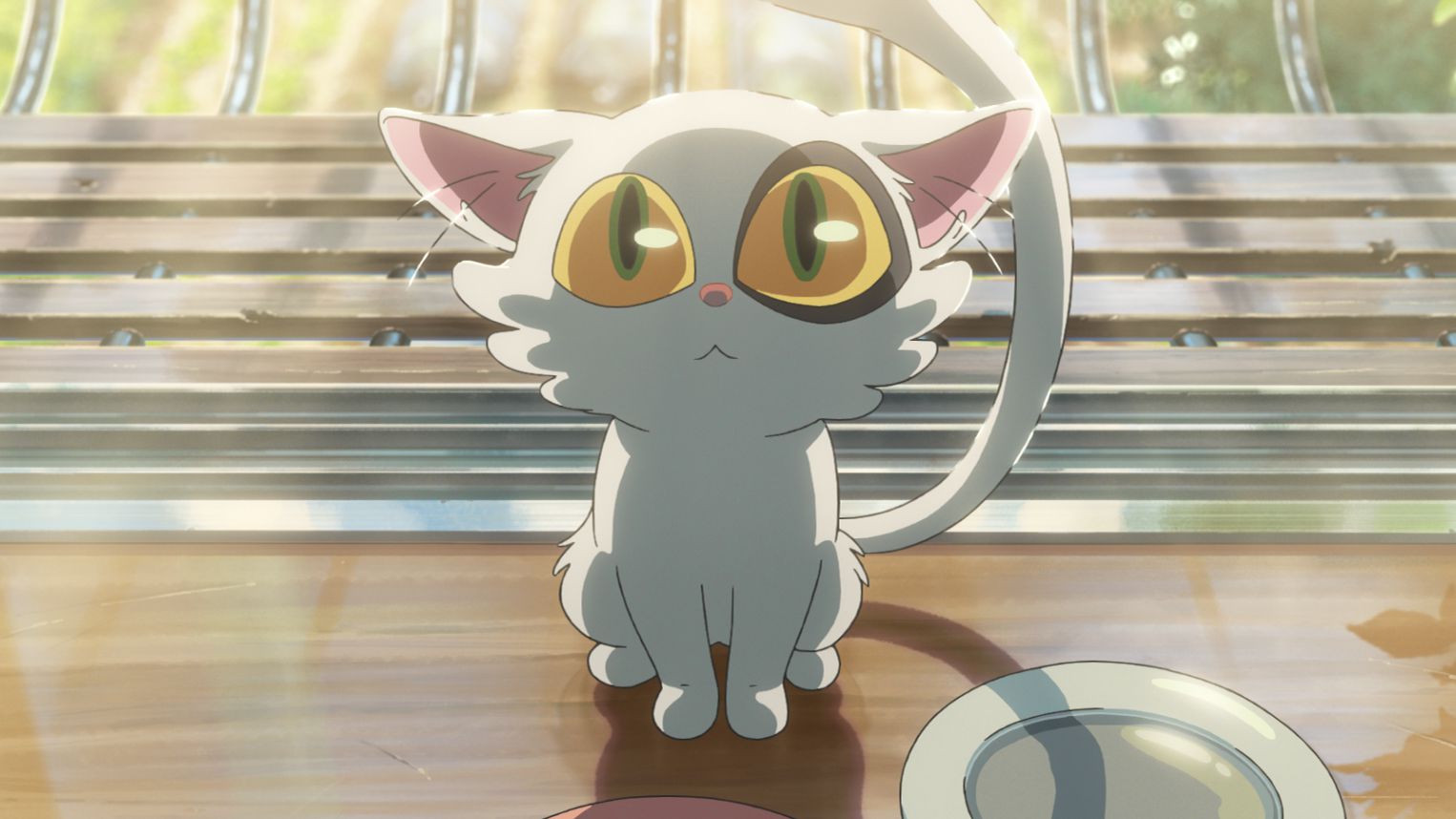
A mysterious talking cat with magical powers turns Souta into a small wooden chair that can run and speak, a development that pushes Suzume to help the man-chair close the new doors that start popping up throughout Japan. As disasters start getting averted, we learn of Suzume’s own history with destructive natural events and the things it can take from people. In her case, it’s her mother’s death that’s reshaped her reality and her dedication to the Closer’s mission.
Despite what the subject matter might suggest, Suzume is a movie that favors a vision of hope and healing in the face of trauma and the grieving process. It’s not difficult to view the doors and the giant worm as representative of the things people wish they could control but ultimately can’t. An inability to accept that preventing every single disaster is impossible, that death can come in many different forms at any given time. The task becomes progressively difficult and riskier the more you attempt to contain the uncontainable.
The story portrays the prevention of natural catastrophes as a kind of fool’s journey that essentially negates life by requiring such an exhaustive dedication to vigilance and readiness. There’s a sense of inevitability to it, of relentless force, that makes the character of Suzume come off as both noble and stubborn at the same time.
The visuals do an excellent job of showing the worm as an unstoppable force without an unmovable object in sight. It can be delayed, but never fully stopped. To an extent, the movie invites a reading that frames the phenomenon as a thing we have to accept, be it as a metaphor for the guarantee of death or as one for the unpredictable certainty of mass traumatic events that we simply can’t always prepare for (or survive regardless of preparedness).
What keeps the story from falling off the deep end into despair is the magical-realist element of the world the movie creates. Only Suzume, Souta, and the cat can see the doors and the worm, but everyone can see the living chair and the talking cat. People react to them with wonder rather than fear or panic and it makes for a very light and colorful experience with several sequences that garner attention just on spectacle alone.
Rounding out the experience are the characters Suzume meets along the way towards each door. They each offer different avenues towards the idea of hope and acceptance and they turn the movie into a living journey with a variety of locations and color palettes to boot. They feel like short stories in their own right and they carry their own arcs.
There are too many metaphors and ideas inhabiting Suzume to account for here, but discovering them on your own is quite rewarding. I latched on to those regarding Japan’s history with natural disasters and crises, especially in recent times with the earthquakes that rocked the country’s nuclear sites. The doors that the worm uses, for instance, are all found in abandoned places such as schools and amusement parks, as if they belong to past traumas people would rather forget than process collectively. There are just so many ways into the story and its characters that repeat viewings are essentially a requirement.
Thankfully, going back into the world of Suzume is an easy sell. It’s a movie that welcomes complexity without overcomplicating the conversations it wants to have on grief, the memory of disasters, and the magic of hope. It truly is a remarkable story that impresses by being as inventive as it is emotionally grounded, and it will become a highlight in anyone’s film education upon watching.
The decision to reveal the origins of a new killer within the slasher genre incurs a lot of risk. A botched attempt can result in a slasher with diminished presence and mystique. Rob Zombie’s 2007 Halloween remake comes to mind. The movie has its high points, especially in terms of how it adds another layer of violence and cruelty to the myth of Michael Myers, but to explain the source of his evil and the reasons why he kills robbed him of the mystery that made his very existence so unsettling in the John Carpenter original.
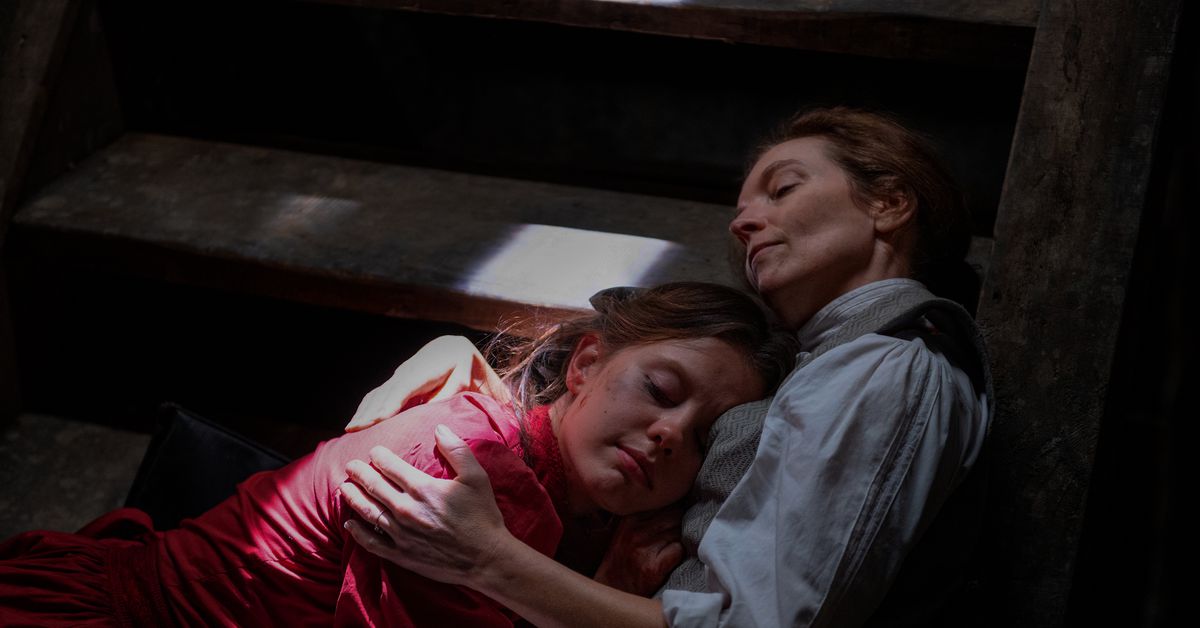
Ti West’s Pearl manages to avoid all this by making sure the story behind the titular slasher is strong enough to warrant exploration. The bad things that turn Pearl into a killer make for a fascinating watch as they’re put on a more intimate and emotional path that mixes violence and tragedy in the service of sculpting a new horror icon with an identity all her own. Its success is owed to a stellar performance from Mia Goth, who takes the character into places largely reserved for established movie monsters and murderers. It’s impressive enough to flirt with the idea of several nominations for the actress in the upcoming awards season.
Pearl is the second part in West’s “X” trilogy, which began with 2021’s X, a movie about a small group of porn actors and filmmakers that rent out a small cabin in a remote farm deep in Texas only to find the old couple they rented it from are vicious killers. Pearl, played by Goth in heavy prosthetics that make her look very old (and who also plays the younger character of Maxine in the movie), is one of the two aging killers. Pearl is a prequel, set in 1918 with the intention of looking at the killer’s younger days, when she was but a mere farmer’s daughter with a secret love for musicals (and an even more secret urge to kill and feed her victims to an alligator in a pond near her house).
Pearl’s mother and wheelchair-stricken father (played by Tandi Wright and Matthew Sunderland respectively) stand in her way, a tragic pair whose circumstances interfere with the development of their daughter’s true potential (at least in Pearl’s mind, that is). It’s a theme that runs throughout the entire movie. Pearl desperately wants to avoid the fate her parents embody the entire time they’re onscreen, which points to a lifetime of regrets and dullness in relative isolation.
It doesn’t help matters that it’s revealed quite early that Pearl is married to a man who is currently overseas, dug in the trenches of World War I. Every aspect of her life, every decision she’s made or has been made for her, further pushes her into the future she dreads. Her killer side takes form within the confines of that.
It’s easy to see how much tragedy envelops Pearl at a mere glance. Goth and West don’t set out to turn her into evil incarnate. On the contrary, she’s portrayed as an ambitious young woman that’s constantly reminded of all the things she’ll never manage to achieve. The movie takes to a slower pace because of this, letting the world around Pearl breath organically to better allow audiences to step into the character’s shoes.
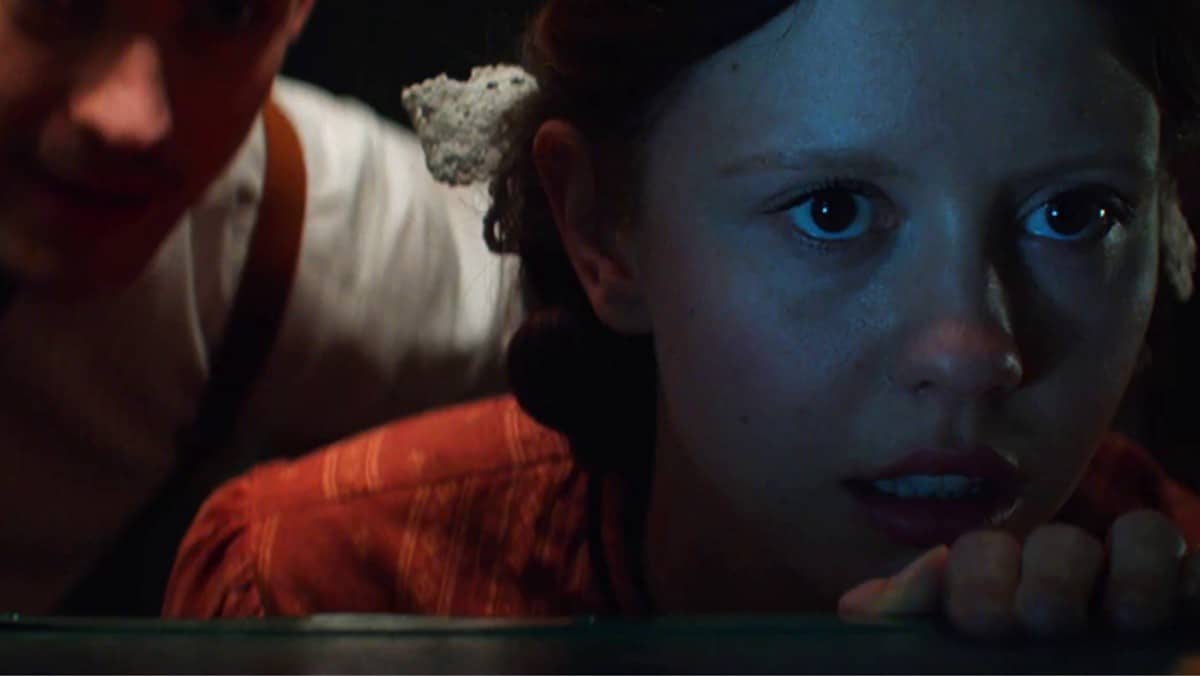
Goth takes all this and channels it into a performance that is wholly committed only to then take it a step further. She doesn’t just deliver every single line with conviction and belief, she also brings every possible facial expression into it to fully become and define the character. Goth’s face twists, turns, contorts, and flexes in ways that give the character a sense of physicality that makes her presence intensely magnetic and endlessly watchable.
Much of Pearl’s story revolves around the slow psychological breakdown of the character, her descent into a life of murder. Goth compartmentalizes her expressions, saves some of them for the character’s later stages, when her world is teetering on the edge of existential collapse. She can go from sweet and naïve to angry and murderous at a moment’s notice, making her face a powerful source of horror. It’s quite simply spectacular, a treat to witness as it evolves throughout the movie. Goth gives audiences one of the best performances in horror movie history.
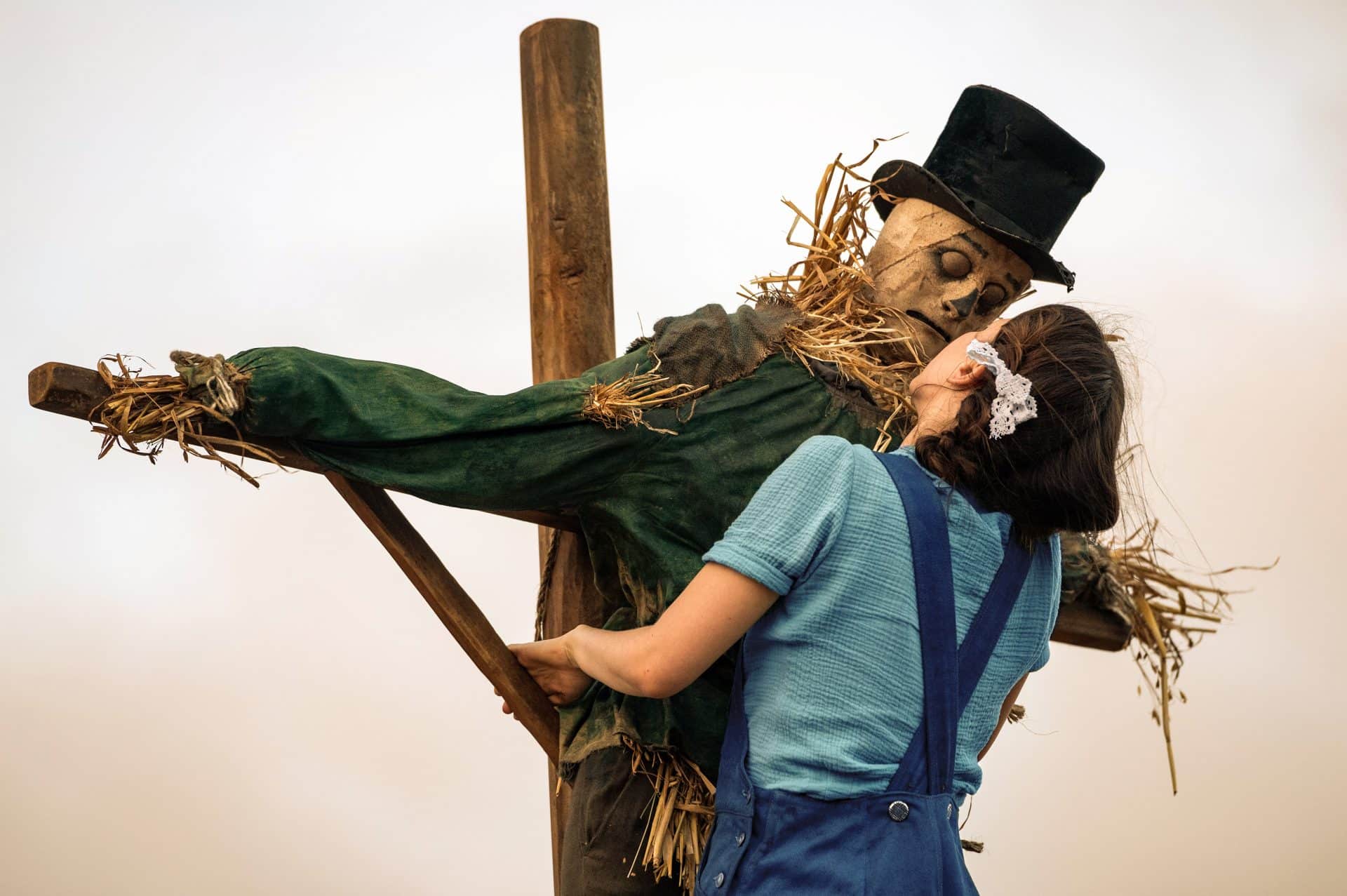
Then come the movie’s influences and how they contrast with the first entry of the “X” trilogy. Where X drew comparisons to The Texas Chainsaw Massacre (1974) for its approach to setting and violence, Pearl finds its look in the Hollywood classics of the 1920’s and 1930’s, in the age of Technicolor. Movies like The Wizard of Oz (1939) take the lead here, but with a generous coat of blood and body parts added to the mix. This is where West’s directing skills come in to elevate the story and give Goth the best chance possible to shine.
Classic movies tend to have a kind of shiny and well-defined visual style that was lighted in a way that accentuated the actors’ features and draped shots with carefully constructed shadows that made each scene pop. West achieves the same with Pearl. Each scene vibrates with life, sound, and color, all of which combine for a very different type of slasher horror styling that no other recent movie in the genre can lay claim to. It’s not played for laughs or even irony. Pearl is a serious story and it is treated as such every step of the way.
The same applies with Tyler Bates and Timothy Williams’ score. It captures the sounds of early 20th century classics with a measured treatment of strings that can get quite sinister when Pearl is at her scariest. The first trailers might’ve suggested a musical take that would homage the movie’s influences while also poking some fun at it, but the end result is way more thoughtful and meaningful. It’s perfectly captures the hopes and dreams Pearl holds dear right down to the disappointment and rage that take over as the story plays out. It’s another well-oiled component in a movie that’s very cleverly constructed.
Pearl is a new horror classic. It’s propelled by a masterful performance from Mia Goth that creates a new titan in the field of the horror slasher and an equally masterful directorial showing by Ti West. It’s the kind of movie that sets new standards, that creates new possibilities and dares future filmmakers to push themselves creatively. Succeeding in this can bring about the creation of new horror icons and classics. Pearl has already achieved this, in both regards.
Pinhead is the kind of horror icon that is recognizable even to those who might not have seen a single Hellraiser movie. A head full of nails and an elegantly dark and leathery costume design that finds a sense of twisted beauty in pain and suffering proved the right combination to achieve this during Doug Bradley’s tenure as the Hell priest.
Now it’s actress Jamie Clayton’s turn to push the iconic role into new territory in the David Bruckner-directed Hellraiser reboot set to premier on October 6 on Hulu. It’s not an easy task, that which lies ahead of the movie, but the recent teaser and photo reveals show considerable promise.
Jamie Clayton as the new Pinhead
Created by master of horror Clive Barker, and based on his 1986 novella The Hellbound Heart, Hellraiser is a story of power and pleasure and the horrors they create when absolute self-indulgence and sexual greed lead people to worship at the altar of terrible things. Pinhead is the head of the Cenobites, demons that reward those seeking to experience a higher form of physical gratification through delicately intricate sessions of pure suffering for all eternity.
The Cenobites have been portrayed as living tributes to sadomasochism that are terrifying pieces of art unto themselves. You can’t quite stop looking at them and the ways they embody pain. Of course, there’s an erotic energy coursing through them that makes their brand of suffering unique. So far, their designs combine flayed flesh wrapped over leather and plastic, making it seem as if the mere act of existing comes at the price of a chunk of flesh for even the smallest movement. Wrapped inside all that is the idea that pain equals pleasure, which turns Hell into a place of decadent torment.
Based on the new images published through Entertainment Weekly and Clayton’s social media, the new Hellraiser seems to be doubling-down on the flayed flesh aspect. Clayton’s Pinhead carries the classic full head grid cut with long thin nails sprouting from its cleanly segment sections, but her neck is peeled back and held in place via strips of flesh organized into gruesome patterns.
Like Doug Bradley’s Pinhead, Clayton’s has black eyes, but they hold a deeper stare that clearly unsettles given how much darker they are than the original’s. These changes, nuanced in parts but still clearly identifiable already add a considerable amount of character and presence to the new Pinhead, things that I believe must be present to guarantee the success of this reboot. So far, looks like we’re on the right track.
The Masque, Hellraiser (2022)
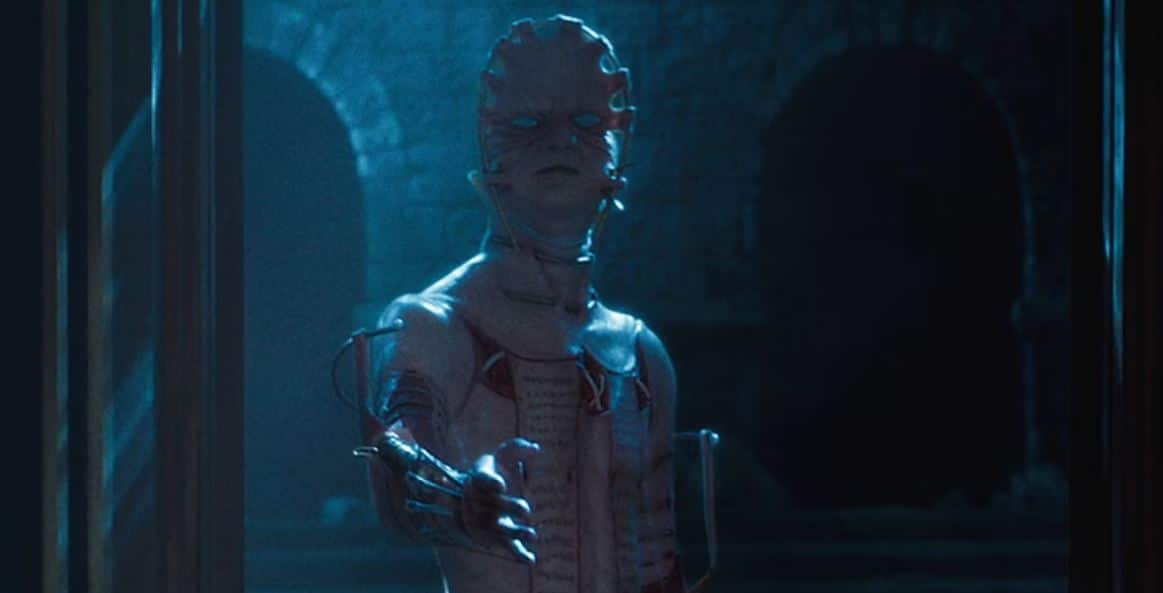
Another Cenobite was revealed called The Masque, a pale white being with a human face stretched over a metal frame with flaps of skin and carefully placed cuts adorning the body and creating their own violent patterns. If The Masque is indication of anything it’s of the care and thought that’s also gone into Pinhead’s band of deranged demons (or angels to others). The original movies featured this as well, with The Chatterer, Butterball, and Angelique among the most beloved by fans. That’s another box the reboot seems to be ticking as well.
The only teaser that’s been released reveals very little, but it does show a bit of Clayton’s Pinhead in the flesh (no pun intended). Will the Lament Configuration (the box that allows the Cenobites to crossover in search of whoever opened it) get its own redesign? Will the story journey into the Cenobites’ realm as it did in Hellraiser II or stay mostly within our reality as it did in the first movie?
These are all questions that a forthcoming trailer will surely shed more light on, but for now we have a genuinely unsettling and creepy new Pinhead to enjoy along with a glimpse of the other horrors that’ll accompany her. The sights provided do more than enough to peak anyone’s curiosity. We’ll soon know just how many nightmares they’ll inspire in an eager audience.
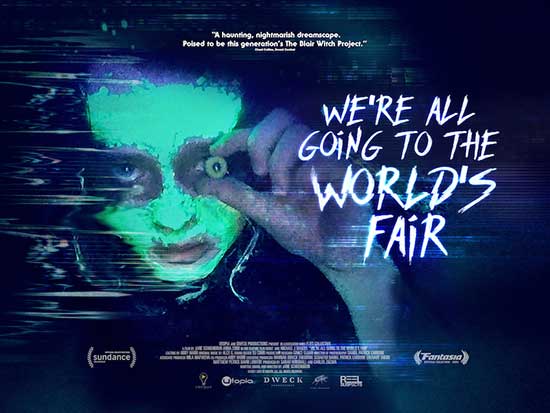
Social isolation stories are a dime a dozen in film, especially those coupled with ‘coming of age’ themes set within broken family scenarios. We’re All Going to The World’s Fair certainly taps into all of this, but it does so in a uniquely disquieting way that disturbs just as much as it breaks your heart. That it achieves this using the language of horror, in subtle ways, makes it all the more outstanding.
Written, edited, and directed by Jane Schoenbrun, We’re All Going to The World’s Fair follows a girl called Casey as she takes on a social media challenge called “the World’s Fair.” It’s a combination of Creepypasta urban legend stuff with TikTok-like content creation sensibilities. The challenge is supposed to cause bizarre bodily changes (as if it were more of a gradual takeover of the body) while also warping the subject’s own sense of reality.
Casey (played by Anna Cobb) starts experiencing the challenge’s symptoms, but whether this is all imagined or not depends on how credible a shared online horror experience can be. This is made more complicated by Casey’s home situation, which the audience only gets flashes of. It’s up to them to piece it together, but it’s clear things don’t bode well in her house.
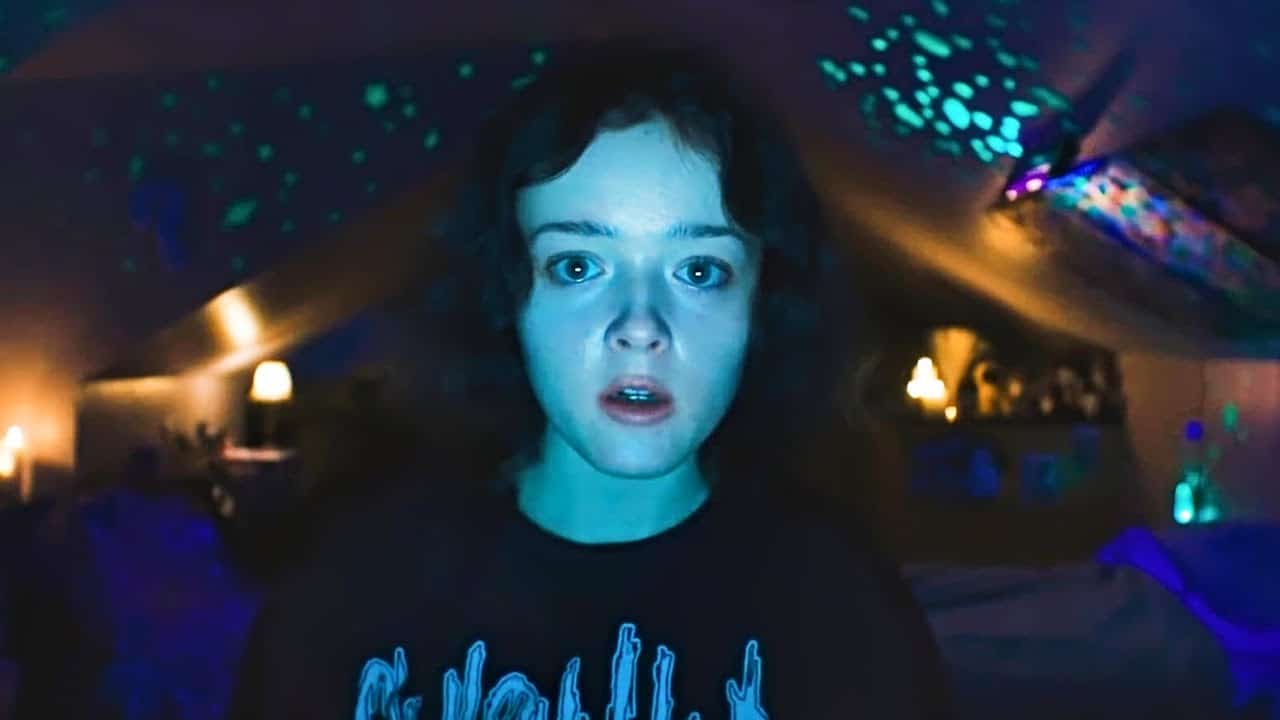
Going to The World’s Fair is a difficult movie to classify. The viral challenge aspect carries a mystery that gives just enough to put the story in horror territory, but it’s not the driving force behind it. It’s a vehicle for the movie’s intimate portrayal of Casey’s psyche. Her isolation from any meaningful human interaction that’s not filtered through a computer is where the movie truly finds ways to unsettle. Some might be tempted to call it a ‘coming of age’ yarn with light horror elements, but this also doesn’t do it justice. I settled on isolation horror, a kind of genre expression that looks at an individual psyche to explore the things that scare us when we’re left almost completely alone.
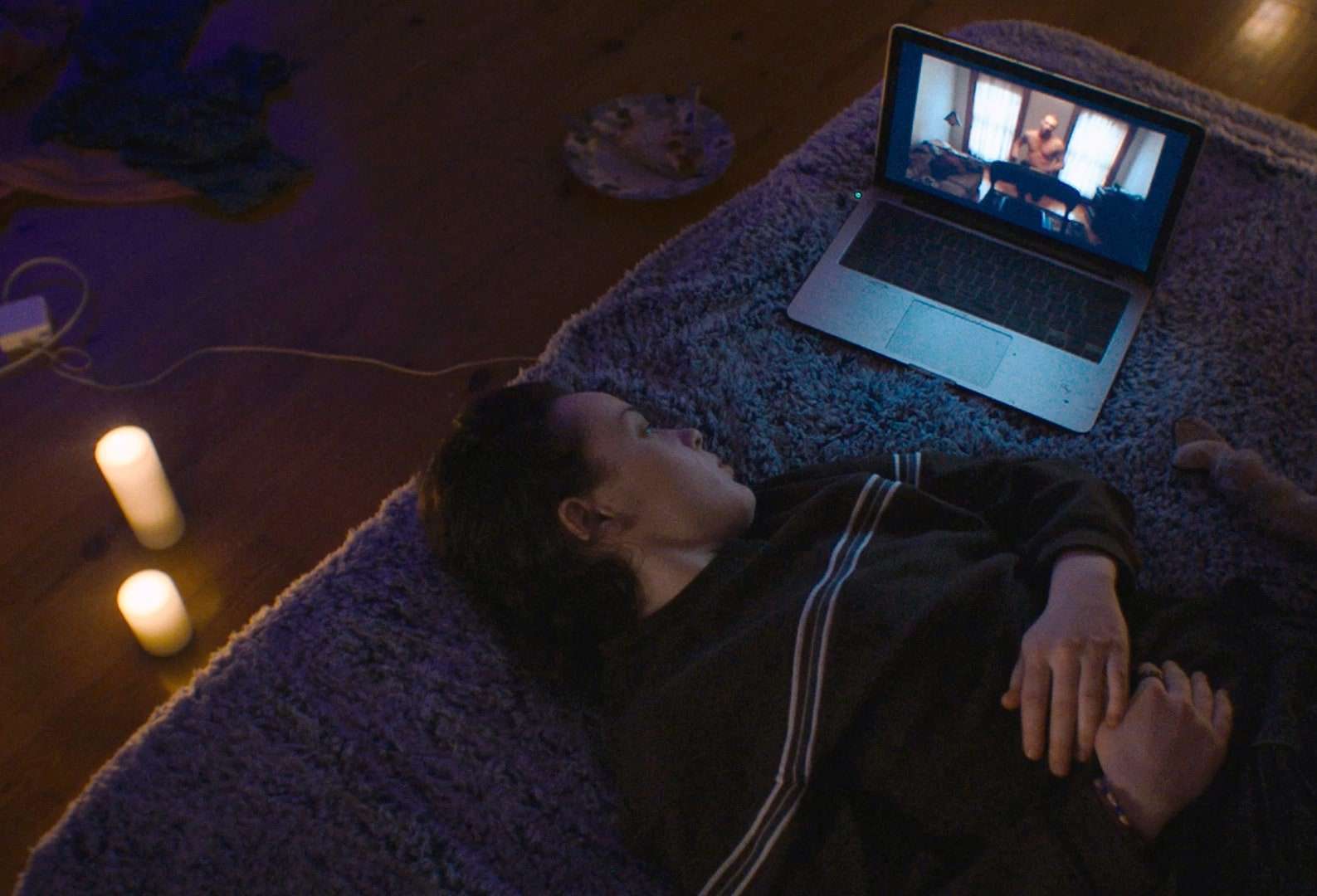
Anna Cobb’s performance is the reason why this works so well. Cobb makes Casey’s mental anguish and frustrations constantly bleed through her body language. She looks haunted in very single frame she’s in. The social media element accentuates this thanks to Schoenbrun’s decision to establish a kind of distance between Casey and the videos she sees on her computer. She’s never just hunched over a computer screen. She’s usually lying in bed, watching videos from a short distance. It creates the sensation she’s peering into someone else’s life rather than actively engaging with them online.
There’s an interesting wrinkle added to this in the form of a character called “JLB” (played by Michael J. Rogers) that pushes Casey further down the digital rabbit hole. His interactions with her are also weird, fractured even, and do a lot to further establish Casey’s isolation. His unstable presence, along with the viral challenge’s influence, managed to keep me on the lookout for something terrible or somewhat supernatural lurking in the background. I never found anything of the sort, but that was because all I needed was to stay in the situation with Casey, to embrace the painful proximity we have with her based on how close she can be to the camera.
In a sense, the horror on display here is of the same type more indie/arthouse productions go for, meaning there’s nothing outright revealed as supernatural. The door is always open to interpretation, to varying degrees depending on the story. Fans of movies like Toad Road (2012) will find a lot to love here. In that movie, a group of relatively young characters embroiled in the excesses of drugs are paired with a dark urban legend that flirts with the idea that Hell or a hidden realm filled with terrible sights can be reached by walking a particular path deep in the woods.
While this movie does commit more to the supernatural than Going to The World’s Fair, there’s a similar sensation regarding the horrors of reality versus the horrors of myths that turn out to be true. Those looking for more of this type of horror should go watch Toad Road. When things descend into outright terror, it gets really dark. It shares that haunting quality that permeates throughout World’s Fair.
Going to The World’s Fair also boasts a remarkable soundtrack, created by Alex G, that plays with synth and retro sounds to best capture the digital horror world Casey traverses. There’s purpose behind each piece and they color certain sequences in ways that make them stand out individually. It’s as if Alex G gave every phase of the challenge a different theme that identifies or signals some change in it. It’s hard to think about the movie without thinking about the music that weaves itself through it.
Jane Schoenbrun crafts a sad tale of a girl struggling with loneliness in a world where social media doesn’t just isolate people but also puts them on a path that might or might not trap you inside another state of consciousness dictated by horror. It impresses in its subtlety, in its ability to foster the strange without losing sight of character. We’re All Going to The World’s Fair is haunting. I would even argue it’s intentions is to actually haunt viewers. It achieved that with me, and I won’t soon be forgetting it.
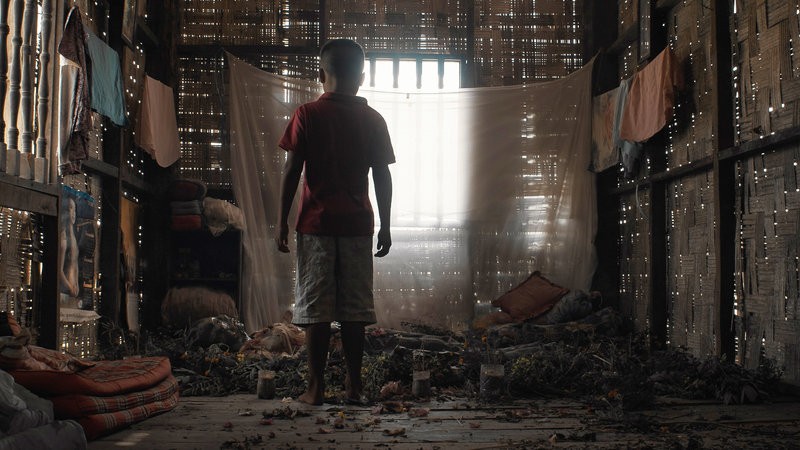
It takes a delicate touch to cross genres, to marry them and then keep them in harmony to get at something different. Mattie Do’s The Long Walk achieves this in truly impressive ways, finding success in the subtleties of the horror and sci-fi genres she uses for her story rather than in their loudest components. The film—a Laotian production—truly is an achievement, and it does something movies in general should aspire to do more of: broaden the scope of storytelling.
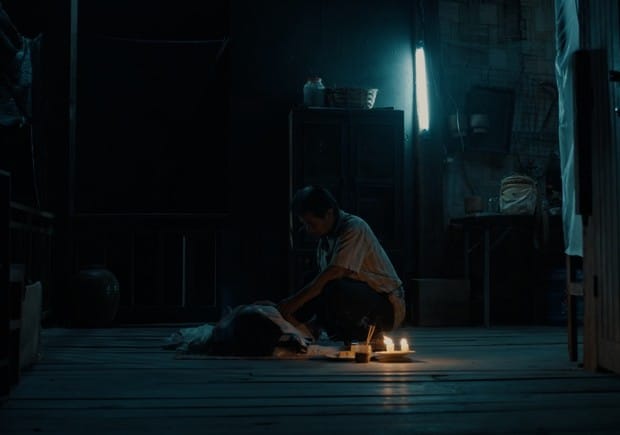
The Long Walk is essentially a ghost story that’s in league with time travel. An old man (played by Yannawoutthi Chanthalungsy) is followed around by a young female ghost (Noutnapha Soydara) that can take him fifty years into the past to when his mother died a slow a very painful death in their house in rural Laos. The old man starts interacting with his younger self (Por Silatsa) with good intentions at heart, but the consequences of meddling in one’s own past turn out to bear a high and strange cost.
It’s a slow burn of a story that gives viewers time to consider the old man’s actions, especially in how well-intentioned he seems to think they are. Given how heavily it focuses on the old man and his younger kid version, the experience is profoundly personal. The audience spends a lot of time with the character at his most intimate and it makes for a study that feels intensely raw but always honest.
It’s important to note that the movie offers no clear answers and offers no real path to judging its main character. As we become aware of what the old man’s intentions are, new questions start claiming their stake in the story, all while making the unique situation the character is in become progressively disturbing.
It’s fortunate, then, that the performances are so good. Chanthalungsy and Silatsa never stop being fascinating to watch. They make the most with the pacing of the story by taking their time to methodically develop the emotional arcs that get tangled together throughout the movie.
I appreciated how uncomplicated the whole time travel component was. There are no hard sci-fi concerns here regarding paradoxes or collapsing universes. A change in the past is a change in the present. What it all means, though, is where the game’s at. Mattie Do accentuates this visually with changes to the old man’s house as markers of time manipulation.
The house itself functions like a character in its own right, or an extension of the old man’s spirit and personality. We spend enough time in it to get a good sense of its secrets. Any change to the things in it are important, adding layers of consequence to the old man’s decisions.
There’s definitely more of an interest in the ghost part of the equation rather than the sci-fi one. If anything, the time travelling is more a means to an end, a vehicle for the ghost story to reach alternate destinations within the narrative. One thing that stuck out was the decision to set the story in a not too distant future. It takes an approach to the future much like the one the movie Logan (2017) takes with its focus on small futuristic leaps instead of full macro shifts in society. Technological progress is evident but measured.
The Long Walk’s Laos is not governed by holograms, lasers, or spaceships. Its sci-fi elements are in the little things, the kind that make a dent in everyday life. Watches, bank accounts, and other functions, for instance, are integrated into human bodies through chips and are displayed on the skin. Solar energy is forced unto the countryside as well, which frames technology as an imposition that threatens established ways of life that might not need the upgrade.
Mattie Do has put a very complex, unique, and important film out into the world. The Long Walk offers a flexible blueprint for new storytelling possibilities and it should be discussed for the things it does with the genres it plays with. If the future holds more movies like this, then horror and sci-fi will be ushered into a whole new age of story.
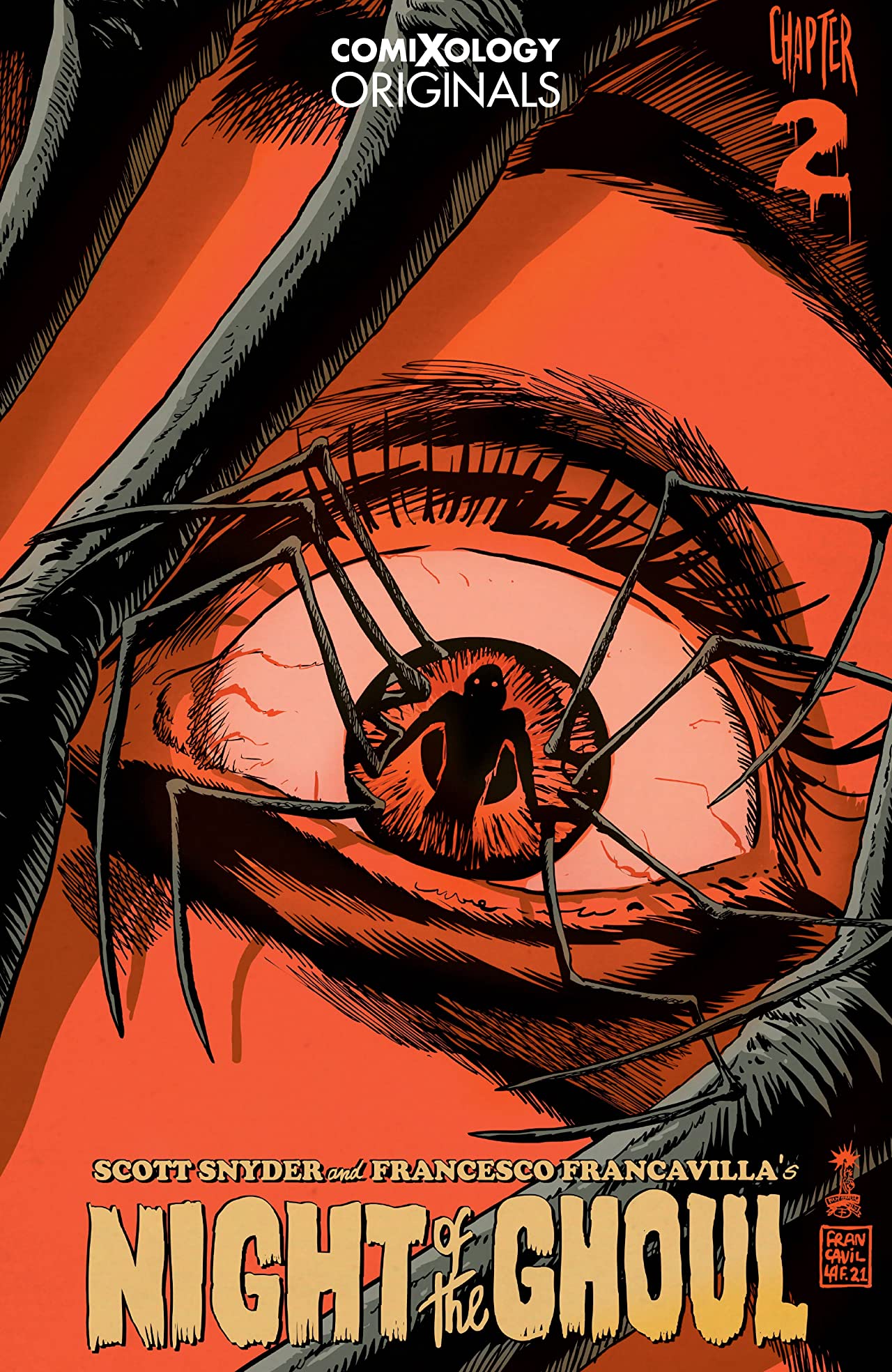
It’s hard not to think about classic horror films when reading Scott Snyder and Francesco Francavilla’s Night of the Ghoul. I was reminded of the original 1951 The Thing, the 1964 film The Last Man on Earth (an adaptation of Richard Matheson’s classic novel I Am Legend), and even a bit of the black & white Universal monster movies. Not necessarily in terms of plot, but rather in terms of the dread that permeates through them. The comic just lives and breathes that kind of Fifties and Sixties horror that relished in making its characters slowly march towards their doom as they search for some impossible truth. It finds its life source in the creepy atmosphere those movies developed as well, the kind that builds up the mystery to heighten the horror at its core.
Night of the Ghoul is all of that and more, a vehicle for fear that establishes a kind of lineage of dark things that honors what came before it but also aspires to insert itself in the continuum. Snyder and Francavilla are tapping into some deeply unsettling things in their comixology series, ready for some serious mythmaking along the way.
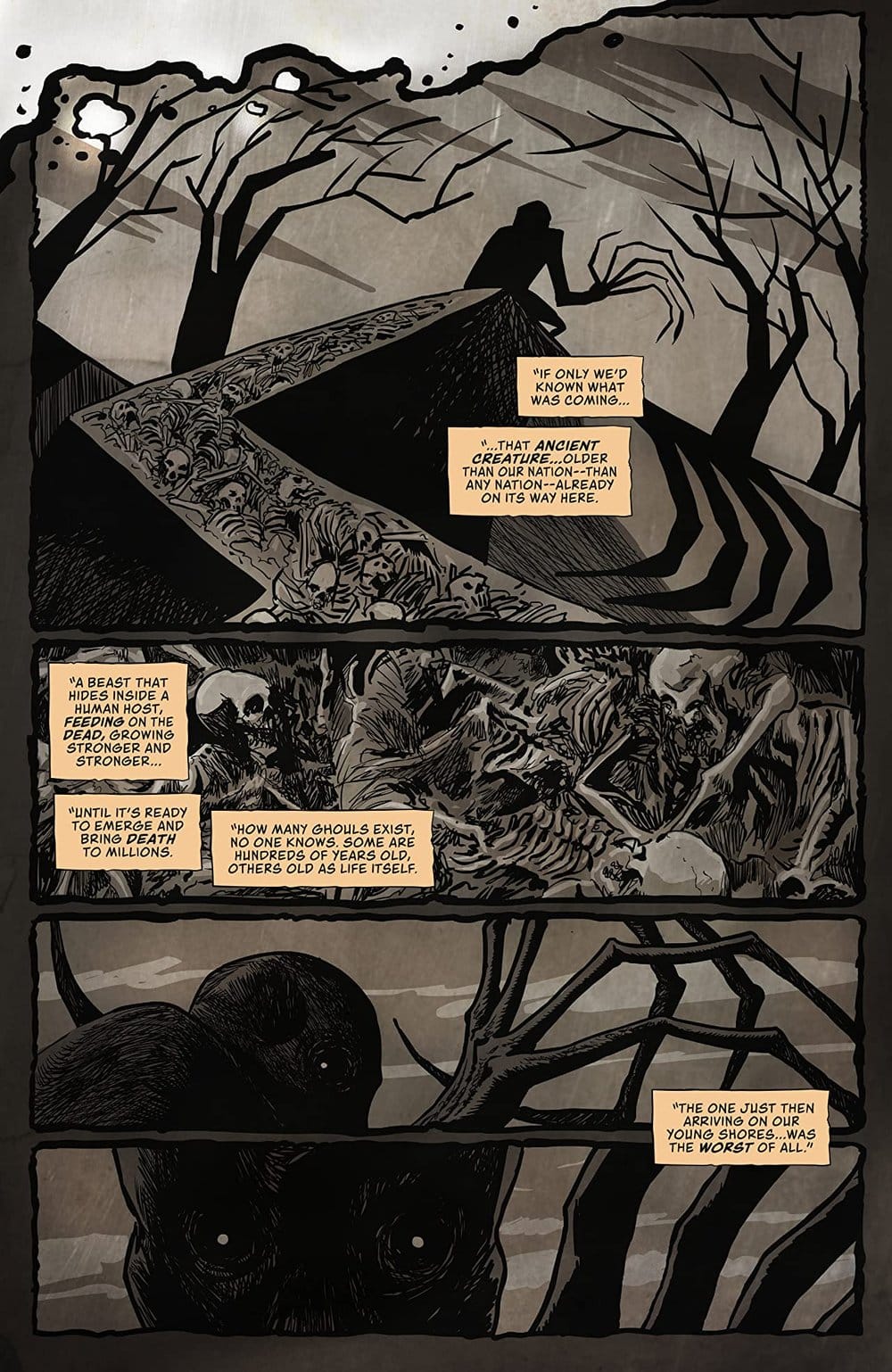
Issue #2 digs just deep enough to expand on the legend of the Ghoul, a kind of proto-monster that transforms into the things other people are afraid of. The film researcher is making progress with the horribly disfigured director of the lost film he uncovered, the lost but now found “Night of the Ghoul,” but every new bit of information gathered points to a discovery of forbidden knowledge captured in celluloid, making the very act of watching it quite dangerous (an idea that reminded me of John Carpenter’s Cigarette Burns, about a rare movie that captures the torture of a majestic being).
The story’s dual narrative structure continues to build upon itself with key cuts in the narrative that show scenes from the “Night of the Ghoul” movie. These sequences offer more hints as to the actual content of the cursed film and the monster that lies within it. Francavilla is putting a lot of care into these segments, capturing a very genuine feel for the black & white horror he’s clearly inspired by, a quality that tends to make its presence known across his body of work.
Snyder’s script stands as one of his most focused and one of his most measured. There’s a real concern with style and structure that helps keep the story from going off the rails. Horror movies from the Golden Age (1910-1960) tended to focus primarily on the larger meanings behind their hauntings, on how they reflected upon society or a deeply seated fear on a collective level. Night of the Ghoul carries itself as such, at least two issues in. The mystery is carrying the story and its implications are what will keep readers hooked in as more gets uncovered.
Night of the Ghoul is a well-oiled machine made by two masters of the craft. Horror runs deep in its DNA and it understands the inner working of it in intimate detail. The comic is well on its way to becoming a horror comics classic. If it holds steady, it’ll become a story I’ll be recommending to readers interested in expanding into the comics medium for their horror fixes.
Story: Scott Snyder, Art: Francesco Francavilla Story: 9.0 Art: 9.0 Overall: 9.0 Recommendation: Buy and subscribe to a streaming service that features old horror movies.