
Tag Archives: jose rizal

Review: Jose Rizal Chapter 3
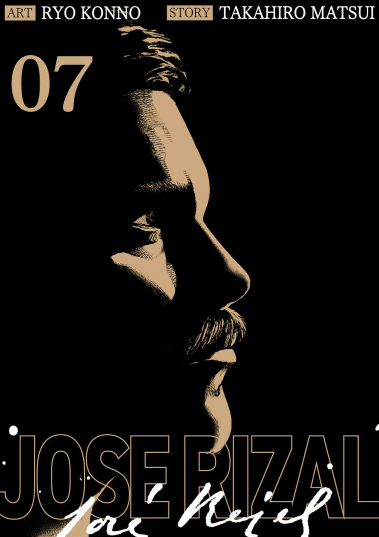
Jose Rizal Chapter 3

Despite Mel Gibson’s notoriety these days, it was not that long ago he was known for his acting talent and being a good director. I remember the first movie I saw him in, a movie I did not quite get at first, Mad Max. He was a brooding lone warrior who fought injustice where he saw it and said practically no words in that first film. As his star rose, so did the gauntlet of characters he would occupy.

Some of his movies were hit or miss, none I would care to mention. Then there are excellent ones like the Lethal Weapon series, and We Were Soldiers. One of my all-time favorite movies of his is Braveheart, where the people who he led did not truly see until the end how much of a man he was before his time. In the final chapter of Jose Rizal, we find our protagonist on the precipice of becoming a world icon.

We find Rizal as his second book, “El Filibusterimo” has just been published, and where he formed “la Liga Filipina”, and was immediately exiled Dapitan in Mindinao for outspokenness. This is where he met Emilio Jacinto, who was considered the braintrust of the Kapitunan, the revolutionaries lead by Andres Bonifacio, who Rizal knew from La Liga Filipina. As Jacinto tried to recruit Rizal to join their army, as he refuses, but is charged with conspiracy anyway despite not having any part of the Kapitunan. When he got back to Manila after being imprisoned, he stood a military trial, and was given a death sentence. As spent his last day and hours, with family and his wife, he still wished for the Filipino nationalism to still catch on like a wild fire. Soon after, Paciano, Jose’s older brother went to meet General Emilio Aguinaldo, who Rizal left a poem, as this would go on to inspire the Filipino peoples until very province was set free. By story’s end, as history has shown, the Philippines would not be freed until Ferdinand Marcos fled the country, as we see through the eyes of one of his students, now a grandmother, the Filipino people as one.

Overall, a heartbreaking end to this epic story, which shows those willing to give up their life freely are a rare breed. The story by Takahiro Matsui is engaging and well told. The art by Ryo Konno is beautiful. Altogether, a story which will inspire and teach the reader that arc of change bends slowly but faith will get you there.

Story: Takahiro Matsui Art: Ryo Konno
Story: 10 Art: 9.5 Overall: 9.7 Recommendation: Buy
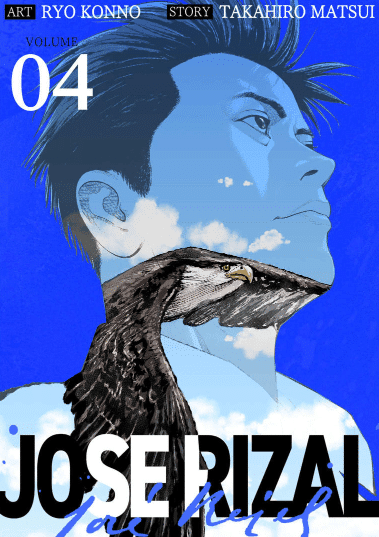
Review: Jose Rizal Vol. 2

Jose Rizal Vol. 2

It takes a revolution (revolution) to make a solution
(Doo-doo-doo-doo)
Too much confusion (aaa-aaah), so much frustration, eh!
I don’t want to live in the park (live in the park)
Can’t trust no shadows after dark (shadows after dark), yeah-eh!
So, my friend, I wish that you could see
Like a bird in the tree, the prisoners must be free, yeah! (Free) –
Revolution-Bob Marley

As Bob Marley eloquently shows in his lyrics that when one starts a revolution, it can be hard to see the truth for what it is and choosing your compatriots is an uneasy task. One starts revolutions because what is in place is not normally working in the eyes of the many. As anyone who has had a dissenting opinion has experienced, their unique voice is usually met knelt heads and sharp glances. As history typically favors these brave souls but their present tense normally doesn’t.

As those first steps can be trying, can be nerve wracking to say the least. As you never know when tomorrow will be your last. As it is easy to admire Samuel Adams now, but would anyone during that time, want to be in hi shoes, with the British Army looking for him? In the second chapter of Jose Rizal, we find out how it was for the titular hero, as he took those first steps before becoming a legend.

We find Rizal, as he departs for Paris, to study Philosophy and Letters, and later studying medicine in Madrid, and where he decides to write his first novel. As his book had many anti colonial sentiments, he gains an ally in Maximo Viola, another Filipino studying in Madrid who shared his hope for reform in the Philippines, who urged him to push on and find a publisher, which he did in Berlin. As his first book gets published, Noli Me Tangere, he finds himself in the midst of sudden fame, as the tome has made quite an impression on the populace who feel that they have not been heard or seen as the Spanish have taken a firmer hold in the Philippines since his youth. As the doubling of taxes makes Rizal’s return inevitable to PI from his travels in Europe, as his mother’s condition only worsened and his hometown was in dire need of an ophthalmologist, as his studies abroad equipped with the best knowledge, to best serve his people. As he soon finds out that the Church controlled the government, and the economy, making it difficult for the native Filipinos to make a living and as his anti-Church actions ramp, he quickly becomes a surveillance target of the colonial government.

Overall, an engrossing chapter in this already rapturous series which attributes this national hero with a fire not too many people possess. The story by Takahiro Matsui is dramatic, engaging and well told. The art by Ryo Konno is simply breath taking. Altogether, a story which tells this history as interesting as it really is.

Story: Takahiro Matsui Art: Ryo Konno
Story: 10 Art: 9.7 Overall: 9.8 Recommendation: Buy

Review: Jose Rizal Vol. 1

Jose Rizal Vol. 1

What does the title “national hero” mean to most people and does that title mean that person is also a patriot? Here in America was bestowed on our Founding Fathers who started the American Revolution. In time, we have given it Americans throughout history who have shown bravery protecting our ideals. History often teaches us what makes one a radical and one a revolutionary is most often time.

The Founding Fathers could have been viewed quite differently by history and their actions could be looked at as treason. The faith these men and women had in their sense of patriotism, is what formed our national identity. Revolutions usually take faith and courage and for some the ultimate sacrifice. In one of the first ever English told stories about one of the Philippines national heroes Takahiro Matsui and Ryo Konno’s Jose Rizal, we get a glimpse of who the man was before he became the martyr the country has come to know.

We meet Jose Rizal, on the day of his execution, as a physician is examining him, he demands that he face, his accusers and the people he loves and represents. We are taken back to when he was a young man, growing as the youngest boy with 11 other siblings, where his family lived under a cruel Spanish monarchy which often took advantage of its dominion in the Philippines and arrested her mother for defiance.  We witness her walk of shame as her equal treatment between the natives, who they refer to as “Indios” and the Spaniards, becomes a sticking point for why she becomes vilified. The Governor of his “province, General Izquierdo, ruled with an iron fist, but with the influence by Jose’s sister, Soledad, had convinced him to set free their mother, Teodora, after two years of imprisonment. By issue’s end, these events sparked a fire in Jose’s mind state, one that would make him a revolutionary and national hero.

Overall, the manga is a beautifully rendered and skillfully told story about one of the world’s best representations of fighting injustice. The story by Matsui is emotional, melancholy, and inspiring. The art by Konno is gorgeous. Altogether, a book that feels like an epic saga more than a history lesson, which makes it so compelling.

Story: Takahiro Matsui Art: Ryo Konno
Story: 9.6 Art: 9.5 Overall: 9.7 Recommendation: Buy