Tag Archives: jim hecht

TV Review: Winning Time S1E4 “Who the F**k is Jack McKinney?”
Who the F**k is Jack McKinney?

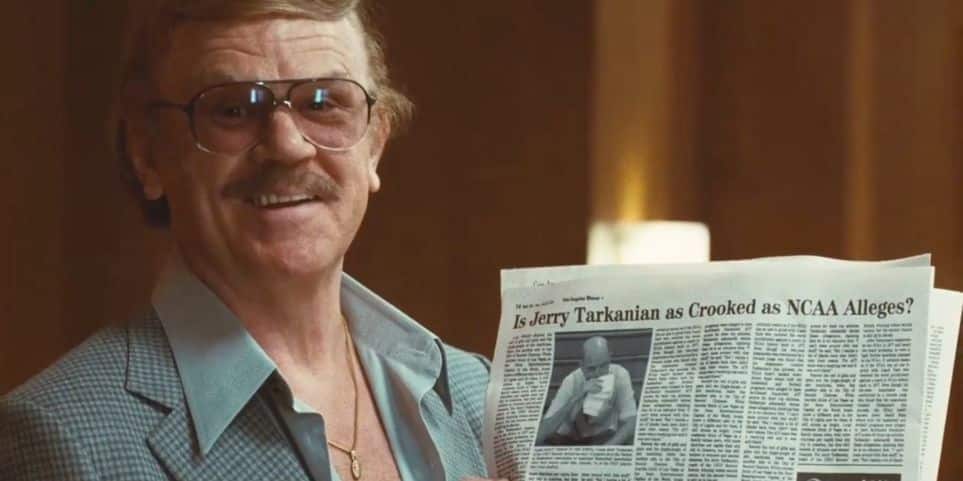
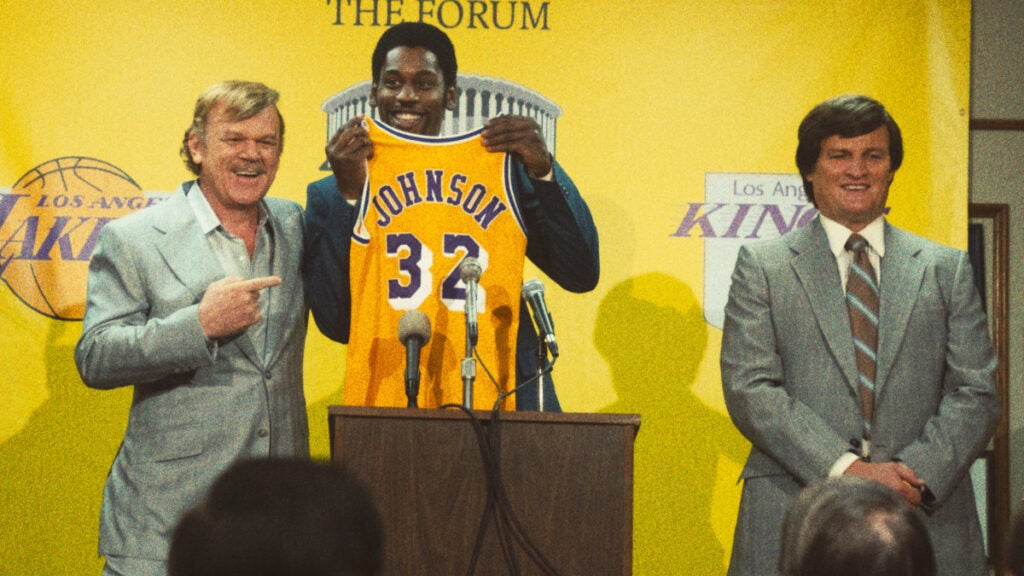
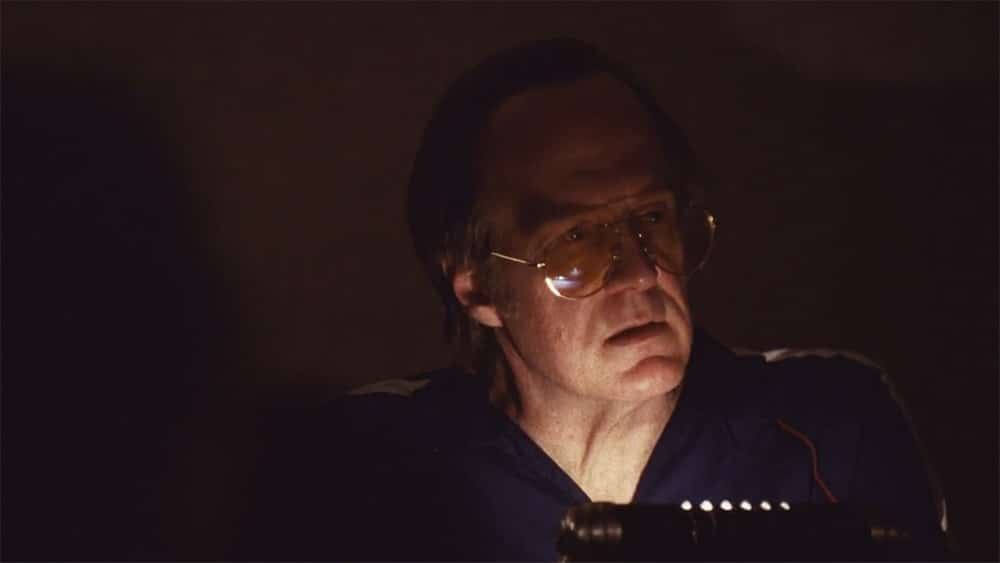
Showtime’s growing pains continue in Winning Time Season 1, Episode 4 “Who the F**k is Jack McKinney?”. Training camp is about to start after last week’s murder of Vic Weiss, Jerry Tarkanian has decided to not take the Lakers job with Weiss’ wife smacking Jerry Buss (John C. Reilly) at his funeral. So, per Jerry West’s (Jason Clarke) recommendation, Buss and the Lakers decide to go with Jack McKinney (Tracy Letts), who might have the stage presence of an accountant, but has ideas that would go on to revolutionize the game of basketball. But, for now, they’re just scrawlings on resort napkins and clipboards, or slides loaded by his assistant coach Paul Westhead (Jason Segel), a floppy-haired former English professor that is really a non-presence in this episode. Like he just mumbles and quotes Shakespeare and immediately fits in with this quite kooky set of characters

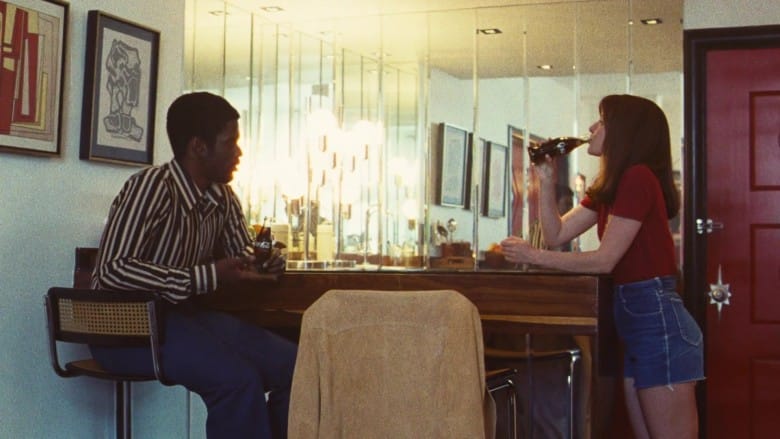
Along with the growing pains on the court, there is still the financial issues with team, and Buss’ accountant/mom Jessie Buss (Sally Field) finds a way out by saddling some of the liabilities with his ex-wife JoAnn Mueller (Kate Arrington). From an awkward opening scene where she and their children have lunch at the same Mexican restaurant as Buss and one of his girlfriends (And Jeanie Buss sees him fingering the woman at the table.) to walking in on him and another woman with the liability paper work, Arrington plays the part with scene-stealing contempt shattering the fantasy that Buss wants everyone to see about him. Writers Jim Hecht, Max Borenstein, and Rodney Barnes follow the thread of Jerry Buss’ true desires through the perspective of Jeanie Buss (Hadley Robinson), who gets real depth in this episode walking the line between an intern and boss’ daughter.

From being quiet and meek in the first couple episodes, she speaks up in a meeting and even builds a connection with two of her co-workers over a shared bong. This episode shows how much Jeanie cares about her dad and the Lakers and also how she’s unhappy that he would rather hang out with random women than spend time and communicate with her going all the way back to the opening flashback. However, she does have some real vision in regards to setting apart the Lakers from a college basketball experience, and Claire Rothman (Gaby Hoffmann) packages her ideas in something that will sell to Jerry Buss. But it’s all just theory for now. There are no Laker girls or Jack Nicholson and Dyan Cannon sitting courtside just yet.
Who the F**k is Jack McKinney?

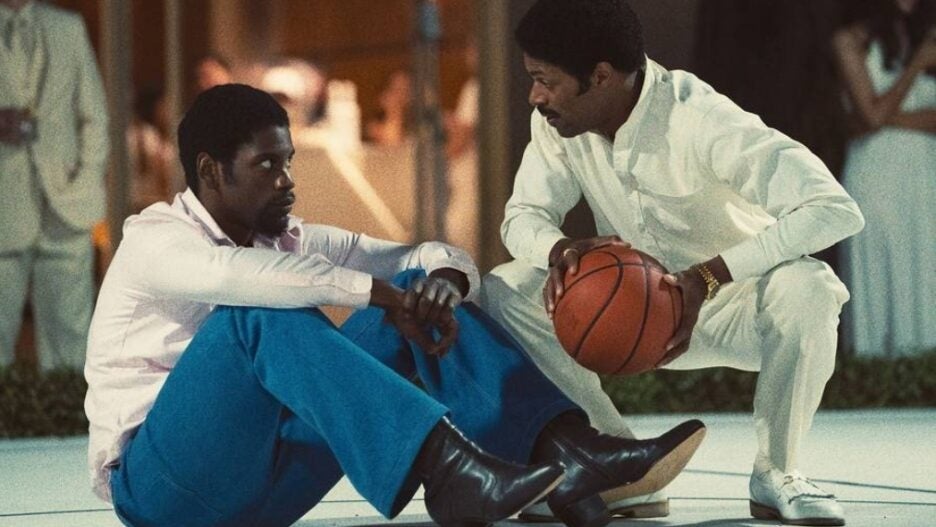
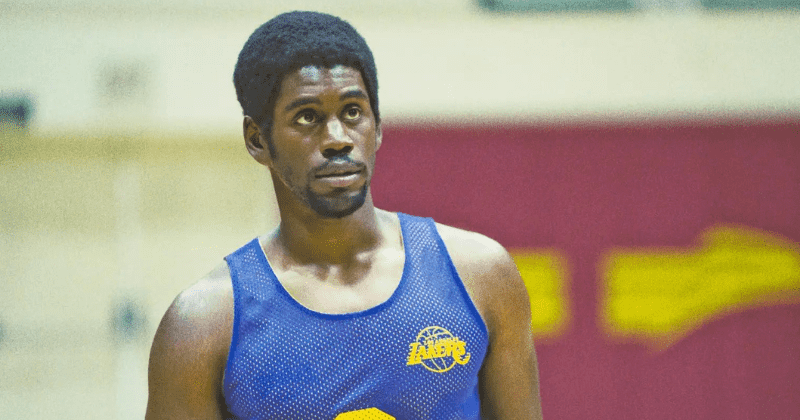
This theme of theory versus practice definitely is the driving engine of Hecht, Borenstein, and Barnes’ training camp A-plot although there’s all kinds of squabbles and subplots going on from Kareem Abdul-Jabbar (Solomon Hughes) hazing Magic Johnson (Quincy Isaiah), Michael Cooper (Delante Desouza) battling to get a guaranteed contract, and Jerry West not wanting to walk away from the team. Director Damian Marcano excels at shooting the basketball action at its best (Johnson, Abdul-Jabbar, and Norm Nixon showing glimpses of real chemistry) and worst (Veteran Ron Boone getting hit by one of Magic Johnson’s no-look passes) while going the montage and voiceover narration route for McKinney’s ideas. With references to Buddhism that reminded me of a future Lakers coach, Tracy Letts nails Jack McKinney’s passion for basketball as well as the heartbreak and compromise he feels when West tells him that he needs to combine his system with some of his old sets. The practices and a verbal sniping show that doing things a new way is painful even as Magic Johnson and Nixon start to buy into system the system while Kareem Abdul-Jabbar simply doesn’t give a fuck. He doesn’t say a lot of words, but Hughes’ physical presence and taciturn looks show that he knows he’s the undisputed leader of the team and won’t be running suicides or “McKinney miles” with the rest of the Lakers.

I do have to applaud Marcano, Jim Hecht, Max Borenstein, and Rodney Barnes for showing viewers the building blocks of Showtime and fast break basketball with montages and film sessions showing how it sharply contrasts with the stagnant half court sets most NBA teams were running at the time. No wonder the league was struggling. There’s also a kind of cheeky animated sequence featuring Magic Johnson that connects his philosophy of basketball to McKinney’s with a focus on making his teammates and basically being good, giving, and game as the basketball court dissolves into Johnson giving oral sex. However, this whole being everyone’s friend is a little bit of facade as Cookie Kelly (Tamera Tomakili) reminds him that Magic Johnson basically stole her from one of his teammates. Their phone conversation doesn’t end well, and Isaiah shows a little bit of the darker, sadder side of Johnson, both on and off the court with Boone fighting him because he’s frustrated at his playing style and also that he has a guaranteed contract even though he hasn’t played a minute of professional basketball.

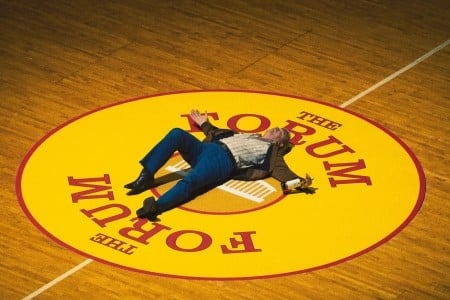
“Who the F**ck Is Jack McKinney” is set in a bikini-clad women-filled oasis in a harsh desert, and no one shot understands the facade that is Jerry Buss’ life and ownership of the Lakers than him mouthing “Fuck” under the pool when he realizes that the Lakers and Forum have no chance of turning a profit this year so he can pay off his creditors. Being together in an enclosed space (Even though McKinney closes practice to the ownership and front office) brings out temper and negative feelings with the Lakers continuing to have a long way to go both on and off the court. However, it’s not all downbeat as Hecht, Borenstein, and Barnes position Jack McKinney as one of the true, unsung heroes of the game even if the players hate him for now. Plus there’s strong characterization for Jeanie Buss as Winning Time leans into its greatest strength and weakness: it has a huge cast so it’s hard to get to know all the players, but most of them are fascinating and opportunities for strong, nuanced performances.

Overall Verdict: 8.1
Winning Time S1E3: The Best Is Yet To Come

The Best Is Yet To Come

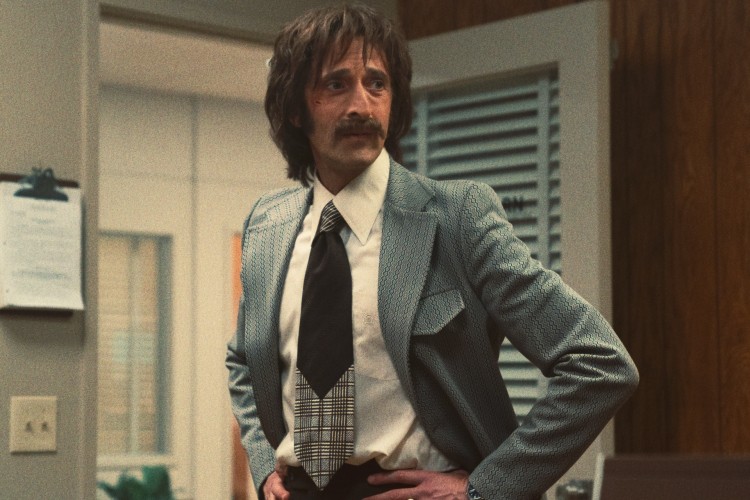
Winning Time’s third episode, “The Best Is Yet To Come“, shows just how precarious the Lakers’ franchise was at this time starting from the opening moments where Jerry Buss (John C. Reilly) completely loses his cool at Jerry West (Jason Clarke) for quitting two weeks before the season. The wheeling and dealing playboy has been thrown to side as West tries to salvage the interaction by saying that he wasn’t cut out for coaching and wishes he could still play for the Lakers, but he’s too old. Director Damian Marcano shoots the scene in a closed office space that becomes a recurring motif in this episode with Magic Johnson (Quincy Isaiah) spending a lot of time in the contained space of his new apartment in L.A. or former Lakers player/wannabe color commentator Pat Riley (Adrien Brody) reliving his glory days in his garage until he ends up raging out and chainsawing the whole place after his more successful wife Chris (Gillian Jacobs) says she wants to turn into her new therapist’s office. And, of course, there’s the body in the car trunk at the end of the episode. All is this to say is that Jim Hecht, Max Borenstein, and Rodney Barnes script a downer of an hour of Winning Time showing that the Lakers, and by extension Buss, Johnson, and Riley, have growing pains to go through before they can be great.

Three episodes in, and Winning Time‘s ensemble has really start to balloon. However, Hecht, Borenstein, and Barnes keep this basically cast of thousands manageable by orienting each character to either Magic Johnson and Pat Riley’s personal arc or the Lakers coaching search. (There is some D-plot kind of stuff with the team’s finances lingering like background radiation.) So, Jerry Tarkanian (Rory Cochrane) and his wise guy fixer Vic Weiss (Danny Burstein) figure in the story as Jerry Buss’ top pick for new Lakers coach. Tarkanian’s disinterest is pretty evident as he loves being respected in Las Vegas as the head coach of UNLV despite being under the scrutiny of the NCAA. Also, Johnson joins Norm Nixon (DeVaughn Nixon) for the premiere of The Fish Who Saved Pittsburgh and gets a taste of being a celebrity and what it’s really like to be an NBA player, and it’s kind of empty.

On the outside, Winning Time might be a glamorous show with 1970s/1980s fashions, California sunshine, bright lights, and naked women, but it continues to actually be about successful men (Emphasis on men.) and their existential crises. Cinematographer Todd Banhazl and editor Hank Corwin let a lot of scenes trail off and switch to a grainy (Think home movie, not New Hollywood film) composition to linger in unspoken emotion like Magic leaving his family to be driven to L.A., or Pat Riley spending aimless, unsatisfactory days at the beach. This extends to the writing as well with Jim Hecht, Max Borenstein, and Rodney Barnes giving Pat Riley (In job begging mode) one hell of monologue to Jerry West about how he never realized that his basketball career would end. (Spoiler alert: It’s 2022, and it still hasn’t.) Marcano does a slow pan to West’s dented MVP trophy and a plaque commemorating him as the official logo of the NBA while Riley tells West that he wish he had at least accomplished something in his career.

The look on Jason Clarke’s face basically says, “See the last episode”, and he’s the same kind of empty as Riley. By the end of the episode, Jerry West is looking as dejected as he was at the beginning and isn’t into having sex with his wife Karen (Lola Kirke), who wants him to become a father. He doesn’t, and it takes him the entire episode to clean out his office. Along the way, he is furious at Buss’ decision to hire Jerry Tarkanian and ends up finding what he thinks is a diamond in the rough in Jack McKinney (Tracy Letts). Letts plays McKinney as the most forgettable middle aged white dude, but the film clips of his Portland Trailblazers team and how he basically comes up with the idea of Showtime gets seeded in quietly while Buss is off jetting to Vegas to woo Tarkanian. West’s passion as he breaks down the film of McKinney’s Portland teams is in contrast with his interactions with his wife and honestly everyone else. Both he and Riley only light up because of the game of basketball. That’s all they know.

The Best Is Yet To Come

As mentioned earlier, John C. Reilly shows the angry side of Jerry Buss, and we also get to see more of his desperate side like an awkwardly hilarious sequence showing how he does his combover or when he ditches lunch with Magic Johnson to fly to Las Vegas and give Tarkanian all his money. The scenes with Jerry Tarkanian and especially his fixer Vic Weiss are straight out of a 1990s mob film with dim lighting, a Rat Pack soundtrack, and lots of quick cuts to show that Buss is out of his depth as he and his business partner Frank Mariani have to hand over their whole wad of cash to even get to have dinner with Tarkanian. Thanks to $750,000 and two cars, Tarkanian does end up taking the Lakers offer, but the conclusion of this episode puts that on hold continuing the one step forward, two steps back of Jerry Buss trying to turn the Lakers into a contender. Tracy Letts nails “Tark the Shark’s” larger than life personality including his paranoia, and how he comes across as a baron of a small fiefdom instead of an emperor. But, NCAA rules aside, he has things running smoothly at UNLV compared to the utter financial and basketball shitshow that is the Lakers. (Which is why they make an interesting TV subject.)

Also, don’t think I’ve forgotten about Magic Johnson. Quincy Isaiah does a good job showing what is charismatic for Johnson in East Lansing comes across as starstruck in Los Angeles through the quick wit of Norm Nixon. However, Nixon ends up being overshadowed by Bill Cosby at his film premiere, and the photographers ask him and his teammates if there are any Los Angeles Rams on the red carpet because the NFL far eclipsed the NBA in popularity in 1979. And in an even darker sequence (And probably why the real Magic Johnson is silent about the show so far.), Johnson falls for the over the top advances of a local pimp and ends up hanging out and having sex with lots of women at his after hours club. This sequence shows Johnson’s naivete as he falls for the pimp’s offer even after more experienced teammate Jamaal Wilkes tells him that the pimp has nothing lose, but Magic Johnson has everything to lose as his career is just starting. Damien Marcano and Corwin also utilize hard cuts from the after hours club to Johnson on the phone with his family to show how empty his time in L.A. has been so far, and that people want to use him and not be his actual friend with the exception of Nixon, who is still going after his starting position.

The Best Is Yet To Come

Even though he’s at the beginning of his basketball journey compared to Jerry West and Pat Riley, Johnson shares a throughline of disappointment with them. At the end of the day, (Although West and Riley have wives.) they’re alone with their thoughts and wondering whether it was worth it to spend so much time practicing and getting better. Marcano explores an undercurrent of nostalgia in his shots of these men from Pat Riley doing commentary over his old University of Kentucky highlights to Magic Johnson putting on his Michigan State hat when he leaves for Los Angeles. Nostalgia is a comfortable place, but as a way overcast Gillian Jacobs as Chris Riley says, “There’s a reason we bury the dead.”.

By weaving together the stories of Magic Johnson, Pat Riley, and Jerry West’s existential crises with Jerry Buss’ frantic attempt to get a Lakers head coach, Damien Marcano, Hecht, Borenstein, and Barnes craft an episode of Winning Time that has both style and substance and finds the flawed humanity in these basketball greats. Also, Adrien Brody’s sad boy slacker take on Riley is memorable and mesmerizing. Unfortunately, the female characters of “The Best is Yet to Come” only exist to advance the arcs of the male characters with even the well-drawn Claire Rothman (Gaby Hoffman) confined to smoking and sneering.

Overall Verdict: 8.4

TV Review: Winning Time S1E1 “The Swan”

Winning Time

HBO Max’s new limited series Winning Time: The Rise of the Lakers Dynasty transports you to a time when one of the biggest sports/entertainment franchises in the world was struggling and being used as a bargaining chip in a divorce settlement, the NBA was going bankrupt, and one of its greatest players of all time was just a kid from Lansing, Michigan struggling with if he wanted to go pro or stay in school for a year. Director Adam McKay and writers Max Borenstein and Jim Hecht cast the perennial champion Los Angeles Lakers as underdogs in this fast-paced, faster talking, and exposition-filled pilot episode. The plot revolves around Jerry Buss (A wheeling and dealing John C. Reilly) trying to buy the Lakers from the racist, sexist, and generally unpleasant Jack Kent Cooke (Michael O’Keefe) while also trying to convince Lakers coach/literally the NBA logo Jerry West (Jason Clarke) to draft 6’9″ point guard/phenom Earvin “Magic” Johnson (Quincy Isaiah).

Besides being a Lakers fan who was too young to experience this era of basketball, what initially drew me to Winning Time is the rumblings about the show not being afraid to show the foibles of such legends of the game like Johnson, West, and Kareem-Abdul-Jabbar (A hilarious and unbothered Solomon Hughes). And the rumors are true with the show opening with a soberingly shot, drab introductory sequence of the worst day in Magic Johnson’s life, which was when he was diagnosed with HIV in 1991. This scene demonstrates Isaiah’s talent and range as he’s barely holding a smile together while his agent/chauffeur weeps in the car. However, the pace picks up after that, and John C. Reilly truly establishes himself as the star of the show as new Lakers owner Buss even though he doesn’t officially own the team until the episode’s closing moments. Reilly and McKay play up Jerry Buss’ playboy image by having him wake up with naked, uninterested blonde while he’s monologuing about the brilliance of basketball and its potential as entertainment. The fourth wall is broken early and often with Buss acting as the episode’s de-facto narrator and doing a variety of things like monologuing about the NBA’s unpopularity, the state of his finances, and how Jerry West still hates his life because he could never beat the Celtics in the NBA Finals.

Borenstein and Hecht don’t shy away from discussing the NBA’s main issue at the time, which was marketing a league mainly featured Black athletes to a white audience. The role of race is a main thread in “The Swan” with graphics saying “Black” and White” popping up when pundits and men like Cooke compare Magic Johnson to Larry Bird, the other big 1979 draft pick. Johnson and his father Earvin Johnson Sr. (Rob Morgan) share frank conversations about how they both code switch to make white people in places of power like them, but Johnson Sr. says that being deferential to them hasn’t gotten him anywhere in life as he gently tries to be realistic with his son.

Winning Time' Fact Check: Did Magic Johnson Really Almost Reject the  Lakers' Offer?

Using tracking shots and home video style footage, Adam McKay and cinematographer Todd Banzahl portray Johnson’s family as close-knit, warm, and full of love with his devout Seventh Day Adventist mother Christine (LisaGay Hamilton) calling out his “Magic” nickname every time it’s brought up. It’s a world away from night clubs, champagne and cocaine-filled white parties, and fox coats and combined with 35 mm shots of Johnson Sr. training Magic Johnson in basketball between his garbage collection shifts, the sequences show Johnson’s clear passion for basketball even if he is overwhelmed and starstruck in this first episode. One of the episode’s most powerful scenes shows Johnson hiding on the couch in his very dark hotel room after being humiliated by the Lakers’ current starting point guard Norm Nixon (Played by his son DeVaughn Nixon.) The million watt smile is turned off, and he’s a twenty year old who misses home and might want to play another year of college ball. You can see the condescending things that Nixon and Jack Kent Cooke said to him in-person in Isaiah’s face as he explores a darker, sadder side of an icon. Maybe, he wasn’t quick enough to play point guard in the NBA, and the Lakers would be better off listening to Jerry West and taking Sidney Moncrief, who was more of a scorer.

Magic Johnson and Jerry Buss definitely take center stage in “The Swan” with the episode’s title being a metaphor for how Buss talks a big game about running the Lakers, but is really paddling for dear life. He has to take a loan from his ex-wife to cover the cash part of the deal while the rest of the purchase is in property, which is almost vetoed by Jack Kent Cooke, who is resentful of Buss’ dressed down demeanor and popularity among his female employees. And speaking of female employees, Max Borenstein and Jim Hecht give a substantial subplot to Claire Rothman (Gaby Hoffmann), the future president of the Forum. She is harassed by Cooke and his cronies throughout the episode and is surprised that contrary to his reputation, Jerry Buss values her business acumen more than her looks mentioning that she put on the first rock concert in a sports arena. In this and a night club sequence, you can definitely see the entertainment side of the “Showtime” era take flight, and Rothman also ends up taking Buss’ daughter, Jeanie (Hadley Robinson) under her wing. In an almost sweet moment, Jeanie Buss already being employed by the Lakers is a key reason why Jerry Buss ends up playing a financial game of chicken with Jack Kent Cooke so they can continue to have a good relationship. She only has a couple scenes, but has faith in Magic Johnson from watching him play in the college national championship and would rather work for the Lakers than finish college.

Winning Time' Fact Check: Did Magic Johnson Really Almost Reject the  Lakers' Offer?

Acting-wise, John C. Reilly and Quincy Silas carry this episode stepping in the roles of iconic sports figure while imbuing them with quirks and vulnerabilities. However, Jason Clarke’s Jerry West almost steals the show from the broad comedy of a West Virginia gentleman breaking golf clubs and dropping F-bombs when Buss and Lakers GM Bill Sharman mention drafting Magic Johnson to real sadness when he talks to Buss about how Cooke cared more about selling tickets and making money than winning basketball games. Black and white footage of the Celtics beating the Lakers six times in the 1960s flood over his profanity-filled monologue, and his description of the NBA Finals MVP trophy he got when the Lakers lost is darkly hilarious. It’s almost like Jerry West is reliving a war he fought in with the flashbacks like news reels. Clarke and Reilly are rage and serenity in every scene they share and shows that the front office action will be just as compelling as the on-court action in Winning Time.

After dozens of fourth wall breaks in the first 20 minutes or so, this part of Adam McKay’s directing style can get annoying, but he, Borenstein, and Hecht find a rhythm by focusing on the flaws and outsized personalities of Jerry Buss, Magic Johnson, and Jerry West. There’s a real seat of his pants energy to any scene that John C. Reilly is in, and it’s fitting he gets the final shot to himself drinking a bottle of bourbon while laughing about how he bought the Lakers. The scenes he shares with Silas are much more wholesome than the wheeling and dealing ones, and their relationship is one to look forward to in upcoming episodes. Reilly brings a Dionysian physicality and California chill to the role of Jerry Buss, and Winning Time is worth checking out for his performance alone.

Overall Verdict: 8.3