Tag Archives: horror comics

Junji Ito’s SOICHI is a terrifying celebration of that weird cousin we all have
Soichi

For all the terror that Junji Ito conjures throughout his stories (even the cat one), there’s a fair amount of dark comedy to go around with it. When Ito wants to be funny, he’s funny. But it’s never without a healthy dose of weird to go along with it. Oddly enough, it’s a style that lends itself perfectly to stories about families. I mean, what is a family if not a dark comedy with a strange cast of characters that features at least one person that freaks everyone out.

This is what Ito’s Soichi is all about, a humorous look at a family that harbors enough horror to give you nightmares all while giving the weird cousin character his long overdue time in the spotlight.

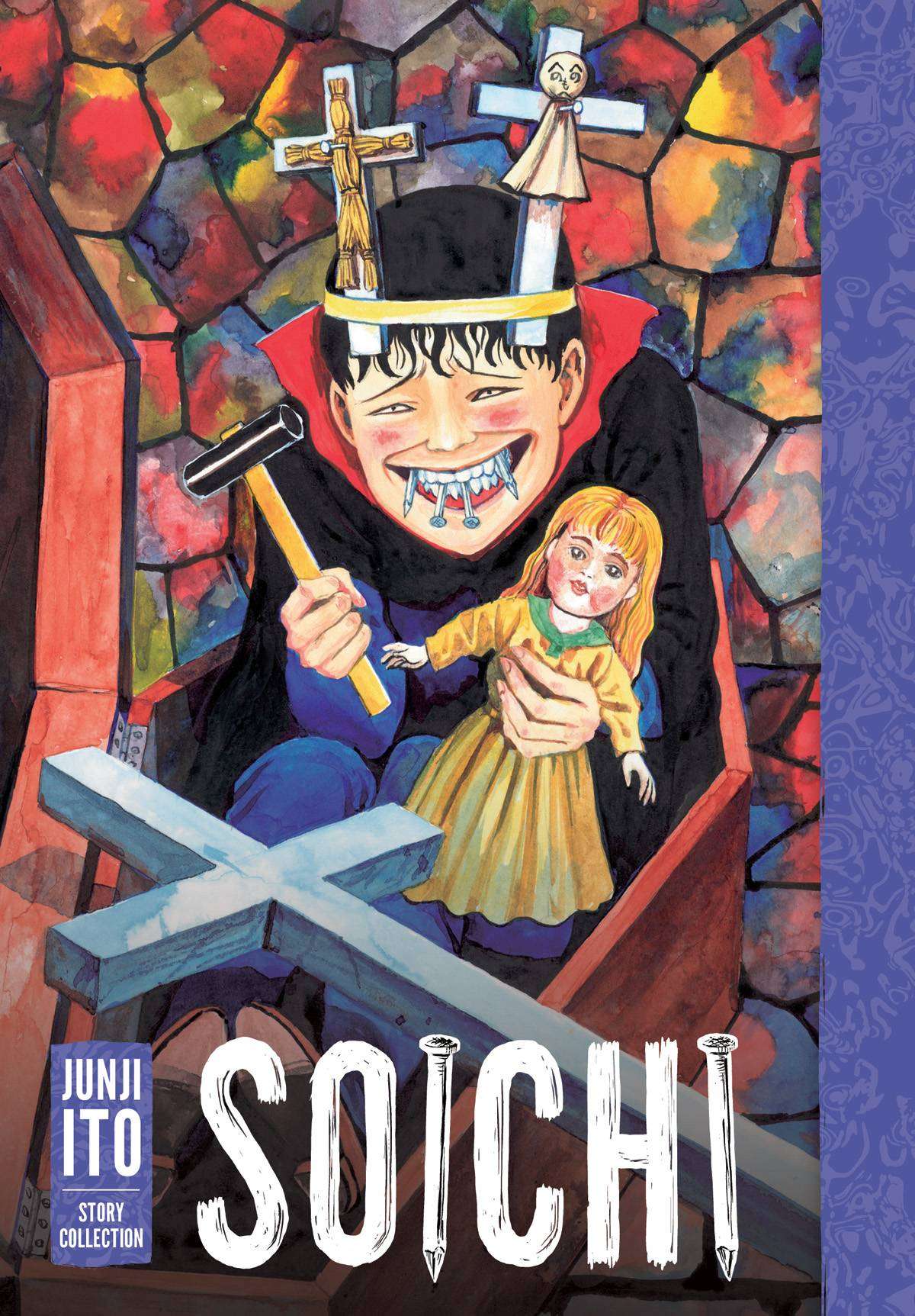
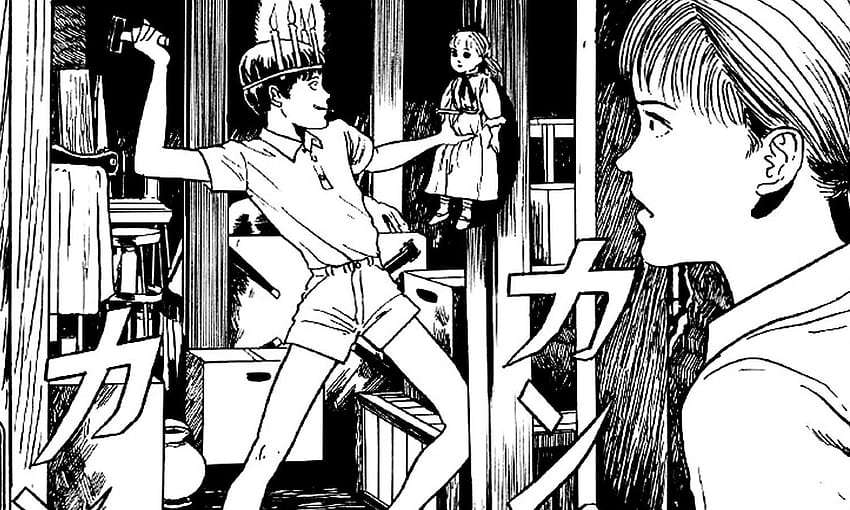
Soichi is composed of 10 short stories featuring the titular character, a kid with a strange and macabre sense of humor that likes to torture his own family along with any visiting cousins that dare spend their vacations where he lives. To an extent, the book chronicles the strange life of Soichi, going from birthdays to elaborate myths concerning his grandmother and then to incidents concerning the creation of life-sized puppets that come alive to create havoc and spread discontent.

Explaining Soichi’s character can be quite tricky. It’s easy to label the kid as nothing more than a proverbial black sheep, the kind every family seems to have at least one of. He’s antisocial, scurries around the attic with the intention of loosening dirt so it falls on people eating below, claims to be able to tap into supernatural elements to torment those he sees fit, and he shoots nails from his mouth.

In the book’s first story, titled “A Happy Summer Vacation,” Soichi’s second cousins (Yusuke and Michina) come for a visit all the way from Tokyo, hoping to spend time with distant relatives they’ve never really had the chance to bond with. They find this part of the family to be the very picture of happiness and cordiality. But then they quickly find out that their son, Soichi, is the exact opposite of this. This kid trades all the brightness his parents and siblings exude and trades it in for doom and gloom. To Soichi’s chagrin, everyone loves the very pleasant Yusuke and Michina. He finds them annoying. So, he responds in kind by creating voodoo dolls in their likeness to visit as much misfortune upon them as possible.

Soichi

While reading this first story, I half-expected the family to be revealed as Satanists that openly worshipped the Dark Lord before every meal. But they weren’t. They were the perfect relatives, the kind everyone wants. It made no sense that this family was responsible for creating such a dark cloud of a human being without an equal within the unit. Therein lies the genius behind these stories.

Because Soichi’s family doesn’t share in his darkness, Soichi becomes relatable. He might be annoying and aggressively unlikeable, but he’s also part of a family that represents everything he’s not. He’s the grungy teen, the headbanger, the metalhead, and the horror hound that every family has at least one of. This is apparent in the way Ito illustrates him.

Soichi is extremely thin, almost to the point of looking sickly. He almost always in a slouch and he has black bags under his eyes to denote a lack of sleep, as if he was destined from the start to be a creature of the night. It’s important that he doesn’t look entirely unwell, though. He’s not neglected by his family or abused. He’s just not like them, making it hard to justify spending quality time with them. He likes to dress in black and he sticks to corners and shadows. Sharing in family events is an obligation to be skirted for him.

While his pranks and snarky remarks go too far (remember the voodoo dolls?), I couldn’t help but feel sad he doesn’t have another likeminded sibling or aunt or cousin to share his darkness with (an idea that comes up in a later story concerning a possible twin brother that no one else can see other than his equally ghoulish grandmother).
soichi

Anyone who’s ever tried to convey the excitement of watching George Romero’s Night of the Living Dead or how listening to Black Sabbath can be life-changing to family members whose automatic response is a disgusted scoff or a throwaway comment on why they’ll never get why people watch horror movies will feel a connection with Soichi.

Ito amplifies this by not turning his family into a scarier and more twisted version of The Addams Family. Soichi doesn’t have a sister like Wednesday or a brother like Pugsly. Hell, he doesn’t even have a Cousin It. He has a painfully normal family that is nothing like him. In truth, Soichi just needs someone who prefers to view life for the terror it is. Views contrary to that are simply alien to him, much like his family.

Soichi will mean different things to different readers, but something that’s indisputable about the character is how much of an outsider he is. He doesn’t care that no one likes him, or that his cousins would rather keep their interactions with him to a minimum. His world is his own, though. He apologizes for none of it. His plans might backfire each time, but he’s true to himself. And then there’s the creeping idea that Ito masterfully sneaks in to make readers consider a very basic fact: every family has their own Soichi, and it might be you. If that’s the case, just be you. But maybe try not to go overboard with the voodoo dolls and the nails.
Dark Ride is one of the best series on the stands and issue #4 further cements it

Dark Ride #4
Dark Ride #4 variant cover by Michael Walsh

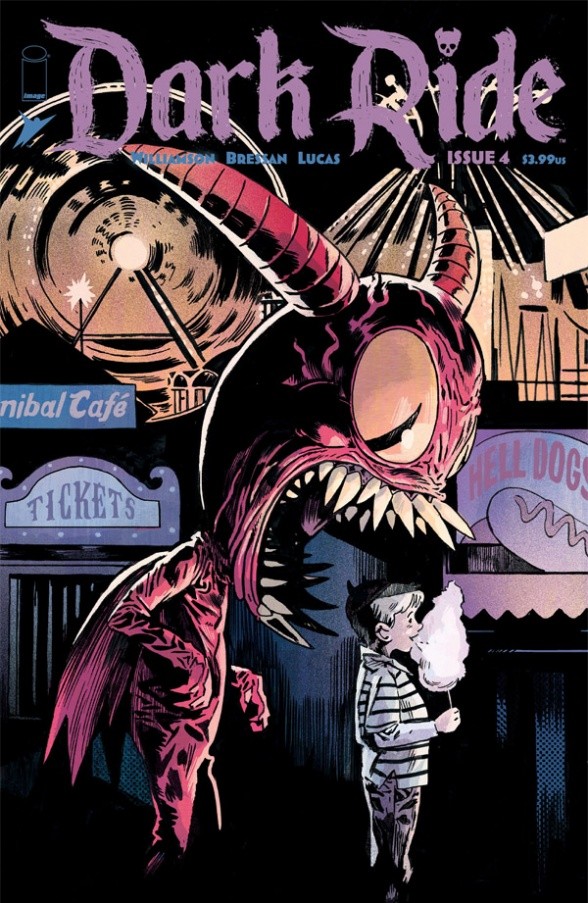
Joshua Williamson and Andrei Bressan’s Dark Ride is a treat for horror fans. The scary theme park at the center of the story is a buffet of genre references and the monsters that inhabit it hide gruesome secrets underneath their mascot suits. While it’s fair to say Dark Ride is a fun read, it’s not without its moments of pure darkness. Issue #4 dives more freely into them.

Dark Ride #4 continues to frame Devil Land park as a place that’s being forced to get in with the times. The definition of fear has changed more than once in recent years and is currently at its most flexible. The park’s owner, Arthur Dante, and his kids Samhain and Halloween (their actual names) are scrambling for ways to update the experience and stay relevant, but eager YouTubers and the sister of missing park employee Owen Seasons are threatening to expose the real horrors operating behind the scenes.

Samhain and Owen’s sister, Summer, take a more central role in issue #4, both fearful of the park’s real power as they each try to understand it while figuring out how Owen could just vanish without a trace inside it. The story is starting to take more of a traditional shape here, with the evil elements making themselves more clearly visible than in previous issues. It looks like Samhain and Summer will end up working together to get to the bottom of the many unknowns Devil Land houses.

Summer’s search for her brother does allow Williamson and Bressan to channel bits from a movie I’m pretty sure influenced the comic’s creation: Tobe Hooper’s The Funhouse (1981). In it, a group of horny teens visit a fair that features a big and disorienting funhouse as one of its main attractions. They sneak into the ride to extend their stay after the fair shuts down, but what they get is an encounter with a monstrous and violent thing that calls the place home along with his cruel parent.

Dark Ride #4

Hooper’s approach to the empty funhouse turns the location into a strange nightmare-filled arena, with barely discernible shapes and shadows making the darkness feel dangerous at every turn. Williamson and Bressan achieve a similar sensation, but they extend it to take over the entire park. Devil Land always looks like a death trap with a mind of its own, not content with just scaring guests. It takes a bite out of customers, one way or another, and it’s the reason why the horror the creative team manages to conjure up with it feels so unique.

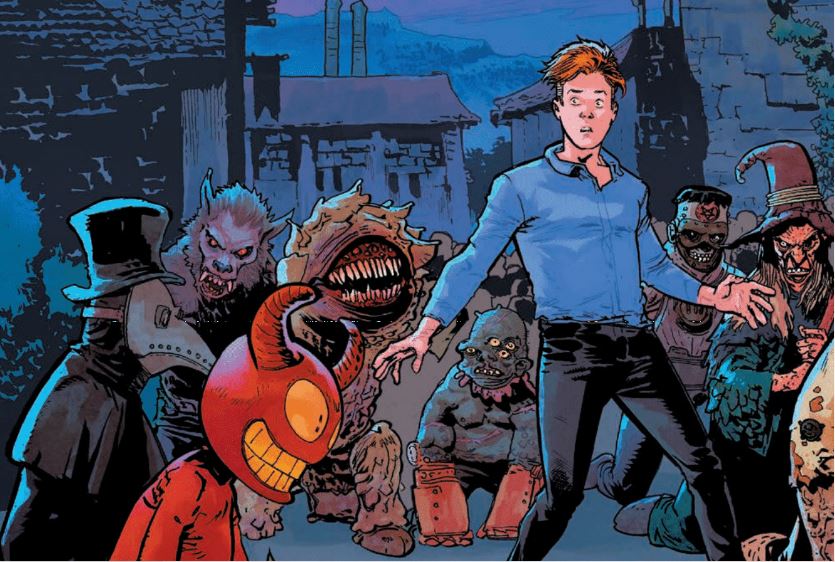
Bressan gives the park and its creatures a fairy tale-like aesthetic that flips classic cartoon tropes for things that look as if from another dimension, a very sadistic one at that. Their behavior reminds of the old voodoo zombie films of the black & white era, stoic but harboring a menace that could reveal itself at any moment.

Adriano Lucas’ colors have been a highlight since issue #1. They’re loud and bright and they help in creating an interesting dialogue between the real and the monstrous. I was reminded of old carnival posters, in which sideshow ads and key announcements jumped out of the page. You can almost hear the colors being shouted out via megaphone, urging people to step right up.

Dark Ride continues to be one of the best series on the stands and it looks like that won’t be changing in 2023. Williamson and Bressan are taking full advantage of the premise, adding layers upon layers of storytelling to the point of establishing narrative arcs and threads that can go on for a long time. I hope the series stays for the long run. If Devil Land were a real place, I’d have no problem buying one of those expensive, all-inclusive passes that let me visit whenever I want. Even if it risks being eaten by one of the rides.

Story: Joshua Williamson Art: Andrei Bressan
Color: Adriano Lucas Letterer: Pat Brosseau
Story: 9.0 Art: 9.0 Overall: 9.0
Recommendation: Read and then watch Hooper’s The Funhouse if you haven’t already.

Image Comics provided Graphic Policy with a FREE COPY by the publisher for review


Purchase: TFAW – Zeus Comics – comiXology/Kindle

Review: Dead Seas #1

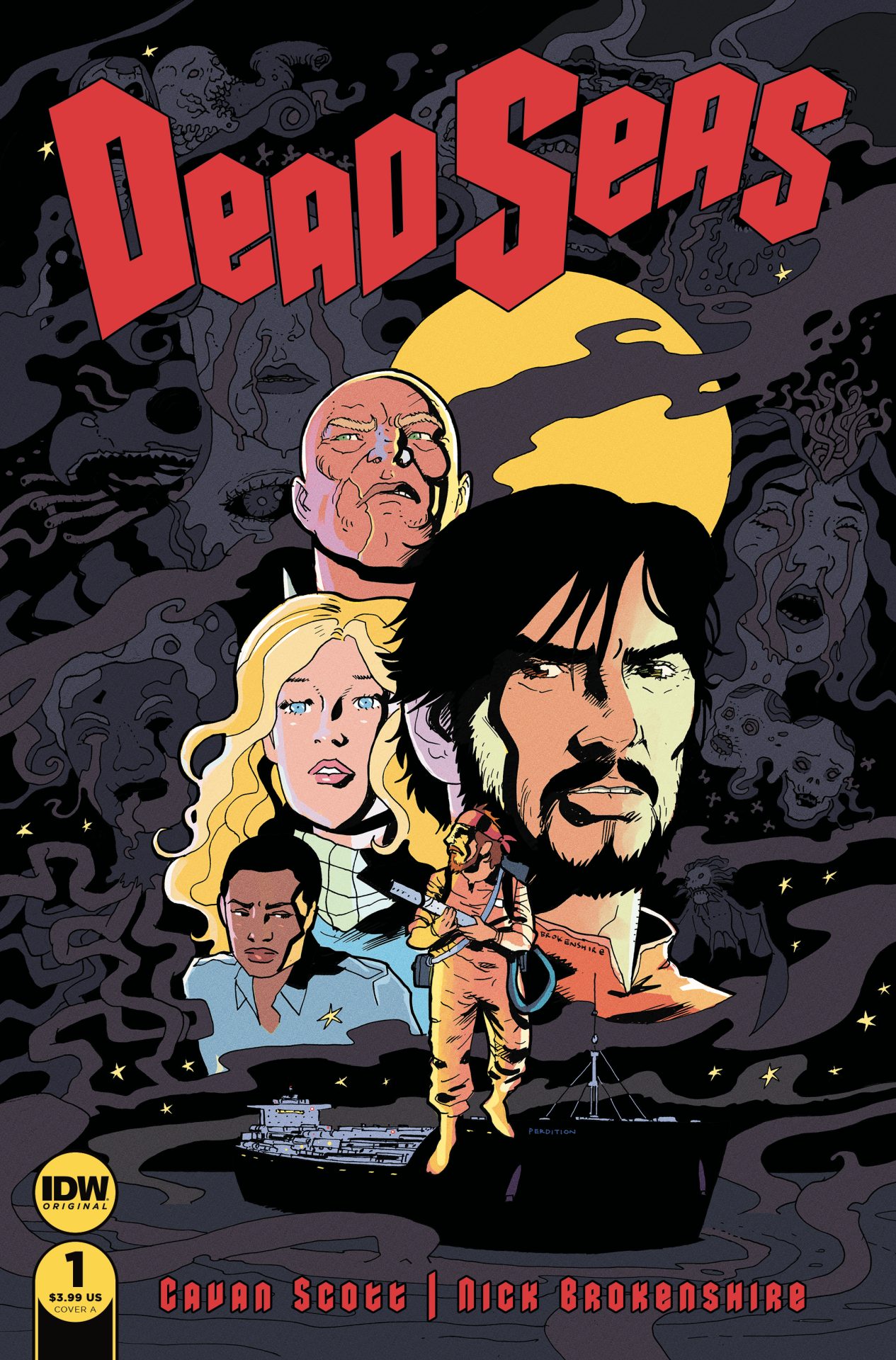
Dead Seas #1

Haunted ships aren’t exactly a new thing in the horror genre. They are, in essence, floating haunted houses made even more isolated, and perhaps crueler, by virtue of being placed miles away from land, thus making it pretty hard for anyone inside them to escape. It’s mostly the same idea behind stories that take place inside haunted spaceships or monster-infested cargo ships. There’s no escape, no one to really hear you scream, and no one to call for a quick save (all things that make movies like Alien and Event Horizon so utterly terrifying).

A floating prison ship that recruits inmates to work on the highly dangerous task of extracting ectoplasm from the ghosts that are being held in it, though, adds a few wrinkles to that old formula. There just aren’t a lot of these kind of ships in horror. This fact alone opens new doors into terror, and it is precisely what writer Cavan Scott and artist Nick Brokenshire decided bet on for their new IDW Originals series Dead Seas.

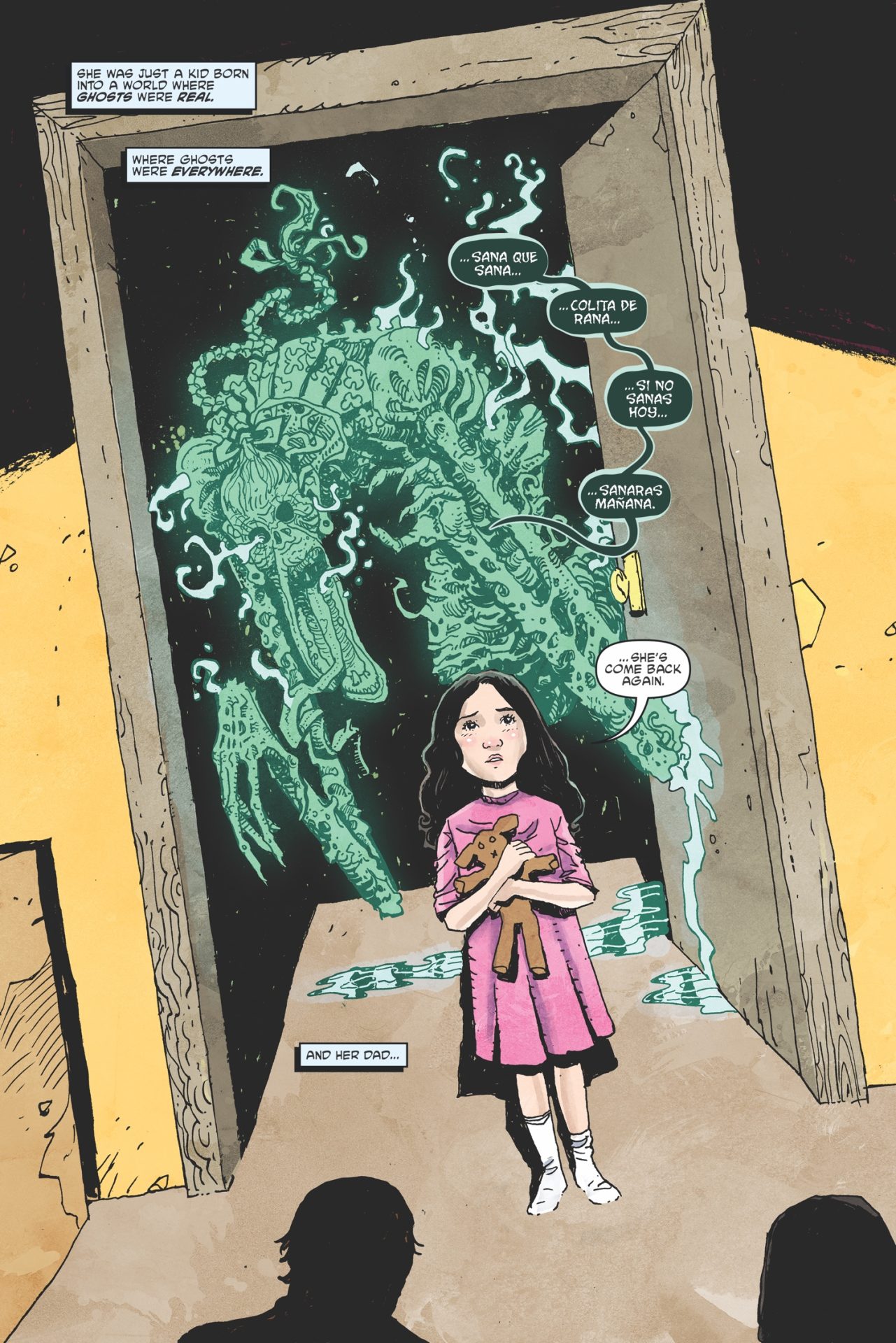
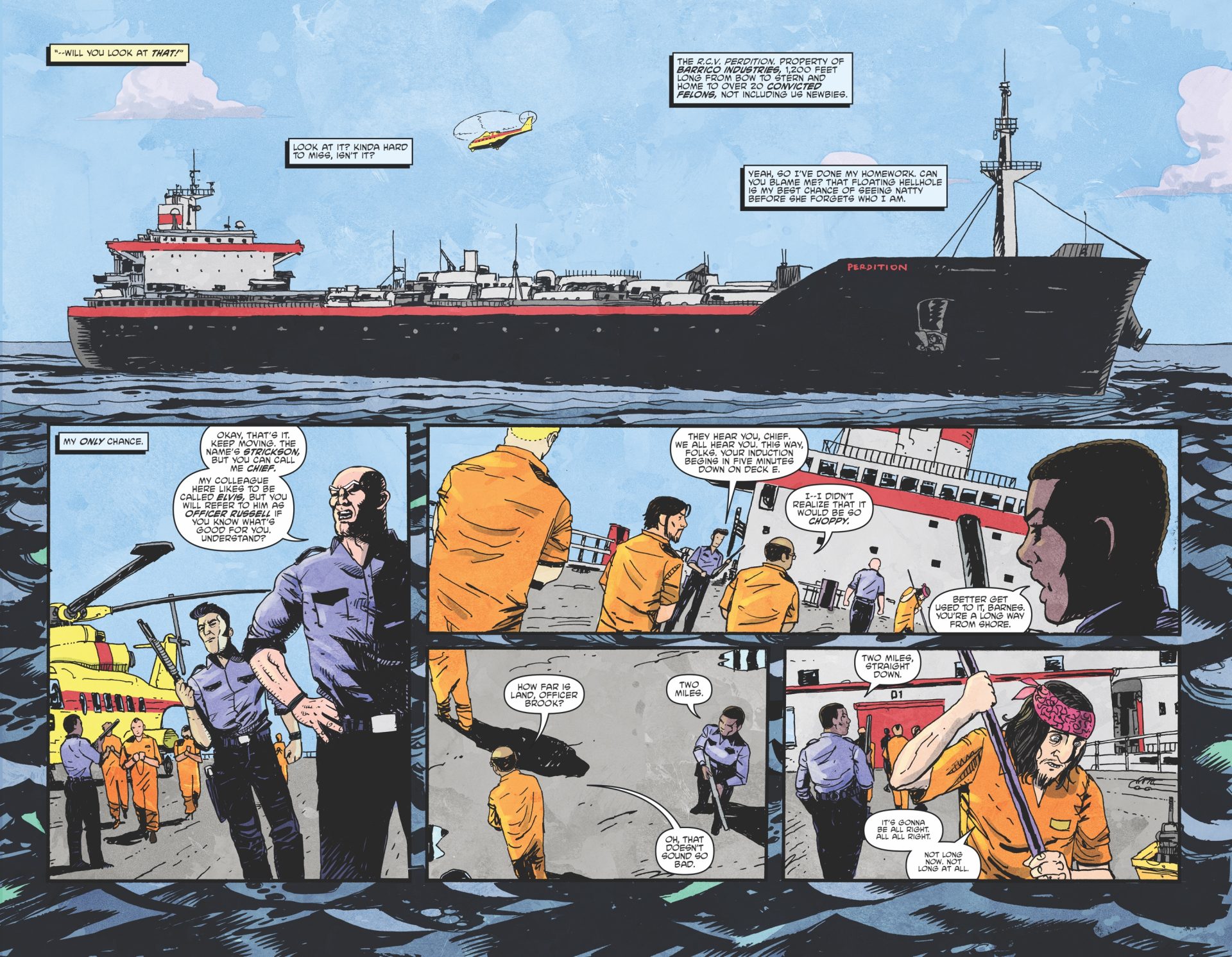
Dead Seas follows Gus, an inmate who is being flown into the prison ship Perdition to work on ectoplasmic collection, an entirely new field of work that’s still in its experimental phase. The world, one character explains early on, has been wrestling with a ghost problem for going on ten years, forcing a new status quo and new opportunities to exploit. Water, it’s been found, can hurt ghosts, a discovery that’s led to the capture and holding of spirits at sea to study the ooze they secrete and their potential medical benefits. Of course, it doesn’t take long for technical difficulties and human error to cut the experiment short and put every living soul on the ship on the path towards paranormal activity.

Dead Seas #1

There are a few influences at play in the story, more as flavoring rather than dominating ingredients. Fans of the 2001 Thirteen Ghosts remake, for instance, might appreciate some of the ways in which Scott and Brokenshire present their ghosts and the vessels they’re trapped in. Spirits are found in short supply in Dead Seas #1, but what’s shown hints at an interest in exploring their more monstrous aspects (like those in the film I mentioned). These aren’t transparent outlines of deceased relatives or hazy visions of regular people. They’re nightmarish, things that look and feel dangerous, insidious, and tortured.

Ghosts are only as good as the people they haunt, though, and Dead Seas starts strong in this department. Scott and Brokenshire surround Gus with a cast of inmates and scientists with complex personalities, each carrying their personal histories on their bodies for all to see. Brokenshire’s character design does an excellent job of making each one feel like a unique person, with qualities both seen and unseen making it across in a very nuanced visual style.

Scott’s dialogue and carefully orchestrated exposition segments prioritize character work first. It’s the reason why issue #1 is lighter on ghosts, which isn’t a knock against it. Scott lets conversations play out as needed so that readers can get a good sense of their personas, especially as it pertains to their anxieties and fears. Every prisoner is there for a reason, mostly to get some benefit in exchange for their service as it pertains to their prison sentences. The stakes run high as the promise of freedom is dangled in from of them so they can overlook the risks and do the job.

Dead Seas #1

One thing the first issue could’ve done a bit better with was pacing. Scott and Brokenshire do an admirable job of worldbuilding and character development, but it all happens fast. There’s barely any breathing room to process what we learn about Gus and Perdition’s ghost operation. The story is rich enough that I would appreciate a slower pace to savor the smaller details in it.

This complaint, however, does little to detract from this impressive and refreshing horror series debut. The promise of things to come is more than enough to warrant attention and further reading. It’s hard not to love stories that tinker with traditions and expectations within genre to arrive at something new. Dead Seas falls squarely on that category and I can’t wait to see what horrors await us in Perdition.

Writer: Cavan Scott Art: Nick Brokenshire Letter: Shawn Lee
Story: 9.0 Art: 9.0 Overall: 9.0
Recommendation: Read, then research how much damage water can actually inflict on ghosts.

IDW Publishing provided Graphic Policy with a FREE copy for review


Purchase: Zeus ComicscomiXology/Kindle

Advance Review: Dead Seas #1

Dead Seas #1

Haunted ships aren’t exactly a new thing in the horror genre. They are, in essence, floating haunted houses made even more isolated, and perhaps crueler, by virtue of being placed miles away from land, thus making it pretty hard for anyone inside them to escape. It’s mostly the same idea behind stories that take place inside haunted spaceships or monster-infested cargo ships. There’s no escape, no one to really hear you scream, and no one to call for a quick save (all things that make movies like Alien and Event Horizon so utterly terrifying).

A floating prison ship that recruits inmates to work on the highly dangerous task of extracting ectoplasm from the ghosts that are being held in it, though, adds a few wrinkles to that old formula. There just aren’t a lot of these kind of ships in horror. This fact alone opens new doors into terror, and it is precisely what writer Cavan Scott and artist Nick Brokenshire decided bet on for their new IDW Originals series Dead Seas.

Dead Seas follows Gus, an inmate who is being flown into the prison ship Perdition to work on ectoplasmic collection, an entirely new field of work that’s still in its experimental phase. The world, one character explains early on, has been wrestling with a ghost problem for going on ten years, forcing a new status quo and new opportunities to exploit. Water, it’s been found, can hurt ghosts, a discovery that’s led to the capture and holding of spirits at sea to study the ooze they secrete and their potential medical benefits. Of course, it doesn’t take long for technical difficulties and human error to cut the experiment short and put every living soul on the ship on the path towards paranormal activity.

Dead Seas #1

There are a few influences at play in the story, more as flavoring rather than dominating ingredients. Fans of the 2001 Thirteen Ghosts remake, for instance, might appreciate some of the ways in which Scott and Brokenshire present their ghosts and the vessels they’re trapped in. Spirits are found in short supply in Dead Seas #1, but what’s shown hints at an interest in exploring their more monstrous aspects (like those in the film I mentioned). These aren’t transparent outlines of deceased relatives or hazy visions of regular people. They’re nightmarish, things that look and feel dangerous, insidious, and tortured.

Ghosts are only as good as the people they haunt, though, and Dead Seas starts strong in this department. Scott and Brokenshire surround Gus with a cast of inmates and scientists with complex personalities, each carrying their personal histories on their bodies for all to see. Brokenshire’s character design does an excellent job of making each one feel like a unique person, with qualities both seen and unseen making it across in a very nuanced visual style.

Scott’s dialogue and carefully orchestrated exposition segments prioritize character work first. It’s the reason why issue #1 is lighter on ghosts, which isn’t a knock against it. Scott lets conversations play out as needed so that readers can get a good sense of their personas, especially as it pertains to their anxieties and fears. Every prisoner is there for a reason, mostly to get some benefit in exchange for their service as it pertains to their prison sentences. The stakes run high as the promise of freedom is dangled in from of them so they can overlook the risks and do the job.

Dead Seas #1

One thing the first issue could’ve done a bit better with was pacing. Scott and Brokenshire do an admirable job of worldbuilding and character development, but it all happens fast. There’s barely any breathing room to process what we learn about Gus and Perdition’s ghost operation. The story is rich enough that I would appreciate a slower pace to savor the smaller details in it.

This complaint, however, does little to detract from this impressive and refreshing horror series debut. The promise of things to come is more than enough to warrant attention and further reading. It’s hard not to love stories that tinker with traditions and expectations within genre to arrive at something new. Dead Seas falls squarely on that category and I can’t wait to see what horrors await us in Perdition.

Writer: Cavan Scott Art: Nick Brokenshire Letter: Shawn Lee
Story: 9.0 Art: 9.0 Overall: 9.0
Recommendation: Read, then research how much damage water can actually inflict on ghosts.

IDW Publishing provided Graphic Policy with a FREE copy for review


Pre-order: Zeus ComicscomiXology/Kindle

Review: Stray Dogs: Dog Days #1

Stray Dogs: Dog Days

Tony Fleecs and Trish Forstner’s Stray Dogs not only stands as one of the best horror comics of the year, but also one of its most emotional. Forstner’s Disney-inspired illustrations and Fleecs’ clever scripting choices helped craft a story about a pack of dogs living with a serial killer who brings back the pets of those he kills with a very delicate sensibility that values character development over gratuitous suffering.

The trend continues with the newest chapter of the series titled Stray Dogs: Dog Days, which looks at each individual dog’s story to explore their connection with their owners and what was lost when the serial killer took them away. There’s not a single page that won’t make you want to burst in tears, but there’s also not a page that isn’t treated with the care it deserves to get the most out of it.

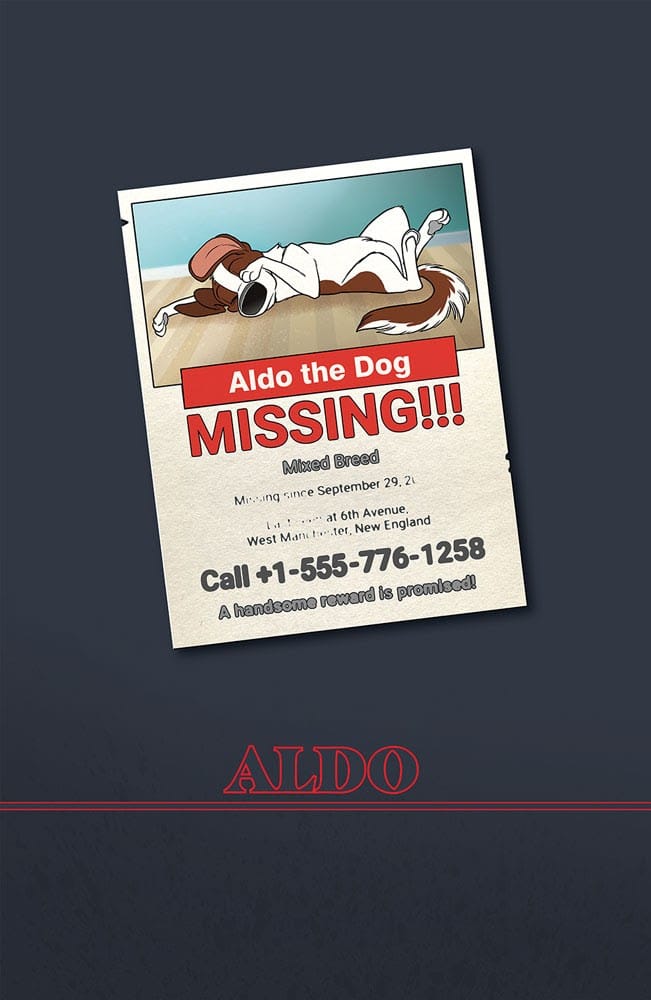
Dog Days is presented in a kind of anthology format, which each segment getting a few pages of story before moving on to the next one. The chapter breaks are particularly clever. They show the “Missing Dog” poster with a picture of the dog accompanied by a few bits of info on their temperament and how best to approach them if you see them.

The concept isn’t just clever, though. It’s a part of the storytelling and speaks volumes about the dogs’ current status, especially when you remember they’re actually living with the man that killed their human companions.

Stray Dogs: Dog Days

While the stories all share a deep sadness between them, there also some truly frightening details that magnify the serial killer’s presence. One in particular finds its horror in a dog trying to barter with another dog for a ball he wants to play with. What he offers in return is chilling and downright unsettling. And yet, the dogs don’t fully grasp the gravity of what’s being exchanged, playing into their unique perspective on life and how naturally innocent they are in their view of it.

The Disney-inspired style retains its power here and is still effective in subverting genre conventions. The contrast between it and the subject matter itself is a thing to behold and may even help the story hit harder. Where the visuals to change entirely, Stray Dogs would become a completely different book and reading experience.

Dog Days #1 signals a return to darkness for the pups of the main story. The segments included in this story aren’t there to be crowd pleasers or alleviate the sadness. That said, the bond the dogs create within the pack is still given its time to shine and points to the light these animals bring to life even when it’s at its most terrifying. I can’t wait for issue #2, even though I dread knowing what each dog went through once the killer steps into their lives. Despite that, Stray Dogs is still a world I want to spend more time in.

Story: Tony Fleecs Art: Trish Forstner Colors: Brad Simpson
Art: 10 Story: 10 Overall: 10
Recommendation: Buy, read, and hug your dog…and also maybe invest in home security (just in case).

Image Comics provided Graphic Policy with a FREE copy for review


Purchase: comiXologyKindleZeus ComicsTFAW

Early Review: Stray Dogs: Dog Days #1

Stray Dogs: Dog Days

Tony Fleecs and Trish Forstner’s Stray Dogs not only stands as one of the best horror comics of the year, but also one of its most emotional. Forstner’s Disney-inspired illustrations and Fleecs’ clever scripting choices helped craft a story about a pack of dogs living with a serial killer who brings back the pets of those he kills with a very delicate sensibility that values character development over gratuitous suffering.

The trend continues with the newest chapter of the series titled Stray Dogs: Dog Days, which looks at each individual dog’s story to explore their connection with their owners and what was lost when the serial killer took them away. There’s not a single page that won’t make you want to burst in tears, but there’s also not a page that isn’t treated with the care it deserves to get the most out of it.

Dog Days is presented in a kind of anthology format, which each segment getting a few pages of story before moving on to the next one. The chapter breaks are particularly clever. They show the “Missing Dog” poster with a picture of the dog accompanied by a few bits of info on their temperament and how best to approach them if you see them.

The concept isn’t just clever, though. It’s a part of the storytelling and speaks volumes about the dogs’ current status, especially when you remember they’re actually living with the man that killed their human companions.

Stray Dogs: Dog Days

While the stories all share a deep sadness between them, there also some truly frightening details that magnify the serial killer’s presence. One in particular finds its horror in a dog trying to barter with another dog for a ball he wants to play with. What he offers in return is chilling and downright unsettling. And yet, the dogs don’t fully grasp the gravity of what’s being exchanged, playing into their unique perspective on life and how naturally innocent they are in their view of it.

The Disney-inspired style retains its power here and is still effective in subverting genre conventions. The contrast between it and the subject matter itself is a thing to behold and may even help the story hit harder. Where the visuals to change entirely, Stray Dogs would become a completely different book and reading experience.

Dog Days #1 signals a return to darkness for the pups of the main story. The segments included in this story aren’t there to be crowd pleasers or alleviate the sadness. That said, the bond the dogs create within the pack is still given its time to shine and points to the light these animals bring to life even when it’s at its most terrifying. I can’t wait for issue #2, even though I dread knowing what each dog went through once the killer steps into their lives. Despite that, Stray Dogs is still a world I want to spend more time in.

Story: Tony Fleecs Art: Trish Forstner Colors: Brad Simpson
Art: 10 Story: 10 Overall: 10
Recommendation: Buy, read, and hug your dog…and also maybe invest in home security (just in case).

Image Comics provided Graphic Policy with a FREE copy for review


Purchase: comiXologyKindleZeus ComicsTFAW

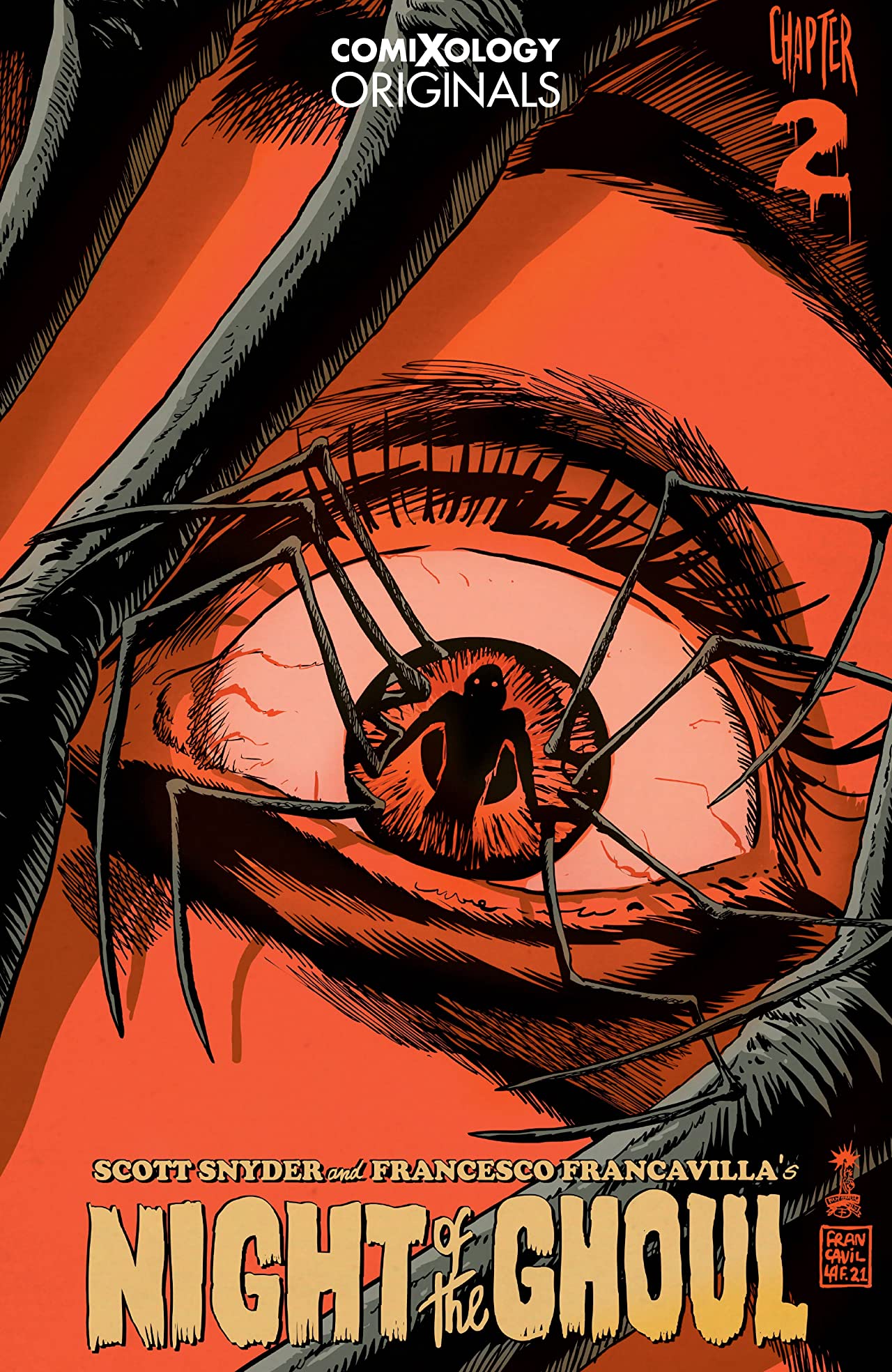
Review: Night of the Ghoul #2

NIGHT OF THE GHOUL #2

It’s hard not to think about classic horror films when reading Scott Snyder and Francesco Francavilla’s Night of the Ghoul. I was reminded of the original 1951 The Thing, the 1964 film The Last Man on Earth (an adaptation of Richard Matheson’s classic novel I Am Legend), and even a bit of the black & white Universal monster movies. Not necessarily in terms of plot, but rather in terms of the dread that permeates through them. The comic just lives and breathes that kind of Fifties and Sixties horror that relished in making its characters slowly march towards their doom as they search for some impossible truth. It finds its life source in the creepy atmosphere those movies developed as well, the kind that builds up the mystery to heighten the horror at its core.

Night of the Ghoul is all of that and more, a vehicle for fear that establishes a kind of lineage of dark things that honors what came before it but also aspires to insert itself in the continuum. Snyder and Francavilla are tapping into some deeply unsettling things in their comixology series, ready for some serious mythmaking along the way.

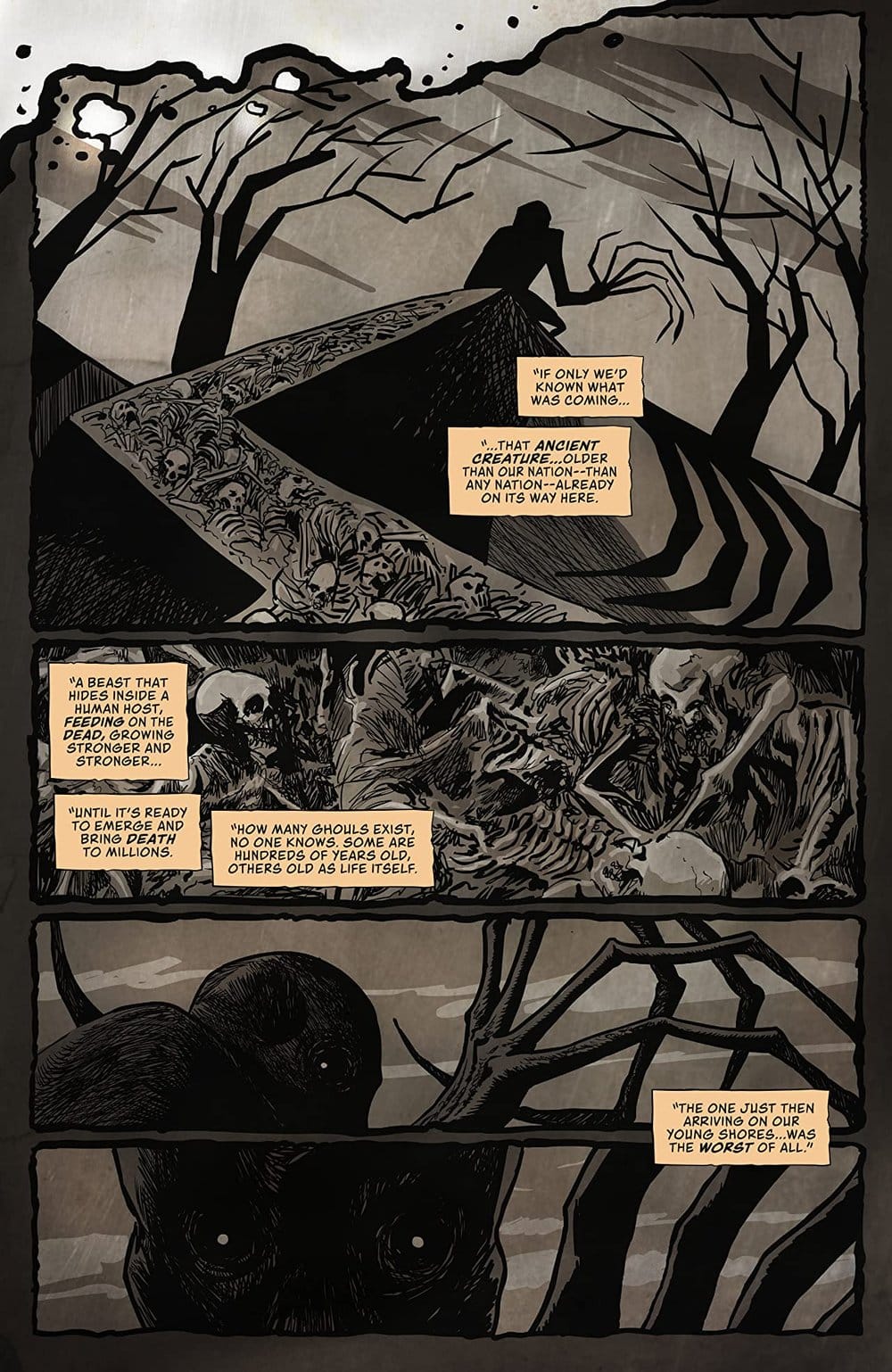
Issue #2 digs just deep enough to expand on the legend of the Ghoul, a kind of proto-monster that transforms into the things other people are afraid of. The film researcher is making progress with the horribly disfigured director of the lost film he uncovered, the lost but now found “Night of the Ghoul,” but every new bit of information gathered points to a discovery of forbidden knowledge captured in celluloid, making the very act of watching it quite dangerous (an idea that reminded me of John Carpenter’s Cigarette Burns, about a rare movie that captures the torture of a majestic being).

NIGHT OF THE GHOUL #2

The story’s dual narrative structure continues to build upon itself with key cuts in the narrative that show scenes from the “Night of the Ghoul” movie. These sequences offer more hints as to the actual content of the cursed film and the monster that lies within it. Francavilla is putting a lot of care into these segments, capturing a very genuine feel for the black & white horror he’s clearly inspired by, a quality that tends to make its presence known across his body of work.

Snyder’s script stands as one of his most focused and one of his most measured. There’s a real concern with style and structure that helps keep the story from going off the rails. Horror movies from the Golden Age (1910-1960) tended to focus primarily on the larger meanings behind their hauntings, on how they reflected upon society or a deeply seated fear on a collective level. Night of the Ghoul carries itself as such, at least two issues in. The mystery is carrying the story and its implications are what will keep readers hooked in as more gets uncovered.

Night of the Ghoul is a well-oiled machine made by two masters of the craft. Horror runs deep in its DNA and it understands the inner working of it in intimate detail. The comic is well on its way to becoming a horror comics classic. If it holds steady, it’ll become a story I’ll be recommending to readers interested in expanding into the comics medium for their horror fixes.

Story: Scott Snyder, Art: Francesco Francavilla
Story: 9.0 Art: 9.0 Overall: 9.0
Recommendation: Buy and subscribe to a streaming service that features old horror movies.


Purchase: comiXologyKindle

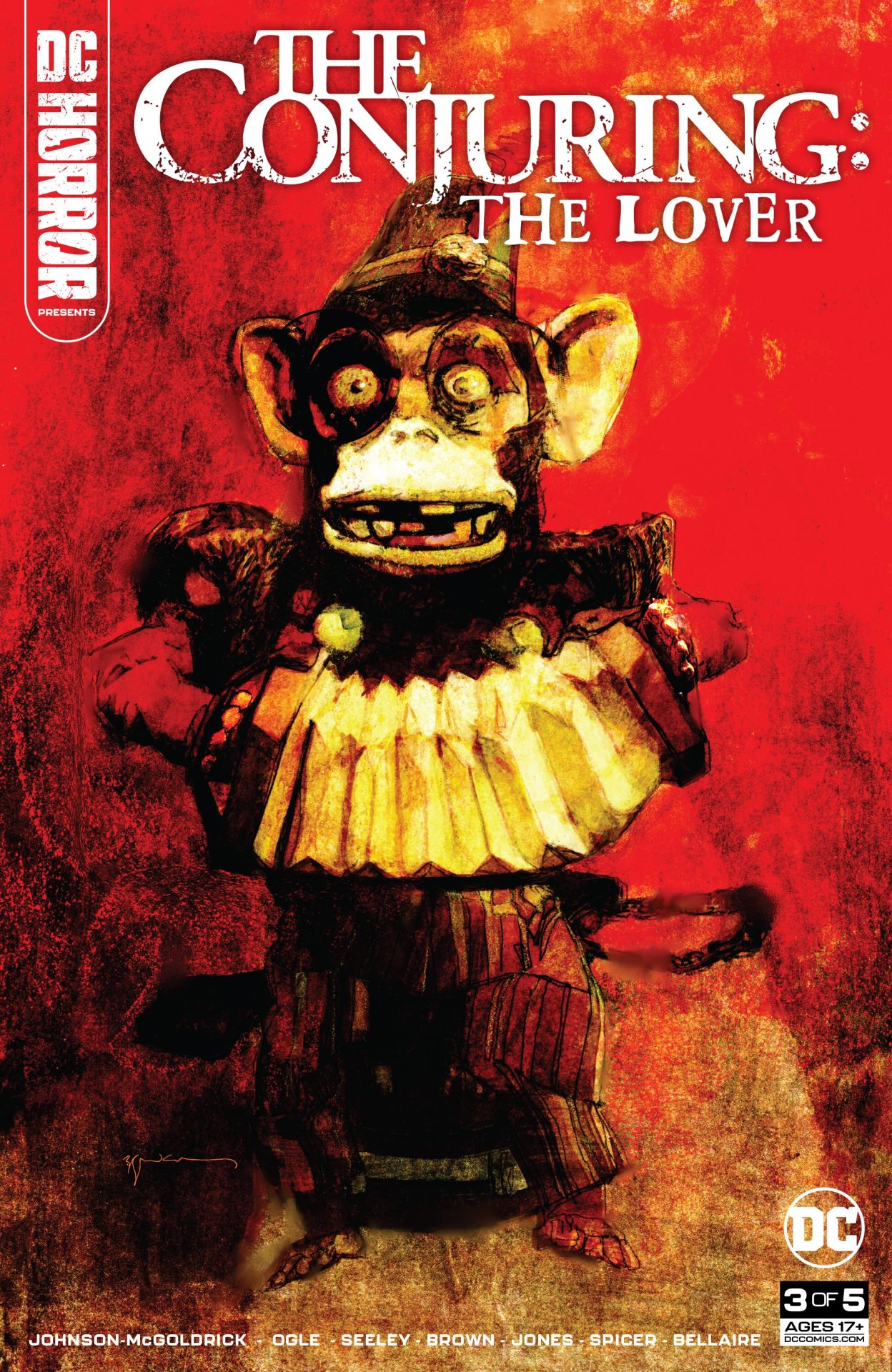
Review: The Conjuring: The Lover #3

The Conjuring: The Lover #3

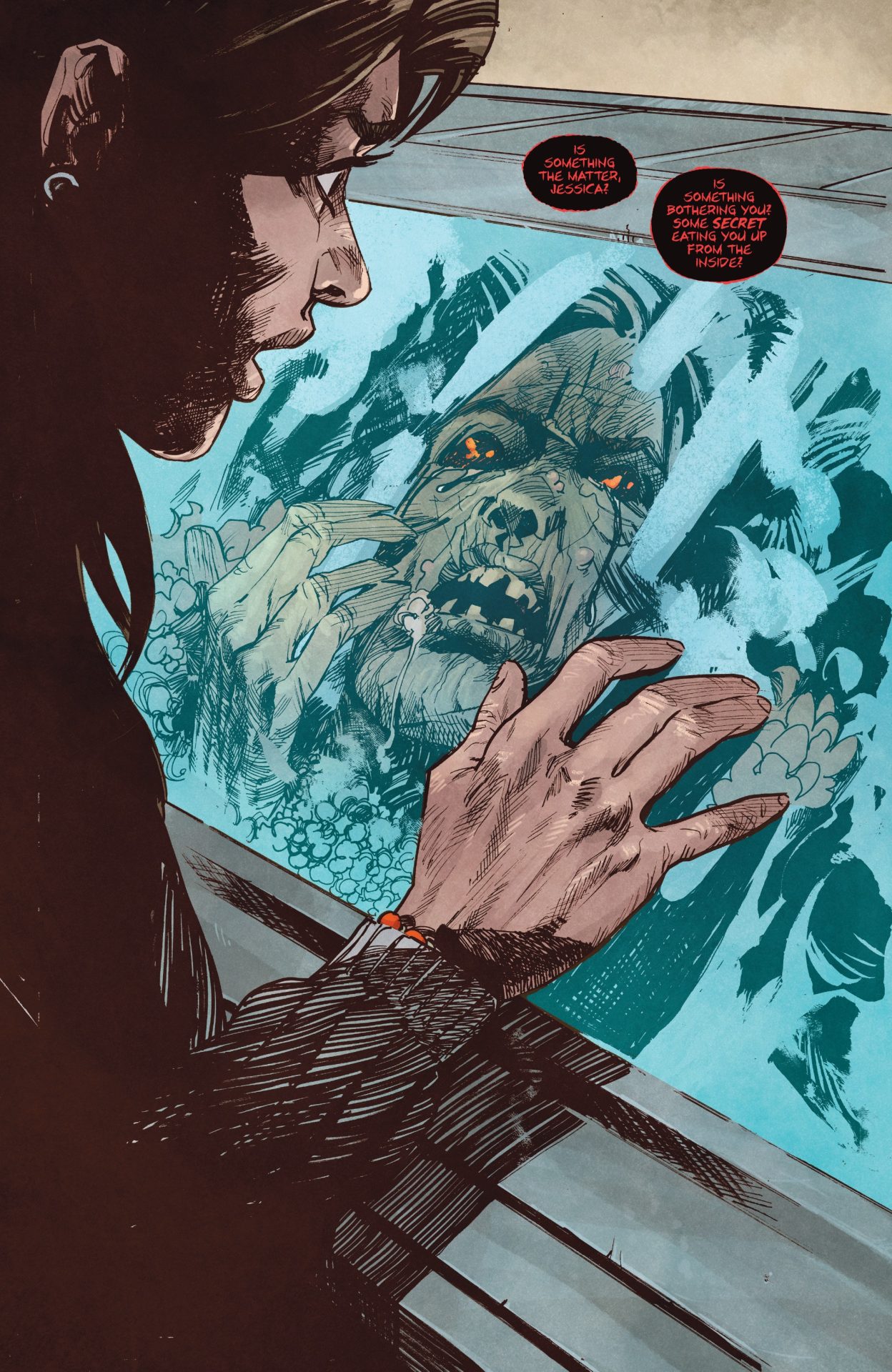
The Conjuring: The Lover #3 has finally put its main character, Jessica, on a straight path to the source of her haunting, and things are getting diabolically tense. The third entry of this horror series seems to be eyeing its endgame quite closely and is thus moving its pieces towards a terrifying finale where evil might actually prevail should Jessica not find a way to rid herself of the mysterious Satanist behind it all.

The Lover has been an immensely fun ride. It thrives on a sense of claustrophobia by keeping the focus close on Jessica and how the thing that’s haunting her further isolates her from friends and any chance of complete salvation from the situation. Issue #3 ramps up the haunting, isolating the character to the point of constant oppression, tricking her friends into believing her behavior stems from good old-fashioned madness.

In this sense, the story reminds me even more of the movie The Exorcism of Emily Rose (2005), in which a female college student struggles with behavior that her family thinks can be attributed to demonic possession when the evidence more directly points to mental illness (based on the true case of Annaliese Michel, who underwent 67 Catholic rites of exorcism that ultimately led to her death).

While the comic leaves less space open to interpretation as to the origin of Jessica’s haunting, it nonetheless resorts to similar storytelling elements to show just how this haunting disconnects someone from the world. It’s been a steady build to this since issue #1 and it’s paying off quite well here.

The Conjuring: The Lover #3

Garry Brown’s art is especially effective in portraying Jessica’s own sense of dread as she gets pulled away from the people that can help her the most by the person enacting the horror that’s latched on to her. Each panel feels claustrophobic, enclosing Jessica deeper within her environment. At points, it feels as if the panels themselves are attacking the character, pushing into even more uncomfortable spaces.

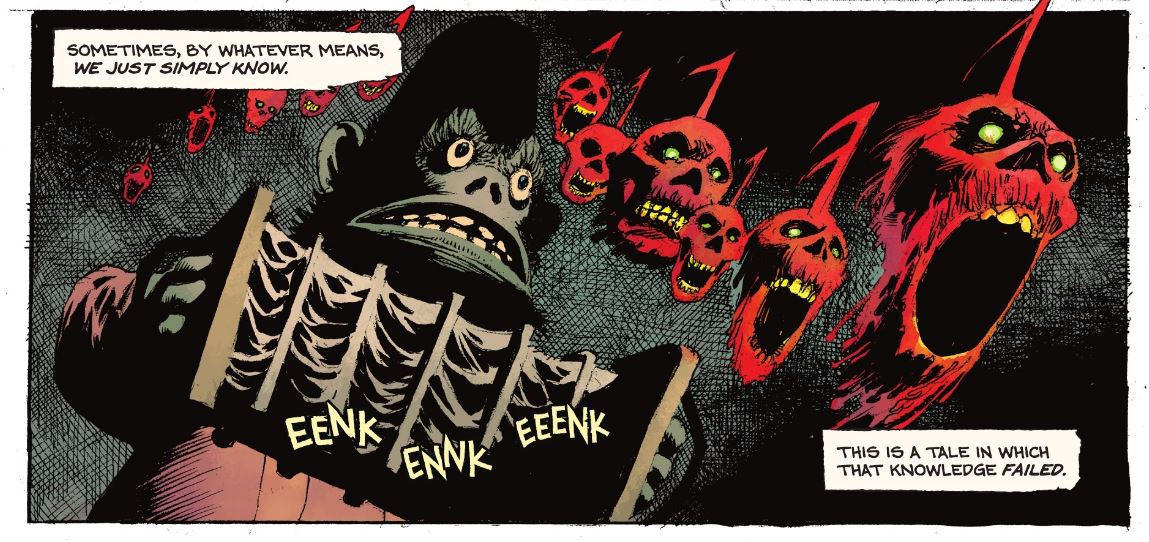
As has been the case in the previous two entries, this issue contains a back-up story featuring a haunted item from the Warren’s Artifact Room, and this issue’s tale might be it’s best yet. It looks at the now infamous Accordion Monkey and it’s written by Tim Seely with art by horror master Kelley Jones and colors by Jordie Bellaire.

It’s a tale that has a 1970’s horror vibe to it in that the inner workings of the haunted object contains a healthy dose of madness, violence, and insidiousness. The horror put on display has no qualms painting a bleak picture for those involved and it savors the idea that darkness tends to have a better chance at prevailing in cases such as this.

The Conjuring: The Lover #3

Seely’s script is tight and smartly gruesome when it needs to be, but Jones’ art is what seals the deal on this one. It’s a great reminder of why Jones deserves to be among the best horror illustrators in the business. It feels classic EC Horror to an extent, but it looks to be more than just an homage to horror’s past. It truly is a treat getting this story right after a solid entry of The Lover.

Things aren’t looking so good for Jessica and the next issue is shaping up to be an intense encounter with the dark forces that have decided to torment her. We can only hope the Warrens make a surprise appearance to save the day, but the way things are going, that doesn’t seem like it’s going to be the case.

Story: David L. Johnson-McGoldrick & Rex Ogle, Art: Garry Brown Color: Jordie Bellaire
Story: 8.0 Art: 9.0 Recommendation: Buy and always have a friend that believes you see ghosts.


Purchase: comiXologyKindleZeus ComicsTFAW

Review: Goosebumps: Secrets of the Swamp #1

GOOSEBUMPS: SECRETS OF THE SWAMP #1

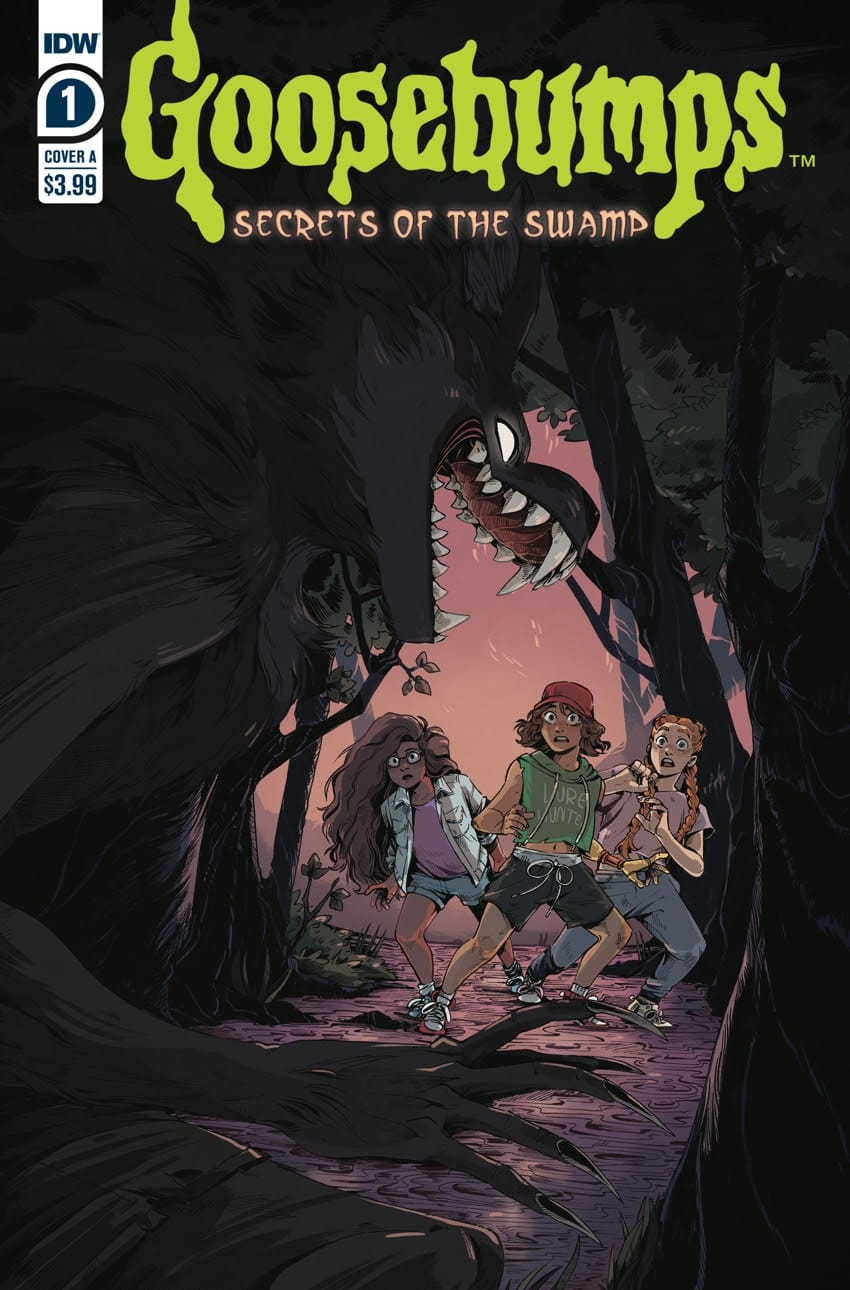
It’s easy to admire how Goosebumps approaches YA horror, especially in pursuing dark stories without the intention of dialing down the evil behind them. This is the case with the new mini-series set within its universe, Goosebumps: Secrets of the Swamp, where three girls find themselves in the middle of a battle between werewolves and wolf-hunters. With this setup, writer Marieke Nijkamp and artist Yasmín Flores Montañez kick-off a story that updates the classic Goosebumps formula with a strong and diverse cast along with familiar monsters offering new scares.

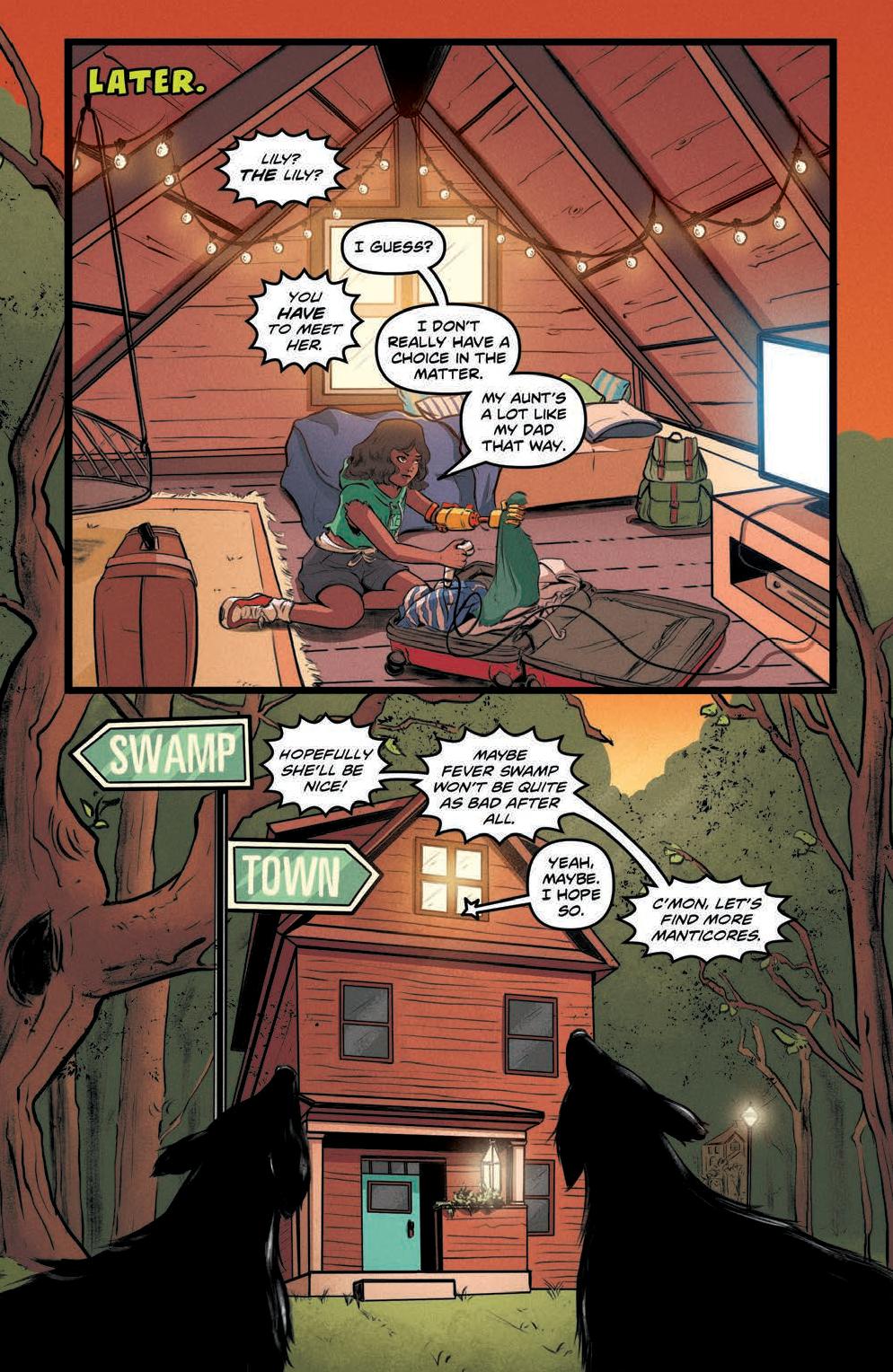
The story follows Blake, an expert gamer looking to pass the summer beating high scores online. Her aunt, whom she is staying with, tries to get her back into the real world with hints and clues as to the myths and legends of the town of Fever Swamp. Horror starts to creep in with this revelation as Blake meets Lily and Cara and tales of swamp monsters start circulating between them.

Flores Montañez and colorist Rebecca Nalty do wonders with the setting. Fever Swamp looks vibrant and colorful but dangerous as well. There’s something about a swamp setting that screams blood and monsters and the art team does a great job of capturing it in all its terrifying glory. Colors seamlessly transition from lighter into darker variations of themselves and in the process help carry the storytelling as it moves towards all-out horror.

Goosebumps: Secrets of the Swamp #1
IDW

The characters’ facial expressions make them feel instantly relatable given they’re so storied and alive. By the end of this first issue, I felt as if I had been reading these characters for a long time. It speaks volumes to Flores Montañez’s ability to bring life into the comics page and the characters that inhabit them.

Nijkamp’s script is expertly paced and allows the story to unravel without heavy exposition dumps. Nothing is explicitly and definitively explained, allowing for a grander sense of the unknown to settle in. As the monsters of the swamp start coming out of the dark, we get the sense that they’re carrying stories with them that don’t conform to the classic trope of ‘good vs. evil’.

Secrets of the Swamp remarkably offers a lot of story in each panel. Details that range from the text on a character’s shirt to the way they move and even how their hair is styled all play into the uniqueness of each character’s identity. This comic feels well lived in. It makes sure readers come back to its world to further uncover its mysteries.

Goosebumps: Secrets of the Swamp #1 is a strong start to a YA horror story that can set a good example as to how to get the most out of the genre. The creative team for this comic is in perfect synchronization and it shows. Stay with this comic. There’s a lot of horror to be had with the promise of more to come.

Story: Marieke Nijkamp Art: Yasmín Flores Montañez Colors: Rebecca Nalty
Story: 9.0 Art: 9.0 Overall: 9.0 Recommendation: Buy, read, and then visit a swamp (just not alone)
.

IDW Publishing provided Graphic Policy with a FREE copy for review


Purchase: comiXologyAmazonKindle

« Older Entries