Tag Archives: David Gordon Green

Should we be excited for The Exorcist: Believer?
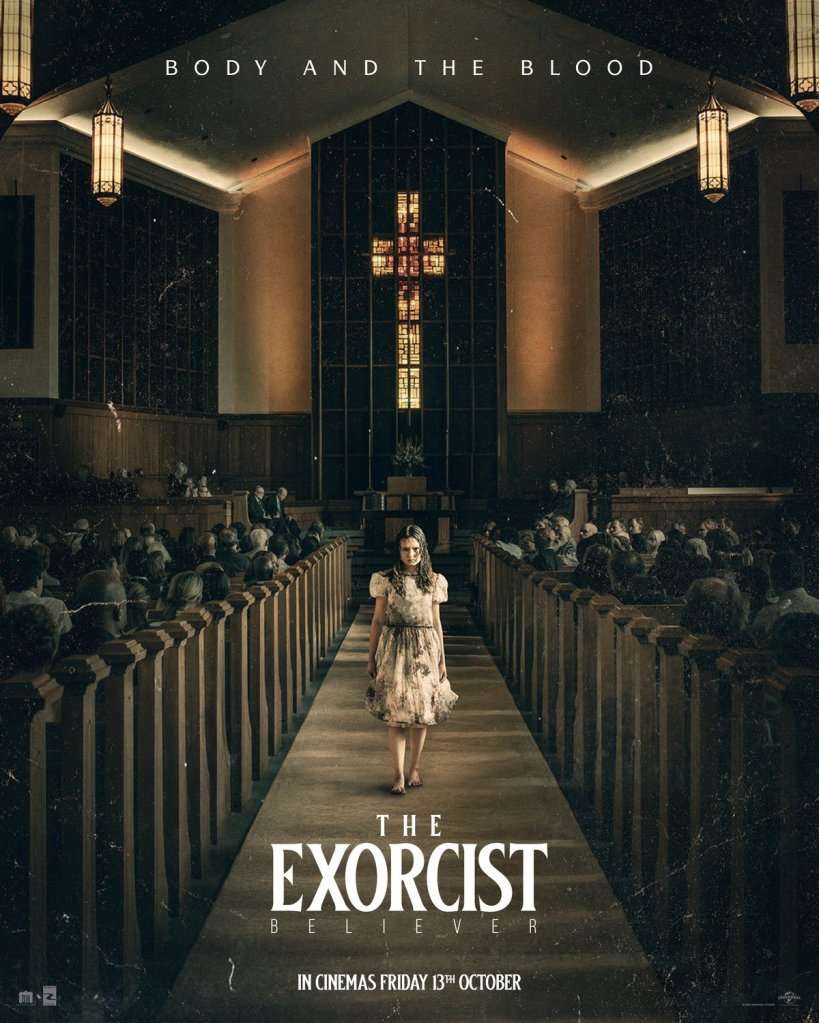
The Exorcist: Believer

William Friedkin’s The Exorcist is considered by many as the scariest and most accomplished horror film in history. It essentially perfected the possession story while setting the blueprint for future forays into the subgenre.

Building a franchise around such a landmark film, though, proved remarkably difficult. Expectations shot up astronomically given the towering presence of the original. Other than the uneven but compelling Exorcist III (released in 1990 and directed by William Peter Blatty, the writer of the 1971 The Exorcist novel the first movie adapted), and the amazing but short-lived The Exorcist 2016 TV series developed by Jeremy Slater, every other attempt at expanding upon the signature horror of Friedkin’s classic has failed spectacularly.

The question now is, will David Gordon Greens’ new Exorcist movie, subtitled Believer, become a possession that’ll reignite audience fears of demonic activity, or will it be another botched exorcism that’ll fade into obscurity along with Exorcist II: The Heretic (1977) and the the prequel movie Exorcist: The Beginning (2004). Another version of the prequel exists called Dominion: Prequel to the Exorcist which was released in 2005 after The Beginning failed to ignite the box office or win over critics. Yes, Warner Brothers released two versions of the same movie, complete with two mostly different casts and two different directors (Renny Harlin worked on Beginning and Paul Schrader on Dominion).

Believer is the first of a planned trilogy that seems to be taking more than a page from Gordon Green’s treatment of the Halloween franchise. The first trailer for the movie established a considerable alteration to the formula concocted before it by showcasing two possessed girls instead of one. This doubling down on the source of horror is an idea that also made its way into the latest Halloween trilogy, to an extent. In the third installment, Halloween Ends, a new character opens the door to the possibility other people can “become” Michael Meyers, thus changing the fabric of the original concept.

The first Believer trailer goes on to show the parents of the possessed girls in a desperate race to try and figure out what’s wrong with their kids. This lands them on the path of someone who’s been through this experience before and who’ll end up helping the parents navigate the possession: Chris MacNeil (Ellen Burstyn), the original survivor parent.

The Chris MacNeil character seems to be cut from the same cloth Laurie Strode was in Gordon Green’s Halloween, Strode being that franchise’s original final girl. She’s a survivor that looks like she’s either been waiting for or has been preemptively preparing for another bout with the same demon that possessed her daughter Regan. Trauma cloaks this character to justify a continuation of the story that ties in to the very first film. From there, we’ll have to see how much is sticks to the Halloween reboot formula and how much it deviates from it.

A few things worry me about this new chapter in the Exorcist franchise, apart from potentially being too similar to the latest Halloween trilogy in structure. First, we’ve gotten a lot of exorcism and demonic possession movies since the first Exorcist. Clichés, genre trappings, and expectations have had ample time to settle in and make themselves known. The first trailer, for instance, shows the possessed girls talking in that overdone multi-voice distortion effect that sounds more like an anonymous caller asking for ransom money than it does a demon.

One of the things that made the first movie’s possession so gut wrenchingly terrifying and memorable was the fact the demon had its own voice, which was masterfully crafted and performed by actress Mercedes McCambridge speaking over Linda Blair’s lines. It created a horror icon and it made things intimate and infinitely more disturbing.
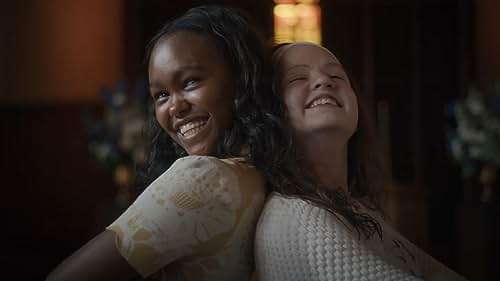
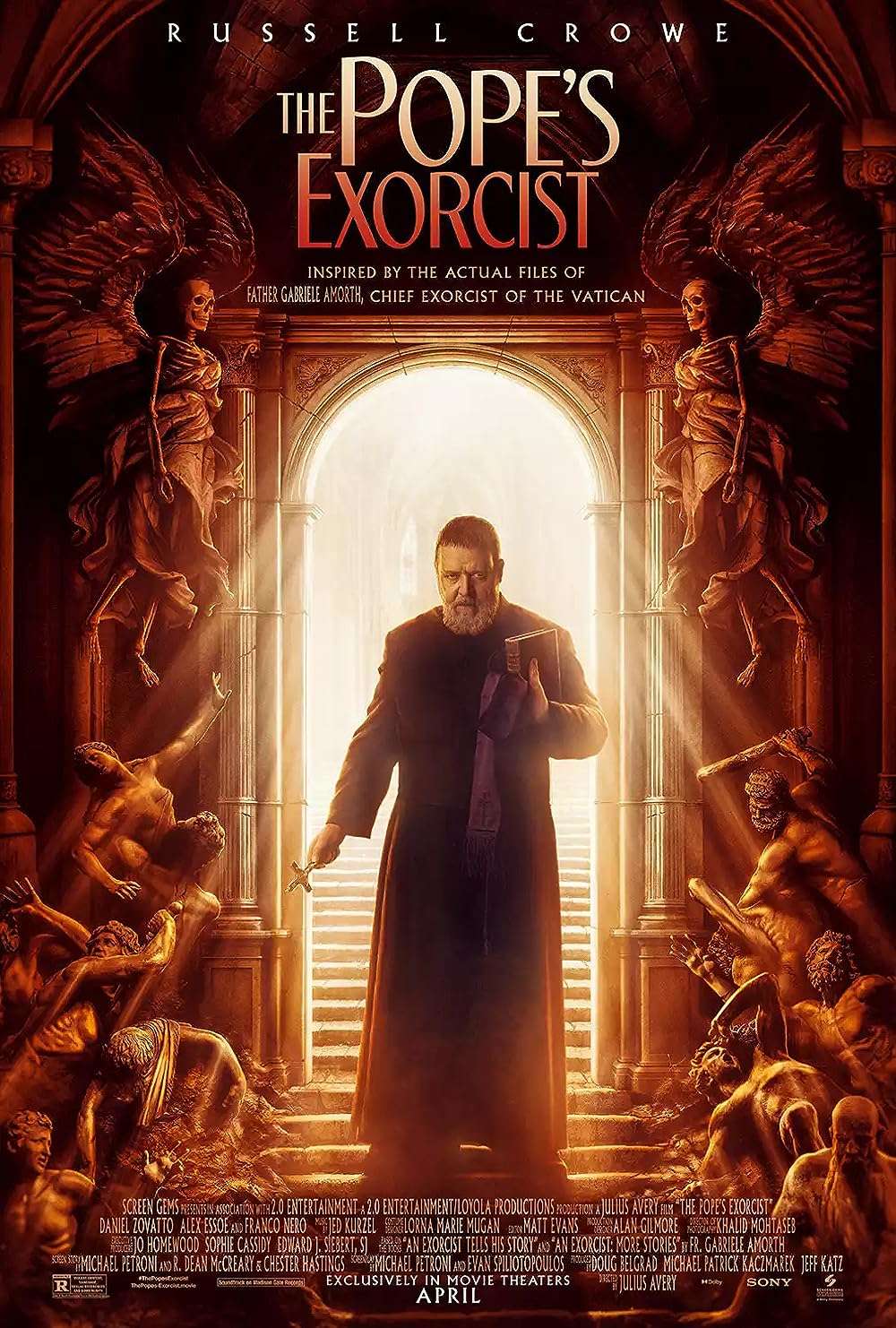
Thus far, the two possessed girls from the Believer trailers come off as more generic, the standard demon kids that spout the usual unholy jargon in the exact voices you’ve come to expect. Fans have gotten a good helping of this already this year alone with The Pope’s Exorcist, though that movie did largely stick to one voice actor for the main demon. In this case it was Ralph Ineson (The VVytch) who took on demon duties. Before The Pope’s Exorcist, though, we had an exorcism episode in FX’s American Horror Story: Asylum, a found footage take on it in The Last Exorcism, an Anthony Hopkins-led movie called The Rite, and the Scott Derickson film The Exorcism of Emily Rose (the better of the bunch).

When Friedkin’s Exorcist came out, no one had seen anything like it. That’s not the case anymore.

My second worry concerns the decision to turn the story into a trilogy. In a sense, The Exorcist already tried this, though not intentionally nor with an eye to create a larger narrative that extended to several movies to get the complete story. Regardless, the result was just not good.

John Boorman’s Exorcist II: The Heretic is considered one of the worst horror sequels in existence, to the point that Friedkin himself once said to have felt disgusted after watching it (a sentiment shared by Blatty, who called it a humiliating experience). It’s a direct sequel, catching up with Regan a few years after her exorcism to find the demon might not have been cast out entirely (diminishing Father Karras’ sacrifice at the end of the first movie).
The Exorcist III, while boasting some great scares and an underlying sense of unease that carries throughout, didn’t exactly stick the landing. It could’ve bene great, but its ending (of which there are different versions of) felt like it belonged to another movie. Its successes, though, are owed to the new mysteries it creates regarding good and evil and spirituality. It’s not a retread of the first movie. Rather, it’s an expansion that explores similar themes through different avenues and perspectives using the more fleshed out characters from Blatty’s novels.

Having this new set of movies already conceptualized as a trilogy might alleviate these problems, but Gordon Green’s previoustrilogy work with Halloween saw a good idea stretched to its limits in all the wrong ways. Michael Meyers became a blunt metaphor for Trump era divisions, characters were killed for shock value rather than carefully plotted story arcs, and the violence authored by The Shape became gratuitous to the point of losing touch with the narrative.

Halloween Kills and Halloween Ends betrayed the storytelling highs of the first one, killing the momentum early into part 2 and never really catching up again. Believer’s chances of hitting the targets it has in its sights become stronger if each movie justifies its existence without coming across as a cash grab that’s only just tangentially connected to push out another horror trilogy. To score a win, it needs avoid the things that ultimately held Halloween back.

So, should we be excited for Exorcist: Believer? Based on the trailers alone, no. There’s always a chance the odds get flipped and we get a great new take on the material. But whatever expectations we might have now should be taken with caution. Don’t get me wrong, I want to see a good trilogy come of this, especially since the triple-feature approach hasn’t gotten the chance it deserves in horror. Unfortunately, the journey to Believer carries a lot of baggage that can weigh it down considerably. More excitement could’ve been afforded to it had it not been an Exorcist movie but a whole new venture into possession horror, one that stands on its own demonic legs. Then again, anything has the capacity to surprise. Breaking the cycle and giving audiences something worth screaming at, or potentially fainting from, will be welcomed with open arms. The road to that, I fear, is looking quite bumpy.

The Exorcist: Believer opens October 6th, 2023 nationwide.

Movie Review: Halloween Kills betrays its characters in the franchise’s dumbest entry

David Gordon Green’s 2018 Halloween was a masterful take on the small but heavily storied world of Michael Meyers and Laurie Strode. It succeeded in not being another babysitter murder flick where horny teenagers get the knife as the sadistic masked killer goes from house to house. Instead, it turned the main survivor of the 1978 John Carpenter original movie, played by Jaime Lee Curtis, into a hardened and battle-ready warrior that weaponized her trauma while also training her daughter to also be able to defend herself.

Halloween Kills
Halloween Kills

Halloween Kills takes all of that and throws it out the window without much to offer in return, other than a dumb violent movie burdened with messy metaphors and unnecessary lore alterations. Sure, Michael Meyers kills, and some of the kills are satisfying to watch, but what ultimately gets butchered in the process is the core Strode family struggle the first movie worked so hard to establish.

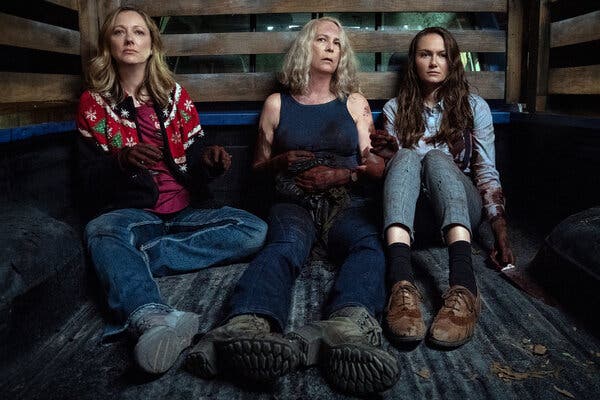
In what’s the second movie in a trilogy that was originally meant to be a two-parter, Halloween Kills picks up moments after the ending of the previous movie to see Michael Meyers surviving the fire at the Strode house. Laurie, daughter Karen (Judy Greer), and granddaughter Allyson (Andi Matichak) drive off thinking Meyers is a pile of ash underneath the rubble they left behind, but little do they know that The Shape is alive and well, and royally pissed off to boot. Chaos ensues.

In an interesting turn on expectations, Halloween Kills takes Easter eggs to a new level by making characters from the original film take on larger roles in this one, shifting the focus from Laurie’s fight against the Boogieman and onto how Haddonfield itself figures into Michael Meyers’ plans (which the movie very lazily tries to reveal through exposition dumps, in addition to trying to convince audiences on the silly idea that the killer has a masterplan of sorts). In fact, it’s what lies at the heart of the movie. The Boogieman isn’t just someone’s problem. It’s everyone’s.

Halloween Kills
Halloween Kills

Things start to get very shaky here as the expansion of the mythos seems inconsequential and sidelines Laurie and her family’s story in favor of half-baked messages and forced alterations to formula. For instance, it turns out that Michael (intentionally?) exposes Haddonfield as the real monster as its people take arms to dole out justice by themselves in a spectacularly dumb show of mob rule that tries very hard to evoke images of the January 6th Capitol Riots, resulting in the tragic death of an innocent man in the film.

One character actually blurts out the movie’s message at one point, observing that the unruly mob has basically become Haddonfield’s real killer (an issue that is “fixed” by creating a smaller, more focused mob, it seems). What’s worse is that all the time spent setting the angry mob up is time taken away from doing anything meaningful with what the previous movie brought to the table.

On the killing side of things, the movie fulfills the promise of its title, but it does so at the cost of turning Meyers into another kind of slasher that shares more with Friday the 13th’s Jason rather than the one we all know and love by now. Not that there’s anything wrong with experimentation, but implementation is key for these variations on character to succeed. Halloween Kills does not approach this aspect convincingly.

Michael is at his most sadistic in this installment, but his signature ‘slow and intimate’ killing style feels too out of character. There is only one kill scene in which we get a glimpse of that behind-the-scenes sadism Meyers usually indulges in out of camera in previous entries, in which the victim gets several knives stuck to his back for no other reason other than to show how much violence truly drives the character’s identity.

Halloween Kills
Halloween Kills

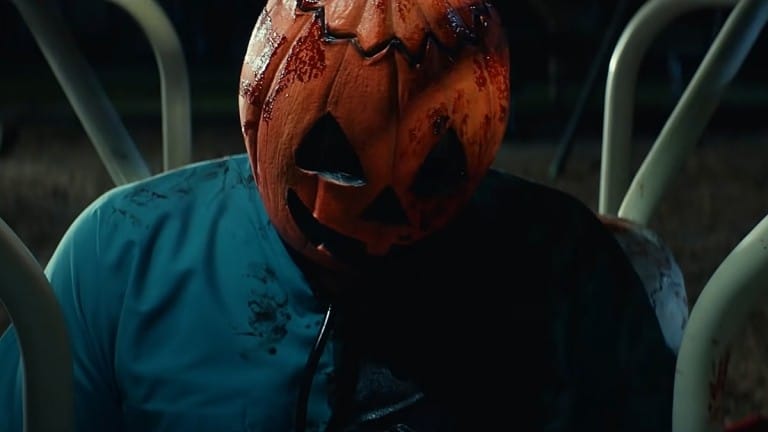
Remember, this is the same killer that beheaded a cop in the previous film and turned the head into a grizzly Jack-o-Lantern, lighted candle included. We never see him carve the cop’s face in the style of a Jack-o-Lantern, but we know he likes to get creative with his kills. Halloween Kills’ focus on fast, action-heavy kill sequences rob him of that creativity.

David Gordon Green’s Halloween sequel sacrifices too much of everything for an uninspired and clunky sequel. Its most tragic casualty is Laurie’s story, which never reaches anything worth writing about other than clichés and stunted character development. It’s a shame. I had hopes for this new trilogy. All I was left thinking of was that everything should’ve been left wrapped up in 2018. Unfortunately, we still have one more movie to go.

Movie Review: Halloween

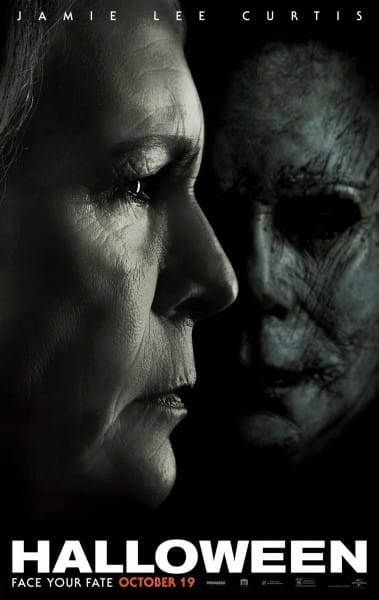
halloween-poster-2018This sequel to the original Halloween pretends its sequels never happened, and, upon jettisoning four decades of history, brings us the best reinvention of the story of Michael Myers ever. Finally, we have a worthy sequel to the film that helped define the slasher genre.

While this is almost a cliche, the best way to describe this film is “all killer, no filler.” Indeed, including flashbacks to the original film, you go nary 15 minutes in this film without someone getting brutally murdered by Michael Myers.

The film plays very close to the structure of the original: Michael Myers, in an asylum, nearing the anniversary of his murders, is visited by two real-crime podcasters (how very 2018!) who want to interview him ahead of his transfer to another facility.

His doctor introduces them, and they go about further investigating the murders that happened 40 years ago, including an interview with a fairly off-kilter and paranoid Laurie Strode (Jamie Lee Curtis) the sole survivor of Myers’ previous spree. Just like the original, our monster breaks out during the transfer and returns to his hometown to go on a murder spree.

The only difference is, this time Laurie has been preparing for 40 years for this very moment. In some of the film’s best parts, and a supreme twist of fate, Myers becomes the hunted and she becomes the hunter. And this is where the film becomes wholly different and its own thing.

She is joined in this with both her daughter Karen (Judy Greer) and her granddaughter Allyson (Andi Matichak), who have varying degrees of tolerance for their mother/grandmother’s nuttery. To be fair, the elder Strode very much seems to have gone off the deep end, and hearing that Myers is back confirms all of her fears and preparation as realism, not paranoia.

The best surprise of the film is having this Trinity of three generations of strong women uniting to fight this unstoppable evil. It takes the first film’s rumination on purity and power and makes it a culturally relevant feminist coup de grace for today. The Strode women, divided by generations and outlooks on the world, when united are the only force that even comes close to counteracting Myers.

The other great surprise of the film is just how funny it is. Screenwriter Danny McBride and screenwriter/directorDavid Gordon Greenwho are normally more adept at stoner comedy (Pineapple Express, Your Highness, Eastbound and Down) put some really amazing touches on here to help break the tension. While the film is all killer, no filler, in between the kills we often get moments of levity that help set up the characters who are about to die gruesome deaths at the hands of Michael Myers and the stakes of the next phase of murder sprees.

Yes, it’s also extremely brutal. This film earns its R rating with some truly gross special effects that we haven’t seen outside of a Troma film in a long while. Also, apparently in this universe blood spurts very very very loudly! There are also a few moments involving impaling, or people’s heads being smashed in, that are on full display here. Horror and slasher fans will be delighted.

Again, it’s almost played for comical effect, and helps lighten the tone of what would otherwise be so dark and depressing. But the film never enters into camp, always staying on the right side of the slasher genre. While it knows that some of the campy elements are necessary, it keeps its funny parts funny and violent parts brutal.

The other great thing about this film is it does not present a great barrier to anyone who has never seen a Halloween film before. It sets up its universe extremely well and establishes its characters even without knowledge of the previous material. However, for die-hard true fans there are a lot of nods to the original that make you feel right at home. This also includes a return of the iconic John Carpenter score, which is as effective now as it was four decades ago.

Fans will eat this film up, and general audiences will likely have a good time as well, though maybe not as good of a time as the core audience. In this way it’s very much like the films in the Marvel franchise where there is a definite fanbase who will enjoy the film at a different level, but there is a strong mass appeal as well as a low bar for entry.

This is not only a great Halloween film, it is a great film for Halloween time. The slasher movie is a tried-and-true staple of the horror genre and especially popular this time of year. Audiences will find the tricks and treats that they so desire here and will be thoroughly satisfied.

3 and 1/2 out of 5 stars