Tag Archives: Cursed films

TV Review: Cursed Films kicks off season 2 with the dark myths behind The Wizard of Oz
Cursed Films

The first season of Shudder’s Cursed Films turned the tables on what its own title seemed to suggest, that it was going to be about the supernatural elements at play in the making of certain horror films. Instead, it went for a more noble goal. It sought to debunk the myths and conspiracy theories that haunt certain movies afflicted by a history of tragedy, irresponsible filmmaking, and superstition. Season two of the docuseries is a continuation of this, and it decided to go for one of Hollywood’s (and cinema’s) most treasured films for its opening episode: The Wizard of Oz.

A cursory online search about the supposedly dark secrets contained within the original cuts of 1939’s The Wizard of Oz (dir. by Victor Fleming) will yield a hefty volume of grim hits that promise to reveal the “truth” behind deep backlot rumors concerning hanging munchkins and abusive Hollywood producers that took turns in abusing the movie’s star, Judy Garland, while on set.

Cursed Films 2 employs the same approach that made season one such a compelling watch. It goes for an aggressive deconstruction of the very idea of what a cursed film is and why reality, and not superstition, offers the best explanations for the mysteries that’ve latched on to it. Taken as a whole, season one ultimately suggests that films become cursed thanks to fans who want to explain production woes and accidents via the same lore that’s in the content of the movies in question.

Weird noises on the set of The Exorcist? It had to be the devil. It’s what the movie is about in the first place. You can’t really blame anything that happened during its production on a vampire, for instance. The movie is not about undead bloodsuckers. It’s about a possessed girl who, in one scene, claims to be the devil. The same goes for the other movies explored in the docuseries.
Cursed Films

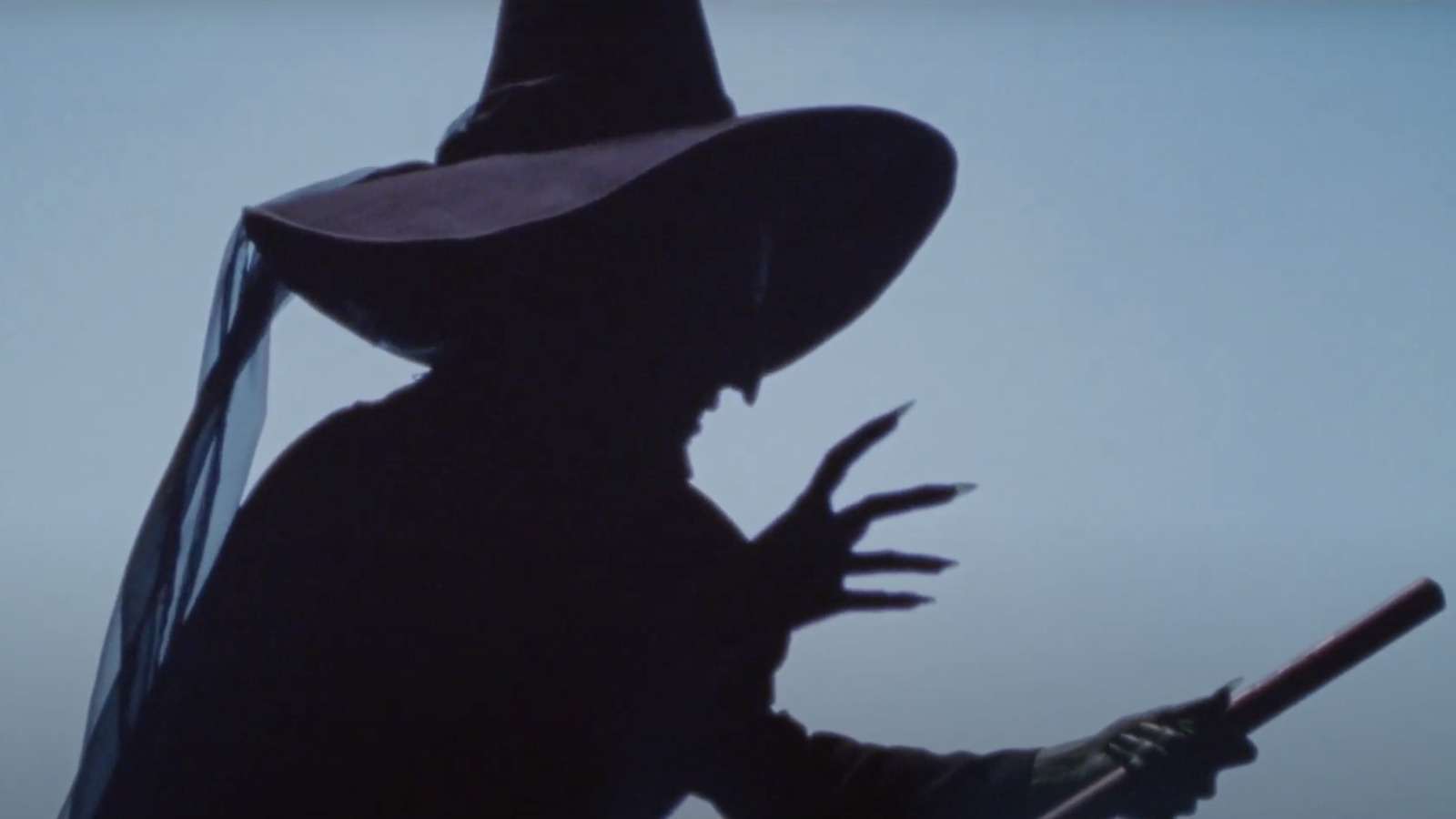
The Wizard of Oz, the show suggests, becomes a cursed film for its position in American film history and how it stands to represent the spirit of Hollywood, a place that is as classy and fantastic as it is ugly and corrupt. Add in the internet’s message board community culture, plus its conspiracy-heavy leanings, and you’ve got a cursed film.

The episode is well-scripted and researched, featuring interviews with surviving family members of the movie’s cast along with other commentators, such as Mythbusters’ own Adam Savage (brought in to discuss the case of the Tin Man’s original aluminum-based makeup and how it nearly killed the first actor that was cast to play him). Surprises are plentiful throughout, especially when it comes to the rumors that swirled around the actors who played the munchkins in the movie. This part of the episode is one of its strongest and is sure to give viewers something to talk about.

Perhaps one of the most effective components of the episode comes in the form of incident reenactments. They possess a haunting quality that strengthens the show’s idea on reality being dark enough on its own without requiring curses to explain away the strange happenings. They’re presented with a grainy filter that heightens the events they recreate while adding context and texture in the process. It’s a very successful approach and I hope the remaining episodes feature them as well.

The decision to open a new season of Cursed Films with a staple of classic American filmmaking is a daring one, and a resounding success at that. It can even be viewed as a statement on the controversial practice of declaring . Cursed Films goes to the land of Oz to say that no myth is safe, that they can be exposed as distorted truths for all to see. The upcoming episodes include Rosemary’s Baby, Stalker, Cannibal Holocaust, and Wes Craven’s The Serpent and The Rainbow (the one I’m looking forward to the most). You should expect them to scare you with what actually happened rather than with demonic forces that hold grudges against troubled Hollywood productions.
Shudder’s CURSED FILMS is a surprisingly noble look at notorious horror cinema

Cursed Films
Shudder

The idea of a cursed film evokes images of satanic creatures standing behind the camera, corrupting what’s captured on celluloid. It’s a kind of subgenre in its own right, a kind of supernatural conspiracy theory hub for fans that do not believe in coincidence when it comes to set fires, mysterious crew deaths, and filming disasters. Shudder’s new Cursed Films docuseries traverses this particular horror terrain, and it does it well, but thankfully not in ways I was expecting.

Cursed Films is a five-part documentary series focusing on five films widely considered to be cursed by horror fans, collectors, and even casual moviegoers, especially those that love to dig into the mythos behind productions marked by tragedy and controversy.

The cursed movies explored in the docuseries are The Exorcist, Poltergeist, The Omen, Twilight Zone: The Movie, and The Crow. As of the time of this writing, only the first three films have been explored in the series.

Those expecting a gratuitous indulgence in the dark stories surrounding these films, and validation of popular beliefs, will not leave entirely satisfied. I say this as a good thing. Cursed Films is, surprisingly (to me, at least), a very serious deconstruction of horror myths, where fact and fiction are separated and then dissected to get at the root of why people like to think cursed movies exist.

The first episode dives straight into perhaps the most controversial movie of the bunch, The Exorcist. My personal favorite horror movie (traditionalist that I am, I guess), William Friedkin’s movie about a girl possessed by a demon has been mired in darkness since day one. People worried that the actual making of the film resulted in the legitimate summoning of Lucifer and his army of possession-hungry demons. Injuries sustained by actors during production and even unexplained set burnings seems to confirm all of this to eager followers of the happenings of The Exorcist’s initial release.

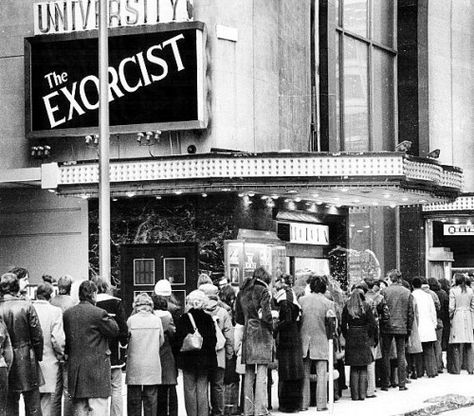
People lined up in droves to see The Exorcist.

To tell you the truth, just writing the name of this movie down gives me chills, irrational though that may be. It’s the only movie that gets scarier with each viewing for me, and yet Cursed Films took me down a different path with it. It dedicated most of its runtime to explaining why people so aggressively associate the devil with the movie and why horror inspires audiences to pursue such dark trains of thought.

The show features psychologists, religious scholars, key production and cast members, and writers all mostly aligned within the idea that the only thing that can curse a movie is its audience. Psychological terms are conjured up to explain why fans gravitate towards curses to explain the mysteries of their favorite movies, all of which have perfectly plausible explanations (for the most part).

The Exorcist episode, for instance, debunks a lot of its myths by looking at the PR campaigns of a desperate movie studio hellbent on turning a profit while also looking at how some of the accidents in the workspace actually happened. It even includes talks on the impact of the work culture the movie’s director created during filming, which is well documented.

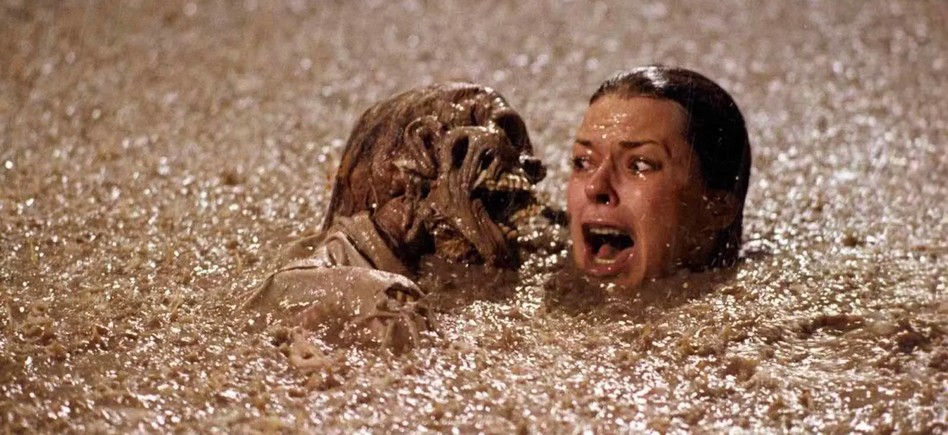
Perhaps the most potent and surgically precise look at a cursed film can be seen in the Poltergeist episode. Two deaths and rumors about the macabre nature of certain props have been circulated enough for some people to confirm the tragedies that accompany the franchise are the results of a curse, possibly originating from beyond the grave.

Scene from the movie Poltergeist.

What Cursed Films does with this movie is nothing short of masterful, going from legend to legend in an attempt to dispel the “curse,” which for the series means proving no such thing exists. It looks at the psychological and supernatural value people put into objects and locations seen in popular films and how it translates into a whole tradition of people visiting fictional haunted places as if they’re actually haunted.

I’ve participated in this, although not under the impression the place I visited was really haunted. I once had the chance to drive close to where the Amityville house from the infamous 1979 Amityville Horror movie was located. The fact the movie was loosely based on “true events”—that have since then been disproved—made the opportunity all the more enticing, so I took it. I saw the house. People live there. I saw no ghosts walking around, not a single swarm of flies hovering over its windows, and no blood dripping from its walls. In fact, I saw other houses that looked almost the same neighboring it. So much for a place housing one of the gates of Hell.

I thought about this short trip to Amityville a lot while watching Cursed Films. The show’s deconstruction of what could be termed as magical-horror thinking made me rethink the entire experience. It’s interesting because even though I knew the house wasn’t haunted, I did feel unsettled. The power of the movie, and the story it’s based on, had definitely charged the place with a supernatural sensation that was hard to shake off. In the end though, it was just a house. For the few minutes I was there, the only thing haunting it was a curious horror fan holding up traffic to take in one of horror cinema’s most iconic locations. Watching Cursed Films, one can feel a lot like this, especially if you’re prone to give into urban legends.

Cursed Films aims at reminding people horror fiction is just that, fiction. And it needs that emphasis on fiction. In fact, the docuseries suggests these myths and legends do a disservice to the people behind the scares, the ones who work for a living to get a scream out of people in the movie theaters. It’s a meditation on the power of belief when it comes to the representation of evil in film. It wants us to consider that movies themselves don’t have to be haunted to become superior works of horror fiction. They can achieve that pretty well on their own, without the necessity of being cursed.