
Tag Archives: Clown

Review: Playthings #1
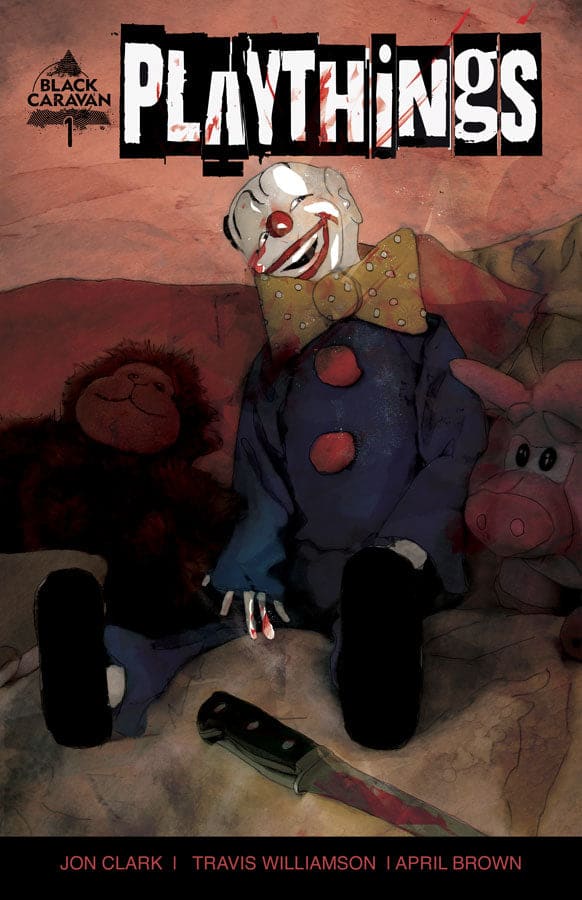
Playthings #1

Scout Comics is becoming a legitimate voice in the field of horror comics, and Playthings #1 is shaping up to be another great example of what the publisher is capable of. The new series, written by Jon Clark and illustrated by Travis Williamson (the team behind the amazing Black Friday), finds its scares in the realities of a broken family with shared custody problems. The mother figure ends up being the target of this story’s haunting, but the first issue is bizarre enough that it keeps things unpredictable. This is a good thing.

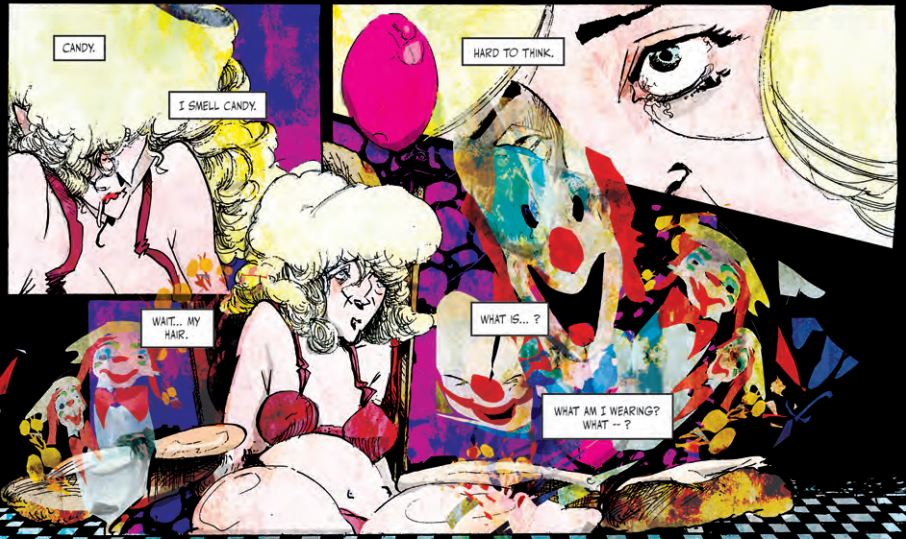
Playthings opens with bright, poppy colors juxtaposed with inky blacks and dark shades. Clown faces huddle around a woman tied to a chair, her hands (or something resembling hands) bound in licorice. As the woman surveys the room she’s in, a kind of anti-funhouse explodes around her. The woman realizes she’s somewhere that’s not entirely within the realm of reason, a place with a child-like sensibility and a whole lot of violence hanging over it.

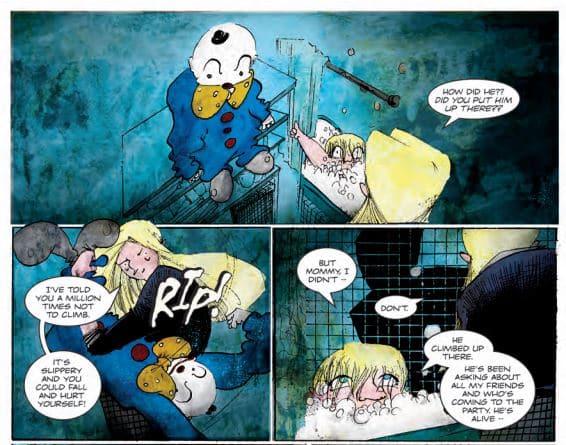
The woman is revealed to be the mother of a small girl and it is made apparent quite quickly that she has a very strained relationship with her ex-husband. The girl’s birthday is coming up and a strange box has appeared out of thin air with a creepy clown doll inside it. As can be expected with anything clown-related, chaos unfolds in relentless fashion.
Playthings #1

Clark and Williamson let the readers know that whatever’s coming after the clown is out of the box is going to be intricately disturbing. The setting and the characters all feel as if ripped straight out of a dark fairy tale, of the kind early Vertigo comics were known for. The story has a kind of 1990’s weird fiction vibe to it, especially in how it displays familial dysfunction early in the story to then transition into more terrifying things. It works well and it signals a very focused set of ideas that the creators are eager to get to as quickly as possible.

Williamson’s art style is perfect for the type of story Clark scripted out. It often reminds of Sam Keith’s own takes on the dark fairy tale aesthetic while also offering enough variation to make it its own. Clark also colors the comic and he adds a notable layer of story through his chosen color palette. Both creators showcase an appreciation for loud and discomforting imagery in Playthings and it makes the horrors they conjure up leave an impression.

The decision to go for a dark fairy tale-style of storytelling allows Clark and Williamson to keep their metaphors and messages at the fore. For Playthings, the focus is on divorce and the hells it can create when there’s a child involved. The mother, for instance, is presented as a tightly wound and angry person that lets her emotions spill unto her innocent kid. The trials of being a single parent are on full display and the haunting the toy clown is intent on making the mother sit through looks to be aimed at turning the scenario into a cautionary tale, the kind fairy tales are well-known for.
Playthings #1

Playthings #1 should please fans of classic horror, fairy tales, and 1990s fantasy comics. It establishes a dark event with terrifying potential, full of painful promises that readers can engage with in more ways than one. Issue #2 should satisfy both readers with dark sensibilities and readers who quite simply enjoy a good story. Keep this one on your radar.

Story: Jon Clark Art: Travis Williamson Lettering: April Brown
Story: 9.0 Art: 9.0 Overall 9.0
Recommendation: Read and look out for clown dolls that weren’t in the room with you before.


Purchase: Scout Comics
Why the Best Horror Book of 2020 is Clown in a Cornfield

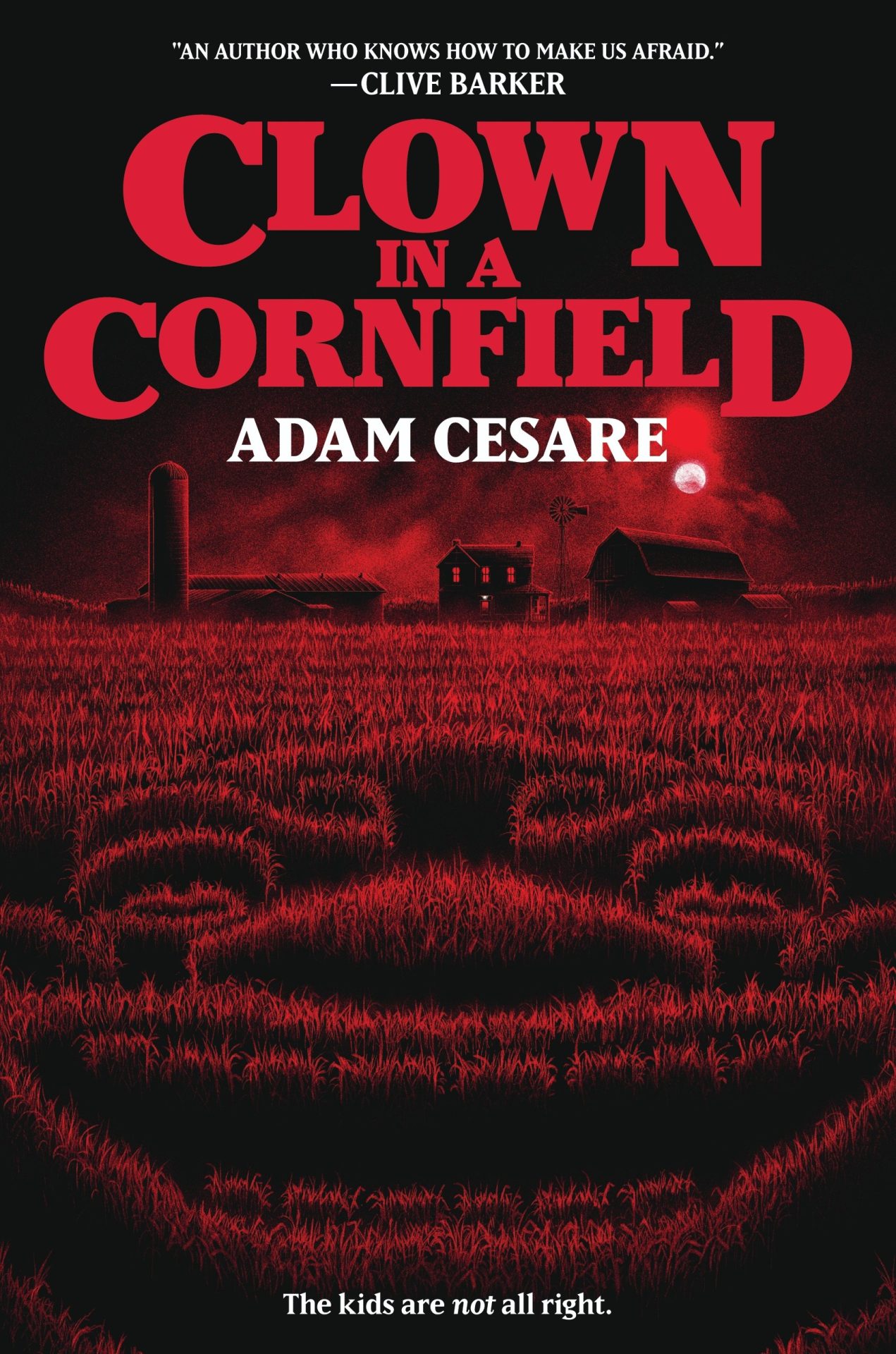
Clown in a Cornfield
Clown in a Cornfield, cover

To an extent, the title of Adam Cesare’s latest book, Clown in a Cornfield, feels like an affront to expectations. We have a YA horror book about teens navigating social media, high school, and rage-filled teachers all hinging on the promise of an actual clown possibly picking off kids in a cornfield. Having read Cesare’s excellent, and surprisingly meta, cannibal movie homage Tribesmen, which shows a profound love and understanding for 1970s horror cinema, I knew something else was hiding in the fields. And that something turned the book into one of the best examples of horror fiction in the context of Trump’s America, and the year’s best in the process.

Clown in a Cornfield follows Quinn, a high schooler that moves into the town of Kettle Springs with her dad following the death of her mom. Now an ex-city girl, Quinn goes about understanding the town and its people but also the looming presence of its recent past, the thing that divides the town into those who see progress as moving forward and those who see it as keeping up with traditions. This is where the titular clown comes in. The rest deserves to be read.

The setup is deceptively recognizable, seemingly on purpose. The story starts with a look at Quinn and her dad going though a short adjustment period, Quinn in particular getting to know the people she’ll eventually get to rely on to survive the deadly events that clown authors.

Cesare takes his time putting every piece in place before taking the reader through a hellish gauntlet of inventive slasher violence, all of which takes cues from John Carpenter, Wes Craven, and a lot of 1990’s horror movie imagery if only to build on them and make them his own. Once the killing begins, the book settles into high tension and doesn’t let up even when commenting on the ideas that prop up the story.

The buildup to the clown horror comes with a few twists on the formula that sets this story apart from the conventional slasher. The teens that drive the story don’t fit the traditional mold of jock, nerd, hot, or final girl characters of old. Instead, Cesare skillfully dodges some of the sexual and “school as a rite of passage” subtexts that govern a lot of classic slasher stories in favor of showing a group of teens that more genuinely reflects the current state of American society.

Adam Cesare

Instead of prom and homecoming queen and king competitions or relationship woes tied to characters losing their virginity, Cesare creates a cast of young Americans that talk about guns, are comfortable around them, and know how to handle them; that embrace social media and make it a point to flirt with its most dangerous aspects; and who know perfectly well what they represent to the older townsfolk (hints of The Lost Boys here).

Kettle Springs is a small town where it’s not hard to imagine every other car sporting a ‘Make America Great Again’ bumper sticker. And yet, the book doesn’t judge the entirety of the town for its conservative leanings. On the contrary, it provides a more complicated human panorama of it, with varying degrees of political inclinations even within the targeted group.

This is perhaps one of the most impressive things Cesare accomplishes with his characters. He breaks away from the black and white morality of the traditional slasher, in which the ‘good’ teens and the ‘bad’ teens could be identified from a mile away, in favor of presenting teens that are not just different from one another but also from the preconceived notions we have of them. This bleeds over into the book’s take on what small-town America was, is, and could be.

Explaining what Cesare does with slasher morality in the story would result in spoiling some the book’s biggest surprises, but it does make for one hell of a killer clown. Frendo is a part of the town’s economic history, being the face of an abandoned factory that at one point was at the heart of Kettle Springs. He was a symbol of success at one point only to later become an imposing symbol of defeat.

Frendo wastes not a single instance of violence on simplicity. Every death, blood spurt, or dismemberment is masterfully choreographed, unafraid to go into detail, leaving the reader with just enough information to let him or her fill in the rest. It’s also hauntingly realistic in parts. Whereas many slasher movies go over the top to create memorable death sequences, Clown in a Cornfield keeps things more plausible, holding back to make the more explosively violent parts truly unforgettable.

Frendo is one unsettling clown, but what drives the killings and how sinister things get in the process is what really scared me to the core. Unlike the Freddies and the Jasons of the genre, Frendo is one killer I completely believe can come after me. Whereas the aforementioned slashers are known for carrying a sense of dark fantasy and myth about them, Frendo seems like an actual inevitability should America continue on the path it’s currently on.

Adam Cesare gave us an important horror book in 2020, one that hits closer to the real horrors America has lived through these past four years. Its commentary on tradition, progress, and what’s expected of newer generations is as sobering as it is terrifying. Give Clown in a Cornfield a read and make sure your windows are closed and your doors locked because Frendo isn’t the stuff of nightmares. It’s the stuff of reality.