Review: Doom Patrol/JLA Special #1
 It’s safe to say that Doom Patrol/JLA Special is the best comic ever to feature superheroes inflated like beachballs saving the day. Writers Gerard Way and Steve Orlando, artists Dale Eaglesham and Nick Derington, and colorists Marissa Louise and Tamra Bonvillain deliver a story that is action packed, emotion filled, and cerebral too. Orlando and Way steep the book in DC history, like the collected works of Grant Morrison, the first appearance of Doom Patrol in My Greatest Adventure #80, and even Keith Giffen “Bwahaha” era of Justice League. However, they aren’t overwhelmed by history and/or nostalgia and craft a satisfying ending to the battle against the Retconn corporation that has real consequences for both the DC Universe and Young Animal world going forward.
Along with the stained glass psychedelic passion play that is the return of Doom Patrol founding member Rita Farr aka , the relationship between Casey Brinke and her son Milkman. Way, Orlando, and Eaglesham could just use him as a strawman representation of corporate comics, but they give the tabula rasa turned moralizing pitchman a human side. Much of Eaglesham’s work in Doom Patrol/JLA is bombastic with splash pages and topsy turvy layouts, but the scenes with Casey and Milkman showcase his skill with interpersonal drama.
Up to this point, Milkman has been a punch/(misogynist) insult machine, but Casey, who is more EMT than superhero, takes him away from the fight, clasps his hand, and says it’s okay that he’s a little screwed up. This is because all of Doom Patrol is a little weird. In a few pages, Way, Orlando, Eaglesham, and Bonvillain and Louise’s warm color palette create a beautiful mother/son relationship that is stripped away in a moment that could be a “put the toys back in the box” plot device moment, but really resonates. Derington even adds a grace note at the end with Casey thinking about Milkman while having a “Good job, rookie superhero” chat with Wonder Woman.

Like all good final crossover issues, JLA/Doom Patrol has some great superhero battles beginning with the first double page splash of the entire JLA and Doom Patrol plus special friends Mother Panic and Shade jumping out of Cave Carson’s cybernetic eye. However, the story shows the futility of fisticuffs and the power of healing and, of course, hope to save the world. There’s the aforementioned conversation between Casey and Milkman as well as dialogue from Vixen about the power of the Red (Contained in her ancestral totem) to heal, their plan to save reality as a “defebrillation” and finally Flex Mentallo’s big damn monologue.
It’s quite amusing to see the super serious Batman speaking about “muscle mystery”, and Gerard Way and Steve Orlando take a page out of the Grant Morrison Batman handbook and make him comfortable with the absurd. You can definitely see him dressing up in a rainbow suit to confuse bad guys. It’s also just plain clever to make the most metafictional character of the bunch literally reset the reboot button while getting an assist from the rest of the teams. It also dovetails nicely with the Rita storyline, which goes from gaudy and religious to primal and minimalist while also kind of reminding me of the video for “Take On Me” as Elastigirl leaves her fictional television world for the real to her, sadly fictional to us world of the DC Universe literally entering the panels of JLA/Doom Patrol Special. She faces the literal comic of her origin story as a victim of circumstance and re-enters the world as a formidable character and charter Doom Patrol member. Retcons can be pretty great some time, and I think Grant Morrison would be proud at this use of comic book as magic spell that calls back to Multiversity and the letters page of The Invisibles. (Think wankathon…)
Speaking of meta, Way, Orlando, Eaglesham, and Derington don’t just use the fourth wall breaking for jokes and jabs at superhero comics (Everything out of Shade’s mouth is comedic gold though.), but give the self-aware-that-he’s-a-comics-character Robotman some big character moments. It’s kind of adorable to see The Ray geek out on him and mention the impact that fictional superheroes had on him. This heat of battle rapport pays huge dividends in the epilogue. Let’s just say, there are hugs.
Doom Patrol/JLA Special isn’t just an entertaining comic that is filled to the brim with hopefulness, it’s a paradigm for how superhero stories can be told. Basically, Gerard Way, Steve Orlando, Dale Eaglesham, Nick Derington, Tamra Bonvillain, and Marissa Louise are saying that superhero comics are pretty damn weird, and they can embrace this strangeness, be inspirational and even funny, and not just be grist in the mill of real life Retconns aka their corporate overlords. Because of this, I’m excited to see what Young Animal does next with its Eternity Girl, Shade the Changing Woman, Mother Panic: Gotham A.D., and Cave Carson Has An Interstellar Eye comics that get short, unobtrusive teasers in Doom Patrol/JLA Special.
Story: Gerard Way and Steve Orlando Art: Dale Eaglesham and Nick Derington
Colors: Tamra Bonvillain and Marissa Louise
Story: 10 Art: 9.8 Overall: 9.9 Recommendation: Buy
DC Comics/Young Animal provided Graphic Policy with a FREE copy for review
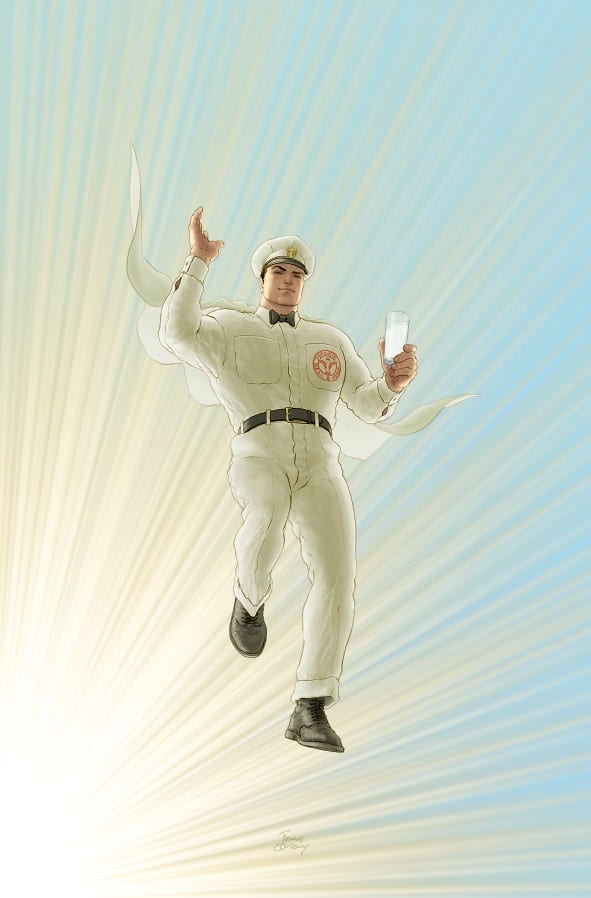 Grab a milkshake, put a cherry on top, and maybe add a shot of whiskey or two, and you’ve got JLA/Doom Patrol #1, the first chapter of the monthlong DC Comics/Young Animal “Milk Wars” crossover. Writers Gerard Way and Steve Orlando combine the surrealism and fourth wall obliterating metafiction of Doom Patrol with the punching and personality-driven Justice League of America to create the soft serve chocolate swirl of “event” comics. It roasts these kind of stories while indulging in all the tropes, including a spread it all around your dorm room four page spread from artist Aco and colorists Tamra Bonvillain and Marissa Louise of the Doom Patrol fighting the literally homogenized version of the JLA.
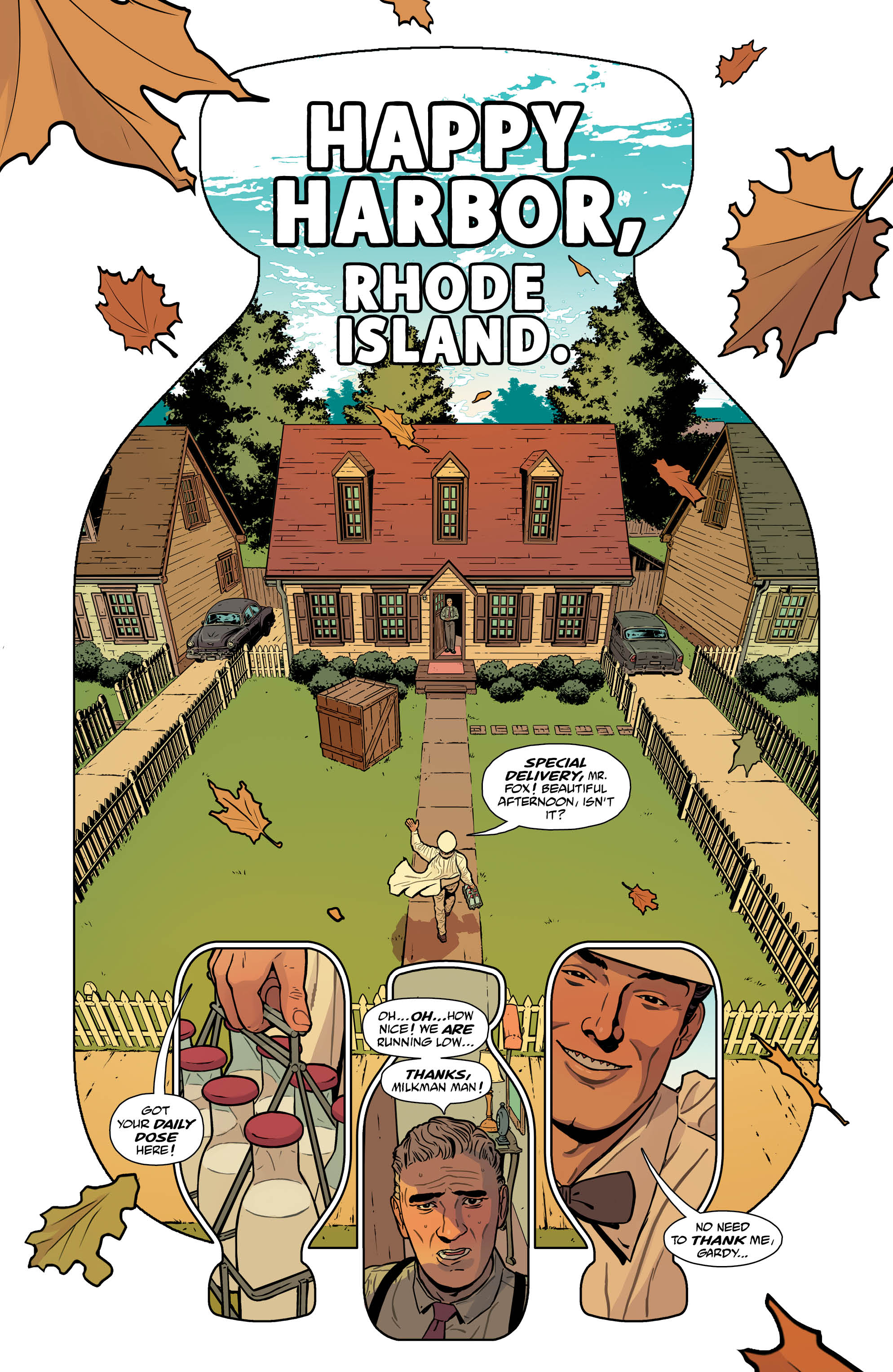 male spandex clad power fantasies” mascot at worst. In his first appearance, Aco goes for pure horror with inset panels of him shoving milk down the throats of an average white Middle America family. This powerful, nearly silent scene played against an idyllic color palette from Bonvillain and Louise is a reminder that even when art claims to be apolitical, just for fun, or not have a message that it, in fact, does have a message. The Retconn Corporation wants to “homogenize” the DC Comics characters, including their classic Trinity, and turn them from powerful icons of justice into basically toys and merchandise as revealed in a couple pages that seem like a “behind the scenes” of a corporate board meeting. Milkman Man’s reaction to reading the actual Action Comics #1 (After yet another gorgeous and meta as hell double page spread from Aco, Bonvillain, and Louise.) is a reminder of how powerful Superman’s origin story is from Way and Orlando, who realize that pop culture can change the world and immigrants get the job done.
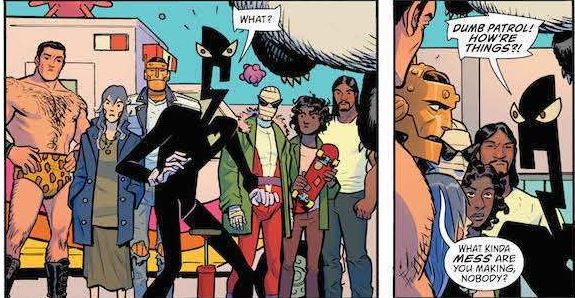
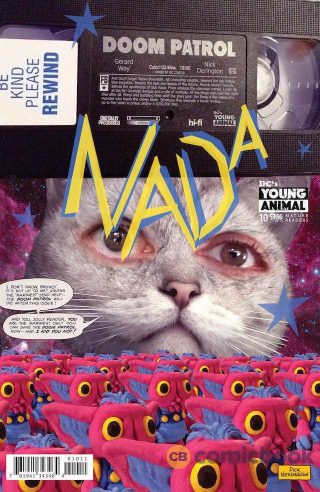 After a bit of a break, Doom Patrol is back and hurling full force into wackiness as the team faces Casey Brinke’s roommate Terry None’s dad Mr. Nobody in a world full of $#*!. It’s surreal, a bit meta (The kinda sorta framing narrative of “Retconn”), brightly colored by Tamra Bonvillain, and has some decent character moments like Casey realizing that she has real feelings for Terry or the Reynolds family pleading with their distant son Lucius to stop messing with reality as the sorcerer pawn of Mr. Nobody. Sometimes, it seems like writer Gerard Way is trying too hard to be Grant Morrison or be too clever to his own good, but for the most part, he and artists Nick Derington and Tom Fowler and colorist Bonvillain craft an entertaining story with punching, chaos, and embrace the weird, loose side of corporate superhero comics with ever shifting team lineups and gimmicks like death, marriages, and capital c Crises and crossovers to sell books and keep readers engaged.