Joe, Alex and Matthew follow up on last week’s idea to give Joe a reading list. Will he read them all? We’ll check in periodically throughout the year.
You can reach us at the following locations if you feel the need: Alex, Joe and Matthew can be found on X respectively @karcossa, @FirstRonin4 and @matthewklein316. You can also find Matthew and Alex on Bluesky @matthewklein316.bsky.social and @karcossa.bsky.social. Alex is on threads @Alex_K_Cossa. Matthew’s on Instagram @macktheknife1116. ThoseTwoGeeks@gmail.com
Matthew’s book Crashing is available now through IDW Publishing. His webcomic The Rhyme Scheme is available for free here.
Joe, Alex and Matthew Klein hang out and talk about movies, books, comics… almost everything over the course of an hour and a half.
You can reach us at the following locations if you feel the need: Alex, Joe and Matthew can be found on X respectively @karcossa, @FirstRonin4 and @matthewklein316. You can also find Matthew and Alex on Bluesky @matthewklein316.bsky.social and @karcossa.bsky.social. Alex is on threads @Alex_K_Cossa. Matthew’s on Instagram @macktheknife1116. ThoseTwoGeeks@gmail.com
Matthew’s book Crashing is available now through IDW Publishing. His webcomic The Rhyme Scheme is available for free here.
This is a column that focuses on something or some things from the comic book sphere of influence that may not get the credit and recognition it deserves. Whether that’s a list of comic book movies, ongoing comics, or a set of stories featuring a certain character. The columns may take the form of a bullet pointed list, or a slightly longer thinkpiece – there’s really no formula for this other than whether the things being covered are Underrated in some way.
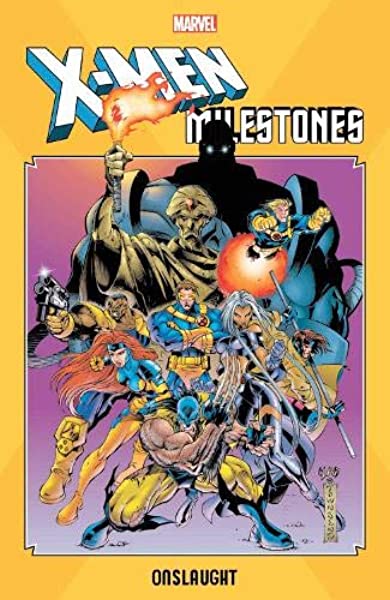
This week: the multi-part crossover event X-Men: The Onslaught Saga.
If I’m totally honest, my Golden Age of X-Men comics is from the mid 90’s to the early 2000’s. This wasn’t exactly when I first started reading the X-Men, that was around 98/99, but because I was largely reading UK reprints, I wasn’t reading the current comics – they were probably always a good two to five years behind what was being published and sold in comic shops depending on the story being presented in the magazine. The reprint magazine had space for three comics in it – this wouldn’t always be three concurrent issues, but was often an issue of Uncanny X-Men and X-Men that were published within the same month and an issue of Uncanny from the 60’s or 70’s). These reprint magazines are actually responsible for the weird dichotomy in my head of knowing the stories very well, but having no context for what issue they came from (yes, the reprint did tell you what comics they were reprinting, but it was much like a tpb; you don’t really notice unless you look in the fine print if the covers).
Over the years, I’ve slowly been picking up and working on completing a run of X-Men comics from issues 100-500, though my focus for years was around 250-400, but because I’ve been largely focused on Uncanny X-Men, I don’t have a lot of the issues that form the giant crossover – if I even have all the Uncanny issues (look, I was often going by cover art and price when picking books up, not sequential numbering, so I have holes everywhere in my collection), so for a story that I really want to read I’ve been picking up collected editions just to be able to read or reread them. There’s collecting for the joy of the hunt and collecting to (re)read the stories – sometimes those things are one and the same, and sometimes they’re not, because I have no intention of risking damaging the early Uncanny issues I own, I’ve also been looking for collected editions of The Dark Phoenix Saga and so on.
Despite having several issues of Uncanny X-Men that comprise the Onslaught Saga, there was a lot I didn’t have, and won’t be getting any time soon, so when I saw this trade for sale at my comic shop I decided to pick it up so I could scratch the itch I had to read it in its entirety.
The Onslaught Saga was a story that came was featured in the reprint magazines just as I had started to read them, and so I ended up missing most of what took place in the story (everything, honestly, other than the aftermath), and so consequently a lot of it was relatively new to me. Sometimes the journey is as important as the conclusion (especially given how two decades later most of the characters in the story are still around).
The basic plot of the story focuses around Xavier losing control after the events of Fatal Attractions (you don’t need to worry about having read that – I still haven’t, though it is in my To-Be-Read pile), and the combined efforts of New York’s heroes to put a stop to his rampage. It’s pure 90’s awesomeness – there’s more destruction that you can shake a stick at, but the story never pulls away from the core focus of the intimate struggle that the heroes face when dealing with an evil Xavier.
The version I read was the X-Men: Milestones trade (pictured above), and it told a very comprehensive story. There was at least one issue missing, but it was tangentially related (Wolverine #105 was a story about Wolverine helping rescue civilians during the battle), so I assume there could be other tie-ins skipped that don’t further the plot, which keeps the tale on point. Which is good because it’s a big trade, clocking in at over 200 pages (closer to 300, I’d guess without counting/checking). It’s easily the best way to read the story, unless you already have the single issues in your collection.
Which I don’t – yet. Oddly, despite my love of the X-Men from the 90’s, I’ve got a lot of holes to fill, which should be pretty easy given how many are in the back issue bins. After all, 90’s comics aren’t all bad, there’s just a huge number of them in longboxes across the country because so many were printed to satisfy a demand that disappeared almost over night. So that just makes them worth less than the comics from the 70’s and 80’s, but it doesn’t mean they’re not any good.
X-Men: The Onslaught Saga eventually leads into Operation: Zero Tolerance, another story I’m also fond of from that era of X-books, and likely subject of another column at some point in the future, as it holds up fairly well to this day.
Join us next week when we look at something else that is, for whatever reason, Underrated.
Alex and Joe geek out about toys. Again. But this time it’s all about what figures they want (and both forgot to prepare).
You can reach us at the following locations if you feel the need: Alex and Joe can be found on X respectively @karcossa and @FirstRonin4 or by email at ItsThose2Geeks@gmail.com. You can also find Alex on Bluesky @karcossa.bsky.social, and threads @Alex_K_Cossa
This is a column that focuses on something or some things from the comic book sphere of influence that may not get the credit and recognition it deserves. Whether that’s a list of comic book movies, ongoing comics, or a set of stories featuring a certain character. The columns may take the form of a bullet pointed list, or a slightly longer thinkpiece – there’s really no formula for this other than whether the things being covered are Underrated in some way.
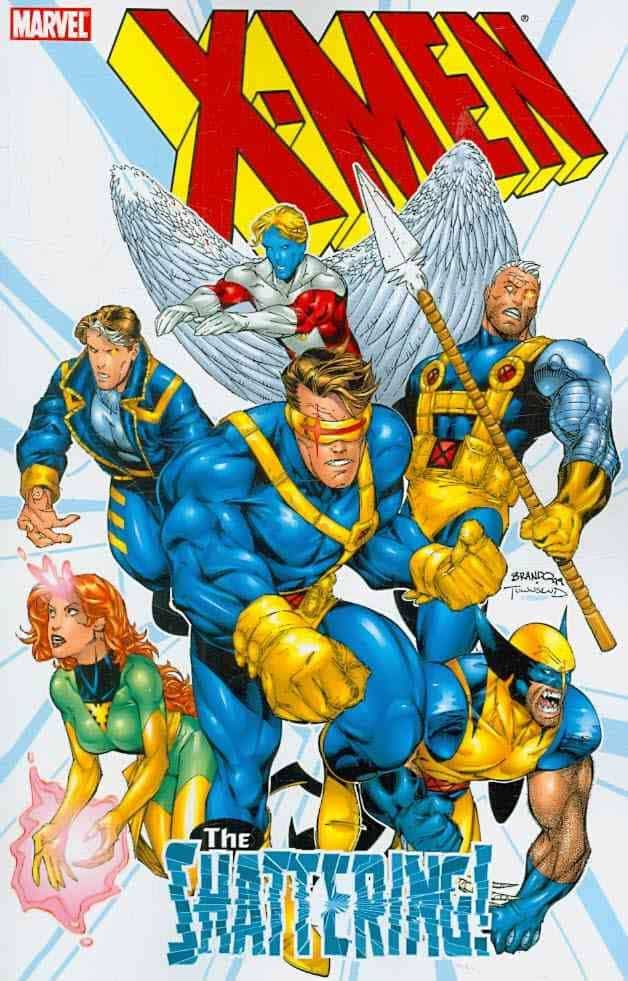
This week: the multi-part crossover event X-Men: The Shattering.
If I’m totally honest, my Golden Age of X-Men comics is from the mid 90’s to the early 2000’s. This wasn’t exactly when I first started reading the X-Men, that was around 98/99, but because I was largely reading UK reprints, I wasn’t reading the current comics – they were probably always a good two to five years behind what was being published and sold in comic shops depending on the story being presented in the magazine. The reprint magazine had space for three comics in it – this wouldn’t always be three concurrent issues, but was often an issue of Uncanny X-Men and X-Men that were published within the same month and an issue of Uncanny from the 60’s or 70’s). These reprint magazines are actually responsible for the weird dichotomy in my head of knowing the stories very well, but having no context for what issue they came from (yes, the reprint did tell you what comics they were reprinting, but it was much like a tpb; you don’t really notice unless you look in the fine print if the covers).
Over the years, I’ve slowly been picking up and working on completing a run of X-Men comics from issues 100-500, though my focus for years was around 250-400, but because I’ve been largely focused on Uncanny X-Men, I don’t have a lot of the issues that form the giant crossover – if I even have all the Uncanny issues (look, I was often going by cover art and price when picking books up, not sequential numbering, so I have holes everywhere in my collection), so for a story that I really want to read I’ve been picking up cheap collected editions just to be able to read or reread them. And because I have no intention of risking damaging the early Uncanny issues I own, I’ve also been looking for collected editions of The Dark Phoenix Saga and so on.
The Shattering was a story that came out just as I was transitioning away from reprints and into the single issues for most series, and so where parts of the comic is familiar to me, a lot of it is relatively fresh – or fresh enough. I’ve got an obvious soft spot for this period of the X-Men, but I acknowledge that not everybody will enjoy the way that Alan Davis tells the story here – though this isn’t the end of the story by any means because the book ends on a cliffhanger that’s already got me scouring online retailers for the next volume (my LCS didn’t have it – I picked this book up from them and didn’t see any others), because I feel the need to follow up on just how this tale ends and I don’t have all the single issues just yet.
I remember reading bits and pieces of this years ago, and was shocked at the time about the revelation on the final page; I won’t reveal it here in case you’ve never read the story and choose to, but reading the trade knowing what was coming does give you an interesting insight into what’s to come.
Oddly, despite my love of the X-Men from the 90’s, I’ve got a lot of holes to fill, which should be pretty easy given how many are in the back issue bins. After all, 90’s comics aren’t all bad, there’s just a huge number of them in longboxes across the country because so many were printed. That just makes them worth less than the comics from the 70’s and 80’s, but it doesn’t mean they’re not any good.
X-Men: The Shattering leads into The Twelve, a story I am reasonably sure I’ve never read, but seems to be full of all the characters I loved the most when I first started reading about Marvel’s merry mutants. Something I was more than happy to do with a story that is far more Underrated than I ever expected.
Join us next week when we look at something else that is, for whatever reason, Underrated.
You can reach Alex and Joe can be found on X respectively @karcossa and @FirstRonin4 if you feel the need to tell them they’re wrong individually, or by email at ItsThose2Geeks@gmail.com.
This is a column that focuses on something or some things from the comic book sphere of influence that may not get the credit and recognition it deserves. Whether that’s a list of comic book movies, ongoing comics, or a set of stories featuring a certain character. The columns may take the form of a bullet pointed list, or a slightly longer thinkpiece – there’s really no formula for this other than whether the things being covered are Underrated in some way.
This week: the multi-part crossover event X-Cutioner’s Song.
The first chapter of X-Cutioner’s Song was published in November 1992 in Uncanny X-Men #294, with subsequent eleven parts coming in issues of X-Factor, X-Men, X-Force and Uncanny X-Men. With the series being billed as revealing the origin of Cable (it didn’t – that came in 1994), there was significant hype and buzz around the comics when they were hitting the shelves nearly thirty years ago, but because I wasn’t into comics at the time, I never heard any of it.
Instead, I noticed a cover when restocking the boxes at my LCS and decided to pick up the arc after the shop owner gave it a quick recommendation. Fortunately, we had a full set (or seven) in stock, so I grabbed the individual issues rather than hunting down a collected edition (partly because I am also building an X-Men and Uncanny X-Men collection, but also because I wanted to read it as it was originally presented in comic form. Complete with the polybags still sealed for some off the comics (I won’t lie, I was tempted to leave them sealed, but at only a couple bucks a comic it didn’t seem worth it.
Plus, I wanted the feeling of cracking those bags and getting to be the first person reading these comics.
I forget sometimes how much dialogue and text there used to be on pages in comics.
Without question, comics from this era were technically published before I started buying single issues, but that doesn’t mean that these issues didn’t kickstart a sense of nostalgia for the old UK reprint magazines that I first came across this arc in. The first issue felt oddly familiar, but beyond that…? It was pure 90’s joy.
After all, 90’s comics aren’t bad. There’s just a huge number of them in longboxes across the country because so many were printed. That just makes them worth less than the comics from the 70’s and 80’s, but it doesn’t mean they’re not worth reading.
“If mankind waited for the ‘right time’ to address the winds of change it’s unlikely we’d ever have crawled from the primordial ooze.”
Scott Lobdell, Uncanny X-Men #294
I don’t know if I had forgotten about the amount of times characters within X-Men comics in the 90’s spouted pearls of wisdom, but I was less than halfway through this first part of X-Cutioners Song and I already had enough one liners to make me sound like I a semi professional couch philosopher thanks entirely to the less than subtle messaging. Messaging that seems just as relevant today as it ever did (and I’m sure we’d all hoped that would be different).
The main plot of X-Cutioner’s Song isn’t fully revealed in the first issue, but there is more than enough information here to reel you in hook line and sinker. The crossover cost me less than $20 to put together, and it was worth every penny to do so – not only because of the nostalgia factor, but primarily because this is a damn good story that holds up today (even the funky fashion choices for the street clothes the X-Men wear don’t detract too much).
With any story crossing over four series, the creative team is, as expected, pretty hefty. There are names that at the time were relatively new faces to the X-Men, but now… well now we consider them as creators who have made significant contributions to the comicsphere, frequently drawing large crowds at conventions;
Writers: Scott Lobdell, Fabian Nicieza and Peter David.
Pencillers: Brandon Peterson, Andy Kubert, Jae Lee and Greg Capullo
Inkers: Terry Austin, Mark Pennington, Al Milgrom and Harry Candelario
Colorists: Mike Thomas, Marie Javins, Glynis Oliver, Joe Rosas and Steve Buccellato.
But despite the big names, the characters and import associated with the story, it’s an arc that can easily get overlooked when when you’re looking in the longboxes because the story came in the early 90’s, before the big bust in the comics market. Despite having heard a little about it over the years, largely through comments in UK reprints, I had never actually read the book before. Something I was more than happy to do with a story that is far more Underrated than I ever expected.
Join us next week when we look at something else that is, for whatever reason, Underrated.
Alex and Joe are joined by Rhode Island’s Own Peter Griffin to talk about AEW Full Gear.
You can reach Alex and Joe can be found on X respectively @karcossa and @FirstRonin4 if you feel the need to tell them they’re wrong individually, or by email at ItsThose2Geeks@gmail.com.
This is a column that focuses on something or some things from the comic book sphere of influence that may not get the credit and recognition it deserves. Whether that’s a list of comic book movies, ongoing comics, or a set of stories featuring a certain character. The columns may take the form of a bullet pointed list, or a slightly longer thinkpiece – there’s really no formula for this other than whether the things being covered are Underrated in some way. This week: Alphabetizing comics
As I was sat down trying to think of something to cover for this week’s column, I realized I hadn’t really read much this week other than the comics I’ve already reviewed or written a column about. Maybe you’ve seen the and, maybe you haven’t, but I didn’t want to retread the same comics here, regardless of whether they fit the theme or not. Which left me in a bit of a pickle as I really didn’t have any thing up my sleeve and I wasn’t particularly keen on rerunning a column from yesteryear.
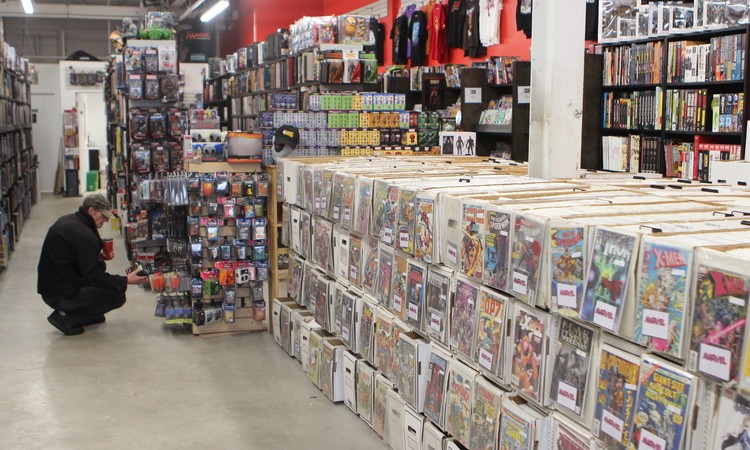
It was then I realized that one of the biggest frustrations I have when looking at dollar bins in comic shops is the lack of alphabetization of the comics. I don’t expect much; my LCS has the dollar boxes separated out by letter, but doesn’t bother to make sure it’s 100% perfectly sorted because that’d be a loosing battle. But there’s at least some semblance of order there that enables customers to find the letter they’re looking for and then flick through looking for a good deal on X-Men or Batman comics. But when they’re thrown in the boxes willy nilly? Yeah, that sucks.
Not my photo. Sourced from the Telegraph Journal (the link seems to be broken).
I get it, though. As a person who has to restock dollar boxes, I can tell you it is far easier to just dump them in and let the customers hunt. But what’s easier for me does not make for a good business practice in the long run.
For example, my wife and I stopped in at a shop a few months ago in a city we don’t visit all that often. In fact it was only the second or third time I’ve been to that specific shop in that city because the opening hours aren’t always compatible with the time and day we’re in said city. I digress. We stopped in the shop, and she was expecting me to go digging, which I did, and I knew she’d look for a bit before she eventually lost interest in the hunt (indeed, she actually found me a couple of absolute gems in their Free For The Taking box). She’s not a huge comic fan, and is certainly not fond of rooting through dollar boxes. Which allows me to circle back to my point; because the ten long boxes weren’t alphabetized, I had to look through each and everyone to find the hole-filling books for the series I was looking for.
And I did.
While I did find quite a lot of comics to plug the holes I was looking to fill, it irked me a little that I found an issue of X-O Manowar next to Moon Knight and Detective Comics. Rifling through those boxes left me less time to go through the other boxes, shelves and what have you that inevitably had a higher price tag (I always start in a dollar bin when hunting in a shop because you never know if the owner is using those to clear overstock of a book he’s got for $5 in marginally better condition). In this specific case the lack of alphabetization potentially cost the store further sales of more expensive product. I say potentially, because I don’t know if I’d have actually found anything else to pick up.
Alphabetizing, especially for stores, is a cheap and easy way to potentially increase sales. If nothing else, it also makes you look organized. Hence why it’s an appropriate subject for today’s column.
Unless the comics industry ceases any and all publication look for a future installment of Underrated to cover more comics that aren’t cracking the top 100.
We’re going back to early 2018 to revisit an old column this week, because if you listen to Those Two Geeks, then you’ll understand why this comic was so loved.
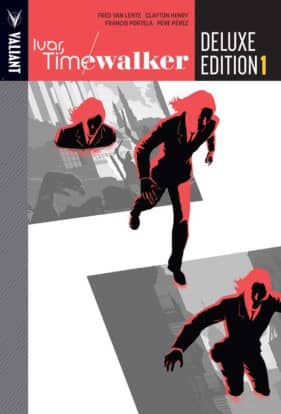
This is a column that focuses on something or some things from the comic book sphere of influence that may not get the credit and recognition it deserves. Whether that’s a list of comic book movies, ongoing comics, or a set of stories featuring a certain character. The columns may take the form of a bullet pointed list, or a slightly longer thinkpiece – there’s really no formula for this other than whether the things being covered are Underrated in some way. This week: Ivar, Timewalker
My comic shop recently got the deluxe hardcover edition of Valiant’s Ivar, Timewalker in on a special order for yours truly, which collects the entire twelve issue run in one place for $40. You can also pick up the series in three softcover trade paperbacks, if you’re so inclined, but I’ve become partial to the oversized hardcovers (especially because of the bonus material in the back, but then I love that stuff). I had already read the final four issues of the series long before I started reading the hardcover, which some would think would be foolish, but when you’re reading a book about time travel then it suddenly becomes less foolish.
In order to give you a bit of context, you’ll find the preview text for the series below.
“At this very moment in Geneva, Switzerland, history is being made. A thousand meters underground inside the Large Hadron Collider, researcher Neela Sethi is about to discover time travel – and jeopardize her life in the process. But she doesn’t know that yet. Ten minutes from now, every deadbeat chrononaut, wannabe conqueror, and misguided protector of the timestream will be banging down her door. Good thing that the legendary Ivar, Timewalker, got there first…right? Now it’s down to history’s most jaded, most tempestuous time traveler to stop the worst of everything that is, was, and will be…before time runs out!“
The series was written by Fred Van Lente, who was joined by Pere Perez, Francis Portella and Clayton Henry with Robert Gill, the first issue being released in January 2015, with the final issue coming in December of that year. The twelve issue series is one of the more underrated offerings from Valiant Entertainment, as many people don’t tend to think about Ivar, Timewalker when talking about the great comics to have come from this publisher – myself included.
As a story about time travel, Ivar, Timewalker is a series that rewards multiple readings – indeed, you could reasonably start at the beginning of any of the three arcs within the series, though this is admittedly more difficult to do with the deluxe edition than the single issues or the trades. Van Lente put together a story that will leave you with as many questions as it will provide answers with an intelligent script that effortlessly blends a heartbreaking story of loss, hope and determination with a sly wit that will have you laughing out loud more often than you would expect in a series that, technically, isn’t a comedy.
Time travel, and effects travelers can have on history are touched on, and often provide some interesting flashes to a story that at its heart is a tale of two incredibly different people; Ivar himself, and Neela Sethi – the scientist who will invent time travel. For as fantastical as the scenery is in this series (and thanks to the artists, it truly is phenomenal), the true draw is the relationship between the two leads.
And that relationship is why you need to read this wonderful story at least twice. I didn’t realize how good this book was when I first read it, and I dare say it’ll only get better with time. Pardon the pun.
Time travel has never been so wonderful.
Join us next week where there will doubtless be another movie, series, comic or comic related thing discussed that is, for whatever reason, Underrated.