Author Archives: glennmatchett

Matchett’s Musings: Creating Sparks Part 4

Creating Sparks Part 4: Selling yourself

I was in high school at the time that the internet was really coming to prominence. I remember sitting in Economics listening to my teacher make the less than radical prediction that the internet would change the way businesses work. It would give small businesses a whole new potential customer base and give businesses a global market to play with.

The same applies to comics, the internet has given small press creators a whole new avenue to showcase their talents. Whether you sell comics directly from your own website (such as GrayHaven does) or market your talents by offering great free content via webcomics (for some exceptional ones check out GrayHaven regular Donal Delays ‘Daring Adventures’, Jason Snyder and Michael Sumislaski‘s ‘Horntoad Sam‘, Nathan Lee James ‘Moonlight Motel‘ & John Clerkin and Ann Harrison’s ‘Bunsen Bunnies‘) it’s now easier than ever to get your work out there if you have a desire to make comics.

The internet has also opened up the door to crowd funding like Kickstarter, Patreon, Indigogo and many more to creators who have the desire or the talent but perhaps not the resources to bring their product to market. Making comic is expensive and you will undoubtedly lose more than you gain but like I said to a fellow writer many years ago ‘if you’re in comics to make money you’re probably in the wrong game’.

When Sparks was released I already had established a few connections through GrayHaven and from my previous solo outing in ‘Living With Death’. I’ve never been to fond of convincing people to buy something from me but no matter what job you do, sales will have some aspect of it, even if you don’t realize it. It’s important in comics to push yourself out there because especially when it comes to super small press work with characters that no one care about but YOU then you’re hardly going to get people banging at your door to buy a copy.

I’ve been to conventions both big and small, some great while others weren’t so great. In both instances I saw small press people sitting watching literally hundreds of potential customers pass them by. Meanwhile I see others who have what my wife would refer to as ‘the gift of the gab’ which means they can draw the attention of people and get people to buy their product. It all depends on your personality of course but tables at conventions (big or small) are pricey and it’s a hard truth that you have to fight hard for every sale.

I won’t say I’m particularly good at it either, I’ve been behind that table and looking at people with an expression likely shared by deer’s moments before an encounter with a car. It takes me a while to get going but like I say, I know no one will come to me so I have to do it. Even top tier creators fight hard to make sure their books are brought to people’s attention. Space in comic shops is precious and creators will want to make sure their books get a spot.

So when Sparks was a released I took advantage of the connections I had and started e-mailing people. I had previously garnered a lot of positive press online and locally for ‘Living With Death’ so it was a little easier. Much to my surprise, people had enjoyed ‘Living With Death’ quite a bit more so were easier to convince to check out ‘Sparks’.

It wasn’t all easy of course. To get reviews you have to supply free copies and like ‘Living With Death’ there were review sites that said they would take the time to look at ‘Sparks’, were given a free copy and I never heard from them again. It’s to be expected because much like space in a comic shop, space on a website can be precious. You’re going to get more hits (and more revenue) talking about the latest Marvel or DC ‘event’ rather than a review of a small press comic. I can only assume the people that I didn’t hear back from didn’t care for the work.

I did get quite a few favorable reviews though thankfully. My efforts paid off as I believe as of this writing both Living With Death and Sparks are the most reviewed books that GrayHaven has produced. This is what happens when you make a little bit of a nuisance of yourself I suppose but like I say, people won’t come to you.

It also meant that Kell Smith got a little bit of a spotlight too. People last week could probably tell I’m a big fan of Kell’s and I want to see her get the success that her talent warrants. Every time I get into a working arrangement with someone on a book I am always eager to share other opportunities I spot for their creative expansion.
People bought the book and seemed to enjoy it. The moment I had worked 12 years for had come to pass. Hearing people’s reactions to the last page of Sparks is often a priceless moment and one I find incredibly gratifying.

Making comics is hard, it can be pricey and it’s something that I have more than once (or a hundred times) considered throwing the towel in on. I’ve lost friends, had people steal money from me, break promises and say things about me that aren’t true. It’s a messy world, even at a level where not many people know who you are.

Moments like the one I described above however make it all worth it. Even if one person read Sparks and demanded more, it means more to me than anything else. Now the book is out of course the journey doesn’t end. You think about what’s on the horizon and doing better than you’ve done before.

It’s easy to make a comic when people don’t expect anything of you. Try doing it when people expect it to be good. That’s the challenge myself and Kell face now and I can’t wait.

Next: I’m headed on honeymoon for a few weeks. When I come back I’ll be talking to Brett about what’s coming up. I’ll be talking women in comics, female characters, the rise of indie comics, Living With Death, editing, some of my GrayHaven shorts and more. Hope to see you all when I get back.

Got any comments, suggestions or questions? Let me know! Also follow me on Twitter @glenn_matchett

Matchett’s Musings: Creating Sparks Part 3

Creating Sparks Part 3: Do you hear that?

Those that know me will probably be familiar with the fact that if you meet me and talk to me for a significant length of time, you’ll discover my passion for Doctor Who. I could write an entire article on that show itself but for now I want to use it for an analogy.

In the show, one of the Doctor’s foes ‘The Master’ was recently revealed to have a constant drumming in his mind. This noise was the explanation for his villainous ways by and large, I mention it because I too have a similar sound in my mind. It’s not a drum though, it’s more like this.

Tick, tock. Tick, tock.

Patience has never been one of my attributes. In an infamous issue of classic X-Factor, Peter David wrote a rather famous bit of dialogue from Quicksilver about how he constantly feels pissed off because compared to him, everyone moves so slow. I’m a little like that but I don’t have super speed to blame, I can sometimes just be an impatient jerk.

I’ve always done things fast in terms of deadlines. In University and in comics I heard people jest that I would have the assignment done before there was even an assignment due. I just liked to be early which was a trait I picked up from my mother who at times liked to be 5 hours early for a flight at the airport.

This expediency can be a blessing, I’ve never missed a deadline and people tell me I’m dependable. Of course it can also be a curse because I work at such a rapid rate, I expect everyone else to as well. I need everything done yesterday and in the world of comics, things tend to move at a general glacial pace. I’ve written scripts for volumes that have seen a year (or more) from me finishing my part to it being in my hands. There are still scripts I wrote back in 2012 that I’m still waiting to see published.

Tick, tock. Tick, tock.

My impatience has led me to make bad decisions, cost me friends and more negative things than I care to remember. It has also allowed me to be an editor at GrayHaven that has more output than any of my peers with regards to completed volumes.

It was this double edged sword of a trait that led to Sparks artist A leaving the book, or rather me asking them to leave. I think they worked on the book for 6-8 months (maybe more, maybe less) and produced 2 character sketches in that time. I tried to be patient with them (or as I could be) contacting them every 2 months or so for a progress update. Eventually I decided to tell them that due to the delay the project had been cancelled.

I did this so I could find someone else. The project of course wasn’t cancelled but I felt this was a decision that was best for the book. I wanted someone who could really dedicate their time and focus to Sparks.  As talented as artist A was, that wasn’t them.

Over this time things had expanded quite a bit at GrayHaven. When I went to Andrew to ask about a replacement artist, he told me that I had to look outside the group of artists working for the company. This made sense to me because since GrayHaven doesn’t pay its contributors, we had to make sure the artists we had were put towards putting out the volumes.

Also by this time, the money I had saved to perhaps pay an artist had been used on another project. I thought back pay was my best option.

The right and wrong of back pay vs. payment is something I will maybe talk about in future. I’m not going to spend a lot of time on it here, I just know] what I’ve spent trying to break into comics I have never really gotten back. I’ve even had people steal from me and heard many stories from people who were stolen from. Sometimes making comics isn’t all its cracked up to be.

Along came artist B who said they had a day job, loved the project and back pay wasn’t a problem. A number of months later artist B then contacted me saying they had received an offer for a paying gig and would return ‘if they found the time’.

Tick, tock. Tick, tock.

Being frank, I found that artist B’s work wasn’t suitable to what I was looking for so for a change it seemed that things were in my favour. I needed someone who would care about the project, whose work I liked and someone I could trust. By this time GrayHaven had progressed on with more ambitious projects than my little British set one shot and it seemed to had been largely quietly forgotten. I don’t blame the company because you have to keep going forwards. If you spend your time on each problem project you’ll drive yourself insane.  I was largely left to my own devices and because of that, I went to the artist who I had wanted from the start, just like it was some sort of odd destiny.

I first became familiar with Kell Smith’s work when she did a cover for us for our 8th anthology that centered around the theme ‘myth’. It was a beautiful cover harkening back to the classic sword in the stone tale that featured King Arthur’s discovery of the mythical sword Excalibur. When I first saw the cover my question was ‘Who is this Kell Smith person?’

I was treated to more lovely covers, prints, pencils and colors by Kell who seemed to be a Swiss army knife of talent. I even had the fortune of working with her on the third volume of GrayHaven’s premier horror title ‘Tales From The Abyss’.

I contacted Kell with the story of my (at that time) over 2 years of headache’s and proposed she join me.  Given my misfortune to this date I didn’t expect a yes. I think Kell is immensely talented and GrayHaven was very fortunate to have someone like her, I didn’t think she would be interested in working with me.

It turns out I was wrong. Kell loved the idea and it seemed that fate had led me all the way back to her. She delivered in my view, beautiful work and brought Mel Sparks, Kathy Ericson and Barry Patterson to life. I was left speechless the first time she showed me the cover because I was brought back to that classroom where it had all been conceived and all the pain, disappointment and broken promises were suddenly worth it.

However getting a product in comics is one thing, getting people to buy it is another.

Tick, tock. Tick, tock.

Next: Release, Reviews and Marketing

Got any comments, suggestions or questions? Let me know! Also follow me on Twitter @glenn_matchett

Matchett’s Musings: Creating Sparks Part 2

Creating Sparks Part 2: The Basics and Getting the Green Light

I remember in English class something my teacher said something to me which I feel is very true. ‘The moment you write something and consider it brilliant is when you should stop.’ In essence what she meant was ‘don’t get your head up your own ass too much.’ Indeed you see it all the time in comics, movies, music or any other industry you can think of. You see people struggle and fight for their spot, producing amazing work but then they get their big break. They become a sure-fire hit, they get told their work is genius and after a while that stops being true. The fire, the motivation to really deliver is gone because no matter what you do, people will buy it.

The reason I’m saying that is I never really think you stop learning to write, especially in comics. Literally every work, every project I learn something new. Sometimes it’s something small, sometimes it improves the quality of my scripts a great deal. However when I started out, after creating Sparks which was closely followed by a concept called The Immortals (more on that later) I had no idea how to put together a comic script. I wasn’t even sure how to structure prose properly and so I completed a lot of stories that went pretty much like this.

Turning to the audience, Glenn gives them a big smile.

Glenn: Hello audience!

Audience: Hello Glenn!

Taking a bow, Glenn proceeds to bask in the audience applause.

Around this time I also sent a full letter of ideas forward to Marvel. I posted it all the way to New York and even put in the legal form the big 2 make you sign anytime you want to submit work/ideas to them. Looking back it was so unprofessional and so deluded of me that the entire submission may have been done out in crayon with cute little backwards letters.

There are plenty of books on how to write comics or to write period. The likes of Stan Lee, Peter David, Brian Bendis, Stephen King, etc have all crafted books on how to write.

I’ll admit right now that I have read none of those. I certainly encourage others who would likely benefit greatly from it but I never did. I just learned through buying a lot of comics.

That might sound strange but one of the wonders of the modern age of comics is how much effort put into collected editions. With some of these collections you get an assortment of DVD/Blu-Ray type special features. You get sketches, pin-up art and sometimes you get scripts. Full comic scripts from the best in the industry and how I learned to put together scripts was by reading other scripts.

I also found a number of other writers putting their scripts online, what then has followed is some trial and error. I’ve included some stuff, ditched other things and tried my best to find my own way to do it. I learned the difference between full script and ‘Marvel style’, how to structure a page and some interesting things I never would have realized.

I found that there was no real ‘wrong’ way to do it. Every writer laid out their full scripts differently and I came across quite a variety of styles. I would probably call my own mostly a blend of Neil Gaiman, Ed Brubaker, J. Michael Staczynski and a little of myself.

Being an editor with GrayHaven I have the pleasure of reading literally hundreds of scripts for anthologies and I pick up interesting things here also. Little hints and tips I use to adjust my own style. If there is anyone out there looking to write comics or wants to learn how to do it better (we can all improve) I would highly suggest reading scripts from peers or pro’s. It’s astonishing what you can pick up. Often times whenever I green light a pitch for a GrayHaven anthology I sometimes get the writer going ‘This is great…now what do I do?’ I then send them some strong scripts I have received over the years.

I would like in particular like to mention GrayHaven vets Ray Goldfield, Doug Hahner, Sean Leonard and Jason Snyder who have great instincts when it comes to scripting. There are many others who I’ve found helpful but those guys are top-notch.

Something I really liked from Neil Gaiman’s scripts was the informal manner he wrote in. In her introduction to Absolute Sandman Vol. 3, Jill Thompson wrote how much of a pleasure it was to read Gaiman’s scripts because of this. I thought I would do the same and I do attempt to do so on a regular basis.

Now obviously it’ll depend on the artist and publisher. The majority of the latter I have worked with enjoyed it but others consider it a distraction. When it comes to your publisher, if they ask you to write the comic script standing on your head and reciting ‘Old McDonald’ then you must do so but…more on this later.

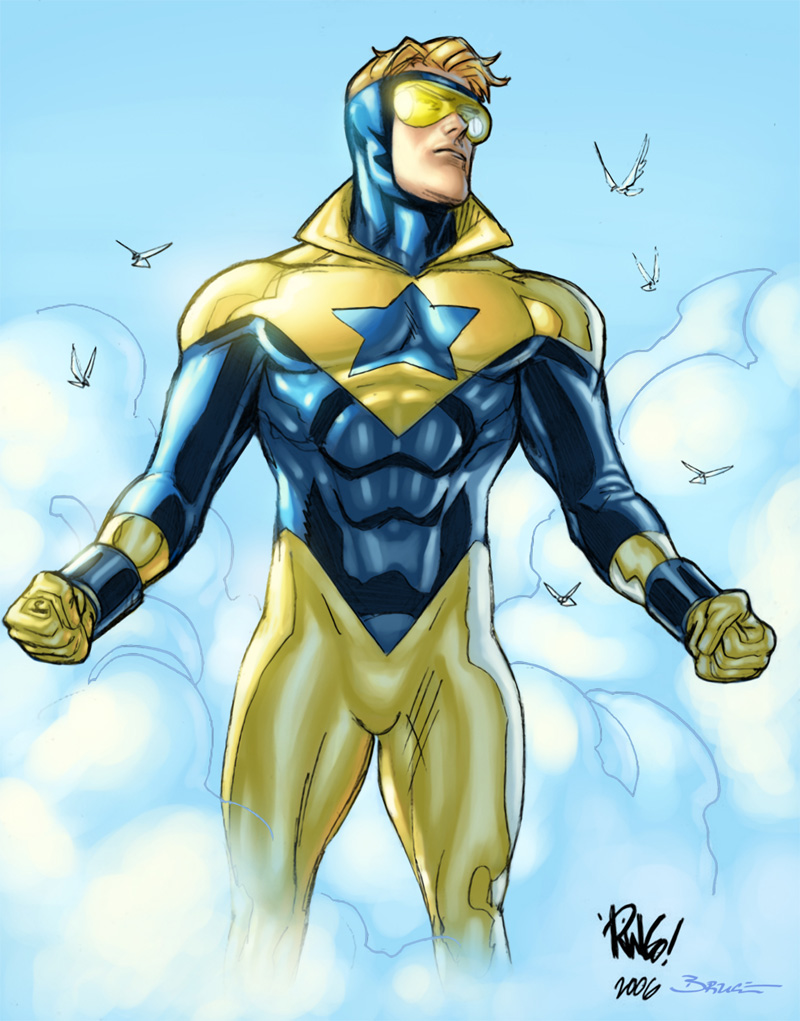
So I started to write comic scripts because mainly, I learn by doing. I first wrote a Booster Gold one I published on Facebook for fun. I was loving the comic series at the time and thought ‘Well, why not?’

I also wrote a script for artist Aaron Bir for his then website Sequential Stutter. I tried to find the story and can’t which is a shame because it was the first comic I had published anywhere.

Then came the beginnings of GrayHaven comics. I’ve told the story over and over so I’ll keep it as brief as possible. Good friend and fellow Jinxworld poster Andrew Goletz asked a bunch of us if we wanted to do a comic anthology for fun. It turned into Vol. 1 ‘The Thing With Feathers’.

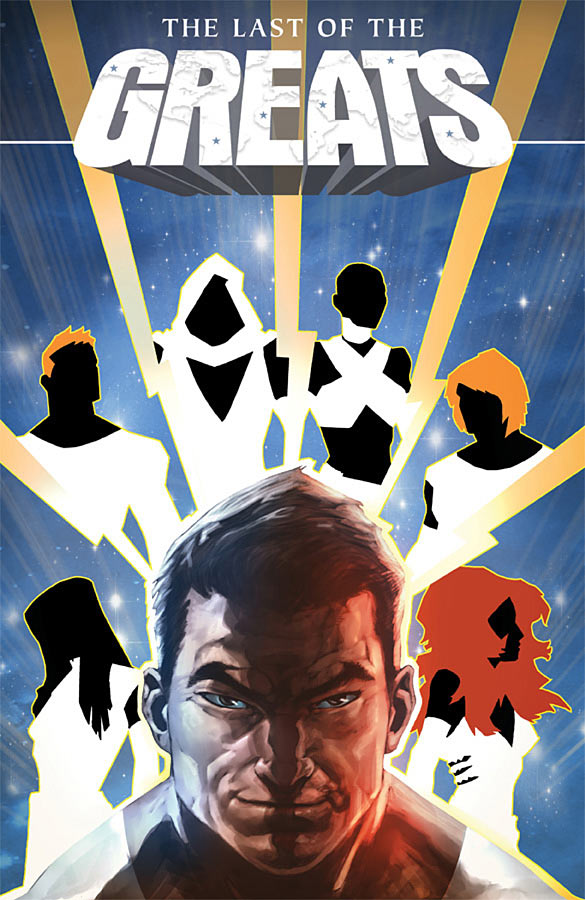
I could probably (and will likely) craft an entire article on where I get the idea for some of my GrayHaven shorts but my first actual printed comic work was in there. The feeling I got when I heard that first book, saw my name on the back (which I still miss) is something I will never forget. I also got to work on with artist Brent Peeples who went on to much bigger and better things with Images Last Of The Greats and other work for IDW, Zenescope, Valiant, Dynamite. I loved working with Brent and hope that one day, our paths cross again.

Vol. 1 of The Gathering was a big hit commercially and critically. It wasn’t perfect but people liked the potential and what it offered. A publisher was willing to let unknown creators throw themselves out there, for better or worse. Having learned over the years that breaking in was very difficult to those who could only write and not draw, it was great to see somewhere that offered that.

I helped out GrayHaven the only way I could in the early days which was financially and with any advice Andrew was willing to take from me. Time passed, more volumes got released and we even had some great pro’s like Gail Simone and Sterling Gates help us out.

Soon we had over 8 volumes with more on the way. New volumes were being announced, I’d sent pitches and Andrew approved them along with another opportunity. Due to my initial support he granted me a one shot. It was quite something as back then, the only solo work GrayHaven had approved was Doug Hahner and Donal Delay’s My Geek Family which had earned it through winning a contest.

I was over the moon and my mind exploded with possibilities. I went back to the idea that came first, I went back to Sparks. I pitched it to Andrew who liked it but wanted one change, he wanted it to be set in Britain and not the US because back then in the days of 2011 when this all happened it wasn’t all that common. Nowadays we have quite brilliant crime dramas set in the UK like Sherlock, Luthor and Broadchurch but at the time it was a great idea so I was all for it!

He then asked me who I wanted to draw the story and I gave him a list of 4-5 names, the first of which in an interesting twist was Kell Smith. However Andrew went above and beyond to a secure an artist (here thereafter referred to as artist A) who was immensely talented and seemed to be on the cusp of real success.

It was all set! The car was there, the key was in the ignition and it was all a go. I had only one problem. I had an enemy I wasn’t fully aware of. An enemy that had operated in the shadows for years but it seemed that now, just when things were taking off for me they were about to become my archenemies and a frequent pain in my rear.

Sherlock Holmes has Moriarty

Batman has the Joker

Even the Powerpuff Girls have Mojo Jojo

It turns out that Glenn Matchett’s enemy was named ‘impatience’ and we were about to get very well acquainted.

Next: Artist A, Artist B and Kell Smith

Got any comments, suggestions or questions? Let me know! Also follow me on Twitter @glenn_matchett

Matchett’s Musings

Article picGreetings everyone and welcome to what is the first in what I hope will be a regular series of articles. My thanks to Graphics Policy and Brett for giving me this opportunity!

For those that don’t know me and are wondering why you’re reading my ramblings, my name is Glenn Matchett and I’m a comic book writer/editor from Northern Ireland. Having grown up as a comic fan my whole life, its been my dream to write comics for a long time. I love this industry and this medium. I love talking about it, writing about it and even having friendly debates regarding it. Comics are wonderful, special things and I just want to be involved in that wonderful experience on some level.

Pile-of-comicsIn an effort to achieve this I’ve been working with publisher GrayHaven Comics the last few years. I’ve written and edited quite a few of their anthologies that are intended to give up and coming creators a chance to show what they’ve got. I’ve also managed to get some of my own solo work published which has led to a lot of positive reviews and people seeming to get the impression I know what I’m doing.

Working to achieve anything in this industry, it requires a thick skin, a lot of patience and even more luck. I’ve done pretty good for myself but I’ve also had a lot of disappointment and genuine heartbreak. When talking to Brett about what I could contribute to the site, I thought it might be interesting to pull back the curtain somewhat. What are my experiences trying to make it in this crazy industry? What have I learned? What can I pass on to people looking to do the same? It may be useful, it may not be but if nothing else it may give some folks out there a step by step guide on what NOT to do.

Along with my own experiences I want to write some articles about how I feel about certain key matters in the industry as a whole. Of course my thoughts and views are all my own but if nothing else, perhaps they’ll inspire some healthy discussion and/or debate. Please note that my personal experiences are pulled from my own memory. The situations I tell are dependent on my own perspective and should be treated as such. I am not here to name names or shame people. If there are people I have had poor experiences with I will not be naming them here. I will only speak of the experiences because as far as I hear some of those people have had little to no issues elsewhere so it is entirely possible the problem could be on my end, not theirs. I can only tell you things from my experience and what may surprise you is that it doesn’t show me in a favorable light all the time.

I will however be raining compliments on some truly awesome people and name dropping wherever possible

Welcome to my comics world…where sometimes truth is stranger than fiction.

Creating Sparks Part 1: Conception

The second of the solo works I have released that I mentioned before was Sparks by myself and Kell Smith (on sale here *coughs*). It was the second work I had produced but actually it came before anything else. Before all the short stories, the other concepts and other projects there was Sparks. The fact that it wasn’t released first is a complex tale I hope to begin to share with you all now.

It’s a story that lasts over 16 years so buckle yourself up and prepare for quite a journey of how I made this comic come to life. My journey as a writer began was I was very young. I would write stupid short James Bond and Sherlock Holmes stories that lasted 5-6 pages. I did it because I loved the Bond films in my youth and I grew up reading classic style murder mysteries like Holmes, Poirot and Miss Marple among others. I was also the kid in class that would really take my creative English assignments as far as I could. In my youth I was basically the author equivalent of the kid who coloured outside the lines in art class (although I did that too).

I loved to read, I always have both prose and comics. Growing up it was a healthy diet of mystery, Stephen King, some R.L Stine books, Harry Potter and the teen ‘Point Horror’ series among others. Comics wise I grew up reading the UK strips the Beano, Dandy and Buster but it was around 9 or 10 when I discovered American mainstream comics. I’d been a fan for years of Batman: The Animated Series and Spider-Man: The Animated Series so having these characters in regular monthly installments was quite a treat for my young mind.

With the expansion of the internet I began to track down as many Spider-Man books as I could because I adored the character (I still do). I worked my way through the controversial Clone Saga and backwards. I absorbed all the Spider-Man knowledge I could but it wasn’t until I was 13 or 14 when I read the Spider-Man comic that would make me want to make comics my career.

I can’t explain what it was about J.M DeMatteis and Mike Zeck’s work on the Spider-Man story ‘Kraven’s Last Hunt’ that affected me so profoundly. It remains my favorite comic work ever and I felt incredibly inspired by it. I’ve read comics that have made me feel the same way as ‘Kraven’s Last Hunt’ but after I finished the final page of that story I decided ‘This is what I want to do.’

Of course like most people starting in comics from scratch I had no idea how to do it. It was like a kid who says they want to be a cop because their dad is in some ways I suppose. I started by creating some of my own Spider-Man stories and jotting them down. It could probably write an entire article about some of the ideas I came up with that have come to fruition in some form or another but even back then, during my period of useful ignorance I realized that I wasn’t exactly going to jump into the ‘big leagues’ right away. As the saying goes, Rome wasn’t built in a day and I had read enough online to come understand one of my earliest but most important lessons in comics which was ‘Don’t do what we do, show us what you can do.’ What that basically means is that no one really got very far by being an imitation, they all got their by producing their own work. This then possibly leading on to work for companies that liked their stuff so much, they were willing to pay that person to work on their characters.

I thought about doing something that was all my own. I was 16 and sitting in front of a Windows 95 computer in English class (showing my age) when I first came up with the concept of Melanie Sparks. The first thing I thought was that I wasn’t likely to get very far doing a super hero book. Even before I discovered the wonderful world of non superhero comics I knew that there was no way a hero book I created could stand out. I had to do something else and I went to another genre I felt very comfortable with, the crime genre. I had grown up with it and was a fan of crime shows so I started going ‘if I were to do one, what would I do differently?’

Most of you reading this likely know but crime shows can come in a variety of forms and can have a wide range of tone and quality. You get some shows that I would describe as ‘popcorn crime’ that is fun and you don’t have to think about much like CSI and then you have the more realistic crime shows like The Wire or True Detective. Back before the days of some of these shows I tried to come up with something different.

In a few hours I had decided to have a female protagonist. It wasn’t something I saw a lot of in comics at the time and I was trying to be different. I also decided that the female protagonist would be a Private Investigator working in America (likely California at the time). The concept of what the character would be called came next as I wanted a name that sounded cool and catchy, something that would stick in people’s minds. I also created a slightly inept but lovable secretary in Kathy and the main story of the first issue quite quickly.

Those that have read Sparks know the story, TV soap star Ruth Gates is brutally murdered like the character she portrays on the show she stars in. The initial scene of her sitting alone, miserable while she watches herself talking happily on the television came to me all right there in front of that old PC in English class. The entire thing came together quite swiftly including other characters and something else that I wanted to do that was rarely seen in crime fiction. I wanted to show the reader who committed the crime and show how Mel figured it out rather than keeping it a secret from both. The classic crime show ‘Columbo’ used this device to great effect and even now the TV show ‘Motive’ does the same.

It still wasn’t enough for 16 year old me though. I needed something else because while all these things weren’t the norm there was nothing new…nothing really special that made my story stand out. Then something occurred to me, an idea popped into my head that seemed completely insane. I’ll admit and this might sound strange but the idea initially frightened me. Could I pull it off? Would it work? If I could make it work then it would be unlike anything I could recall experiencing at the time. What I’m speaking of course is the shock twist at the end of Sparks 1 which I won’t spoil here. The last few pages came to me in a flurry and the final image a lot of readers have told me left their jaw on the floor came to me.

It all seemed to come to easily. Surely now that I had what I thought was a killed concept that the rest would fall in line…as if by magic?

I soon learned another important lesson in comics, nothing worth having ever comes easy…EVER.

Next: An idea and writing isn’t the same thing? Well I never!

Got any comments, suggestions or questions?  Let me know!  Also follow me on Twitter @glenn_matchett

Recent Entries »