Author Archives: Logan Dalton

Metamorpho The Element Man #3 continues the retro pastiche journey through the Swinging Sixties
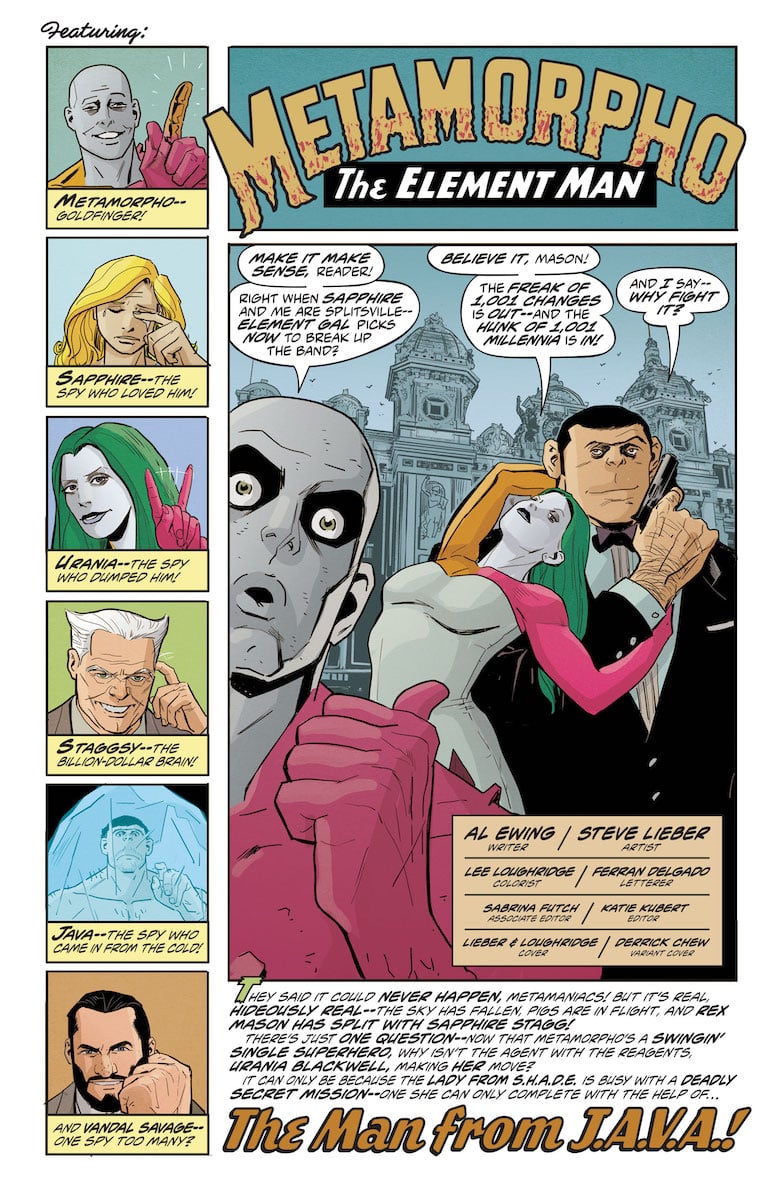
Metamorpho The Element Man #3

Metamorpho The Element Man #3 continues the title’s retro pastiche journey through the Swinging Sixties with period accurate dialogue (With some modern touches/jokes) from writer Al Ewing and day-glo visuals from Steve Lieber and Lee Loughridge. The latest stop on my favorite current Big Two comic’s magical mystery tour is classic spy fiction beginning with lots of pun on James Bond movie names and continuing with lots of gadgets and one-liners. However, Metamorpho #3 isn’t one-note and contains plenty of the adventure fiction type escapes that the character is known for as he, Urania Blackwell, and most importantly, Java, investigate an Olmec-type pyramid that has a very non-Olmec head on it, that of caveman-turned immortal-turned Gotham police commissioner, Vandal Savage.

Even as he introduces very modern concepts like social media influencers and popular music standom, Ewing’s script remains very Silver Age with tongue firmly planted in cheek. A lot of comedy comes from the banter between the unlikely team of Metamorpho, Urania, and Java trying to navigate the literal maze of the pyramid featuring well-placed one-liners about modern pop culture coming from a millennia-old caveman. Plus there’s Vandal Savage channeling Blofeld (Sans cat.) with cheesy one-liners as he interacts with his ally The Mad Mod (Whose panel time is shorter than last issue, but has some of the most hilarious dialogue known to comicdom.) and finally, our intrepid heroes. Like his work on modern superhero comedy/satire classics Superman’s Pal: Jimmy Olsen and One-Star Squadron, Lieber’s skill with facial expressions helps drive Al Ewing’s verbal jokes home. This is definitely a comic where you read a second time and discover all the background jokes (Vandal Savage looking fondly at a sabretooth tiger skull.) although Steve Lieber’s art isn’t dense and lets the story breathe.

Java had all the best lines in Metamorpho #1 and #2 so it’s fitting he gets his own little dramatic arc in issue three, and his actions drive the issue’s narrative with Metamorpho himself doing an elemental take on the third wheel role. The main conflict of the story centers around his rivalry with Vandal Savage. It’s interesting to see the interplay between a man whose key motivation is honor, and another who will do anything to get power. And there’s also lots of setup for future incidents in Metamorpho edging on over-exposition, but it also reminds me a lot of old school Chris Claremont-style comic book plotting where subplots would be introduced in early issues and become the main plot down the road. But mostly it reinforces the corporate sketchiness of Silas Stagg, and how maybe that’s not a guy you want to owe a life debt too.

One of my personal type of panel layout or storytelling device in superhero/science fiction/adventure comics is the hideout cutaway. In Metamorpho #3, Ewing and Lieber have even more fun with it by combining an old fashioned maze with a cutaway. Basically, the reader has to “solve” the layout to get to the inner chambers of Vandal Savage’s temple with Metamorpho and Urania and rescue Java from Vandal Savage. There are all kinds of booby traps, explosions, and frustrated Metamorpho and Urania faces, and it turns what would be a basic transition scene into the most memorable moment of the comic. It shows the uniqueness of comics medium while also continuing the weird will they/won’t they tension between Metamorpho and Urania as well as raising the stakes for the showdown versus Vandal Savage.

Al Ewing, Steve Lieber, and Lee Loughridge don’t rest on their laurels in Metamorpho The Element Man #3 and tell a visually creative spy story that also fleshes out Rex Mason’s supporting cast and connects this sideshow of a title to the larger DC Universe without feeling like a late period MCU flick. There’s a lot of Jim Steranko’s Nick Fury, Agent of SHIELD in this issue’s DNA, but Metamorpho #3 is funnier and more madcap just like its titular protagonist.

Story: Al Ewing Art: Steve Lieber
Colors: Lee Loughridge Letters: Ferran Delgado
Story: 9.0 Art: 9.2 Overall: 9.1 Recommendation: Buy

DC Comics provided Graphic Policy with a FREE copy for review


Purchase: Zeus ComicsKindle

Mini Reviews: Weapon X-Men #1, Exceptional X-Men #6, Godzilla: Heist #1, New Gods #3, Howl #2, and The Power Fantasy #6

Godzilla: Heist #1

Sometimes, the staff at Graphic Policy read more comics than we’re able to get reviewed. When that happens you’ll see a weekly feature compiling reviews of the comics, or graphic novels, we just didn’t get a chance to write a full one for.

These are Graphic Policy’s Mini Reviews and Recommendations.

Logan

Weapon X-Men #1 (Marvel) Weapon X-Men #1 is an event tie-in, a late 90s throwback, and an A-list X-Force comic all in a fun-sized package from Joe Casey and ChrisCross. It’s Deadpool, Wolverine, Chamber (For some reason), Cable, and Thunderbird all thrown at a crazy situation in Latveria that ends up being not what it seems, and there are twists, bloodshed, surprises, and loads of fourth wall breaking. Not the heartiest meal, but it’ll remind you of the 90s with smoother pacing and better art. Overall: 7.5 Verdict: Read

Exceptional X-Men #6 (Marvel) – This is another solid issue of Eve Ewing, Carmen Carnero, and Nolan Woodard‘s Exceptional X-Men #6 as Bronze, Axo, and Melee get internships at Priti’s consulting company and meet a CEO who preys on young mutants’ insecurities. Whereas Bronze and Melee immediately are suspicious about Xenos’ Verate app asking for DNA information, Axo connects with him because they both have external mutations that can’t be hidden. Their interactions are sci-fi tinged masterclass in showing how young, idealistic people can be manipulated by exploitative corporations, and it’s sad to watch Axo demonstrate his empathy powers in front of Xenos. Carnero’s skill with facial expressions continues to be an asset for this book, which is more about conversations and debates than fisticuffs for now. Overall: 8.4 Verdict: Buy

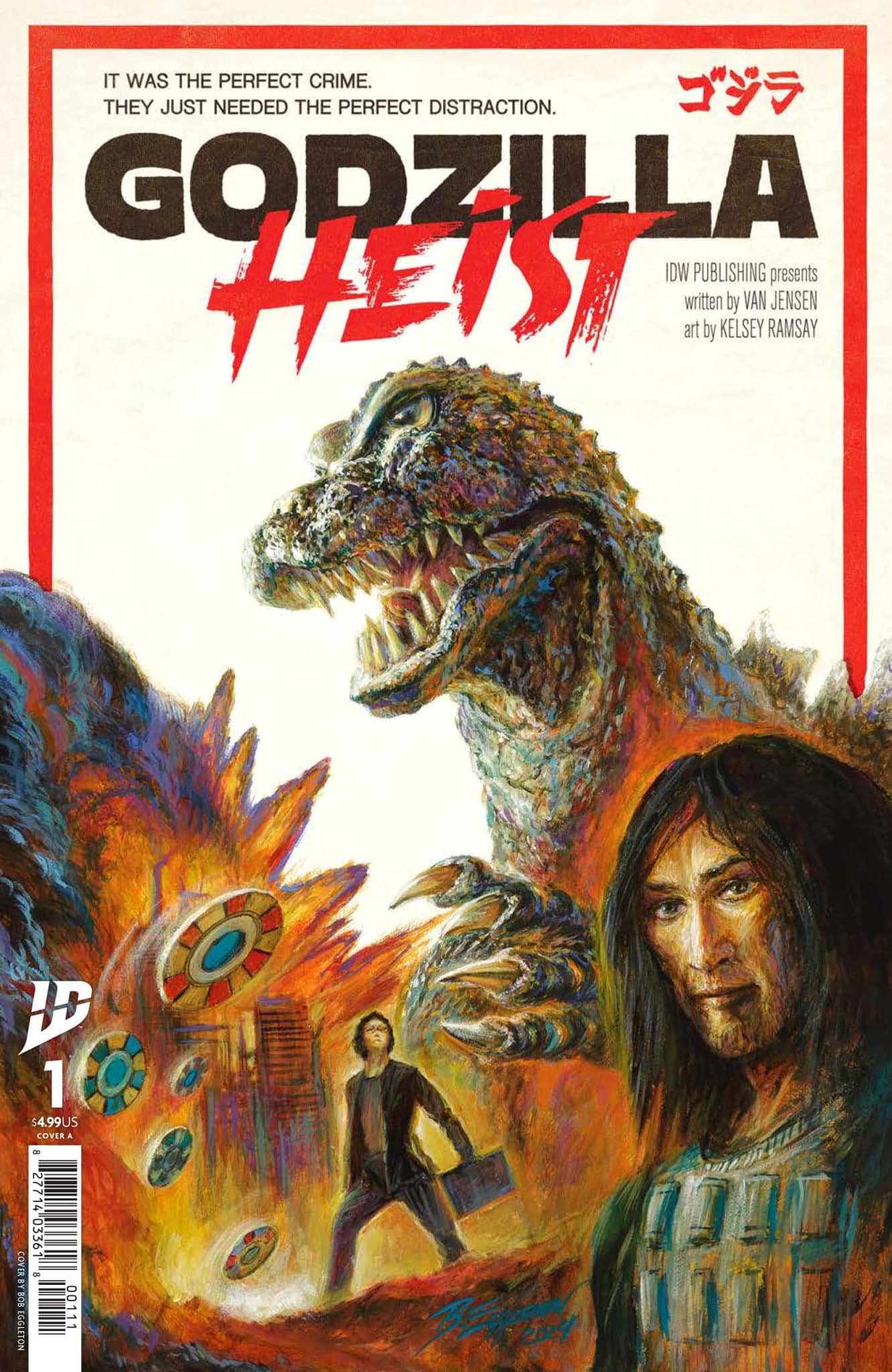
Godzilla: Heist #1 (IDW)Van Jensen and Kelsey Ramsay combine gritty crime tropes and visuals with kaiju action and anti-imperialist themes to craft a comic that is probably more compelling than any summer blockbuster. Godzilla: Heist #1‘s premise is super high concept: what if Godzilla was a heist team member, but Jensen builds an interesting story around it. Most of that comes from protagonist, Jai, who is a young Indian-British man, who has a vendetta against the country that took credit for his mother’s work and a special scientific connection to Godzilla. It’s fun watching him work in conjunction with the big monster to execute his first solo heist, which puts him on the radar of a much bigger job shrouded in mystery. Godzilla: Heist crosses the worlds of street-level and epic scope stories and is one of the most entertaining comics I’ve read this year with some solid social commentary too. Overall: 9.4 Verdict: Buy

New Gods #3 (DC)New Gods #3 establishes once and for all that Ram V and Evan Cagle are doing something additive with the Fourth World instead of just re-arranging pieces established by Kirby, Simonson, Evanier, Byrne (Ugh), or even Morrison. Most of the issue is a flashback sequence narrated by the Chronicler and skillfully by Riccardo Federici, which connects the new New God to the mythos of the previous Second and Third Worlds. There’s lots of new lore to unpack, but V and Federici wisely connect it to creation myths and the dawn of civilization and humanity. This adds depth and stakes to the present day story with Mister Miracle, Big Barda, and Liv being charming as always while the “new Darkseid” Karok Deen is a little one-dimensional. However, Cagle draws his conquests with a heavy metal fury. New Gods #3 continues to balance epic world-building with personal family drama and as someone who loves mythology, world religions, and anthropology, this might be the best issue of the series yet for V, Evan Cagle, Federici, and colorist Francesco Segala. Overall: 8.8 Verdict: Buy

Howl #2 (Ahoy) – Things get more Invaders of Body Snatchers, but with mushrooms and in beatnik-era Greenwich Village in Alisa Kwitney and Mauricet‘s Howl #2. Kwitney’s dialogue for the pod-people manipulated male artists is hilarious like a cross between Coneheads and Allen Ginsberg, and I love how she continues to center the women who are actually putting in the work while they wander around aimlessly. Mauricet continues to nail the atmosphere of the 1950s village, but with more weird body horror vibes. Things are going to get very strange in this comic, and the satire of societal norms are on point. Overall: 8.2 Verdict: Buy

The Power Fantasy #6 (Image) Kieron Gillen and Caspar Wijingaard kick off the second arc of The Power Fantasy with a nigh-literal bang exploring the implications of Jacky Magus joining the US president’s cabinet along with a new wild card figure. There’s a lot of passive aggressive maneuvering like in the first arc, but some real battle lines are drawn plus there’s some more info where these abilities come from. Plus Wijingaard’s art is slick, especially when the occult/counterculture elements come into play using exotic layouts and color palettes to show how distant the main characters of this series are from everyday humans. The Power Fantasy definitely is a slow burn series, but I’m enjoying learning more about the inner workings of this universe and the small, yet might moves across the proverbial game board. Overall: 8.0 Verdict: Buy

Zatanna #1 is a visual feast from writer/artist Jamal Campbell

Zatanna #1

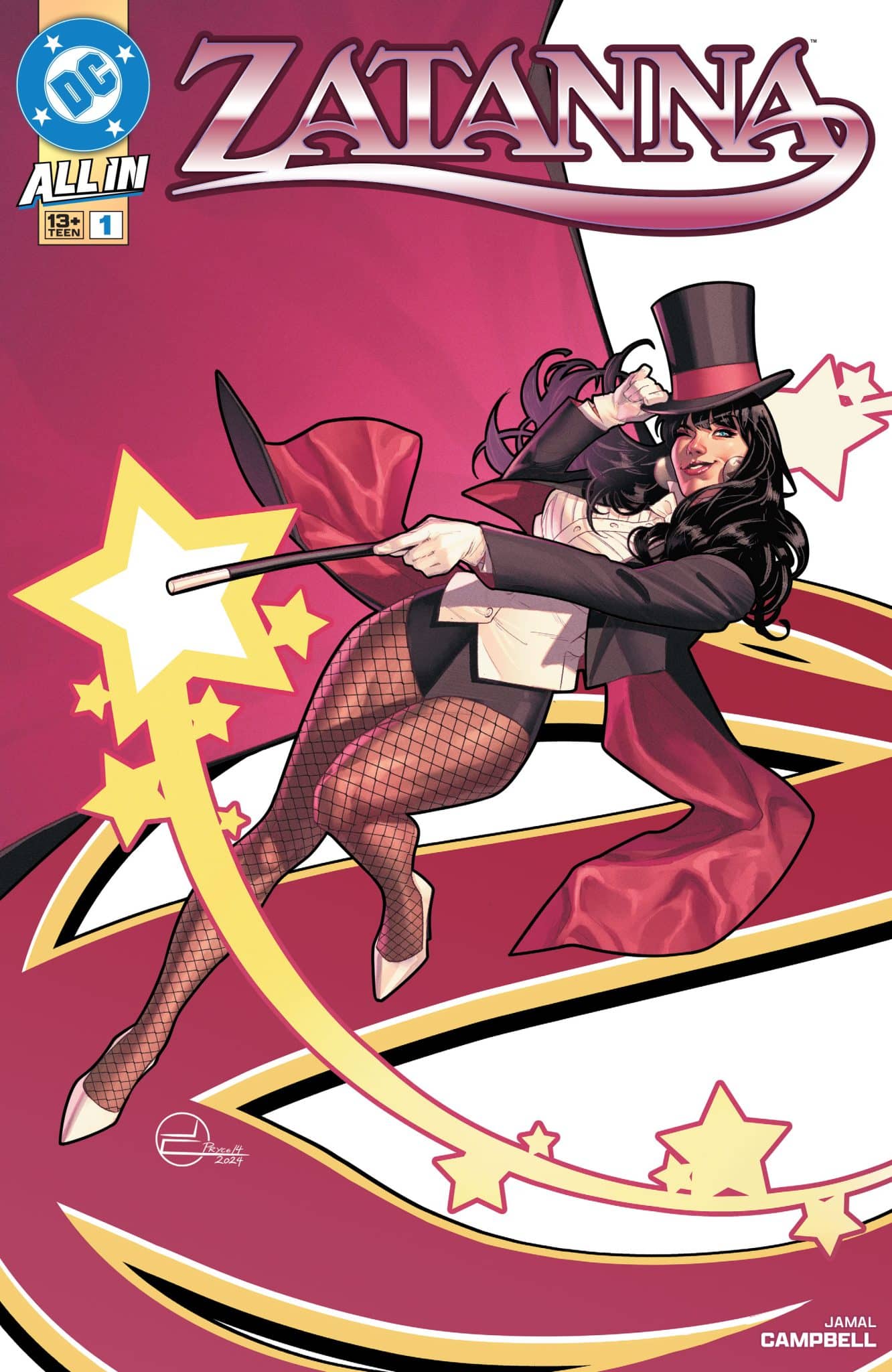
Even though it’s a little thin on story, the new Zatanna solo series is a visual feast from writer/artist Jamal Campbell. After an enigmatic first few pages featuring light and dark princesses and flashbacks to pivotal moments in Zatanna’s character history (The death of her father Giovanni Zatara, when she joined the Justice League of America.), Zatanna #1 focuses on the preparation behind her latest magic show at San Francisco’s Terpsichore Theater. However, it all goes awry when long-dead actor/artist/dancer/singer/multi-hyphenate Lady White appears and whisks all of Zatanna’s crew members to different types of movies. What follows is a love letter to classic Hollywood cinema and spectacle as Campbell captures what it’s like to actually experience magic.

Beautiful is an understatement for Jamal Campbell’s art in Zatanna #1, and it’s easily the main draw of this comic. There’s a sequence where Zee goes into the posters of different films and must use the tropes of the genre to rescue her crew mates that lets Campbell try out different styles. However, each panel has its own magician-type flair as she hijacks the mini movies that her colleagues are stuck in. There’s moments of surreality when Zatanna breaks the rules of reality in a hypercompetent, entertaining way just like she does in her actual stage show. This dreamlike feel is reinforced by Jamal Campbell’s color choices like an exquisite porcelain for Lady White, or blues and all kinds of shiny digital effects for a musical sequence. However, the palette can also be more muted for more quiet, serious moments like Zatanna giving one of her scene partners, Adam, a sort of pep talk about his performance during a sequence.

Zatanna is definitely a comic where the art is better than the writing as it ends with a cliched cliffhanger, and it goes a little too mysterious for the first issue of a new series. (I do have faith that we’ll learn more about Lady White in future issues so I won’t ding the title too hard for that.) However, despite the hypercompression of Campbell’s plotting, he does execute a magnificent tour de force of Zatanna’s abilities, both as stage magician and an occult superhero using similar splash pages and intricate layouts for her show as well as magical battles against ghostly, mysterious Hollywood stars. However, there is still time for vulnerability like when Zatanna is brooding in her dressing room in her first appearance before putting on a brave face for rehearsal. Also, not every trick goes off without a hitch, but this imperfection adds much-needed conflict to the comic and breaks the montage of gorgeous spreads

Zatanna #1 showcases Jamal Campbell’s sequential storytelling chops as he melds fairy tales, magic shows, and classic Hollywood glamor with the usual top hat, tuxedo, and fishnets shenanigans. It could use a little more story, but with his mastery of layout, color, and atmosphere, I’m not complaining too much.

Story/Art: Jamal Campbell Letters: Ariana Maher
Story: 7.1 Art: 9.0 Overall: 8.1 Recommendation: Buy

DC Comics provided Graphic Policy with a FREE copy for review


Purchase: Zeus ComicsKindle

Film Review: Captain America: Brave New World is a low point for the Marvel Cinematic Universe and is neither entertaining, thought-provoking, funny, or interesting to look at

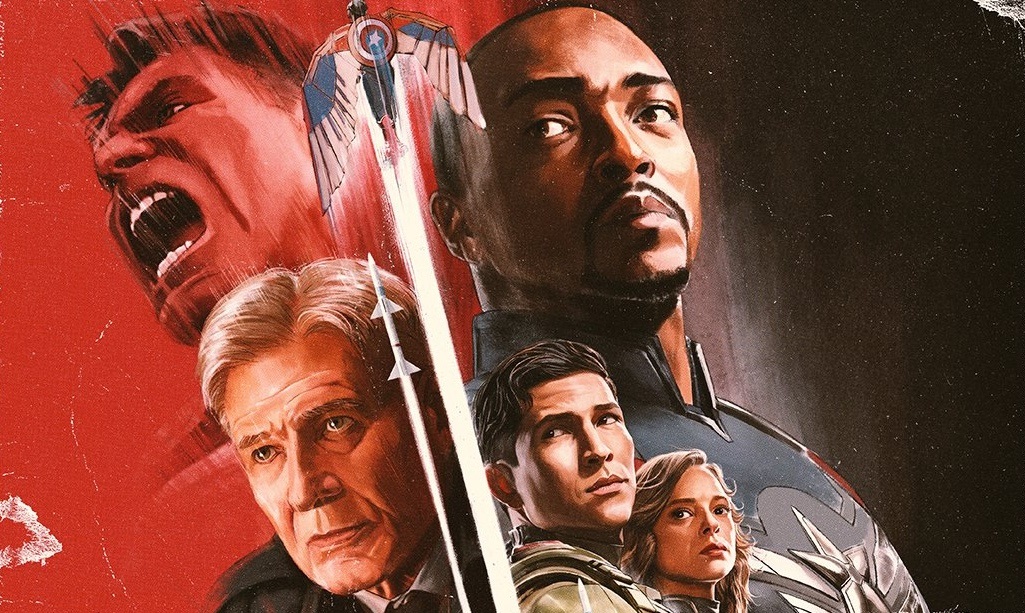
When something catches on fire, you’re supposed to immediately smother/cover it and/pr finish it off with a fire extinguisher. What you’re not supposed to do is keep throwing stuff into the fire while wearing a nighty and continuing to live stream. All this to say is that I wasn’t surprised when the credits rolled for Captain America: Brave New World, and there were five credited writers, including director Julius Onah. New chefs kept respawning in the burning kitchen that was the screenplay for this film. Captain America: Brave New World is simultaneously Sam Wilson’s (Anthony Mackie) first cinematic outing as Captain America, a follow-up to Incredible Hulk and Eternals, and a bit of a prequel to Thunderbolts and anything the Marvel Cinematic Universe wants to do with Wolverine/the Weapon X program. It succeeds at being none of these things (Although, Harrison Ford’s Thaddeus Ross/Red Hulk is a somewhat delightful grump), has muddled visual effects, corny dialogue, and above all else, bad politics.

Captain America: Brave New World begins at the inauguration of Ross as president of the United States, which is a controversial choice thanks to his actions towards the Hulk in his solo film and to superheroes as a whole in Captain America: Civil War. But, like a good centrist, he’s ready to cross the aisle and work with the new Captain America to start a new Avengers team. Unfortunately, this plan immediately backfires when something triggers forgotten/screwed over by the United States government super soldier Isaiah Bradley (Carl Lumbly), and he attacks President Ross at a reception for world leaders centered around the adamantium discovered in “Celestial Island” in the Indian Ocean. The film follows Sam Wilson and Joaquin Torres’ attempt to clear Bradley’s name and figure out who is really behind the assassination attempt.

This plot synopsis makes it seem like Brave New World is a political thriller like the excellent Captain America: Winter Soldier, but it’s unfortunately a pale echo of the previous film. The writing (and let’s face it, marketing) team shows their hands too early, and we go from Wilson and Torres rooting around in sketchy labs in West Virginia to squabbling with fighter planes, aircraft carriers, and Celestial heads. Secondary villain Sidewinder (Giancarlo Esposito) mentions something about the CIA paying him to steal adamantium from the Japanese, but it’s brushed over for explosions, rage-outs, stale quips, and empty speeches that not even Mackie’s (And a sleep walking Sebastian Stan in one scene.) charisma can salvage.

The opening scene where Sam Wilson and Joaquin Torres fight Sidewinder and the Super Society has well-choreographed hand-to-hand action augmented by whiz bang special effects for Wilson’s Wakanda-enhanced Captain America costume, but it’s all downhill from there in the action department. The fights seem just a perfunctory part of the superhero genre than revealing anything about the characters in them although Wilson often complains about not taking the super-soldier serum while he fights foes from the Hulk’s rogues gallery. It’s fun to see Ford freak out as Red Hulk and be consumed by rage until he gets talked down by Sam Wilson’s plot-relevant background as a social worker. (Winter Soldier handled this part of his character much better.)

In keeping with the through-line of Brave New World being a Xerox of a Xerox of Winter Soldier, the film has its own (Former) Black Widow. It’s not Scarlett Johansson’s Natasha Romanov even though the performer playing her is also a Zionist: Israeli actress Shira Haas appearing as Ruth Bat-Seraph. (The character’s comic book codename Sabra and backstory as a Mossad agent don’t appear in this adaptation.) Politics aside, Bat-Seraph is a nothingburger of a character, who represents President Ross’ distrust of superheroes and love of the covert. Let’s just say she’s no Romanov, Maria Hill, or even Sharon Carter. It’s puzzling how such a controversial character survived multiple reshoots and plays no meaningful role in the film even though an American president having an Israeli secret agent as a key figure in his security detail could have led to compelling commentary on the relationship between the United States and Israel. Instead we get to see a stilted performance by an actress from a country that is currently committing genocide, who hasn’t spoken out against it.

Sometimes, Captain America: Brave New World feels like it’s actually about something, and that’s usually in scenes featuring Isaiah Bradley, who was also the best part of the Falcon and Winter Soldier TV show/six hour movie. Although, most of his interactions are responding to ageist quips from Joaquin Torres, Bradley also talks to Sam Wilson about his misgivings of going to the White House and standing with President Ross after how he was treated by the US government. He finds common ground with Wilson’s imprisonment in Captain America: Civil War, but this is immediately brushed aside by the new Captain American saying something about having a seat at the table. Ideological tension is swept aside for “there are fine people on both sides” type of rhetoric, and of course, Isaiah Bradley needing to be at the White House to kick off the plot, being benched for the rest of the movie, and not receiving any kind of recognition or reparations at the end of the film. If Brave New World has any kind of overarching theme, it’s to throw scary, traumatic, soul and society shattering things in a literal prison and get back to the status quo. In this way, it connects to one of the chief criticisms of the MCU, which is the films care more about getting to the next movie/event than telling a compelling story in the current film.

Captain America: Brave New World is truly a low point for the Marvel Cinematic Universe and is neither entertaining, thought-provoking, funny, or interesting to look at. (They did nail Sam Wilson’s Captain America costume.) Most of the film is empty spectacle a la Michael Bay’s Transformers sequels, and the whole endeavor is a waste of Anthony Mackie, Harrison Ford, Giancarlo Esposito, and Tim Blake Nelson’s talents. Maybe, Galactus should eat this universe and its cowardly politics.

Overall Verdict: 3.0

Mini Reviews: Bug Wars #1, Feral #10, and Absolute Batman #5

Absolute Batman #5

Sometimes, the staff at Graphic Policy read more comics than we’re able to get reviewed. When that happens you’ll see a weekly feature compiling reviews of the comics, or graphic novels, we just didn’t get a chance to write a full one for.

These are Graphic Policy’s Mini Reviews and Recommendations.

Logan

Bug Wars #1 (Image)Bug Wars #1 transported me back to 6th grade when my friends and I would catch bugs for our life science class and have illicit preying mantis cage matches. This horror/fantasy comic from Jason Aaron, Mahmud Asrar, and Matthew Wilson introduces readers to a world of constant battle between a “civilized” ant society and a horde of beetle riding barbarians. The double page spreads that Asrar uses might make it seem it’s set in a distant fantasy universe, but it’s just a backyard in Alabama. Bug Wars would already be a fun high concept fantasy series, but throwing in the dysfunctional family dynamic makes it even more resonant as SJ tries to follow in his entomologist father’s footsteps and the lines between science and fantasy are blurred. Bug Wars is a cool concept with epic art that is executed well and leaves plenty of mysteries on the table for future issues. Overall: 8.3 Verdict: Buy

Feral #10 (Image) Tony Fleecs, Trish Forstner, Tone Rodriguez, and Brad Simpson‘s Feral continues to breathe new life into the zombie survival genre by including cute, yet severely traumatized cats. Issue ten, which wraps up the series’ second arc, is no exception as the gang must band together to move the rabies-stricken body of a woman called the Lady to get out of her basement and find some kind of freedom. In 23 pages, Fleecs, Forstner, and Rodriguez show the effects of starvation on the cats, and formerly pampered Lord even turns to cannibalism. (If you could call a cat eating a human that.) Using cartoonish style art for the animals and photorealistic art for the humans makes everything that much more creepier, and Simpson’s dark reds turn an old lady’s dwelling into an abattoir. This is a frenetically paced, action packed comic and sets up new challenges for the main cast of characters. Overall: 8.5 Verdict: Buy

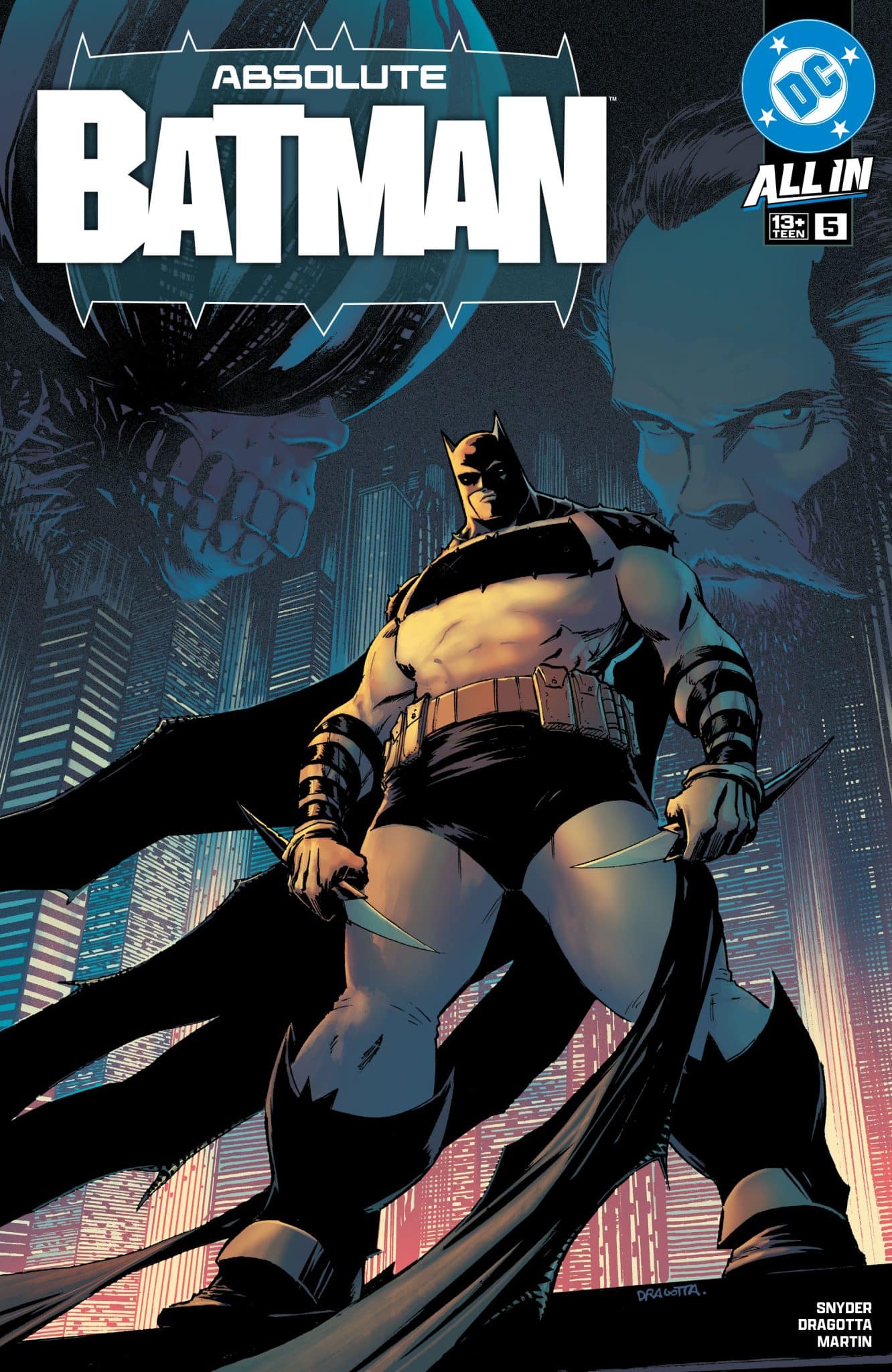
Absolute Batman #5 (DC) – Batman gets his ass kicked big time in the penultimate issue of Absolute Batman‘s first arc from Scott Snyder, Nick Dragotta, and Frank Martin. This is definitely a have your cake and eat it too kind of comic books featuring great commentary on our billionaire-dominated, last gasps of capitalism of society as well as brutal, yet intimate (I love the tiny panels Dragotta uses!) fight sequences with a Gothic flair. There are also timely flashbacks that add a touch of emotion to Batman’s actions in this issue. Never has a world where the system failed looked so iconic. Overall: 8.9 Verdict: Buy

Mini Reviews: Savage Tales Winter Special, Bronze Faces #1, and Star Wars: Legacy of Darth Vader

Bronze Faces #1

Sometimes, the staff at Graphic Policy read more comics than we’re able to get reviewed. When that happens you’ll see a weekly feature compiling reviews of the comics, or graphic novels, we just didn’t get a chance to write a full one for.

These are Graphic Policy’s Mini Reviews and Recommendations.

Logan

Savage Tales Winter Special 2025 (Dynamite) – Dynamite revives the 1970s Marvel pulp anthology to middling results. The first story from David Avallone and Hamish Cook is about Gullivar Jones (A less popular version of John Carter) returning to Mars, fighting monsters, and yearning for his lost lover. It’s billed as a chapter 3, but comes off as a chapter 1 with a weak cliffhanger ending. Next up is action-packed John Carter and Dejah Thoris story from Avallone and Eman Casallos about a mutiny on one of their ships. It’s a pretty standard action comic with art that’s sometimes too stiff and overly posed, but has dynamic layouts especially when Carter is dodging gunfire and tossing out one-liners. The third story in the anthology is a Vampirella one from Avallone and Mariano Benitez Chapo. It’s cheeky fun as Vampi is working for a paranormal TV show named Draculette, who only pretends to believe in vampires for rating. Of course, she runs into a nest of Nosferatu’s spawn, and hijinks ensue. This story pokes fun at reality TV, and Vampirella gets to kick ass, crack jokes, and look good while doing it. Savage Tales Winter Special 2025 saves the best for last with a reprint of a Kurt Busiek and Benjamin Dewey (Autumnlands reunion!) Red Sonja story from her Black, White, and Red anthology. It’s a thrilling, well-rendered yarn where the warrior woman dodges traps, fights monsters, and shows the pitfalls of greed. The red spot color also plays a crucial role in the plot beyond its heroine’s flowing tresses. It definitely made me want to seek out the Red Sonja: Black, White, and Red series and Vampirella continues to be a queen, but the Martian pulp heroes haven’t aged very well in 2025. Overall: 7.3 Verdict: Read

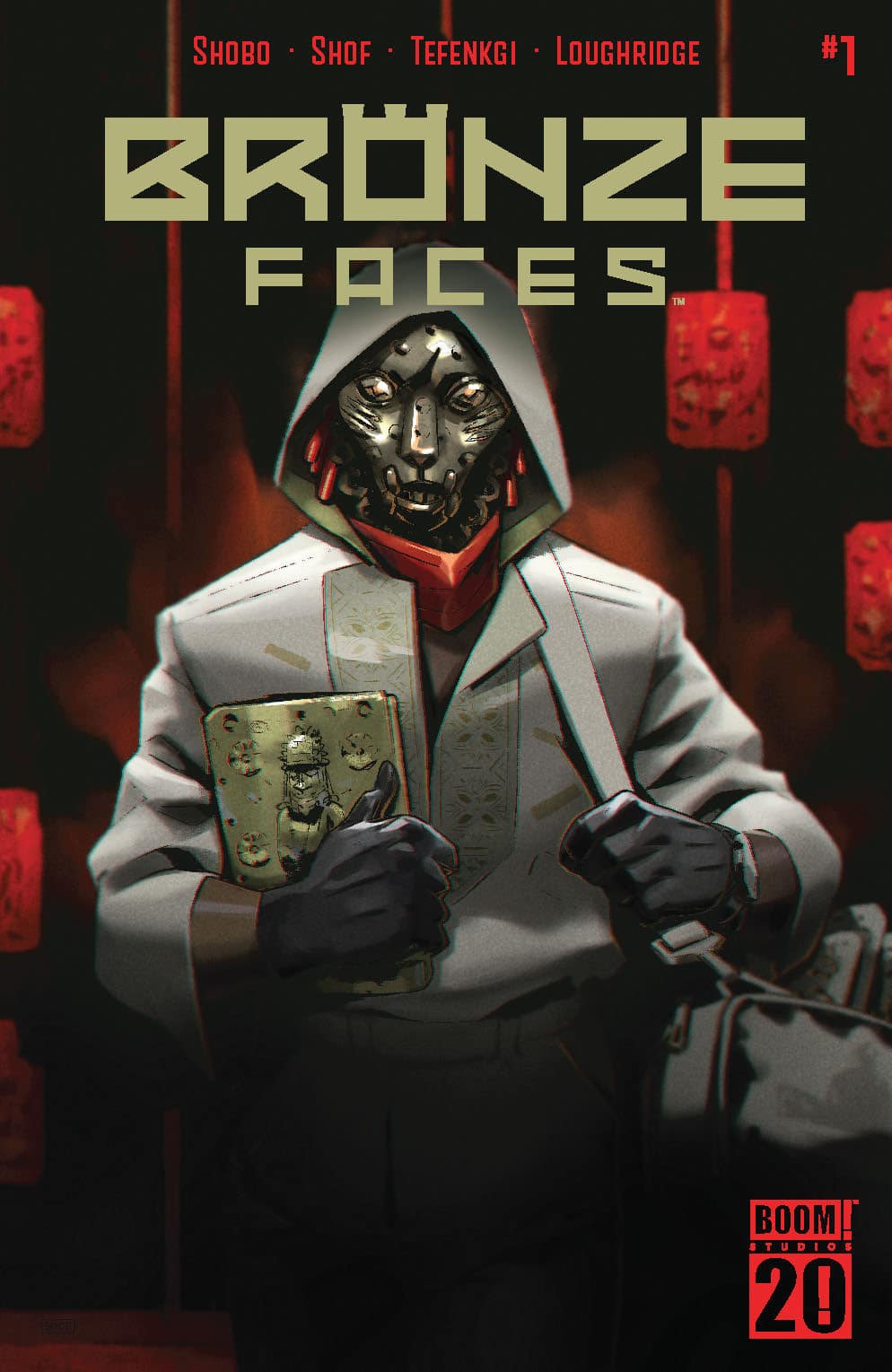
Bronze Faces #1 (BOOM!) – Brother writers Shobo & Shof and artists Alexandre Tefenkgi and Lee Loughridge cook up a daring tale of three childhood friends from Nigerian daring to steal the work of protagonist’s Timi’s father as well as other works from the Kingdom of Benin in the British Museum. Flat colors, inset panels, and rapid fire dialogue give Bronze Faces #1 a solid flow with the entire comic fueled by righteous anger against colonialism and exploitation of artists from the Global South. The juxtaposition of flashbacks in Benin City and present day sequences in London and Abidjan flesh out the relationships between the trio of main characters and set the stage for the heist. However, there’s plenty of action too, and it’s cool to see a major American comics publisher put out exciting work by creators from Nigeria. Overall: 8.7 Verdict: Buy

Star Wars: Legacy of Darth Vader #1 (Marvel) – Star Wars: Legacy of Darth Vader #1 is a serviceable Kylo Ren solo comic from Charles Soule and Luke Ross that is equal parts sequel trilogy greatest hits, nostalgia fest, and soul searing look at the relationship between Vader and his grandson. At times, Ross’ art is stiff and photorealistic, and then sometimes, he litters the page with inset panels that make the flow of a fight scene and its dialogue difficult to follow. He and colorist Nolan Woodard are better at the slow, establishing moments like Kylo Ren’s ship flying into Mustafar. I can’t 100% recommend this book, but Kylo Ren hitting his grandpa’s old haunts is a fun conceit for a book and hope the quality of the story improves. Overall: 6.1 Verdict: Pass

EC’s Cruel Kingdom #2 reveals truths about the dark side of human nature

Cruel Kingdom #2

The second installment of Oni Press/EC Comics’ anthology Cruel Kingdom uses various dark fantasy/magical settings to tell stories about human failings and foibles. None of its stories have the utterly dynamic, genre-mashup world-building in miniature tone as Al Ewing and Kano’s story in the first issue, but the three stories in Cruel Kingdom #2 are visually interesting with several memorably horrifying panels. Best of all, the stories increase in quality as the anthology progresses.

Cruel Kingdom #2 leads off with a suitably grotesque fantasy horror tale called “Immunity” from Chris Condon, PJ Holden, and Michelle Madsen. The plot is a simple, be careful what you wish for monkey’s paw type of situation as a warrior named Parzival acquires a sword that gives him immunity in battle, but there’s a catch. However, the impetuous knight beheads the man who is about to tell him the side effects of the blade and goes onto fight and win many wars. Holden and Madsen’s visuals are the standout part of this story as Parzival’s body deteriorates from page to page fighting endless wars and taking damage that would even make Wolverine shudder until he looks like a figure from a classic EC comic. There’s also a playful sense of humor interlaced with the blood, guts, and addiction like a deadpan overhead shot of Parzival in bed with his wife … and his sword. “Immunity” could be read as a parable for warmongering, addiction, or even not reading the side effects/small print. (I’ll definitely be reading every word of the Apple Terms and Condition when I get a new iPhone.) It’s a moralistic short story, but the heavy metal artwork makes it go down smooth.

In “Hammer of Witches”, Steve Niles, Andrea Mutti, and Michael Atiyeh put a stylish spin on the story of burning witches and how discrimination can happen from both in- and out-groups. Mutti’s background doing psychological fantasy comics like Parasomnia and historical fiction books like Rebels comes in handy in the story as he nails the period specific clothing and set dressing a la the films of Robert Eggers. Atiyeh’s colors almost tremble as the men of the village get closer and start to burn the protagonist, but he also uses big bursts of flat color for important moments in the story. Niles’ plot is straightforward, but is full of truths about how terrible human nature can be. The main character just wants to be left alone to do her own thing, but she threatens the established order of multiple groups so she must be silenced. Although it’s set in the distant past, “Hammer of Witches” has a timeless relatability to anyone who hasn’t quite fit in and the final page is worthy of a fist pump.

Cruel Kingdom #2 concludes with a proper intrigue-filled banger of a story from Cameron Chittock, David Lapham, and Nick Filardi called “Seat of Power”. There are a lot of twists, turns, and commentary on the nature of power in this short story about two sons vying to succeed their father on the throne. I’m very impressed by the economy of the storytelling from Chittock and Lapham who use the foreboding image of a closed door and a conversation between two brothers playing strategy game to establish their characters and the atmosphere of the story. How the sausage gets made is always a compelling narrative path, and “Seat of Power” delivers a strong payoff and even a bit of a political statement about how heads of states are at the mercy of the folks that put them in power or hold the purse strings. Featuring strong images, characters with distinct personalities, and a relevant message, “Seat of Power” is easily the best of the three stories in Cruel Kingdom and the comic is worth picking up for it alone as well as the David Lapham interior art.

Cruel Kingdom #2 uses the settings of war-torn kingdoms, superstitious villages, and a medieval kingdom ran like a macabre Civilization campaign to reveal truths about the dark side of human nature. As both a fantasy and horror fan, I’m looking forward to future installments and their miniature macabre worlds.

Story: Chris Condon, Steve Niles, Cameron Chittock
Art: PJ Holden, Andrea Mutti, David Lapham
Colors: Michelle Madsen, Michael Atiyeh, Nick Filardi
Letters: Richard Starkings, Tyler Smith
Story: 8.1 Art: 8.7 Overall: 8.4 Recommendation: Buy

Oni Press provided Graphic Policy with a FREE copy for review


Purchase: Zeus ComicsKindle

Mini Reviews: DC’s Lex and City, Ripperland #1, and Teenage Mutant Ninja Turtles #6

Teenage Mutant Ninja Turtles #6

Sometimes, the staff at Graphic Policy read more comics than we’re able to get reviewed. When that happens you’ll see a weekly feature compiling reviews of the comics, or graphic novels, we just didn’t get a chance to write a full one for.

These are Graphic Policy’s Mini Reviews and Recommendations.

Logan

DC’s Lex and City #1 (DC Comics) – The fittingly named DC’s Lex and City is a mega-size one-shot about the many varieties of love and friendship in DC’s fictitious cities from a murderer’s row of creators. First up is Sina Grace‘s “Lex and the City,” which features the hilarious image of Lex Luthor typing away at his laptop a la Carrie Bradshaw while still having a robust arc for gossip journalist turned investigative reporter, Trish Q. In the next story, getting a Valentine’s Day gift is difficult especially when your girlfriend is a green-skinned eco-terrorist, and you’re a clown who hears voices in your head. Maggie Tokuda-Hall and Snotgirl‘s Leslie Hung turn in a story that is simultaneously sweet and sexy with Hung’s storybook-style visuals its main highlight. Speaking of sweet, Jon Rivera and Michael Avon Oeming weave a tale of economic insecurity and Mr. Freeze trying to steal a rose from a Gotham museum that was the last thing she saw before getting sick. Oeming’s style fits the art deco vibes of Gotham, and I love the parallels he and Rivera draw between the main couple in the story and Victor and Nora. Your interest in Lex and the City’s fourth story might depend on how much nostalgia you have for the 1970s lineup of the Teen Titans, but Serg Acuna draws gorgeous men (Especially Aqualad, or whatever codename Garth is going by these days.) and Charles Skaggs writes some fun banter between old friends. Continuing with the Robin-ish theme, Brendan Hay and Stephen Byrne‘s hilarious story is about Tim Drake preparing Damian Wayne for his first date and also acts as a love letter to Gotham City. Hay nails Damian’s dry, blunt sense of humor, and his plot showcases the unique bond between the Bat-family with guest stars galore. Sabrina Futch and ML Sanapo flip things over to the villainous side of thing with Riddler trying to figure out why he can’t get a date. There is tons of silly humor (Especially when the Joker is involved.) and chaotic sequences, but this story also ends up being a love letter to Gotham City. Sometimes your passion isn’t another person, but the city you live in and also riddles. In Lex and City‘s penultimate story, Raven is trying really hard to understand Valentine’s Day for Beast Boy (Yay Notes App checklist!), but of course, hijinks ensue courtesy of Trigon. I loved how colorful Marissa Louise‘s palette was in this one with love triumphing against demon dads and exes. Unfortunately, Lex and City wraps up with its weakest story: a mired in the past tale of Hawkman trying to recapture his memories with the Golden Age Hawkgirl, Shiera Hall. Howard Porter‘s aggressive art works for the character, but the story feels like more of a Wikipedia entry than a love story. All in all, 7 out of 8 stories isn’t a bad hit rate, and this comic is worth picking up for fans of slice of life superhero stories as well as Gotham City aficionados. Overall: 8.0 Verdict: Buy

Ripperland #1 (Dark Horse) – A straight-laced American FBI agent teams up with a, let’s say, very retro English detective in Ripperland #1 from the American and English writer duo of Steve Orlando and John Harris Dunning with art by Alessandro Oliveri and Francesca Vivaldi. Orlando and Dunning drop us into this weird, retrofuturistic world leading up to the murder and then explain the backstory of a 22nd century England that is an American protectorate that acts as a kind of a retro Victorian theme park for American tourists. It’s silly, satirical fun with a bit of a gory edge. Oliveri channels D’Israeli’s work in his art, and this is something that wouldn’t be out of place in a prog of 2000 AD. Ripperland is an sex and violence-filled delight for Anglophiles. Overall: 7.9 Verdict: Buy

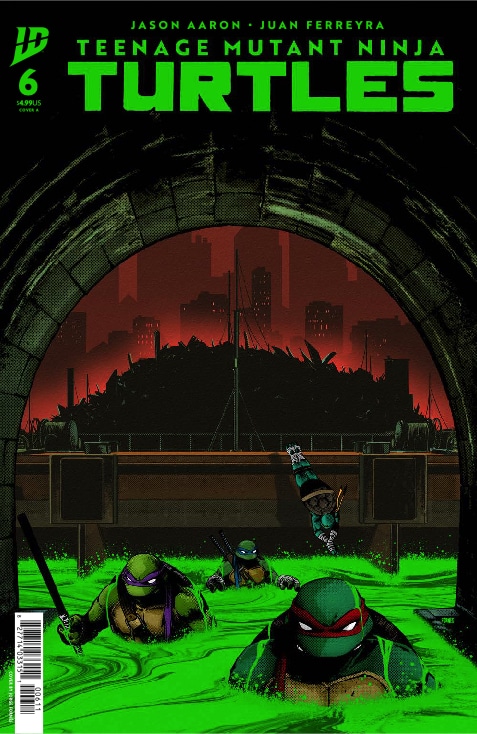
Teenage Mutant Ninja Turtles #6 (IDW) – Mikey, Raph, Leo, and Donnie are all back together in NYC, but it’s not a happy family reunion. Jason Aaron and new series artist Juan Ferrerya use ninja turtle ass kicking and martial arts metaphors to weave a tale of a dysfunctional family in a dysfunctional world. As the series has progressed, TMNT (2024)’s nigh-dystopian take on New York City has started to mirror the current United States with public servants (Fire fighters in this comic!) serving the fascist state instead of the common good and persecuting marginalized folks. However, despite this, the Teenage Mutant Ninja Turtles don’t band together and are overcome by their differences and recent experiences shown in the first four issues. Ferreyra brings drama and sense of agility to the fight sequences while also including plenty of close-ups to show how this group has torn apart. TMNT #6 is a culmination to the classic franchise’s return to its dark, gritty roots with a contemporary twist and a visuals-first focus. Overall: 8.9 Verdict: Buy

Film Review: Companion is a genre-bending film that is chock full of truths

Companion

*Warning: this review contains spoilers. Seriously, this film changes its status quo every 5-10 minutes so don’t read on unless you’ve seen the film or want it spoiled for you*

Alt right chuds like Andrew Tate would see the world of Companion as some kind of utopian paradise where men can treat women (and men) like literal on-demand sex and intimacy bots mediated by Smartphone apps and five minutes into the future Bluetooth pairing. (Of course, this film’s protagonist drives a copyright friendly Tesla.) However, to folks who actually have a moral compass, this world is terrifying, if fascinating in a window shattering, gore spraying, car crash kind of way, which makes it a compelling backdrop for a film that is a mélange of horror and science fiction in anti-romantic (pitch black) comedy wrapping from writer/director Drew Hancock.

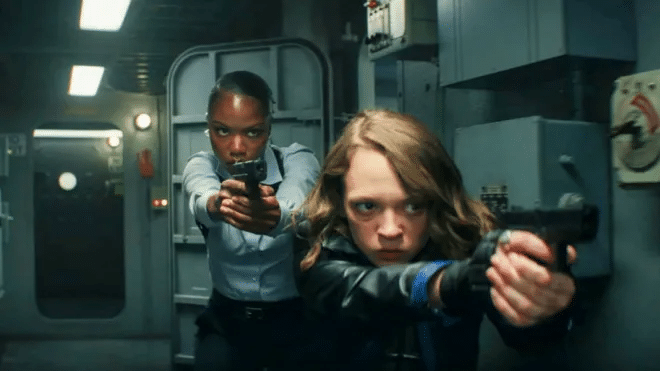
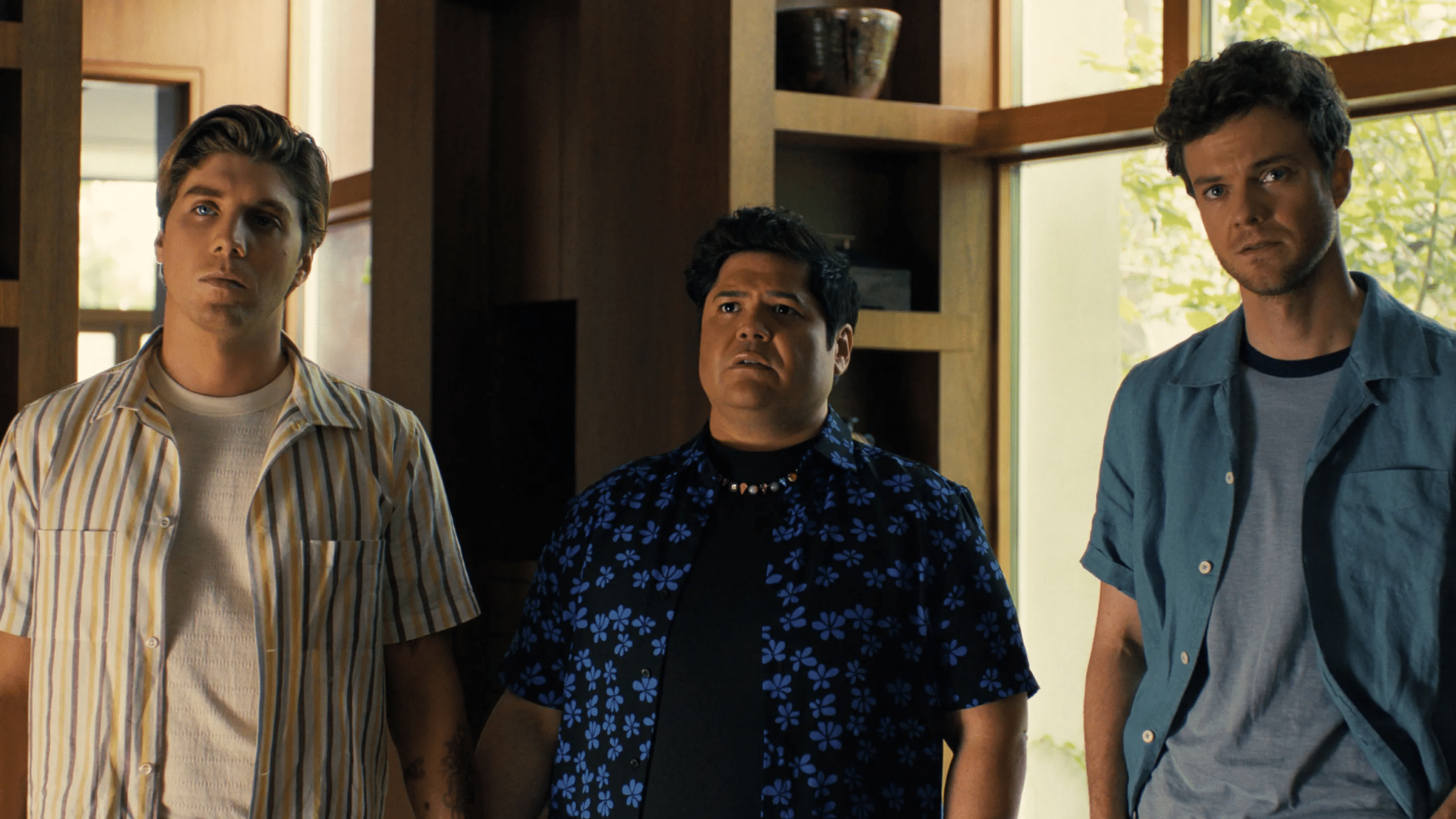
The basic premise of Companion is that an average white cishet “nice guy” male named Josh (Jack Quaid) goes on a trip to a remote cabin with his girlfriend Iris (An incredible Sophie Thatcher), his best friend Kat (Megan Suri), his other best friend Eli (A silly and wholesome Harvey Guillen), and his boyfriend Patrick (Lukas Gage). Their host is Kat’s kind of, sort of Russian sugar daddy Sergey (Rupert Friend), who is incredibly wealthy and also tries to sexually assault Iris leading to his murder and the increasingly unhinged events of the film as it’s revealed that Iris is actually a robot. What follows is a saga of greed, hubris, entitlement, and Thatcher showcasing her acting range as she nails all the different “settings” of the Companion robot from humorous comic relief (She talks to a cop in German because she’s programmed not to lie.) to bone dry, emasculating sarcasm.

On the surface and maybe from some of the marketing, one could view Companion as a dark parable about how men treat women like property, and of course, they’ll have sex with a robot immediately after meeting them. And it definitely is like this as Hancock draws parallels between Josh and Sergey’s behavior even hoisting characters in-universe and audiences watching on their own petard when it’s revealed that he got wealthy selling sod and wasn’t a part of the Russian mob. However, he also introduces some nuance in the human/Companion relationship when it’s revealed that Patrick is a robot too, but they genuinely love each other.

Companion

This is established through an adorably specific meet cute of them meeting at a Halloween party where an over-the-top Dracula costume sporting Patrick accidentally steps on Eli’s dinosaur costume tail, they lock eyes, and fall in love. Even Guillen and Gage’s body language while telling this story sell the adorableness of the moment before we get to see it in flashback. On the other hand, Iris and Josh’s “meet cute” makes Nicholas Sparks look like a literary genius. Of course, he literally just picked it from a drop down menu, and there’s no actual connection or similarities between Josh and Iris beyond them joking about the AI on Josh’s self-driving car, or that Iris can tell the weather in a very precise manner. Iris is just a means to an end for Josh whether that’s killing a wealthy Russian man for money, or an outlet for his sexual desires. There’s one mercifully brief sex scene between Josh and Iris in Companion, and he has a very loud orgasm and immediately uses a sleep command on Iris without even caring about her needs or pleasure. He’s definitely not Joaquin Phoenix’s character in Her and has no inner life. Jack Quaid weaponizes the affable everyman vibe that made him a great POV character in The Boys to be the worst (and most pathetic villain) of all.

On the flipside of this, Sophie Thatcher has the opportunity to sink her teeth into a multidimensional role as Iris and truly delivers. The intrepid robot who wants to become a real woman (And always was one!) joins the recent pantheon of powerful female lead horror acting performances in the past year, including Demi Moore in The Substance, Lily Rose Depp in Nosferatu, and a highly underrated Kathryn Newton in Lisa Frankenstein and Abigail. Early in the film, even before the initial robot reveal, Thatcher’s jerky movements and the stilted way she delivers the smallest of small talk is more android than or human. (Or maybe a biting satire of how poorly written “love interest” female characters are in blockbuster films.) Once she turns her intelligence settings to 100%, Hancock and cinematographer Eli Born dig into flights of fancy and overthinking as Iris goes from video game NPC to a Final Girl written by Aaron Sorkin. And when Josh gets the upper hand one last time and changes her intelligence settings to 0%, Sophie Thatcher’s face and eyes work overtime to show how utterly helpless and in agony she is as he tries to “kill” her and run off with the money. And, well, let’s say when Iris gets actual free will, Thatcher exudes badass in an effortless, let’s say Thelma and Louise way.

My one real qualm with Companion is that stylistically it definitely comes across as Drew Hancock’s first feature film. He’s a competent craftsman, but all the memorable moments come through dialogue and character interactions and not visuals. However, co-editor Brett Bachman channels his work on recent Nicolas Cage films like Mandy, Pig, and Colour of Space with his ability to cut to a moment that feels you with utter disgust and/or total empathy. (Let’s just say I feel really bad with how Josh treats Patrick in the second half of the film.) But Hancock definitely has the writer side of writer/director down with an eye for satire, dark humor, and surprisingly beautiful queer moments while working on TV shows like Suburgatory and Faking It. I love that he gives Iris a powerful character arc and doesn’t reduce her to a victim while still indulging in grindhouse movie antics with an iOS sheen.

Companion is a genre-bending film that is chock full of truths about everything from smartphone addiction and clinginess to the orgasm gap, mansplaining, and maybe even true love. It’s also a star-making turn for Sophie Thatcher and a clever first feature from Drew Hancock.

Overall Verdict: 8.4

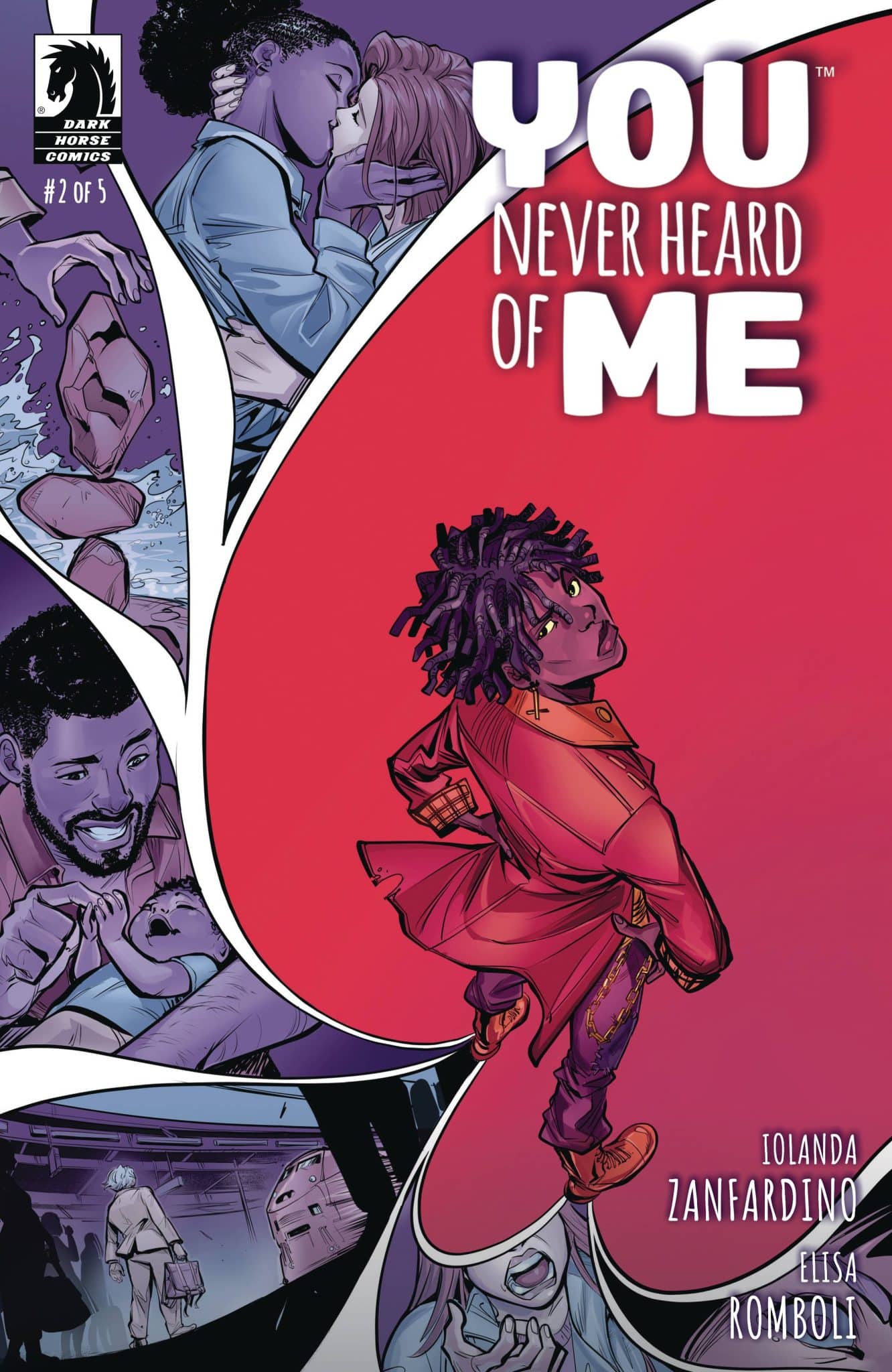
You Never Heard of Me #2 explores what Will does with his powers of foresight

You Never Heard of Me #2

With the origin story out of the way, You Never Heard of Me #2 is free to explore what Will does with his powers of foresight. Iolanda Zanfardino and Elisa Romboli keep the stakes human and relatable as he decides to help out his fellow student Allie, who wants to stand up to a bully on behalf of another student named Rory, who is a makeup vlogger and picked on for his gender nonconformity. However, the comic isn’t some kind of anti-bullying PSA and uses Will’s heightened abilities to visual dig into the psychological nature of why people act out and pick on each other or choose to help and strike back. It also looks at how prophetic abilities can be a double edged sword and the butterfly effect of it all although thankfully Zanfardino and Romboli avoid timey wimeyness for the time being.

You Never Heard of Me #2 doesn’t have fight scenes like the majority of the books featuring superpowers, but Elisa Romboli does imbue her line art as well as her and Iolanda Zanfardino’s color palette with a physicality that jumps off the page. Will goes from being another face in the crowd with panels framing him at a distance to Romboli moving the camera closer on his eyes and braids as he connects with Allie on probably the deepest level she’s ever experience seeing both her good and bad days. Yellows flood the page, and I love how Elisa Romboli structures the panels of the vision to flow from Will’s eye like sun beams. It’s a happy, intimate moment, but when you turn the page, Romboli and Zanfardino’s palette is blue, and Will is in shock and horror as he experiences the potential worst day in Allie’s life. This kind of page-turn, visual whiplash creates an immersive reading experience and puts you in Will’s headspace as he struggles to act on these visions or continue to be Uatu the Watcher high school edition.

I love how You Never Heard of Me #2 flips Will’s character from active to passive depending on the situation. He has a whole mini arc in the issue where he goes from accidentally bumping into Allie to playing a key role in her anti-bullying efforts even as he’s just trying to chill at the library during his free period. This is yet another relatable element of this book because my level of being outgoing depends on how comfortable I am with the folks around me. Will and Allie go from strangers to weird tenseness as he tries to talk around his foresight abilities. Finally, they become legitimate friends hanging out in the hall with Allie trying to coax Will to use his powers in a more proactive way. Iolanda Zanfardino and Elisa Romboli capture the frenetic stages of friendship from having a weird first impression to being inseparable and then going deeper and experiencing life’s challenges together.

Zanfardino and Romboli show Will’s talents in action from start to finish in You Never Heard of Me #2 with splashy, colorful visuals while still centering the story around him and his friends’ everyday lives. To the outside world, Will’s foresight looks like radical empathy, and a lot of the comic is him either verbally or visually putting himself in other people’s shoes to eventually solve their problems. It’s a triumph of heart, not fists, but You Never Heard of Me continues to introduce conflicts that won’t be solved with a single touch or in a single issue.

Story/Colors/Letters: Iolanda Zanfardino Art/Colors: Elisa Romboli
Story: 8.4 Art: 8.6 Overall: 8.5 Recommendation: Buy

Dark Horse Comics provided Graphic Policy with a FREE copy for review


Purchase: TFAW Zeus ComicsKindle

« Older Entries Recent Entries »