
Comici CEO Daisaku Manda talks the Manga Platform’s Expansion, Data, What Comics Can Learn from Netflix, and Bringing the Magazine Format to Digital Manga
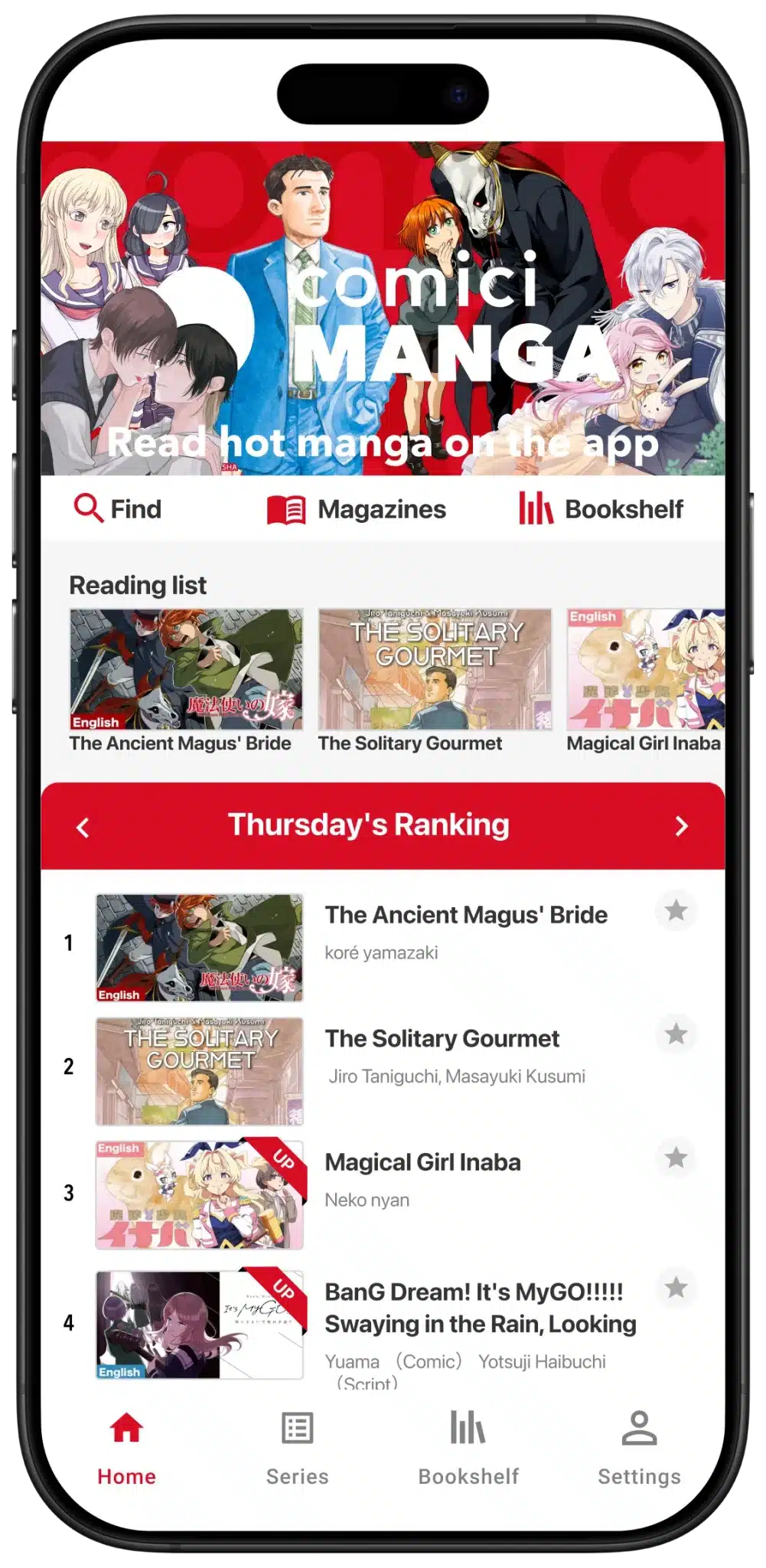
In March, comici announced it was launching a new platform, comici MANGA. Described as a ‘”next-generation” digital reading platform,’ the focus on its use of data to expand its audience and deliver content to readers that they want caught our attention and interest.
We got a chance to ask comici CEO Daisaku Manda some questions we had about the new digital comics platform, the use of data in the comic industry, what surprises have there been since its launch, an more!
Graphic Policy: How long has comici MANGA been in the works?
CEO Daisaku Manda: comici is now in its ninth year, and comici MANGA officially launched in January 2026. Over the past several years, we have been building the foundation for manga distribution through our SaaS (software as a service) platform for publishers. comici MANGA is a natural extension of that work—bringing what we’ve developed in Japan to a global audience.
So while the service itself is new, the underlying infrastructure and philosophy have been refined over many years.
GP: What drove you to launch this digital platform?
DM: We felt that a proper, official distribution channel for manga was needed globally. Manga is a unique form of entertainment. Unlike anime, which is a passive viewing experience, manga is something readers actively engage with. It also serves as the foundation for many anime adaptations.
What makes manga especially powerful is its diversity—an ecosystem that continuously generates a wide range of stories, styles, and ideas.
We wanted to help bring this form of entertainment to a global audience in its proper form, and build an environment where it can continue to grow.
GP: In your announcement you talk a lot about a data driven approach. How do you see this being applied, or not applied to the comic industry? Is there a difference in this approach when it comes to manga publishers, digital platforms, and “western” comic publishers?
DM: The comic industry has traditionally relied on editorial intuition, which is incredibly valuable. We are not trying to replace that—and we do not use data in the creative process itself. Manga creation should remain driven by creators and editors.
Our use of data is focused on distribution.
As manga expands globally, it needs to reach audiences across different cultures, languages, and preferences. In that context, data becomes essential to understand where and how content should be delivered.
We use data to:
- Understand reader behavior across regions
- Identify where specific genres or works resonate
- Deliver the right content to the right audience
So our approach is not about influencing creation, but about ensuring that diverse manga can reach the most relevant readers around the world.
GP: Your discussion about Netflix is very interesting and what you highlight can be seen in their choice of releases. Netflix also seems to have a content issue and struggling for original content. How are you approaching that aspect to comici MANGA?
DM: Netflix distributes video content such as anime and films, while we focus on manga. In Japan, only around 200–300 anime titles are produced each year. In contrast, manga produces around 1,500 new comic volumes every month. This massive diversity is one of manga’s greatest strengths.
Because of this difference, the challenge is not a lack of content—but how to surface the right content to the right audience.
Like Netflix, we believe data can play an important role in distribution and discovery. However, we are not focused on content production.
Our role is to:
- Deliver the right manga to the right audience
- Help diverse works travel beyond Japan
- Unlock the value of existing content through better distribution
There is already an abundance of great manga. The real opportunity lies in making that diversity accessible globally.
GP: Unlike Netflix, and even Webtoon, it doesn’t sound like you want to be involved in the content
creation process, as opposed to focusing on matching content to the reader, correct?
DM: “Not involved in content creation” That’s correct. We believe publishers and creators are best positioned to create content.
Our role is to build the infrastructure:
- Distribution
- Data analysis
- Monetization systems
We want to be the “common OS” for the manga industry.
GP: It seems like you’re being driven by consumer behavior as opposed to selling to the consumer. In other words, past consumption will determine future action, as opposed to trying to change the behavior.
DM: We don’t see it as purely reactive. Japan has been relatively open to diverse expressions, which allowed manga to become highly varied. However, globally, audiences are shaped by different cultures, religions, and identities. Because of this, it’s important to deliver the right content in the right context.
We use data to understand where and how content should be delivered. This approach doesn’t limit taste—it helps new tastes emerge by connecting people with content they wouldn’t have discovered otherwise.
GP: The “magazine format” isn’t something we see in “western” comics, can you describe that more for those that don’t know?
DM: The magazine format is a core part of manga culture. Each magazine is shaped by the editors behind it, reflecting their vision and passion. Manga is released as ongoing chapters, so readers can follow the latest episodes regularly.
This also makes it easier to receive immediate feedback from readers. As a result, it creates strong engagement, continuous feedback loops, and a space for discovering new works.
We believe this format works very well in a digital environment.
GP: You mention excitement spreading to social media. Word of mouth and consumer to consumer recommendations is key to Netflix’s marketing. How do you see that fitting into comici MANGA and is there anything built in specifically in the app to help foster that?
DM: Word of mouth is critical.
In manga, social media plays a huge role in spreading excitement around new chapters and
scenes.
We support this through:
- Shareable content structures
- Timely release cycles
- Data-informed promotion
Over time, we aim to further enhance social-driven discovery.
GP: You mentioned some of the publishers you’re working with in the announcement. Are you looking to expand? Is it just manga, or manhwa, western publishers too?
DM: Yes, we are actively looking to expand our partnerships. Our current focus is on Japanese manga, but we are open to working with global partners, including manhwa and potentially Western publishers.
However, our priority is to build a strong foundation for manga distribution first, and then expand thoughtfully.
GP: It feels like the comic industry as a whole has been resistant to more modern data usage. Do you see that too? Why do you think that is?
DM: Yes, we do see resistance to data usage in the comic industry.
Manga has been built on strong editorial intuition and creator-driven creativity, which has worked very well. Personally, I don’t think data should be used in the creative process. It can limit creativity and reduce diversity.
However, data can play an important role in distribution.
Even if something is niche in one market, it can resonate strongly in another. When those works travel, they can shape new cultural trends. Things like samurai, ninja, and sushi were once niche, but spread globally through entertainment.
We believe data can help similar cultural expansion happen by delivering the right content to the right audiences.
GP: When it comes to data, there’s obviously a lot of concerns with consumers, and laws can vary by country and region. Is that impacting how you’re approaching things at all?
DM: Yes, this is a very important consideration.
Before launching the service, we conducted extensive research and discussions with experts who have experience in cross-border e-commerce.
On the legal side, we worked with lawyers not only on privacy protection, but also on subscription regulations and publishing-related laws in different regions.
We have made a significant upfront investment in this area to ensure we build the service on a compliant foundation.
In terms of data, we focus on aggregated and anonymized insights rather than personal identification. This allows us to gain useful insights while respecting user privacy and trust.
GP: AI is obviously on everyone’s mind. Will it be used at all with the app? I can see it being used in data reporting.
DM: Yes, we see AI as a tool, especially in data analysis and reporting.
For example, it can help identify trends, summarize performance, and support decision-making.
However, we are cautious about using AI in the creative process. Creation should remain human-driven.
GP: What data will you be sharing with publishers? What feedback have you gotten about that?
DM: We provide publishers with data such as readership trends, engagement, and performance by region.
The feedback has been positive, especially around understanding global audiences, which has traditionally been difficult to measure.
GP: The digital comic market seems to be rather stagnant based on end of year reports. Do you
think it is? Why or why not?
DM: In countries like Japan and Korea, where digital adoption is already high, the market appears to be stabilizing. However, we see strong growth potential in regions like the US, Europe, and Southeast Asia.
Global manga piracy is estimated to be worth around 8.5 trillion yen. This indicates strong underlying demand that is not being properly captured.
One key challenge is the lack of sufficient legal content supply in these markets. If you imagine a world without Netflix, it’s hard to picture today’s anime market.
We believe manga is still in a similar pre-platform stage globally. The opportunity lies in increasing content availability and building the infrastructure to deliver it
properly.
GP: You’re launching in twelve markets, with Japan not listed. Why those twelve?
DM: We selected markets where there is already strong interest in manga and digital content.
We also considered factors such as language accessibility, market size, and early traction from our tests.
Japan is not included because we already distribute through other services domestically.
In addition, services for Japan and overseas need to be designed differently due to legal requirements, including data protection and regulatory differences.
That is why we are building a dedicated service specifically for global markets.
GP: How do you see the current economic climate impacting what you’re doing? Consumers might be more cost conscious, and tech costs are rising, while investment money has shifted towards AI.
DM: We believe the cost structures of physical and digital are moving in opposite directions.
Printing and distribution costs for physical books are likely to continue rising.
On the other hand, digital distribution costs are expected to decrease over time.
Because of this, the importance of digital content will continue to grow. At the same time, physical books may shift more toward collectibles and fan-driven products.
In this environment, efficient digital distribution becomes increasingly important.
GP: What do you see as challenges for the manga/comic market?
DM: One major challenge is expanding manga as a global form of entertainment, like anime. Today, there is strong competition from other content such as social media, games, and video. For manga to grow globally, it needs to reach and resonate with audiences in different regions. This makes cultural and market adaptation especially important.
In addition, discovery remains a challenge, given the large volume of content available.
GP: Some platforms are embracing LCP (Lightweight Content Protection). Have you thought about that at all?
DM: We are aware of LCP and similar DRM approaches.
We believe content protection is important, but it needs to be balanced with user experience. We are exploring approaches that protect content while keeping access simple for users.
GP: You’ve talking about grouping users into “preferences,” but are you looking at traditional data too like age, income, that type of demographic data?
DM: We focus primarily on behavioral data and user preferences. Traditional demographic data like age or income can be useful, but they are not always the best indicators of taste.
We believe what users read and how they engage is more important.
GP: Is there any consumer behavior that has surprised you so far?
DM: One surprising insight is how well niche genres travel globally. Genres like BL or certain subcultures can perform strongly outside Japan. This reinforces our belief that diversity in content is a strength when paired with the right
distribution.
Discover more from Graphic Policy
Subscribe to get the latest posts sent to your email.
