
Demián Rugna’s WHEN EVIL LURKS is a masterful exercise in cruelty
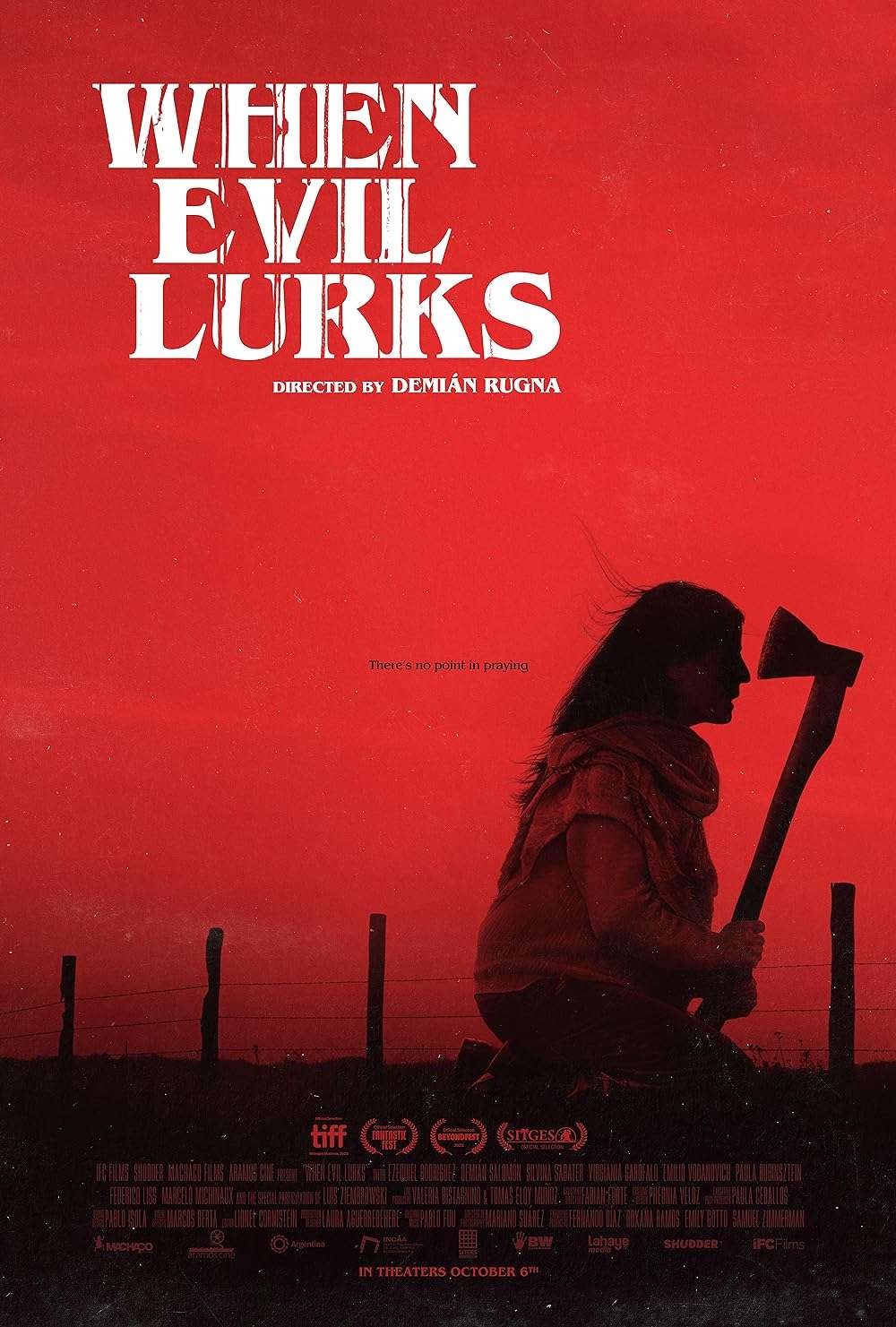
Horror loves grand metaphors about society, be it on the effect capitalism has on people (Dawn of the Dead) or the terrors racism can manifest in different scenarios (Tales from the Hood). Demián Rugna’s When Evil Lurks certainly has its metaphor in place – namely human behavior in times of crisis – but more than having an interest in calling out society, what it really wants is to express its highly justified anger at it. And this movie is angry.
When Evil Lurks (or Cuando Acecha la Maldad, in the original Spanish) imagines a world where demonic possession spreads like a virus. Essentially, humanity is in the throes of a possession pandemic, a very cruel one at that. Cities are hotspots, making smaller rural areas the ideal places for safety. That is, until panic inevitably sets in and people start giving in to it.
The movie follows Pedro (Ezequiel Rodríguez) and Jaime (Demián Solomón), two brothers who live in an isolated and very quiet part of the countryside. One night they hear gunshots, a sign that things in their corner of the world might not be so disconnected from the outside world. The next day they find a possessed (or embichado in Spanish) and realize the pandemic has reached their home. Panic rears its head almost immediately, and what follows is a blood-soaked journey that leads to death, doom, extreme violence.
What sets this particular pandemic horror story apart is how intently it focuses on human error and how it can lead to all the tragedy that ensues once a full-blown crisis is under way. Pedro and Jaime are scared and unbearably anxious for almost the entirety of the film, and it influences each decision made in their poor attempt to outrun the demonic pandemic.

Pedro and Jaime’s actions put their group in immediate danger from the onset, an interesting comment on how people disregard logic and common sense when met with danger in its earliest stages. Echoes of the COVID-19 pandemic carry through here. The memory of people disregarding social guidelines and hoarding supplies due to fake fears of shortages is fresh enough that it’s hard not to connect the dots while watching the movie. But it goes beyond that. The mistakes Pedro and Jaime make are timeless, things people have been doing since time immemorial.
The performances do an excellent job of conveying this throughout. Interactions are intense and loud, led by frustration rather than careful thought. Ezequiel Rodríguez, especially, channels this with aplomb. His characterization of Pedro weaves good intentions with desperation to show a man that wants to help but does more damage in doing so. Here’s where cruelty sets in.
Rugna approaches death sequences with a visceral sense of violence that is unmatched when compared to what landed on cinemas this year. What makes them hit hard isn’t necessarily their explicitness, but rather how important he makes each character feel to the group that Pedro and Jaime eventually put together. One scene in particular, involving a dog and a small kid, ripped through the silence of the theater with a shock that threw any semblance of safety out the window. No one is safe, and no one dies easy. The violence the victims face help build the more sinister qualities of the pandemic while also reflecting how badly key characters screwed up so that this could happen.
Cruelty, here, is a storytelling tool that accentuates consequence. Shock value is there to weigh characters down with the guilt of having put people in the way of their terrible deaths. Tried to save your son without considering taking him out of his home was the wrong idea in the first place? Expect an embichado to eat his head while casually walking on the road. A tragedy, sure, but an avoidable one. Realizing that brings with it a special kind of pain.
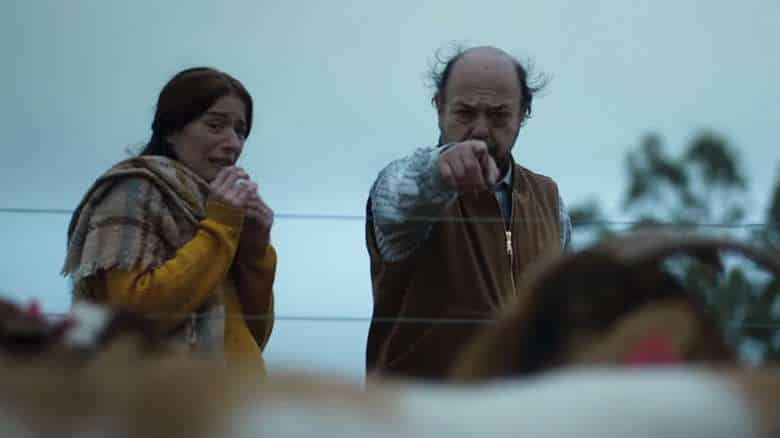
One other point of note is Rugna’s worldbuilding. Not unlike James Mangold’s 2017 Logan, there are no dedicated points of exposition to explain how the story got to this point in the pandemic. You get bits and pieces and are then expected to put them together. Preventing infection, for instance, is a process that’s mostly inferred. Fighting the possessed follows suit, but is given more depth with the introduction of certain tools that carry a lot of story. In a clever twist, though, these arcane-looking tools are there to inspire more questions. They are pieces of a puzzle with strange dimensions the audience is not made privy of. It helps keep the mystery of the pandemic open enough to not just be COVID-specific, but rather more universal regarding humanity’s woeful track record with crisis management.
When Evil Lurks is a dare for the horror genre. It pulls the camera away from the über-intimate focus of newer horror movies (that often overindulge the topic of trauma to get their point across) to get a very good look at panicked social behavior. It’s pandemic horror of the highest order, of the kind that points the finger at people and tells them they’re making it worse. We need more movies like this, hence the dare. Angry horror movies are like getting a bucket of cold water getting dunked on our heads followed by a bucket of hot blood. You’re not supposed to feel comforted. You’re supposed to feel guilty if you’re part of the problem. It’s confrontational horror at its finest, and it’s precisely what When Evil Lurks is.
Discover more from Graphic Policy
Subscribe to get the latest posts sent to your email.
