Category Archives: Underrated

Underrated: Becoming Superman

This is a column that focuses on something or some things from the comic book sphere of influence that may not get the credit and recognition it deserves. Whether that’s a list of comic book movies, ongoing comics, or a set of stories featuring a certain character. The columns may take the form of a bullet-pointed list, or a slightly longer thinkpiece – there’s really no formula for this other than whether the things being covered are Underrated in some way. This week:  Becoming Superman by J. Michael Strazinsky


I’m not usually one to read autobiographies, if I’m honest, which probably sounds like a contradiction to those of you who know how much I like reading about history – specifically the history of comic books – given that autobiographies will typically deal with history in some form or another. And so it was somewhat surprising to me that when I saw Becoming Superman show up at my local comic shop of all places I felt compelled to pick it up. Especially considering I didn’t consider myself a huge J. Michael Straczynski fan to begin with (more as I hadn’t read a lot of his comics as far as I was aware of than because I didn’t like what I read), and so I went into the book knowing relatively little about who he was.

The reason I’m focusing on that book this week, rather than the broader subject of comic book creator auto/biographies is purely that I haven’t read enough of them to have any kind of compelling point to make. Plus, I am sure part of me knows I can then milk the subject a bit further as needed.

Anyway, obviously this is a book that fans of Straczynski are more likely to pick up, but what about those of us who aren’t that into autobiographies or even that big a fan of the man himself?

As somebody who fits both those categories, I can honestly say this was a super compelling book (pun not intended). Straczynski doesn’t shy away from the harsh truths of his life or even the way his actions shaped them. It’s an often times unflinching look at his journey, and you can see how his childhood shaped the man he became, and how he has shaped that into his work. From the harsh reality of television, the highs and lows, JMS is a fantastic storyteller (which shouldn’t be surprising given the list of things the man has worked. Seriously, it reads like a geek’s Must Watch list – Babylon 5, He-Man… the man is nonstop. And yet he looks back upon his life with a wisdom and analytical mind that stops him from portraying the events with rose tinted glasses.

It’s as honest an autobiography as I’ve read, and certainly more than I expected.

Being a comics fan primarily, I came to this looking for insight on his comics, and boy was I not disappointed. His telling of the script writing for Amazing Spider-Man #36, the 9/11 tribute issue, is genuinely beautiful, and had me rushing out to find a copy for my collection (as well as reading it digitally because that all black cover is a nightmare with fingerprints).

I didn’t expect that this would be a book I’d ever cover here, but man oh man was it good. Becoming Superman is a book that checks a lot of boxes, and yet despite that I haven’t heard many folks talking about it, which is why I wanted to write about it today.


Join us next week when we look at something else that is, for whatever reason, Underrated.
Underrated: 4 Kids Walk Into A Bank

This is a column that focuses on something or some things from the comic book sphere of influence that may not get the credit and recognition it deserves. Whether that’s a list of comic book movies, ongoing comics, or a set of stories featuring a certain character. The columns may take the form of a bullet pointed list, or a slightly longer thinkpiece – there’s really no formula for this other than whether the things being covered are Underrated in some way. This week: 4 Kids Walk Into A Bank


4 KIDS WALK INTO A BANK 1
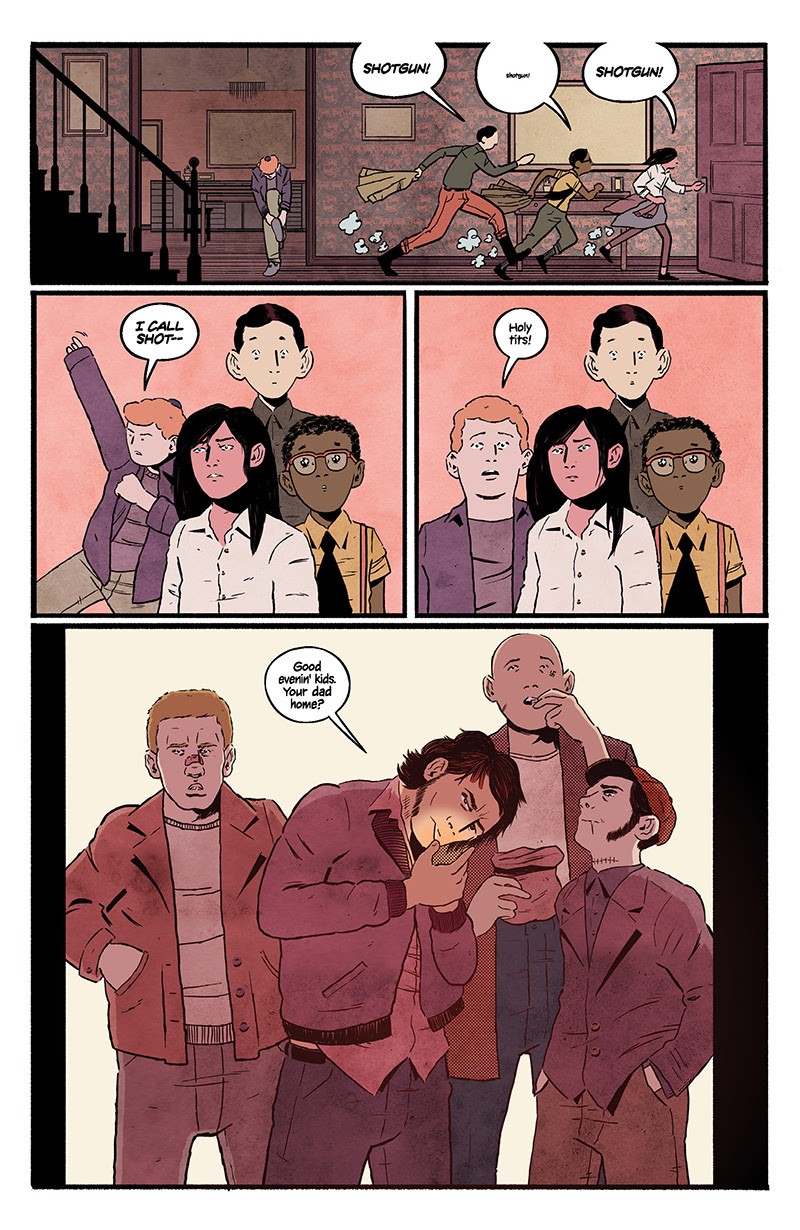
All images will be taken from the first issue preview pages to help alleviate the spoiler hammer.

At some point  in the last two years you’ve probably heard somebody talking about the comic 4 Kids Walk Into A Bank. The first of the five issues in the series was released April 2016, but due to a series of delays the fifth issue only hit the physical and digital shelves in September 2017, which unfortunately left some readers less than enthused about the story – not because the quality was lacking, but because the inconsistent release schedule caused momentum and interest in the series to wane.

4 KIDS WALK INTO A BANK 4

Personally, after the second delay I had almost forgotten to keep checking for the next issue, so it came as quite a welcome surprise to notice the trade. Finally, I could read the entire story in one sitting (or several but at least I had the full story in hand).

But first, before we talk about 4 Kids Walk Into A Bank, what’s the story about?

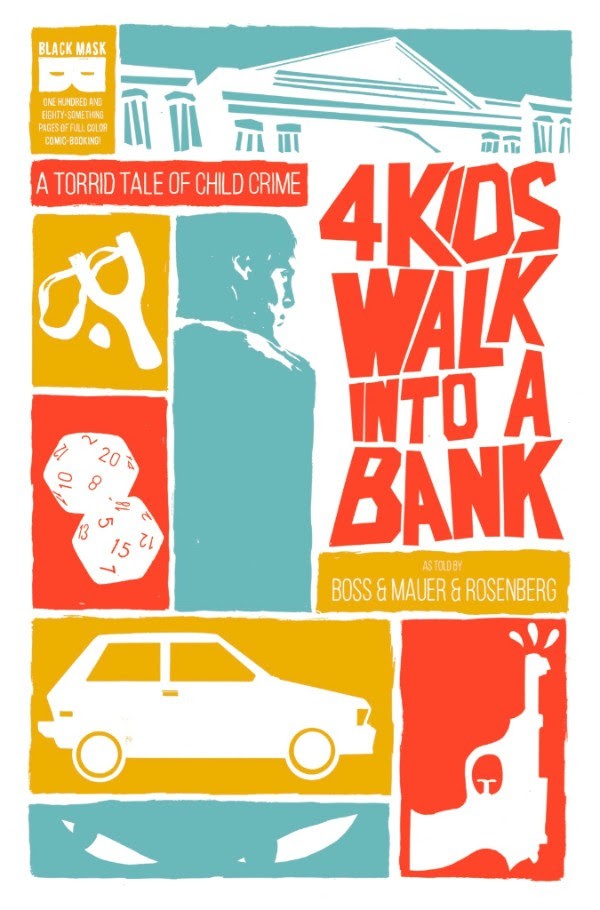
Well the book’s synopsis reads: “A fun(ish) crime caper about children! Eleven-year-old Paige and her weirdo friends have a problem: a gang of ex-cons need her dad’s help on a heist… the problem is those ex-cons are morons. If Paige wants to keep her dad out of trouble, she’s going to have to pull off the heist herself. Like Wes Anderson remaking Reservoir Dogs, 4KWIABis a very dark & moderately humorous story about friendship, growing up, D & D, puking, skinheads, grand larceny, and family.

Before we get to talking a little about the story, when you open the trade and see the comic’s credits you’ll notice that they’re done in alphabetical order; art and design by Tyler Boss, Flatting by Clare Dezutti, Lettering by Thomas Mauer, Wallpaper by Courtney Menard and written by Matthew Rosenberg. Rosenberg was a guest on Graphic Policy Radio last year where he said that he felt it important that each artist who contributes to a comic is recognized (I could  be wrong in the exact wording, but I believe the essence of the quote is there), and it was on that episode of the radio show that I first heard the term “flatter.” I hadn’t really come across it before, and consequently had no knowledge of what a flatter did. Thankfully, the ever reliable Wikipedia was there to help;

flatter is a colouring specialist within the comic book industry that prepares the inked or sketched comic book page for the colorist with digital art software such as Adobe Photoshop. The specialist does so by selecting the objects on the page and filling them in with a solid color called a “flat”, so that the “flats” can be used by the colorist by way of the “magic wand” tool. In this way, the colorist may select each object during the rendering process-to the exclusion of the other objects on the page-so that the object’s base color may be changed, or to render the colors.”

They sound like a pretty important part of the comic industry, eh?

4 KIDS WALK INTO A BANK 10

That’s a subject for another day, however, as today we’re looking at 4 Kids Walk Into A Bank in it’s totality.

Perhaps best likened to somebody throwing the Goonies, a supernatural-less Stranger Things and Reservoir Dogs into a blender and then poured it out over a nice crust of fantastic and baked for several minutes. Served with a side of wry humour and a glass of childhood innocence that may have started to sour a little, if you had started 4 Kids when it first came out but, like me, you’d let the series fall off your radar then you’ll be pleased to know that with the release of the trade you won’t need to put the story down.

I didn’t (well, not intentionally – I did fall asleep while reading but that’s because it was 3 am and I’d been awake more than twenty hours and thus should not be taken as an indication of quality).

4 Kids is one of those stories that really couldn’t work as well in any other medium; this is a story that exemplifies what it means to be a comic book. In an age of endless crossovers and reboots it is beyond refreshing to read a complete story that will take you along by the scruff of the neck as the characters end up going further and further down a rabbit hole – not only do the elements of humour in the comic play off the visuals, but they allow the deeper messages of the story to permeate your brain. Before you know it you’ve noticed that this story is so much more than just four kids walking into a bank (keep an eye out for some great narration bubbles there, too) – this is a story about family, societal debt and the folly of youth.

Rosenberg’s script is witty, the pacing of the story beats are utterly perfect; his writing so sharp I nearly lost a finger. When it comes to Boss’, his art may not be your cup of tea at first, but his command of the page and the characters upon that page couldn’t be better suited to this script. If this was a review rather than an entreaty to pick the trade up (I have despite having  a review copy) then I would be giving this top marks across the board. 4 Kids Walk Into A Bank is a comic you must read.


That’s all for this week folks. Join us next week when we talk about something else that falls under the Underrated banner in the comic book world.

Underrated: Fantastic Four (2015)

Before you start yelling at me for writing a column about why the worst reviewed Fantastic Four movie doesn’t entirely suck, I’m not saying the movie is the best thing since sliced bread. It’s not. But it is unfairly shit on by so many of us, and that’s the whole point of Underrated. This is a column that focuses on something or some things from the comic book sphere of influence that may not get the credit and recognition it deserves. Whether that’s a list of comic book movies, ongoing comics, or a set of stories featuring a certain character.

The columns may take the form of a bullet pointed list, or a slightly longer thinkpiece – there’s really no formula for this other than whether the things being covered are underrated in some way.

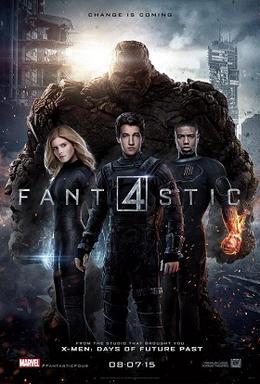
This week I wanted to talk about the much derided Fantastic Four movie from 2015. Or Fant4stic, as the stylized logo goes, which is how I’ll be referring to the movie from here on out. The flick was directed by Josh Trank and starred Micheal B. Jordan as Johnny Storm, Miles Teller as Reed Richards, Kate Mara as Sue Storm, Jamie Bell as Ben Grimm and Tobey Kebbel as Victor Von Doom. The relatively unknown director Josh Trank had previously directed the cult hit Chronicle and one other movie that I’ve never seen before being handed the reigns to Marvel’s first family, but based on Chronicle there was hope that Fant4stic would be on par, with, or better than, the other superhero flicks of the year.

Obviously that wasn’t the case. But was the movie really as bad as we think it was?

Sure it was certainly disappointing when it came out, almost entirely failing to meet the vast expectations heaped upon on it – of course, I’m being facetious, because almost from the get go it seemed this movie was doomed to fail. From the way people turned their nose up when talking about the rumours swirling about choices made around Doom’s origin, at one point he was supposed to be a Russian hacker called Victor Von Domashev; the reprehensible reaction to the casting choice of Micheal B. Jordan as the Human Torch (yes, there were some who were more worried about the lack of perceived blood relation between the Storm siblings rather than the colour of their skin, but the sense that many – myself included – got was that the outcry was a bit more racially tinged); and the dreaded Studio Involvement toward the end of the filming and editing process.

By now I’m sure you’ve heard of the strife between the director and the studio (if you haven’t there’s a good account of it here), but when Trank tweeted his frank tweet about Fant4stic you could hear geekdom cry “I knew it! It’s so bad even the director hates it!” And Tobey Kebbel seemed to agree with Trank in an interview given last year, saying that “the honest truth is [Trank] did cut a great film that you’ll never see.That is a shame. A much darker version, and you’ll never see it.”

Kebbel goes on to say that much of the footage of Doom in the movie isn’t him, due to the amount of the film that was reshot “I played Doom in three points: Walking down a corridor, killing the doctor and getting into the time machine, and lying on the bench. They were the only times I played Doom. Everything else was some other guy, on some other day… doing some other thing. I was infuriated that he was allowed to limp like that!”

With all the vitriol surrounding the movie prior to it’s release there was realistically no hope for the movie (indeed it barely made enough money to cover the budget, let alone the marketing costs), and many people took a rather large shit on the movie because they felt that they had the right to do so – whether they’d actually watched the movie or not.

Almost a year after the movie came out, I sat down and watched it on Netflix for the first time. And you know what? It wasn’t anywhere near as terrible as I expected it to be.

Fantastic Four The Thing

Now I did go in with some pretty low expectations but, dare I say it, I actually enjoyed the movie; even though it seemed to do everything possible to prevent that from happening. Yes, there are moments that seem contrived only to move the plot from point A to B in the most straight forward manner, and there is a sense that there are two visions on display here due to the reshoots, but this isn’t as bad a movie as you’d expect based on the hatred and criticism that Fant4stic received upon it’s release.

While some of the acting is questionable, the performances of Jordan and Teller (and Bell’s vocal performance) are pretty solid. While we’ll never get to see the original version of the movie, the one we did get does have a visual punch that’s better than you’d think. As a slow burning action movie, this isn’t too bad.

Was this a great Fantastic Four movie? Hell no.. but it’s not as bad as you’d think, and if you look at it as a movie very loosely based on the Fantastic Four rather than an actual Fantastic Four movie, then it’s actually watchable.

That’s why it’s Underrated.

Underrated: Descender Volume One: Tin Stars

This is a column that focuses on something or some things from the comic book sphere of influence that may not get the credit and recognition it deserves. Whether that’s a list of comic book movies, ongoing comics, or a set of stories featuring a certain character. The columns may take the form of a bullet pointed list, or a slightly longer thinkpiece – there’s really no formula for this other than whether the things being covered are Underrated in some way. This week: Descender Volume One: Tin Stars


Descender_01-1.pngI picked up the first volume of Descender the other day because of a recommendation from the owner, and seeing as how she’s never really steered me wrong before and that it was written by Jeff Lemire I figured I’d give it a try. So what’s the series about?

The synopsis reads;

“Young Robot boy TIM-21 and his companions struggle to stay alive in a universe where all androids have been outlawed and bounty hunters lurk on every planet. Written by award-winning creator, Jeff Lemire, Descender is a rip-roaring and heart-felt cosmic odyssey. Lemire pits humanity against machine, and world against world, to create a sprawling epic. Created by Jeff Lemire (Sweet Tooth, Trillium) and Dustin Nguyen’s (Little Gotham) critically acclaimed, bestselling new science fiction series!”

I won’t lie to you, friends, if it hadn’t been my my LCS’ recommendation I would never have read the first volume in this series – and that would have been quite a shame. Y’see even though I frequently say  that science fiction stories aren’t usually my cup of tea, the  more I seem to read the more I seem to enjoy, so either I’m lying or I never really read any good science fiction before form that opinion – either way that’s not the point right now.DESCENDER_1_Letts_17.0.jpg

Upon opening the first six issue volume of Descender – which you can find for $10 at your LCS – you’ll find an art style that won’t appeal to everyone right away (if you’ve read Little Gotham you’ll know what I mean), but allow yourself a couple of pages and you’ll begin to notice that the art style works incredibly well with the story. Indeed the art and the story mirror each other in that just as you notice that there’s a lot more to Dustin Nguyen‘s art than you’ll initially pick up on in those first few pages, you’ll also begin to realize that Lemire’s plot goes a lot deeper than you’d first expect.

Like all good fantasy and science fiction stories, Descender  (or at least the first volume) will have you thinking about the world around you, and how you react to it, without explicitly telling you what Lemire was thinking about when he was writing the series, lending the work a timeless quality.

Honestly, I’m shocked that I don’t hear more people talking about this series; I’d say it’s one of the best things that Jeff Lemire has written but when the man is as prolific as he is with top notch comics, you’ll forgive me for not giving in to full blown hyperbole. What the first volume  of Descender is, however, is simply fantastic.


That’s all for this week folks. Join us next week when we talk about something else that falls under the Underrated banner in the comic book world.

Underrated: Autumnlands: Woodland Creatures

This is a column that focuses on something or some things from the comic book sphere of influence that may not get the credit and recognition it deserves. Whether that’s a list of comic book movies, ongoing comics, or a set of stories featuring a certain character. The columns may take the form of a bullet pointed list, or a slightly longer thinkpiece – there’s really no formula for this other than whether the things being covered are Underrated in some way. This week:  Autumnlands: Woodland Creatures


A few weeks ago I wrote about the first volume of The Autumnlands  in this column (which you can find in a horribly typo filled post here because apparently I forgot to spell check). I was quite taken with the book, and remarkably surprised that I’d never come across the story before, and as I’m sure you’ve figured out, I picked up the second trade. This time for full price.

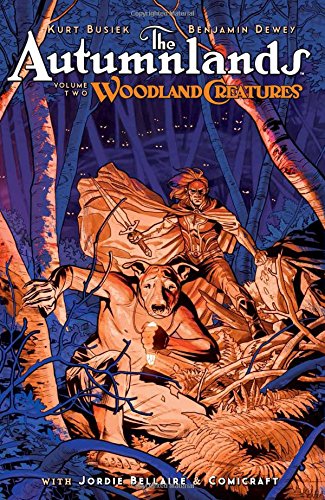
The second trade, Woodland Creatures picks up, with the aftermath of the bridge battle sending Dusty and Learoyd left abandoned on the ground as the rest of the citizens are rehomed.

Whereas the first volume touched on the divide of rich and poor in a class-based society, the second really drives home the differences between the magic users and the rest of the woodland creatures, culminating in a shocking and remarkably relevant commentary on the imposition of one’s will over another.

Slavery, class divide, religion, environmental damage and technological abuses are all touched upon here in a way that doesn’t come off as Kurt Busiek standing on a soapbox, but rather encouraging us to think about the world around us. Maybe something that seems impossible has a rather obvious solution when approached from a different angle.

If you’re looking for a fun fantasy story, then you will find what you’re looking for with the second volume in the Autumnlands saga. Without question, this is a top notch comic book. But like any great science fiction or fantasy series, the messages barely beneath the surface are more powerful and relevant for their seemingly innocuous delivery and framing within the confines of the story.

As with all great works of fiction, Woodland Creatures asks exactly as much of the reader as it needs to in order to encourage you become a better person. Yup. But as deeply as I have read into this book, and possibly far deeper than I should have, you don’t need to do that. This is a book that can be enjoyed solely as a great story.

Image has a vast library of great books, and while we’re still waiting on the third volume of the series, this book is worth reading now. Yes, there’s a set up for the following issue, and yes there are unanswered questions, but nothing that will haunt you long into the night (though the wait for the next chapter  will suck).

As with most books covered in this column, it’s a book I don’t see getting the love it deserves – that’s why the book is Underrated. Go read it now. You won’t regret it.


Join us next week when we look at something else that is, for whatever reason, Underrated.
Underrated: Autumn Lands: Tooth And Claw

This is a column that focuses on something or some things from the comic book sphere of influence that may not get the credit and recognition it deserves. Whether that’s a list of comic book movies, ongoing comics, or a set of stories featuring a certain character. The columns may take the form of a bullet pointed list, or a slightly longer thinkpiece – there’s really no formula for this other than whether the things being covered are Underrated in some way. This week:  Autumn Lands: Tooth And Claw


In another case of “Alex bought something for Underrated without knowing anything about it beforehand,” we have The Autumn Lands: Tooth And Claw by Kurt Busiek, Benjamin Dewey, Jordie Bellaire and John Roshell of Comicraft. I had never heard of this series before spotting it at my LCS last week as I restocked the trade shelves (I’m not a nice person, they pay me to do it). Then this week a used copy came in, and I couldn’t turn down a half priced trade.

It didn’t take long for me to realize that $5 was an utter steal for this book. Within four pages I had become absorbed into this wonderfull world of anthromorphic animals, magic and class based society.

Autumnlands is published by Image, with the first volume being released in 2015 that collects the six issues released from November 2014 to June 2015. There was a second volume released in 2017 that collects the eight issues released from November 2015 to January 2017. As a person who only recently discovered the series, I can imagine that the less than frequent release date didn’t help garner Autumnlands much buzz – but I could easily be wrong here as it is entirely possible I just missed it. Like I missed the comics.

Magic is failing in the world, and a group of sky-city dwelling wizards want to bring back the Great Champion so that he can show them how to return the world’s magic. Only… the wizards didn’t bring back a savior, they snagged themselves a soldier. An effective soldier, but a soldier nonetheless. From anther world, or time, or dimension. Into this new world, then, the soldier finds himself embroiled in the politics of a city (or he would if he seemed to care about such things), and it’s through the uses of the types of animals that we can see a class-based commentary begin to form.

Although this is more a rule of thumb than specifically stated, meat eaters, generally, seem to be at the top of the hierarchy, while herbivors are (quite literally) at the ground level. There are exceptions to this, including a wizarding giraffe, however. But put the politics and commentary aside, and you still have a solid fantasy story about a hero who finds himself alone in a strange world who must somehow protect and save those who need him. Busiek delivers on multiple levels with this book, and it’s easy to see why there’s a cover quote telling us it’s his best work in some time.

Likewise, there’s also a cver quote extolling Benjamin Dewey’s art work, and rightly so, as he and colourist Jordie Bellaire deliver the second punch with their all out visual assualt. Rarely have I been so surprised by a book’s visual impact as I was when reading this.

Autumnlands: Tooth and Claw is fatastic, and I’d have been supremely happy with this at twice the price – I’m pretty sure my LCS has volume two (or they did when I put it on the shelf), so I’ll be picking that up this weekend, too. Volume one is going to set you backaroud $10 new, which is an astounding deal for six issues, let alone six issues of this quality. Autumnlands: Tooth and Claw is a really good read, phenomenl, even.

But as with most books covered in this column, it’s a book I don’t see getting the love it deserves – that’s why the book is Underrated. Go read it now. You won’t regret it.


Join us next week when we look at something else that is, for whatever reason, Underrated.
Underrated: The Comic Book History Of Comics: Birth Of A Medium

This is a column that focuses on something or some things from the comic book sphere of influence that may not get the credit and recognition it deserves. Whether that’s a list of comic book movies, ongoing comics, or a set of stories featuring a certain character. The columns may take the form of a bullet pointed list, or a slightly longer thinkpiece – there’s really no formula for this other than whether the things being covered are Underrated in some way. This week: The Comic Book History Of Comics: Birth Of A Medium.


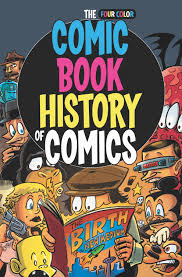
choc.jpgThere are numerous books on the history of comics, some of which sit partially read on my shelf, but there are very few comics or graphic novels about the history of comics. Enter Fred Van Lente and Ryan Dunlavey’s Comic Book History Of Comics. It is exactly what it says; a history of comics told in comic book form. But it’s more than just a history of comics, it also attempts to show the evolution of art into the sequential art we know today as comics; to show the differentiation from cartoons to comics. Originally published by IDW as a six issue miniseries, I picked up the collected edition a few months ago

and only finally read it this week.

Frankly, I was astounded that it had taken me this long to read it, and  little surprised that fewer people were talking about the project. After all, what better way to tell the early history of comics than in comic form? It almost makes you wonder why it hasn’t been done before.

The Comic Book History Of Comics: Birth Of A Medium packs a LOT of information into its 150 odd pages, but it isn’t a definitive history. How could it be with only 150 some pages of sequential art? But it is a fantastic introduction to some of the medium’s more architectural sons and, to a lesser extent daughters (but that’s an issue  with the book and the industry itself – Van Lente and Dunlavey do include sections entitled The Comic Book Herstory… but one gets the sense that these are far less prominent than perhaps they should be). That being said, this is a fun way to learn about the history of comics if you’re unfamiliar, and even if you think you have a good handle on things, I’d put money on Fred Van Lente and Ryan Dunlavey having unearthed something that you were previously unfamiliar with.

There’s a ton of information packed within these pages, but never once does the delivery feel stagnant or anything less than thoroughly entertaining. There are visual puns amidst the art, examples of Dunlavey literally showing you what Van Lente is talking about in terms of panel usage, and some wonderful caricatures of historical figures. I paid $24 for this book (I’m in Canada), and it was worth every penny and then some. Ultimately, this is a brilliant addition to my bookshelf, and one I will revisit more often than not.

I can wait to get the next volume.


Join us next week when we look at something else that is, for whatever reason, Underrated.
Underrated: Revolver

This is a column that focuses on something or some things from the comic book sphere of influence that may not get the credit and recognition it deserves. Whether that’s a list of comic book movies, ongoing comics, or a set of stories featuring a certain character. The columns may take the form of a bullet pointed list, or a slightly longer thinkpiece – there’s really no formula for this other than whether the things being covered are Underrated in some way. This week: Revolver


Published by Vertigo, Revolver was written and drawn by Matt Kindt in 2010, and as near as I can tell was released as a graphic novel first. The wonderful hardcover collection in my hands will set you back around $24.99 at full price, but I picked up a used copy in a sale at my LCS for about $2 (I paid for this out of my own pocket, and happily so).

revolver.jpgSo what’s the story about?

Stuck in a dead-end job with a boss he can’t stand and a materialistic girlfriend, Sam rises from a late night of barhopping to discover his whole world has changed. Literally.An avian flu outbreak has killed millions, the nation’s infrastructure has crashed and a dirty bomb has destroyed Seattle. Forced to go on the run, Sam awakes to a normal world the next day – and to chaos again the day after that. A single constant between the two worlds will undo all the damage, if he can find it – but that seems impossible. In one world, anything goes. In the other, he’s out of danger and sleepwalking through life. So Sam’s got an even bigger problem: Which world to choose?

Taken from the Vertigo website, the above text is also located on the back of the book, but that wasn’t what sold me on the book. The entire reason I picked this up is because the story was written by Matt Kindt, who is one of my favourite writers in comics today. That it was also $2 was the icing on a very lovely cake for your humble writer.

Revolver can perhaps best be described as a slight blend between  the inverse of Groundhog Day and Fight Club where the protagonist wakes up one day in the normal world, and the next day he wakes up in a post apocalyptic world after several bombs have gone off, and the power is failing. The obvious question asked is which of the two worlds our protagonist wants to live in by the end of the book as a choice has to be made.

revolver_043.jpgKindt takes a somewhat unlikeable office worker on a somewhat introspective journey as he explores what living truly is. Is it a life where you go through the motions because you have to, or is it a life where you need to feel a sense of purpose (not necessarily the danger inherent in the post apocalyptic world). Revolver was far more interesting a read than I expected, but it’s when you sit down and just think about the book afterwards that you realize just how deep a story it actually is. The minimalist art only helps in that regard, with subtle shades of colour helping you differentiate between which world we’re joining the protagonist in.

This isn’t my favourite Matt Kindt story I’ve read all year, but it is one that I think fans of science fiction will enjoy.


Unless the comics industry ceases any and all publication look for a future installment of Underrated to cover more comics that aren’t cracking the top 100.

Underrated: Jack Kirby: The Epic Life of the King of Comics by Tom Scioli

This is a column that focuses on something or some things from the comic book sphere of influence that may not get the credit and recognition it deserves. Whether that’s a list of comic book movies, ongoing comics, or a set of stories featuring a certain character. The columns may take the form of a bullet pointed list, or a slightly longer thinkpiece – there’s really no formula for this other than whether the things being covered are Underrated in some way. This week: Jack Kirby: The Epic Life of the King of Comics by Tom Scioli.


Biographies aren’t always the first thing you think  of when you think of graphic novels, and vice versa. But the thing is a graphic novel is a fantastic way to tell a person’s life story, or a portion there of, that isn’t often used as much as it could be. Graphic novel biographies are a wonderfully unique way of telling a story that you really can’t capture the same way with a prose book. By utilizing the graphic novel format, the creative team have the opportunity to bring the story to life with picture, or temper  the harshness of what the biography’s subject went through so that the reader can take more of the story in (seriously, imagine the first entry with realistic artwork). Or the artwork can tell give you a subtlety that’s missing in other mediums as you’re more readily able to spend time pouring over the images in front of you. Yeah, I think it’s safe to say that I think graphic novels are an underrated method of telling a biographical story.

Biographies told in the graphic novel format have been around for awhile, and I’ve found are often my preferred way to read story about a person’s life. Maus for example would be a much harder book to read in prose, and part of Spiegleman’s genius is in how he still conveys the horror of his father’s story with the art that’s never cute or adorable, but wouldn’t look out of place next to Andy Capp in your Sunday supplement (this isn’t a knock against the book – it remains one of my favourite graphic novels because of exactly this; the balance of the art to the horror is perfect and frequently left me questioning how I would be reacting if the art was realistic or had the story been told in prose with vivid descriptions).

But when it comes to reading a graphic novel, even a near 200 page one, to learn about the rich history of a subject, then there is an obvious trade off with the amount of information you can fit into a graphic novel verses a text book – sometimes that matters, and others it doesn’t.

I’ve read a few biographies of Kirby over the years (Mark Evanier’s Kirby: King Of Comics is probably my favourite), but this is the first biography of Kirby I’ve read in the graphic form. Other than some minor details, Scioli doesn’t tell me anything that I wasn’t already at least partly aware of, though that’s not because he doesn’t have a well researched book (he really does), but rather because this isn’t the first Kirby biography I have ever read – Jack Kirby: The Epic Life of the King of Comics, published by Ten Speed Press, is a thoroughly engaging read, and Scioli’s dedication to the presentation of the book shines through early with a scene of young Kirby reading comics for one of the first times.

This is told from Kirby’s perspective, which does lead to him being portrayed in a very flattering light, but given the author’s well documented reverence for Kirby, I’m genuinely impressed that Scioli is somewhat restrained at the same time; he never crosses into a full worship of the comics legend (which is very easy to do given how much respect Kirby is due and how much he often gets outside of the comics community).

Jack Kirby: The Epic Life of the King of Comics is a really good book; it’s often overlooked in a lot of the circles I run in because it’s both a graphic novel and a biography – the combination of which never seems to excite people as much as a fictional graphic novel (or comic). It’s a shame, because this book is an ideal start to learning about Jack Kirby, and will propel you into reading the comics he so loved to create.


In the meantime, Underrated will return to highlight more comic book related stuff  that either gets ignored despite it’s high quality, or maybe isn’t quite as bad as we tend to think it is.

Underrated: The Man With No Name: Sinners and Saints

This is a column that focuses on something or some things from the comic book sphere of influence that may not get the credit and recognition it deserves. Whether that’s a list of comic book movies, ongoing comics, or a set of stories featuring a certain character. The columns may take the form of a bullet pointed list, or a slightly longer thinkpiece – there’s really no formula for this other than whether the things being covered are Underrated in some way. This week: The Man With No Name: Sinners and Saints.


I’ve not read a lot of books published by Dynamite over the last few years, partly due to their flirtations with that group of specific comic fans, and partly because there was nothing that really grabbed my interest from the publisher. I’ve long been a fan of their take on the pulp heroes (the Black Bat, the Spider and the Phantom to name a few), and so when a used copy of The Man With No Name: Saints and Sinners came into my LCS I figured I’d give it a go.

Written by Christos Gage, with art by Wellington Dias and letters by Simon Bowland, the book was initially published in single issue format as issues 1-6 of The Man With No Name around 2009 or so (at least according to the copyright info in the front of the book and not a google search). The book serves as a sequel to The Good, The Bad and The Ugly, though you don’t necessarily need to have seen that film to enjoy this – albeit I say that as someone who might have watched the movie twenty years ago and doesn’t remember a lot of it (I never made it to the third of Sergio Leone’s trilogy during my Western kick two years ago after I finished playing Red Dead Redemption 2.

All you really need to know about that trilogy you can puzzle out during this story; whether The Man With No Name’s actions and reasons for said actions make sense is up to you to decide; having no seen the movies in a long time I don’t really have anything to say on that one way or another, is the truth; it feels a touch off, but that could very well be my memory confusing the Man With No Name with another Western antihero Clint Eastwood played at some point in the past. It ultimately isn’t a deal breaker for the comic itself.

The story in the book is fairly straight forward; the nameless outlaw finds himself defending the defenceless as a repayment of a debt, and the audience gets to see some pretty fantastic gunfights in the desert. By audience I mean readers. Explaining too much more of the plot would ultimately be me padding this column out for the sake of word count, which I won’t do. Suffice to say that this really feels like a snapshot in the eponymous antihero’s life and (probably) flows well as a sequel the the trilogy.

The book was a nice diversion on a rainy Saturday morning, and as far as my limited experience with Western comics goes, far from the worst one I’ve read (take that more as a statement on how few I’ve read that have made an impact either positively or negatively). Not a bad book at all, and definitely an underrated one when it comes to how often you see it talked about. Are there better comics out there? Absolutely; but I enjoyed my time with The Man With No Name: Saints and Sinner, and at the end of the day that’s what matters.


There we have it. Are there other comic book related stuff out there that is, for whatever reason, underrated and under-appreciated?

Absolutely.

Because of that, Underrated will return to highlight more comic book related stuff  that either gets ignored despite it’s high quality, or maybe isn’t quite as bad as we tend to think it is. In the meantime, though, if you do get a chance check out the characters in thisUnderrated, then you may need to hunt through the back issue bins for some, but others do have some stories collected in trades.

Until next time!

« Older Entries Recent Entries »