
Tag Archives: rutgers university press

Review: Mixed Race Superheroes
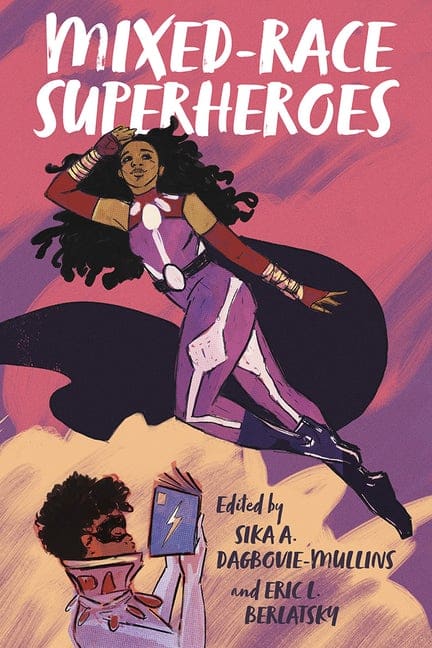
Mixed Race Superheroes

Ever since Barack Obama entered the court of public opinion, everything about him has been under public scrutiny. Things like where he grew up and just how intelligent he is have been regularly discussed or investigated. Even his time at Harvard and his work as a community organizer, nothing has seemed off limits, especially from his detractors. The most glaring thing that exposes most racists is his being mixed race.

Him being both Black and white, drums all those old ghosts that has made conservatives stoke Americans’ worst fears, but really is their internalized racism. For comic fans, the topic isn’t new. Readers know that this is a topic that has been explored as long as comics have exited. In the new essay collection from Rutgers University Press, Sika A. Dagbovie-Mullins and Eric L Berlatsky explore this dichotomy in Mixed Race Superheroes.

In the “Introduction”, the editors,  start off with W. Kamau Bell’s article for Wired where he talked about the hope she had for his mixed race children, citing  recent examples in Ant Man and The Wasp and Aquaman, where mixed race actors played characters of similar racial makeup. In “ Guess Who’s Coming Home”, Dagbovie Mullins explores how race has been seen throughout Spiderman’s canon in film and in comics. In “ The Ride Of Valkyrie against White Supremacy”, Mitchell talks about Tessa Thompson’s portrayal of Valkyrie onscreen, not only going against type but challenging racism within the geek community. In “Which World would you Rather Live In”, Gavaler talks about Gary Jackson’s poetry and how it formed some of the first comic book criticism whilst talking about race. In “Flash Of Two races”, Berlatsky talks about how both the comics and the TV show handled Wally West and the franchise’s larger narrative on race, incest and miscegenation. In “Let Yourself Just be whoever you are”, Collins dissects the issues of decolonial hybridity and LGBTQ possibilities in the Steven Universe franchise. In “ the Hulk and Venom”, Carter shows the parallels between the prevailing societal notion of superiority based on bloodlines, and how it is harmful , through its most extreme examples in Hulk and Venom. In “Monsters, Mutants and Mongrels”, Koenig-Woodyard, discusses the importance of character building in Monstress, and how its creators has made probably one of the best protagonist in comics in the past decade. In “Examining Otherness and the Marginal Man in DC’s Superman through Mixed-Race Studies”, Tembo discusses how using Superman to talk about mixed race can both be the perfect example and a complete fallacy. In “Talented Tensions and Revisions”, Santos delves into Miles Morales and how his double consciousness makes an even more interesting character than Peter Parker. In “They’re Two People in One Body”, Miller talk about the brave choices made, especially in reference to how mixed race was portrayed, in the television adaptation of Legion. In “Into the Spider-Verse and the Commodified (Re) Imagining of Afro-Rican Visibility”, Molina-Guzman talks about how the movie brought something refreshing to the canon. In the last essay, “Truth, Justice, and the (Ancient) Egyptian Way”, Resha talks about how the character of Doctor Fate has been portrayed and how a new wave of writers has made the hero relevant to geopolitical narrative.

Overall, Mixed Race Superheroes is an excellent book that is both entertaining and educating. The essays by the different authors are imperative, powerful and through provoking. The editing by  Dagbovie –Mullins and Berlatsky is well done. The art by the different artists is beautiful. Altogether, a book that speaks to our times and where the world is going.

Story: Eric L Berlatsky, Gregory T Carter, Chris Gavaler, Chris Koenig-Woodyard, Nicholas E Miller, Isabel Molina-Guzman, Jorge J. Santos Jr., Kwasu David Tembo, Sika A. Dagbovie-Mullins, Corinne Esther Collins, Jasmine Mitchell, Adrienne Resha
Art: Ron Frenz, Brett Breeding, Brett Booth, Norm Rapmund, Sana Takeda, Frank Quitely, Lee Bermejo, Sara Pichelli, Sonny Liew
Editing: Sika A. Dagbovie-Mullins and Eric L Berlatsky
Story: 10 Art: 9.0 Editing: 9.8 Overall: 9.97 Recommendation: Buy

Purchase: AmazonKindleBookshop

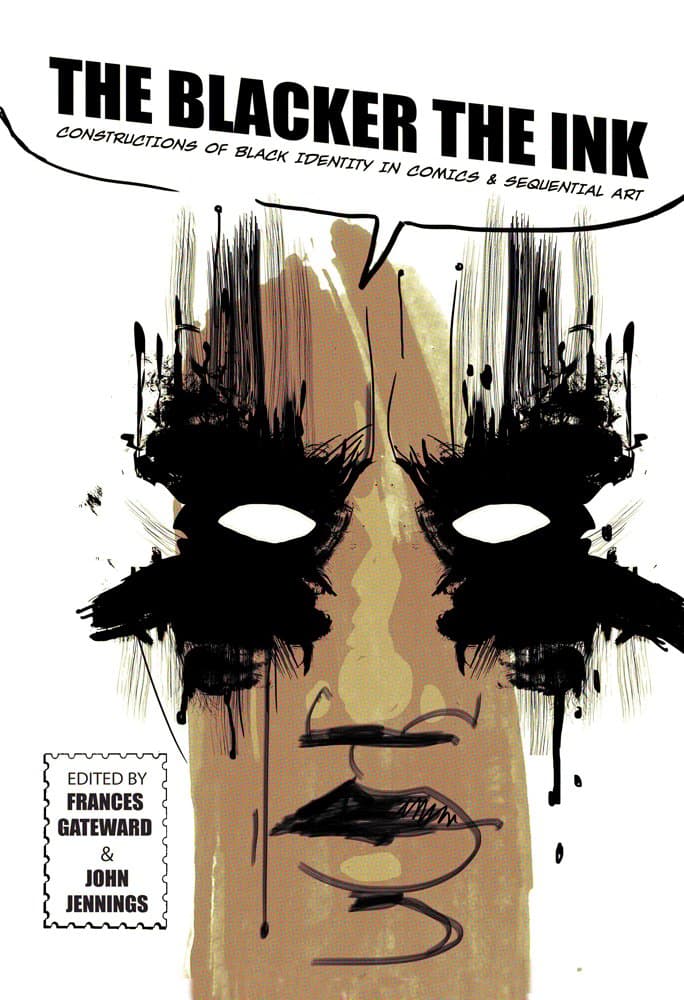
Review: The Blacker the Ink: Constructions of Black Identity in Comics and Sequential Art

In today’s political climate it feels like we rarely see each other as humans. It is mostly what political megalomaniacs tend to spin is what we each other as, labels and often lies.

This is even more distressing in communities of color, as the disparity in conviction rates has perpetuated a false narrative of black on black crime and that myth that people who grow up in these communities, have a choice.

Growing up in these communities myself, I know this not true, as the lack of choices is what leads many to the choices they make. Many of these choices are rarely ever ideal.

It is a lifetime of indiscernibility as Ralph Ellison wrote in the Invisible Man:

I am invisible, understand, simply because people refuse to see me.

This is what was wrong with Matt Groening’s argument surrounding South Asians’ issue with the Apu character, is that he refused to see the problem. His privilege gave him blinders that would otherwise come full on a creator of color.  This void all people of color carry, is something we barely show to our non POC acquaintances, but it is there. Even more difficult is the burden as well as journey most creators of color face, how their work is most often misunderstood, how they rarely receive the same accolades as their white counterparts. This is why Dr. Francis Gateward and John Jennings chose to illuminate those creators in The Blacker The Ink about those stories that made the comics world what it is, but rarely gets told, when it comes to creators of a more sepia tone.

In “The Introduction” the editors recount how it was for them to grow up as children, being interested in comics and not seeing themselves reflected in the comics they enjoyed. In the chapter entitled “No Sweat”, Daniel Yezbick dissects how the Comics Code changed a well-intentioned progressive story because of unfair targeting at EC Comics. In “Sex in Yop City”, Sally McWilliams talks about the first attempt to produce a graphic novel about modern Africa, and how the politics of racial fragility prevented the book from reaching the masses it intended to. In “A Post colony in Pieces”, the reader is treated to how the lessons in Frantz Fanon’s Black Skin, White Masks can be seen throughout Joshua Dysart’s run In Unknown Soldier. In “Fashion in Funny Papers”, Nancy Goldstein attempts to give prolific Jackie Ormes, the justice she richly deserved. In “Graphic Remix”, Coleman and Youmans chronicle the stratospheric rise of the Boondocks as not only as comic strip and cartoon but also as a cultural touchstone. In “American Truths”, Conseula Francis examines the 2002 comic, “Truth: Red, White & Black”, which tells the story of the first men to get the Captain America’s powers before him. In “Drawn into Dialogue”, Andre Carrington, uncovers the story behind Milestone’s Icon and one of its most controversial stories, which is considered relevant today but revolutionary at the time. In “Critical Afrofuturism”, Reynaldo Anderson tells about some fo the first comics to feature” Afrofuturism”, as one of the first books was Ramzez: Prince of Panet Heru. In “Bare Chests, Silver Tiaras and Removable Afros”, Blair Davis, uncovers the evolving look of black superheroes through the whole history of comic books. In “Daddy Cool”, Kinohi Nishikawa tells the story of how Donald Goines gave the world, he first graphic novel about street life from a black perspective. In “The Tragic Bluescomic”, Qianna Whitted talks about Stager Lee, and its long hard road to publication. In “Provocation Through Polyphony”, Craig Fischer gives a behind the scenes look of how Kyle Baker’s Nat Turner came to be. In “Performance Geography”, Hershini  Bhana Young, they dissect Jeremy Love’s Bayou. In “A Secret History of Miscegenation”, James Ziegler, gives readers a look at Jimmy Corrigan and how the main character’s adoption of a black child, gave readers pause. In the final story, “It’s A Hero?”, Rebecca Wanzo, examines society’s lack of empathy and refusal to see a hero of color, has led to generations of children of color struggling with identity and self-empowerment.

Overall, a groundbreaking work that neither preaches or purely entertains but educates and stokes the fire of readers everywhere to dig into these comic books.  Each essay/story gives readers much needed insight into these pioneers and under read classics. The rose of each story is both intriguing and illuminating. Altogether, a much-needed book which tells a part of the story, but does it very well, as the story continues to today.

Essayists: Daniel Yezbick, Sally McWilliams, Patrick F Walter, Nancy Goldstein, Robin R.Means Coleman, William Lafi Youmans, Conseula Francis, Andre Carrington, Reynaldo Anderson, Blair Davis, Kinohi Nishikawa, Qianna Whitted, Crag Fischer, Hershini  Bhana Young, James Ziegler, and Rebecca Wanzo
Editors: John Jennings and Professor Frances Gateward
Essay: 10 Prose: 9.0 Overall: 9.4 Recommendation: Buy