Tag Archives: mental illness

Movie Review: Saint Maud offers a disturbing portrayal of faith and loneliness

Saint Maud
Saint Maud

Pay attention to the title of the movie Saint Maud. Really think about what it is that makes someone a saint. In fact, if you look up some of the key saints from Christianity you’ll find the path to sainthood is often paved in blood. Be it through obscure instances of violence or culpable sin, the title of saint is still considered as an undertaking of absolute faith with the good grace of God standing as its ultimate reward.

Rose Glass Saint Maud looks at all this through a different lens, employing psychological horror to produce one of the most disturbing explorations of faith, devotion, and mental illness in recent memory.

Written and directed by Glass, Saint Maud follows a young, pious nurse called Maud as she comes to terms with the meaning of her relationship with God. In essence, Maud lives to answer the question of what God wants with her. As she looks for answers, she’s assigned to take care of a woman dying of cancer. Maud believes she can save the troubled woman’s soul, but God seems to have a harder test in the works for her.

The movie’s most resounding successes rest on the shoulders of actress Morfydd Clark, who plays Maud. Clark masterfully captures the title character’s tug and pull with being both hopeful and lost at the same time. Clark plays Maud as a young woman constantly teetering between a full-blown mental breakdown or a divine revelation.

Maud is given brief but revealing bits of internal dialogue that keeps viewers informed on the latest developments on what she thinks God is asking of her. Morfydd’s narration does a great job of showing Maud’s frustrations with her lack of understanding, always aware of the mounting pressure she faces while trying to make sense of her situation.

Saint Maud plays a bit with what’s real and what’s inside the main character’s head, but it prefers the less ambiguous approach to what’s actually happening. There’s more evidence of Maud suffering from a severe mental illness rather than a fundamental crisis of faith. And yet, it’s her faith that wins out as the thing that guides her in this new phase of life as a recent convert. Maud wasn’t always religious. There’s an obscure trauma at play that the movie cleverly keeps pretty much under wraps. It’s what might explain how God has so completely taken a hold over her.

Saint Maud
Saint Maud

The manifestations of her faith do one very unique thing here that not many other horror movies can claim to do. It makes the movie unfold as a kind of possession story where God is the invading spirit. Maud’s religious devotion plays a central role here as her decision to give in to faith keeps her isolated from almost everyone else.

Glass’ script is careful not to overindulge with the supernatural elements, but whenever something gives the appearance of being otherworldly, the horror gets ramped up considerably. Glass does an excellent job of playing with shadows and dark corners without stripping a single scene of all color. In fact, the movie contains a very clear and solid color palette that serves to heighten the terror at the heart of Maud’s process.

This figures into Glass’ decision to put Maud in big open spaces that aren’t exactly crowded with people. Quite the opposite. Maud seems to live in a world devoid of meaningful human contact. This becomes an especially powerful source of pain while in the presence of male characters, none of which see Maud as someone worth being treated with care or respect. Maud’s world is hostile and even God is suspect.

Saint Maud has a lot of moving parts, each made more complex and disturbing thanks to the fact the element of faith serves as its source of horror. Clark’s performance elevates the story’s focus on the consequences of unchecked piousness with an eye to question not just religious behavior but also the effects it can have on a troubled mind. As far as explorations into these matters are concerned, Saint Maud stands as one of its greatest.
Review: Stealth #1

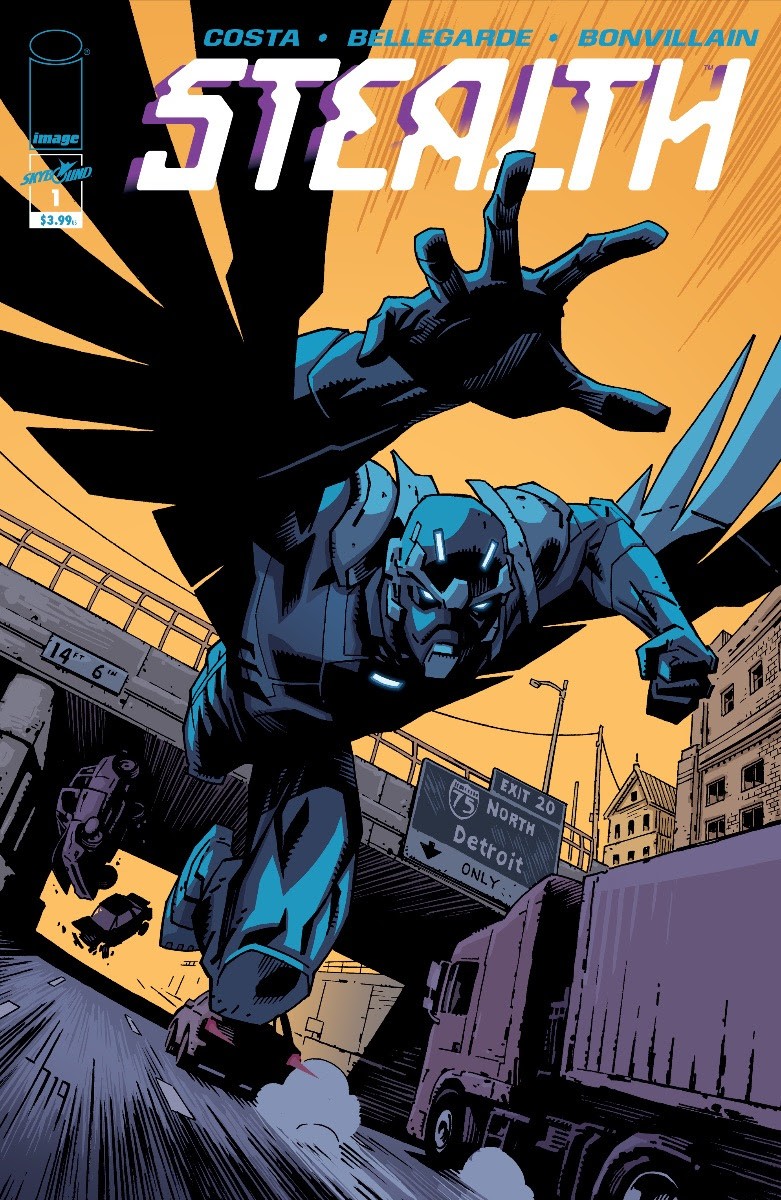
Stealth #1

Stealth is a hard read, as is the case with most stories dealing with mental illness. It holds nothing back as it takes a measured look at the dynamics between a father and son struggling to make sense of a particularly rough psychiatric condition. Of course, everything’s made harder when it’s revealed the father’s a superhero that can confuse innocents with criminals due to his mental state. Needless to say, this comic lands as hard as a punch to the gut—and then some—and it has every intention of saying something important about the subject matter.

Written by Mike Costa and illustrated by Nate Bellegarde Stealth centers on a Detroit-based black superhero—the titular Stealth— as he faces a crisis-like challenge: Alzheimer’s. His son, reporter Tony Barber, is already aware of the situation, just not of the fact his dad is a superhero. That is until he walks in on his dad in full hero getup, looking as if lost in his own home. From there we get to the central question of the story: should Stealth be taken out of the superhero game, even if it means leaving a crime-riddled Detroit without its protector?

Costa and Bellegarde do a great job of balancing classic superhero tropes with the metaphors and messages surrounding the overarching narrative, which is driven by Stealth’s condition. They seem to be aware of the importance of not letting the mental illness factor drown out the superhero element, and vice versa. One of the ways they do this is by mixing tried and true superhero traditions in order to shape them into something easily recognizable.

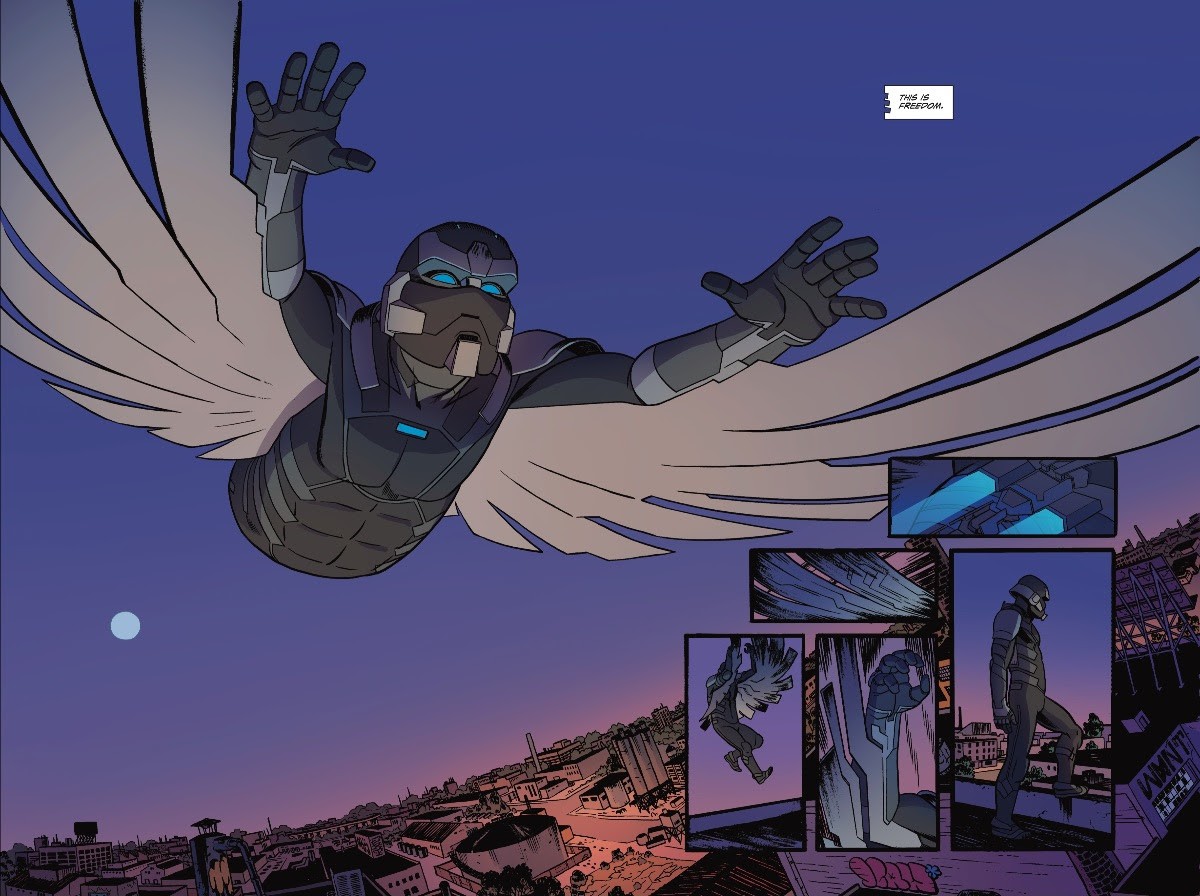
Stealth is basically a combination of Sam Wilson’s Falcon, Batman, and a hero’s burning need to save a city. Daniel (Stealth’s real name) wears each influence on his sleeves. Some of Sam Wilson’s influence can be found in Stealth’s suit, a high-tech winged suit that looks like it was taken from one of the most recent iterations of the character in the current Marvel universe.

That he is a black superhero, though, opens up a whole slew of racial politics that can make their way into the treatment the character’s alter ego, especially when considering Detroit’s actual track-record with the black population. It feels as if the city will stand for something more than just another innocent worth saving.

Image Comics

In fact, echoes of Batman come through with the comic’s surprising focus on the city of Detroit itself. Costa and Bellegarde take every chance they get to show just how important Stealth is to the city and its continued safety. You get the sense that benching Stealth in this story would be as catastrophic as taking Batman out of Gotham. This is magnified by Bellegarde’s designs for Stealth. He’s always presented as a towering figure, a superior agent of justice.

And yet, that same degree of care that’s afforded to the hero’s presence is then flipped to ramp up the tension surrounding the situation. Once we’re made aware of Stealth’s diagnosis, the story’s emotional spectrum opens up and we’re left with a heartbreaking portrayal of a man that can end up doing a lot of damage in his attempts to do good. Costa’s script does wonders in putting the reader through a revolving door of emotions that makes one scared for the hero but also for those that can get badly swept up in his path. Again, what would happen if Batman could no longer distinguish friend from foe?

Tamra Bonvillain’s colors add to this play of superheroes tropes and mental health representations by going for the spectacular during action scenes, on one hand, to then going for a more restrained touch for the more intimate sequences. It makes everything blend in organically as it essentially guides readers through the multiple metaphorical worlds contained in the comic with smooth transitions. The colors here set the tone and then account for each change in it.

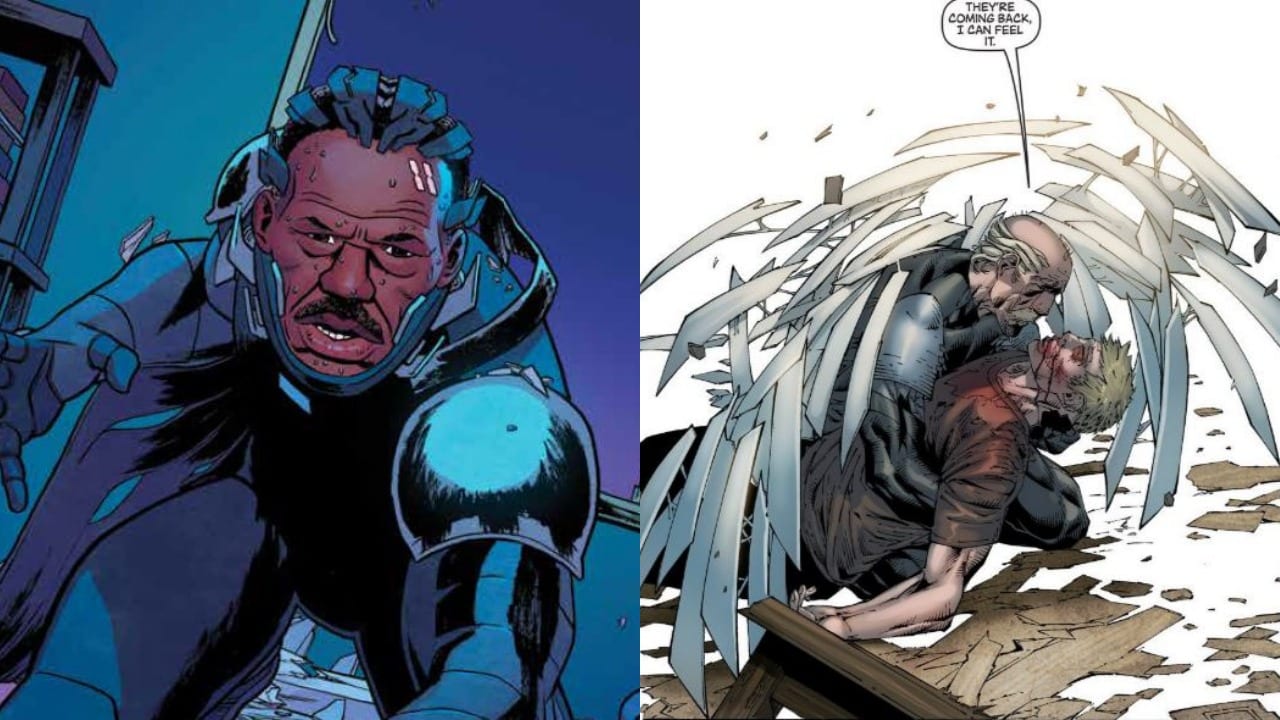
Both versions of Stealth, new version on the left, original version on the right.

It should be noted that Stealth is based on a Robert Kirkman and Marc Silvestri comic that sticks to many of the same storytelling beats of the original story but with some key changes. Kirkman and Silvestri’s Stealth is a white man and his son is navigating what appears to be a recent divorce. This changes the dynamic quite a bit. Skin color can ultimately dictate the feel of the story, whether it wants to or not, and the expectations that come with black characters in terms of representation are already felt throughout Costa and Bellegarde’s Stealth.

Additionally, I consider Costa and Bellegarde’s Stealth to have a much better hold on pacing. Costa’s script pulls off a brilliant gamble with misdirection early on that focuses on the son and the real identity of Stealth, leading to a reveal that was very well orchestrated. Kirkman’s script lets you in on most of the story’s secrets early on and, as a result, doesn’t feel as profound as it does in the new version. It’s still an interesting read, but I prefer Costa’s and Bellegarde’s take.

Stealth #1 presents a world of conversation starters regarding mental illness, hero worship, and straight up comic book storytelling. It’s a story about checking in with our heroes to know when they’ve reached their limit and when to flip the roles to take care of them. It’s about a kind of responsibility we need to own up to more than we actually do.

Script: Mike Costa Art: Nate Bellegarde Colors: Tamra Bonvillain
Story: 10
Art: 10
Recommendation: Buy, and get ready to shed a tear or two

Image Comics provided Graphic Policy with a free copy for review.