
Movie Review: Play Along with The Lost Man in EXIT 8
Video game adaptations, by definition, wrest control away from players. To an extent, they ask them to watch the same story they already played through but with less direct input. Gone is the anxiety of making a big jump to finish a level. Gone is the tension of inadvertently walking into a boss fight with limited ammunition. Simply put, video game adaptations turn players into spectators.
Genki Kawamura’s Exit 8, an adaptation of the walking simulator/puzzle horror game hit of the same name (developed and published by Kotake Create), finds success by leaning into the spectator aspect of the experience to foster interaction. Rather than turning the story into a 90-minute long cutscene, it opts for a quiet and spaciously-framed affair that audiences can still participate in by spotting important details along with the characters.
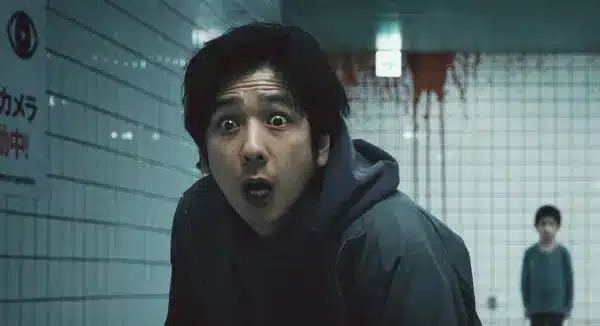
Like the game, Exit 8 takes place in a looping passageway in the Japanese metro system. While the game doesn’t define or describe a specific character per se, the movie follows a man (played by Kazunari Ninomiya) who learns his ex-girlfriend is pregnant just as he’s getting off the train. While attempting to exit the subway station, he suddenly finds himself in a loop of corridors. There, he sees a sign with a set of rules printed on it that must be followed to escape this punishing liminal space.
To reach the real exit, the man must search for anomalies in the repeating passageways eight times in a row before he’s allowed to leave. Failure to identify these anomalies, or lack thereof, results in a reset that sends the man back to level 0 (the first run-through). If a poster or a door is in the wrong position, walk back to the rules poster to progress. If nothing’s changed, complete the loop.
The man meets a walking man and a kid that might or might not be lost in the loop as well. Whether they’re anomalies or not depends on the cues and hints the movie dishes out at key moments.
This is where director Kawamura finds an opening to make sure some of Exit 8’s gameplay elements make it into the movie. A lot of this relies on the observational aspects of the source material. Posters, signs, doors, and other important details are few but crucial to progression, so it’s easy to start looking for anomalies as an audience member while the man attempts to make it through all the stages. If the character misses out on anything you caught, an incredible sense of anxiety creeps in. You want to scream at the screen to point out the differences before it’s too late.
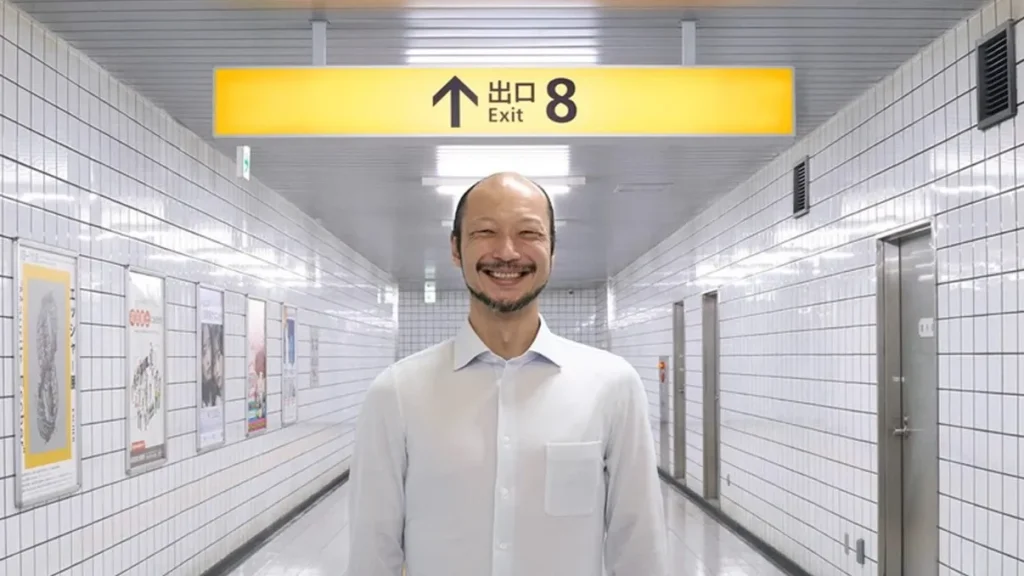
Kawamura is smart to go for wide-shots here. We’re given a great big look at everything that could be hiding or pointing to a clue, and the movie does well to stick to the open and strikingly bright dimensions of the corridors that make up the loop. Nothing’s ever really obscured, which means the horror resides in what’s seen rather than what’s unseen. As a video game movie, it does what no other film of its kind ever truly manages to pull off: it lets people play the game from their vantage point, if only to an extent.
The only thing that undercuts the terror of the liminal subway loop is the movie’s insistence on hammering a message on indecisiveness, which hinges on the news of the pregnancy that hovers over the main character. It tries too hard to turn the loop into a metaphor for anxiety regarding big life decisions, detracting from the mystery.
What made the situation so unsettling was its random nature. That it simply forced someone to play a game about noticing strange alterations in a self-repeating space should’ve been enough. The message is just too blunt, and it compromises the creepiness factor. In fact, it takes away the bit of control it had afforded audiences so well beforehand up to that point.

Exit 8 should be commended for adapting a video game while still giving audiences the chance to feel like active players in it. Its ending betrays some of the good work done up till then, but it doesn’t diminish its accomplishments entirely. If anything, it’ll make you want to pick up a controller and look for anomalies yourself in the original game. Hell, it might even make you look for anomalies in actual subway stations as well.
