Don’t Worry, Mommy’s Here: 5 of the best moms in horror cinema
When I was just a wee baby (as in barely a few months old), my mom decided to take me to the movie theater with her to see The Lost Boys (released in July, 1987). Jerry Rees’s The Brave Little Toaster was also playing. My mom apparently weighed her options and decided The Lost Boys would have more of an impact in my early development than a toaster with a smile.
I cried during the entire movie. If you’ve never seen it (and if you haven’t, you should), the vampire make-up effects by artist Greg Cannom were terrifying. The vamps kept their human forms, but their faces transformed into something resembling very angry bats. And then there’s the vamp feeding scene at a punk bonfire. Fangs sunk into skulls and blood flew over the fire as the bikers went into a frenzy.
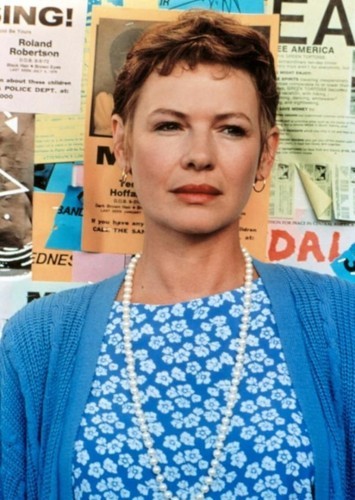
Years later, still a kid, I watched the movie again and managed to get through it without crying out of pure fear, but what stood out this time was how important the movie’s mother figure, Diane Weist‘s Lucy Emerson, was to the story and how much tension and terror the movie extracts from her as we watch one of her sons worry over her safety thinking she was dating a vampire. It left an impression. What if my mom got targeted by a vampire all of a sudden? Could I kill it on my own or did I need my own Frog Brothers to stake the bloodsucker?
It was easy to empathize with Lucy. She was a single parent moving in with her father at a time when her two kids were at their most rebellious in a new place she later learns is infested with vampires. She becomes a calming presence that could’ve helped more if her kids had let her in on the troubles of Santa Carla and the people they hung out with. One thing I admired was how brave she came off as in a place director Joel Schumacher went lengths to portray as dirty, dangerous, and forgotten. She was strong and she proved it in the final moments of the film, taking a decision for the sake of her family’s safety that jeopardized hers. All of this to say, Lucy Emerson was my first horror mom and she’s remained a favorite ever since.
It goes without saying by now, but my appreciation of horror, and The Lost Boys in particular, started getting nurtured the moment my mom decided to lightly traumatize me as a baby by taking me to the movies to see biker vampires on a big screen. So, in honor of the work mothers do from the moment we’re born, here’s a list of 5 horror movie moms that either scare, take care, or bring chaos to their kids. In other words, the kind of moms that keep steering future generations into horror.
Enjoy, and Happy (belated) Mother’s Day!
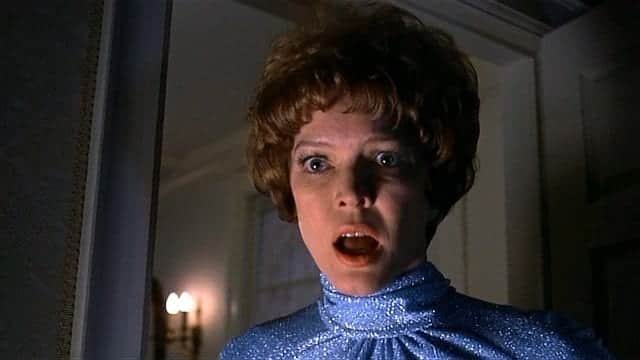
1. Ellen Burstyn as Chris MacNeil in The Exorcist (dir. William Friedkin, 1975)
As frightening as the possessed Regan MacNeil is, none of it would’ve worked to the extent it did if the audience couldn’t channel their horror through her mom. Ellen Burstyn made this possible with a spectacular performance as Chris MacNeil, a mom that embodied both the fear of living with a child tormented by something unfathomable and the strength that’s required to fight a battle that initially looked unwinnable.
Burstyn dug deep to portray a mother that had her entire reality flung out the window and yet still managed to hold out hope as a demon tore apart her kid from the inside. Her facial expressions should be studied by anyone interested in capturing what true fear looks like, but also what anger and frustration look like in a supernatural setting. Each one of Chris MacNeil’s screams is a gut punch that makes you reel, heightening the horror of the possession and the idea of what it means to share a household with a sinister entity hellbent on corrupting an innocent soul.
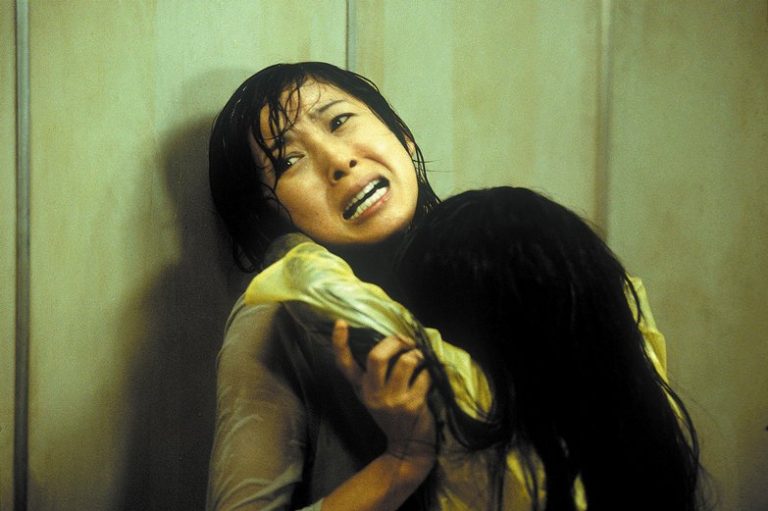
2. Hitomi Kuroki as Yoshimi Matsubara in Dark Water (dir. Hideo Nakata, 2002)
Mothers have a strange and complicated relationship with child ghosts in horror. In movies where the mother is grieving the loss of a daughter, for instance, the ghost becomes a metaphor for loss and denial in the face of death.
In Hideo Nakata’s Dark Water, though, the connection becomes something different. The story’s mother character, Yoshimi Matsubara, isn’t mourning the loss of a child. She’s getting consumed by the fear of losing hers, all of which stems from the ghost of a little girl that died in the apartment building they live in.
Actress Hitomi Kuroki plays Yoshimi like a tragic beacon of light that lonely ghosts can find a mother in. Her performance captures both the terrors that motherhood brings to the fore and what being a parent represents in the grander scheme of things. Kuroki channels the energy of a haunted house in human form, reluctantly accepting her role despite the consequences of potentially becoming mom to a ghost.
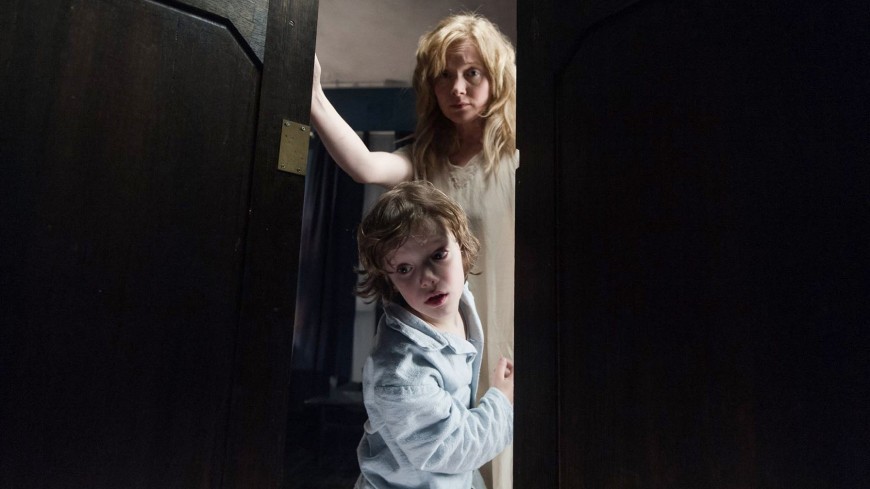
3. Essie Davis as Amelia in The Babadook (dir. Jennifer Kent, 2014)
Perhaps the most influential horror mom in recent times, Essie Davis’ Amelia landed on the scene with a force that reminded viewers how brutal the experience of motherhood can be. The Babadook runs on her intensity, on her up-close and uncomfortably personal pain.
Amelia is a single mom taking care of her high-energy kid, called Samuel. Her life has essentially halted, fully, just because Samuel and his behavior take up so much of her existence, every inch of it, in fact. When the titular demon comes into their home, it finds Amelia ripe for murderous possession.
Director Jennifer Kent managed to paint a rage-filled portrait of a mother that was dealt an extremely bad hand. Essie Davis leans into Amelia’s frustrations and makes a compelling argument against becoming a mom, but only in certain moments. At others, she manages to flip the horror of the Babadook to show how incredibly beautiful it can be to take care of a life you created.

4. Vera Farmiga as Norma Bates in Bates Motel (TV series developed by Carlton Cuse, Kerry Ehrin, and Anthony Cipriano, 2013-2017)
I’m going to cheat here really quick and go for a horror TV series instead of a movie because this example is just too good, and it should be discussed more as a whole. Vera Farmiga’s interpretation of the iconic Norma Bates in Bates Motel is one of the most fascinating takes on the role in the history of the moms in horror.
The series modernizes the Norman Bates story by making the motel he shares with his mother part of a larger ecosystem and by having Norma be very much alive. Drugs, late night rendezvous, and dangerous relationships form in their place of business, and Norma has a hand in everything in one shape or another. And yet, nothing with her is predictable. She can turn a bad situation worse or offer comfort in times when those closest to her are in need.
What’s impressive is how the show interweaves outside influences with the peculiar intricacies of Norma’s relationship and outright manipulation of Norman. Farmiga switches with ease between scheming and selfish to loving and nurturing. She’s a source of torment one episode and a pillar of stability in another. She’s both what Norman needs as a mother and what he desperately needs to run away from. Farmiga puts on a show for the ages as Norma Bates. Her contribution to horror should not be overlooked.

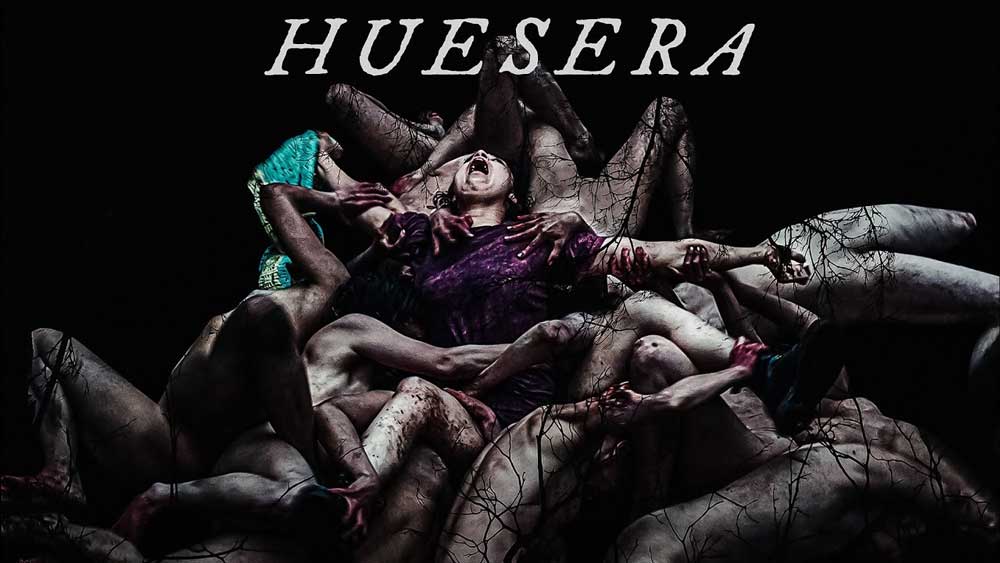
5. Natalia Solán as Valeria in Huesera: The Bone Woman (dir. Michelle Garza Cervera, 2022)
A baby can be a terrifying thing, especially as it grows inside you. It can either be a great source of happiness or a force of existential oppression that can shatter a parent’s identity. Add the fear of some foreign entity shaping and corrupting the life you’re carrying and things can get scarier fast.
Michelle Garza Cervera’s Huesera indulges in this kind of fear, asking what a child is supposed to mean to a mother and whether they should submit to whatever the answer is. It places the mom-to-be, Natalia Solán’s Valeria, at the center of the story as a kind of victim of pregnancy, someone who went along with social expectations only to open the doors for something sinister to latch onto her baby.
Solán approaches Valeria as a ticking time bomb-type of character that suffers quietly at first, but is then forced to face the entity and the prospect of becoming a mother in the worst ways possible. Watching Valeria unravel is tough, but it comes with the development of a different point of view regarding a mother’s obligations and whether it’s okay to resist them. The very meaning of personal sacrifice is explored here, and it leads to an urgent question more people should ask themselves: is the parent’s life, their dreams and desires, less important than that of the child’s? The answer, Huesera would argue, is not so simple.