
Tag Archives: Marvel Comics

Mini Reviews and Recommendations For The Week Ending 06/26/2021

Sometimes, the staff at Graphic Policy read more comics than we’re able to get reviewed. When that happens you’ll see a weekly feature compiling short reviews from the staff of the comics, or graphic novels, we just didn’t get a chance to write a full review for. Given the lack of new comics, expect this weekly update to begin featuring comics that we think you’ll enjoy while you can’t get anything new to read – only new to you.

These are Graphic Policy’s Mini Reviews and Recommendations.


Logan

Wolverine #13 (Marvel)– X-Force’s plant-based mind control of the Terra Verdeans goes terribly awry plus there’s a big plot development that affects the Krakoan status quo in an exciting, morally devious, and occasionally hilarious issue of Wolverine from Benjamin Percy, Scot Eaton, Oren Junior, and Matthew Wilson. There’s the juxtaposition of gross body horror with haute couture, and this story makes it explicit that Krakoa is not utopia, but just another colonizing power like the rest of the world. You feel for the Terra Verdeans fighting off the Krakoans, and Percy’s villainous take on Beast is downright delicious and might make long-time fans hoping that it’s Dark Beast or something. Beast’s conversation with Emma Frost shows that they have two different plans for keeping Krakoa going, and after the events of Wolverine #13, these might be thrown out the window. Visually, Eaton, Junior, and Wilson provide solid action and horror plus nail the silly moments like Deadpool begging Wolverine to put him on the new incarnation of X-Force. Overall: 8.8 Verdict: Buy

SWORD #6 (Marvel)– The Krakoan flex that was the terraforming of Mars in Planet-Sized X-Men #1 gets bigger on an exponential level in SWORD #6 by Al Ewing, Valerio Schiti, and Marte Gracia. With an intense conversation between Captain America and Dr. Doom from the get-go, Ewing and Schiti sets up stakes that are Marvel Universe-big while not neglecting these character’s personalities and background. However, most of this issue takes place on Mars and features the leaders of various galactic systems that have made appearances in titles like Guardians of the Galaxy, Empyre, and previous issues of this book. Then, Abigail Brand basically lays down the new status quo not just for Earth, but the whole solar system with Valerio Schiti’s wide-screen art and Marte Gracia’s cool digital coloring effects driving her point home. To quote David Bowie, the stars look very different today in the X-Books and Marvel’s line as a whole. However, Al Ewing and Schiti end the issue and the first arc of SWORD on a beautiful father/daughter moment confirming my theory that Ewing’s writing style is the perfect marriage of the big picture concepts of Jonathan Hickman and the sharp wit and characterization of Kieron Gillen. This is a damn good comic, and Al Ewing does a damn good job straddling the mutant and cosmic realms. Overall: 9.3 Verdict: Buy

Batman: Reptilian #1 (DC/Black Label)– Garth Ennis does a good job of writing Batman as a total dick, and Liam Sharp brings a glorious painted art style to Batman: Reptilian #1. The dialogue is edgy, but Sharp’s visuals are eerie, and I especially enjoy his takes on the members of Batman’s rogue gallery. Both in the way the book looks and how Batman acts (Beating everyone you within an inch of their life.), it feels a lot like the Arkham video games. The book is worth picking for Batman intimidating the shit out of a rapist boxer and his corrupt lawyer in the first scene. Overall 8.2 Verdict: Buy

Black Hammer Reborn #1 (Dark Horse)– Black Hammer is back: not with a bang, but not a whimper either. Jeff Lemire, Caitlin Yarsky, and Dave Stewart show Lucy Weber (Formerly known as Black Hammer II) and her nondescript life with two kids and a husband in the suburbs before setting a return to heroism that’s a little bit on the dark and disturbing side. Black Hammer Reborn #1 spends plenty of time showing Lucy’s day to day life as a mom and copy editor with Yarsky’s realistic artwork nailing her emotions when she’s dealing with her children being unruly or the tedium of work at an ad agency. However, like previous installments of Black Hammer, she adds a little bit of surrealness and cosmic horror to this “normal” world where Earth-destroying villains aren’t a factor any more and taken care of by a SHIELD type organization. But Lemire and Caitlin Yarsky are quick to topple that status quo while also jogging readers’ memories on the Black Hammer universe. Overall: 7.9 Verdict: Buy

Gamma Flight #1 (Marvel)– This spinoff of Immortal Hulk from Al Ewing, Crystal Frasier, and Lan Medina doesn’t show why it should exist in its first issue, but it doesn’t wear out its welcome either. The supporting cast has been a consistent strength of Ewing’s Immortal Hulk, and they get to shine center stage in Gamma Flight #1. The book also looks at the ideas of restorative justice, but with extra punching as this team of former villains and Hulk-hunters focus on helping folks affected by gamma radiation instead of taking them out. Honestly, my favorite part is the sweet chemistry between Absorbing Man and Titania as this baddie has come a long way thanks to the efforts of writers like Saladin Ahmed, Al Ewing, and Frasier. Visually, Medina does a serviceable job and leans into the body horror elements for the new gamma mutate, Stockpile. This series is like watching the spinoff of your favorite TV show with likable supporting characters even though none of them have the star power of the original lead. Overall: 7.5 Verdict: Read

Way of X #3 (Marvel)– This is the good, weird shit from Si Spurrier and Bob Quinn starting with a Nighcrawler in full prophet/priest mode and ending in an unexpected relationship. Way of X #3 continues to examine what life is like on a supposed utopia for folks who aren’t involved in feuds, intrigues, and battles. Using Nightcrawler as a POV character, Spurrier and Quinn show us how Stacy X has become a sex therapist/intimacy counselor on Krakoa and also what happens to babies who go through resurrection protocols. There’s also pushback against the whole “make more mutants” mandates, which is a tad old-fashioned for a futuristic society where you can be brought back from the dead. Finally, there’s the whole Onslaught thing, and Quinn and colorist Java Tartaglia wisely make him more of a psychic threat in the early going instead of his look in the 90s. Overall: 8.7 Verdict: Buy

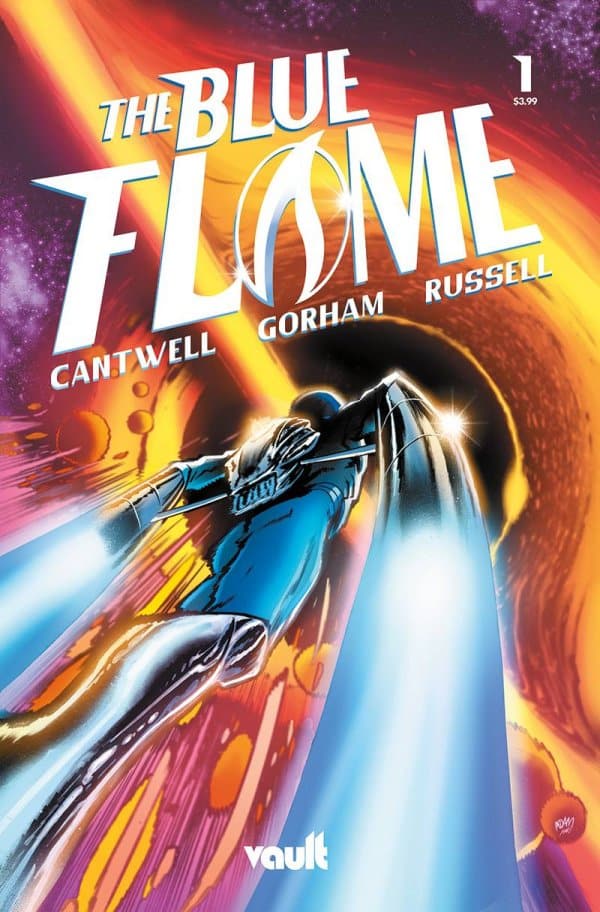
The Blue Flame #2 (Vault)– Christopher Cantwell and Adam Gorham go into the psychological side of the hero, the Blue Flame, who must argue for the continued existence of Earth before a group called the Consensus. This is juxtaposed with his estranged sister, a cashier at a grocery store, finding out that he’s Blue Flame and about the fatal shooting of the previous issue. Gorham swaps out the cosmic for the human issue showing Blue Flame’s sister’s ordinary, routine life and the four rinky-dink boxes that the Consensus has for humanity and Earth. An idea starts to take shape that Earth isn’t its accomplishments, but folks who have been neglected or victimized by society. In the Blue Flame #2, Cantwell, Adam Gorham, and K. Michael Russell abandon the genre pastiche of the first issue for a deeper look into how the Blue Flame ticks as well as commentary on society and mass shootings/tragedies. Overall: 8.0 Verdict: Buy

Brett

Checkmate #1 (DC Comics) – An ok issue that really is a setup that introduces us to all of the pieces on the board. It pits DC’s best spies against Leviathan in what so far is a rather ho-hum start. The characters though look fantastic as they stand around and talk. Hopefully it delivers more action in future issues. Overall Rating: 7.0 Recommendation: Read

Harley Quinn #4 (DC Comics) – Kevin is one of the best new characters of DC. In four issues the character has my sympathy and I just want to give him a big hug. The issue also keeps up the kinetic energy of the series as Harley psychs herself up to take on Hugo Strange. Fantastic art plus a lot of fun together creates an entertaining read. Overall Rating: 8.3 Recommendation: Buy
Infinite Frontier #1 (DC Comics) – Everything is on the table now post Death Metal and Infinite Frontier seems like it’ll be the series to explore the possible. Amazing art with some great twists makes a debut that has me excited to dive into more of DC’s omniverse. Overall Rating: 8.6 Recommendation: Buy

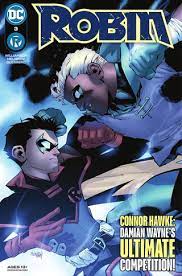
Robin #3 (DC Comics) – Robin gets to know the other characters on the island a bit better as he learns to relax. The issue dials back the action a lot to deliver a cute issue that feels a little slow. But, it does a good job of diving into characters to let us know what we’re in for. The art continues to be nice but not quite the dynamic visuals you’d want with a comic where fighting is front and center. In fairness, the issue doesn’t deliver a lot making what action that does happen a bit blah in the visuals Overall Rating: 7.75 Recommendation: Read

Teen Titans Academy #4 (DC Comics) – Get to know the Bat Pack in this issue as they attempt to figure out who Red X is. While I like the idea of the mystery hero/villain the fact it’s so front and center in the series is making my interest go elsewhere. It’s a bit too much and an issue entirely dedicated to the mystery feels like too much too soon. Overall Rating: 7.0 Recommendation: Read

Alex

Vinyl #1 (Image) Well shit, this wasn’t what I expected. Coming into the comic, I expected a story about music – maybe a band or singer from the 70’s. What I got instead was a detective story that has a tangential connection to vinyl records through a song, but rather focuses on a man exchanging his life for his daughter’s. The real hook is that the detective may or may not be relying on a serial killer to save him. Vinyl is dark, twisted, and utterly fantastic. Overall: 8.8 Recommendation: Buy

Witcher: Witch’s Lament #2 (Dark Horse) While the art definitely didn’t impress me, the story is starting to get more interesting. There’s more of a psychological twist to this story than other Witcher comics I’ve read, and I’m here for that and not the muddy art. Overall: 7 Recommendation: Read

Well, there you have it, folks. The reviews we didn’t quite get a chance to write. See you next week!

Please note that with some of the above comics, Graphic Policy was provided FREE copies for review. Where we purchased the comics, you’ll see an asterisk (*). If you don’t see that, you can infer the comic was a review copy. In cases where we were provided a review copy and we also purchased the comic you’ll see two asterisks (**).

Mini Reviews and Recommendations For The Week Ending 06/19/2021

Sometimes, the staff at Graphic Policy read more comics than we’re able to get reviewed. When that happens you’ll see a weekly feature compiling short reviews from the staff of the comics, or graphic novels, we just didn’t get a chance to write a full review for. Given the lack of new comics, expect this weekly update to begin featuring comics that we think you’ll enjoy while you can’t get anything new to read – only new to you.

These are Graphic Policy’s Mini Reviews and Recommendations.


Logan

Planet-Size X-Men main cover by Pepe Larraz and Marte Gracia

Planet-Sized X-Men #1 (Marvel)– Gerry Duggan continues to kill it on his chapters of “Hellfire Gala” as he, Pepe Larraz, and Marte Gracia tear things wide open and show the Krakoan terraforming of Mars to give Arakko its own home planet. The omega mutant power combination thread that’s been running through the X-Books pays off big time as we get to see different mutants like Magneto, Storm, this cool axolotl Arakki one, and even Jamie Braddock put their own touches on Planet Arakko at the planet formerly known as Mars. Gracia uses gorgeous palettes and filters while Larraz’s art is truly wide-screen and deserves a Gustav Holst soundtrack as they depict the transformation. And it’s safe to say that this event will have a huge effect on the X-Book status quo moving forward with the concluding data pages hinting at things to come. Overall: 8.8 Verdict: Buy

The Silver Coin #3 (Image)– The Silver Coin anthology series continues with Ed Brisson taking over scripting duties as he and Michael Walsh tell a chilling story of possession, arson, cannibalism, and especially death rattles. This story is a catastrophe in motion as teens go from trying to cover up a dead body and steal some stuff to a full-out supernatural tinged car chase. Walsh uses topsy turvy layouts and bold flat colors to make the story even more unsettling and hopeless in the end with gruesome finish a la the other bearers of The Silver Coin. Overall: 8.3 Verdict: Buy

New Mutants #19 (Marvel)– Vita Ayala’s run on New Mutants is starting to come into their own as they, Alex Lins, and Matt Milla expertly weave together the happenings of the Hellfire Gala with the Shadow King plotline. Ayala uses the Gala setting to have the older cast of the book split into groups and pairs and talk about their feelings with Warlock feeling lonely since his “Self friend” Doug Ramsey got married. Just like he’s been written in the data pages, Warpath ends up being a listening ear to Warlock’s issues, and Ayala’s insightful pairs well with Lins’ almost-montage style art of everyone having a good time while Warlock feels out of place. But this is just one thread in New Mutants #19 as there is also a focus on Gabby Kinney as one of the younger mutants and why she is missing from the Gala. Alex Lins’ facial expressions convey Gabby’s sadness and fear about Shadow King, and he and Vita Ayala also take time to show how Laura Kinney aka Wolverine is reacting to this situation. And I just realized that I forgot to mention that this comic is funny as well as emotional thanks to an extended sequence where the women of the New Mutants plus Warlock tell off a creepy artist, who is negging and objectifying Karma. It’s a rich read, and I’m definitely onboard with this series even though I’m not super-connecting to the Wolfsbane/child resurrection subplot. Overall: 8.7 Verdict: Buy


Well, there you have it, folks. The reviews we didn’t quite get a chance to write. See you next week!

Please note that with some of the above comics, Graphic Policy was provided FREE copies for review. Where we purchased the comics, you’ll see an asterisk (*). If you don’t see that, you can infer the comic was a review copy. In cases where we were provided a review copy and we also purchased the comic you’ll see two asterisks (**).

Mini Reviews and Recommendations For The Week Ending 06/12/2021

Sometimes, the staff at Graphic Policy read more comics than we’re able to get reviewed. When that happens you’ll see a weekly feature compiling short reviews from the staff of the comics, or graphic novels, we just didn’t get a chance to write a full review for. Given the lack of new comics, expect this weekly update to begin featuring comics that we think you’ll enjoy while you can’t get anything new to read – only new to you.

These are Graphic Policy’s Mini Reviews and Recommendations.


Logan

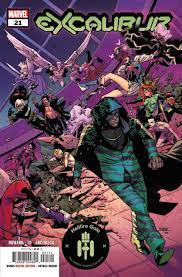
Excalibur #21 (Marvel)– Tini Howard and Marcus To use the Hellfire Gala setting to advance several plots in their own series, including the dissolution of the tenuous UK/Krakoa alliance, Rogue leaving the team to join the Krakoan X-Men, and all kinds of blood magic/Arthurian stuff. The British/magic stuff continues to be inconsistent as ever, but Howard continues to nail the interpersonal moments between characters like Gambit being proud of his wife becoming an X-Man again, Rictor and Shatterstar struggling to get back together, and Rachel Grey and Captain Britain sharing a dance away from the folks that would ply them for information. I don’t know if it’s because the book is an event tie-in, but Excalibur #21 does have several reversal and twists that act as the perfect canvas for Erick Arciniega’s bright blasts of color and To’s wide panels for scenes of magic. Excalibur is still a mid-tier X-Book, but I feel like the overall story has real momentum again and feels like a team book instead of Captain Britain and her Amazing Friends. Overall: 7.6 Verdict: Read

X-Men #21 (Marvel)– The final issue of Jonathan Hickman’s X-Men volume is up and down. For the most part, the visuals are brilliant from Nick Dragotta’s manga-infused and heavy shadows take on Namor, Russell Dauterman getting to unveil the new X-Men team and bask in his fashion brilliance, and Sara Pichelli showing everyone a good time. (Lucas Werneck is stuck with the photo-tracing celebrities gig.) However, the story fluctuates from clip show to teaser trailer in both the selection of the new X-Men team and the Sinister Secrets data page and finally some actual good stuff as Namor reminds Professor X and Magneto that, yes, he controls 70% of the world. Hickman has a good ear for writing him as evidenced by his work on New Avengers, and I hope he figures in future storylines. The rest of the story shows Krakoa at what seems to be its “peak” as it flexes its muscles before the fall alluded to in Marauders #21. The art’s great, but there’s too much montage and not enough story. Overall: 7.0 Verdict: Read

Marjorie Finnegan: Temporary Criminal #2 (AWA Studios)– Garth Ennis and Goran Sudzuka’s self-indulgence continues in Marjorie Finnegan #2, which opens with its protagonist saying Jesus was just a guy, chasing Henry VIII with a strap on, and shitting on Donald Trump’s head. Edgy, sophomoric stuff cleanly rendered by Sudzuka with flat background colors by Miroslav Mrva. The plot sort of starts to take out with this one with Marjorie fighting her sister, the time cop Harriet while the bad guys go around her flat looking for a book that could change human history. The satire might be a little Maher-esque, but Ennis’ dialogue is earthy as ever and Goran Sudzuka’s art is easy to follow. The fight between Marjorie and Harriet is overlong, and the villains are underdeveloped so this issue is worth skipping or waiting for the full narrative in trade. Overall: 6.0 Verdict: Pass

Children of the Atom #4 (Marvel)– Centering around Wolverine/general fanboy Benny Thomas aka Marvel Guy is a smart move from Vita Ayala and Paco Medina, but this little team of mutant wannabes (Except possibly Carmen.) is starting to annoy me. The fandom stuff is interesting and kudos to Ayala for crafting a diverse cast of characters, but this issue is pretty weak and honestly creepy with the team using their friend Cole’s DNA off his basketball jersey to try to crash the Hellfire Gala. And, of course, it goes badly, and they’re caught by mutant hunters. The narration with Benny is okay, but it doesn’t really connect to the overall plot and just ends up being the pre-requisite internal drama before they fight the bad guys. The issue ends on a star-studded splash page, but it is definitely unearned and comes across as a sales-boosting gimmick. Children of the Atom is a middle of the road teen superhero team comic, and fans looking for a more interesting look at young (actual) Krakoans with better visuals would be better off checking out Vita Ayala and Rod Reis’ New Mutants. Also, this issue has nothing to do with Hellfire Gala if you just picked it up for that. Overall: 5.7 Verdict: Pass

Die #17 (Image)– Die #17 is a Lovecraftian dungeon crawler (Guest starring the actual H.P. Lovecraft) from Kieron Gillen and Stephanie Hans, and the series turns to horror in its endgame. There are some meditations on games, dreams, and death as Matt sees the face of his dead mother and the tubes she’s hooked up in Cthulhu. At this point, Gillen has a strong command on the characters’ basic personalities and use an out of character moment to great effect like Chuck behaving seriously, or Isabelle paying off her debts as a godbinder. He and Hans also reveal more about the underlying mechanics of Die connecting it to the imagery of many-angled gods in the works of Lovecraft. And speaking of Stephanie Hans, her work is majestic, spacious, and full of chaos and fear as she delves into dreams and nightmares. Die’s final arc has been quite excellent so far. Overall: 9.1 Verdict: Buy


Well, there you have it, folks. The reviews we didn’t quite get a chance to write. See you next week!

Please note that with some of the above comics, Graphic Policy was provided FREE copies for review. Where we purchased the comics, you’ll see an asterisk (*). If you don’t see that, you can infer the comic was a review copy. In cases where we were provided a review copy and we also purchased the comic you’ll see two asterisks (**).
Mini Reviews and Recommendations For The Week Ending 06/05/2021

Sometimes, the staff at Graphic Policy read more comics than we’re able to get reviewed. When that happens you’ll see a weekly feature compiling short reviews from the staff of the comics, or graphic novels, we just didn’t get a chance to write a full review for. Given the lack of new comics, expect this weekly update to begin featuring comics that we think you’ll enjoy while you can’t get anything new to read – only new to you.

These are Graphic Policy’s Mini Reviews and Recommendations.


Logan

Hellions #12 (Marvel)– The Hellions crash the Hellfire Gala in an issue that is messiness at its finest. At first, it looks like only the “normal” members of the team plus Sinister are going to be in the Gala, but Zeb Wells and Stephen Segovia unleash the whole team on this celebration of Krakoa. Drawing couture isn’t Segovia’s strong suit, but he and Wells create some hilarious moments and give each member their moment in the sun from Wildchild trying to get back with ex Aurora to Nanny getting totally plastered, and of course, everyone wanting to kick Empath’s ass. Hellions #12 also isn’t all jokes as Zeb Wells continues to tug on the plot thread that is Havok wanting Madeline Pryor to be resurrected. This issue isn’t super *essential* to the whole “Hellfire Gala” plot line, but it’s nice to see the Hellions attempting to enjoy themselves for once plus Mr. Sinister interacting with various Avengers and Fantastic Four members is comedy gold. (There’s some veiled Dan Slott shade.) Overall: 8.0 Verdict: Buy

X-Force #20 (Marvel)– X-Force #20 has just the right blend of silly comedy and serious consequences. X-Force is working security for the Hellfire Gala, but instead of just giving Tony Stark psychic patdowns or stopping Deadpool from crashing the party, Beast is using the shindig to expand his network of plant-powered mind control that began with Terra Verde in a previous arc. Joshua Cassara is back on art for this issue, and his Beast is monstrous and matches the imperialist monologues that Benjamin Percy gives him. Cassara’s skill at body horror and group scenes comes in handy as he tops the previous Green Lagoon scene he drew and shows how unsettling telefloronic mind control is. Krakoa being a utopia, yet having a CIA in X-Force has been one of its contradictions from the get-go, and X-Force #20 does a wonderful job showing it go sideways as they don’t fit into Emma’s plans for the nation. Overall: 8.3 Verdict: Buy

Crush & Lobo #1 (DC)– Crush & Lobo #1 has stellar storytelling from artist Amancay Nahuelpan, a sassy running monologue from writer Mariko Tamaki, and colorist Tamra Bonvillain definitely sets up the contrast between Crush and girlfriend Katie in a clash of grime and pastels. This first issue has a real “whatever” vibe and doesn’t take itself too seriously while unpacking Crush’s issues with relationships and parental figures. Lobo is in the title, but isn’t in the comic as much. However, his absence is its own kind of character and shades Crush’s actions and attitudes throughout the issue. She’s a really entertaining lead character, and I’m interested to see her adventures with her famous father that will hopefully lead to more outrageous action sequences from Nahuelpan Overall: 8.4 Verdict: Buy

The Worst Dudes #1 (Dark Horse)– I’m not a big fan of police procedurals, but I can get behind ones that involve pink lion beast suspects, space madness drugs, comet bars, missing demi-gods. and, of course, copious and creative amounts of profanity. These are all things that show up in Aubrey Sitterson, Tony Gregori, and Lovern Kindzierski’s The Worst Dudes #1. Its plot is the equivalent of “lol, so random” and its color palette is a unicorn puking a rainbow, but it fits the tone of the story, which is basically gumshoe detective meets decadent, depraved space empire. Also, Gregori has real visual comedy chops, and I definitely went back to some of his panels to catch details I missed the first time. Overall: 7.9 Verdict: Buy


Well, there you have it, folks. The reviews we didn’t quite get a chance to write. See you next week!

Please note that with some of the above comics, Graphic Policy was provided FREE copies for review. Where we purchased the comics, you’ll see an asterisk (*). If you don’t see that, you can infer the comic was a review copy. In cases where we were provided a review copy and we also purchased the comic you’ll see two asterisks (**).
Mini Reviews and Recommendations For The Week Ending 05/29/2021

Sometimes, the staff at Graphic Policy read more comics than we’re able to get reviewed. When that happens you’ll see a weekly feature compiling short reviews from the staff of the comics, or graphic novels, we just didn’t get a chance to write a full review for. Given the lack of new comics, expect this weekly update to begin featuring comics that we think you’ll enjoy while you can’t get anything new to read – only new to you.

These are Graphic Policy’s Mini Reviews and Recommendations.


Logan

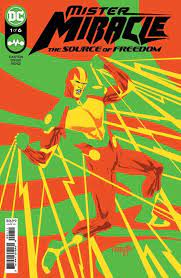
Mister Miracle: The Source of Freedom #1 (DC)– Featuring day-glo color palette from Rico Renzi, exciting layouts from Fico Ossio, and poignant commentary on being a Black man in the United States (and entertainment industry) from Brandon Easton, Mister Miracle #1 really has it all. Shilo Norman gets put into a variety of situations in Mister Miracle #1 from an eye popping stunt in the opening scene to dealing with microaggressions from his manager and even acting like an asshole on a date and only talking about his job. He’s a character struggling to find an identity in a click driven, late capitalist hellscape, and the villain that Easton and Ossio set up for him seems derivative at first, but it actually comments on racist comics fan who are angry that characters of color are picking up the mantles of white characters. Mister Miracle #1 balances all these excellent elements and looks gorgeous too, especially in the color department. Overall: 8.8 Verdict: Buy

Made in Korea #1 (Image)– Made in Korea is a nice, little sci-fi story about a middle class family that gets a discount on a “proxy”, or some kind of robot child is manufactured in South Korea. Writer Jeremy Holt and artist George Schall spend a good portion of the book showing the parents bonding with their new daughter, Jesse with plenty of adorable sequences. However, Schall’s sterile color palette and the starkness at his art senses at something a little more sinister going on in a parallel story of a workaholic, Korean computer programmer. Jesse might not be the nice, shy, yet curious girl that she seems to be from the outset. Overall: 8.0 Verdict: Buy

Beta Ray Bill #3 (Marvel)– Daniel Warren Johnson and Michael Spicer’s Beta Ray Bill continues to be a flat out good time of bright colors, big sound effects, and even bigger guns as Bill, Pip, Skurge, and a newly humanoid Skuttlebutt try to find the Twilight Sword of Muspelheim. This issue is heavy on action and adventure with Skurge living life like he’s in a first person shooter, and Skuttlebutt going all Optimus Prime in another impressive widescreen setpiece from Johnson. However, Beta Ray Bill #3 isn’t just an epic quest, but it’s turning into a surprisingly sweet love story with Bill and Skuttlebutt going on what is basically a first date. Daniel Warren Johnson writes them in a charming, yet awkward way, and I’m rooting for these crazy Korbinite/AI ship kids. Overall: 8.7 Verdict: Buy

Reptil #1 (Marvel)– It’s been a long time since Avengers Academy and Avengers Arena, but Reptil finally gets a solo series thanks to Terry Blas, Enid Balam, Victor Olazaba, and Carlos Lopez. Blas, Balam, and Olazaba know that readers might be unfamiliar with Reptil’s backstory so they catch us up to speed in a double page spread that also doubles as dinosaur tracks. He has a genuinely cool power set, but (for now) Reptil is done with the hero thing and just wants to focus on helping his grandpa get better, which is why he moves to L.A. with his aunt and cousins. Plotwise, Terry Blas takes his time setting up the dynamic between Reptil and his twin cousins Eva and Julian before introducing any superhero elements. However, Enid Balam and Victor Olazaba seem to truly have a ball when Reptil transforms into a dinosaur for the first time as the panels shift and move across the page. A fairly generic villain aside, Reptil #1 is a charming reintroduction to a hero with cool powers, who also happens to be one of Marvel’s few Mexican-American superheroes. Overall: 7.9 Verdict: Buy

The Blue Flame #1 (Vault)– Christopher Cantwell and Adam Gorham mash up the cosmic space hero and the blue collar, street level hero in The Blue Flame #1. I love how Gorham and colorist K. Michael Russell shift their art style from something feathery and ethereal when Blue Flame is exploring an uncharted planet to a more meat and potatoes, 1980s superhero style (pre-Image founders) when he’s on Earth with his team, the Night Brigade. The Blue Flame #1 establishes the duality of our protagonist, who is curious about exploring different planets and alien civilizations, but also does every day shit like clear out his drive way, fix boilers, and have romantic tension with one of his teammates. Christopher Cantwell and Adam Gorham don’t deconstruct or add anything new to the superhero genre, but combine two subgenres and focus on characterization while also having a big, damn hook in the final pages. Overall: 8.5 Verdict: Buy

Money Shot #11 (Vault)– The new arc starts with the XXXPlorers adding a new scientist/porn star to their team, Yasmin, because their leader Christine thought she looked attractive as a talking head on a TV show. However, she doesn’t really have “chemistry” with the rest of the team, and ratings go high, plummet, and plateau off. New series artist Caroline Leigh Layne hits the right balance between humorous and erotic while Sarah Beattie and Tim Seeley’s script shows the importance of being a responsive and giving partner, which Yasmin is not. There’s also some good satire as the planet that the XXXplorers go to is similar to Earth and has similar issues with climate change, but because they can’t reverse these problems, they just enjoy a psychedelic plant. Between the sexy hijinks and mishaps, Money Shot #11 has a tone of existential crisis as the characters start to question whether they’re doing this to get ratings and stay solvent or to actually make the world a better place. Overall: 8.0 Verdict: Buy


Well, there you have it, folks. The reviews we didn’t quite get a chance to write. See you next week!

Please note that with some of the above comics, Graphic Policy was provided FREE copies for review. Where we purchased the comics, you’ll see an asterisk (*). If you don’t see that, you can infer the comic was a review copy. In cases where we were provided a review copy and we also purchased the comic you’ll see two asterisks (**).
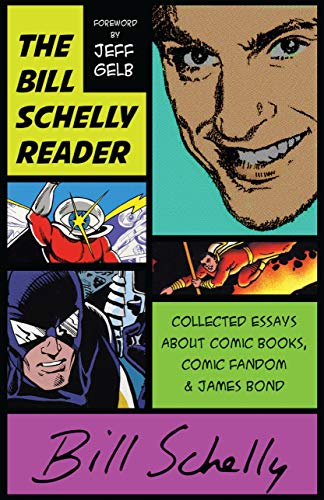
Underrated: The Bill Schelly Reader

This is a column that focuses on something or some things from the comic book sphere of influence that may not get the credit and recognition it deserves. Whether that’s a list of comic book movies, ongoing comics, or a set of stories featuring a certain character. The columns may take the form of a bullet-pointed list, or a slightly longer thinkpiece – there’s really no formula for this other than whether the things being covered are Underrated in some way. This week: The Bill Schelly Reader.


I’ve never been shy about my interest in comic book history, and it was when I was searching for some new books to scratch the itch, I came across The Bill Schelly Reader, a book by Bill Schelly that collects some of his finest prose work on the early history of comics and fandom.

Borrowing the text from the back of the book, because that’ll give you a better synopsis than anything I’ll write:

Bill Schelly has been writing about comics and fandom since 1965. In over 50 years one can do a lot of writing, and The Bill Schelly Reader includes some of the author’s best work on subjects ranging from the golden age of comic fandom to James Bond.

Schelly takes us back to the very beginnings of comic fandom with such articles as:

  • “Batmania”: a short history of the early 1960s fanzine (the first fanzine Bill Schelly ever read) credited for a resurgence of interest in Batman comics during a time of dwindling sales
  • “The First Comicons”: a retrospective on the first conventions organized by comics fans, from the Alley Tally Party to larger events in major cities like New York and Chicago
  • “It Started on Yancy Street”: an issue-by-issue look at the first fanzine devoted entirely to Marvel Comics, and why an unwelcome decision by Marvel led to its demise

In addition, book includes articles about the Silver Age Batman, Hawkman by Joe Kubert, the James Bond books by Ian Fleming, and an interview with the author. With dozens of vintage photos and images!

I’d never knowingly read one of Schelly’s essays before, though that’s mostly because I never got much of an opportunity to read Alter Ego where a lot of his essays were published. Over the course of The Bill Schelly Reader, Schelly dives into the early stages of comic fandom in the 1960’s, exploring the emergence of fanzines and the very first conventions. His essays are deep and incredibly interesting for those of us who want to learn more. A lot of the information that Schelly presents, while by no means the definitive history, paints enough of a picture so that you grasp what those days were like for fans. Remember this was long before any websites or even widely published magazine like Wizard, and so fanzines often had circulation numbers running at less than a thousand issues – and were put together by folks who also had other jobs (not unlike a lot of comics websites, but we don’t need to worry about publishing, printing and distribution of our content).

The essays run an average of ten pages or so each with a lot of additional images that add flavour to the text, and it’s amazing how much info Schelly crams into each one. There’s the odd moment where I found my interest waning, but for the most part the book held my attention from cover to cover (though I’d only read an essay or two a night).

If you’re at all curious about the early days of comic fandom, then I’d highly suggest you take a look at this book. Schelly’s literary work often goes out of print (well, as far as I know from my fifteen minutes of research, anyway), and then inevitably the prices spike. Grab this one if you’re at all interested.


Join us next week when we look at something else that is, for whatever reason, Underrated.

Mini Reviews and Recommendations For The Week Ending 05/21/2021

Sometimes, the staff at Graphic Policy read more comics than we’re able to get reviewed. When that happens you’ll see a weekly feature compiling short reviews from the staff of the comics, or graphic novels, we just didn’t get a chance to write a full review for. Given the lack of new comics, expect this weekly update to begin featuring comics that we think you’ll enjoy while you can’t get anything new to read – only new to you.

These are Graphic Policy’s Mini Reviews and Recommendations.


Logan

Nightwing #80 (DC)– One of the Dick Grayson’s strengths is that he has a network of friends and allies in the DC Universe that he gets help from on missions, and he’s making new friends. Tom Taylor, Bruno Redondo, and a literally electrifying Adriano Lucas lean on this character trait in Nightwing #80 as he, Tim Drake, and Barbara Gordon try to find a serial killer who’s taking out the hearts of homeless people. Redondo uses soft lines and open facial expressions to show how sad Dick is that a kid named Elliott, who he helped get food and hotel room last issue, had to see his father murdered and his heart removed. However, Bruno Redondo can also do comedy and action too drawing a frustrated chibi Oracle when Tim starts to pry about their relationship status, and he and Lucas are a true Bash Brothers team in the fighting video game-worthy choreography of Dick and Tim taking down a couple of Blockbuster’s henchmen. Empathetic scripting from Tom Taylor, kick-ass action sequences from Redondo and Adriano Lucas, and a cute dog to top things off, and Nightwing is back to being one of my favorite DC titles. Overall: 8.8 Verdict: Buy

Wonder Girl #1 (DC)– Wonder Girl #1 is part character intro, part table-setting intrigue, and 100% a visual tour de force from Joelle Jones and Jordie Bellaire. Jones handles the writing duties too, and she gives Yara Flor just as much charisma and personality as she had in Future State. However, her place in the DC Universe (As seen in a truly breathtaking splash page from Joelle Jones.) isn’t set in stone, and Wonder Girl #1 shows various Amazon and divine factions maneuvering and trying to get her while Yara just wants to have a nice trip to Brazil. Wonder Girl hits a range of tones from jarring scarlets from Bellaire and intense visuals during Yara’s “origin” sequence to breezy fun as she dresses down a vlogger. My one qualm with the book is that the scenes with the different factions don’t flow as well as the scenes with Yara and feel like teaser trailer rather than compelling foreshadowing. Overall: 8.0 Verdict: Buy

Wonder Girl #1 (DC)– Wonder Girl #1 is part character intro, part table-setting intrigue, and 100% a visual tour de force from Joelle Jones and Jordie Bellaire. Jones handles the writing duties too, and she gives Yara Flor just as much charisma and personality as she had in Future State. However, her place in the DC Universe (As seen in a truly breathtaking splash page from Joelle Jones.) isn’t set in stone, and Wonder Girl #1 shows various Amazon and divine factions maneuvering and trying to get her while Yara just wants to have a nice trip to Brazil. Wonder Girl hits a range of tones from jarring scarlets from Bellaire and intense visuals during Yara’s “origin” sequence to breezy fun as she dresses down a vlogger. My one qualm with the book is that the scenes with the different factions don’t flow as well as the scenes with Yara and feel like teaser trailer rather than compelling foreshadowing. Overall: 8.0 Verdict: Buy

The Many Deaths of Laila Starr #2 (BOOM!)– Another intelligent, emotional issue of what is turning into a potential modern classic from Ram V and Filipe Andrade. V focuses on class differences, the curiosity of a child, and a goddess experiencing mortality yet again with the help of Andrade’s bendy figure work, grids, and flat colors. The Many Deaths of Laila Starr #2 is centered around the idea that death isn’t physical death, but when the person with the last memory of you passes away. The idea of Death herself experiencing a funeral is a poignant one, and this is definitely a comic to sit with and pore over Ram V’s beautiful words and Filipe Andrade’s beautiful compositions and color palettes. Overall: 9.4 Verdict: Buy

Jonna and the Unpossible Monsters #3 (Oni Press)– Jonna #3 features the same high energy line work and layouts from Chris Samnee as Jonna continues to bound from rock to rock looking water, for her and Rainbow’s dad, or maybe just a monster to fight. However, he and co-writer Laura Samnee use this issue to supply much-needed backstory about this post-apocalyptic world and introduce Jonna and Rainbow to some fellow survivors. There’s a real dissonance between Jonna making shapes against the cave wall and talking about punching monsters, and the rest of the survivors’ very serious discussions about who they’ve lost. The Samnees and skilled colorist Matthew Wilson do a good job of showing how Jonna is really just a kid who thinks this is one big adventure instead of not how the world should be. After the previous action-driven two issues that focus mainly on Jonna and Rainbow’s relationship , the time is perfect for expanding the world of this comic. The Samnees time each piece of information very well and also throw in a killer cliffhanger. Overall: 8.8 Verdict: Buy

Fantastic Four: Life Story #1 (Marvel)– Mark Russell, Sean Izaakse, and Nolan Woodard’s Fantastic Four aging in real time kicks off with a retelling of their classic origin. However, Russell and Izaakse immediately throw spanners in the work by having Reed Richards have a vision of Galactus while he’s bathed with cosmic rays and becomes Mr. Fantastic. This is definitely an oversimplification, but the 1960s in the United States were defined by fear whether of the USSR and “communists”, fear of people with a different skin color than you, or even fear of that guy down the street, who had longer hair and listened to different music than you. Russell and Izaakse tap into this existential fear in Fantastic Four: Life Story between all the parades, superhero montages, and celebrity cameos. Basically, the universe is chaotic and doesn’t give a shit about us, but we can still care about helping our fellow human beings and being good people. Finally, I really enjoyed how Mark Russell wrote Ben Grimm as truly having an antagonistic relationship with Reed Richards and only pretending to like the team for the cameras because the accident ruined his life and relationships. Overall: 8.3 Verdict: Buy


Well, there you have it, folks. The reviews we didn’t quite get a chance to write. See you next week!

Please note that with some of the above comics, Graphic Policy was provided FREE copies for review. Where we purchased the comics, you’ll see an asterisk (*). If you don’t see that, you can infer the comic was a review copy. In cases where we were provided a review copy and we also purchased the comic you’ll see two asterisks (**).

Underrated: X-Men: Assault On Weapon Plus

This is a column that focuses on something or some things from the comic book sphere of influence that may not get the credit and recognition it deserves. Whether that’s a list of comic book movies, ongoing comics, or a set of stories featuring a certain character. The columns may take the form of a bullet-pointed list, or a slightly longer thinkpiece – there’s really no formula for this other than whether the things being covered are Underrated in some way. This week: X-Men: Assault On Weapon Plus


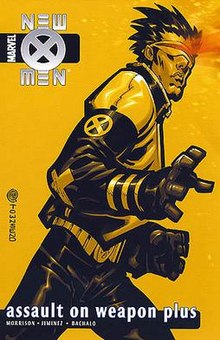
I’ve been collecting X-Men comics for the last year and a half, and while I’ve been focusing mainly on the Uncanny X-Men, I’ve also been picking up issues of X-Men (and later New X-Men), which is how I stumbled across Assault On Weapon Plus. The four issue arc originally appeared in New X-Men #142-145, and was written by Grant Morrison, penciled by Chris Bachalo, inked by Tim Townsend, coloured by Chris Chuckry and lettered by Chris Eliopoulos. The story has been collected in the last two decades, but I’ve no idea how hard those collections are, and given the price and availability of the single issues right now, it’s easy enough to pick up the floppies.

The plot picks up after Emma Frost has been shot, shattered and reassembled (though the only relevance to of that to this story is to explain why Cyclops is drowning his sorrows because Jean caught him in a psychic affair and this is sounding more like a soap opera than I thought it would). There’s a little more to it, but the recap in #142 will catch you up for what is effectively a Wolverine, Cyclops and Fantomex story. Wolverine frequently reminds Cyclops, and by extension the audience, that this isn’t an X-Men mission.

It may seem strange that I’ highlighting a Grant Morrison story, but of the man’s often incredible body of work, this four-parter isn’t one that you hear people talking about all that often (although the run in general does get praise), and the story is more accessible than some of the writer’s other work. Assault On Weapon Plus is more of a straight shooting story about a trio of mutants trying to break into the Weapon Plus program for reasons (Fantomex wants to burn everything to the ground, Wolverine wants to know who he was and Cyclops wants to watch Logan’s back).

It’s a fun story, and definitely one that spurs you from issue to issue.

The story does end on a cliffhanger though, and while the following issues aren’t expensive either, there’d probably be a bit of an annoyance if you only picked up the four issues then you’d be left a touch stranded at the end of New X-Men #145. Ultimately though, this story is so much more than it seems on the surface, as with any Grant Morrison story, but you can’t just read the four issues and stop because there’s no conclusion to the story – although it’s not a bad thing to want to keep reading into the five issue Planet X, which I’ll be doing now.


Join us next week when we look at something else that is, for whatever reason, Underrated.

Mini Reviews and Recommendations For The Week Ending 05/15/2021

Sometimes, the staff at Graphic Policy read more comics than we’re able to get reviewed. When that happens you’ll see a weekly feature compiling short reviews from the staff of the comics, or graphic novels, we just didn’t get a chance to write a full review for. Given the lack of new comics, expect this weekly update to begin featuring comics that we think you’ll enjoy while you can’t get anything new to read – only new to you.

These are Graphic Policy’s Mini Reviews and Recommendations.


Logan

Children of the Atom #3 (Marvel)– Vita Ayala, Paco Medina, and David Curiel take a break from the superhero fights and cameos in Children of the Atom #3 to help readers get to know the characters underneath the costume. They predominantly focus on Carmen aka Gimmick in this issue, and her struggles with finding value in what she does rather than who she is as a person. This extends from her cosplay tutorials and streams to helping her family with chores and childcare as well as her role on the team. Medina draws a lot of wistful glances between her and Buddy aka Cyclops-Lass and uses a fairly pedestrian escape from a spaceship to build that romantic tension between them. Carmen’s arc is definitely the best part of Children of the Atom #3, and I love the emotionally resonant way that Ayala writes her. However, Children of the Atom #3 also sets up the story’s villain and ties this into the very relatable event of using someone for what they can get you, or in this case Cole’s access to Krakoa. After a high-wire, yet uneven beginning, Children of the Atom is finding its footing even with the art shift from Bernard Chang to Paco Medina. Overall: 8.0 Verdict: Buy

Joker #3 (DC)– Joker #3 is like a more psychologically compelling and less focused on shock value Killing Joke meets David Simon’s Homicide: A Year on the Killing Street and Anthony Bourdain’s oeuvre with just a dash of the Batgirls comic I wish was an ongoing. James Tynion, Guillem March, and Arif Prianto are firing on all cylinders as they show how deep Joker has gotten into Jim Gordon’s psyche. This is tempered with salt of the Earth narration of Gordon’s detective techniques and gift for conversation and empathy that turns totally chaotic by the last few pages with the book switching to yet another genre. March’s art is a little Neal Adams and Kelley Jones by way of Brian Bolland, but his ability to carry the main plot while Tynion focuses on character development is all him. They are doing special work in Joker, which has escalated from a focused character study to gonzo action by the end. And the Punchline backup from James Tynion, Sam Johns, and Mirka Andolfo is the best it’s ever been as Andolfo gets to draw a physical confrontation between Punchline and Orca and dig into the messed up mind of her old roommate Aiden. Poor Harper Row, and apologies to all you true crime fans out there! Overall: 9.0 Verdict: Buy

The Silver Coin #2 (Image)– This genre-bending, writer switching anthology turns its sights to the slasher genre with Kelly Thompson and Michael Walsh telling the story of a young girl who goes off to summer camp, gets bullied, and finds revenge with the help of the titular silver coin. The Silver Coin #2 is derivative of classic horror films, and it knows it with its retro VHS filter opener as Fiona watching a video nasty might actually come in handy in summer camp. Walsh hits all his paces as a storyteller from the sickly, wholesome palette he uses when Fiona arrives at camp to the various and sundry ways she gets her revenge. He and Thompson have a lot of fun turning the victim into the baddie, and The Silver Coin #2 is a very cathartic and nostalgic read in the end. Overall: 8.3 Verdict: Buy

X-Corp #1 (Marvel)– I didn’t hate X-Corp #1, and Tini Howard creates some good chemistry between board members Monet, Angel, Multiple Man, and Trinary, but this book’s initial public offering (I had to!) is a little tepid. Some of that comes from the Alberto Foche’s visuals, which are middle of the road Marvel house style with Sunny Gho adding some flourishes with the color palette. They definitely pale in comparison to David Aja’s bleeding edge cover and don’t fit the tone of a book about disrupting tech sectors, intense business negotiations, and yes, flashy gadgets and abilities. Howard’s script isn’t that bad, especially her dialogue, but the first issue’s climax breaks a rule of suspense as she treats readers (who have more knowledge) with the in-universe characters who have less. With Trinary “selling out” and going corporate, Monet suppressing her rage during constant meetings, Angel trying to be a good rich guy, and Multiple Man as the wild card, X-Corp has potential and fills a gap in the X-line. However, this issue is more like smelling something yummy at another diner’s table than having your own meal. Overall: 6.0 Verdict: Pass


Well, there you have it, folks. The reviews we didn’t quite get a chance to write. See you next week!

Please note that with some of the above comics, Graphic Policy was provided FREE copies for review. Where we purchased the comics, you’ll see an asterisk (*). If you don’t see that, you can infer the comic was a review copy. In cases where we were provided a review copy and we also purchased the comic you’ll see two asterisks (**).
Mini Reviews and Recommendations For The Week Ending 05/09/2021

Sometimes, the staff at Graphic Policy read more comics than we’re able to get reviewed. When that happens you’ll see a weekly feature compiling short reviews from the staff of the comics, or graphic novels, we just didn’t get a chance to write a full review for. Given the lack of new comics, expect this weekly update to begin featuring comics that we think you’ll enjoy while you can’t get anything new to read – only new to you.

These are Graphic Policy’s Mini Reviews and Recommendations.


Logan

Batman #108 (DC)– My enjoyment of James Tynion, Jorge Jimenez, and Tomeu Morey’s Batman continues to rise post-Future State, and issue 108 is no exception. In this comic, Batman is placed between the forces of surveillance capitalism and anti-capitalism all augmented with cyberpunk style technology and a candy color palette. The anti-capitalist side is represented by flashy new character Miracle Molly, who sees beneath Matches Malone’s facade, and offers a critique of Batman even though they’ll probably fight down the road. Tynion’s other plot thread is basically Blue Lives Matter with cybernetics, and Jimenez draws the hell out of some robots. The Ghost-Maker backup from Tynion and Ricardo Lopez-Ortiz is delightful as he fights laser tigers, a manga themed assassin named Kid Kawaii, and the mysterious Madame Midas. Pure sugar rush comics. Overall: 9.0 Verdict: Buy

Hellions #11 (Marvel)– Zeb Wells and Stephen Segovia take old X-baddies and use them in a creative way in Hellions #11. Thanks to Mastermind, the Hellions are in their worst nightmares with psychic Kwannon and John Greycrow trying to hardest to fight out of it while Arcade blackmails Sinister (Who’s missing a few teeth) to make clones for him. It ends up being a little more complicated than that with Segovia and colorist David Curiel getting to draw some intense psychic duels between Kwannon and Mastermind, and Wells continues to give Sinister the funniest lines. Even though he puts on a good show for the Quiet Council, Sinister is still irredeemable, and part of the enjoyment of Hellions is watching the extents he goes to cover his crimes against genetics while hoping for the Hellions to eventually expose him. It’s like Breaking Bad, but with capes, clones, and psychic ninjas. Overall: 8.4 Verdict: Buy

Marauders #20 (Marvel)– This issue is all about how great Storm is with various Marauders telling stories of cool or touching things she has done while also guessing how many knives she’s had. Storm’s leaving the team so Gerry Duggan and Stefano Caselli give her a fitting send-off set in a variety of locales as we see her reform Hate-Monger by kicking his ass, rescue a powerful young mutant in India and be used as bluffing tool. Of course, we get to see her close friendship with Kate Pryde, and how Storm helped her get through the crisis of possibly not being a mutant. Caselli does comedy as well as action in this book with a hilarious montage of Storm pulling knives out from various parts of her costume as well as a great panel of Lockheed driving the ship while the team and its allies feast. Wisely, Storm’s exploits and character is the focus of Marauders #20, but Duggan sets up a little bit of intrigue for the upcoming Hellfire Gala that could reshape this team’s role for better or worse. Overall: 8.6 Verdict: Buy

Die #16 (Image)– After the fantasy geopolitics of the previous arc, Die is back in quest and cosmic horror mode as Kieron Gillen and Stephanie Hans have the party traveling to the center of the world. Gillen portrays everyone at their worst: drinking and struggling and hoping it’s all going to be over. Hans gets to tap in her range as an artist going from big sea journey landscapes to intimate conversations between Sol and Ash (The “baddies” of the party) and finally turning into pure horror mode towards the end. With the comic about to reach its end, it’s nice to see Kieron Gillen and Stephanie Hans focusing of the main cast and interrogating why characters like Sol found escape in fantasy and roleplaying worlds. Plus there’s a real doozy of twist at the end. Overall: 8.2 Verdict: Buy

The Good Asian #1 (Image)– Pornsak Pichetshote, Alexandre Tefenkgi, and Lee Loughridge use the noir genre to explore racism against Asian-Americans, respectability politics, and the effect of policing in society through the character of Edison Hark. Hark is a Hawaii police detective who is transferred to San Francisco’s Chinatown where there are rumblings that the Tong gangs have returned, and the Chinese maid of a prominent wealthy businessman has gone missing. Pichetshote and Tefenkgi deftly balance a whodunnit, crime thriller, and use flashbacks to flesh out Edison’s character drawing parallels between him and an older Irish-American cop as breaking the racial glass ceiling. Loughridge’s flat colors are a treat exploding for sequences of racialized violence, fading out for flashbacks, or turning pink when Edison thinks about one of his vices: white women. Featuring wonderful compositions from Alexandre Tefenkgi and punchy dialogue from Pornsak Pichetsote, The Good Asian #1 is a solid crime comic that also sheds light on the anti-Asian racism that is baked into the core of the United States. Overall: 8.9 Verdict: Buy

Brett

Nocterra #3 (Image Comics) – A really good third issue that balances showing and telling. We get to see more of Val’s history with her parents and learn more of what it means to turn into a Shade. There’s also a lot of action as Bill is in the pursuit of Val and her group with hints as to history there. What really stands out are the colors that pop from the page and really emphasize the darkness of the world. Overall Rating: 8.3 Recommendation: Buy

Batman/Fortnite: Zero Point #2 (DC Comics) – I was down on the first issue. It felt like it was geared too much towards fans of the video game. The second issue is an improvement as Batman must figure out what’s going on if he hopes he can escape. It takes us through his process as he has 22 minutes before the game resets and he starts all over. It’s a really interesting concept and as a puzzle for him to solve, it’s great. It also could be a trap by anyone and not so much Fortnite focused. The art is pretty good with small details being added with each reset to tell a bit of what has happened. This has me much more interested in what’s to come after being generally turned off from the debut issue. Overall Rating: 7.95 Recommendation: Buy

Crime Syndicate #3 (DC Comics) – Such a great concept just squandered. The art is dodgy and story choppy at times. There’s a lot of potential in the series and concept but it never really focuses on the right things. This is one where some a lack of details hurts it. Overall Rating: 6.0 Recommendation: Pass

Green Lantern #2 (DC Comics) – The first issue was good but this issue is where things really take off. The first one had me generally willing to come back. This issue I’m all in. It has a shocking ending as the Guardians restructure the Green Lantern Corps with their inclusion to the new cosmic structure being set up. Now I can’t wait to see what’s next. Overall Rating: 8.4 Recommendation: Buy

Man-Bat #4 (DC Comics) – This series has been really solid. Kirk and Francine are under the control of Scarecrow and the dual narrative they’re experiencing is some great stuff. The art really nails down what’s happening and brings a bit of sadness to it all. Just a fantastic issue and overall this is a series I want to see more of. Overall Rating: 8.25 Recommendation: Buy

Suicide Squad #3 (DC Comics) – We’re getting a crossover with Teen Titans Academy as the Squad needs to get Bolt. The series has been a pleasure to read with the dysfunction on full display. The personalities of the team is really what stands out as they squabble, be smart-asses, or just want to run for their lives. The series has no problem delivering a body count and have this Squad screw up. It’s a fun series where the bad guys are really… bad at what they do. Overall Rating: 8.5 Recommendation: Buy


Well, there you have it, folks. The reviews we didn’t quite get a chance to write. See you next week!

Please note that with some of the above comics, Graphic Policy was provided FREE copies for review. Where we purchased the comics, you’ll see an asterisk (*). If you don’t see that, you can infer the comic was a review copy. In cases where we were provided a review copy and we also purchased the comic you’ll see two asterisks (**).

« Older Entries Recent Entries »