Category Archives: Underrated

Underrated: The Witcher Omnibus

This is a column that focuses on something or some things from the comic book sphere of influence that may not get the credit and recognition it deserves. Whether that’s a list of comic book movies, ongoing comics, or a set of stories featuring a certain character. The columns may take the form of a bullet pointed list, or a slightly longer thinkpiece – there’s really no formula for this other than whether the things being covered are Underrated in some way. This week:  The Witcher Omnibus.


I often wonder how to start a column when the focus is an adaptation of other media – especially when the other media is an adaptation of something else. Such as it is with Dark Horse’s The Witcher Omnibus. The book collects four five issue miniseries mostly written by Paul Tobin, with two being based on the books and two seemingly based on the video games that were also based on the books judging by Geralt’s armour and the appearance of certain characters in the final story.

As someone who has grown to love the The Witcher over the last 18 months, getting a chance to experience the stories in a different format was an exciting opportunity. I loved the books, and thoroughly enjoyed The Witcher III: Wild Hunt on PlayStation 4. The eight episodes of the Netflix adaptation wasn’t even close to being enough for me, and I can’t wait to experience more when the second season hits. For some reason, despite being a comic guy, I had never actually read the comics until my parents sent me the omnibus for my birthday (it hasn’t happened yet – I just have no patience when it comes to opening gifts for my birthday), and I read the 200 odd pages in two sittings interrupted only by an exhausted sleep.

The book was a fantastic read, and I really enjoyed seeing how the a short story from one of the first two books translated to comic book form (I’d be more specific which book it was from, but I read them back to back and often get which short stories are in which book mixed up), just as it was fun to see a story set after the events of one of the game’s endings. Thankfully, it was the ending I had gotten when playing through, so it could be confusing if you only went through the game once and got a different outcome.

That’s honestly the only downside I can think of to the omnibus. That you may need to know pieces from the other adaptations to enjoy one of the stories within (even though the game isn’t specifically referenced so the story won’t spoil your enjoyment of Wild Hunt), but if you’re somebody like me who has gone all in of Andrej Sapkowski’s creation then you’ll not notice it. Or if you’re willing to accept that certain things have happened that don’t impact the story then you’ll still be able to enjoy the final story.

All in all, it’s a minor complaint.

The art is varied within the omnibus, with the first two tales taking on a more Hellboy-esque look and feel which suits the world of Geralt just fine, and the latter two taking inspiration from the imagery gamers are more familiar with. Either way, I had absolutely no complaints with how the book looked, how it read nor how Tobin and the rest of the creative team handled Geralt of Rivia.

The book will set you back between roughly $25-30 depending which side of the Canadian border you’re on, and it was worth each and every penny for me. If you’re curious about who Geralt is beyond the events in the Netflix show and you haven’t read the books yet, then this is a great introduction. The nature of his long life and many adventures lend themselves well to short pointed stories within a five issue miniseries, which is what makes this book stand out so well; there isn’t an epic story told over hundred of pages, but rather a selection of Geralt’s contracts, his adventures and his stories. So toss a coin to you witcher comic shop and grab this book. You won’t be disappointed


Join us next week when we look at something else that is, for whatever reason, Underrated.

Underrated: Comics Not In Diamond’s Top 100 For January 2020

This is a column that focuses on something or some things from the comic book sphere of influence that may not get the credit and recognition it deserves. Whether that’s a list of comic book movies, ongoing comics, or a set of stories featuring a certain character. The columns may take the form of a bullet pointed list, or a slightly longer thinkpiece – there’s really no formula for this other than whether the things being covered are Underrated in some way. This week: Comics not in Diamond’s top 100 sellers for January 2020


This week we’re going to be looking at a list of comics that are all pretty good, but don’t get the attention that they deserve. Now I’m not even going to pretend to have a definitively exhaustive list of underrated comics here, because we’re hoping  that you decide to check at least one of these series out next time you’re looking for something new either online or at your LCS, and giving you a huge list to check out would be counter productive to that. Instead, you’ll find four to six comics that are worth your attention that failed to crack the top 100 in sales. The only hard stipulation for this week: not one of the comics made it into the top 400 (yeah, I went for books that hardly any of you have read for whatever reason) for this month’s comic sales, according to Comichron, which is why they’re Underrated.


Uncle Scrooge #53 (IDW)
Sales Rank/Units Sold: 338/2,926
Why You Should Read It:  
I will never apologize for enjoying Disney comics. They’re often aimed at kids, but I’ve rarely ever not enjoyed the vibrant four colour pages. Will they ever make my Top Ten Year End lists? Probably not, but that doesn’t mean they’re still not a genuine pleasure to read (I refuse to call them a guilty pleasure).

Rai #3 (Valiant)
Sales Rank/Units Sold: 275/5,080
Why You Should Read It: 
There’s something magical about a story that helps you to ask questions about your place in the world, what it means to be human, when you should resort to violent recourse and how easy it can be to touch the lives of those around you. This comic does all of that.

Quantum & Woody #1 (Valiant)
Sales Rank/Units Sold: 203/8,958
Why You Should Read It: 
Obviously I’m going to be biased toward this, but there’s a very British comics style to the first issue of the new series. For me, that’s a major plus, but if it’s not a selling point for you, there’s actually a complete story in this comic from start to finish. And I loved it.

Folklords #3 (Boom)
Rank/Units Sold: 189/9,769
Why You Should Read It: 
Thankfully, more people read the third issue than the second, but this is still a criminally underrated comic. It is a book that rewards close attention; far from predictable, this is another Matt Kindt story that you’re going to wish you read.

The Last God #4 (DC/Black Label)
Sales Rank/Units Sold: 159/11,967
Why You Should Read It: 
A comic with two stories being told concurrently – the present and the past, with only 30 years in the difference. The book examines what happens when the legends you believe aren’t entirely true, whilst also dealing with how we came to believe in those same legends. Plus, violence, corruption and a lost innocence and naivety.

Once and Future #6 (Boom)
Sales Rank/Units Sold: 144/13,548
Why You Should Read It: 
Reimagining King Arthur as something other than the hero we’ve all come to know and love growing up is an interesting wrench to throw into the mix, but then when you add in the modern elements to the tale whilst centering on a main character who has no idea what’s happening… it’s fantastic stuff. Truly brilliant.

.


Unless the comics industry ceases any and all publication look for a future installment of Underrated to cover more comics that aren’t cracking the top 100.

Underrated: Halls Of The Turnip King

This is a column that focuses on something or some things from the comic book sphere of influence that may not get the credit and recognition it deserves. Whether that’s a list of comic book movies, ongoing comics, or a set of stories featuring a certain character. The columns may take the form of a bullet pointed list, or a slightly longer thinkpiece – there’s really no formula for this other than whether the things being covered are Underrated in some way. This week:  Halls Of The Turnip King.


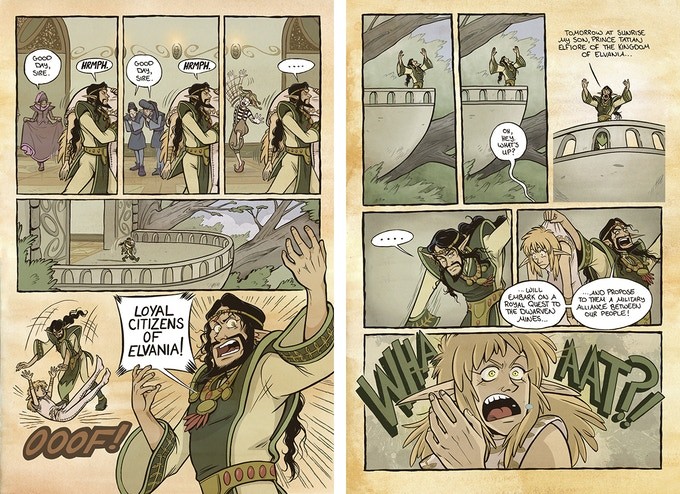
I picked up Halls Of The Turnip King, published by Pegamoose Press yesterday from my LCS. It was written, drawn and hand lettered by Brenda Hickey. Originally released as a very limited series with a small print run, Halls Of The Turnip King also adds a thirteen page epilogue to the story, and I thoroughly enjoyed every page.

The plot is actually pretty simple; an elf prince goes to the dwarf kingdom to forge an alliance because the king believes a war is coming. But the prince would rather be playing video games than playing politics and doesn’t really have any idea what he’s doing. But where the plot is fairly straight forward it allows Hickey to really go to two with the humour in the book. If you like visual gags, the honouring, mickey-taking and subverting of fantasy tropes then this is going to be a book you’ll want to get your hands on.

Hickey also has some really fantastic examples of lettering and playing with the panel layouts and sound effects. One of these moments has a sound effect tapping a character on the shoulder to get his attention. I love the way that Hickey is able to work these often subtle moments into the graphic novel. It honestly wasn’t until I started writing this column that I realized just how much I enjoyed the way Hickey has drawn and lettered the comic. There’s an energy here that makes the comic feel almost Monty Python-eqsue at times, but it always feels like a complete and cohesive vision from Hickey.

There’s also a good lesson in the comic, too, but if I tell you what it is then it’ll probably give away too much of the story. The plot is fairly basic on paper, and that’s actually one of the comic’s strengths.

Hickey shows that you don’t need to have a Lord Of The Rings or Game Of Thrones/A Song of Ice And Fire style epic to tell a good story. Sometimes, a story about trying to forge an unlikely alliance can turn out to be exactly what you want to read on a Saturday morning (yes, I am writing this half an hour before publication). I read this book in one sitting, and I enjoyed each and every page of the book. Art, humour, the lettering (which is an underrated side of comics in and of itself) are utterly fantastic.

If this was a review of the book, I’d probably be looking at giving it upwards of an eight or a nine (I say this because there aren’t that many reviews of the book from what a quick google search found). But, because this isn’t a review, what I will say is that this is an Underrated gem and was worth every penny of the $30 it cost me.


Join us next week when we look at something else that is, for whatever reason, Underrated.

Underrated: Imperium

This is a column that focuses on something or some things from the comic book sphere of influence that may not get the credit and recognition it deserves. Whether that’s a list of comic book movies, ongoing comics, or a set of stories featuring a certain character. The columns may take the form of a bullet pointed list, or a slightly longer thinkpiece – there’s really no formula for this other than whether the things being covered are Underrated in some way. This week: the comic book Imperium


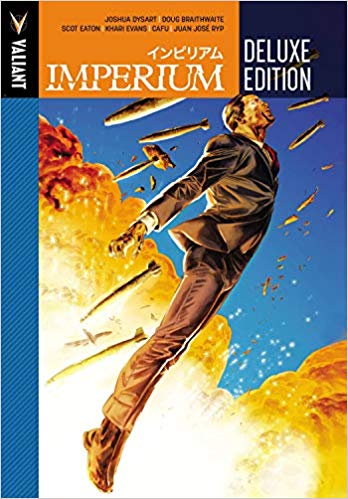
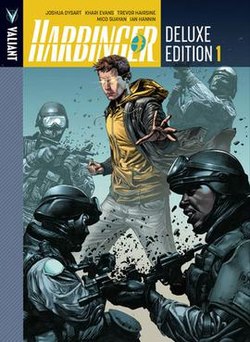
When Valiant Entertainment relaunched in 2012, one of the four books that the publisher started with was Harbinger. Arguably one of Valiant’s signature books, the original series launched in the 90’s with the publisher’s first incarnation. I have never read the 90’s series in full, but have dabbled in an issue here or there (specifically the two that contained chapters of the multi-book crossover Unity). I have, however, read the entirety of the modern Harbinger run, and own a smattering of individual comics and the three deluxe hardcovers containing the story; Harbinger Deluxe Edition One, Harbinger  Deluxe Edition  Two and Harbinger Wars 
Deluxe Edition. Until very recently, I had not read Imperium. While I have had access to the review copies for years, I had long decided that I would rather read the story in print form so I was waiting to pick up the deluxe hard cover edition of Imperium from my LCS. A couple weeks ago, I finally ordered it.

It cost me $65 before taxes and it was worth every penny.

There are easy comparisons to make between the Harbinger story and that of the X-Men, between Toyo Harada and Magneto; an incredibly powerful man who wants peace at any cost. The truth is when I was reading the book there are obvious similarities to the X-Books. Especially now that the X-Men have their own nation state, which is where Imperium finds Toyo Harada and his Foundation.

Joshua Dysart pulls the sixteen issue story in from various places in the Valiant universe, touching upon characters that will be familiar if you have read the previous Harbinger run that I spoke about (again) last week. If you haven’t read those books it shouldn’t be a big deal – the story is told in a way that it can be read alone, but you’ll miss out on some context here and there (and a great build up) if you skip what came before.

Watching Harada build his nation state free of scarcity while fighting the countries that are trying to stop him over the course of sixteen issues is fascinating. We watch him take some extraordinary measures to ensure that he is left alone, and we wonder whether the man is truly as philanthropic and good as his ideal seems or is he as self serving as he sometimes appears?

Although the book is told from Harada’s perspective Dysart never quite leaves you confident that you should be rooting exclusively for him. Should he be stopped? Or does his means justify the ends?

What makes this such a great story is that Dysart has balanced the antagonists so well that nobody seems to be explicitly evil aside from a certain corporation out exclusively for profit, which illustrates the nobility behind Harada’s ideal while underscoring the capitalist nature of our society. There are so many different aspects to this story; the concept of artificial intelligence becoming sentient, does anybody ever truly have free will, the balance of sacrifice for progression of the greater good. What devils do you have to make a deal with?

When it comes to everybody else in this book you have to wonder whether you should root for anyone.

Joshua Dysart’s writing will educate you, encouraging you to think and develop yourself all while delivering one of the greatest stories in comics. That sentence was as true for Harbinger as it is for Imperium. He has a unique ability to distill a greater political and ideological idea down into a story that will never overwhelm a reader but also leaves you thinking about the nature of the politics involved long after the cover has been closed.

Whether this story is one told from the villain’s perspective as he tries to achieve his goals having convinced his followers they are doing the right thing or if it is story about a hero who faces insurmountable odds as he tries to make the world a better place will differ on how you read the book.

And that, for me, makes it an utter masterpiece.

This series is the subject of today’s Underrated because I had long ehard how brilliant the story was from others who have read the book so I ended up reading the full run in almost a single sitting. And I realized that I seldom hear people talk about Valiant’s Harbinger comics, or Toyo Harada. I hope that changes.

Underrated: Harbinger

I was going to write about Imperium this week, but I haven’t finished the hardcover book I picked up Wednesday from my LCS. So instead of rushing a column on a book that deserves a lot more attention than I’d have time to give it, I decided to rerun a column about the series preceeding Imperium.


This is a column that focuses on something or some things from the comic book sphere of influence that may not get the credit and recognition it deserves. Whether that’s a list of comic book movies, ongoing comics, or a set of stories featuring a certain character. The columns may take the form of a bullet pointed list, or a slightly longer thinkpiece – there’s really no formula for this other than whether the things being covered are Underrated in some way. This week: the comic book publisher Harbinger


When Valiant Entertainment relaunched in 2012, one of the four books that the publisher started with was Harbinger. Arguably one of Valiant’s signature books, the original series launched in the 90’s with the publisher’s first incarnation. I have never read the 90’s series in full, but have dabbled in an issue here or there (specifically the two that contained chapters of the multi-book crossover Unity). I have, however, read the entirety of the modern Harbinger run, and own a smattering of individual comics and the three deluxe hardcovers containing the story; Harbinger Deluxe Edition One, Harbinger  Deluxe Edition  Two and Harbinger Wars 
Deluxe Edition. The latter also contains four issues of Bloodshot that tie into the Harbinger Wars miniseries – also four issues. The series is also collected in trade paperback as well (though I have no idea how many volumes). I realize I’m rambling at this point, so I’ll get back on to the subject at hand.

It would be easy to compare Harbinger to the various X-Men comics Marvel has released through the years; both feature teenagers with powers originating from a a genetic difference (although Valiant’s psiots need to be activated through risky painful procedures or times of extreme stress whereas Marvel’s mutants just need to hit puberty), and both have a villain character who is more complicated than you would initially expect. While the comparison is justified, it also does a disservice to the Harbinger comics to write them off as another publisher’s X-Men imitation.

Especially because Joshua Dysart’s run on the series (which also include Imperium, which I have inexplicably not finished yet) deals with some really interesting concepts that you don’t often find elsewhere. It’s for this reason that I hold his run as some of the very best team based comics that been published in the last ten years (honestly, I’d also go so far as to say that I’ve ever read).

The characters are wonderfully deep and complex, some are flawed and broken, searching for a redemption that may never come; others are desperately trying to make the world a better place no matter the cost; one wants to destroy a shadowy organization that may or may not have more worldly influence than they should regardless of the cost; and one wants to be a bonafide superhero in a world in which right and wrong and good and evil are not always on the same side. The series, at its most simple description, can be boiled down to two incredibly power psiots, Peter Stanchek and Toyo Harada having a disagreement, and at the outset you know who fills the typical hero/villain positions, but after a few issues you’ll begin to question who you should root for.

Should you root for anyone?

Dysart’s story is a wondrous thing. In giving us a gripping and emotional tale about people who just happen to be caught up in events, people who are just reacting – and not always well – to the stimuli around them, some of whom are super powered, he also leaves us questioning the traditional role of the hero and villain. Much like Magneto and Professor X were allegories for Malcolm X and Dr. Martin Luther King Jr. in the 60’s, Stanchek and Harada represent the world we live in today; shades of grey where ethically and morally questionable decisions are made by the people we’re supposed to hold in high esteem. Dysart uses these characters to remind us that beneath the power, the people we follow are just as flawed as the next person. Stanchek, with his position as a hero within the book, has made some pretty fucking awful decisions – ones where forgiveness shouldn’t be given lightly – but then is Harada any better?

We’re only scratching the surface here (and honestly, only the first trade or so if you’re going the non-deluxe route), and Dysart doesn’t let up throughout the run. His writing will educate you, encouraging you to think and develop yourself all while delivering one of the greatest stories in comics.

I don’t mean to discount the artistic contributions to the book, and it may seem that I have, but Harbinger, like almost every Valiant book, features some consistently brilliant artwork by artists, colourists and letterers that will have you asking why you hadn’t heard of them before (since the series wrapped, some have gone on to become more familiar to comic fans in general). I remember reading the comics for the first time and being in awe of what I was seeing; Harbinger remains one of the only series which I have framed on my wall simply because the interlocking covers to issues 7-10 by Mico Suayan are so damn pretty.

The art more than balances the story, which is an impressive feat.

This series is the subject of today’s Underrated because I had forgotten how amazing it was until I sat down and read the full run in almost a single sitting. And I realized that I seldom hear people talk about Valiant’s Harbinger comics, or Toyo Harada. With one of the most complex and interesting characters in the medium getting a six issue miniseries this year, I hope that changes.

Do yourselves a favour, add The Life and Death of Toyo Harada to your pull list now. Preorder the series because, and I say this after having read the first issue already, it’s going to be amazing.


As an addendum to this column, I’d like to say that The Life and Death of Toyo Harada was every bit as good as I hoped. Yes, I am aware that reading the end before the middle isn’t always ideal, but c’est la vie.

Underrated: Comics Not In Diamond’s Top 100 For December ’19

This is a column that focuses on something or some things from the comic book sphere of influence that may not get the credit and recognition it deserves. Whether that’s a list of comic book movies, ongoing comics, or a set of stories featuring a certain character. The columns may take the form of a bullet pointed list, or a slightly longer thinkpiece – there’s really no formula for this other than whether the things being covered are Underrated in some way. This week: Comics not in Diamond’s top 100 sellers for December 2019


This week we’re going to be looking at a list of comics that are all pretty good, but don’t get the attention that they deserve. Now I’m not even going to pretend to have a definitively exhaustive list of underrated comics here, because we’re hoping  that you decide to check at least one of these series out next time you’re looking for something new either online or at your LCS, and giving you a huge list to check out would be counter productive to that. Instead, you’ll find four to six comics that are worth your attention that failed to crack the top 100 in sales. The only hard stipulation for this week: not one of the comics made it into the top 400 (yeah, I went for books that hardly any of you have read for whatever reason) for this month’s comic sales, according to Comichron, which is why they’re Underrated.


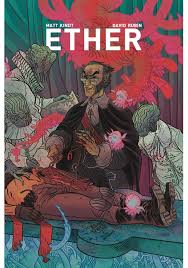
Ether: Disappearance of Violet Bell #4 (Dark Horse)
Sales Rank/Units Sold: 338/2,700
Why You Should Read It:  
I will never apologize for raving about Matt Kindt. The third volume of Ether, a story about a modern scientist in a fantasy world, has Boone Dias solving a magical mystery using science. It is a magical combination – poor pun intended.

Rai #2 (Valiant)
Sales Rank/Units Sold: 267/5,823
Why You Should Read It: 
There’s something magical about a story that helps you to ask questions about your place in the world, what it means to be human, when you should resort to violent recourse and how easy it can be to touch the lives of those around you. This comic does all of that.

Middlewest #13 (Image)
Rank/Units Sold: 209/8,488
Why You Should Read It: 
A young adventurer, a carnival of magicians a destructive tornado and some utterly fantastic artwork. This isn’t your typical coming of age story, and that’s only one of the things that makes it special.

The Last God #2 (DC/Black Label)
Sales Rank/Units Sold: 144/12,858
Why You Should Read It: 
A comic with two stories being told concurrently – the present and the past, with only 30 years in the difference. The book examines what happens when the legends you believe aren’t entirely true, whilst also dealing with how we came to believe in those same legends. Plus, violence, corruption and a lost innocence and naivety.

Folklords #2 (Boom)
Rank/Units Sold: 186/9,613
Why You Should Read It: 
A comic that rewards close attention; far from predictable, this is another Matt Kindt story that you’re going to wish you read.

Once and Future #5 (Boom)
Sales Rank/Units Sold: 133/14,330
Why You Should Read It: 
Reimagining King Arthur as something other than the hero we’ve all come to know and love growing up is an interesting wrench to throw into the mix, but then when you add in the modern elements to the tale whilst centering on a main character who has no idea what’s happening… it’s fantastic stuff. Truly brilliant.

.


Unless the comics industry ceases any and all publication look for a future installment of Underrated to cover more comics that aren’t cracking the top 100.

Underrated: Freaks Of The Heartland

We’re rerunning an older column this week. I may have gotten to obsessed with Westworld and may have forgotten to write a new column for the week.


This is a column that focuses on something or some things from the comic book sphere of influence that may not get the credit and recognition it deserves. Whether that’s a list of comic book movies, ongoing comics, or a set of stories featuring a certain character. The columns may take the form of a bullet pointed list, or a slightly longer thinkpiece – there’s really no formula for this other than whether the things being covered are Underrated in some way. This week:  Freaks Of the Heartland

foth.jpg

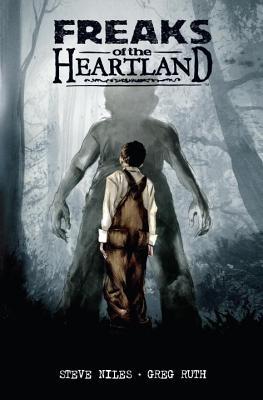
This is another book in the “well this looks interesting” series that usually results in me grabbing, seemingly at random, a trade paperback from the shelves at my LCS. Freaks of the Heartland was originally published as a six issue miniseries around 2004/2005. The series was written by Steve Niles and Greg Ruth handled the art and lettering.

Freaks Of The Heartland is set in the 50’s or 60’s, based on the visual clues throughout the book, and tells the story of young Trevor Owen and his mysterious younger brother Will, a mysterious child who is condemned to live in the barn behind the house. 

When I first cracked the cover, I was struck at how wonderful the art was – which feels like an odd statement given the subject of the book. Ruth’s work is frankly astounding. He is able to give you all you need to know about the characters within a panel or two at the very most – whether this is a facial expression, a gesture or their body language, this is a book where the words are almost unnecessary for your understanding of the story and the journey the characters are on. 

Niles is known for his horror comics, and the story of Freaks of the Heartland has its origins in the horror genre. There is the hidden threat and ominous sense of foreboding are very present throughout this book, and right up until the very end you’re never quite sure how the cards will fall in the conclusion. Nothing is telegraphed, nothing is given away, and the ending is all the more powerful for that. I went into this book without any idea of the plot – I never bothered to read the back of the book, and so I won’t give you anymore plot details here than I have because there are moments and revelations that hit me as I turned each page that I don’t think would have had the same impact upon me had I been more cognizant of the plot when opening the book.

Instead, I hope you’ll take my word for it that this is an utterly fantastic non-superhero story that will make you rethink the power of sequential art as a story telling medium. I genuinely believe that this story, a story that is told in its entirety in one volume, is an example of what comics are truly capable of when you look past the cyclical nature of superhero stories.

I devoured this book in a single sitting and knew immediately that had it been released this year then there is no question it would have made an appearance on my Best Of 2018 list. At this point, I’m thinking I’m going to add some kind of “Best thing I read this year that wasn’t from 2018” category just so I can highlight the book once again.

I usually end this column with a recommendation to check out the book or series or movie in question, but I genuinely can’t recommend this graphic novel to you highly enough If you don’t grab this with both hands when you see then you’ll miss an Underrated gem.


Join us next week when we look at something else that is, for whatever reason, Underrated.

Underrated:Bedlam

This is a column that focuses on something or some things from the comic book sphere of influence that may not get the credit and recognition it deserves. Whether that’s a list of comic book movies, ongoing comics, or a set of stories featuring a certain character. The columns may take the form of a bullet pointed list, or a slightly longer thinkpiece – there’s really no formula for this other than whether the things being covered are Underrated in some way. This week:  Bedlam


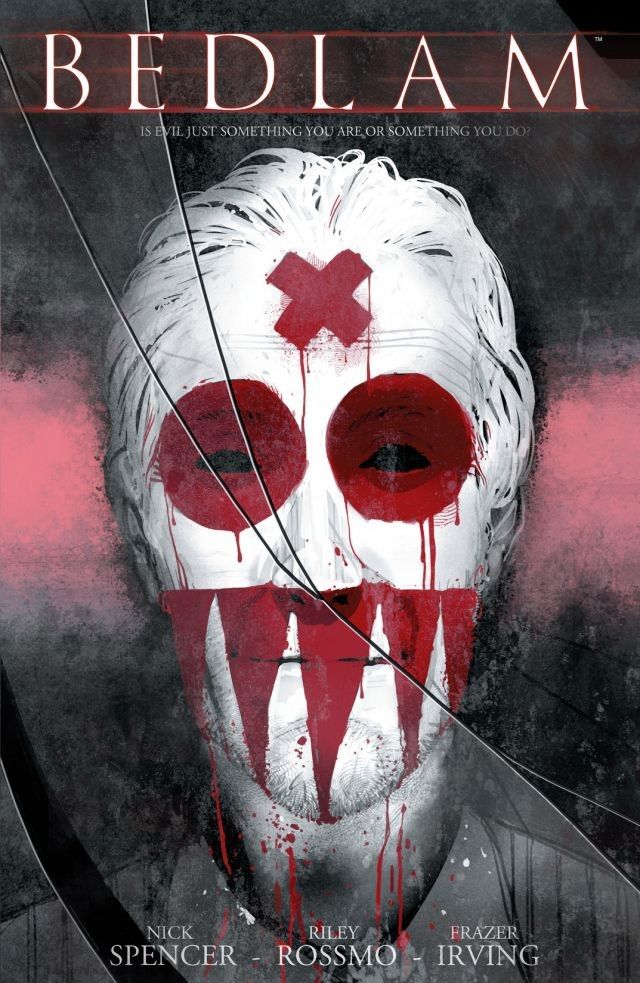
I had stopped into my LCS in the middle of a bit of a winter storm on my way home (depending on where you’re from will depend on how bad you’d have found it. I’m in Eastern Canada, and it wasn’t too bad; I could still see across the street and the snow wasn’t super deep), and my friend had just finished reading the first volume of Bedlam written by Nick Spencer with art by Riley Rossmo and colours by Frazier Irving. He suggested I check it out, so I did and started the trek home.

Bedlam was published by Image beginning in 2012 and ran for 11 issues – which was not enough to tell a complete story, but if you stop reading after the first volume you get a solid open-ended thriller comic.

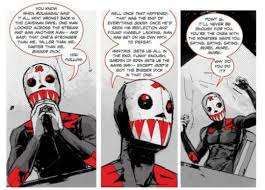
The book focuses on a villain who is essentially the Joker named Madder Red as he tries to navigate the world after being cured of his evil and sadistic desires. We also get to see how the city of Bedlam has moved on since Madder Red’s three year reign of terror, and we join the story just as a new killer begins to haunt the city. Spencer divides the time between revealing more about who Madder Red was whilst also showing who Fillmore Press is now as he tries to help the police capture a killer by using intuition honed by years of being a homicidal maniac himself.

It’s an interesting story that doesn’t shy away from who Fillmore used to be; Spencer never once tries to make Madder Red sympathetic, though we never see Madder Red without his mask during hiss reign of terror or his rehabilitation which left me wondering whether Fillmore was “cured” of the evil, or if he had simply locked it away.

As with any story about a Joker analogue, there is a Batman-like character here called the First (of many) who actually takes a back seat to the police detective Ramirez and Fillmore Press as they attempt to get ahead of the maniac murdering his way across Bedlam. It’s the lack of focus on the superhero that I enjoyed the most, with Ramirez and Press being the focus of the book that gives us a peek behind the curtain of what it would be like working with a reformed villain.

Riley Rossmo and Frazier Irving give the book a haunted horror style presentation, the world shown primarily in monotones or flat grays with only flashes of red standing as the vibrancy on the pages. Almost as if the comic is insinuating that Fillmore Press was only truly alive before his reformation.

It’s an interesting book, and I read both volumes of the trades in one sitting. For me, it certainly started stronger than it ended – but that’s only because I felt it ended in the middle of the story. But such is often the way with comics.

If you see this book when you’re at your LCS, give it a go. It’s a solid read, and I don’t regret the $15 on the buy one get one sale. It’s certainly worth $10 for the first volume alone, so don’t be afraid to grab this when you see it on the shelf if you’re looking for something to read; if you skip it, then you’ll miss an Underrated gem.


Join us next week when we look at something else that is, for whatever reason, Underrated.
Underrated: Superman/Batman: World’s Finest

This is a column that focuses on something or some things from the comic book sphere of influence that may not get the credit and recognition it deserves. Whether that’s a list of comic book movies, ongoing comics, or a set of stories featuring a certain character. The columns may take the form of a bullet pointed list, or a slightly longer thinkpiece – there’s really no formula for this other than whether the things being covered are Underrated in some way. This week:  Superman/Batman: World’s Finest


Fifteen years ago, I picked up this book when I had first moved to Canada and I was looking for something to read that wasn’t Marvel related. Volume one of a series seemed like a good enough place to start, and despite knowing very little about DC’s comics at the time I was more than aware who Batman and Superman was in the general sense from the movies and TV shows that had been released at the time.

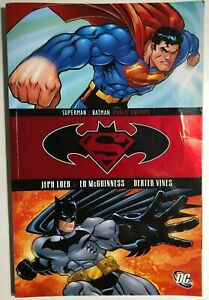
The story was also adapted for DVD in 2009 or so under the title Superman/Batman: Public Enemies. Because I’m not talking about the adaption today, I’m referring to the story under the comic book title.

No, today I wanted to revisit a story I hadn’t read in years because my wife picked me up a Batman blind box recently, and this was one of the books within the box. I’d forgotten how much I enjoyed reading it until I flicked through the softcover collection again.

Collecting the first six issues of the series, Superman/Batman: World’s Finest was released in April 2004, and was written by Jeph Loeb with art by Ed McGuinness and colours by Dexter Vines. The story features a then President Lex Luthor, the framing of the man of steel for Metallo’s murder and a fantastic twin narrative device that allows Loeb to use the internal monologues of both Batman and Superman to great effect. It is often the source of my laughter when reading the book, as both men have some diametrically opposed viewpoints on things, and their thoughts in the moment are almost mirrored.

It’s honestly worth reading for that alone.

The story itself is largely free of any major continuity trappings from other series, by which I mean at the time I was able to go into this entirely blind about the state of the DC universe in 2004/2005 and still thoroughly enjoy the story. And my introduction to a cast of new characters like Captain Atom, Black Adam, Major Force and others I had never heard of before.

Although there have been a lot of really good Batman/Superman stories since this came out, the writing of Loeb and the way he has the two leads play off each other makes this collection stand out. If you’re not that keen on reading yet more stories featuring two of DC most popular heroes, then that’s fine. But you’ll be missing out on one of the coolest and most underrated aspects of this collection – I’ve said it before, and I’ll say it happily again – the dueling monologues of Superman and Batman highlight Loeb’s understanding of the two characters and their relationship.

The only downside is that as my introduction to DC comics, this remains one of the finest examples of that relationship I’ve read to this day.

You can find this collection at your local comic shop; it’s still in print so shouldn’t be too hard to find if you’re looking for it. I highly recommend checking it out when you get a chance.


Join us next week when we look at something else that is, for whatever reason, Underrated.
Underrated: The Highest House

This is a column that focuses on something or some things from the comic book sphere of influence that may not get the credit and recognition it deserves. Whether that’s a list of comic book movies, ongoing comics, or a set of stories featuring a certain character. The columns may take the form of a bullet pointed list, or a slightly longer thinkpiece – there’s really no formula for this other than whether the things being covered are Underrated in some way. This week:  The Highest House


I had picked this book up prior to going on vacation to read on the plane at the suggestion of my LCS, but never actually got around to reading the book while I was away. Thankfully, I found I had the time this week and decided to sit down and start reading the book in between devouring Andrej Sapkowski’s The Witcher novels. 

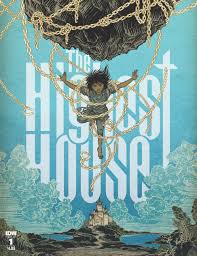
I don’t say this lightly, but The Highest House is one of those books you give to people who don’t like comics, or don’t read comics, to show them what the medium can do. Its impact isn’t only felt in the story, but rather that you don’t need to be aware of decades of tropes and nuances to get the most from the book. This is just a really moving and powerful story about change and overcoming the shit life throws at you in order to rise above and become the best version of yourself.

Written by Mike Carey and illustrated by Peter Gross, the trade paperback set me back $30 Canadian, and is worth each and every penny that I paid for it. Without revealing too much about the story, this won’t be the longest column, but I want you to go in blind – just like I did. 

Because this book is worth it.

I usually end this column with a recommendation to check out the book or series or movie in question, but I genuinely can’t recommend this graphic novel to you highly enough If you don’t grab this with both hands when you see then you’ll miss an Underrated gem.


Join us next week when we look at something else that is, for whatever reason, Underrated.
« Older Entries Recent Entries »