Category Archives: Underrated

Underrated: Wrath Of The Eternal Warrior

This is a column that focuses on something or some things from the comic book sphere of influence that may not get the credit and recognition it deserves. Whether that’s a list of comic book movies, ongoing comics, or a set of stories featuring a certain character. The columns may take the form of a bullet pointed list, or a slightly longer thinkpiece – there’s really no formula for this other than whether the things being covered are Underrated in some way. This week: Wrath Of The Eternal Warrior.


wotewJust under a year and a half aog, Valiant Entertainment released a deluxe hardcover edition collecting the entire 14 issue run of Wrath Of The Eternal Warrior along with Eternal Warrior: Awakening #1. Fifteen comics presented in an over-sized hardcover along with 20 odd pages of bonus extras that add a lot for  those interested in the process of the creation of the series, all for $49.99. And yes, I did buy this myself (and happily so) despite having access to the review copies and single issues I had picked up when released.

This series remains one of my all time favourites, so getting a chance to read it all in one spot was something I couldn’t pass up.

But despite this being one of my all time greats, it wasn’t until about the midway point that I fell for the series. Wrath Of The Eternal Warrior didn’t start out as a series that wowed me. The first four issues seemed to struggle with pacing and the art style, especially given the series billing as a follow-up to the explosively exciting Book Of Death miniseries that (spoiler) ended in the Eternal Warrior’s death. It’s that death, and those that follow, that form the crux of the series, but without the first four issues you don’t realize the toll taken on the Eternal Warrior with each death and resurrection cycle. The comics that I felt struggled with pacing quickly became some of the most important ground-setting in modern comics – a lesson that I took to heart, and quickly so.

Comics, like all stories, need time to breath.

It would also be fair to say that the art team of Raul Allen and Patricia Martin were not immediately to my taste. In furtherance to that, it would also be fair to say that my taste quickly changed as the series progressed and the elegance and artistic genius of the husband and wife team gave me a new appreciation of the majesty of sequential art.  There are other artists who contribute to the series, all with a fantastic level of talent; it’s these contributions that give the series the honour of being one of the most visually stunning and diverse pieces of sequential art published by Valiant.

Robert Venditti has written some incredible comics in his time, but one of the finest examples of his work comes in the fourteen issue run of Wrath Of The Eternal Warrior. Taking you on a journey through history,  across continents and beyond death, Venditti weaves an incredibly deep tale that reveals a different layer upon each subsequent reading.

It’s also violent as all hell in places, which should satisfy the need we have for a bit of blood and conflict in our comics, but there’s also a deep emotional story here that cannot – and should not – go ignored. The Eternal Warrior is an ancient being, and his life has not always been sunshine and roses – but he still picks himself up and dusts himself off.

Isn’t there a saying that’s roughly it isn’t how many times we fall, but how many times we pick ourselves up?

Wrath Of The Eternal Warrior is a fantastic series, and I envy those of you who get to read the entire thing in one sitting; the deluxe hardcover is worth picking up for that series alone, which is why I haven’t mentioned Eternal Warrior: Awakening at any point in this week’s column because that’s the cherry on top of the fantastic main course. Mixed metaphors aside, Awakening is another really good comic, and serves as another nice bonus for those who buy the collection.

I’ll  make no secret of my abject love for this series, indeed the fact I own both the individual issues and the deluxe hardcover when I also have access to the review copies should hopefully speak volumes to that love. It’s a love that I genuinely believe you’ll share when you give the series a chance – it’s an underrated gem.


Join us next week when we look at something else that is, for whatever reason, Underrated.
Underrated: Imperium

This is a column that focuses on something or some things from the comic book sphere of influence that may not get the credit and recognition it deserves. Whether that’s a list of comic book movies, ongoing comics, or a set of stories featuring a certain character. The columns may take the form of a bullet pointed list, or a slightly longer thinkpiece – there’s really no formula for this other than whether the things being covered are Underrated in some way. This week: the comic book Imperium


When Valiant Entertainment relaunched in 2012, one of the four books that the publisher started with was Harbinger. Arguably one of Valiant’s signature books, the original series launched in the 90’s with the publisher’s first incarnation. I have never read the 90’s series in full, but have dabbled in an issue here or there (specifically the two that contained chapters of the multi-book crossover Unity). I have, however, read the entirety of the modern Harbinger run, and own a smattering of individual comics and the three deluxe hardcovers containing the story; Harbinger Deluxe Edition One, Harbinger  Deluxe Edition  Two and Harbinger Wars 
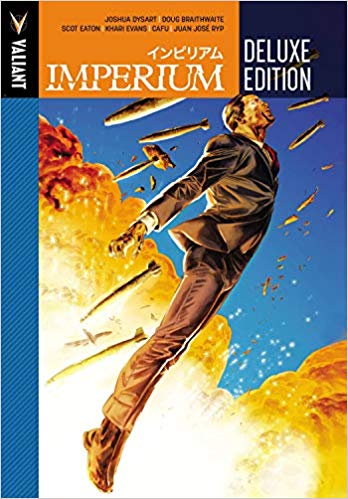
Deluxe Edition. Until very recently, I had not read Imperium. While I have had access to the review copies for years, I had long decided that I would rather read the story in print form so I was waiting to pick up the deluxe hard cover edition of Imperium from my LCS. A couple weeks ago, I finally ordered it.

It cost me $65 before taxes and it was worth every penny.

There are easy comparisons to make between the Harbinger story and that of the X-Men, between Toyo Harada and Magneto; an incredibly powerful man who wants peace at any cost. The truth is when I was reading the book there are obvious similarities to the X-Books. Especially now that the X-Men have their own nation state, which is where Imperium finds Toyo Harada and his Foundation.

Joshua Dysart pulls the sixteen issue story in from various places in the Valiant universe, touching upon characters that will be familiar if you have read the previous Harbinger run that I spoke about (again) last week. If you haven’t read those books it shouldn’t be a big deal – the story is told in a way that it can be read alone, but you’ll miss out on some context here and there (and a great build up) if you skip what came before.

Watching Harada build his nation state free of scarcity while fighting the countries that are trying to stop him over the course of sixteen issues is fascinating. We watch him take some extraordinary measures to ensure that he is left alone, and we wonder whether the man is truly as philanthropic and good as his ideal seems or is he as self serving as he sometimes appears?

Although the book is told from Harada’s perspective Dysart never quite leaves you confident that you should be rooting exclusively for him. Should he be stopped? Or does his means justify the ends?

What makes this such a great story is that Dysart has balanced the antagonists so well that nobody seems to be explicitly evil aside from a certain corporation out exclusively for profit, which illustrates the nobility behind Harada’s ideal while underscoring the capitalist nature of our society. There are so many different aspects to this story; the concept of artificial intelligence becoming sentient, does anybody ever truly have free will, the balance of sacrifice for progression of the greater good. What devils do you have to make a deal with?

When it comes to everybody else in this book you have to wonder whether you should root for anyone.

Joshua Dysart’s writing will educate you, encouraging you to think and develop yourself all while delivering one of the greatest stories in comics. That sentence was as true for Harbinger as it is for Imperium. He has a unique ability to distill a greater political and ideological idea down into a story that will never overwhelm a reader but also leaves you thinking about the nature of the politics involved long after the cover has been closed.

Whether this story is one told from the villain’s perspective as he tries to achieve his goals having convinced his followers they are doing the right thing or if it is story about a hero who faces insurmountable odds as he tries to make the world a better place will differ on how you read the book.

And that, for me, makes it an utter masterpiece.

This series is the subject of today’s Underrated because I had long heard how brilliant the story was from others who have read the book so I ended up reading the full run in almost a single sitting. And I realized that I seldom hear people talk about Valiant’s Harbinger comics or Toyo Harada. I hope that changes. Especially after the last week with the publisher focusing on the character this week.

Underrated: The Amazing Spider-Man

I drastically overslept today, so rather than the planned column, we’re revisitng one from 2017 when I went to bat for one of the more maligned Spider-Man movies.


This is a column that focuses on something or some things from the comic book sphere of influence that may not get the credit and recognition it deserves. Whether that’s a list of comic book movies, ongoing comics, or a set of stories featuring a certain character. The columns may take the form of a bullet pointed list, or a slightly longer thinkpiece – there’s really no formula for this other than whether the things being covered are Underrated in some way. This week: The Amazing Spiderman


Today I wanted to talk about the first reboot of the Spider-Man movie franchise from waaaaaaaay back in 2012. After the Sam Raimi trilogy which, lets be honest, didn’t exactly end on a high note, Sony would eventually decide to relaunch the Spider-Man movie franchise, and it’s the result of that reboot that I wanted to talk about today.

If you’re surprised that this is the movie we’re focusing on today, then you may have missed that the Marvel Studios/Sony collaboration Spider-Man Homecoming is in theaters  (and the MCU!) now; and you may also have been unaware of the amount of people who are now complaining about this movie (or maybe that’s just the people I hang out with?) – or you may have never really enjoyed this movie. But regardless of where you sit, I’ve always really enjoyed this movie, and feel that it’s stronger than a lot of people give it credit.

Why? To the bullet points!

The chemistry between the leads
One of the strongest aspects of the Amazing franchise is the relationship between Andrew Garfield’s Peter Parker and Emma Stone’s Gwen Stacy. Their interactions on screen approach poetry in some scenes, and without a doubt these two actors elevate the film beyond what a typical pair of romantic leads can do.

 Andrew Garfield’s Spider-Man
Garfield may have been to cool to genuinely pull off a nerdy Peter Parker, but his Spider-Man was top notch; his boundless energy and fast mouth was unlike anything we had seen before in live action, and Garfield pulled it off spectacularly. This was a Spider-Man whose failures were a palpable weight on his spandex clad shoulders, and in the quiet moments throughout the movie you can genuinely sense that through Garfield’s body language.

 The webswinging
The effects team did a wonderful job guiding Spider-Man’s journey through the skies in what is, for my money, the most realistic depiction of a man flying through the air on super strong glue to date.

 The costume
I’m kidding. I wasn’t exactly fond of this movie’s Spider-Man look. The orange lenses weren’t my thing, and the way the red came down the legs weren’t my favourite.

 The lack of the actual words “With great power there must also come great responsibility”
I know this is probably a contentious point to make, but loved that Peter learned this lesson throughout the film without having the quote used just for the audience who feel they must hear those words in the movie. It was far more powerful for Peter to learn it through his actions and reactions than have the lesson spelled out in what could have been an awkward and stilted scene. Plus, it lent a much heavier weight to Uncle Ben’s voice message at the end.

There are quite a few aspects of The Amazing Spider-Man that I thoroughly enjoyed, more than I should probably talk about in this article, but I’m aware that this isn’t a flawless movie – it’s not even the best Spider-Man movie- that honour is reserved for Sam Raimi’s Spider-Man 2. Yes, The Amazing Spider-Man  did have its issues; the Lizard wasn’t the most compelling villain, and his design was somewhat weak, but he isn’t the weakest in any of the Spider-Man movies (Topher Grace a Venom will hold that title for quite some time). His rationale is still just understandable enough when you break it down for yourself, but you do need to be aware of his misguided, yet deeply hidden altruistic thought process. And only a few years removed from Spider-Man 3, did we really need to see Uncle Ben die again? Not really.

I’m aware that it had it’s problems, but I don’t care; I love it anyway. For years, this was one of my favourite Spider-Man films, until we got the two Tom Holland flicks. I’ll always enjoy this movie, but it won’t be the first Spider-Man movie I reach for.


There we have it. Are there other comic book related stuff out there that is, for whatever reason, underrated and under-appreciated?

Absolutely.

Because of that, Underrated will return to highlight more comic book related stuff  that either gets ignored despite it’s high quality, or maybe isn’t quite as bad as we tend to think it is. In the meantime, though, if you do get a chance check out the characters in thisUnderrated, then you may need to hunt through the back issue bins for some, but others do have some stories collected in trades.

Until next time!

Underrated: Coda

This is a column that focuses on something or some things from the comic book sphere of influence that may not get the credit and recognition it deserves. Whether that’s a list of comic book movies, ongoing comics, or a set of stories featuring a certain character. The columns may take the form of a bullet pointed list, or a slightly longer thinkpiece – there’s really no formula for this other than whether the things being covered are Underrated in some way. This week: Coda


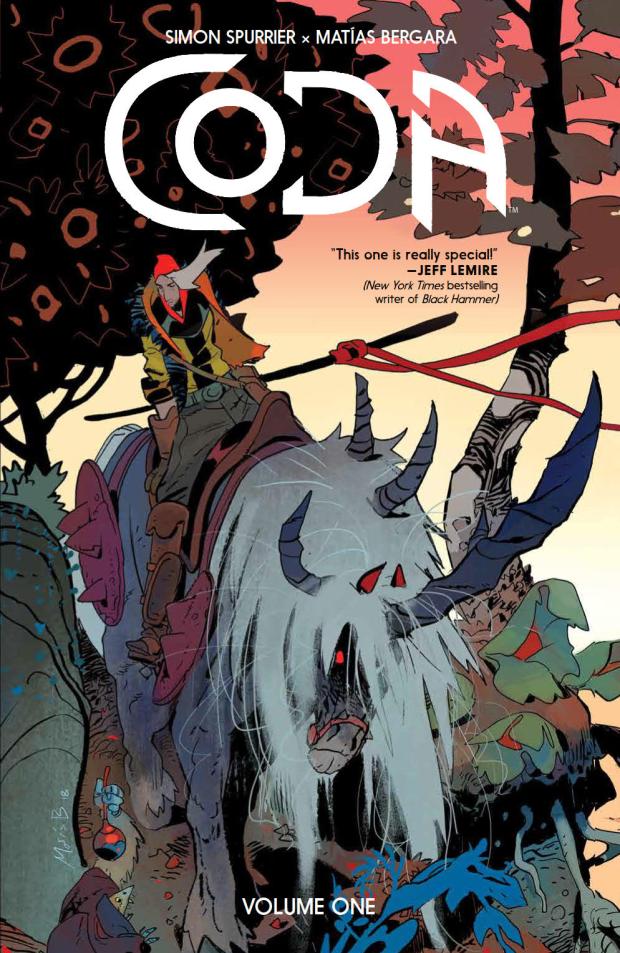
I feel like it’s been a little while since I actually wrote a new Underrated column, given the Valiant Hero Of The Week content that has been coinciding with the column’s regular time slot, but this week I wanted to talk about Coda. Coda is series about a world after the great cataclysm, a post apocalyptic story in a world not unlike Middle Earth from Lord Of The Rings where magic, a once plentiful resource, has become a scarcely sought after treasure.

Originally published by Boom as a twelve issue series, Coda has since been collected into three trade paperback collections, which is how I read the complete story. Written by Simon Spurrier with art by Mattias Bergara, the story follows former bard Hum.

A man of few words, Hum seeks a way to save the soul of his wife with nothing but a foul-tempered mutant unicorn and his wits to protect him. He is unwillingly drawn into a brutal power struggle he has little interest in which will decide forever who rules the Weird Wasteland.

The above paragraph is roughly paraphrased from the preview blurb of the first comic, because if you choose to go into the book, then there are a couple of moments early on that I want you to experience the same way I did; having no idea that they would be coming. It won’t make or break the story if you find out about them before you read, but it’s more fun if you don’t know what happening.

Brett’s video review of the first volume is spoiler free, so don’t be afraid to check it out.

Spurrier and Bergara take you on a fantastic journey through the twelve issues or three volumes of Coda, and introduce you to some really interesting characters and story mechanics. If you’re a fantasy fan, then the way this book approaches its world is going to be one you want to have a look at. The standout character in the book is Hum’s mutant unicorn, because his frequent cursing seems to come at just the time to elicit a chuckle from the reader.

The mutant unicorn, affectionately labelled the Nag (or a pentacorn) is just one of a fantastic cast of characters to populate the book. Spurrier breaths a real sense of life and humanity into these often inhuman beings that gives a real sense that the story didn’t start with the first issue – we’ve just picked it up here. What went before, and who Hum really was, aren’t explicitly stated, but we know he was a bard and we know the world ended and magic is gone. Backstory isn’t given explicitly, rather it’s teased out and hinted at as the tale proceeds across strange and stunning vistas that break the traditional fantasy mould and skew more toward a post-apocalyptic design. Which makes perfect sense.

Coda is a story for fantasy fans, but also for those who want an intensely personal story of self discovery. This isn’t the type of comic that treads water, and is always moving at a brisk pace. I devoured all three volumes in a single sitting (or would have if I purchased all three at the same time – after finishing the first, I ordered the others from my comic shop immediately).

I’ve really not heard many people talking about Coda. It wasn’t until I saw the first volume on the shelf the last day my shop was properly open that I had even heard of it. That’s why I wanted to point you toward it today; there’s a chance you’ll find your next favourite Underrated gem of a comic story.


That’s all we have for this week, folks. Come back next time  when there’s something else Underrated to talk about.

Underrated: X-O Manowar: Birth

This is a column that focuses on something or some things from the comic book sphere of influence that may not get the credit and recognition it deserves. Whether that’s a list of comic book movies, ongoing comics, or a set of stories featuring a certain character. The columns may take the form of a bullet pointed list, or a slightly longer thinkpiece – there’s really no formula for this other than whether the things being covered are Underrated in some way. This week: X-O Manowar: Birth


I’ve been a Valiant fan for nearly four years now, and while I have dabbled in the original comics (affectionately known as VH1 among the fanbase), it has primarily been the modern era, comics from 2012 to the present day (known as the VEI era), that has been my reading and collecting focus. But a couple of weeks ago, the owner of my LCS returned from visiting one of his other stores with a hardcover for me because he thought I’d be interested. That hardcover reprinted the first six issues of the original X-O Manowar run from 1992, the #o issue and an original story featuring the origin of one the early issues villains. This collection represents the earliest comics from Valiant I’ve yet read, and although I prefer the 2012 origin for X-O Manowar, I can understand why Valiant was able to hook fans in with the original X-O stories. I’m looking at this book today from the perspective of somebody who has read a lot, or even some, of the modern X-O Manowar comics before ever touching the original VH1 run, and asking whether that person would be interested in looking to the past.

If you’re at all familiar with Aric of Dacia, the X-O Manowar armour and his abduction and subsequent return to Earth then you’ll know the essence of the plot this book. The 2012 origin took a lot from these six or seven comics, and although some details were updated or modified, the the influence the original story still bears upon the modern is easy to see. Aside from Aric’s Hulk-like speech patterns that do, thankfully, begin to diminish as he learns English, the barbarian’s character still shows flashes of the man he will become when the publisher relaunched.

The Vine are replaced with the Spider-Aliens, although aside from the name there is little that distinguishes them from the first few comics in the 2012 run. Where as the Vine become one of the more interesting and complex plot points in the VEI stories, the Spider-Aliens show little of the same qualities at this point (yes, there are signs that there is more to the Vine within the first three issues of the VEI run), but then that really just makes it easier to enjoy the battle carnage as Aric tears his way through the soldiers and corporate representatives of the Spider-Aliens.

Although you can enjoy the book without any prior knowledge, for a Valiant fan of the old or new school (or both) this beautifully presented book is a must read. And most of us will seek the story out if we can, but for those not entrenched in Valiant lore, this standalone story here represents an Underrated gem from comics history.


Join us next week when we look at something else that is, for whatever reason, Underrated.

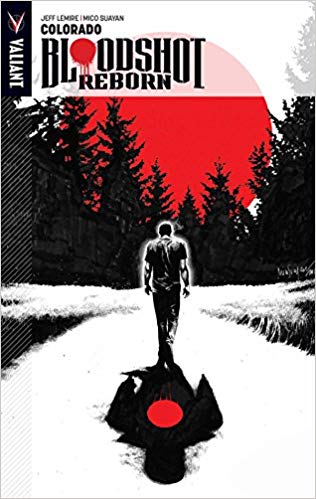
Underrated: Bloodshot Reborn: Colorado (Redux)

This is a column that focuses on something or some things from the comic book sphere of influence that may not get the credit and recognition it deserves. Whether that’s a list of comic book movies, ongoing comics, or a set of stories featuring a certain character. The columns may take the form of a bullet pointed list, or a slightly longer thinkpiece – there’s really no formula for this other than whether the things being covered are Underrated in some way. This week: Bloodshot Reborn: Colorado


bs colorado.jpg

I wanted to revisit this book, because I’ve recently reread and still don’t think it gets the attention it deserves. This originally ran in July of 2018.

Jeff Lemire has been writing Bloodshot across various series for a long time. Longer, even, than I have been reading. Two days ago, I picked up the first volume of Bloodshot Reborn as despite reading from around the eighth issue of the series on, I had never actually read the opening to the series. The blurb on the back of this book gives you a pretty good idea of the book’s plot, but what it doesn’t do is tell you that this book is so much more than your typical superhero story.

Bloodshot’s nanites made him a nearly unstoppable killing machine. His enhanced strength, speed, endurance, and healing made him the perfect weapon, and he served his masters at Project Rising Spirit — a private contractor trafficking in violence — very well. Now, Bloodshot is a shadow of his former self. He lives in self-imposed exile, reeling from the consequences of his past life and the recent events that nearly drove him mad. But when a rash of shootings by gunmen who appear to look just like Bloodshot begin, his guilt will send him on a mission to stop the killers, even if it means diving head-long into the violence that nearly destroyed him.

Picking up after the events of The Valiant (expect spoilers for that book if you haven’t read it), Colorado opens with a monologue telling you who Bloodshot was juxtaposed against images in stark contrast to who he is now. Lemire wastes no tie in showing you that a  man who was forced to kill for others has, seemingly, wasted his opportunity at a second chance for a normal life. Within a page or two, you’re hitting rock bottom with the man formerly known as Bloodshot. You can feel his guilt and shame emanating  from the paper as you turn the page, and not once do you blame him for what he’s going through.

This is a man who was broken, and who doesn’t know how to move past what he was. Who woke up from a nightmare only to understand that he was the monster, and now wears the question of whether he deserves to move on as an armour.

Bloodshot Reborn: Colorado is an origin story, of sorts, for Ray Garrison. Which means you don’t need to have read Bloodshot prior to picking up this comic (and, really, although the first series post Valiant relaunch is good, it pales in comparison to the more psychological horror take on the character that Lemire presents us with). This first volume in the series is a brilliant read; I devoured it in one sitting and immediately wanted to read more. I am a huge fan of Jeff Lemire, and think his take on the character is a vastly underrated one when looked at in the grand scheme of the comics read world.

Lemire’s take on Bloodshot is my favourite version of the character, but the opening of his story takes more from the horror genre than one would initially expect. The character’s inner turmoil is obvious and very clear to the reader as Ray Garrison struggles to discover who he is now that he’s no longer a monster; and his biggest fear, and one he must confront as the volume progresses, is that he’s nobody. Without the monster, he is a shell of a man.

Bloodshot Reborn: Colorado is a book I can’t speak highly enough of (were this a review I’d be giving it a solid 10; the art is every bit as impressive as the story), and it genuinely surprised me that I hadn’t heard much about it prior to reading it myself. Maybe that was part of the magic, that unexpected kick in the teeth, but this first volume of Bloodshot Reborn needs to find its place on your shelf – whether physical or digital.


Join us next week when we look at something else that is, for whatever reason, Underrated.
Underrated: Your Local Comics Shop

This is a column that focuses on something or some things from the comic book sphere of influence that may not get the credit and recognition it deserves. Whether that’s a list of comic book movies, ongoing comics, or a set of stories featuring a certain character. The columns may take the form of a bullet pointed list, or a slightly longer thinkpiece – there’s really no formula for this other than whether the things being covered are Underrated in some way. This week:  Your Local Comics Shop


Given the current comics climate, with printers not printing and Diamond not distributing, I wanted to remind us all about one of the things that we’ve all taken for granted at some point or another, and that is the shop you buy your comics from.

I know that some of you prefer to order from DCBS or read digitally, and so don’t have a shop you frequent regularly, but when you want to pick up a board game, statue or toy collectible, then you may go to your LCS rather than Amazon. Ordinarily, at least. Right now, with so many non-essential businesses being closed, going online for our nerd needs is more tempting than ever. But here’s the thing; I know that you’re starving for something to read right now, but this is the time to support the local businesses in your town, city, state/province ahead of a giant company who’s CEO could afford to fund several reading or food programs in our schools.

When all the dust has settled after the Covid 19 pandemic, and it will, you’re going to want to go out and socialize and talk about comics with friends, or strangers, in person and not online. You’re going to want to go to your comic shop.

Right now, you can’t really do that, but there are some idea on how to support your local shop here.

Until you can go back to your LCS, or until you decide to start going to one, spend a minute and think about all small business owners and their employees. Right now they’re worried about lost wages, and potentially a lost business in the future. When this is over, go spend the money you didn’t spend there – if you can.


That’s all we have for this week, folks. Come back next time  when there’s something else Underrated to talk about.

Underrated: Comics Not In Diamond’s Top 100 For February 2020

This is a column that focuses on something or some things from the comic book sphere of influence that may not get the credit and recognition it deserves. Whether that’s a list of comic book movies, ongoing comics, or a set of stories featuring a certain character. The columns may take the form of a bullet pointed list, or a slightly longer thinkpiece – there’s really no formula for this other than whether the things being covered are Underrated in some way. This week: Comics not in Diamond’s top 100 sellers for February 2020


This week we’re going to be looking at a list of comics that are all pretty good, but don’t get the attention that they deserve. Now I’m not even going to pretend to have a definitively exhaustive list of underrated comics here, because we’re hoping  that you decide to check at least one of these series out next time you’re looking for something new either online or at your LCS, and giving you a huge list to check out would be counter productive to that. Instead, you’ll find four to six comics that are worth your attention that failed to crack the top 100 in sales. The only hard stipulation for this week: not one of the comics made it into the top 400 (yeah, I went for books that hardly any of you have read for whatever reason) for this month’s comic sales, according to Comichron, which is why they’re Underrated.


Cult Classic Creature Feature #5 (Vault)
Sales Rank/Units Sold: 380/1,322
Why You Should Read It:  
I’m usually not drawn to horror comics, but I do tend to enjoy anything Eliot Rahal writes, so I wanted to check this out. Obviously, I’m going to recommend you start with the first issue (or just wait for the trade if you can’t find the individual comics), but this is a great series that (I’m told by friends who do enjoy horror comics) is a great send up to the genre.

Quantum & Woody #2 (Valiant)
Sales Rank/Units Sold: 280/4,028
Why You Should Read It: 
Obviously I’m going to be biased toward this, but there’s a very British comics style to the series with the art; the lines, the sheer amount of things occurring on the page (which never once feels overwhelming). There’s a chaotic brilliance to this book – don’t miss this.

Rai #4 (Valiant)
Sales Rank/Units Sold: 264/4,900
Why You Should Read It: 
Why yes, I did include this in last month’s version of this comic. And the month before. Because this is frankly the best book on this list (truth be told it was the best one I’d read all month. The series encourages you to ask questions about your place in the world, what it means to be human, when you should resort to violent recourse and how easy it can be to touch the lives of those around you. This comic does all of that whilst still giving you a freaking brilliant book.

Finger Guns #1 (Vault)
Rank/Units Sold: 199/8,418
Why You Should Read It:
What if when you shot a finger gun at somebody you were able to adjust their emotions? This comic throws that into the mix amidst a sense of abandonment and loneliness that we’re all probably familiar with these days.

Ascender #9 (Image)
Sales Rank/Units Sold: 173/9,970
Why You Should Read It: 
If you haven’t started reading this, then you should. But rather than start with the first issue of Ascender, you really want to pick up the first volume of Descender. You’ll thank me later.

Bang #1 (Dark Horse)
Sales Rank/Units Sold: 159/10,741
Why You Should Read It: 
Matt Kindt once again proves why he’s one of the best writers in the business. There’s a lot to say about this book, but holy moly is it ever wonderful. Go in blind, I did, and it’s worth every moment.

.


Unless the comics industry ceases any and all publication look for a future installment of Underrated to cover more comics that aren’t cracking the top 100.

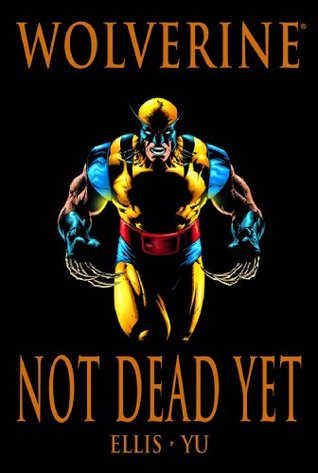
Underrated: Wolverine: Not Dead Yet

This is a column that focuses on something or some things from the comic book sphere of influence that may not get the credit and recognition it deserves. Whether that’s a list of comic book movies, ongoing comics, or a set of stories featuring a certain character. The columns may take the form of a bullet pointed list, or a slightly longer thinkpiece – there’s really no formula for this other than whether the things being covered are Underrated in some way. This week: Wolverine: Not Dead Yet


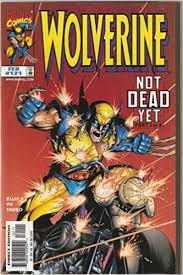
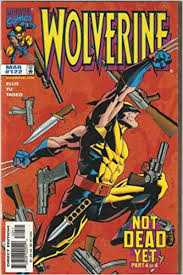
With a new Wolverine series have started last month, I wanted to take a look back at one of the very first Wolverine story arcs I read that wasn’t reprinted from older comics. I didn’t know it at the time, but Not Dead Yet was written by Warren Ellis and drawn by Lenil Francis Yu. When I first read this story, I wasn’t as concerned with knowing who had written it because I didn’t follow creators at the time, only the characters. Only Wolverine and the X-Men.

Originally published in Wolverine v. 2 #119-122 back in the late 90’s, the story was both my first introduction to American comic books and how they were laid out with the advertisements, the page sizes, the recap pages and the preview page with Stan’s Bulletin Box. It really was a transformative experience in how I experienced my comic books at the time as I went from the UK reprint magazines to the real thing. They were unlike anything I could get my hands on at the time; the reprint mags contained three issues, were slightly smaller, and had only minimal personality to them that wasn’t in the original comics. The other comics I was reading at the time were all weekly anthology magazines too – there wasn’t a dedicated 30 odd pages to a single comic and all the little extras that go with it. Looking back on those single issues now, I feel that we’ve lost something along the way as technology has progressed and the need for previews in comics has decreased – but that could just be the nostalgia talking.

This is quite possibly one of my favourite Wolverine stories that I’ve ever read. It’s certainly the one I will always point readers to if given half a chance. The story takes place during the time Wolverine had no adamantium in his body, it is told both in the present and the past by use of flashbacks that serves to emphasize the relationship between the ol’ Canuckle head and a Scottish assassin called McLeish who eventually sets his sights on our favourite mutant. Wolverine is being hunted by one of the best, a man who has planned for years to be able to take down the nearly unkillable Canadian mutant with adamantium bones, but what he doesn’t know is that Wolverine’s bones are no longer coated with the metal, and Logan is suddenly much more vulnerable than he used to be.  I keep coming back to this story every few years, and I have mentioned it several times on my blog, too.  It’s available in trade paperback format, and I highly suggest you pick it up.

I mentioned earlier how I didn’t realize who the creative team was when I read this story more than twenty years ago. In all honestly, it was for another 40 issues of Wolverine when Frank Tieri and Sean Chen started writing the book. So it was years later that I finally realized that Warren Ellis wrote the book, and I remember being somewhat surprised. I’d read and enjoyed a lot of his stuff over the years, but never realised that one of my favourite stories was penned by him.

Wolverine: Not Dead Yet has a timelessness to it that’s only betrayed by the amount of payphones and the style of cars and the odd fashion choice if you’ve a keen eye for those things. This is a tale that focuses less on Wolverine being a superhero and instead takes him back to the shadowy underworld of his past in a much more grounded setting. There’s no spandex in sight, and consequently the story has more of an immediacy to it. This was a time when Wolverine would frequently get his fightin’ togs on when he had a chance, and in Not Dead Yet he doesn’t have that chance.

When it comes to classic Wolverine stories, Not Dead Yet is seldom counted on the list, and one could ask if I would hold it in such high esteem had I not read it at such a formative time in my life. The answer is an easy yes; I read a lot of stories around that time, but none have stayed with me the same way Not Dead Yet has. The story still holds up to this day, and is honestly one of the most common places I’ll start with when going through the back issues of Wolverine in my comic boxes. That‘s why I wanted to focus on this as an Underrated gem this week.


That’s all we have for this week, folks. Come back next time  when there’s something else Underrated to talk about.

Underrated: Power Rangers (the 2017 movie)

I’m about to get on a plane, and this is exactly the kind of movie I love watching while flying. For that reason, I wanted to rerun this column, and not because I forgot to prepare one in advance. Nope.


This is a column that focuses on something or some things from the comic book sphere of influence that may not get the credit and recognition it deserves. Whether that’s a list of comic book movies, ongoing comics, or a set of stories featuring a certain character. The columns may take the form of a bullet pointed list, or a slightly longer thinkpiece – there’s really no formula for this other than whether the things being covered are Underrated in some way. This week: Power Rangers (the 2017 movie)


This has been an interesting year for me. 2018 marks the first time in decades where neither Marvel or DC comprise even a third of my pull-list, when I deliberately chose to read a space based science fiction book (which usually run totally against my tastes) and the first time since I was a nipper that I watched the Power Rangers.

Whilst waiting for my wife to wake up on Christmas morning (because she’s happy to sleep in to a normal time, whereas I am a man-child who wakes up at 6am without an alarm one day of the year only) I was flicking through Netflix and came across the 2017 Power Rangers movie. Remembering it not doing so well critically or commercially, I decided to press play so I could enjoy a bad movie alone (hey, sometimes bad movies are awesome).

This wasn’t a bad movie.

Oh, it was cheesy, with moments of camp and a villain that was desperately trying (and partially succeeding) to exude evil with every step, but it wasn’t bad. Power Rangers was exactly what I expected and hoped it would be, given the source material filtered through twenty five years or more of nostalgia. In short, it was bloody awesome.

I understand people’s frustrations with it taking nearly and hour and a half before we first see the Power Rangers in their suits (or armour, as the outfits are in the movie), and that the pacing seems a touch slow until it suddenly isn’t. But for me, having not watched anything Power Rangers since I was about nine or ten years old, it allowed me to get reacquainted with characters I had long forgotten. The movie is brilliant, and for my money, is perfectly self aware. In a world with Thor: Ragnorak, Wonder Woman and Spider-Man: Homecoming, Power Rangers is never going to stand out as a truly great superhero movie. And that’s honestly a shame, because the movie is a lot of fun.

The martial arts action is well choreographed, the giant robot fights are also fun (but far too short), but what had me nearly cheering out loud was when the theme song came on. It was a brilliantly self aware homage to the original series, the longtime franchise fans who returned to watch the movie, and people like myself who haven’t heard that song in decades.

Frankly, it was glorious. Which is why, dear reader, I wanted to talk about it today. Power Rangers  is exactly the kind of movie that Underrated is about; one that was largely laughed off or over shadowed by a bigger release. This flick is on Netflix (Canada) now – do yourselves a favour and go check it out.


Join us next week when we look at something else that is, for whatever reason, Underrated.

« Older Entries Recent Entries »