Category Archives: Underrated

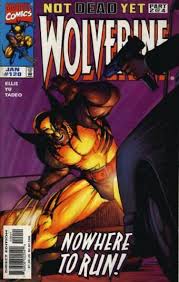
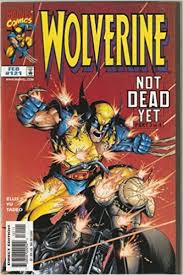
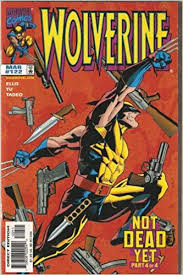
Underrated: Wolverine: Not Dead Yet

This is a column that focuses on something or some things from the comic book sphere of influence that may not get the credit and recognition it deserves. Whether that’s a list of comic book movies, ongoing comics, or a set of stories featuring a certain character. The columns may take the form of a bullet pointed list, or a slightly longer thinkpiece – there’s really no formula for this other than whether the things being covered are Underrated in some way. This week: Wolverine: Not Dead Yet
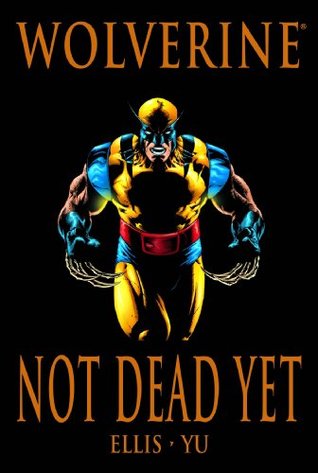

With a new Wolverine series have started last month, I wanted to take a look back at one of the very first Wolverine story arcs I read that wasn’t reprinted from older comics. I didn’t know it at the time, but Not Dead Yet was written by Warren Ellis and drawn by Lenil Francis Yu. When I first read this story, I wasn’t as concerned with knowing who had written it because I didn’t follow creators at the time, only the characters. Only Wolverine and the X-Men.

Originally published in Wolverine v. 2 #119-122 back in the late 90’s, the story was both my first introduction to American comic books and how they were laid out with the advertisements, the page sizes, the recap pages and the preview page with Stan’s Bulletin Box. It really was a transformative experience in how I experienced my comic books at the time as I went from the UK reprint magazines to the real thing. They were unlike anything I could get my hands on at the time; the reprint mags contained three issues, were slightly smaller, and had only minimal personality to them that wasn’t in the original comics. The other comics I was reading at the time were all weekly anthology magazines too – there wasn’t a dedicated 30 odd pages to a single comic and all the little extras that go with it. Looking back on those single issues now, I feel that we’ve lost something along the way as technology has progressed and the need for previews in comics has decreased – but that could just be the nostalgia talking.

This is quite possibly one of my favourite Wolverine stories that I’ve ever read. It’s certainly the one I will always point readers to if given half a chance. The story takes place during the time Wolverine had no adamantium in his body, it is told both in the present and the past by use of flashbacks that serves to emphasize the relationship between the ol’ Canuckle head and a Scottish assassin called McLeish who eventually sets his sights on our favourite mutant. Wolverine is being hunted by one of the best, a man who has planned for years to be able to take down the nearly unkillable Canadian mutant with adamantium bones, but what he doesn’t know is that Wolverine’s bones are no longer coated with the metal, and Logan is suddenly much more vulnerable than he used to be.  I keep coming back to this story every few years, and I have mentioned it several times on my blog, too.  It’s available in trade paperback format, and I highly suggest you pick it up.
I mentioned earlier how I didn’t realize who the creative team was when I read this story more than twenty years ago. In all honestly, it was for another 40 issues of Wolverine when Frank Tieri and Sean Chen started writing the book. So it was years later that I finally realized that Warren Ellis wrote the book, and I remember being somewhat surprised. I’d read and enjoyed a lot of his stuff over the years, but never realised that one of my favourite stories was penned by him.

Wolverine: Not Dead Yet has a timelessness to it that’s only betrayed by the amount of payphones and the style of cars and the odd fashion choice if you’ve a keen eye for those things. This is a tale that focuses less on Wolverine being a superhero and instead takes him back to the shadowy underworld of his past in a much more grounded setting. There’s no spandex in sight, and consequently the story has more of an immediacy to it. This was a time when Wolverine would frequently get his fightin’ togs on when he had a chance, and in Not Dead Yet he doesn’t have that chance.

When it comes to classic Wolverine stories, Not Dead Yet is seldom counted on the list, and one could ask if I would hold it in such high esteem had I not read it at such a formative time in my life. The answer is an easy yes; I read a lot of stories around that time, but none have stayed with me the same way Not Dead Yet has. The story still holds up to this day, and is honestly one of the most common places I’ll start with when going through the back issues of Wolverine in my comic boxes. That‘s why I wanted to focus on this as an Underrated gem this week.


That’s all we have for this week, folks. Come back next time  when there’s something else Underrated to talk about.

Underrated: Black Beetle: No Way Out

This is a column that focuses on something or some things from the comic book sphere of influence that may not get the credit and recognition it deserves. Whether that’s a list of comic book movies, ongoing comics, or a set of stories featuring a certain character. The columns may take the form of a bullet-pointed list, or a slightly longer thinkpiece – there’s really no formula for this other than whether the things being covered are Underrated in some way. This week:  Black Beetle: No Way Out


Another week, and yet another case of “Alex bought something for Underrated without knowing anything about it beforehand.” This week we’re looking at the first volume of Francisco Francavilla‘s Black Beetle: No Way Out, another book that I found at a thrift store for an absolute bargain price. Actually, bargain is understating things. I paid $1 for this book (technically $1.25, but at but 4 get 1 free it works out to a dollar). Which is an absolute steal of a deal for a hardcover trade.

Black Beetle: No Way Out is published by  Dark Horse, written and drawn by Francavilla, and takes the form of a modern reinterpretation of the old pulp novels of the 30’s and 40’s, with all the semi futuristic-steampunk technology and sleek lines that includes.

This throwback feeling permeates the entire graphic novel, genuinely allowing it to read as a pulp novel from a bygone era – but one with the tonal sensitivities of today. It’s within this area that Francavilla tells the story of a vigilante who is equal parts the Shadow, the Spider and the Black Bat – and though comparisons to Batman will be made, the only similarity there is that Batman is more prevalent in the cultural awareness of our medium than the other three characters previously mentioned. I’m not saying the comparisons are unfair, but that the similarities are more in line with the characters Batman took inspiration from rather than Bruce Wayne himself.

The story, then, that is told within No Way Out is very reflective of those pulp novels, especially the original covers that are used as story breaks between the individual issues. Francavilla’s artistic approach is very evocative of the art styles of the time – simple colours, thick lines and a sense of foreboding. With Francavilla handling both the writing and the art duties in the book, we’re given a tour-de-force of a creative offering as he delivers an incredible experience.

And that, ultimately, is why I loved this book so much. It’s an incredibly fun pulp story, a classic hero romp with a hero who in’t shy about using his guns. Of course that does leave a little room for folks to be concerned about a lack of substance in the plot, but I think for the most part that is a concern that can be put aside by the artistic offering.

This is a book that’s absolutely worth a read.

Yes, I only paid $1 for it, and yes, I only bought it because it was in a thrit store, but I am so glad that I did. Black Beetle: No Way Out is easily the best thing I have read all week – including the four other books I picked up – and I am frankly astounded that I had never read this before. I’m equally as astounded that I’d never even heard of the book before.  Consequently, this is a book I don’t see getting the love it deserves – that’s why the book is Underrated.


Join us next week when we look at something else that is, for whatever reason, Underrated.

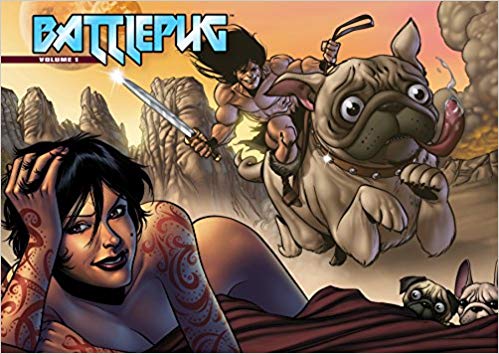
Underrated: Battlepug Volume One

This is a column that focuses on something or some things from the comic book sphere of influence that may not get the credit and recognition it deserves. Whether that’s a list of comic book movies, ongoing comics, or a set of stories featuring a certain character. The columns may take the form of a bullet pointed list, or a slightly longer thinkpiece – there’s really no formula for this other than whether the things being covered are Underrated in some way. This week: Battlepug: Volume One


Disclaimer: Somehow I managed to delete, and save the deletion, of almost the entire text of this column. It is currently about ten minutes before it’s due to go live… 

After a visit to the thrift store the other day I found the first volume of Mike Norton‘s Battlepug. Joining Norton for the comic is colourist Allen Passalaqu and letter Chris Crank. The story itself is a blend between homage and parody to Conan and He-Man in a world where sword and sorcery is the name of the game in a world where giant cuddly and innocent looking (mostly) animals represent a rather unconventionally large threat. With the first volume taking on a story-within-a-story set up, the framing is of a fairly stereotypical fantasy woman telling a bed time story to her two talking pugs. 

It’s the story within, that bed time story, that holds the origin of the Battlepug as a lone survivor of a village grows to become the Conan figure in all his brutal glory. The book, a slightly oversized hardcover that cost me $6, is presented almost like a children’s book – and because this isn’t a book for kids, that only adds to the brilliance of its presentation. Battlepug is one of those rare stories that is able to both poke fun at and show respect to its genre while exposing the tropes and criticisms that audiences level at classical fantasy. And it does all this with utter seriousness as a giant pug slurps and snorts through the pages.

Although there is a very cohesive and well told story here, there are also brilliant little moments every few pages; jokes in dialogue and imagery, nods of the head to other things the reader should be all too aware of, and things that may not necessarily be on their radar (I’m sure I missed a lot, honestly). There’s a much deeper story for you to unpack upon the second or third reading, and it never gets old. Or it hasn’t for me.

Norton’s story is utterly fantastic. It’s funny, it’s remarkably well written, and it deserves so much more than the hastily rewritten column that it is getting. It is beyond an Underrated gem, and it’s one that I have every intention of revisiting very soon, and in more detail, when I find the second volume.


Join us next week when we look at something else that is, for whatever reason, Underrated.

Underrated: Star Wars The Last Flight Of The Harbinger

This is a column that focuses on something or some things from the comic book sphere of influence that may not get the credit and recognition it deserves. Whether that’s a list of comic book movies, ongoing comics, or a set of stories featuring a certain character. The columns may take the form of a bullet-pointed list, or a slightly longer thinkpiece – there’s really no formula for this other than whether the things being covered are Underrated in some way. This week:  Star Wars: The Last Flight Of The Harbinger


A few weeks ago, I wrote about Star Wars comics in general. I said then that I’m the biggest Star Wars fan in the world, and even though I did enjoy (all) of the live action movies to some extent, I’d never really read many of the comics.

Despite being a big comics fan, and a relatively new Star Wars fan, I never once thought about reading the comics that were going to reintroduce us to the world and build upon what was known from the movies. It just never occurred to me. Star Wars was something I watched not something I read.

That changed this year when I found a rather significant haul of Star Wars trade paper backs for a remarkably decent price, but that’s not news for regular readers of this column. One of the books I had picked up was a trade collecting the several issues from Jason Arron’s Star Wars series (issues #20-25). The story takes place some time after the events of A New Hope but before The Empire Strike Back. Most of the book focuses on our favourite rebels steals a Star Destroyer to break a blockade while confronting an elite squad of Stormtroopers called SCAR Squad, with a single issue looking at an older Obi-Wan Kenobi fighting off a bounty hunter on Tatooine during his secret guardianship of Luke (who’s around ten or so here).

There’s also a bonus story with R2D2 that’s of the fun but easily forgettable type that you’d usually find in a Sunday paper.

The Obi-Wan story fleshes out Luke’s uncle, and opens a door for an eventual live action story set around this period by showing that Obi-Wan doesn’t need to be fighting a galactic threat to be a hero – there are plenty of more intimate battles he can fight whilst staying within close proximity to the Skywalkers.

But the meat of the story, and the part that lends the book its title, focuses on the Rebel’s capture of a Star Destroyer, first by dedicating an issue to explaining who SCAR Squad is, and then by showing the action unfold. That we get a look at what the Rebel’s did off camera during the intervening years adds another layer to the original movies, and it really does serve to give you the sense that the Rebellion versus the Empire wasn’t limited to a few battles, but was a much larger galactic conflict by a band of guerrilla fighters. With the The Last Flight Of The Harbinger taking place mainly over a day (at most) and flashbacks, Aaron shows without any other context, that this really is a protracted war and not a series of minor conflicts with some lovable characters.

I read this as a standalone book without realizing when I purchased the trade that it was volume four in Aaron’s collected Star Wars run, and it didn’t hamper my enjoyment at all. Perhaps because these are characters that are so embedded without the public consciousness coupled with the fact that the story is entirely self contained (with only one or two references to previous events) meant that I didn’t need to know what had gone on before to enjoy the book in hand. Which ultimately is a hallmark of the Skywalker Saga; with so many years in between some of the movies, you rely on the legendary yellow scroll and a general sense of who is who to get by more often than you don’t.

Or maybe I’ve grown to care less and less about What Went Before if the story is good.

Star Wars comics may not be for everyone, but if you’re a comic reader (and I assume you are if you’re reading this), and a Star Wars fan and you haven’t read these stories, then you owe it to yourself to check out the books being published by Marvel. If you have read them, then I shall gladly listen to the “I told you so” if you want to follow it up with “now read this…”


Join us next week when we look at something else that is, for whatever reason, Underrated.

Underrated: Star Wars Chewbacca

This is a column that focuses on something or some things from the comic book sphere of influence that may not get the credit and recognition it deserves. Whether that’s a list of comic book movies, ongoing comics, or a set of stories featuring a certain character. The columns may take the form of a bullet-pointed list, or a slightly longer thinkpiece – there’s really no formula for this other than whether the things being covered are Underrated in some way. This week:  Star Wars Chewbacca


A few weeks ago, I wrote about Star Wars comics in general. I said then that I’m the biggest Star Wars fan in the world, and even though I did enjoy (all) of the live action movies to some extent, I’d never really read many of the comics.

Despite being a big comics fan, and a relatively new Star Wars fan, I never once thought about reading the comics that were going to reintroduce us to the world and build upon what was known from the movies. It just never occurred to me. Star Wars was something I watched not something I read.

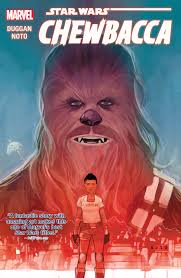
That changed this year when I found a rather significant haul of Star Wars trade paper backs for a remarkably decent price, but that’s not news for regular readers of this column. One of the books I had picked up was a trade collecting the five issue miniseries by Gerry Duggan and artist Phil Noto. The comic takes place shortly after the Battle of Yavin, or the events of A New Hope for those of us who aren’t sure, and focuses on a mining colony owned by a loanshark who forces his debtors to work in his mine.

A father and his daughter are the latest to fall victim to the loan shark, and when the young girl escapes she runs into a certain wookie who is stranded on the planet because his ship is a hunk of junk (but not that hunk of junk). Chewbacca is the largely silent protagonist throughout the story, with the point of view character being the aforementioned daughter, which works to give the audience a way to interpret the wookie through the eyes of a somebody who can’t understand wookie.

On the whole, the story isn’t going the change how you view Star Wars, it won’t suddenly help something make sense, but what it does do is flesh out one of the rebellion’s greatest heroes a little more. Chewbacca’s past is hinted at through flashbacks and other interpreting his vocalizations, which is a really interesting way to add some exposition to the proceedings because it largely relies on the reader to to pick up on the visual cues from the wookie; Duggan and Noto don’t hand hold the reader into their revelations because they’re not integral to the story (though there is a little more gentle guidance in the finale).

As a standalone story, this fleshes out the universe and Chewbacca whilst remaining firmly in the “you should read this, but if you don’t you’re not missing anything integral to the Star Wars saga.” It’s a snapshot of what’s happening on fringe worlds during the saga, and for that reason alone it’s well worth reading – plus who doesn’t want to see more Chewie?

Star Wars comics may not be for everyone, but if you’re a comic reader (and I assume you are if you’re reading this), and a Star Wars fan and you haven’t read these stories, then you owe it to yourself to check out the books being published by Marvel. If you have read them, then I shall gladly listen to the “I told you so” if you want to follow it up with “now read this…”


Join us next week when we look at something else that is, for whatever reason, Underrated.

Underrated: The Astounding Wolf-Man Volume One

This is a column that focuses on something or some things from the comic book sphere of influence that may not get the credit and recognition it deserves. Whether that’s a list of comic book movies, ongoing comics, or a set of stories featuring a certain character. The columns may take the form of a bullet pointed list, or a slightly longer thinkpiece – there’s really no formula for this other than whether the things being covered are Underrated in some way. This week:  The Astounding Wolf-Man


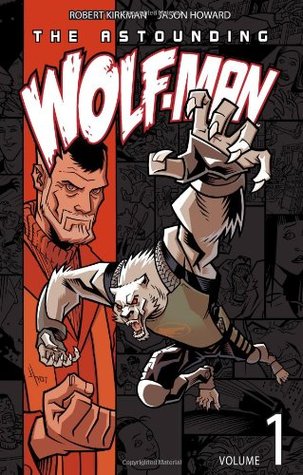
atounding wolf-man.jpgBorn from Robert Kirkman‘s desire to see comic books on the rack that are easily identifiable from the cover and the title, The Astounding Wolf-Man is a comic about a werewolf superhero. The complete twenty five issue run is collected across four volumes, all published by Image. The series originally ran in the mid 2000’s, culminating with the 25th issue in 2010. The Astounding Wolf-Man mixes the supernaturally traditional horror monsters (basically werewolves and vampires) in with the traditional cape and cowl crowd in ways that you may not have necessarily encountered before within the Marvel or DC universes. Kirkman establishes the existence of the monsters long before he does the heroes, which has the effect of grounding the world in the supernatural long before we see the heroes – so while the reader is used to and has accepted the existence of werewolves, the heroes are left to question the very nature of Wolf-Man much longer into the series.

The origin of Wolf-Man is told succinctly, with Kirkman never allowing the origin to feel overly drawn out or excessive – the story is well paced from start to finish, and it all begins with the origin.

Who is the Wolf-Man?

Gary Hampton. A man who was mauled by a werewolf while out camping with his family, and chooses to use his newfound powers for good by becoming a superhero. But there are dangers with being a heroic werewolf, both the physical reactions of those he confronts, and from the reactions of those around Gary Hampton. Kirkman stays true to the horror stories that have made him famous by injecting a touch of the emotional tension from The Walking Dead as the audience witnesses Wolf-Man’s world adjust to who and what he is.

Joining Kirkman in this venture is artist Jason Howard. Howard was a relative newcomer at the time of the series publication, but has gone on to work on Super Dinosaur, also with Kirkman, and Trees with Warren Ellis. His style throughout the comic reminded me a lot of Batman: The Animated Series in how the characters had a weight to them, and their kinetic energy as they dance their often violent dance across the pages of the graphic novel. Obviously, given the nature of the titular hero, one should expect a judicious use of red ink on these pages as Wolf-Man slices his way through various opponents of varying degrees of villainy.

So the question now, is why is this underrated? Because aside from it being an incredibly fun read, I hadn’t heard of it until I saw the collection on the used shelf at my local comic shop. It turned out that the fresh take on supernatural superheroes was far more entertaining than I had initially expected, and given the fame of some of Kirkman’s other work, I was a little surprised that the twenty five issue run ofThe Astounding Wolf-Man hadn’t gained any real stream before. 

If you get a chance to read this, then do so. You’ll find an Underrated gem just waiting for you.


Join us next week when we look at something else that is, for whatever reason, Underrated.

Underrated: Valiant Masters: Ninjak: Black Water

This is a column that focuses on something or some things from the comic book sphere of influence that may not get the credit and recognition it deserves. Whether that’s a list of comic book movies, ongoing comics, or a set of stories featuring a certain character. The columns may take the form of a bullet pointed list, or a slightly longer thinkpiece – there’s really no formula for this other than whether the things being covered are Underrated in some way. This week: Valiant Masters: Ninjak: Black Water.


Ever since I’ve started to collect Valiant comics, I’ve been picking up the hardcover deluxe editions here and there as a way to catch up in bulk on some of the series I’ve missed, and also because I just like the look of them. A while back I did a cost analysis as to whether it was worth buying the deluxe editions verses the softcover trades or single issue floppies at cover price; generally the savings were negligible depending on the size of the book (less than $5, I think) between the hardcovers and soft covers, but the difference between the hard covers and cover price floppies varied greatly depending on how many books were collected (and it didn’t factor in the cost of the floppies after they’ve been on the market for a while, as they can fluctuate higher or lower depending on different trends).

This is relevant only because the Valiant Masters hardcovers generally contain the first eight issues of the original Valiant series (either 1-8 or 0-7 depending on the stories within), which means that for $25 you end up paying about $3.25 a comic. Whether that’s a good price for the early Valiant books depends on which book you’re looking at; I’ve paid $20 for the first appearance of Rai, $6 for the first appearance of Ninjak and around $1 for others, so it’s largely a crap shoot, but for the most part the individual issues collected in the Valiant Masters are going to be cheaper than the hardcover itself depending on which one you’re looking at.

The point I’m making here is that while I’m talking about the hardcover today, in reality I’m really looking at the eight issues within the book (Ninjak #1-6, before giving us his origin with issues #0 and #00), and those you can probably find easier than the hardcover which may be out of print now. The floppies will likely be cheaper given how out of print Valiant hardcovers tend to sell for higher than cover price.

Perhaps my favourite aspect of these Masters editions is in comparing what I know about the characters from their 2012 relaunch and the versions that appeared in the 90’s. The Ninjak of the 90’s had his differences from the modern version; born to English parents as part of an experiment to grow enhanced humans, he grew up in Japan and learned the ways of the ninja from a temple he sought refuge in after his father was murdered. The rest, his technology and such, differ only in what was conceivable to the writers of the time.

Black Water has the titular ninja taking down an international conglomerate. It sounds fairly cliche now, but the story’s echoes of Batman and James Bond set it apart from the general run of the mill hero vs corporation stories. The story is only the first two issues of the series and , but by the time that story had wrapped I felt like I’d read a full trade – one of my favourite things about comics from the 90’s and before has always been the amount of content packed into each issue. The first six issues we get are wonderful. Reading these, and the other early Valiant, I can understand why the publisher gained such a strong following over the years. Compact, exciting, and with some truly exciting art (I acknowledge that comic art has come a long way since the 90’s, but these issues of Ninjak hold up very well even today).

There may only be a limited number of folks left who, like me, want to explore the original Valiant comics of the 90’s that haven’t already done so, but these hardcover editions are a brilliant gateway to the past, and great encouragement to go hunting for the comics that haven’t been collected – and may never be at this point. That’s why I think these books are underrated; because so few of you will be looking for them. Which is a shame because those early Valiant stories are fantastic.


Join us next week when we look at something else that is, for whatever reason, Underrated.

Underrated: A Once Crowded Sky

This week we’re revisiting a previous entry in the series with Tom King’s A Once Crowded Sky.


This is a column that focuses on something or some things from the comic book sphere of influence that may not get the credit and recognition it deserves. Whether that’s a list of comic book movies, ongoing comics, or a set of stories featuring a certain character. The columns may take the form of a bullet pointed list, or a slightly longer thinkpiece – there’s really no formula for this other than whether the things being covered are Underrated in some way. This week: A Once Crowded Sky


It’s no secret how much I love comics. Or at least it shouldn’t be.

While most pretty much all of the comics I read can, to varying degrees, be placed on the superhero side of things, sometimes I’ll pick up the odd non-superhero comic.  I’m a big fan of the modern comic book re-imaginings of the early pulp heroes such as The Black Bat, The Spider, and The Phantom, although one could argue their closeness to the superhero genre renders the example moot, so let me be blunt; the point I am poorly trying to make is that I love superhero stories (of all varieties) in my comics more than any other type of story. 

Amazingly enough, I also read books.

If you look at my book shelf you’ll see a lot of fantasy, sword and sorcery, and historical fiction. There isn’t much set within the last one hundred years or so that I tend to pick up and read. I can think of, maybe, twenty books (or series) that I’ve read in the last fifteen years or so that are set within the last century, and only a handful of them were based around superheroes. One was an average Wolverine tale I read on Kindle, one is the hugely enjoyable Dresden Files series and another was A Once Crowded Sky by some dude named Tom King, which  is the subject of today’s column.

Although the story wasn’t quite mind blowing, it was remarkably well told, and had some incredible ideas within its pages. Perhaps the most interesting thing about the book is actually the way it is told. In a book with multiple point of view characters, each character’s point of view is laid out like a comic book; the book is set up like a text version of a collected comic book tie-in event across multiple issues. It’s a brilliant way to tie in the obvious influence and homage to the four colour medium, as is the occasional comic book page within the book itself.

A Once Crowded Sky is a relative anomaly for me; it’s a superhero story that I read, and enjoyed, that wasn’t in a comic book. Now, my sample size of superhero books is obviously incredibly small compared with that of superhero comics, but the thing I must stress here is it isn’t that I’ve had no access to superhero books, it’s that I simply have no desire to read about superheroes in any other medium that isn’t a comic book, and I have no idea why.

Maybe it’s because up until A Once Crowded Sky every superhero book I’ve looked as has been hard to justify the price tag. I found A Once Crowded Sky for $3 on a table of reduced hardcover books at a chain book store – it’s easily worth four times that amount, but would I have looked at it for more than $3? Seeing as how it took me two days to decide to pick the book up even for about the price of a comic, well, then probably not. Maybe I don’t like superhero books because they lack the visual nature of comics, which probably does have something to do with it, but I’m more then happy reading the Dresden Files novels and graphic novels, but then the Dresden Files and superheroes occupy two different genres. Maybe, and most likely, it’s because there simply hasn’t been much buzz about any superhero books.

So what’s A Once Crowded Sky about, and why should you read it?

“The superheroes of Arcadia City fight a wonderful war and play a wonderful game, forever saving yet another day. However, after sacrificing both their powers and Ultimate, the greatest hero of them all, to defeat the latest apocalypse, these comic book characters are transformed from the marvelous into the mundane.

After too many battles won and too many friends lost, The Soldier of Freedom was fine letting all that glory go. But when a new threat blasts through his city, Soldier, as ever, accepts his duty and reenlists in this next war. Without his once amazing abilities, he’s forced to seek the help of the one man who walked away, the sole hero who refused to make the sacrifice–PenUltimate, the sidekick of Ultimate, who through his own rejection of the game has become the most powerful man in the world, the only one left who might still, once again, save the day.”

Tom King’s debut novel has some lofty ideas, and some great presentation ideas that more than out weigh the at times overly wordy moments as King at times loses himself in backstory and internal monologues. There are flashes of his later brilliance in this 2012 novel, and it’s fascinating to see how he’s grown as a writer since this book. Despite having some rather interesting names for his characters (no, that’s not food – that’s my tongue in my cheek), it’s not hard to identify where their inspiration came from. Soldier of Fortune and Captain America do bear more than a slight similarity, after all.

But by using his own versions of these characters we’re all so familiar with, King is able to tell the story he wants without worrying about the guiding hand of either of the big two publishers impacting his story.

What we’re left with at the end of the day is a solid, and very enjoyable superhero novel written by a man who would go on to write some utterly fantastic comics. This book isn’t on that level, but it’s still well worth checking out should you come across it.

Someday, hopefully soon, superhero books will have their own section in the book store and when they do, that’s where you’ll find me.


Join us next week when we explore another Underrated aspect that may be at best tangentially related to comics!

Underrated: Scarlet Spider (2012)

Scarlet Spider has always been one of my favourite Spier-Man sub characters, and even more so when his former enemy (and clone) Kaine took up the mantle. However unwillingly. I recently reread the series, and so, as you can see, wanted to revisit an old column.

The series more than holds up.


This is a column that focuses on something or some things from the comic book sphere of influence that may not get the credit and recognition it deserves. Whether that’s a list of comic book movies, ongoing comics, or a set of stories featuring a certain character. The columns may take the form of a bullet pointed list, or a slightly longer thinkpiece – there’s really no formula for this other than whether the things being covered are Underrated in some way. This week: The 2012 Scarlet Spider run.


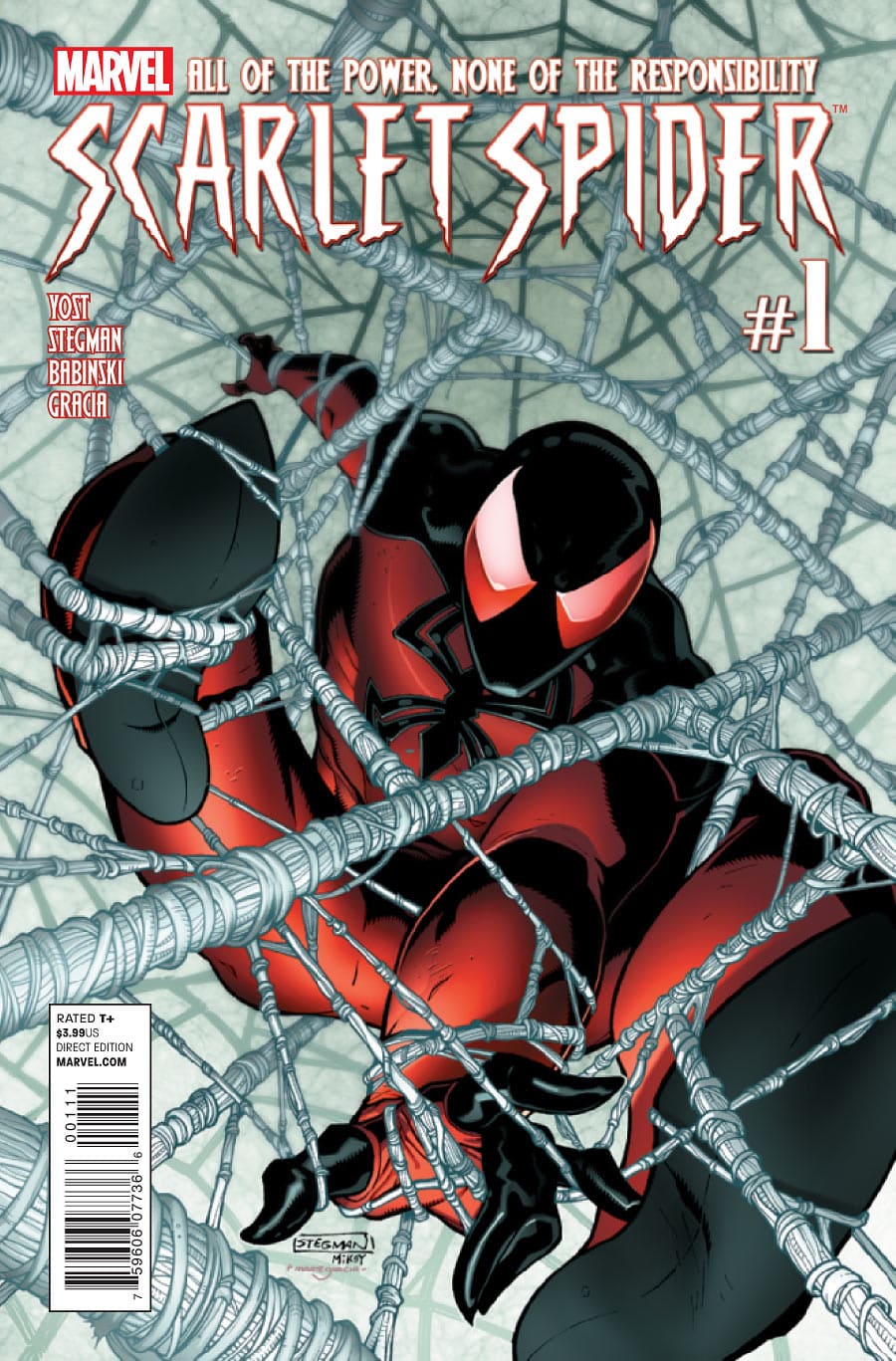
Scarlet_Spider_Vol_2_1

I have always enjoyed stories about villains becoming heroes, struggling to atone for or come to terms with their actions; I’m a sucker for a good redemption story, I’ll admit. There’s something about somebody striving to earn forgiveness when surrounded by people who don’t believe in them I’ve always enjoyed.

With 2012’s Scarlet Spider we get almost the exact opposite of that. A man who just wants to disappear surrounded by those who inexplicably believe in him.

I originally added this to my pull list with its first issue way back in 2012, I had assumed that the Scarlet Spider in question was Ben Reilly in a new costume, and not Kaine. I’m sure had I been reading the Spider-Man comics at the time I’d have known better, but I figured this was a good place to jump on board – and I wasn’t wrong in that sense, but I was wrong about who was wearing the costume. So I settled in to enjoy a story about Spider-Man’s clone, and as I hoped I ended up loving the series.

But not for the reasons I expected. Instead of a heroic story featuring Ben Reilly, Scarlet Spider delivered something I wasn’t expecting – and ended up loving more than I thought I would given my initial expectations of who I was going to be reading about.

The story starts with Kaine trying to get to Mexico, having recently been cured of the cellular degeneration he was suffering as a clone (it’s a whole thing that’s explained in multiple stories and other resources), he’s seeking a chance to finally live his life free of the constant agony he used to suffer. But, as with any good story featuring a Spider, things inevitably get in the way of that and Kaine gets stuck in Houston, quickly becoming the city’s own resident super hero. The series was written by Chistopher Yost, who was joined by a variety of hugely talented pencillers, inkers and colourists throughout the series 25 issue run (there were also  couple of specials and tie-in issues that bulk up the issue count if you want the whole story).

The full run remains one of my favourite Spider stories, in part because of the redemptive nature, but also because it’s just really good. But like all series that features a lesser known character it was cancelled because of low sales – though Kaine still pops up as the Scarlet Spider from time to time, and I will always try to grab those issues as and when I can. Scarlet Spider is a brilliant alternate to Spider-Man as we see a hero with, as the tag line so eloquently puts it, “all of the power, and none of the responsibility.” But Kaine is still a Parker, and as he begrudgingly accepts the responsibility of being the Scarlet Spider, we get to see a villain slowly change into (well, almost) a hero. However reluctantly.

This is a fantastic run, easily one of my favourite parts of my collection, but it’s one I don’t see getting the love it deserves – that’s why the book is Underrated.


Join us next week when we look at something else that is, for whatever reason, Underrated.

Underrated: Red Thorn: Glasgow Kiss

This is a column that focuses on something or some things from the comic book sphere of influence that may not get the credit and recognition it deserves. Whether that’s a list of comic book movies, ongoing comics, or a set of stories featuring a certain character. The columns may take the form of a bullet pointed list, or a slightly longer thinkpiece – there’s really no formula for this other than whether the things being covered are Underrated in some way.

This week: Red Thorn: Glasgow Kiss


I had completely forgotten about Red Thorn until a copy of the first trade came into the comic shop the other day, and I remembered how much I had enjoyed the series. I don’t know if I ever finished it, for some reason I think I stopped picking up the comics around the 8th or 9th issue, but that’s something I’m happy to look into and fill out the remaining issues for my collection.

What’s the book about? Well, the blurb is copied below:

Although she grew up in America, gifted artist Isla Mackintosh is a Scot at heart. Both of her parents were born in Glasgow, and 25 years ago her older sister Lauren vanished during a visit to the land of her ancestry. Now, Isla is following in her sister’s footsteps, hoping to discover the truth behind her disappearance.
 
The secret she’s about to unearth, however, is far older and more dangerous than she ever could have guessed.
 
Something has been waiting for Isla, deep beneath the moors. A pagan demigod has been trapped there for millennia, caged inside the bones of ancient gods. He smells of the blood of a thousand enemies and the sweat of countless lovers. His name is Thorn, and Isla’s art is the key to his freedom.

Red Thorn is one of those comics that has something special about it. Whether it’s in the way David Baillie has crafted this issue, Meghan Hetrick‘s art work or the coluring of Steve Oliff, there’s something about this comic that draws you in.

With any comic I read, I always hope it’ll be good, but especially when picking up the first issue of a new series; if the first issue doesn’t grab you in some way then the chances you’ll be willing to pick up the next issue aren’t great. Thankfully, there’s something about Red Thorn that grabs a hold of  you and pulls you through the streets of Glasgow on wild ride that begins to edge onto the mythological history of writer David Baillie‘s native Scotland.

The story here is mostly fluid, with Baillie taking his time about delving too quickly into the mythology side of things that the series will undoubtedly feature strongly across later issues. It’s a smart choice, because by focusing less on the mythology he allows us to become familiar with Isla Mackintosh, the young American in Scotland with an unusual talent that I’m sure Baille will have some fun with as the series goes on.

The art from Meghan Hetrick is brilliant; I’ve never been to Scotland myself, but her scenery has a distinctly Scottish flavour (admittedly I’m basing that statement on the few images, movies and television shows I’ve seen set in and around the country). One of my favourite scenes in the opening issue is when we’re given a glimpse inside Isla‘s sketch book. It’s a jaw dropping double page spread that really highlights Hetrick‘s abilities and, combined with the colours of Steve Oliff, is an excellent window into the kind of person Isla is.

Red Thorn #1 is a brilliant example of the talented creative team working with a synchronicity that you wouldn’t ordinarily expect from the first issue in a series, and it only becomes stronger throughout the rest of the trade. 


Join us next week when we look at something else that is, for whatever reason, Underrated.

« Older Entries Recent Entries »