Category Archives: Underrated

Underrated: Masters Of The Universe

This is a column that focuses on something or some things from the comic book sphere of influence that may not get the credit and recognition it deserves. Whether that’s a list of comic book movies, ongoing comics, or a set of stories featuring a certain character. The columns may take the form of a bullet pointed list, or a slightly longer thinkpiece – there’s really no formula for this other than whether the things being covered are Underrated in some way. This week: Masters Of The Universe


Masters of the Universe

It’s hard to imagine the impact that Masters of the Universe had on kids in the 80’s and, to a lesser extent, the 90’s. There has been a lot written and recorded about the franchise, from its beginnings as a line of action figures that would be advertised by a now much revered cartoon, to its status as a cult classic, so I have no intention of pretending to add something new to that vast database of knowledge. What I will do, however, is admit that this movie is far better than it has any right to be.

Now, if you’re surprised that this is the movie we’re focusing on today, then that’s possibly because you haven’t yet realized I’ve been on a significant Masters of the Universe kick of late, brought on because I picked up a He-Man figure during Hurricane Fiona (we had lost power for days at this point) so that when power was restored I could send a meme of He-Man when power had finally been restored. Clearly I had forgotten about using an actual gif, which is what ended up happening, but because I had a He-Man my collector brain now needed a Skeletor. And because I found a Skeletor, and Battle Cat for really good prices I ended up with Merman, Triclops and oh gods a new collection had been born.

I suppose my reinvigorated He-Man love came about because of the Masters Of The Universe Revelation cartoon, but it was – oddly enough – seeing an action figure of He-Man that pushed me over the edge again. So it was that I decided to revisit the live action movie from the 80’s with the expectation that it would be a terrible movie… and it honestly wasn’t. Yes, there were definitely departures from the cartoons, there was no Orko, Prince Adam or Snout Spout; the villains were half original (but no less enjoyable). The setting was less Eternia and more six blocks in Oregon with a brilliantly realized Castle Grayskull throne room – due largely to budget cuts the throne room was in dark during the climactic final scene.

Dolph Lundgren’s sword play was… less than authentic, but given how He-Man rarely used his sword in an offensive way in the cartoon it still felt oddly accurate.

The movie isn’t great, but it’s absolutely fantastic for what it is; a fun, romp that’s largely faithful to the spirit of the cartoon if not the letter. Frank Langella’s Skeletor is genuinely sinister, and a true highlight of the movie (along with that bald 80’s authority figure James Tolkan). The movie somehow becomes more than it should be when you want to enjoy it. When you embrace its quirks and foibles and you embrace the Eternian sayings that the movie uses with abandon. This isn’t going to be high on your watch list, but it’s a lot of fun nonetheless.

Good journey, folks.


There we have it. Are there other comic book related stuff out there that is, for whatever reason, underrated and under-appreciated?

Absolutely.

Because of that, Underrated will return to highlight more comic book related stuff  that either gets ignored despite it’s high quality, or maybe isn’t quite as bad as we tend to think it is. In the meantime, though, if you do get a chance check out the characters in thisUnderrated, then you may need to hunt through the back issue bins for some, but others do have some stories collected in trades.

Until next time!

Underrated: God Country

This is a column that focuses on something or some things from the comic book sphere of influence that may not get the credit and recognition it deserves. Whether that’s a list of comic book movies, ongoing comics, or a set of stories featuring a certain character. The columns may take the form of a bullet-pointed list, or a slightly longer thinkpiece – there’s really no formula for this other than whether the things being covered are Underrated in some way. This week: God Country


God Country has one of the more interestingly unique concepts in comics; that of an Alzheimer’s patient who is cured when his hand touches a twelve foot sword, only to be drawn into the soap  opera like world of space gods that have more than a passing resemblance to the Greco-Roman pantheons. Written by Donny Cates, who also co-wrote The Paybacks with Eliot Rahal; that series looked at the other side of superheroing with a starkly funny focus on a group of knock off characters serving as superpowered repomen (and women) struggling to emerge from the crippling debt their equipment put them in. On the surface, God Country may have little in common with The Paybacks other than half of the writing team (and Geoff Shaw‘s art), that’s certainly true on a superficial thematic level, but at their core both series focus on something quite relatable: people and their struggles against every day adversity.

There is every chance that you probably recognize Cates’ name from his work on Venom, Thor and King In Black, and I’ll admit that it feels strange to write about something Donny Cates has written as being underrated, but this is a book that I don’t see people talk about as much as they should.

Emmet Quinlan’s family have been struggling with the horror of watching a loved one slip away whilst suffering from Alzheimer’s, and their struggles are haunting – if you’ve ever had to watch a loved one slip away while suffering this horrible disease as I have, then you’ll understand immediately how hard it can be. Donny Cates treats the subject with the respect it deserves without sugar coating the emotions that Emmet’s family face.

Of course, with this being a comic book called God Country, that’s not what the comic is about.

At least not in it’s entirety. You see Emmet finds a giant sentient sword that restores his mind in its entirety. While Emmet’s disease does form the backbone of his desire to keep his hand on the sword that returned his mind, it’s the conflict with the space gods who want the sword back that provides the more immediate physical threat.

If you enjoyed Jason Aaron’s run on Thor: God Of Thunder  then you’re going to find a lot to love here, from the heavily emotional sequences in the first issue to the more operatic space god scenes in subsequent comics, this is a powerful series – indeed, without Cates wry humour that appears every so often throughout the series, then this could easily become an almost too heavy story.

Ultimately though, this story is so much more than it seems on the surface.

God Country is that rare beast that uses a well thought out high concept science fiction or fantasy premise to tell the most human of stories. It is truly a work of art that had my eyes sweaty with respect – and that doesn’t happen very often when I read comics.


Join us next week when we look at something else that is, for whatever reason, Underrated.

Underrated: The Amazing Spider-Man

I drastically overslept today, so rather than the planned column, we’re revisiting one from 2017 when I went to bat for one of the more maligned Spider-Man movies.


This is a column that focuses on something or some things from the comic book sphere of influence that may not get the credit and recognition it deserves. Whether that’s a list of comic book movies, ongoing comics, or a set of stories featuring a certain character. The columns may take the form of a bullet pointed list, or a slightly longer thinkpiece – there’s really no formula for this other than whether the things being covered are Underrated in some way. This week: The Amazing Spiderman


Today I wanted to talk about the first reboot of the Spider-Man movie franchise from waaaaaaaay back in 2012. After the Sam Raimi trilogy which, lets be honest, didn’t exactly end on a high note, Sony would eventually decide to relaunch the Spider-Man movie franchise, and it’s the result of that reboot that I wanted to talk about today.

If you’re surprised that this is the movie we’re focusing on today, then you may have missed that the Marvel Studios/Sony collaboration Spider-Man Homecoming is in theaters  (and the MCU!) now; and you may also have been unaware of the amount of people who are now complaining about this movie (or maybe that’s just the people I hang out with?) – or you may have never really enjoyed this movie. But regardless of where you sit, I’ve always really enjoyed this movie, and feel that it’s stronger than a lot of people give it credit.

Why? To the bullet points!

• The chemistry between the leads
One of the strongest aspects of the Amazing franchise is the relationship between Andrew Garfield’s Peter Parker and Emma Stone’s Gwen Stacy. Their interactions on screen approach poetry in some scenes, and without a doubt these two actors elevate the film beyond what a typical pair of romantic leads can do.

•  Andrew Garfield’s Spider-Man
Garfield may have been to cool to genuinely pull off a nerdy Peter Parker, but his Spider-Man was top notch; his boundless energy and fast mouth was unlike anything we had seen before in live action, and Garfield pulled it off spectacularly. This was a Spider-Man whose failures were a palpable weight on his spandex clad shoulders, and in the quiet moments throughout the movie you can genuinely sense that through Garfield’s body language.

•  The webswinging
The effects team did a wonderful job guiding Spider-Man’s journey through the skies in what is, for my money, the most realistic depiction of a man flying through the air on super strong glue to date.

•  The costume
I’m kidding. I wasn’t exactly fond of this movie’s Spider-Man look. The orange lenses weren’t my thing, and the way the red came down the legs weren’t my favourite.

•  The lack of the actual words “With great power there must also come great responsibility”
I know this is probably a contentious point to make, but loved that Peter learned this lesson throughout the film without having the quote used just for the audience who feel they must hear those words in the movie. It was far more powerful for Peter to learn it through his actions and reactions than have the lesson spelled out in what could have been an awkward and stilted scene. Plus, it lent a much heavier weight to Uncle Ben’s voice message at the end.

There are quite a few aspects of The Amazing Spider-Man that I thoroughly enjoyed, more than I should probably talk about in this article, but I’m aware that this isn’t a flawless movie – it’s not even the best Spider-Man movie- that honour is reserved for Sam Raimi’s Spider-Man 2. Yes, The Amazing Spider-Man  did have its issues; the Lizard wasn’t the most compelling villain, and his design was somewhat weak, but he isn’t the weakest in any of the Spider-Man movies (Topher Grace a Venom will hold that title for quite some time). His rationale is still just understandable enough when you break it down for yourself, but you do need to be aware of his misguided, yet deeply hidden altruistic thought process. And only a few years removed from Spider-Man 3, did we really need to see Uncle Ben die again? Not really.

I’m aware that it had it’s problems, but I don’t care; I love it anyway. For years, this was one of my favourite Spider-Man films, until we got the two Tom Holland flicks. I’ll always enjoy this movie, but it won’t be the first Spider-Man movie I reach for.


There we have it. Are there other comic book related stuff out there that is, for whatever reason, underrated and under-appreciated?

Absolutely.

Because of that, Underrated will return to highlight more comic book related stuff  that either gets ignored despite it’s high quality, or maybe isn’t quite as bad as we tend to think it is. In the meantime, though, if you do get a chance check out the characters in thisUnderrated, then you may need to hunt through the back issue bins for some, but others do have some stories collected in trades.

Until next time!

Underrated: Havok and Wolverine: Meltdown

This is a column that focuses on something or some things from the comic book sphere of influence that may not get the credit and recognition it deserves. Whether that’s a list of comic book movies, ongoing comics, or a set of stories featuring a certain character. The columns may take the form of a bullet pointed list, or a slightly longer thinkpiece – there’s really no formula for this other than whether the things being covered are Underrated in some way. This week: Havok & Wolverine: Meltdown.


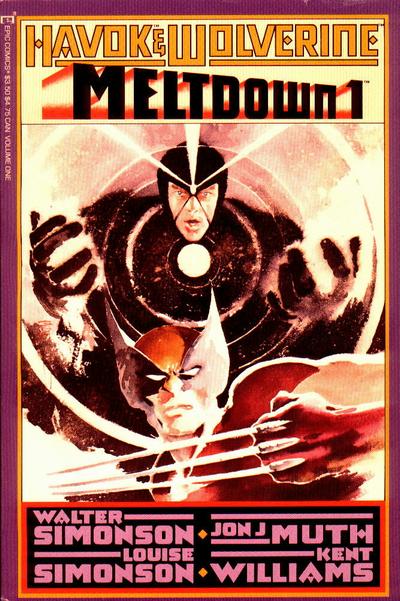
I don’t remember the first time I read this story, but it was likely in the UK reprint magazine Wolverine Unleashed in the mid to late 90’s. That was also the last time I read it, so when I saw the collected edition at my LCS for $15 I couldn’t pass it up – now because Wolverine is a little bit more marketable than Havok, the trade was just called Wolverine: Meltdown.

Originally published in the late 80’s, Meltdown was written by Walter and Louise Simonson, with illustrations by John J. Muth and Kent Williams. The story is set around the Chernobyl nuclear disaster of the mid 80’s, and finds Havok and Wolverine caught up in the midst of a plot to end the world in nuclear war from the shadows. The art has a wonderful painted look to it at times, but the artists aren’t afraid to experiment with multiple forms of media throughout the book. It’s a choice that is divisive to some – I’ll freely admit when I was younger the art did nothing for me, but I enjoyed the story a fair bit, whereas now I find myself absorbed in the art more than the writing which is a strange twist on how I usually find myself feeling when coming back to stories I haven’t read in 20 some years.

It’s easy to imagine the way this story would have felt when initially released as it presents another possibility behind the Chernobyl disaster as an intentional act to snare the X-Men. Looking back now, it’s a great premise to a story, and one that still holds up despite the very specific time setting. Admittedly, I’ve no idea or memory as to how in continuity/canon this story is within the X-Universe but the story is entertaining enough to allow you to just enjoy it as is, and seeing Wolverine and Havok team up together is still a relatively rare event even today – and while I’m probably in the minority here, I’d love to see more chances for these two mutants to come together on the page.

The main reason I wanted to talk about this book today is solely because it’s a story that I’d completely forgotten about. This isn’t one of the classic Wolverine or X-Men stories that people will talk about, and honestly nor should it be, but it’s still an enjoyable tale that still stands the test of time; admittedly it’s the artwork that will pull you in more than the story, because this is a book that just looks utterly fantastic. The art is at times risky and pushes the envelope of what comics would typically feature 30 years ago (and yet is far more common today). Do yourself a favour and check this story out if you can – it’s a four issue mini series that shouldn’t break the bank if you hunt the individual issues.


Unless the comics industry ceases any and all publication look for a future installment of Underrated to cover more comics that aren’t cracking the top 100.

Underrated: Thrud the Barbarian

This column is a rerun from late 2018. Enjoy!

This is a column that focuses on something or some things from the comic book sphere of influence that may not get the credit and recognition it deserves. Whether that’s a list of comic book movies, ongoing comics, or a set of stories featuring a certain character. The columns may take the form of a bullet pointed list, or a slightly longer thinkpiece – there’s really no formula for this other than whether the things being covered are Underrated in some way. This week:  Thrud the Barbarian


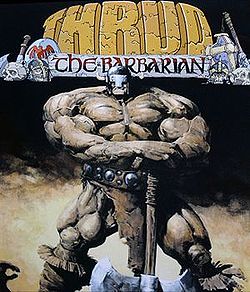
Another week, and yet another case of “Alex bought something for Underrated without knowing anything about it beforehand,” or it would be had Alex not received Carl Critchlow‘s Thrud the Barbarian  a few years  ago from the now defunct Comic Bento. Published by Titan Comics, the trade paperback collects the original Thrud the Barbarian five issue miniseries, as well as a couple of single page shorts from White Dwarf magazine, and was originally published in 2013. If you missed this when it first came out, don’t be surprised – I’m not sure it was ever released on a large scale outside Britain.

Thrud the Barbarian is what I’d consider a quintessentially British comic; it blends in equal parts the violence , chaos and destruction that one would expect from a Conan parody with the silliness and tongue in cheek humour that wouldn’t feel out of place in a Monty Python skit. But with a lot more smashed heads and limbs flying free of bodies. The Titan Comics collection consists of five stories that can be read independently of each other (seven if you’re counting the bonus strips), or in one go – which is what I did when rereading it recently.

Honestly, I reread it because I was reorganizing my bookcase and saw the cover again and wanted something fun, easy and not too deep or involved to read. Thrud was certainly that, and I loved every irreverent thought, every stunningly painted cover, and the computer coloured artwork. It was exactly the kind of book that I needed to read after a busy week, a book that I am glad I own, and one I am even happier that I noticed on the shelf.

Thrud2

As a fan of heroic fantasy books, I loved Critchlow’s send up of the genre; the visualization and sight gags and some brilliant punchlines across all the stories in in the collection. I loved every aspect of this book; the sound effects, the dumb-as-a-post hero just wants his beer and the cartoon-like hyper violence that ties it all together in such a lovely package.

Without a doubt this is one of my favourite books I’ve ever written about for this column, even if I did forget I owned it for a little while.

And yet, had it not been for the Bento box, I would never have heard of this book. Which is easily one of the best aspects of the online blind box subscription thingies – the introduction to new and exciting books and comics you otherwise would never have been exposed to. Consequently, this is a book I don’t see getting the love it deserves – that’s why the book is Underrated.


Join us next week when we look at something else that is, for whatever reason, Underrated.

Underrated: Incognito

Time got away from me this week, so we’re rerunning an older column from yesteryear.

This is a column that focuses on something or some things from the comic book sphere of influence that may not get the credit and recognition it deserves. Whether that’s a list of comic book movies, ongoing comics, or a set of stories featuring a certain character. The columns may take the form of a bullet pointed list, or a slightly longer thinkpiece – there’s really no formula for this other than whether the things being covered are Underrated in some way. This week: Incognito


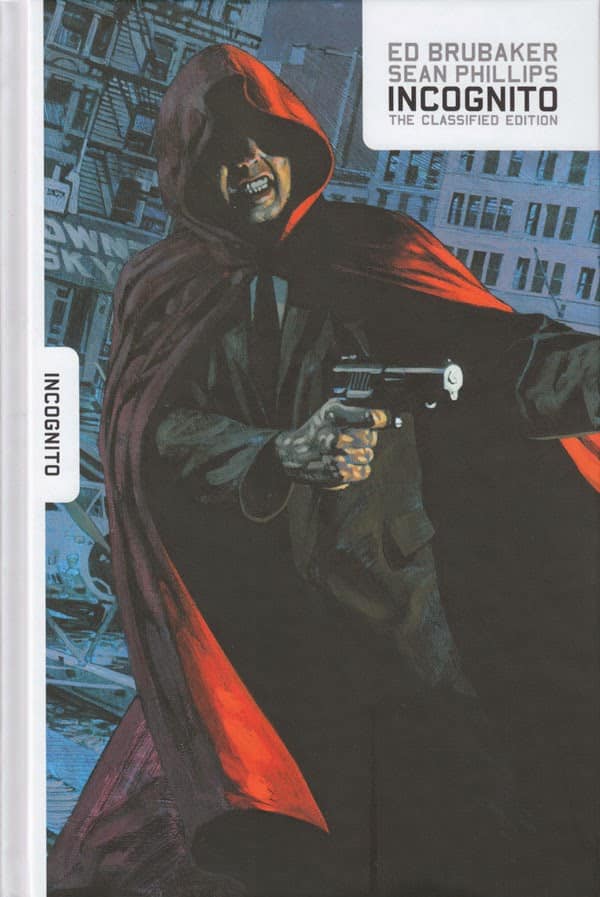
My local comic shop recently got the hardcover edition of Incognito in, and it last all of ten minutes on the table where it was in line for pricing as I picked it up and read what amounted to half the first issue before scooping it up before it ever actually made it to the shelf.

Written by Ed Brubaker, with art by Sean Phillips and colours by Val Staples, the hardcover collects both Incognito and the sequel Incognito: Bad Influences within its 360-odd pages as well an essay, a series cover gallery and some interesting process pieces. If you’ve read any of Brubaker and Phillips other work together, such as Criminal, Fatale or Kill Or Be Killed, then you probably have an idea what you’re in for. If you don’t… well, let’s just say you’re in for a very compelling story that you’ll probably want to read multiple times.

If you want to read the series’ synopsis, it’s below. If you don’t… well, skip the next paragraph, I guess. Either way, you’ll find the core premise of the comic below.

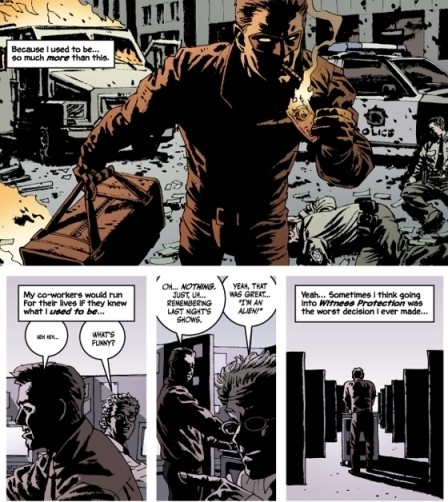
What if you were an ex-super villain hiding out in Witness Protection… but all you could think about were the days when the rules didn’t apply to you? Could you be a humdrum office clerk after being the best at years of leaving destruction in your wake? And what if you couldn’t stand it? What would you do then? 

This story is steeped in the pulp fiction of the 30’s and 40’s, stories that undeniably inspired the superhero fiction of today. Brubaker takes those early influences and fills out a world that has descended from them; there’s a very clear path in Incognito back to characters like the Shadow and the Spider (or rather Brubaker’s version thereof), and it gives the reader the sense that we’re barely scratching the surface with the characters and history revealed through the course of the hardcover’s 360-odd pages.

I was immediately taken in by the story as we learned more about Zack Overkill and how he went from a heavy hitting super villain to a lowly file clerk barely noticed by his coworkers. We see flashes of his mandated psychiatric appointments, the oh-so-real struggles he’s facing in a life that he’s not accustomed too. If you remove the super powered aspect from the opening part of the story, you can see a man struggling with his mental health amidst an unfulfilling life of boredom and depression. Is it any wonder that he eventually turns to drugs in order to find an escape?

Zach Overkill is an oddly likable guy despite never hiding (at least from us) what kind of man he used to be; whether this story is about his trying to find redemption, or a larger tale about whether a leopard can truly change its spots is one of the best parts about this book. Brubaker asks you not whether you can change for the better after making a horrible series of life choices, but whether others can accept your change. Whether they truly believe it, or if once they’ve labelled you a villain then that’s how they will always see you.

I should have expected good stuff from this book, but I wasn’t quite prepared with just how good it would be.

In a story that can be so much to so many, we’re left asking ourselves who we really are; are you really the person you think you are, or are you just a product of what this world has made you?


Join us next week where there will doubtless be another movie, series, comic or comic related thing discussed that is, for whatever reason, Underrated.

Underrated: the Batman: Arkham Knight comic prequel

This is a column that focuses on something or some things from the comic book sphere of influence that may not get the credit and recognition it deserves. Whether that’s a list of comic book movies, ongoing comics, or a set of stories featuring a certain character. The columns may take the form of a bullet pointed list, or a slightly longer thinkpiece – there’s really no formula for this other than whether the things being covered are Underrated in some way.

This week: the Batman: Arkham Knight comic prequel.


If you’re a gamer and a comic fan, then there’s a really good chance that you’ve played the Arkham series of Batman games. Starting with Arkham Asylum, the sequel (and still my favourite of the bunch) Arkham City, to the finale Arkham Knight, the franchise also delivered Arkham Origins – though this prequel, released after Arkham City, was developed by a different studio and doesn’t compare as well to the other three despite still being a really good game. The games’ story is remarkably robust, and at the time caught a few people off guard with the quality and detail (remember, the first two were released before video game stories were up to the quality you see in God Of War or Red Dead Redemption 2), leaving many a comic fan with the first true experience of playing as the goddamn Batman.

Of course, being a comic based game series, there have been various tie-in series released over the years, which is where this column comes in, with a look at the prequel to Arkham Knight, the series finale.

Written by Peter Tomasi with art by an all star cast of creators such as Vikto bogdanovic, Art Thibert, Ig Guara and Julio Ferreira, this book is far better than your average movie or video game tie in. And yes, it did take me far longer than it should have to realize that this was the second volume, but that didn’t lesson my enjoyment of the story at all. If anything, the best way to really look at this book is as an Elseworlds tale (which ultimately it is, just under a different moniker. where you’re not going to know the full story unless you play the games as well.

This gives the Arkham universe a unique interactive element to them not found in either comics or videogames alone. There’s no harm in not reading this book if you’re a gamer, just as there’s no real reason not to give this a look if you’re a comics fan – though if you’re not familiar with the game’s story then you may have a slightly harder time, but no more so if you started reading a series at the beginning of a story and not at the first issue.

If you’ve been reading comics, especially superhero comics, for some time then you’re going to be used to starting a story without knowing everything that came before, and so if you pick this book up with that in mind then there’s something here that you’ll be able to enjoy.

This a solid story, and one that I’m glad I found on the shelf.

This isn’t one of the defining runs or stories in Batman’s history, but it is a lot of fun – and that’s why it’s a great candidate for today’s Underrated column. Check it out if you ever get a chance.


Join us next week when we look at something else that is, for whatever reason, Underrated.

Underrated: Daredevil: No Devils, Only God

This is a column that focuses on something or some things from the comic book sphere of influence that may not get the credit and recognition it deserves. Whether that’s a list of comic book movies, ongoing comics, or a set of stories featuring a certain character. The columns may take the form of a bullet pointed list, or a slightly longer thinkpiece – there’s really no formula for this other than whether the things being covered are Underrated in some way.

This week: the multi-part crossover event Daredevil: No Devils, Only God


Daredevil is one of those characters that I’ve heard a lot about, but haven’t really delved into his history and stories on a consistent manner – the one miniseries I own is Daredevil: End Of Days, which is good, but probably not a solid indication as to what to expect when starting to get into the character. Indeed, most of my exposure to Daredevil probably comes from the Netflix TV show rather than the comics, and so I didn’t delve into this run for quite some time – it wasn’t until a couple of friends effectively forced me to read it that I finally did (and if you listen to Those Two Geeks, you’ll know Joe has been insisting I read this for awhile).

As I said, the Daredevil I’m most familiar with is the one from Netflix, and so for me this was a perfect starting point. No, I had no idea what came before – and it didn’t really matter – but the series, written by Chip Zdarsky, seems to be geared toward those more familiar with the live action series rather than with a deep knowledge of the character. Again, I could be wrong, and maybe the comics had been more closely aligned to what I’m familiar with before the first issue of Zdarsky’s run.

So welcome to the second part of my read through of Zdarsky’s Daredevil. I’m told it’s excellent as far as Daredevil comics go, and while I can’t speak to that, I can say that I didn’t want to stop reading after the final issue in this volume to write this column.

No Devils Only Gods, drawn by Lalit Kumar Sharma (issues 6-9) and Jorge Fornes (issue 10) and coloured by Jay Leostan (issues 6-9) and Jordie Bellaire (issue 10), picks up where Know Fear left off with Matt Murdock having hung up the mask and focusing on his normal life. The snyopsis for the arc, taken from Comixology, reads “the Man Without Fear is missing! Daredevil has disappeared from Hell’s Kitchen — and in his absence, the real devils are starting to come out to play. Detective Cole North may think he’s stopped Daredevil, but there are bigger problems coming his way! Meanwhile, Matt Murdock has emerged from his recent ordeals a changed man — but has he changed for better or worse? As he faces up to the choices he has made, Matt grapples with who he is and who he wants to be. Can he truly live a life without the suit?”

Zdarsky uses this arc to explore what happens after a hero hangs up the mask. What happens when he still has the drive to do the right thing, but doesn’t want to be the vigilante he once was? We see Matt Murdock questioning his faith quite a lot over the course of this arc, and as in life, he never gets an answer. Rather, he has to look for and interpret the signs he sees around him to find the answer he seeks, much as I imagine you would do in your daily life if you were going through the same crises of faith (as an atheist, this was an interesting part of the story to read, because while I couldn’t relate on a spiritual level, it did resonate to me on a mental health scale as I’ve had some skirmishes with depression over the last couple of years).

It’s the internal conflict and struggle that really elevates this chapter in Zdarsky’s run, because there’s very little Daredevil appearances in costume, and I think the arc is stronger for that. There’s no clear cut ending to this arc, either, with Zdarsk’s writing leaving you in a moment where you’re not sure if the chapter is over or if you should be picking up the next issue – it’s a very fitting ending for a story that doesn’t offer any black and white answers.

Now, if you’ll excuse me, I’ve got the next volume of this underrated gem to check out. Whether Zdarsky’s run on Daredevil will be held in the same esteem as Bendis, Nocenti and Miller, well only time will tell. But I bloody love it.


Join us next week when we look at something else that is, for whatever reason, Underrated.

Underrated: Daredevil: Know Fear

This is a column that focuses on something or some things from the comic book sphere of influence that may not get the credit and recognition it deserves. Whether that’s a list of comic book movies, ongoing comics, or a set of stories featuring a certain character. The columns may take the form of a bullet pointed list, or a slightly longer thinkpiece – there’s really no formula for this other than whether the things being covered are Underrated in some way.

This week: the multi-part crossover event Daredevil: Know Fear


Daredevil is one of those characters that I’ve heard a lot about, but haven’t really delved into his history and stories on a consistent manner – the one miniseries I own is Daredevil: End Of Days, which is good, but probably not a solid indication as to what to expect when starting to get into the character. Indeed, most of my exposure to Daredevil probably comes from the Netflix TV show rather than the comics, and so I didn’t delve into this run for quite some time – it wasn’t until a couple of friends effectively forced me to read it that I finally did (and if you listen to Those Two Geeks, you’ll know Joe has been insisting I read this for awhile).

As I said, the Daredevil I’m most familiar with is the one from Netflix, and so for me this was a perfect starting point. No, I had no idea what came before – and it didn’t really matter – but the series, written by Chip Zdarsky, seems to be geared toward those more familiar with the live action series rather than with a deep knowledge of the character. Again, I could be wrong, and maybe the comics had been more closely aligned to what I’m familiar with before the first issue of Zdarsky’s run.

Know Fear, drawn by Marco Checcheto and coloured by Sunny Gho, finds Matt Murdock at one of the (many) low points in his life as he tries to get back into the hero game again after a near death experience. The first issue leads off with Daredevil struggling against three robbers, and sets up one of the driving plot points of the story as one of the robbers dies at the hospital – but how? And who could want to frame Daredevil for murder?

Zdarsky uses this run to take a look at the career of a hero as they bounce back from a traumatic accident, and through that lens we can see our own struggles to get back to where we want to be after suffering a setback or two. Of course, most of us don’t put on red tights and run around rooftops, but that’s neither here nor there when you look at the spiritual and emotional turmoil that Matt Murdock is going through – and that’s where Zdarsky’s able to relate the character to the audience so well. We’ve all struggled to pick ourselves back up, and we’ve all tried to do the best that we can in the face of overwhelming odds…

There’s a couple of key reasons why I wanted to highlight this volume today; the first is that it’s a very accessible volume for new readers coming from the Netflix show, like myself. Secondly, it’s a really introspective dive into a character that left me feeling as if I’d been reading Daredevil for years. Thirdly, it’s got a grim, dark sense to it that’s oddly beautiful in its way as Daredevil struggles to find himself amidst the chaos of his new life.

Now, if you’ll excuse me, I’ve got the next volume of this underrated gem to check out. Whether Zdarsky’s run on Daredevil will be held in the same esteem as Bendis, Nocenti and Miller, well only time will tell. But I bloody love it.


Join us next week when we look at something else that is, for whatever reason, Underrated.

Underrated: Halls Of The Turnip King

This is a column that focuses on something or some things from the comic book sphere of influence that may not get the credit and recognition it deserves. Whether that’s a list of comic book movies, ongoing comics, or a set of stories featuring a certain character. The columns may take the form of a bullet pointed list, or a slightly longer thinkpiece – there’s really no formula for this other than whether the things being covered are Underrated in some way. This week:  Halls Of The Turnip King.


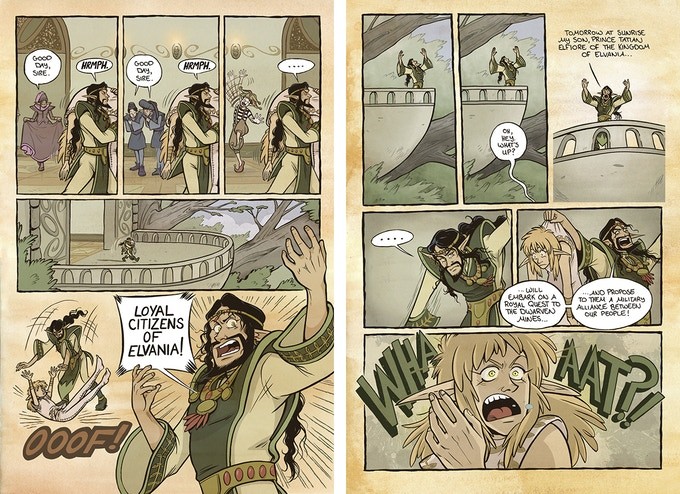
I picked up Halls Of The Turnip King, published by Pegamoose Press yesterday from my LCS. It was written, drawn and hand lettered by Brenda Hickey. Originally released as a very limited series with a small print run, Halls Of The Turnip King also adds a thirteen page epilogue to the story, and I thoroughly enjoyed every page.

The plot is actually pretty simple; an elf prince goes to the dwarf kingdom to forge an alliance because the king believes a war is coming. But the prince would rather be playing video games than playing politics and doesn’t really have any idea what he’s doing. But where the plot is fairly straight forward it allows Hickey to really go to two with the humour in the book. If you like visual gags, the honouring, mickey-taking and subverting of fantasy tropes then this is going to be a book you’ll want to get your hands on.

Hickey also has some really fantastic examples of lettering and playing with the panel layouts and sound effects. One of these moments has a sound effect tapping a character on the shoulder to get his attention. I love the way that Hickey is able to work these often subtle moments into the graphic novel. It honestly wasn’t until I started writing this column that I realized just how much I enjoyed the way Hickey has drawn and lettered the comic. There’s an energy here that makes the comic feel almost Monty Python-eqsue at times, but it always feels like a complete and cohesive vision from Hickey.

There’s also a good lesson in the comic, too, but if I tell you what it is then it’ll probably give away too much of the story. The plot is fairly basic on paper, and that’s actually one of the comic’s strengths.

Hickey shows that you don’t need to have a Lord Of The Rings or Game Of Thrones/A Song of Ice And Fire style epic to tell a good story. Sometimes, a story about trying to forge an unlikely alliance can turn out to be exactly what you want to read on a Saturday morning (yes, I am writing this half an hour before publication). I read this book in one sitting, and I enjoyed each and every page of the book. Art, humour, the lettering (which is an underrated side of comics in and of itself) are utterly fantastic.

If this was a review of the book, I’d probably be looking at giving it upwards of an eight or a nine (I say this because there aren’t that many reviews of the book from what a quick google search found). But, because this isn’t a review, what I will say is that this is an Underrated gem and was worth every penny of the $30 it cost me.


Join us next week when we look at something else that is, for whatever reason, Underrated.

« Older Entries Recent Entries »