Category Archives: Features

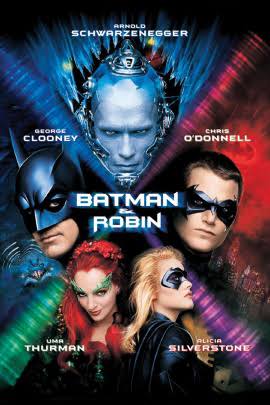
Underrated: Batman And Robin. Yes, The Movie. No, I Am Not Joking

This is a column that focuses on something or some things from the comic book sphere of influence that may not get the credit and recognition it deserves. Whether that’s a list of comic book movies, ongoing comics, or a set of stories featuring a certain character. The columns may take the form of a bullet pointed list, or a slightly longer thinkpiece – there’s really no formula for this other than whether the things being covered are Underrated in some way. This week: Batman And Robin.


You all know the general reputation of this movie. So bad that it ended the original run of Batman films. Nipples on the Batsuit and enough ice puns to chill a bottle of whiskey.

And let us not forget the Bat-credit card.

The last of the movie series that began with Tim Burton’s Batman is not thought of fondly, but I want you to think about a couple of points regarding the movie next time you want to hate on the only George Clooney Batman appearance.

  • It paved the way for Christopher Nolan’s Dark Knight Trilogy
    Alright, so this isn’t necessarily a good thing about the movie, but at least the follow up Batman flick led to one of the strongest movies featuring the Dark Knight we’ve had yet.
  • It’s the only film in which Batman does purposefully or accidentally kill somebody.
    When I say accidentally kill somebody, I mean those moments where he doesn’t seem to care what happens to criminals after he’s run them off a bridge. Or shot their vehicle with missiles. Or left a man on a train.
  • Think of it as a continuation of the Adam West Batman.
    All of a sudden the movie takes on an entirely new look when you see it as being an homage to the biffing and powing of the 60’s.
  • Once you accept it’s not a great movie, it’s surprisingly fun.
    This will never place highly on any comic fans order of Batman movies – at best it might be in the bottom two or three – but it’s always going to place high on the silly and goofy list. Sometimes, after imbibing some mind altering substances, that’s exactly what you want. Don’t take this movie seriously, and you’ll find it a very ice film.
  • Arnold’s ice puns are awful.
    Seriously, they’re very uncool. And yet… you can’t help but laugh at the sheer delight Arnold has in delivering them.
  • It really is so bad it’s great.
    There’s only a few movies that are so shit that you enjoy them, and this is the best of the ones featuring Batman.

You didn’t really think I’d claim this as a good movie, did you? It’s awful. But it’s so awful that it’s really enjoyable (unlike the theatrical cut of Batman V Superman which is considerably worse than the extended version). So enjoyable that it’s almost an underrated gem – which makes it the perfect movie to rewatch when you’ve got a spare moment and want a laugh.


Join us next week when we look at something else that is, for whatever reason, Underrated.

Underrated: Green Valley

Did you read this book yet? Allow us to remind you why you should with a rerun of a column from 2019.


This is a column that focuses on something or some things from the comic book sphere of influence that may not get the credit and recognition it deserves. Whether that’s a list of comic book movies, ongoing comics, or a set of stories featuring a certain character. The columns may take the form of a bullet pointed list, or a slightly longer thinkpiece – there’s really no formula for this other than whether the things being covered are Underrated in some way. This week: Green Valley


Published by Image, Green Valley was written by Max Landis and features art by Giuseppe Camuncoli, inks by Cliff Rathburn and colours by Jean Francois Beaulieu. The wonderful hardcover collection in my hands collects nine issues and will set you back $29.99 (I paid for this out of my own pocket, and happily so, even though I probably had access to the single issue review copies).

So what’s the story about?

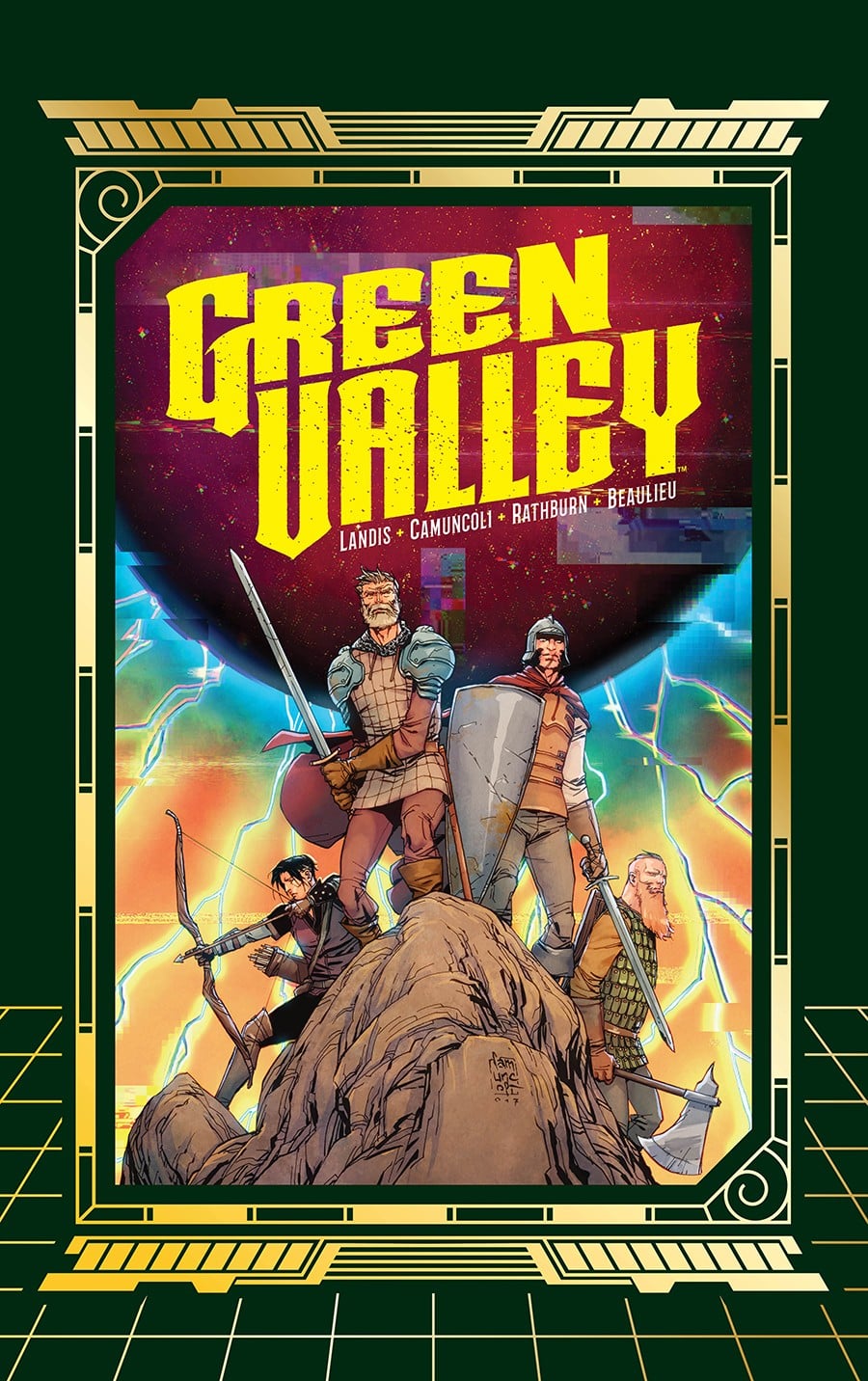
GreenValleyHC.jpg

The knights of Kelodia are the finest in the land, but they’ve never faced a POWER like the one that resides in the Green Valley. Now they’re about to embark on the adventure of a lifetime—to stop a wizard and slay his dragons—but there’s no such thing as magic or dragons…is there? 

You may have noticed by reading this column that I tend to enjoy stories set in and around medieval times, even though I don’t tend to read that many comics set in that era (or at least I didn’t until this year). So when my LCS suggested I pick this up (it was on the counter and the owner told me I’d like it) I did so without question because sometimes I don’t want to read superhero comics.

One of the first things I noticed was that the hardcover itself just feels utterly wonderful in your hands.  The above image is of the hardcover, with the comic art inset slightly into the gold and green cover of the book itself in an effect that really doesn’t translate as well in the image as it does in person, but it does give you a hint about the nature of the story, which aside from the cover and text on the back I entered utterly blindly – and I fell in love.

green valley interior 2.jpg
green valley interior.jpg

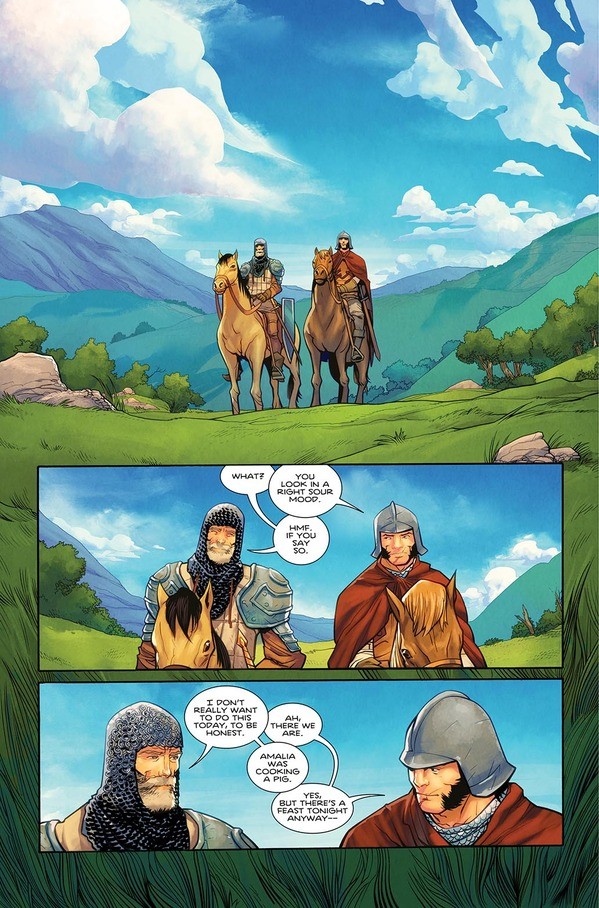
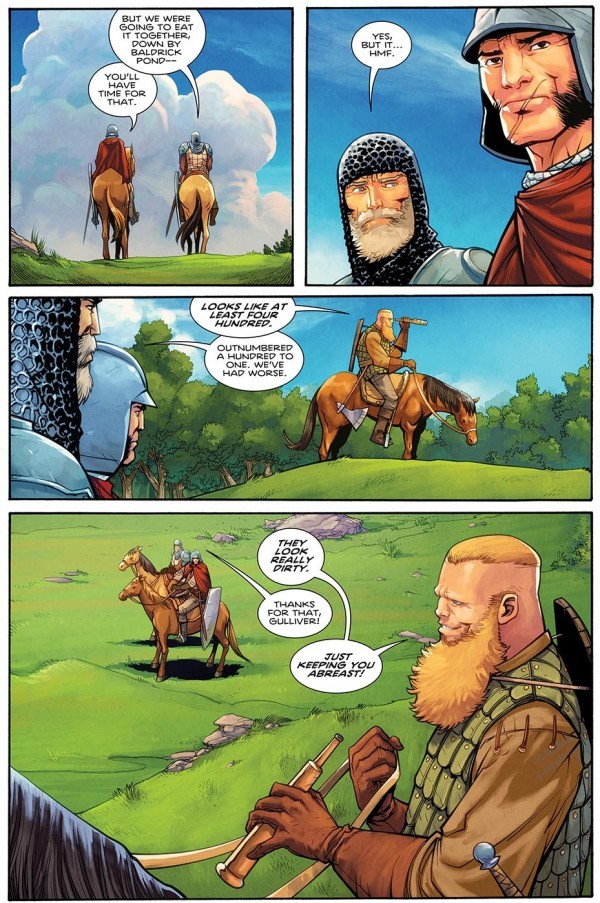
Green Valley is the kind of book that you will want to read in a single sitting – it grabs you right from the start as you’re introduced to the legendary Knights of Kelodia (all four of them) as they face down a barbarian horde in a brilliant sequence that’s full of dry humour, a genuine feeling camaraderie from the knights  and tense knightly masculinity all wrapped up in some beautiful visuals that are some of the nicest pure-comic pages I’ve seen in quite some time. Were I reviewing this here, I’d be giving this at least 9’s across the board and telling you to buy this without question – the story and art genuinely took me by surprise and had me forget that I really should be doing a bunch of other stuff for the hour or so I sat enraptured in this story.

Without spoiling anything, it’s tough to explain why I loved this story, but that won’t stop me from trying. Green Valley is a very intelligently written book, with dialogue that is, at times, so sharp you could loose a finger. There are moments that span the gamut of human emotion for the characters, and will have you laughing out loud and pumping your fist as the story goes on – just as you’ll feel gut-punched at certain other moment. Max Landis has written one hell of a story that deserves a very special place on your shelf.

Now excuse me while I go reread it (no, I’m not saying that for effect – I’m actually going to reread it now).


Unless the comics industry ceases any and all publication look for a future installment of Underrated to cover more comics that aren’t cracking the top 100.

Underrated: Battlepug Volume One

This is a column that focuses on something or some things from the comic book sphere of influence that may not get the credit and recognition it deserves. Whether that’s a list of comic book movies, ongoing comics, or a set of stories featuring a certain character. The columns may take the form of a bullet pointed list, or a slightly longer thinkpiece – there’s really no formula for this other than whether the things being covered are Underrated in some way. This week: Battlepug: Volume One


Disclaimer: Somehow I managed to delete, and save the deletion, of almost the entire text of this column. It is currently about ten minutes before it’s due to go live… 

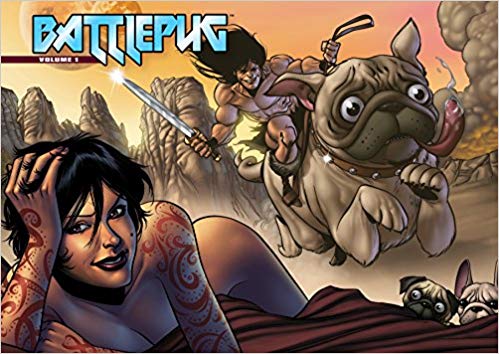
After a visit to the thrift store the other day I found the first volume of Mike Norton‘s Battlepug. Joining Norton for the comic is colourist Allen Passalaqu and letter Chris Crank. The story itself is a blend between homage and parody to Conan and He-Man in a world where sword and sorcery is the name of the game in a world where giant cuddly and innocent looking (mostly) animals represent a rather unconventionally large threat. With the first volume taking on a story-within-a-story set up, the framing is of a fairly stereotypical fantasy woman telling a bed time story to her two talking pugs. 

It’s the story within, that bed time story, that holds the origin of the Battlepug as a lone survivor of a village grows to become the Conan figure in all his brutal glory. The book, a slightly oversized hardcover that cost me $6, is presented almost like a children’s book – and because this isn’t a book for kids, that only adds to the brilliance of its presentation. Battlepug is one of those rare stories that is able to both poke fun at and show respect to its genre while exposing the tropes and criticisms that audiences level at classical fantasy. And it does all this with utter seriousness as a giant pug slurps and snorts through the pages.

Although there is a very cohesive and well told story here, there are also brilliant little moments every few pages; jokes in dialogue and imagery, nods of the head to other things the reader should be all too aware of, and things that may not necessarily be on their radar (I’m sure I missed a lot, honestly). There’s a much deeper story for you to unpack upon the second or third reading, and it never gets old. Or it hasn’t for me.

Norton’s story is utterly fantastic. It’s funny, it’s remarkably well written, and it deserves so much more than the hastily rewritten column that it is getting. It is beyond an Underrated gem, and it’s one that I have every intention of revisiting very soon, and in more detail, when I find the second volume.


Join us next week when we look at something else that is, for whatever reason, Underrated.

Underrated: Maverick #1-12

This is a very old rerun, inspired entirely from a comment on a recent episode of Those Two Geeks by the author. The comment meant a lot to me, and so I wanted to make sure this series got a little more love.

This is a column that focuses on something or some things from the comic book sphere of influence that may not get the credit and recognition it deserves. Whether that’s a list of comic book movies, ongoing comics, or a set of stories featuring a certain character. The columns may take the form of a bullet pointed list, or a slightly longer thinkpiece – there’s really no formula for this other than whether the things being covered are Underrated in some way. This week something a little different as we take a look at one of my favourite characters, and his twelve issue solo series from the late 90’s: Maverick.


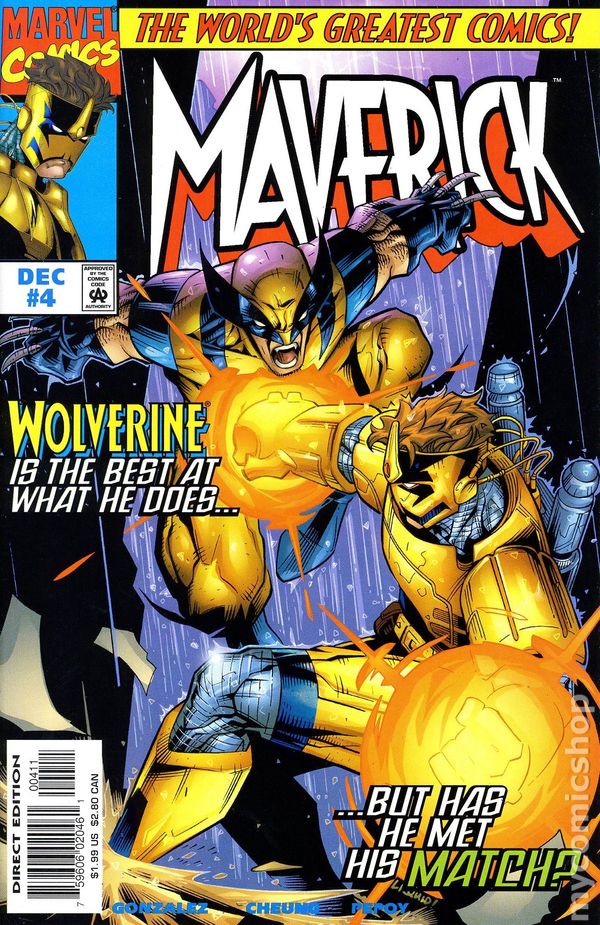
maverick 4.jpg

One of the first non-Wolverine comics I ever picked up was Maverick #4. Of course, the reason I picked it up was because Wolverine was on the front cover, so technically, the first non-Wolverine comic I picked up was Maverick #5.  As it turns out, I’d end up reading a lot about Maverick through the years because of Wolverine; Marvel UK’s Wolverine Unleashed was reprinting the original American comics.

Maverick is a product of the 90’s; his  first appearance in 1992’s X-Men #5 had all the hallmarks of the time;  giant shoulder pads, heavy guns, and  a half face mask that allowed his hair to fly free. Maverick would end the decade with a more streamlined version of his armour; sleeker and slightly less bulky for his solo series that ran for twelve issues beginning in 1997.  Although he’s had numerous guest appearances in a few X-Men based comics, Maverick has never really reached the level of popularity of certain other characters introduced during the same time frame, but he does have a very fond place in  this comic lovers heart.

Although Maverick is almost always featured in X-Men related titles, he is most closely associated with everybody’s favourite dead Canadian mutant, having been a significant part of Wolverine’s life before his skeleton was coated in adamantium. But it wouldn’t be fair to Maverick, though, to just write him off as that  mercenary friend of Wolverine’s; Maverick’s own history is a rich bed of potential, and it’s explored within this series.

Born in East Germany to parents who were either Nazi sympathizers or full blown Nazi’s, Christoph Nord was self-described idealist, and fought against the communist regime during the height of the Cold War, joining a West German black ops unit named Cell Six. During this time Nord met and fell in love with a nurse Ginetta Barsalini, whom he fell in love with and married. Not realizing he was a spy until it was too late, Nord was forced to shoot her inn self defense (unwittingly killing his unborn child in the process). Shortly after this Nord was recruited by the CIA, changed his name to David North and ended up on a team with Victor Creed and Logan.

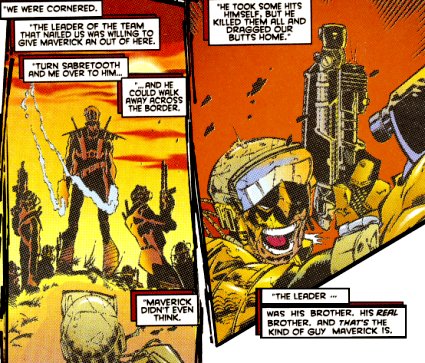
When the team was sent on a mission in East Germany, both Creed and Logan were badly injured. Rather than follow protocol and leave them, North dragged them to the extraction point where he was cornered by Andreas Nord, now an assassin, North saved his teammates the only way he could; killing his own brother in cold blood.

Maverick is a character rooted in tragedy; from his early years already recapped to his contracting a slow acting deadly disease that took his powers before killing him slowly (he was brought back to life moments after his death with some inventive CPR which also returned his powers), before becoming an executioner for a shady government organisation by way of brainwashing before losing his powers (again).

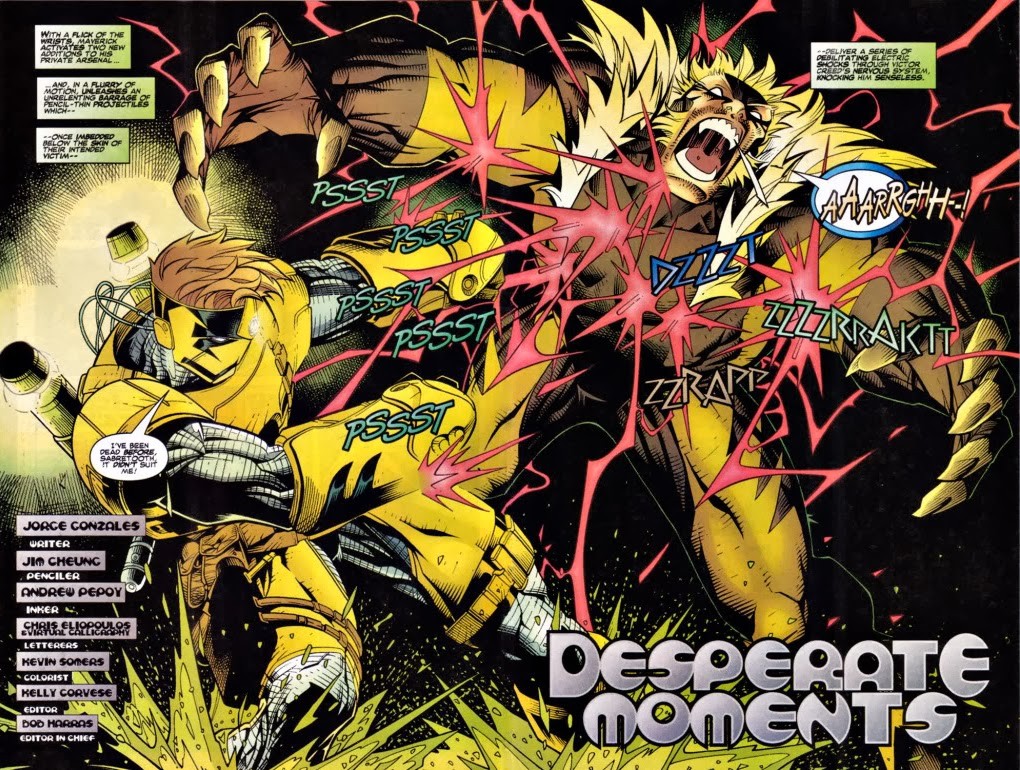
maverick spread

One of the most enjoyable twelve issue series I’ve ever read was Maverick Vol. 2; this run had me from the moment the protagonist died in the opening pages to the very end. It’s a series that has never been, and probably never will be collected into a trade paperback, which means that to read it you’ll need to track down the floppies. The series deals with some suddenly relevant again issues surrounding anti mutant attitudes, Russian gangsters and the struggle of being born to Nazi sympathizing parents, as well as what it’s like for a young facing certain death at the hands of the Legacy Virus. On top of that there’s a few guest stars, some pretty fantastic enemies (some new and some old), and some really great art and writing. Honestly, I tend to read this series on an almost yearly basis.

maverick03.jpg

Other than appearing in a few Wolverine stories that have been released as TPB’s and being a part of the ensemble cast of the 2002 Weapon X series that’s also been at least partly collected into TPB’s, finding Maverick comic appearances is largely a case of scouring the back issue bins at your local comic shop anyway. If you do that, and I highly recommend you do, then hunting for the Maverick #1-12 comics could be an easier (and cheaper) task than hunting for key issues of Deadpool or Wolverine because not many people are looking for them – which is a shame, but could work out to your benefit.

Do yourself a favour; find Maverick. You’ll not be disappointed.

Underrated: Wrath Of The Eternal Warrior

This is a column that focuses on something or some things from the comic book sphere of influence that may not get the credit and recognition it deserves. Whether that’s a list of comic book movies, ongoing comics, or a set of stories featuring a certain character. The columns may take the form of a bullet pointed list, or a slightly longer thinkpiece – there’s really no formula for this other than whether the things being covered are Underrated in some way. This week: Wrath Of The Eternal Warrior.


wotewJust under a year and a half aog, Valiant Entertainment released a deluxe hardcover edition collecting the entire 14 issue run of Wrath Of The Eternal Warrior along with Eternal Warrior: Awakening #1. Fifteen comics presented in an over-sized hardcover along with 20 odd pages of bonus extras that add a lot for  those interested in the process of the creation of the series, all for $49.99. And yes, I did buy this myself (and happily so) despite having access to the review copies and single issues I had picked up when released.

This series remains one of my all time favourites, so getting a chance to read it all in one spot was something I couldn’t pass up.

But despite this being one of my all time greats, it wasn’t until about the midway point that I fell for the series. Wrath Of The Eternal Warrior didn’t start out as a series that wowed me. The first four issues seemed to struggle with pacing and the art style, especially given the series billing as a follow-up to the explosively exciting Book Of Death miniseries that (spoiler) ended in the Eternal Warrior’s death. It’s that death, and those that follow, that form the crux of the series, but without the first four issues you don’t realize the toll taken on the Eternal Warrior with each death and resurrection cycle. The comics that I felt struggled with pacing quickly became some of the most important ground-setting in modern comics – a lesson that I took to heart, and quickly so.

Comics, like all stories, need time to breath.

It would also be fair to say that the art team of Raul Allen and Patricia Martin were not immediately to my taste. In furtherance to that, it would also be fair to say that my taste quickly changed as the series progressed and the elegance and artistic genius of the husband and wife team gave me a new appreciation of the majesty of sequential art.  There are other artists who contribute to the series, all with a fantastic level of talent; it’s these contributions that give the series the honour of being one of the most visually stunning and diverse pieces of sequential art published by Valiant.

Robert Venditti has written some incredible comics in his time, but one of the finest examples of his work comes in the fourteen issue run of Wrath Of The Eternal Warrior. Taking you on a journey through history,  across continents and beyond death, Venditti weaves an incredibly deep tale that reveals a different layer upon each subsequent reading.

It’s also violent as all hell in places, which should satisfy the need we have for a bit of blood and conflict in our comics, but there’s also a deep emotional story here that cannot – and should not – go ignored. The Eternal Warrior is an ancient being, and his life has not always been sunshine and roses – but he still picks himself up and dusts himself off.

Isn’t there a saying that’s roughly it isn’t how many times we fall, but how many times we pick ourselves up?

Wrath Of The Eternal Warrior is a fantastic series, and I envy those of you who get to read the entire thing in one sitting; the deluxe hardcover is worth picking up for that series alone, which is why I haven’t mentioned Eternal Warrior: Awakening at any point in this week’s column because that’s the cherry on top of the fantastic main course. Mixed metaphors aside, Awakening is another really good comic, and serves as another nice bonus for those who buy the collection.

I’ll  make no secret of my abject love for this series, indeed the fact I own both the individual issues and the deluxe hardcover when I also have access to the review copies should hopefully speak volumes to that love. It’s a love that I genuinely believe you’ll share when you give the series a chance – it’s an underrated gem.


Join us next week when we look at something else that is, for whatever reason, Underrated.

Underrated: A Once Crowded Sky

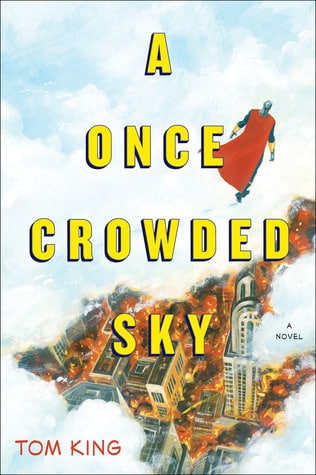
This week we’re revisiting a previous entry in the series with Tom King’s A Once Crowded Sky.


This is a column that focuses on something or some things from the comic book sphere of influence that may not get the credit and recognition it deserves. Whether that’s a list of comic book movies, ongoing comics, or a set of stories featuring a certain character. The columns may take the form of a bullet pointed list, or a slightly longer thinkpiece – there’s really no formula for this other than whether the things being covered are Underrated in some way. This week: A Once Crowded Sky


It’s no secret how much I love comics. Or at least it shouldn’t be.

A Once Crowded Sky

While most pretty much all of the comics I read can, to varying degrees, be placed on the superhero side of things, sometimes I’ll pick up the odd non-superhero comic.  I’m a big fan of the modern comic book re-imaginings of the early pulp heroes such as The Black Bat, The Spider, and The Phantom, although one could argue their closeness to the superhero genre renders the example moot, so let me be blunt; the point I am poorly trying to make is that I love superhero stories (of all varieties) in my comics more than any other type of story. 

Amazingly enough, I also read books.

If you look at my book shelf you’ll see a lot of fantasy, sword and sorcery, and historical fiction. There isn’t much set within the last one hundred years or so that I tend to pick up and read. I can think of, maybe, twenty books (or series) that I’ve read in the last fifteen years or so that are set within the last century, and only a handful of them were based around superheroes. One was an average Wolverine tale I read on Kindle, one is the hugely enjoyable Dresden Files series and another was A Once Crowded Sky by some dude named Tom King, which  is the subject of today’s column.

Although the story wasn’t quite mind blowing, it was remarkably well told, and had some incredible ideas within its pages. Perhaps the most interesting thing about the book is actually the way it is told. In a book with multiple point of view characters, each character’s point of view is laid out like a comic book; the book is set up like a text version of a collected comic book tie-in event across multiple issues. It’s a brilliant way to tie in the obvious influence and homage to the four colour medium, as is the occasional comic book page within the book itself.

A Once Crowded Sky is a relative anomaly for me; it’s a superhero story that I read, and enjoyed, that wasn’t in a comic book. Now, my sample size of superhero books is obviously incredibly small compared with that of superhero comics, but the thing I must stress here is it isn’t that I’ve had no access to superhero books, it’s that I simply have no desire to read about superheroes in any other medium that isn’t a comic book, and I have no idea why.

Maybe it’s because up until A Once Crowded Sky every superhero book I’ve looked as has been hard to justify the price tag. I found A Once Crowded Sky for $3 on a table of reduced hardcover books at a chain book store – it’s easily worth four times that amount, but would I have looked at it for more than $3? Seeing as how it took me two days to decide to pick the book up even for about the price of a comic, well, then probably not. Maybe I don’t like superhero books because they lack the visual nature of comics, which probably does have something to do with it, but I’m more then happy reading the Dresden Files novels and graphic novels, but then the Dresden Files and superheroes occupy two different genres. Maybe, and most likely, it’s because there simply hasn’t been much buzz about any superhero books.

So what’s A Once Crowded Sky about, and why should you read it?

“The superheroes of Arcadia City fight a wonderful war and play a wonderful game, forever saving yet another day. However, after sacrificing both their powers and Ultimate, the greatest hero of them all, to defeat the latest apocalypse, these comic book characters are transformed from the marvelous into the mundane.

After too many battles won and too many friends lost, The Soldier of Freedom was fine letting all that glory go. But when a new threat blasts through his city, Soldier, as ever, accepts his duty and reenlists in this next war. Without his once amazing abilities, he’s forced to seek the help of the one man who walked away, the sole hero who refused to make the sacrifice–PenUltimate, the sidekick of Ultimate, who through his own rejection of the game has become the most powerful man in the world, the only one left who might still, once again, save the day.”

Tom King’s debut novel has some lofty ideas, and some great presentation ideas that more than out weigh the at times overly wordy moments as King at times loses himself in backstory and internal monologues. There are flashes of his later brilliance in this 2012 novel, and it’s fascinating to see how he’s grown as a writer since this book. Despite having some rather interesting names for his characters (no, that’s not food – that’s my tongue in my cheek), it’s not hard to identify where their inspiration came from. Soldier of Fortune and Captain America do bear more than a slight similarity, after all.

But by using his own versions of these characters we’re all so familiar with, King is able to tell the story he wants without worrying about the guiding hand of either of the big two publishers impacting his story.

What we’re left with at the end of the day is a solid, and very enjoyable superhero novel written by a man who would go on to write some utterly fantastic comics. This book isn’t on that level, but it’s still well worth checking out should you come across it.

Someday, hopefully soon, superhero books will have their own section in the book store and when they do, that’s where you’ll find me.


Join us next week when we explore another Underrated aspect that may be at best tangentially related to comics!
Underrated: Havok and Wolverine: Meltdown

This is a column that focuses on something or some things from the comic book sphere of influence that may not get the credit and recognition it deserves. Whether that’s a list of comic book movies, ongoing comics, or a set of stories featuring a certain character. The columns may take the form of a bullet pointed list, or a slightly longer thinkpiece – there’s really no formula for this other than whether the things being covered are Underrated in some way. This week: Havok & Wolverine: Meltdown.


Havok & Wolverine: Meltdown

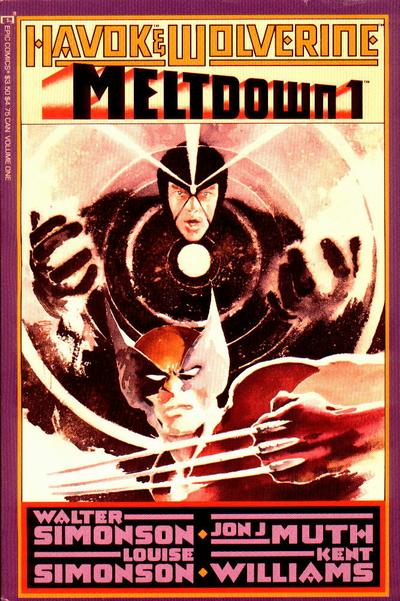
I don’t remember the first time I read this story, but it was likely in the UK reprint magazine Wolverine Unleashed in the mid to late 90’s. That was also the last time I read it, so when I saw the collected edition at my LCS for $15 I couldn’t pass it up – now because Wolverine is a little bit more marketable than Havok, the trade was just called Wolverine: Meltdown.

Originally published in the late 80’s, Meltdown was written by Walter and Louise Simonson, with illustrations by John J. Muth and Kent Williams. The story is set around the Chernobyl nuclear disaster of the mid 80’s, and finds Havok and Wolverine caught up in the midst of a plot to end the world in nuclear war from the shadows. The art has a wonderful painted look to it at times, but the artists aren’t afraid to experiment with multiple forms of media throughout the book. It’s a choice that is divisive to some – I’ll freely admit when I was younger the art did nothing for me, but I enjoyed the story a fair bit, whereas now I find myself absorbed in the art more than the writing which is a strange twist on how I usually find myself feeling when coming back to stories I haven’t read in 20 some years.

It’s easy to imagine the way this story would have felt when initially released as it presents another possibility behind the Chernobyl disaster as an intentional act to snare the X-Men. Looking back now, it’s a great premise to a story, and one that still holds up despite the very specific time setting. Admittedly, I’ve no idea or memory as to how in continuity/canon this story is within the X-Universe but the story is entertaining enough to allow you to just enjoy it as is, and seeing Wolverine and Havok team up together is still a relatively rare event even today – and while I’m probably in the minority here, I’d love to see more chances for these two mutants to come together on the page.

The main reason I wanted to talk about this book today is solely because it’s a story that I’d completely forgotten about. This isn’t one of the classic Wolverine or X-Men stories that people will talk about, and honestly nor should it be, but it’s still an enjoyable tale that still stands the test of time; admittedly it’s the artwork that will pull you in more than the story, because this is a book that just looks utterly fantastic. The art is at times risky and pushes the envelope of what comics would typically feature 30 years ago (and yet is far more common today). Do yourself a favour and check this story out if you can – it’s a four issue mini series that shouldn’t break the bank if you hunt the individual issues.


Unless the comics industry ceases any and all publication look for a future installment of Underrated to cover more comics that aren’t cracking the top 100.

Underrated: Eternal Warrior: Sword of the Wild

This is a column that focuses on something or some things from the comic book sphere of influence that may not get the credit and recognition it deserves. Whether that’s a list of comic book movies, ongoing comics, or a set of stories featuring a certain character. The columns may take the form of a bullet pointed list, or a slightly longer thinkpiece – there’s really no formula for this other than whether the things being covered are Underrated in some way. This week: Eternal Warrior: Sword of the Wild


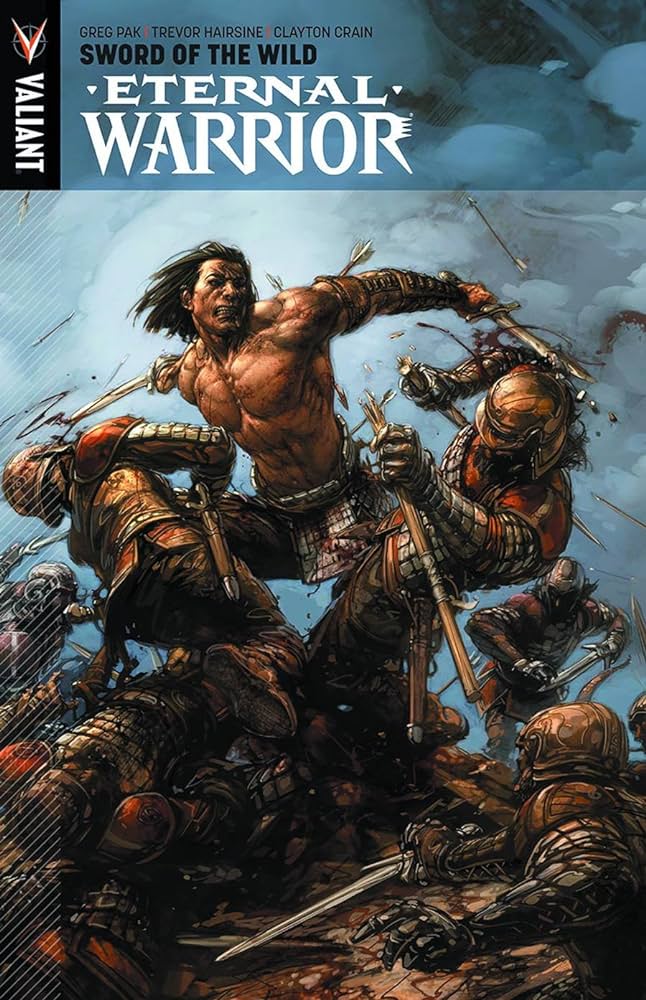
It should be no secret to you that I am a huge fan of Valiant comics. I’ve also made no secret of my love for the Eternal Warrior. But a lot of that love stems from Book Of Death and Wrath of the Eternal Warrior, and not his first solo series offered since Valiant’s 2012 relaunch, the eponymously titled Eternal Warrior. I first read that series shortly after Book Of Death and didn’t enjoy it as much as I wanted to, and although I’ve heard mixed opinions on it since, I wanted to give the first four issues in the series another chance (you can find them collected as Sword Of The Wild, hence the full title of this week’s column, and what I’ll be referring to them as going forward).

The back of the trade dressing (apparently) reads;

Soldier. Guardian. Warrior. Legend. Across ten millennia and a thousand battlefields, Gilad Anni-Padda has traversed the darkest, most mysterious corners of history. But the horror and bloodshed of constant warfare has finally taken its toll on the man myth calls the Eternal Warrior…and he has abdicated his duties as the Fist and the Steel of Earth for a quiet life of seclusion. But when a blood vendetta from the distant past suddenly reappears in the modern day, he must decide if he will return to the ways of war…for the child who betrayed him thousands of years ago…

Before rereading Sword of the Wild I realised that I had to look at the book as its own entity, removed from the larger continuity of the Valiant universe as a whole. This realisation came because for me Sword of the Wild doesn’t tie in to the portrayal of the Eternal Warrior we were given in Unity, and subsequently Book Of Death and Wrath of the Eternal Warrior (although the latter two came after Sword of the Wild) nor the general continuity Valiant had built at the time. Once I had taken that mentality with the book,  I sat down, opened the front cover and got started… and was immediately transported to what felt like a reimagination of the 90’s era Eternal Warrior.

I say this because although the book doesn’t lot in as well with the Valiant continuity as other books and series have done, it’s still a really enjoyable read. More so than I initially expected. When you look at this book as a standlone story about an immortal warrior finally having enough of the world’s shit and just wants to live the rest of his long days in peace (or at least a portion of them), and remove any preconcieved notions of how it could or should fit into the other stories featuring Gilad Anni-Padda, then you’ll find that there’s a really compelling four issue arc here.

Just on that maybe lines up better with the pre-relaunch Valiant comics than the Valiant Entertainment era.

I really enjoyed this book – far more than I expected to. So why is it today’s subject? Because I hear very few people talk about this volume with the enthusiasm the character deserves because it doesn’t fit the larger Valiant continuity as well as it could. But as a standalone story? It’s pretty good – that’s why the book is Underrated.


Join us next week when we look at something else that is, for whatever reason, Underrated.

Underrated: Crecy

This is a column that focuses on something or some things from the comic book sphere of influence that may not get the credit and recognition it deserves. Whether that’s a list of comic book movies, ongoing comics, or a set of stories featuring a certain character. The columns may take the form of a bullet pointed list, or a slightly longer thinkpiece – there’s really no formula for this other than whether the things being covered are Underrated in some way. This week: Crecy.


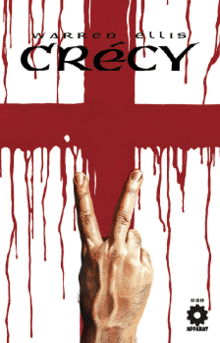
I’ve always been interested by the middle ages, and the English use of the longbow. In part because it’s the origin of one of my favourite hand gestures to use (especially in North America when so few actually know what I’m doing in pictures). Needless to say, when I saw that gesture over a bloody St. George’s cross, I grabbed the book off the shelf. And then noticed that it was a Warren Ellis book.

I am by no means an authority on the Battle of Crecy. I only really know of a few accounts through Wikipedia articles and their sources and the Bernard Cornwall novels surrounding an English Archer named Thomas of Hookton, with the book Harlequin telling the tale of the battle from his perspective. So I won’t claim to know that this book is 100% historically accurate, but it is as faithful a telling as you’re likely to find from the eyes of an archer – whether in a textbook or not.

Ellis utilizes a lead character who frequently addresses the audience when telling the battle’s story and events, showing knowledge of modern times without ever indicating that he knows he’s in a fictional story. It’s an effective story device, and one that I really enjoy for this type of story (but I hope we don’t see it over used, either). The black and white are hides some of the violence, but serves to highlight the mayhem and carnage of the day.

Crecy is a great book – worth every penny of the cover price, and far more Underrated than it should be.


Join us next week when we look at something else that is, for whatever reason, Underrated.

Underrated: The Fox: Freak Magnet/Fox Hunt

This is a column that focuses on something or some things from the comic book sphere of influence that may not get the credit and recognition it deserves. Whether that’s a list of comic book movies, ongoing comics, or a set of stories featuring a certain character. The columns may take the form of a bullet pointed list, or a slightly longer thinkpiece – there’s really no formula for this other than whether the things being covered are Underrated in some way. This week:  The Fox.


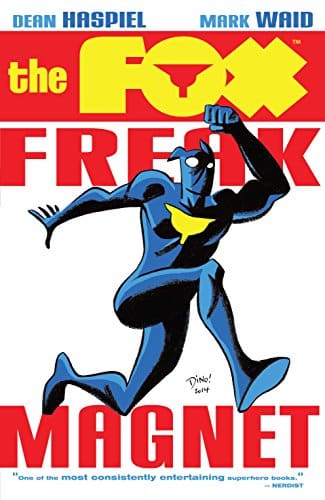
Originally appearing in MLJ Comics Blue Ribbon Comics #4, the Fox continued to feature in the title until it’s cancellation eighteen issues later with #22, although the character only had one cover appearance; issue #16’s ensemble featured every character featured within the comic.  MLJ Comics would eventually become Archie Comics, which brings us to 2014 and the release of the first issue of Freak Magnet.

Haspiel packs the issues with some fantastic art sequences to complement the story.

Written by Mark Waid (Irredeemable/Incorruptible, Daredevil) and Dean Haspiel, who also provides the art, the modern miniseries evokes a sense of chaotic fun that harkens back to the Golden Age of comics, while  remaining fresh and relevant for today’s audience. Officially published by Dark Circle Comics, which is an imprint of Archie Comics, The Fox had two miniseries by the same creative team; Freak Magnet and Fox Hunt. You can read them in any order, and I say that because I read the sequel, Fox Hunt, prior to Freak Magnet and never once felt as though I was missing out on anything.

 A lot of that is down to the quality of the comics, because Fox Hunt was honestly one of the best story arcs I had the pleasure of reading back in 2015. Fox Hunt seeks to explores the difficulty facing a superhero who just wants to retire, with Paul Patten Jr. steadfastly trying to retire as The Fox. Unfortunately due to his innate freak magnet he’s having a bit of a hard time doing just that (although the million dollar bounty on his head isn’t helping things either). 

Although he is another legacy hero (think Robin, Flash, Union Jack, or any character who has taken over for the original hero – the current Fox is the original‘s son), with the way Mark Waid is writing the comic at the moment, the history of the character really doesn’t weigh on the story at all, allowing youto enjoy the two individual miniseries. With Fox Hunt, however, it would be a good idea to read the issues in order – or to wait for the collected edition that will inevitably be released following the conclusion of the first story arc – because this is a linear story.

If it sounds that The Fox is a fun series, well that’s because it is. When it comes to enjoying the comics we read, very few of the comics I have read have been as entertaining as this five issue miniseries. The art work isn’t quite family friendly (there’s the odd scene of mostly off panel violence that Dean Haspiel will highlight by having the odd bit of gristle or unidentified flesh appear on panel), but it’s a far cry from the gritty feel of many modern day comics. Waid and Haspiel‘s story telling is simply a joy to experience, and the light hearted tone never seems to go over the top into the realm of comedy, but certainly elicits a couple of chuckles from me each issue.

A spoiler free summary will not, and cannot, do the comics any justice, and I urge you to take the plunge and go check out either  Freak Magnet or Fox Huntwhen you can. It will absolutely be worth every minute you spend in this world.


Join us next week when we look at something else that is, for whatever reason, Underrated.

« Older Entries Recent Entries »