Category Archives: Features

Underrated: Graphic Novel Biographies

This is a column that focuses on something or some things from the comic book sphere of influence that may not get the credit and recognition it deserves. Whether that’s a list of comic book movies, ongoing comics, or a set of stories featuring a certain character. The columns may take the form of a bullet pointed list, or a slightly longer thinkpiece – there’s really no formula for this other than whether the things being covered are Underrated in some way. This week: Graphic Novel Biographies.


Biographies aren’t always the first thing you think  of when you think of graphic novels, and vice versa. But the thing is a graphic novel is a fantastic way to tell a person’s life story, or a portion there of, that isn’t often used as much as it could be. Graphic novel biographies are a wonderfully unique way of telling a story that you really can’t capture the same way with a prose book. By utilizing the graphic novel format, the creative team have the opportunity to bring the story to life with picture, or temper  the harshness of what the biography’s subject went through so that the reader can take more of the story in (seriously, imagine the first entry with realistic artwork). Or the artwork can tell give you a subtlety that’s missing in other mediums as you’re more readily able to spend time pouring over the images in front of you. Yeah, I think it’s safe to say that I think graphic novels are an underrated method of telling a biographical story.

So I present to you here a short list of graphic novel biographies. 

A few things before we start; firstly, these biographies are all told primarily in the graphic novel format, but they my not encapsulate  the entirety of the subjects life. Secondly, because I’ve got eclectic taste these selections may not be for everybody so be prepared for some potentially foolish claims. Lastly, this isn’t a complete, or inclusive, list and it is completely subjective.

Maus (Pengiun)
Lets’s be honest here, Maus is far from underrated as a comic book. It’s one of the prime examples of excellence in the medium, and for good reason; this is a book that tackles the harsh realities of life in a concentration camp, and is still every bit as relevant now as it it ever was. So its far from underrated as a comic, but as a biography? It’s not often thought of in that way, especially by non comics fans.  Granted, this book takes a spot in this weeks Underrated simply because it’s a graphic novel that really exemplifies the mediums power, but also because when those outside of comics think of a biographical tale seldom does a graphic novel crop up. It’s for this reason that Maus is on the list.

Andre The Giant: Closer To Heaven (IDW)
You don’t need to be a wrestling fan to appreciate this story, but I won’t deny that it helps. I am not a wrestling fan any more (though I still appreciate the talent these men and women have to do what they do), but I found Closer To Heaven is an incredibly touching tribute to a great man. A giant who entertained millions of people around the world, while suffering an incredible amount of pain because of his gigantism. Andre is a truly inspiring figure, and this is a fantastic way to honour his story. It’s not the only biography of Andre released in graphic novel form, but it is the only one that I have read.
Bill The Boy Wonder: The Secret Co-Creator Of Batman (Charlesbridge)
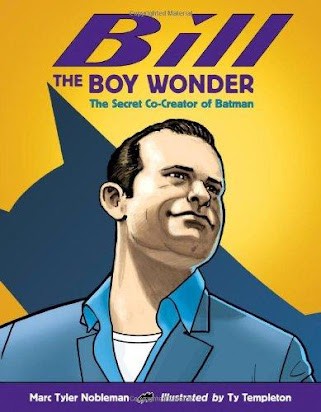
Perhaps the most powerful book on this list that isn’t Maus, Bill The Boy Wonder tells the story of Bill Finger, and his integral role in creating Batman that went largely known know, and entirely uncredited, until last year. This is a must read for any fans of Batman who want to know the true origin story of the caped crusader, and for those who want to read the book that helped Bill Finger get the recognition he deserves.

Dark Night:  A True Batman Story (Vertigo)
Telling the story of the night that legendary Batman writer Paul Dini was mugged, this book is honestly hard to read at times thanks to it’s frank and honest depiction of one man’s struggle to overcome one of the mot traumatic nights of his life, and how Batman inspired him to get back up.

March (Top Shelf Productions)
This is a bit of a cheat because March is actually a three volume graphic  novel that tells the story of congressman John Lewis, a congressman in the state of Georgia. Each volume in this series is amazing, and delivers to an incredible reading experience about an American icon. Brett has an incredible series of reviews on this modern classic that can all be found within the first paragraph here, so if you want to know why you should read these books then read those.


There we have it – some of the best of the graphic novel biographies. Not all are underrated in the typical sense as relates to this column, (Mausfor example is one of the most respected graphic novels around), but all are worth reading. There are without a doubt other graphic novel biographies that I missed, so there’s a good chance there will be a second (or third) part to this list eventually.

In the meantime, Underrated will return to highlight more comic book related stuff  that either gets ignored despite it’s high quality, or maybe isn’t quite as bad as we tend to think it is.
Underrated: Autumnlands: Woodland Creatures

This is a column that focuses on something or some things from the comic book sphere of influence that may not get the credit and recognition it deserves. Whether that’s a list of comic book movies, ongoing comics, or a set of stories featuring a certain character. The columns may take the form of a bullet pointed list, or a slightly longer thinkpiece – there’s really no formula for this other than whether the things being covered are Underrated in some way. This week:  Autumnlands: Woodland Creatures


 Autumnlands: Woodland Creatures

A few weeks ago I wrote about the first volume of The Autumnlands  in this column (which you can find in a horribly typo filled post here because apparently I forgot to spell check). I was quite taken with the book, and remarkably surprised that I’d never come across the story before, and as I’m sure you’ve figured out, I picked up the second trade. This time for full price.

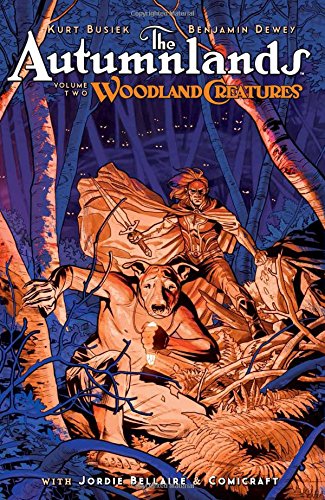
The second trade, Woodland Creatures picks up, with the aftermath of the bridge battle sending Dusty and Learoyd left abandoned on the ground as the rest of the citizens are rehomed.

Whereas the first volume touched on the divide of rich and poor in a class-based society, the second really drives home the differences between the magic users and the rest of the woodland creatures, culminating in a shocking and remarkably relevant commentary on the imposition of one’s will over another.

Slavery, class divide, religion, environmental damage and technological abuses are all touched upon here in a way that doesn’t come off as Kurt Busiek standing on a soapbox, but rather encouraging us to think about the world around us. Maybe something that seems impossible has a rather obvious solution when approached from a different angle.

If you’re looking for a fun fantasy story, then you will find what you’re looking for with the second volume in the Autumnlands saga. Without question, this is a top notch comic book. But like any great science fiction or fantasy series, the messages barely beneath the surface are more powerful and relevant for their seemingly innocuous delivery and framing within the confines of the story.

As with all great works of fiction, Woodland Creatures asks exactly as much of the reader as it needs to in order to encourage you become a better person. Yup. But as deeply as I have read into this book, and possibly far deeper than I should have, you don’t need to do that. This is a book that can be enjoyed solely as a great story.

Image has a vast library of great books, and while we’re still waiting on the third volume of the series, this book is worth reading now. Yes, there’s a set up for the following issue, and yes there are unanswered questions, but nothing that will haunt you long into the night (though the wait for the next chapter  will suck).

As with most books covered in this column, it’s a book I don’t see getting the love it deserves – that’s why the book is Underrated. Go read it now. You won’t regret it.


Join us next week when we look at something else that is, for whatever reason, Underrated.

Underrated: Autumn Lands: Tooth And Claw

This is a column that focuses on something or some things from the comic book sphere of influence that may not get the credit and recognition it deserves. Whether that’s a list of comic book movies, ongoing comics, or a set of stories featuring a certain character. The columns may take the form of a bullet pointed list, or a slightly longer thinkpiece – there’s really no formula for this other than whether the things being covered are Underrated in some way. This week:  Autumn Lands: Tooth And Claw


In another case of “Alex bought something for Underrated without knowing anything about it beforehand,” we have The Autumn Lands: Tooth And Claw by Kurt Busiek, Benjamin Dewey, Jordie Bellaire and John Roshell of Comicraft. I had never heard of this series before spotting it at my LCS last week as I restocked the trade shelves (I’m not a nice person, they pay me to do it). Then this week a used copy came in, and I couldn’t turn down a half priced trade.

It didn’t take long for me to realize that $5 was an utter steal for this book. Within four pages I had become absorbed into this wonderfull world of anthromorphic animals, magic and class based society.

Autumnlands is published by Image, with the first volume being released in 2015 that collects the six issues released from November 2014 to June 2015. There was a second volume released in 2017 that collects the eight issues released from November 2015 to January 2017. As a person who only recently discovered the series, I can imagine that the less than frequent release date didn’t help garner Autumnlands much buzz – but I could easily be wrong here as it is entirely possible I just missed it. Like I missed the comics.

Magic is failing in the world, and a group of sky-city dwelling wizards want to bring back the Great Champion so that he can show them how to return the world’s magic. Only… the wizards didn’t bring back a savior, they snagged themselves a soldier. An effective soldier, but a soldier nonetheless. From anther world, or time, or dimension. Into this new world, then, the soldier finds himself embroiled in the politics of a city (or he would if he seemed to care about such things), and it’s through the uses of the types of animals that we can see a class-based commentary begin to form.

Although this is more a rule of thumb than specifically stated, meat eaters, generally, seem to be at the top of the hierarchy, while herbivors are (quite literally) at the ground level. There are exceptions to this, including a wizarding giraffe, however. But put the politics and commentary aside, and you still have a solid fantasy story about a hero who finds himself alone in a strange world who must somehow protect and save those who need him. Busiek delivers on multiple levels with this book, and it’s easy to see why there’s a cover quote telling us it’s his best work in some time.

Likewise, there’s also a cver quote extolling Benjamin Dewey’s art work, and rightly so, as he and colourist Jordie Bellaire deliver the second punch with their all out visual assualt. Rarely have I been so surprised by a book’s visual impact as I was when reading this.

Autumnlands: Tooth and Claw is fatastic, and I’d have been supremely happy with this at twice the price – I’m pretty sure my LCS has volume two (or they did when I put it on the shelf), so I’ll be picking that up this weekend, too. Volume one is going to set you backaroud $10 new, which is an astounding deal for six issues, let alone six issues of this quality. Autumnlands: Tooth and Claw is a really good read, phenomenl, even.

But as with most books covered in this column, it’s a book I don’t see getting the love it deserves – that’s why the book is Underrated. Go read it now. You won’t regret it.


Join us next week when we look at something else that is, for whatever reason, Underrated.

Underrated: Thrud the Barbarian

This column is a rerun from late 2018. Enjoy!

This is a column that focuses on something or some things from the comic book sphere of influence that may not get the credit and recognition it deserves. Whether that’s a list of comic book movies, ongoing comics, or a set of stories featuring a certain character. The columns may take the form of a bullet pointed list, or a slightly longer thinkpiece – there’s really no formula for this other than whether the things being covered are Underrated in some way. This week:  Thrud the Barbarian


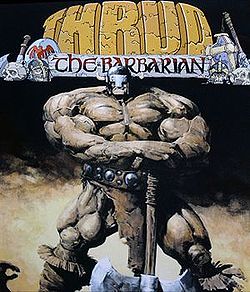
Another week, and yet another case of “Alex bought something for Underrated without knowing anything about it beforehand,” or it would be had Alex not received Carl Critchlow‘s Thrud the Barbarian  a few years  ago from the now defunct Comic Bento. Published by Titan Comics, the trade paperback collects the original Thrud the Barbarian five issue miniseries, as well as a couple of single page shorts from White Dwarf magazine, and was originally published in 2013. If you missed this when it first came out, don’t be surprised – I’m not sure it was ever released on a large scale outside Britain.

Thrud the Barbarian is what I’d consider a quintessentially British comic; it blends in equal parts the violence , chaos and destruction that one would expect from a Conan parody with the silliness and tongue in cheek humour that wouldn’t feel out of place in a Monty Python skit. But with a lot more smashed heads and limbs flying free of bodies. The Titan Comics collection consists of five stories that can be read independently of each other (seven if you’re counting the bonus strips), or in one go – which is what I did when rereading it recently.

Honestly, I reread it because I was reorganizing my bookcase and saw the cover again and wanted something fun, easy and not too deep or involved to read. Thrud was certainly that, and I loved every irreverent thought, every stunningly painted cover, and the computer coloured artwork. It was exactly the kind of book that I needed to read after a busy week, a book that I am glad I own, and one I am even happier that I noticed on the shelf.

Thrud2

As a fan of heroic fantasy books, I loved Critchlow’s send up of the genre; the visualization and sight gags and some brilliant punchlines across all the stories in in the collection. I loved every aspect of this book; the sound effects, the dumb-as-a-post hero just wants his beer and the cartoon-like hyper violence that ties it all together in such a lovely package.

Without a doubt this is one of my favourite books I’ve ever written about for this column, even if I did forget I owned it for a little while.

And yet, had it not been for the Bento box, I would never have heard of this book. Which is easily one of the best aspects of the online blind box subscription thingies – the introduction to new and exciting books and comics you otherwise would never have been exposed to. Consequently, this is a book I don’t see getting the love it deserves – that’s why the book is Underrated.


Join us next week when we look at something else that is, for whatever reason, Underrated.

Underrated: (Your Favorite Comic) Animated Series

This is a column that focuses on something or some things from the comic book sphere of influence that may not get the credit and recognition it deserves. Whether that’s a list of comic book movies, ongoing comics, or a set of stories featuring a certain character. The columns may take the form of a bullet pointed list, or a slightly longer thinkpiece – there’s really no formula for this other than whether the things being covered are Underrated in some way. This week: Animated Series

I woke up stupidly early this morning, and as I sat on the couch waiting for the kettle to boil ignoring my cats I realized that when I was a kid I would often be up at this time willingly for one reason and one reason only: cartoons.  I’ve always felt that superhero cartoons were somewhat looked down upon when I was younger, and while that may not be the case now, that still means there’s a wealth of animate superhero adventures out there that may not have the same cult following as Batman: The Animated Series.

And yes, I’ll use cartoons and animated series interchangeably.

A few things before we start; firstly, these animated series may not be strictly underrated, but rather they may not be fore front on your mind any more. Secondly, I’ve got eclectic taste so these may not be for everybody so be prepared for some potentially foolish claims. Thirdly, these cartoons are all upwards of five or more years old. Lastly, this isn’t a complete, or inclusive, list and it is completely subjective.

X-Men: The Animated Series
Debuting in the early 90’s, this show has one of the greatest opening theme tunes of any cartoon before or since. Perhaps not solely responsible for my love of comics, and despite it being slightly over shadowed by some more modern cartoons, it remains to this day one of my most fondly remembered cartoon versions of an X-Men comic.

Spider-Man: The Animated Series
Spider-Man, Spider-Man… the theme tune here was my ring tone for years. What’s more impressive is that I had to actually compose it using the Nokia phone’s number pad. That this was also a brilliantly enjoyable TV show that provided numerous hours of enjoyment is a happy after thought. 

The Batman
Okay, so nothing will ever compare to the Batman: The Animated Series, but this short lived cartoon was pretty enjoyable. A young Batman finding his way in Gotham City gave this show a very Batman Begins like feel without the gritty realism; it was a fun look into the Caped Crusader’s early years. Oddly significantly better than Gotham, a much darker live action TV show released years later.

Defenders Of The Earth
The first time I was ever exposed to the Phantom was with this cartoon (get your mind out of the gutter), and he’s been one of my favourites ever since. This may not hold up as well now as some of the others from that era, but I’ll always remember it fondly.


There we have it – a mere handful of underrated animated comic book adaptations that I was thinking of over my morning cup of tea. There are undoutedly more cartoons influenced by comics that are worth watching, so there’s a good chance there will be a second (or third) part to this list eventually when I’m not reminiscing over bygone years.

In the mean time, Underrated will return to highlight more comic book related stuff  that either gets ignored despite it’s high quality, or maybe isn’t quite as bad as we tend to think it is.
Until next time!

Underrated: Thundercats (Wildstorm’s 2002 Series)

This is a column that focuses on something or some things from the comic book sphere of influence that may not get the credit and recognition it deserves. Whether that’s a list of comic book movies, ongoing comics, or a set of stories featuring a certain character. The columns may take the form of a bullet pointed list, or a slightly longer thinkpiece – there’s really no formula for this other than whether the things being covered are Underrated in some way. This week: Thundercats


ThunderCats Wildstorm
Version 1.0.0

In another case of “Alex brought something to read just for this column” we have the Thunder Cats miniseries from Wildstorm that I found in the dollar bin at my LCS. Previous iterations of this theme in Underrated have often been a success (aside from Holy Terror which was a terrible comic, but a great column if I do say so myself), but will this one?

Well… kinda. I read the five issues of the miniseries with no context whatsoever which is par for the course when you find something in a dollar bin with no real idea when it was released (2002 is the answer to that). Assuming that you, dear reader, are like me and have some basic familiarity with the 1980’s cartoon, or one of the later iterations.

The thing is with this miniseries is that there is almost no hint given toprevious events, so if you pick this up hoping for a gentle introduction into the world of the Thundercats then you’ll be a touch disappointed. However, the story is still remarkably easy to follow because although Thundercats is a five issue miniseries it feels more like five episodes of a cartoon show with at best a slim plot that leads from the first to last issue. While this may lead some to claim that is leaves the series feeling like a vapid and disjointed mess, I’ll make the case that it invokes a powerful sense of nostalgia that allows children of the 80’s or 90’s the opportunity to easily reconnect with a treasured piece of your childhood.

I would give you a plot summary, but it basically boils down to “the Thundercats are trying to make a new home and are being opposed by villains.” Which is fine. I enjoyed the overly implistic nature of the main plot almost as much as I enjoyed the feeling that each comic was an episode of the show.

Why, then, does this make an appearance in this week’s Underrated? Because I had never heard of the series before, and made an assumption that if you found this in a dollar bin then you’dlikely pass it over as licensed tat. It isn’t tat at all, and was certainly enjoyable enough to spend a half hour or so with for a column that’s supposed to highlight unsung gems, and at best this is a moderately shiny dollar bin gem (unfortunately I had left it too late to read something else for the column so here we are).

Maybe next week I’ll find an actual gem?


Join us next week when we look at something else that is, for whatever reason, Underrated.

Underrated: Coda

This is a column that focuses on something or some things from the comic book sphere of influence that may not get the credit and recognition it deserves. Whether that’s a list of comic book movies, ongoing comics, or a set of stories featuring a certain character. The columns may take the form of a bullet pointed list, or a slightly longer think piece – there’s really no formula for this other than whether the things being covered are Underrated in some way. This week: Coda


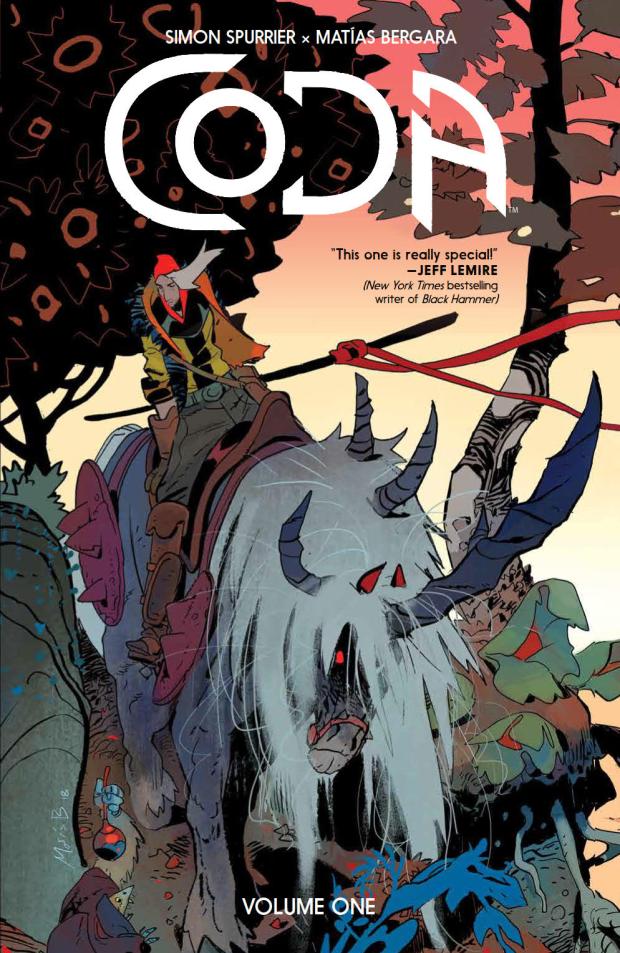
I feel like it’s been a little while since I actually wrote a new Underrated column, but this week I wanted to talk about Coda. Coda is series about a world after the great cataclysm, a post apocalyptic story in a world not unlike Middle Earth from Lord Of The Rings where magic, a once plentiful resource, has become a scarcely sought after treasure.

Originally published by BOOM! as a twelve issue series, Coda has since been collected into three trade paperback collections, which is how I read the complete story. Written by Simon Spurrier with art by Mattias Bergara, the story follows former bard Hum.

A man of few words, Hum seeks a way to save the soul of his wife with nothing but a foul-tempered mutant unicorn and his wits to protect him. He is unwillingly drawn into a brutal power struggle he has little interest in which will decide forever who rules the Weird Wasteland.

The above paragraph is roughly paraphrased from the preview blurb of the first comic, because if you choose to go into the book, then there are a couple of moments early on that I want you to experience the same way I did; having no idea that they would be coming. It won’t make or break the story if you find out about them before you read, but it’s more fun if you don’t know what happening.

Brett’s video review of the first volume is spoiler free, so don’t be afraid to check it out.

Spurrier and Bergara take you on a fantastic journey through the twelve issues or three volumes of Coda, and introduce you to some really interesting characters and story mechanics. If you’re a fantasy fan, then the way this book approaches its world is going to be one you want to have a look at. The standout character in the book is Hum’s mutant unicorn, because his frequent cursing seems to come at just the time to elicit a chuckle from the reader.

The mutant unicorn, affectionately labelled the Nag (or a pentacorn) is just one of a fantastic cast of characters to populate the book. Spurrier breaths a real sense of life and humanity into these often inhuman beings that gives a real sense that the story didn’t start with the first issue – we’ve just picked it up here. What went before, and who Hum really was, aren’t explicitly stated, but we know he was a bard and we know the world ended and magic is gone. Backstory isn’t given explicitly, rather it’s teased out and hinted at as the tale proceeds across strange and stunning vistas that break the traditional fantasy mould and skew more toward a post-apocalyptic design. Which makes perfect sense.

Coda is a story for fantasy fans, but also for those who want an intensely personal story of self discovery. This isn’t the type of comic that treads water, and is always moving at a brisk pace. I devoured all three volumes in a single sitting (or would have if I purchased all three at the same time – after finishing the first, I ordered the others from my comic shop immediately).

I’ve really not heard many people talking about Coda. It wasn’t until I saw the first volume on the shelf the last day my shop was properly open that I had even heard of it. That’s why I wanted to point you toward it today; there’s a chance you’ll find your next favourite Underrated gem of a comic story.


That’s all we have for this week, folks. Come back next time  when there’s something else Underrated to talk about.

Underrated: Tokyo Ghost: The Atomic Garden

This is a column that focuses on something or some things from the comic book sphere of influence that may not get the credit and recognition it deserves. Whether that’s a list of comic book movies, ongoing comics, or a set of stories featuring a certain character. The columns may take the form of a bullet-pointed list, or a slightly longer thinkpiece – there’s really no formula for this other than whether the things being covered are Underrated in some way. This week:  Tokyo Ghost: The Atomic Garden.


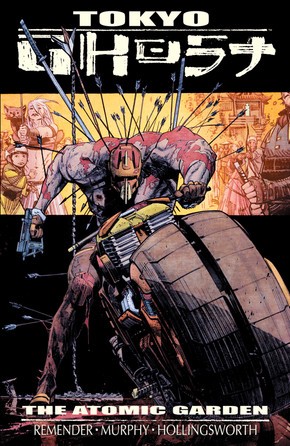
I had never heard of Tokyo Ghost: The Atomic Garden. until I saw the cover of the trade at my LCS, which doesn’t really mean much other than sometimes I miss things. Something about the cover caught my attention as I was putting it on the shelf. There was something about a motorcycle rider stuck full of arrows that made me stop and wonder what the hell I was putting on the shelf, so I flipped the book and read a synopsis that was just curious enough to be immediately interesting, saw Rick Remender’s name and immediately purchased the book.

It never made it to the shelf.

The synopsis that helped to hook me in: The Isles of Los Angeles 2089: Humanity is addicted to technology, a population of unemployed leisure seekers blissfully distracted from toxic contamination, who borrow, steal, and kill to buy their next digital fix. Getting a virtual buzz is the only thing left to live for. It’s the biggest industry, the only industry, the drug everyone needs, and gangsters run it all. And who do these gangsters turn to when they need their rule enforced? Constables Led Dent and Debbie Decay. This duo is about to be given a job that will force them out of the familiar squalor of Los Angeles to take down the last tech-less country on Earth: The Garden Nation of Tokyo. You can check out the first issue on Image’s website from this link if you’re curious.

The promise of a story that deals with the dangers of technology wasn’t lost on the person who works with technology every damn day across two jobs and sees the impact of it on another as digital comics are an always present conversation piece at the shop (usually in how they don’t compare, but then that’s to be expected given the people in the conversation are literally buying physical comics at the time).

Remender takes our current obsession with technology to an extreme with Tokyo Ghost, imagining a world that reminds me of the dystopian future of the Matrix with the worst of a Hollywood drug den spread across LA. If Snake Plisken was here, he’d be trying to escape. Through the haze and horror of a tech addicted world, Remender focuses on a Constable, Led Dent, and his tech-free partner Debbie Decay. We see Debbie try to break Led’s all encompassing tech addiction by forcing him to detox… it’s an oddly uncomfortable story that’s all the more powerful by the striking nature of the addiction.

Look, I know you’re reading this on your phone, tablet, laptop or whatever. But this is a book that’ll remind you to go outside in an oddly non-preachy way. It doesn’t hurt that the art is perfectly suited to do what it needs to do; whether in the hell of LA or the relative paradise of Japan… this is a book that you really should be reading.

That the story is good is a byproduct of it’s message – and that’s one we probably all need to listen to (he says as he goes back to surfing the interwebs, where, incidentally, I discovered this is volume one of two, so maybe technology isn’t all bad…).


Join us next week when we look at something else that is, for whatever reason, Underrated.

Underrated: Incognito

This is a column that focuses on something or some things from the comic book sphere of influence that may not get the credit and recognition it deserves. Whether that’s a list of comic book movies, ongoing comics, or a set of stories featuring a certain character. The columns may take the form of a bullet pointed list, or a slightly longer thinkpiece – there’s really no formula for this other than whether the things being covered are Underrated in some way. This week: Incognito


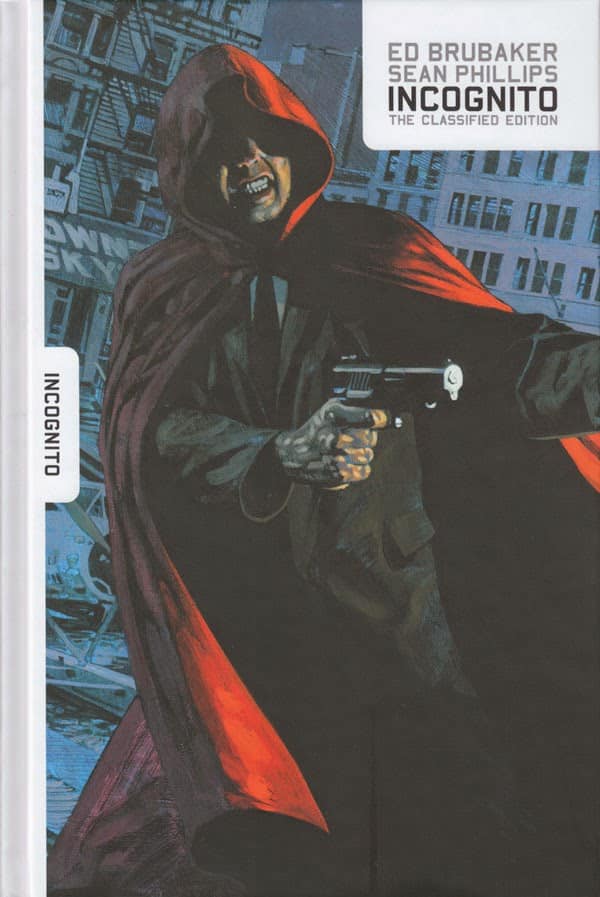
My local comic shop recently got the hardcover edition of Incognito in, and it last all of ten minutes on the table where it was in line for pricing as I picked it up and read what amounted to half the first issue before scooping it up before it ever actually made it to the shelf.

Written by Ed Brubaker, with art by Sean Phillips and colours by Val Staples, the hardcover collects both Incognito and the sequel Incognito: Bad Influences within its 360-odd pages as well an essay, a series cover gallery and some interesting process pieces. If you’ve read any of Brubaker and Phillips other work together, such as Criminal, Fatale or Kill Or Be Killed, then you probably have an idea what you’re in for. If you don’t… well, let’s just say you’re in for a very compelling story that you’ll probably want to read multiple times.

If you want to read the series’ synopsis, it’s below. If you don’t… well, skip the next paragraph, I guess. Either way, you’ll find the core premise of the comic below.

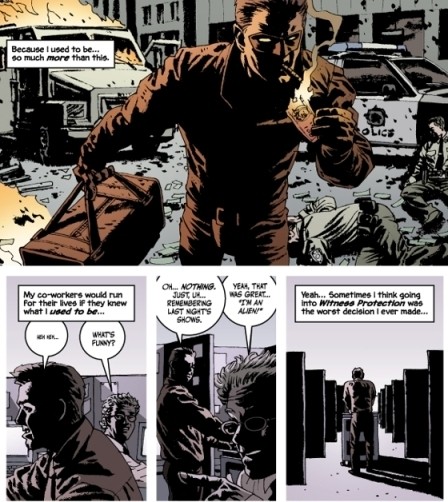
What if you were an ex-super villain hiding out in Witness Protection… but all you could think about were the days when the rules didn’t apply to you? Could you be a humdrum office clerk after being the best at years of leaving destruction in your wake? And what if you couldn’t stand it? What would you do then? 

This story is steeped in the pulp fiction of the 30’s and 40’s, stories that undeniably inspired the superhero fiction of today. Brubaker takes those early influences and fills out a world that has descended from them; there’s a very clear path in Incognito back to characters like the Shadow and the Spider (or rather Brubaker’s version thereof), and it gives the reader the sense that we’re barely scratching the surface with the characters and history revealed through the course of the hardcover’s 360-odd pages.

I was immediately taken in by the story as we learned more about Zack Overkill and how he went from a heavy hitting super villain to a lowly file clerk barely noticed by his coworkers. We see flashes of his mandated psychiatric appointments, the oh-so-real struggles he’s facing in a life that he’s not accustomed too. If you remove the super powered aspect from the opening part of the story, you can see a man struggling with his mental health amidst an unfulfilling life of boredom and depression. Is it any wonder that he eventually turns to drugs in order to find an escape?

Zach Overkill is an oddly likable guy despite never hiding (at least from us) what kind of man he used to be; whether this story is about his trying to find redemption, or a larger tale about whether a leopard can truly change its spots is one of the best parts about this book. Brubaker asks you not whether you can change for the better after making a horrible series of life choices, but whether others can accept your change. Whether they truly believe it, or if once they’ve labelled you a villain then that’s how they will always see you.

I should have expected good stuff from this book, but I wasn’t quite prepared with just how good it would be.

In a story that can be so much to so many, we’re left asking ourselves who we really are; are you really the person you think you are, or are you just a product of what this world has made you?


Join us next week where there will doubtless be another movie, series, comic or comic related thing discussed that is, for whatever reason, Underrated.

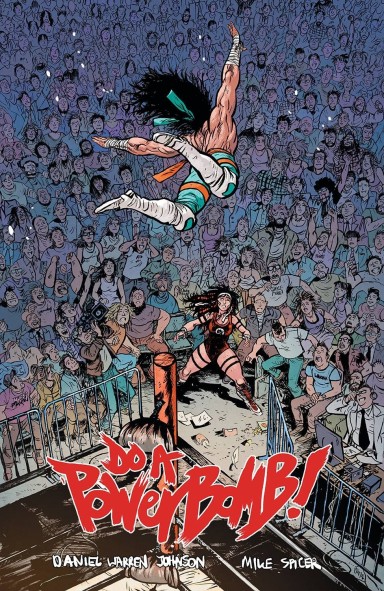
Underrated: Do A Power Bomb!

This is a column that focuses on something or some things from the comic book sphere of influence that may not get the credit and recognition it deserves. Whether that’s a list of comic book movies, ongoing comics, or a set of stories featuring a certain character. The columns may take the form of a bullet pointed list, or a slightly longer thinkpiece – there’s really no formula for this other than whether the things being covered are Underrated in some way. This week: Do A Power Bomb!


For one reason or another, over the past year or so I’ve found myself becoming a fan of professional wrestling again. It’s been more than 25 years since I last consistently watched wrestling, and yet between three or four people in different groups of friends I have being fans, I could feel the pull of curiosity. Needless to say, after the last year of finding my way back into professional wrestling, when Do A Power Bomb! came around I was curious. I’d missed the first issue or two, and so despite the covers drawing me into the comic, I resisted the urge to read them floppy issues until the trade came out.

So what’s it about? I’ve handily copied the blurb for you below.

Lona Steelrose wants to be a pro wrestler, but she’s living under the shadow of her mother, the best to ever do it. Everything changes when a wrestling-obsessed necromancer asks her to join the grandest pro wrestling tournament of all time, which is also the most dangerous! It’s The Wrestler meets Dragonball Z in a tale where the competitors get more than they ever bargained for!

Daniel Warren Johnson created, wrote and illustrated the story, with colours by Mike Spicer and letters by Rus Wooton. As you can probably tell by the blurb and my intro, the comic is about professional wrestling. It’s actually a unique story with how it blends professional wrestling, while acknowledging the scripted and predetermined outcome of each match, with real world consequences of the sport/performance.

As an aside, it’s interesting how given the athleticism required for professional wrestling, it’s not technically a sport as there’s no real winner and loser other than the stories being told. Performance art might be a better description (or sports entertainment, I suppose, which is why that’s a thing). Needless to say, I take umbrage with those claiming wrestling is fake; it’s not fake (those chops and slams hurt), but it is predetermined. Kinda like a movie. Only difference is, these actors/stuntmen/women only get one take in front of a live audience to tell their story and react quickly when something goes wrong.

It’s what goes wrong that Do A Power Bomb! deals with, and the repercussions of that. Without spoiling anything, this story is far deeper than you’re expecting. Far deeper. A comic about professional wrestling can easily be overlooked, and this is a comic with so much more to offer than giants in spandex. It’s an emotional story with some beautiful artwork that captures the frenetic in ring action. You feel the impacts on the mat through the paper.

And that’s why this is underrated.


Unless the comics industry ceases to exist this week, Underrated will return next week.

« Older Entries Recent Entries »