Category Archives: Features

Underrated: Ultimate X-Men

This is a column that focuses on something or some things from the comic book sphere of influence that may not get the credit and recognition it deserves. Whether that’s a list of comic book movies, ongoing comics, or a set of stories featuring a certain character. The columns may take the form of a bullet pointed list, or a slightly longer thinkpiece – there’s really no formula for this other than whether the things being covered are Underrated in some way. This week:  Ultimate X-Men
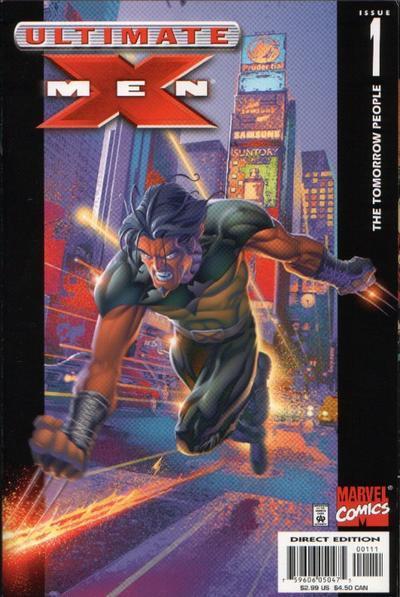

Ultimate_X-Men_Vol_1_1.jpgUltimate X-Men was a series launched under Marvel’s Ultimate Marvel imprint that aimed to do away with 40 years of so called convoluted continuity into a more modern and updated setting. The second title to launch after Ultimate Spider-Man, Ultimate X-Men was written by Mark Millar and drawn by Adam and Andy Kubert. Millar was largely ignorant of the storied history of the X-Men, and reinvented the characters with the 2000 X-Men  film as his primary reference. Millar has admitted in an interview with Sequential Tart that he knew bugger all about the characters before Joe Queseda and Bill Jemas asked him to pitch for X-Men, expecting them to use the script as toilet paper. Instead, because Millar knew next to nothing about the franchise, they decided that he should be the one to reboot the X-Men for Marvel’s Ultimate line of comics.

Free from the shackles of the past Millar set about crafting a new, and more modern universe for the X-Men to inhabit aimed to bring a return to the mainstream appeal the franchise enjoyed years before.

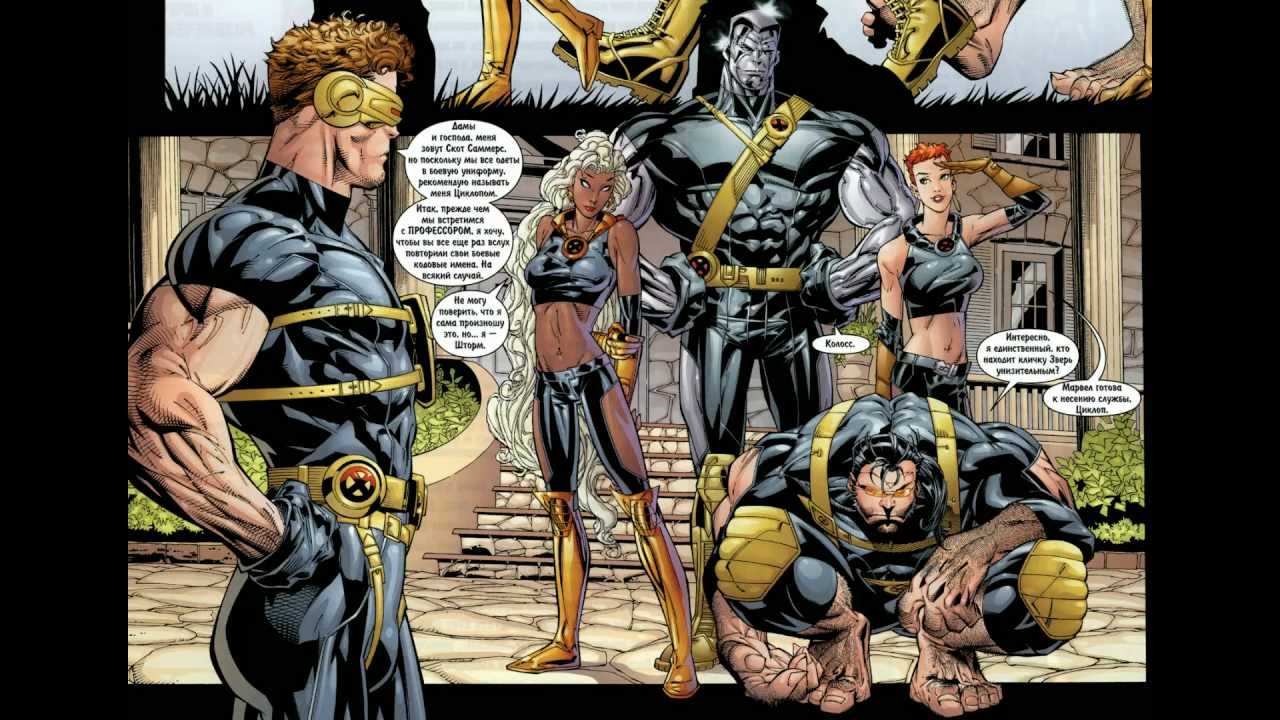
Launching in 2001, Ultimate X-Men was also part of Marvel’s “dot-comics” format, which was an early translation of print to digital using a slightly animated Flash format. Comic pages would appear on the screen showing a handful of panels at a time, and speech and thought bubbles hovering over the characters. The format would eventually pave the way toward Marvel Unlimited. Although not the first comic on the dot-comics format, it was one of the first that I read that way. Because the dot-comics were free to whomever had an internet connection and the patience to read the comics in their episodic form (if memory serves, five or so pages were uploaded every few days), they were a great way for people like myself to get introduced to a series that I otherwise would not have before.
Ultimate_X-Men_Vol_1 interior.jpg

Although I had previously dabbled in the X-Universe before, I was never a constant reader. Ultimate X-Men drew me into reading an ongoing series featuring Marvel’s merry mutants for the first time. The characters were familiar and yet felt fresh, the situations they were in reflected more of the world around them than the main Marvel universe characters did. Or at least that’s how it felt at the  time. It was here, with a newly discovered love of the characters that I truly became an X-Men fan and not just a Wolverine fan. At the time the irony that the series was being written by a man who knew bugger all about the characters was something I was unaware of, but the benefit of hindsight brings into sharp focus that provided one is a competent writer and has some understanding of the subject, then the essence of characters one is writing about shine through. And Millar, for the most part, had that understanding.

Running from 2001 until 2009 where it was cancelled at the conclusion of the critical and commercial failure of the Ultimatum crossover, Ultimate X-Men enjoyed nearly a decade as the fan favourite X-title. Although it was eventually relaunched as Ultimate Comics X-Men in 2011, the series never enjoyed the success of its pre-Ultimatum days.

Would Ultimate X-Men have worked had it been released today? Although we’ll probably never know, you can look at DC’s New 52 and to a lesser extent the successor to the Ultimate line (Ultimate Comics) to get an idea – although there are obvious faults with either comparison. The New 52 replaced DC’s continuity in its entirety, to much chatter from fans, and the Ultimate Comcs line tried to pick up after the failure of Ultimatum which had driven many fans away already. However you look at it, for nearly ten years Ultimate X-Men, and some of its companions under Marvel’s Ultimate line, were among the pinnacle of superhero comics. The reimagining of the characters, stripping them down to their core and putting them in a different world was a brave choice, but one that I, and thousands like me, fell in love with.

I grew up reading Ultimate X-Men, both as a comics fan and a human, and it hurts me a little to see people ignore it as an unimportant part of Marvel’s past because it’s not chronologically relevant in the X-Men’s story. It’s not, not really, but that doesn’t mean the stories told under the Ultimate X-Men banner remain among some of my most cherished to this day. If, for whatever reason, you haven’t read them then you can find the collected editions easily enough at your favourite online retailer (or, maybe your LCS can get them in for you).

That’s all we have for this week, folks. Come back next time  when there’s something else Underrated to talk about.
 

Underrated: Superman/Batman: World’s Finest

This is a column that focuses on something or some things from the comic book sphere of influence that may not get the credit and recognition it deserves. Whether that’s a list of comic book movies, ongoing comics, or a set of stories featuring a certain character. The columns may take the form of a bullet pointed list, or a slightly longer thinkpiece – there’s really no formula for this other than whether the things being covered are Underrated in some way. This week:  Superman/Batman: World’s Finest


Fifteen years ago, I picked up this book when I had first moved to Canada and I was looking for something to read that wasn’t Marvel related. Volume one of a series seemed like a good enough place to start, and despite knowing very little about DC’s comics at the time I was more than aware who Batman and Superman was in the general sense from the movies and TV shows that had been released at the time.

The story was also adapted for DVD in 2009 or so under the title Superman/Batman: Public Enemies. Because I’m not talking about the adaption today, I’m referring to the story under the comic book title.

No, today I wanted to revisit a story I hadn’t read in years because my wife picked me up a Batman blind box recently, and this was one of the books within the box. I’d forgotten how much I enjoyed reading it until I flicked through the softcover collection again.

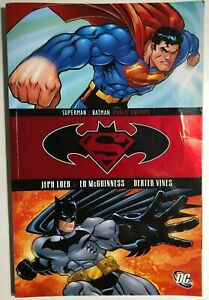
Collecting the first six issues of the series, Superman/Batman: World’s Finest was released in April 2004, and was written by Jeph Loeb with art by Ed McGuinness and colours by Dexter Vines. The story features a then President Lex Luthor, the framing of the man of steel for Metallo’s murder and a fantastic twin narrative device that allows Loeb to use the internal monologues of both Batman and Superman to great effect. It is often the source of my laughter when reading the book, as both men have some diametrically opposed viewpoints on things, and their thoughts in the moment are almost mirrored.

It’s honestly worth reading for that alone.

The story itself is largely free of any major continuity trappings from other series, by which I mean at the time I was able to go into this entirely blind about the state of the DC universe in 2004/2005 and still thoroughly enjoy the story. And my introduction to a cast of new characters like Captain Atom, Black Adam, Major Force and others I had never heard of before.

Although there have been a lot of really good Batman/Superman stories since this came out, the writing of Loeb and the way he has the two leads play off each other makes this collection stand out. If you’re not that keen on reading yet more stories featuring two of DC most popular heroes, then that’s fine. But you’ll be missing out on one of the coolest and most underrated aspects of this collection – I’ve said it before, and I’ll say it happily again – the dueling monologues of Superman and Batman highlight Loeb’s understanding of the two characters and their relationship.

The only downside is that as my introduction to DC comics, this remains one of the finest examples of that relationship I’ve read to this day.

You can find this collection at your local comic shop; it’s still in print so shouldn’t be too hard to find if you’re looking for it. I highly recommend checking it out when you get a chance.


Join us next week when we look at something else that is, for whatever reason, Underrated.

Underrated: The Highest House

This is a column that focuses on something or some things from the comic book sphere of influence that may not get the credit and recognition it deserves. Whether that’s a list of comic book movies, ongoing comics, or a set of stories featuring a certain character. The columns may take the form of a bullet pointed list, or a slightly longer thinkpiece – there’s really no formula for this other than whether the things being covered are Underrated in some way. This week:  The Highest House


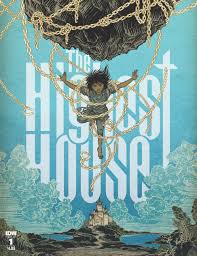
I had picked this book up prior to going on vacation to read on the plane at the suggestion of my LCS, but never actually got around to reading the book while I was away. Thankfully, I found I had the time this week and decided to sit down and start reading the book in between devouring Andrej Sapkowski’s The Witcher novels. 

I don’t say this lightly, but The Highest House is one of those books you give to people who don’t like comics, or don’t read comics, to show them what the medium can do. Its impact isn’t only felt in the story, but rather that you don’t need to be aware of decades of tropes and nuances to get the most from the book. This is just a really moving and powerful story about change and overcoming the shit life throws at you in order to rise above and become the best version of yourself.

Written by Mike Carey and illustrated by Peter Gross, the trade paperback set me back $30 Canadian, and is worth each and every penny that I paid for it. Without revealing too much about the story, this won’t be the longest column, but I want you to go in blind – just like I did. 

Because this book is worth it.

I usually end this column with a recommendation to check out the book or series or movie in question, but I genuinely can’t recommend this graphic novel to you highly enough If you don’t grab this with both hands when you see then you’ll miss an Underrated gem.


Join us next week when we look at something else that is, for whatever reason, Underrated.

Underrated: Batman: Child Of Dreams

This is a column that focuses on something or some things from the comic book sphere of influence that may not get the credit and recognition it deserves. Whether that’s a list of comic book movies, ongoing comics, or a set of stories featuring a certain character. The columns may take the form of a bullet pointed list, or a slightly longer thinkpiece – there’s really no formula for this other than whether the things being covered are Underrated in some way. This week: Batman: Child Of Dreams


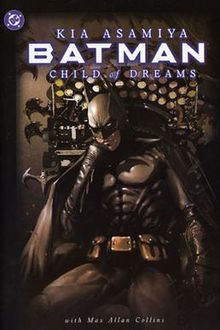
Child_of_Dreams_(manga).jpgThis week I wanted to focus on one of the very few manga books I own. Batman: Child Of Dreams was written and illustrated by Kia Asamiya and was originally published in Magazine Z, before eventually being released in an English language version in 2003. At the time of translation it was common for manga to be flipped so that Western audiences wouldn’t be confused by the traditional right to left reading layout of the source material (I’m told this isn’t the case any longer), so when you’re reading the book you’ll notice Two Face is scarred on the wrong side. It’s a minor thing at best once you understand why it’s there, and don’t attribute the error to an artistic blunder.
The story is about a designer drug that transforms you into somebody for 24 hours before killing you, the trail of which Batman follows to Tokyo with the help of a journalist Yuuko Yagi.

Child Of Dreams works on numerous levels as a book. It’s a compelling Batman story in and of itself, but it also gently introduced those unfamiliar with manga to the medium with characters that they’re already familiar with. Although I would have liked to try to read the book the way it was originally designed to be read, it is still interesting to see Asamiya’s take on the Dark Knight and how his influences and style give a fresh light to a well established character.

Unfortunately, this book didn’t inspire me to jump into manga, nor seek out more works by the creator (simply because I didn’t know how to find either after a very brief search), but it still remains a Batman tale that I enjoy to this day. If you can find this for a decent price, and you want to spend some time with a different take on the Dark Knight, then you can’t go wrong with Batman: Child of Dreams.


Join us next week when we look at something else that is, for whatever reason, Underrated.


Underrated: Valiant Masters: Ninjak: Black Water

This is a column that focuses on something or some things from the comic book sphere of influence that may not get the credit and recognition it deserves. Whether that’s a list of comic book movies, ongoing comics, or a set of stories featuring a certain character. The columns may take the form of a bullet pointed list, or a slightly longer thinkpiece – there’s really no formula for this other than whether the things being covered are Underrated in some way. This week: Valiant Masters: Ninjak: Black Water.


Ever since I’ve started to collect Valiant comics, I’ve been picking up the hardcover deluxe editions here and there as a way to catch up in bulk on some of the series I’ve missed, and also because I just like the look of them. A while back I did a cost analysis as to whether it was worth buying the deluxe editions verses the softcover trades or single issue floppies at cover price; generally the savings were negligible depending on the size of the book (less than $5, I think) between the hardcovers and soft covers, but the difference between the hard covers and cover price floppies varied greatly depending on how many books were collected (and it didn’t factor in the cost of the floppies after they’ve been on the market for a while, as they can fluctuate higher or lower depending on different trends).

This is relevant only because the Valiant Masters hardcovers generally contain the first eight issues of the original Valiant series (either 1-8 or 0-7 depending on the stories within), which means that for $25 you end up paying about $3.25 a comic. Whether that’s a good price for the early Valiant books depends on which book you’re looking at; I’ve paid $20 for the first appearance of Rai, $6 for the first appearance of Ninjak and around $1 for others, so it’s largely a crap shoot, but for the most part the individual issues collected in the Valiant Masters are going to be cheaper than the hardcover itself depending on which one you’re looking at.

The point I’m making here is that while I’m talking about the hardcover today, in reality I’m really looking at the eight issues within the book (Ninjak #1-6, before giving us his origin with issues #0 and #00), and those you can probably find easier than the hardcover which may be out of print now. The floppies will likely be cheaper given how out of print Valiant hardcovers tend to sell for higher than cover price.

Perhaps my favourite aspect of these Masters editions is in comparing what I know about the characters from their 2012 relaunch and the versions that appeared in the 90’s. The Ninjak of the 90’s had his differences from the modern version; born to English parents as part of an experiment to grow enhanced humans, he grew up in Japan and learned the ways of the ninja from a temple he sought refuge in after his father was murdered. The rest, his technology and such, differ only in what was conceivable to the writers of the time.

Black Water has the titular ninja taking down an international conglomerate. It sounds fairly cliche now, but the story’s echoes of Batman and James Bond set it apart from the general run of the mill hero vs corporation stories. The story is only the first two issues of the series and , but by the time that story had wrapped I felt like I’d read a full trade – one of my favourite things about comics from the 90’s and before has always been the amount of content packed into each issue. The first six issues we get are wonderful. Reading these, and the other early Valiant, I can understand why the publisher gained such a strong following over the years. Compact, exciting, and with some truly exciting art (I acknowledge that comic art has come a long way since the 90’s, but these issues of Ninjak hold up very well even today).

There may only be a limited number of folks left who, like me, want to explore the original Valiant comics of the 90’s that haven’t already done so, but these hardcover editions are a brilliant gateway to the past, and great encouragement to go hunting for the comics that haven’t been collected – and may never be at this point. That’s why I think these books are underrated; because so few of you will be looking for them. Which is a shame because those early Valiant stories are fantastic.


Join us next week when we look at something else that is, for whatever reason, Underrated.

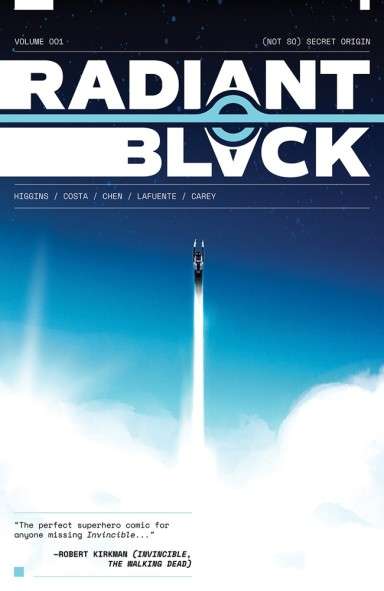
Underrated: Radiant Black (Not So) Secret Origin

This is a column that focuses on something or some things from the comic book sphere of influence that may not get the credit and recognition it deserves. Whether that’s a list of comic book movies, ongoing comics, or a set of stories featuring a certain character. The columns may take the form of a bullet pointed list, or a slightly longer thinkpiece – there’s really no formula for this other than whether the things being covered are Underrated in some way. This week: Radiant Black: (Not So) Secret Origin.


I’m not the biggest fan of the Power Rangers, but I’ve always thought about picking up a trade or two to check out the comic series, but I never quite think of doing that when I’m actively looking for something new to read at the shop. A week or two ago, when I was reorganizing the backstock trades in the basement, my eye was caught by the cover of Radiant Black: (Not So) Secret Origin, and I quickly spun the book to check out the blurb, and the price. As it turned out, the book is one of those that Image publishes and prices low to encourage a person to check out the book (I mean at $10, you can’t really argue the value of getting six comics for the price of three or so). Now, I’m not going to regurgitate the blurb on the back of the trade, or write a summary in slightly different words, but I will just copy it directly from the publisher’s website because who doesn’t love to be efficient?

Visionary writer KYLE HIGGINS (Mighty Morphin Power Rangers, Ultraman) and artist MARCELO COSTA reinvent super heroes for a new generation! Nathan Burnett has just turned 30, and things aren’t great—he’s working (and failing) at two jobs, his credit card debt is piling up, and his only move…is moving back home with his parents.

But when Nathan discovers the ethereal, cosmic RADIANT, he’s given the power to radically change his fortunes…unless the Cosmic Beings who created them succeed in taking them back by any means necessary. Oh, and did we mention there’s a RED RADIANT who wants Nathan dead? The next must-read comic book series STARTS HERE.

Cloaked, on the surface, reminded me of the heroes that inspired Batman; the Shadow, the Spider and the Black Bat. Men who were mostly powerless and used handguns to dish out justice to criminals to varying degrees of lethality. This story takes the form of a man trying to discover the legacy of the city’s masked hero by hiring an ex-cop private eye to find out why the hero disappeared. It’s through this lens that we get glimpses of the hero’s activities during the years he was active, told through the people who knew him the most (which, given that he kept his identity very close, isn’t many).

The book is very much what it says it is; something that fans of Invincible and the Power Rangers will find enjoyable (or at least, those were the vibes I got most from the pages of the trade, but since I’ve not really read much of either of the names inspirations, I can’t really confirm or deny the statement). The only downside to the book is that it doesn’t really end… the final chapter is very much an origin story for one of the characters and not a final chapter which feels a little less than satisfying. If nothing else it encourages you to pick up the next book, and ultimately that’s what we’re looking for in a book; do I want to read the next book? And the answer is “oh yes.”


Join us next week where there will doubtless be another movie, series, comic or comic related thing discussed that is, for whatever reason, Underrated.

Underrated: Warhammer: Crown Of Destruction

This is a column that focuses on something or some things from the comic book sphere of influence that may not get the credit and recognition it deserves. Whether that’s a list of comic book movies, ongoing comics, or a set of stories featuring a certain character. The columns may take the form of a bullet pointed list, or a slightly longer thinkpiece – there’s really no formula for this other than whether the things being covered are Underrated in some way. This week: Warhammer: Crown Of Destruction.


It’s often easy to discount Games Workshop based comics as little more than a generic cash in with little appeal beyond those who already play Games Workshop games such as Warhammer. As you may have guessed by this collection featuring in Underrated, that’s not always the case. 

Although I found this in a thrift shop for $2, I was utterly captivated by it from start to finish. I tell you the price I paid more to give an indication of what I was willing to pay based on the cover and blurb on the back, not because I want to brag about my find. Any higher a price and I probably would have left it on the shelf – though seeing as how it was with the kids books I may have at least moved it to the adult section. 

As I may have indicated, I went into this book with pretty low expectations on the story (though oddly I would have been surprised if the art wasn’t at the very least “pretty damn good”). But given that this four issue collection was written by Kieron Gillen, I probably should have had higher expectations than I did. Yes, it’s the third book in the series, no that didn’t bother me any.

Gillen’s story about disgrace, honour and cowardice is pure escapist fantasy, but it is solid and more than enjoyable. I loved the artistic direction of the book. Dwayne Harris, while not to everybody’s taste, encapsulates the visual feel I expected from a gritty comic that had some very loud 2000AD  echoes.

A lot of the folks I talk to at my LCS generally discount these comics as not being worth reading; and while they may not always be the best things you’ll ever read, they’re far better than most (including myself) give them credit for. That’s why I think these stories are Underrated. Next time a Warhammer comic looks interesting to you, check it out. You may find yourself enjoying it more than expected.


Join us next week when we look at something else that is, for whatever reason, Underrated.

Underrated: The Incredible Hulk

This is a column that focuses on something or some things from the comic book sphere of influence that may not get the credit and recognition it deserves. Whether that’s a list of comic book movies, ongoing comics, or a set of stories featuring a certain character. The columns may take the form of a bullet pointed list, or a slightly longer thinkpiece – there’s really no formula for this other than whether the things being covered are Underrated in some way. This week: Incredible Hulk.


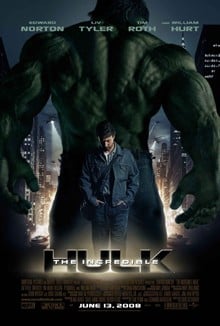
The Marvel Cinematic Universe started off with Iron Man in 2008. You all know that, I’m sure. Just as you know that the second film was Incredible Hulk, released just over a month later. Unlike the other Marvel movies, Bruce Banner is play by Edward Norton in this film, the actor’s only appearance as the jolly green giant. This movie is also slightly harder to find than the rest of the MCU movies because it’s the only one that Disney doesn’t own the distribution rights to, as Universal own the distribution rights to the Incredible Hulk – as well as first refusal on any Hulk movie (which is why you haven’t seen a Hulk movie since this one).

When I first saw this movie I remember thoroughly enjoying the near two hours I sat in the theater, thinking that Marvel had gone two for two with their opening salvo.

Back to the bullet points!

  • Don’t expect to see the humour from Mark Ruffalo’s Hulk. This movie has odd lighter moments, but for the most part it’s much closer to a straight action film featuring a very reluctant hero.
  • Edward Norton plays a very good Bruce Banner. The years of running and hiding are etched into his face and body – do I prefer him to Ruffalo? I don’t know – each man takes a very different approach to the character, neither of which I dislike.
  • Emil Blonsky. I haven’t read a lot of comics featuring Emil Blonksy or the Abomination, but the former marine’s decsent into a power hungry, uh, abomination felt quite believable as the movie progressed. You knew it was coming, it was never a surprise to anybody – except Thunderbolt Ross. But watching a slightly powered up Blonksy thinking he can go toe to toe with the Hulk is…. pretty awesome.
  • The Hulk looks awesome. I enjoy the look of the Hulk in the later MCU movies, but there’s something savage and raw about how this Hulk looks on screen.
  • The CGI holds up. Ten plus years is a long time in the world of technology, and the advancements are often noticeable in the films of yesteryear verses today. Not so here.

The movie does have its moments where it doesn’t quite measure up, though. The inherent charm of the early (and most of) the MCU movies is missing, but given that this is only the second movie that’s to be expected. the MCU hadn’t found its identity just yet. The chemistry between Liv Tyler’s Betty Ross and Edward Norton’s Bruce Banner is spotty at times, but it’s far from being a reason to avoid the movie.

There’s been a lot said over the years about the MCU, and a lot of people have, and will continue to, overlook this film because, they’ve heard it’s not as good as the rest of the movies released around this Phase in the MCU. It is. But as I mentioned before, it’s also harder to find; it isn’t on Disney+ right now, and I haven’t seen it on Netflix in awhile (bear in mind I live in Canada so this may be different for you).

Thankfully, I still have the DVD I purchased when the film first came out – one of only two MCU DVDs I have since I started going for Bluray with Iron Man 2. If you can find it, then it’s well worth checking out one of the most underrated movies in the Marvel Cinematic Universe.


Join us next week when we look at something else that is, for whatever reason, Underrated.

Underrated: Animosity Volume One: The Wake

This is a column that focuses on something or some things from the comic book sphere of influence that may not get the credit and recognition it deserves. Whether that’s a list of comic book movies, ongoing comics, or a set of stories featuring a certain character. The columns may take the form of a bullet pointed list, or a slightly longer thinkpiece – there’s really no formula for this other than whether the things being covered are Underrated in some way. This week: Animosity Volume One: The Wake.


Animosity Volume One: The Wake

I’ve had this trade sat in my digital to-read pile for quite some time, and this week I finally got around to reading it. I could give you my take on the central premise, but it sounds so much better straight from the horses mouth (because I basically reworded this the first time I wrote the opening):

“One day, for no reason, the Animals woke up. They started thinking. They started talking. They started taking REVENGE. Collecting the first four issues of the best-selling series, plus the special one-shot issue ANIMOSITY: THE RISE. 

The world is plunged into chaos as the newly-intelligent Animals fight humanity, and simply fight each other, for their own life, liberty, and pursuit of happiness. In the midst of the turmoil is Jesse, an 11-year-old girl, and her dog, Sandor, who is devoted to her and her protection. One year after the incident, Jesse and Sandor begin a cross-country journey to find Jesse’s half-brother, Adam, who is living in San Francisco.”

To be honest I actually went into this series knowing only the bare minimum about it, so when the animals woke up I was actually taken aback by the entire thing. I know. The entire premise of the comic caught me off guard when it happened on the opening few pages of the story. It makes me laugh a little, too.

Centering around Jesse and her beloved dog Sandor’s relationship, and his overwhelming desire to protect her because she loves him. He’s one of the few animals not to hate humanity, and others who are still somewhat fond of humans are typically those who weren’t abused or mistreated in any way – and sadly, humans have done far too much of that in our time on this planet. Marguerrite Bennett‘s script is remarkable; she touches on the bigger impact of animals gaining sentience and the political and economical ramifications of this often in passing but with enough detail to answer some of the questions you’ll be having regarding food sources, population control… there’s a lot to set up in this trade, and for the most part the four issues of the main series collected here succeed in doing that.

There is a time jump that some may find jarring, but as with  any time jumps it will give us something to flash back to in subsequent trades and issues.

Artistically, Rafael De La Torre and Rob Schwager deliver. Their animals are able to convey the requisite emotions and atmospheric design needed to pull you from page to gorgeous page. Animosity‘s first volume is remarkably solid and enjoyable – and well worth checking out.


Join us next week where there will doubtless be another movie, series, comic or comic related thing discussed that is, for whatever reason, Underrated.

Underrated: The Astounding Wolf-Man Volume One

This is a column that focuses on something or some things from the comic book sphere of influence that may not get the credit and recognition it deserves. Whether that’s a list of comic book movies, ongoing comics, or a set of stories featuring a certain character. The columns may take the form of a bullet pointed list, or a slightly longer thinkpiece – there’s really no formula for this other than whether the things being covered are Underrated in some way. This week:  The Astounding Wolf-Man


atounding wolf-man.jpg

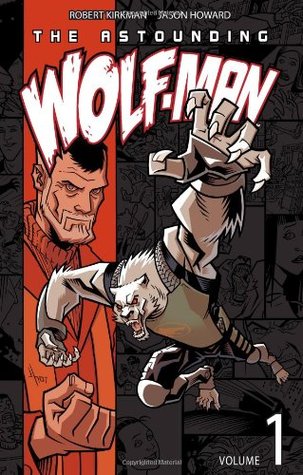
Born from Robert Kirkman‘s desire to see comic books on the rack that are easily identifiable from the cover and the title, The Astounding Wolf-Man is a comic about a werewolf superhero. The complete twenty five issue run is collected across four volumes, all published by Image. The series originally ran in the mid 2000’s, culminating with the 25th issue in 2010. The Astounding Wolf-Man mixes the supernaturally traditional horror monsters (basically werewolves and vampires) in with the traditional cape and cowl crowd in ways that you may not have necessarily encountered before within the Marvel or DC universes. Kirkman establishes the existence of the monsters long before he does the heroes, which has the effect of grounding the world in the supernatural long before we see the heroes – so while the reader is used to and has accepted the existence of werewolves, the heroes are left to question the very nature of Wolf-Man much longer into the series.

The origin of Wolf-Man is told succinctly, with Kirkman never allowing the origin to feel overly drawn out or excessive – the story is well paced from start to finish, and it all begins with the origin.

Who is the Wolf-Man?

Gary Hampton. A man who was mauled by a werewolf while out camping with his family, and chooses to use his newfound powers for good by becoming a superhero. But there are dangers with being a heroic werewolf, both the physical reactions of those he confronts, and from the reactions of those around Gary Hampton. Kirkman stays true to the horror stories that have made him famous by injecting a touch of the emotional tension from The Walking Dead as the audience witnesses Wolf-Man’s world adjust to who and what he is.

Joining Kirkman in this venture is artist Jason Howard. Howard was a relative newcomer at the time of the series publication, but has gone on to work on Super Dinosaur, also with Kirkman, and Trees with Warren Ellis. His style throughout the comic reminded me a lot of Batman: The Animated Series in how the characters had a weight to them, and their kinetic energy as they dance their often violent dance across the pages of the graphic novel. Obviously, given the nature of the titular hero, one should expect a judicious use of red ink on these pages as Wolf-Man slices his way through various opponents of varying degrees of villainy.

So the question now, is why is this underrated? Because aside from it being an incredibly fun read, I hadn’t heard of it until I saw the collection on the used shelf at my local comic shop. It turned out that the fresh take on supernatural superheroes was far more entertaining than I had initially expected, and given the fame of some of Kirkman’s other work, I was a little surprised that the twenty five issue run ofThe Astounding Wolf-Man hadn’t gained any real stream before. 

If you get a chance to read this, then do so. You’ll find an Underrated gem just waiting for you.


Join us next week when we look at something else that is, for whatever reason, Underrated.

« Older Entries Recent Entries »